Reviewed · BERLIN TOURS
Berlin: 4-Hour Guided Highlights Tour in Spanish
Berlin’s past unfolds block by block on this four-hour Spanish walking tour, from the medieval quarter near Alexanderplatz to the Wall, the Holocaust memorial, Potsdamer Platz, and the Brandenburg Gate. The route gives you a useful first look at a city that has been rebuilt, split, scarred, and rebuilt again.
I like the clear east-to-west route and the way the guides connect grand monuments with daily life behind the Wall. I also like the human stories, including East Germans who risked their lives to cross into West Berlin. The main drawback is simple: four hours on foot can feel long in cold, snow, or rain, even though the tour runs in all weather.
Key points to know before booking
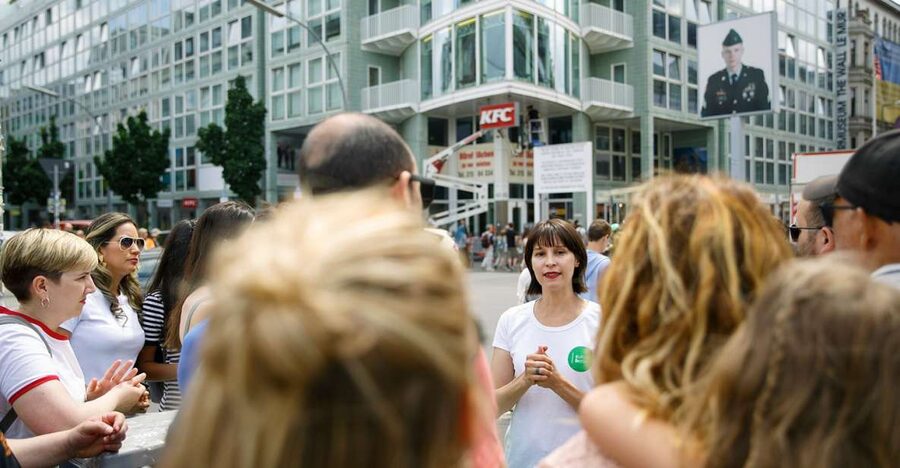
- The route begins at Alexanderplatz and ends at the Brandenburg Gate, giving you a strong introduction to central Berlin without needing public transport between stops.
- The tour is offered only in Spanish, with guides including Evelyn, Celia, and Constantino.
- The history covers several eras, from Berlin’s early origins and Prussian power to Nazi rule, the Holocaust, the Wall, and reunification.
- A break of about 30 minutes may be included, useful for coffee, a restroom stop, and a chance to rest.
- The tour costs $29 per person, a fair price for four hours of guiding and the number of major sights covered.
- You walk in rain or shine, so comfortable clothing and weather-ready shoes matter.
Starting at Alexanderplatz beneath the TV Tower
Meet beside the green flag marked tours en español, next to the only entrance to the TV Tower at Alexanderplatz. The meeting point is between the Fernsehturm and Alexanderplatz train station, beside Espresso House.
This is a practical place to begin. Alexanderplatz is one of Berlin’s largest transport hubs, so it is easy to reach by train. Give yourself extra time to find the correct side of the TV Tower. The green flag is the useful landmark, not the tower entrance itself.
The TV Tower gives you an immediate sense of modern Berlin. Around it, wide open spaces and postwar buildings reflect the former East German city. From here, the tour moves into the nearby San Nicolas neighborhood, where you begin learning about Berlin’s early beginnings.
That contrast is part of the appeal. Berlin does not present its story in a neat old-town package. You move quickly between medieval origins, socialist rebuilding, imperial monuments, Nazi crimes, Cold War division, and bold modern architecture.
A few more half-days in Berlin worth comparing
- Berlin: Reichstag, Dome and Government District Guided Tour
★ 4.7 · 18,288 reviews - Berlin: 1-Hour City Tour by Boat with Guaranteed Seating
★ 4.3 · 16,993 reviews - Berlin: Boat Tour Along the River Spree
★ 4.4 · 11,252 reviews
San Nicolas and Berlin’s earliest beginnings
The San Nicolas neighborhood is linked with the origins of Berlin. This opening stop gives the tour a useful base before the bigger political stories take over.
You should not expect a full archaeological or architectural study here. The value is that your guide places Berlin on a timeline. The city was not created as a grand capital overnight. Its early core grew around trade, settlement, and the Spree River, before later rulers reshaped it.
I appreciate starting with origins rather than rushing straight to Hitler or the Wall. Berlin’s twentieth-century story is powerful, but the city is older than its darkest chapters. This first section helps you see the capital as a living place with layers, not only as a memorial to recent tragedy.
Museum Island and the Berliner Dom
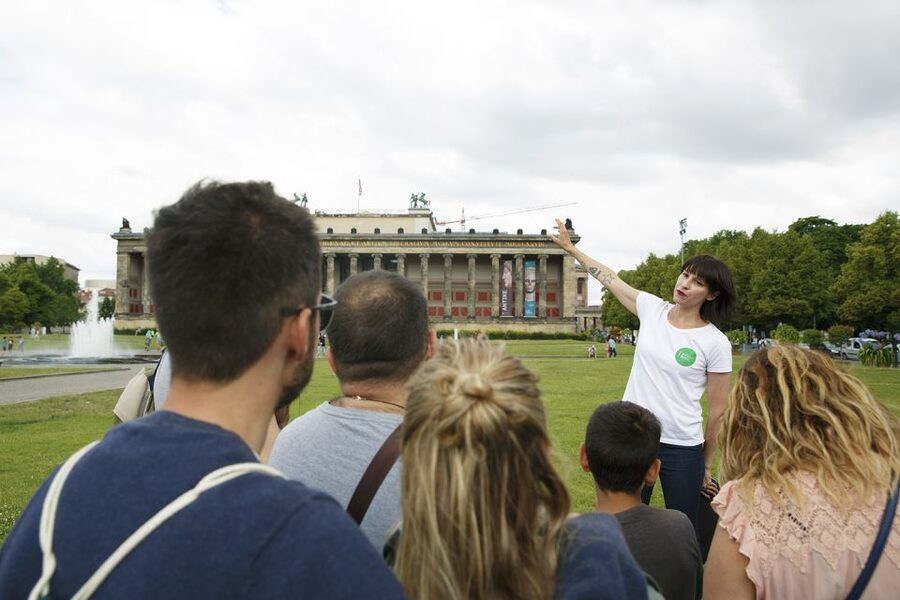
The route continues through Museum Island, a UNESCO World Heritage Site in the middle of Berlin. The area contains major museums, but this tour focuses on seeing the setting and understanding its role in the city rather than entering museum collections.
The Berliner Dom is the visual star here. Its large dome and formal exterior make it one of Berlin’s most recognizable buildings. You will have time to admire it from outside and hear how this part of the city became a center of royal, religious, and cultural power.
This is also a good place to decide how you want to spend later time in Berlin. If you enjoy museums, Museum Island deserves a separate visit. A walking tour cannot do justice to the collections inside, but it can help you choose which building to return to.
The stop works well for first-time visitors because your guide gives you context without asking you to spend four hours indoors. The possible limitation is that museum admission is not included, and the tour does not replace a proper museum visit.
Unter den Linden and Berlin’s royal boulevard
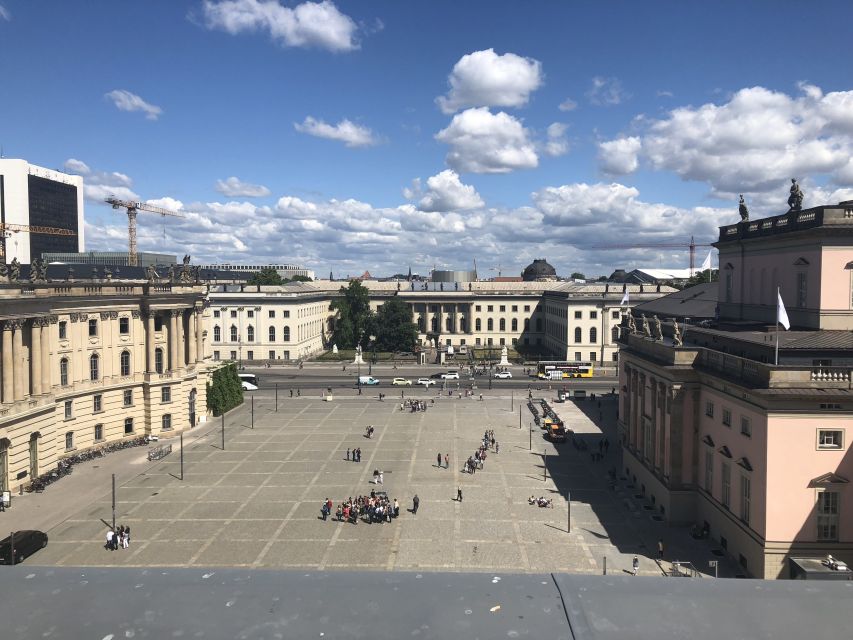
From Museum Island, you walk along Unter den Linden, the grand avenue once known as Kaisers Avenue. The route passes Humboldt University, the Royal Library, and the State Opera.
This section shows Berlin in its formal, imperial mode. The buildings around the avenue were designed to express education, monarchy, culture, and state power. Your guide can explain how these institutions fit together, and why this boulevard became such an important public axis.
I like this part because it gives you a break from the usual Wall-focused story. Berlin’s identity was shaped by kings, scholars, musicians, and civil servants long before the twentieth century. The buildings also help explain why Berlin became a political capital rather than simply a large German city.
The walking is generally straightforward, but the route covers a lot of ground. Wear shoes you can use for four hours. Comfortable clothing is specifically advised, and that matters more here than dressing for a formal sightseeing occasion.
Same city, a completely different kind of day:
- Discover Berlin Half-Day Walking Tour
★ 5.0 · 9,624 reviews - Berlin: Hop-on Hop-off Bus Tour with Live Commentary
★ 4.3 · 8,579 reviews - Berlin: Government District around the Reichstag Guided Tour
★ 4.7 · 8,447 reviews - Berlin: Reichstag, Plenary Chamber, Cupola & Government Tour
★ 4.6 · 8,422 reviews
Gendarmenmarkt and the first photo pause
Gendarmenmarkt is one of Berlin’s most attractive squares, with grand buildings arranged around an open public space. The tour pauses here for photographs.
The square is a welcome visual change after the long avenue. It also gives your group a natural moment to slow down. Use the pause to take pictures, listen to the next part of the story, and check whether you need water or a warmer layer.
A square this polished can seem almost too perfect for Berlin, but that is exactly why the guide’s explanation helps. Berlin has repeatedly rebuilt, changed its political identity, and reassigned meaning to its public spaces. Gendarmenmarkt lets you see the city’s architectural confidence before the tour turns toward darker twentieth-century subjects.
If you are hoping for long free time at every stop, this may feel brief. The goal is a guided overview, not an unhurried photography walk.
Nazi Berlin, the Gestapo site, and the Holocaust memorial
The tour then addresses Hitler’s rise to power and the Nazi period. You see the remains of the former Gestapo Headquarters and stop at the Memorial to the Murdered Jews of Europe.
This is the most serious part of the walk. The Gestapo site points to the machinery of political repression, while the Holocaust memorial offers a stark space for remembrance. A good guide needs to handle these places with care, accuracy, and restraint.
The tour’s strength is the sequence. You first see institutions and public buildings connected with power, then learn how that power was turned against political opponents and targeted communities. The memorial is not a museum lecture, and the experience does not depend on elaborate displays. The setting itself creates a pause for thought.
You should be ready for difficult material. This is not a light sightseeing stroll, though the guides aim to keep the explanation clear and approachable. Celia, one of the guides, has been praised for combining historical facts with debate and personal reflection. That approach can help you understand events as human choices, not only as dates to memorize.
If you want a longer visit to the Holocaust memorial or its underground information center, plan to return on your own. The four-hour route gives you an introduction, not unlimited time at each site.
The Berlin Wall and everyday life in a divided city
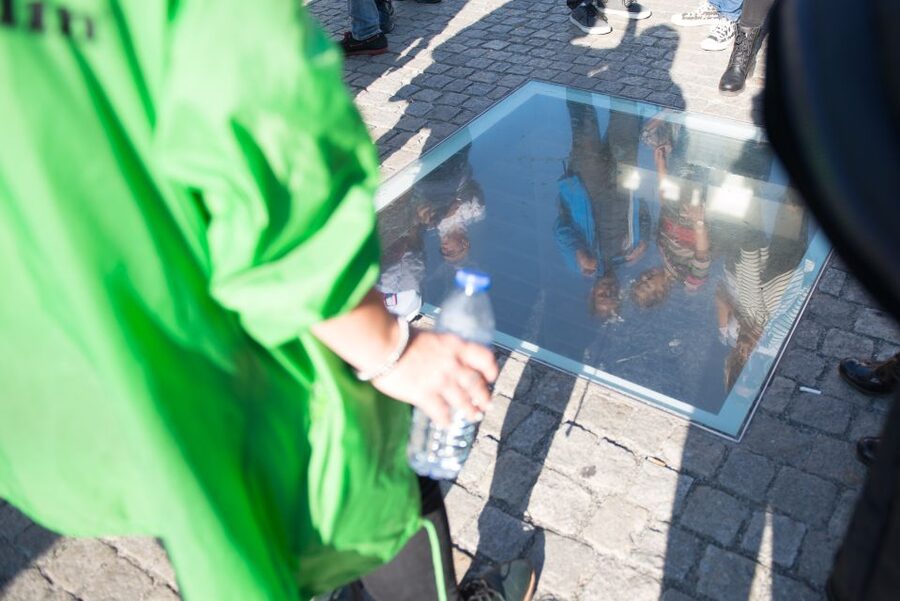
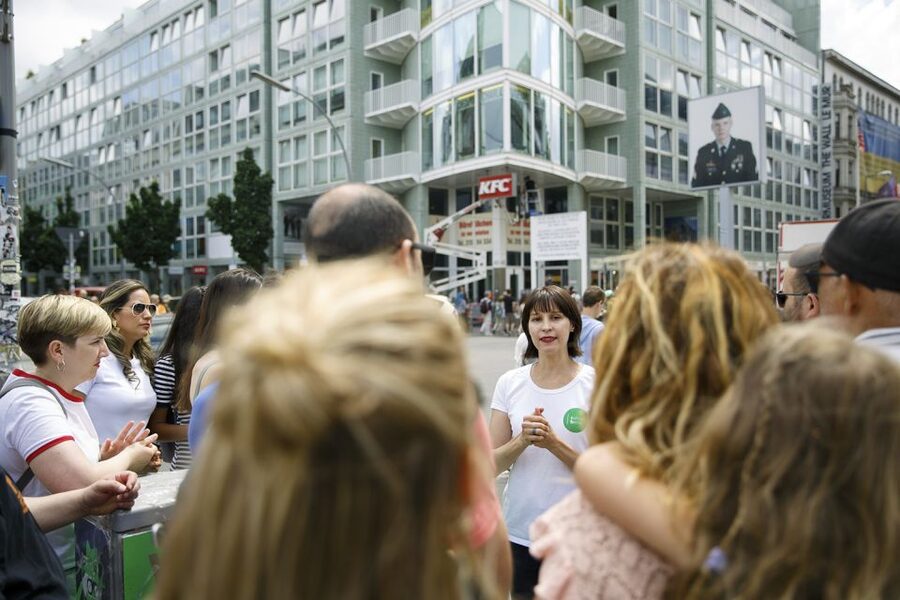
The tour’s strongest section is the explanation of Berlin’s division. You learn why the Wall was built, how it divided East and West Berlin, why it eventually fell, and how people lived with it day after day.
This subject is often reduced to a few famous images. A good guide makes it more personal. You hear about families, work, shopping, travel, surveillance, and the risks taken by East Germans trying to reach West Berlin. These details turn the Wall from a monument into a force that shaped ordinary decisions.
The Spanish-language format is especially useful here if you prefer discussing complex political subjects in Spanish. The guides can explain the difference between the postwar occupation zones, East Germany, West Germany, and the status of West Berlin without forcing you to rely on partial understanding in another language.
Evelyn, a guide from Chile, has been praised for explaining clearly and patiently, including for people walking at a slower pace. That patience matters on a route with so much ground to cover. Constantino has also been noted for keeping the experience enjoyable and including a break of about half an hour for coffee, the restroom, and rest.
The Wall section is not presented as a simple story of good people and bad people. The point is to understand why the barrier was created, how the East German government defended it, and why its fall became such a powerful symbol. You leave with a better sense of how recent this history really is.
Potsdamer Platz and Berlin’s modern face
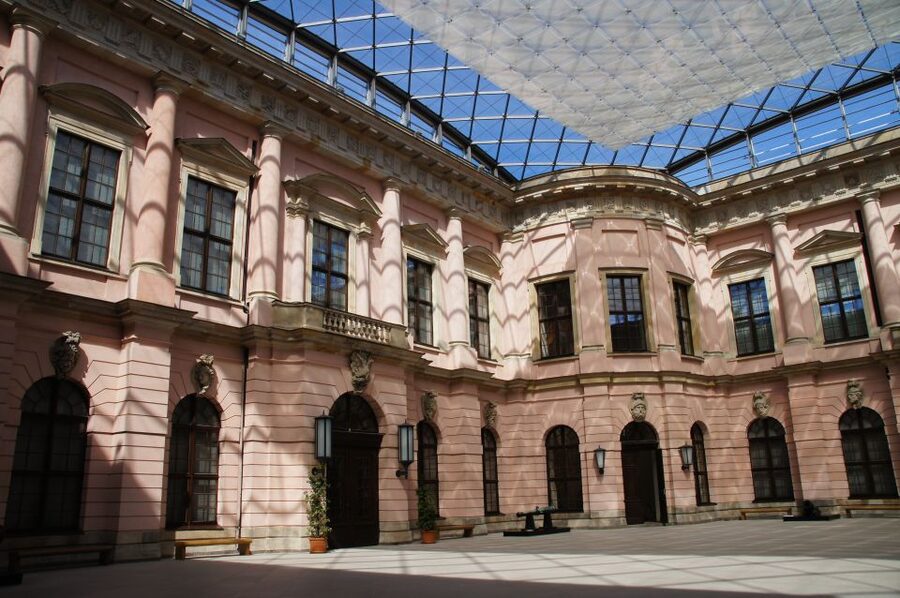
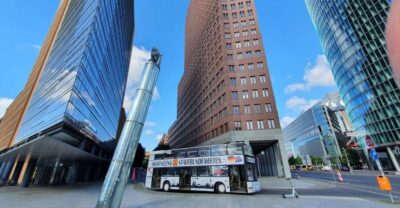
After the historic and memorial sites, the route reaches Potsdamer Platz. This is where Berlin’s modern rebuilding becomes easy to see.
Before the Second World War, Potsdamer Platz was a major urban crossroads. The war and the Wall left it divided and damaged. After reunification, it became a large redevelopment project with modern offices, shops, entertainment venues, and striking architecture.
You may find the contrast abrupt. One moment you are discussing escape attempts and state control, and the next you are looking at contemporary towers and open plazas. But that shift is the point. Potsdamer Platz shows how quickly Berlin tried to turn a former border zone into a symbol of a reunited capital.
The stop also gives the tour a change of pace before its final landmark. If you like architecture, this is a useful place to look closely at how the new city was planned. If your main interest is old Europe, the modern buildings may be less appealing than Museum Island or Gendarmenmarkt.
Finishing at the Brandenburg Gate
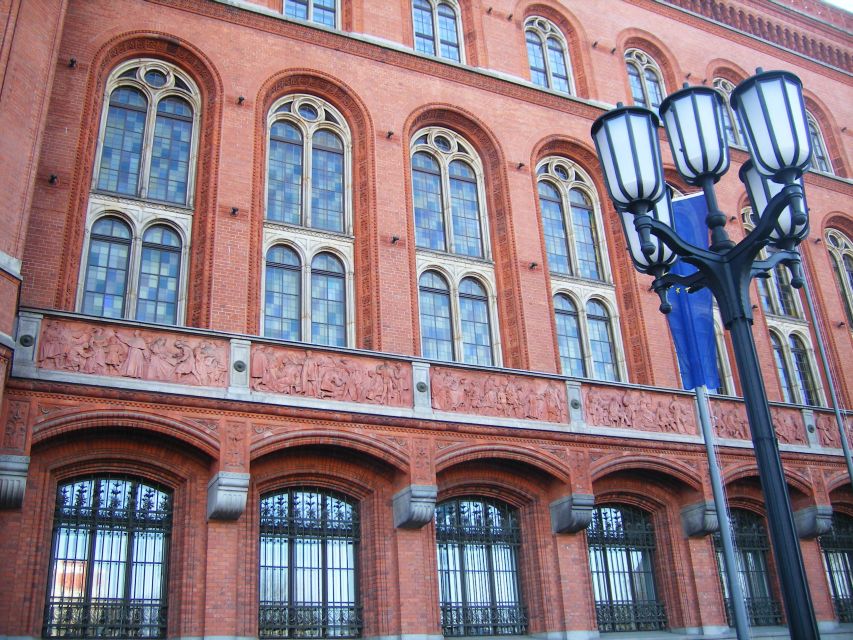
The tour ends at the Brandenburg Gate, Berlin’s best-known symbol. The location is fitting because the gate has represented several different versions of the city: royal power, political spectacle, division, and reunification.
Ending here makes practical sense. You can continue on foot to nearby sights, return by public transport, or stop for a meal. Since the tour ends in central Berlin rather than returning to Alexanderplatz, think about your next plan before you start.
The Brandenburg Gate is often crowded, so your guide’s historical explanation is more valuable than simply taking a photograph. You learn why this landmark became linked with the Wall and why images of it carried such weight when Berlin was divided.
What $29 gets you
At $29 per person, this tour offers good value if you want a broad first look at Berlin. You are paying for four hours of live guiding in Spanish, a route through several major areas, and historical explanation that links the sites together.
You are not paying for museum entry, meals, or a private car. The tour is mainly a walking experience, with an optional hotel-lobby pickup available and private groups offered. For most people, the value comes from the guide’s ability to make sense of a scattered city.
The price is particularly reasonable for visitors with only a short stay. In four hours, you cover Alexanderplatz, San Nicolas, Museum Island, Unter den Linden, Gendarmenmarkt, Nazi-era sites, the Holocaust memorial, Potsdamer Platz, and the Brandenburg Gate.
The tradeoff is depth. You will see many places, but you cannot study each one at length. Think of this as a well-organized orientation, then choose the sites where you want to spend more time later.
Who will get the most from this walk
I would choose this tour if you want to understand Berlin’s main story in Spanish and prefer learning outdoors rather than sitting in a museum. It suits first-time visitors, families with different levels of background knowledge, and anyone who wants the major landmarks arranged into a sensible route.
It is also a good match for people who want historical explanation with a human angle. The strongest material concerns everyday life during division and the risks taken to cross the border.
You should think twice if you dislike long walks, need frequent indoor stops, or want detailed entry visits at the museums. The tour runs every day at 10:00, rain or shine, so winter visitors should dress for the forecast. Cold and snow did not prevent one February group from enjoying the experience, but warm layers and proper shoes will make the day easier.
The tour is wheelchair accessible, and a private group can be arranged. Since it is offered only in Spanish, confirm that this is the language you want before booking.
Should you book this Berlin tour?
Book it if you want a strong introduction to Berlin, especially if the city’s twentieth-century history is new to you. The route is broad, the price is fair, and the best guides add clarity, patience, and room for thoughtful discussion.
I would not book it expecting a slow museum tour or a relaxed café walk. You will cover a lot of ground and face serious subjects. For a Spanish-speaking visitor who wants the Brandenburg Gate, Museum Island, the Wall, the Holocaust memorial, and Berlin’s modern center tied together in one morning, this is a practical choice.
FAQ
What language is the tour offered in?
The tour is offered only in Spanish, with a live Spanish-speaking guide.
How long does the tour last?
The walking tour lasts four hours.
Where does the tour meet?
Meet beside the green flag marked tours en español, next to the only entrance to the TV Tower at Alexanderplatz. The point is between the TV Tower and Alexanderplatz train station, beside Espresso House.
What time does the tour begin?
Tours run every day beginning at 10:00 in front of the TV Tower at Alexanderplatz.
Where does the tour end?
The tour ends at the Brandenburg Gate.
Is the tour offered in bad weather?
Yes. The tour runs rain or shine.
Is the tour wheelchair accessible?
Yes, the activity is listed as wheelchair accessible.
Can I book a private group?
Yes, a private group option is available.
Is hotel pickup available?
Optional pickup at your hotel lobby is available.
Can I cancel for a full refund?
Yes. You can cancel up to 24 hours in advance for a full refund. You can also reserve now and pay later.
Just added in Berlin
- Berlin & The Third Reich Private Guided Tour★ 5.0 · 3 reviews
- Third Reich Quest Experience in Berlin★ 4.5 · 7 reviews
- Private Analogue Photography Experience in Berlin★ 5.0 · 3 reviews
- Berlin Urbex Adventure and History Tour★ 5.0 · 9 reviews
- The Beauty of Berlin by Bike: Private Tour★ 5.0 · 59 reviews
- Berlin: Guided Bike tour of the Berlin Wall and Third Reich★ 5.0 · 160 reviews
- Beyond Currywurst: Berlin’s Hidden Street Food & Culture Tour★ 5.0 · 100 reviews
- Berlin Third Reich & Cold War Walking Tour With A Guide★ 5.0 · 7 reviews
Berlin Tours, compared.
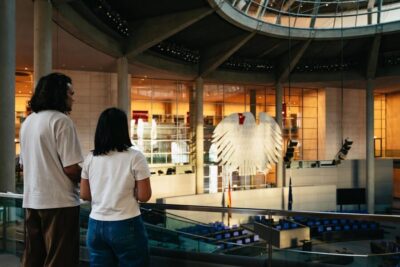
Reichstag, Dome and Government District Guided Tour
Read our review →
Reichstag, Plenary Chamber, Cupola & Government Tour
Read our review →