
Reviewed · STREET ART
Alternative Berlin / Street art tour – Private group
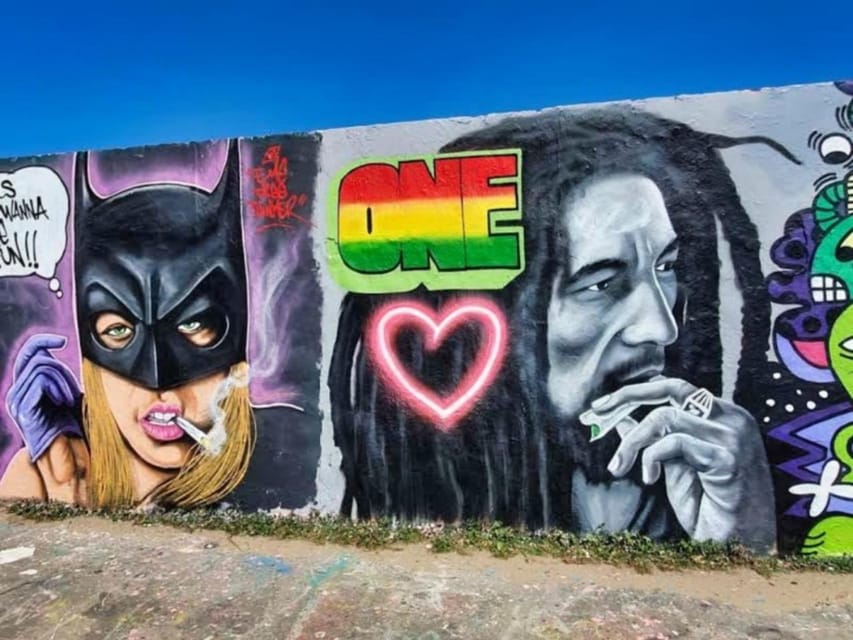
Berlin’s street art is only the starting point here. With Adrian, creator of the Alternative Tour concept in Berlin, you look at murals, graffiti, communal housing, wagon communities, industrial spaces, and the counter-culture that grew after the Wall fell. The art becomes a way to read the city.
I like Adrian’s personal connection to the scene and the way the tour links art with Berlin’s social and political changes. I also like that the experience goes beyond sightseeing, with tips on food, bars, clubs, and local neighborhoods. The main consideration is that you need an AB public transport ticket, and three hours can only offer a focused sample of such a large subject.
- Street art with context: Learn who made important works, what they mean, and what occupied the site before the current piece.
- A personal guide: Adrian brings long experience with Berlin’s alternative scenes, music, graffiti, and nightlife.
- Post-Wall Berlin: See how squats, shared housing, creative projects, and informal communities took root after reunification.
- Local neighborhood time: Stop in multicultural Kiez districts where your group can choose to try food or drink.
- Useful nightlife advice: Get practical suggestions for Berlin’s bars, clubs, galleries, and after-dark culture.
- Private group value: The $176 rate covers up to 20 people, making the per-person cost reasonable for a full group.
Reading Berlin Through Its Street Art
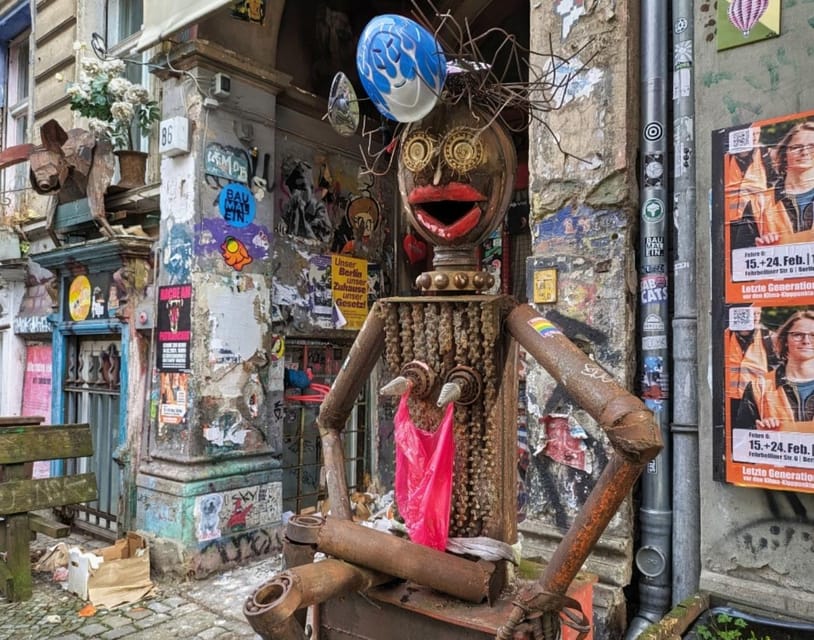
This is not a tour that simply takes you to a wall, names an artist, and moves on. Adrian uses each piece as a clue. You learn about the artist, the social or political message, and the layers of activity that came before the current artwork.
That approach matters in Berlin, where outdoor art can change quickly. A mural may cover an older tag, a construction site may replace a famous piece, and a once-forgotten industrial corner may become a creative meeting point. Adrian explains those changes rather than presenting the city as a fixed open-air gallery.
You can expect to see street art, mural art, graffiti, and other urban projects away from the standard tourist route. The focus is on personal favorites and less obvious corners, so this suits you if you have already seen the major central sights or want something different from museum displays.
The art itself is only half the experience. The useful part is learning how Berlin’s street culture communicates ideas about identity, politics, housing, freedom, and public space. If you enjoy taking photographs, you should find plenty of strong subjects, but the tour gives you more than attractive backgrounds.
Starting Near Warschauerstrasse
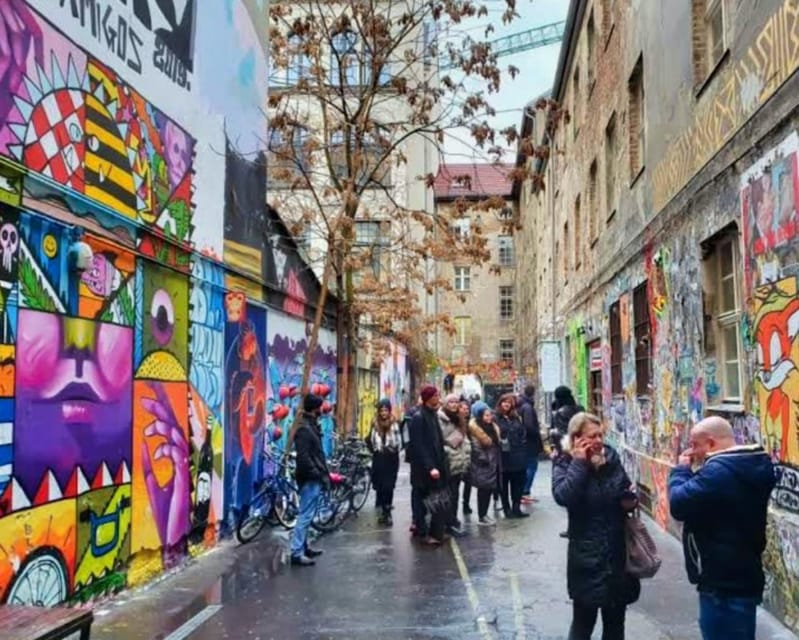
The meeting point is on the corner of Revalerstrasse and Warschauerstrasse, in front of a kebab shop. This places you in an area closely tied to Berlin’s alternative culture and makes a practical starting point for a tour centered on street art, nightlife, and changing urban neighborhoods.
You should arrive ready to walk and use public transport. An AB transport ticket is required, but it is not included in the price. Check the starting time when booking, since the exact departure time depends on availability.
The location also gives you an early taste of the tour’s subject. This is not a formal historic center with grand monuments laid out in sequence. Instead, you begin in a part of Berlin where food, music, nightlife, creative work, and changing property use sit close together.
More Street Art Tours in Berlin
- Berlin: City Street Art Guided Walking Tour
★ 4.8 · 886 reviews - Berlin: 3-Hour Street Art Tour
★ 4.7 · 778 reviews - Berlin Street Art Walking Tour – Off The Grid
★ 5.0 · 270 reviews
The Post-Wall Story Behind Alternative Berlin
The most useful historical frame is what happened after the Berlin Wall fell. Empty buildings and unused spaces created room for people who wanted to live, work, make music, and organize outside conventional systems.
Adrian explains how expats, filmmakers, musicians, startup companies, misfits, and free spirits were drawn to Berlin. The story is not only about artistic freedom. It is also about cheap or informal space, shared projects, and the chance to try new ways of living.
You may visit or see examples of communal apartments, housing projects, squats, and wagon communities. These places help explain why Berlin developed its particular alternative identity. They also show that the city’s creative image came from real people solving practical problems, not from a tourism campaign.
The picture is not presented as perfect. Communities sometimes live side by side in harmony, and sometimes they do not. That honesty gives the subject more weight. You get a look at the tensions surrounding shared space, neighborhood change, and the challenge of keeping alternative projects alive.
Creative Spaces, Green Projects, and Urban Experiments
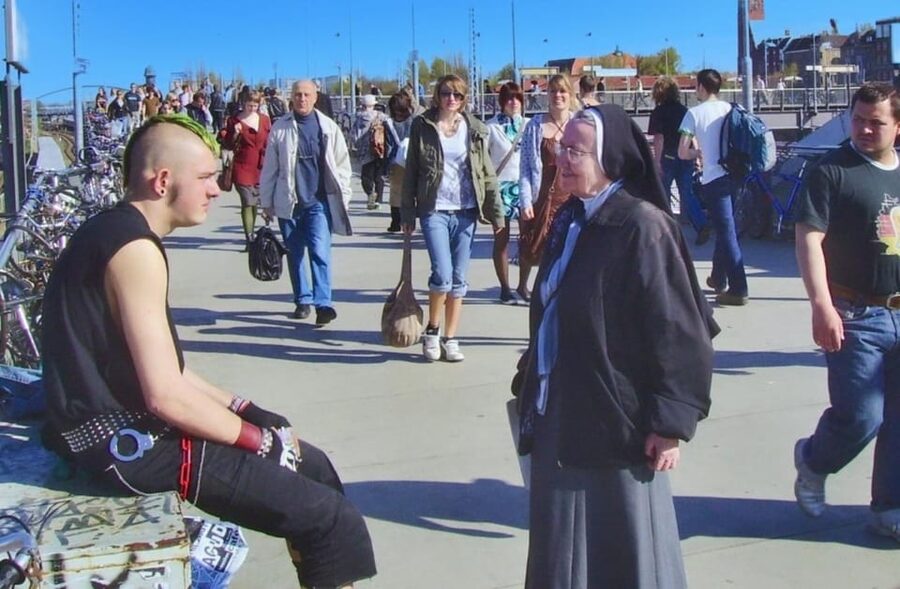
The route includes transformed industrial spaces, alternative galleries, self-sustainability projects, and green initiatives. The exact stops can vary, so you should think of this as a guided reading of Berlin’s creative districts rather than a guaranteed checklist of named attractions.
For you, the value lies in seeing how ordinary or neglected places can be put to new use. A former industrial setting may become a gallery, workshop, gathering place, or community project. A green initiative may show how people are trying to produce, share, or manage resources in a different way.
This part of the tour is especially useful if you are interested in architecture, design, urban planning, social projects, or independent art. It also gives you a break from looking only at painted walls. Berlin’s alternative culture is expressed through buildings, gardens, housing, events, and local businesses as well as graffiti.
Keep your expectations flexible. Since the tour covers a living culture rather than a museum collection, some places may look rough, temporary, or less polished than you expect. That is part of the point, but it will not suit anyone seeking a tidy set of finished attractions.
Music, Clubs, and the City After Dark
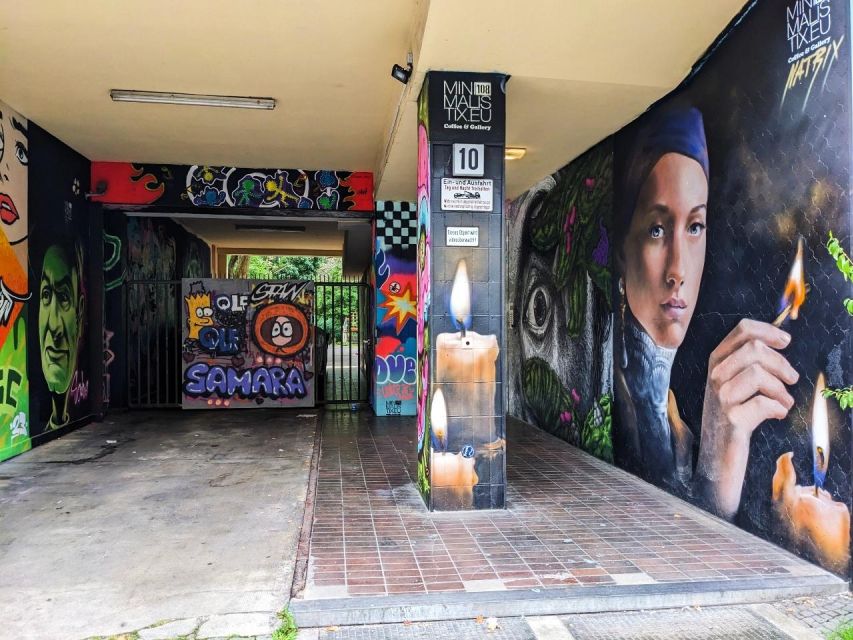
Berlin’s music story reaches far beyond electronic clubs. Adrian discusses punk, hip-hop, jazz, metal, and electronic music, along with earlier forms of nightlife and social rebellion.
The tour also touches on gramophone parties held in the 1920s and 1930s as a response to National Socialism and compulsory youth groups. You hear about jazz, blues, and swing events that were forbidden at the time, then about underground fetish clubs and burlesque culture with roots in the 1920s.
This adds an important layer. Berlin’s nightlife is not only a modern clubbing product. Music and dance have long offered people a way to form communities, resist pressure, and express identities that official society tried to control.
I would book this tour if you want practical after-dark advice, but I would not treat it as a dedicated club crawl. The emphasis is on discussion, history, neighborhoods, and personal recommendations. Adrian can point you toward nightlife options and share stories, yet the tour itself lasts three hours and is primarily a walking and public transport experience.
Same city, a completely different kind of day:
- Berlin: Reichstag, Dome and Government District Guided Tour
★ 4.7 · 18,288 reviews - Berlin: 1-Hour City Tour by Boat with Guaranteed Seating
★ 4.3 · 16,993 reviews - Berlin: Boat Tour Along the River Spree
★ 4.4 · 11,252 reviews - Discover Berlin Half-Day Walking Tour
★ 5.0 · 9,624 reviews
Eating and Drinking in the Kiez
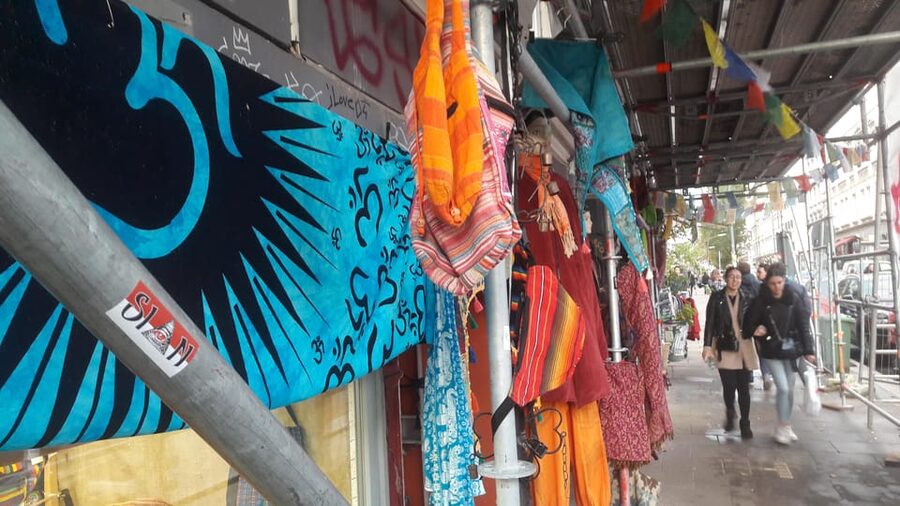
Several local and multicultural neighborhoods, known in Berlin as Kiez, form part of the experience. If your group wishes, you can stop for local food or drink while Adrian offers suggestions about the area.
This is a small but useful feature. Food gives you a reason to pause and helps connect the art and housing stories to daily life. You are not only looking at an alternative district from the outside. You can spend time in a neighborhood where different communities, businesses, and cultural habits meet.
One group used a restaurant recommendation from Adrian and enjoyed lunch in the district. That detail is worth noting because a good local suggestion can save you from choosing a random place after the tour. Still, food and drink are not included, so budget separately if your group decides to stop.
The word multicultural can sound vague, but here it refers to neighborhoods where different communities live and work alongside one another. Adrian’s role is to explain the character of these areas rather than reduce them to a photo stop.
Why Adrian Makes the Difference
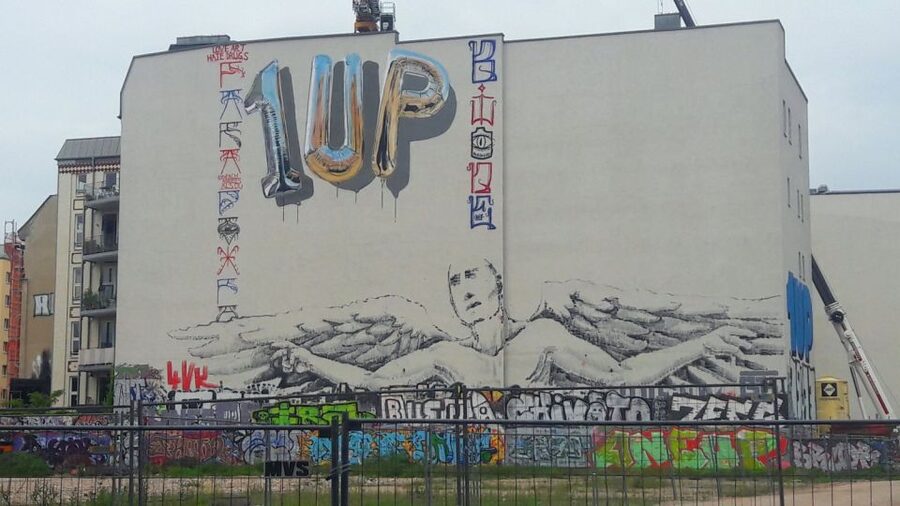
The strongest reason to book this experience is the guide. Adrian is not simply reciting a prepared list of murals. He has been connected with Berlin’s alternative scene for many years and created the Alternative Tour concept in 2006.
That background helps him connect separate subjects. A piece of graffiti can lead to a story about housing. A club can lead to a discussion of music and censorship. An industrial site can lead to the city’s post-Wall population changes.
His storytelling has also worked well for different kinds of groups. A dance school group with students aged 18 to 23 and two teachers found the tour a good fit, especially for its underground information and street art history. A separate group of people who had lived in Berlin for more than five years still found new corners and new stories.
That makes this a strong choice for both first-time visitors and residents. You do not need specialist art knowledge. You only need curiosity and a willingness to look beyond polished landmarks.
Group Size and Value at $176
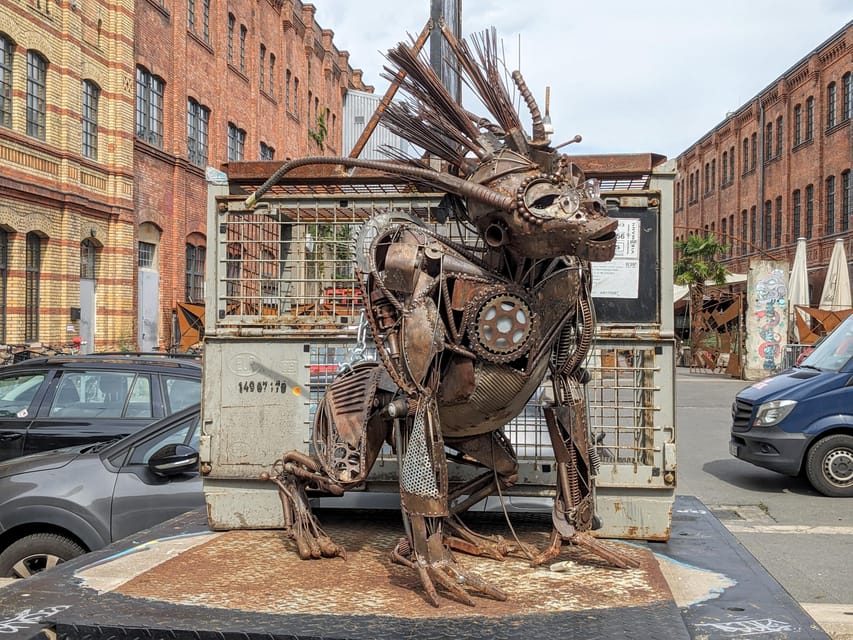
The listed price is $176 for a private group of up to 20 people. For a solo visitor or a couple, that is a high price compared with joining a standard shared walking tour. For a larger group, the calculation changes considerably.
At the full 20-person limit, the cost works out to about $8.80 per person. At 10 people, it is $17.60 each. A private guide, three hours of time, and a subject tailored to your group can make that good value for families, school groups, creative teams, and friends traveling together.
The private format also gives you more room to ask questions. A group interested in graffiti can spend more time on the art. A dance group can ask about music and club culture. A group of long-term Berlin residents can focus on changes they have noticed but not fully understood.
The tradeoff is that the price does not include public transport, food, or drinks. You also need to share the guide’s attention with your own group, so a large party should agree beforehand on the subjects it most wants to explore.
Practical Details for a Three-Hour Walk
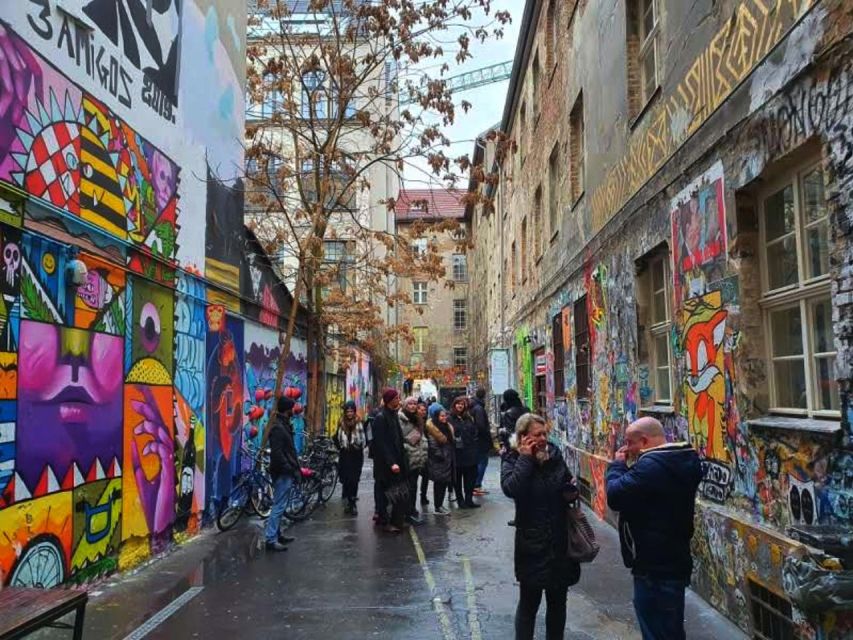
The tour lasts three hours and is offered in English with a live guide. It is wheelchair accessible, though the route includes streets, alleys, industrial areas, and public transport, so your group should still confirm any specific mobility needs before booking.
Wear comfortable shoes and dress for changing weather. That is practical advice for any outdoor Berlin tour, and especially useful here because much of the experience concerns streets and public spaces rather than indoor museums.
Bring the correct AB transport ticket. This is an easy cost to overlook because the ticket is required but not included. Your starting point is near Warschauerstrasse and Revalerstrasse, and the tour may move between districts.
The private format is helpful if you want a slower pace or have a clear interest. It also means you should not expect a rigid sightseeing route with every stop guaranteed. Alternative projects, artwork, and public spaces change, so Adrian may shape the experience around what is available and relevant on the day.
Free cancellation is available up to 24 hours before the tour for a full refund. You can also reserve now and pay later, which is useful if your Berlin schedule is still shifting.
Who Will Enjoy This Most
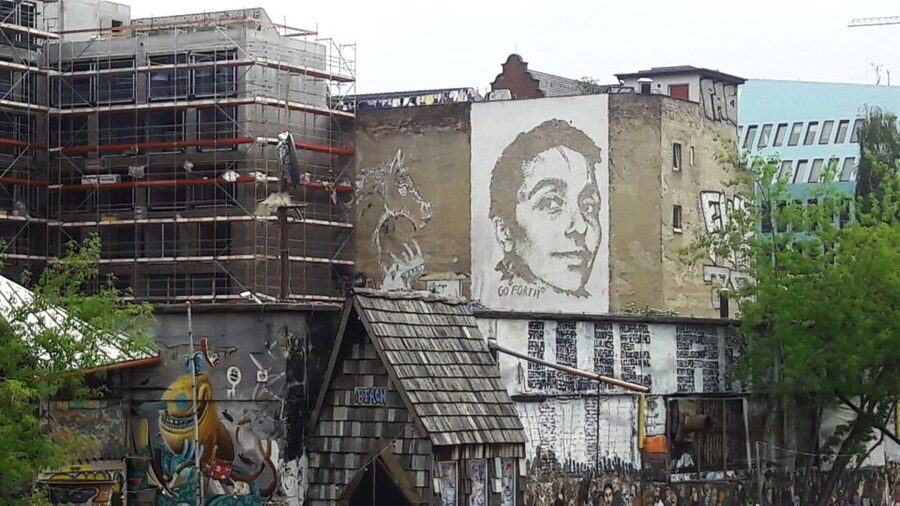
I would recommend this for people who want to understand Berlin through its residents, art, music, and social experiments. It is a particularly good fit for:
- Street art fans who want artist names, meanings, and background rather than quick photo stops.
- First-time visitors looking for a side of Berlin beyond the main historic sights.
- Repeat visitors and residents who think they already know the city but want lesser-known corners and fresh context.
- Students and creative groups interested in dance, music, design, film, housing, or public art.
- Private groups that can share the $176 cost and shape the conversation around their own interests.
I would hesitate if your main goal is Berlin’s royal buildings, wartime memorials, or major museums. Those subjects are not the focus here. I would also think twice if you dislike walking, public transport, unfinished spaces, or discussions about nightlife and alternative housing.
Should You Book This Berlin Tour?
Book it if you want a personal explanation of how Berlin’s alternative culture works, not just a collection of impressive walls. Adrian’s long connection to the scene, strong storytelling, and local tips are the central attractions.
The best value comes when you fill several places in the private group. For a large party, the $176 rate is fair for three hours with a dedicated English-speaking guide. For one or two people, the cost is harder to justify unless street art and underground Berlin are a major priority.
Bring an AB ticket, allow room for neighborhood stops, and keep your expectations open. If that sounds appealing, this tour should give you a more thoughtful view of Berlin’s art, music, housing, and everyday counter-culture.
FAQ
How long does the Alternative Berlin tour last?
The tour lasts three hours.
Who leads the tour?
Adrian leads the experience. He created the Alternative Tour concept in Berlin in 2006 and has long been connected with the city’s alternative scenes.
What language is the tour offered in?
The tour is conducted in English.
How many people can join the private group?
The price covers a private group of up to 20 people.
What does the tour cost?
The listed price is $176 per group of up to 20 people.
Is public transport included?
No. You need an AB transport ticket, and it is not included in the tour price.
Where does the tour meet?
The meeting point is on the corner of Revalerstrasse and Warschauerstrasse, in front of a kebab shop.
Is the experience wheelchair accessible?
Yes, the tour is listed as wheelchair accessible.
What can I see on the tour?
You can explore street art, murals, graffiti, creative urban projects, alternative galleries, industrial spaces, green initiatives, housing projects, communal living spaces, multicultural neighborhoods, and music and nightlife culture.
Just added in Berlin
- Berlin & The Third Reich Private Guided Tour★ 5.0 · 3 reviews
- Third Reich Quest Experience in Berlin★ 4.5 · 7 reviews
- Private Analogue Photography Experience in Berlin★ 5.0 · 3 reviews
- Berlin Urbex Adventure and History Tour★ 5.0 · 9 reviews
- The Beauty of Berlin by Bike: Private Tour★ 5.0 · 59 reviews
- Berlin: Guided Bike tour of the Berlin Wall and Third Reich★ 5.0 · 160 reviews
- Beyond Currywurst: Berlin’s Hidden Street Food & Culture Tour★ 5.0 · 100 reviews
- Berlin Third Reich & Cold War Walking Tour With A Guide★ 5.0 · 7 reviews
Street Art, compared.

Neustadt District Street Art Guided Walking Tour
Read our review →

East Meets West: Berlin Food Culture & Street Art
Read our review →
Browse the lists this tour appears in