
Reviewed · WALKING TOURS
Augsburg: Illuminated Guided Evening Walking Tour
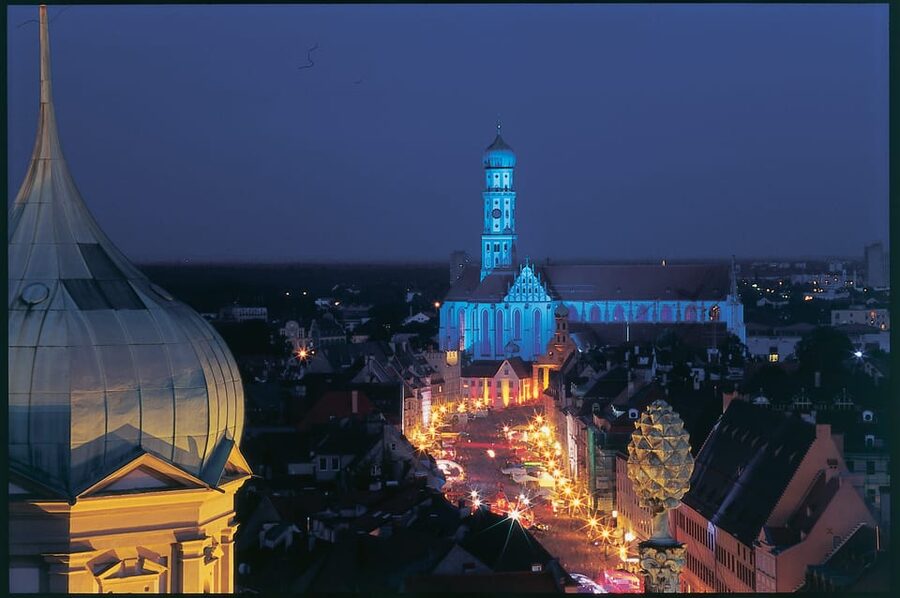
Augsburg looks different after sunset. The illuminated town hall, fountains, and churches give the old center a softer, more dramatic feel, while your guide adds the stories and historical links that are easy to miss on a daytime stroll. The route takes in the Cathedral, St. Ulrich and Afra Basilica, and the grand buildings along Maximilianstraße.
I like this tour for two clear reasons: it packs Augsburg’s key sights into a manageable 90-minute walk, and it puts the city’s architectural mix right in front of you, from Renaissance Fugger houses to Baroque and Rococo palaces. The main consideration is language: the live tour is in German, so you will get the most from it if you understand German.
Key points at a glance
- Three fountains after dark: See Augsburg’s major fountains lit up in the evening, when their details take on a different character.
- A compact central route: The walk begins at the main door of the town hall and covers several major sights without requiring a full day.
- The Imperial Mile: Follow Maximilianstraße, Augsburg’s grandest promenade, lined with colored houses, Fugger buildings, and former palaces.
- Several architectural periods: Look for Renaissance, Baroque, and Rococo details on one city-center walk.
- A German-speaking guide: The tour is conducted in German and includes historical facts and local stories.
- A flexible outing: The walk lasts 1.5 hours, is wheelchair accessible, and allows free cancellation up to 24 hours before departure.
Why Augsburg is especially atmospheric at night
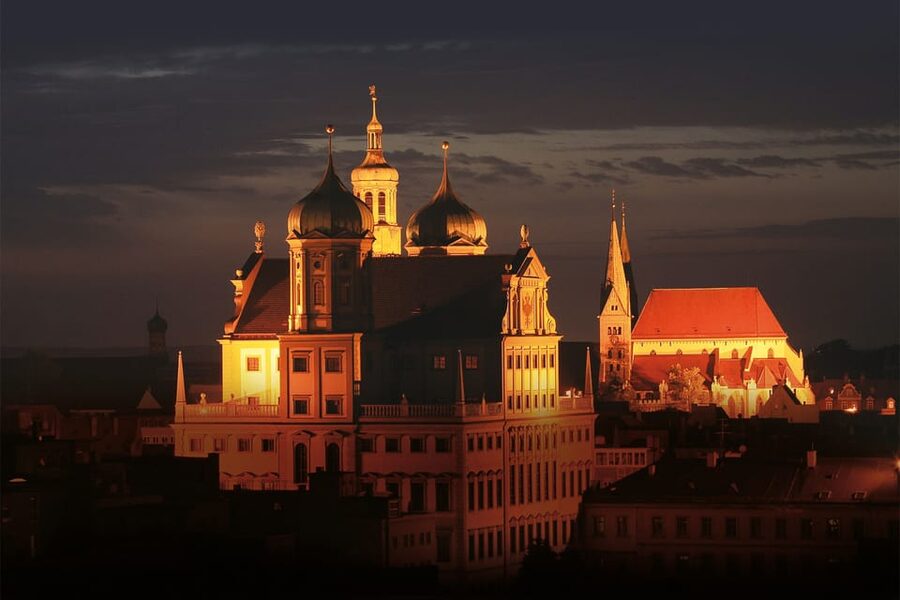
Augsburg is one of Bavaria’s oldest cities, but you do not need a full history lecture to appreciate this outing. At night, the focus shifts from traffic and daily errands to facades, towers, fountains, and pools of light. That makes the city center easier to read as a connected historic district rather than a collection of separate sights.
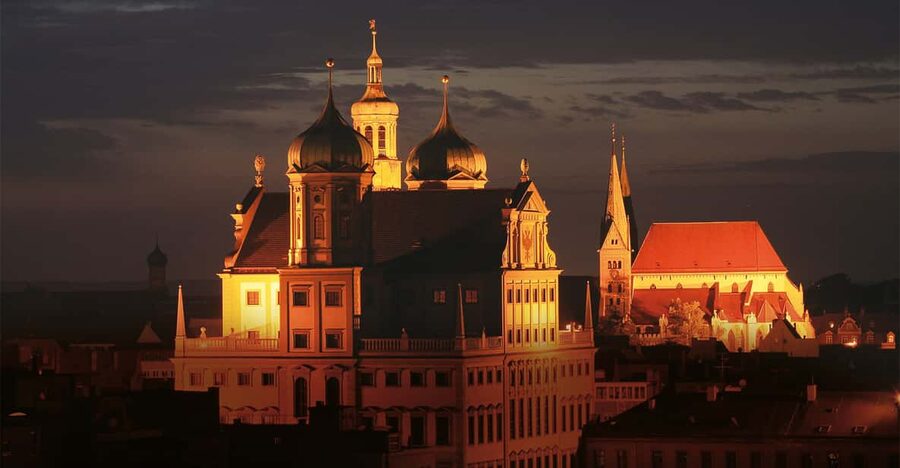
I like the timing because many of the places on the route are impressive in daylight but more theatrical once illuminated. The town hall becomes a natural starting point, the fountains catch the eye as you walk, and the churches gain a stronger sense of scale against the dark sky.
This is not a food tour, museum visit, or inside tour of every monument. It is a guided orientation walk with an evening mood. You should book it for the combination of scenery and explanation, not for a long list of interior visits.
The tour also gives you a useful first look at Augsburg. After 90 minutes, you will have seen the central landmarks and the principal promenade, which can help you decide where to return during daylight hours.
More Walking Tours in Bavaria
- Augsburg: Walking Tour with Fuggerei
★ 4.6 · 2,245 reviews - Regensburg: Guided City Walking Tour of the Old Town
★ 4.7 · 1,395 reviews - Passau: City Highlights Guided Walking Tour
★ 4.8 · 351 reviews
Starting at Augsburg Town Hall
Meet at the main door of Augsburg’s town hall. That is a practical meeting point because the building is one of the city’s best-known landmarks and sits at the heart of the central route.
The illuminated town hall is one of the early visual rewards. Its Renaissance design provides an immediate introduction to the city’s architectural identity, and a guide can help you connect the building with Augsburg’s period of commercial and political importance.
I would arrive with enough time to find the main entrance without rushing. The supplied details do not give a separate check-in procedure, so keeping the meeting point simple is wise: look for the principal town hall door and be ready for an outdoor walking departure.
The town hall also gives you a sense of scale. From here, the tour moves through a compact center rather than sending you across distant parts of Augsburg. That matters if you have only an evening in town, or if you prefer sightseeing that does not require local transport.
The three fountains, seen under city lights
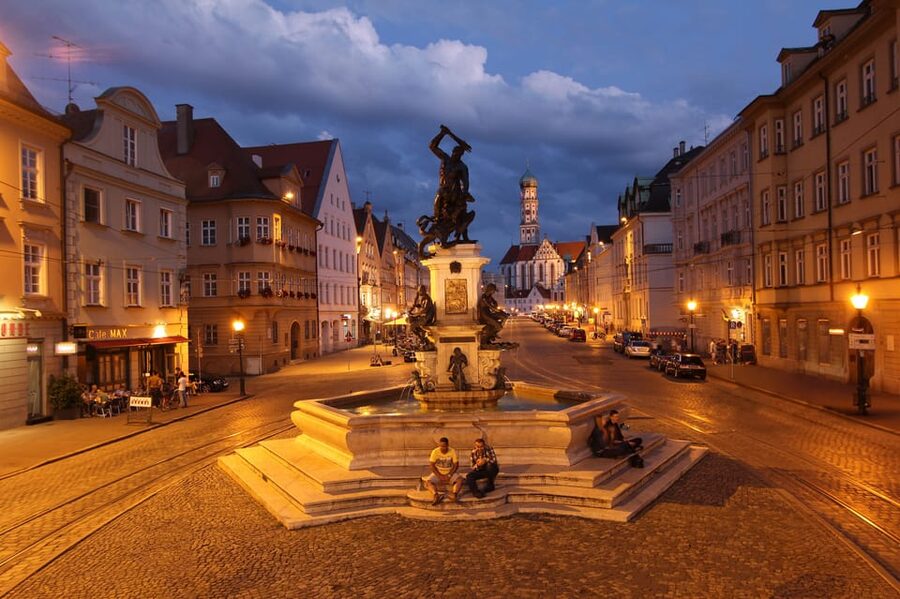
The three magnificent fountains are among the route’s most distinctive stops. Augsburg is known for its historic water system, and these fountains give the tour a visual way to explain that part of the city’s past.
At night, the lighting changes how you inspect them. Sculptural details can appear sharper, and the water becomes part of the scene rather than just a daytime ornament. Your guide provides the context, so you are not simply walking past attractive public art without knowing why it matters.
Expect these stops to be viewed from outside. The information provided describes the fountains as landmarks on a walking route, not as places with a scheduled indoor visit or a separate performance.
I would keep your phone or camera ready, but do not let photographs turn the walk into a stop-and-start procession. The value here comes from seeing the fountains as part of Augsburg’s wider historic center, alongside the town hall, churches, and grand residential buildings.
The Cathedral and St. Ulrich and Afra Basilica
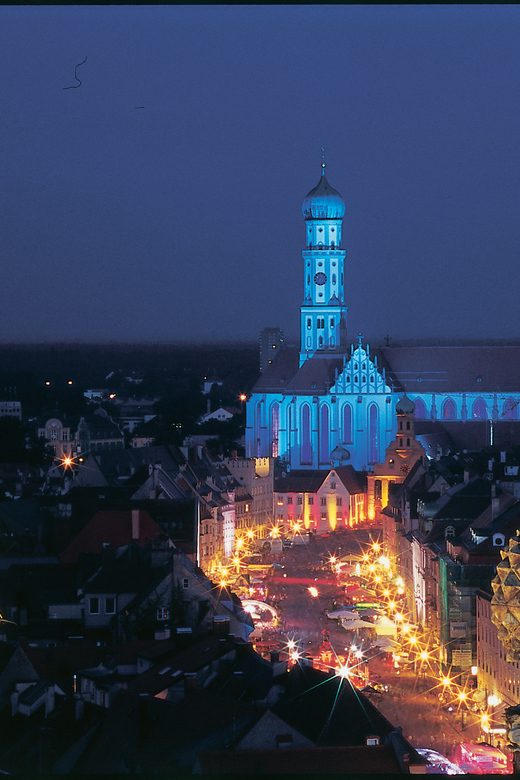
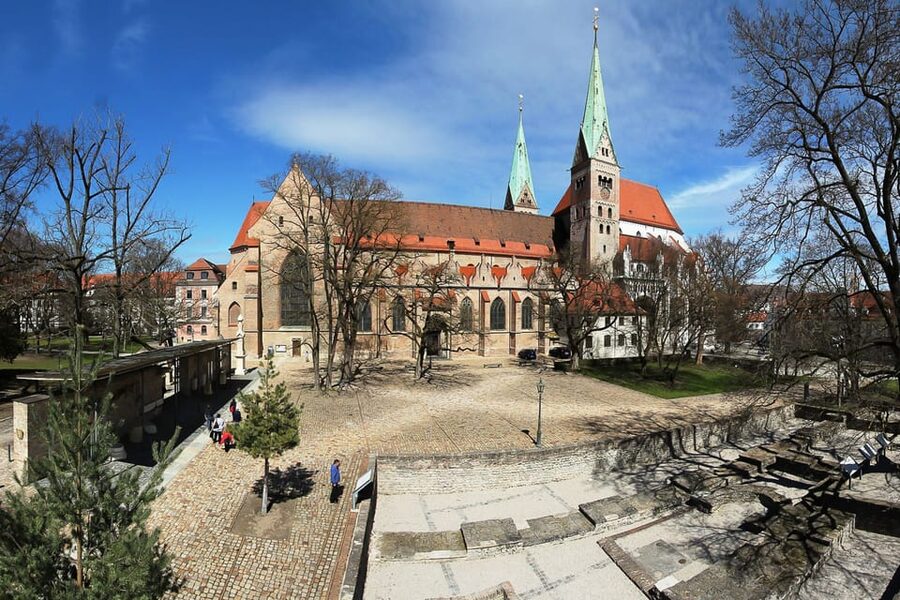
The Cathedral and the Basilica of St. Ulrich and Afra add a strong religious dimension to the route. Their illuminated exteriors offer a change of scale and mood after the civic architecture around the town hall and fountains.
The Cathedral is one of the city’s essential landmarks. Seeing it at night lets you focus on its outline, towers, and illuminated stonework. The tour information does not promise an interior visit, so plan on appreciating the building from the route unless your guide explains otherwise.
The Basilica of St. Ulrich and Afra gives you another major church, but with its own presence and architectural details. Together, the two churches show that Augsburg’s center is not defined only by merchant wealth and civic buildings. Religious institutions also shaped its streets and skyline.
I find this pairing useful because it prevents the walk from becoming a parade of similar facades. You move between fountains, public buildings, churches, and palaces, with the guide tying them together through stories about Augsburg.
If you have limited mobility, the tour is listed as wheelchair accessible. One guide also adjusted the route to suit a participant who was not walking easily. That does not remove every possible street or paving concern, but it suggests that the guide can respond to the needs of the group when practical.
Same city, a completely different kind of day:
- Regensburg: City Tour with the Bimmelbahn Train
★ 4.3 · 1,010 reviews - Passau: Crystal Ship Sightseeing Cruise
★ 4.6 · 705 reviews - Regensburg: Klinger’s Sightseeing Boat Tour to Walhalla
★ 4.6 · 507 reviews - Passau: Floating City Highlights Tour on the Danube and Inn
★ 4.5 · 452 reviews
Walking the Imperial Mile on Maximilianstraße
Maximilianstraße is the visual centerpiece of the walk. Known as Augsburg’s Imperial Mile, it is the city’s grand promenade, lined with colored houses, Fugger buildings, and former palaces.
This is where you can best compare the architectural periods named in the tour. Renaissance forms appear beside later Baroque and Rococo work, creating a street that rewards slow looking. Your guide can point out the differences instead of leaving you to guess which details belong to which period.
The colored facades are especially useful at night. Illumination picks out individual buildings and gives the broad street a more formal appearance. You will want to look above street level, where decorative details can be easy to overlook during a normal walk.
The Fugger houses add another layer. The Fugger family played an important role in Augsburg’s history, and their buildings help explain the wealth and influence that shaped this part of town. The tour does not promise access to every palace or house, but seeing them from the street still makes the promenade more meaningful.
I would think of Maximilianstraße as a sequence of views rather than one single stop. You may pause for a fountain, turn toward a church, then look back along a row of colored buildings. That changing perspective is one reason the route works well after dark.
Renaissance, Baroque, and Rococo in one short walk
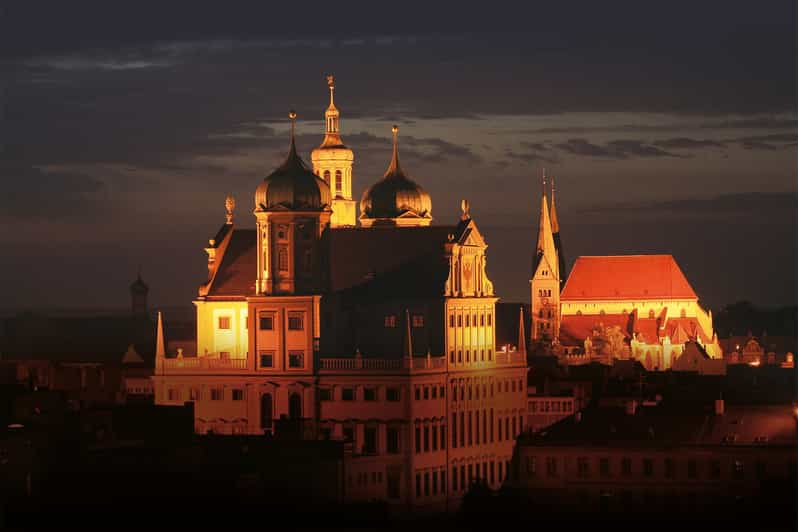
Augsburg’s architectural variety is one of the tour’s strongest features. In a fairly short route, you can see Renaissance buildings, Baroque palaces, and Rococo details. That gives you a quick lesson in changing taste, wealth, and building style.
The guide’s role matters here. A facade can be beautiful without being easy to understand. A short explanation about its period, purpose, or owner can turn decorative stonework into a useful clue about the city’s development.
I like this kind of guided viewing because it helps you make comparisons. Renaissance buildings may feel more restrained and ordered, while Baroque and Rococo designs often bring more movement and ornament. You do not need to memorize technical terms, but you will begin to notice why neighboring buildings feel different.
The evening setting also keeps the architecture from feeling like a dry classroom exercise. You are walking through active streets and public spaces, with the lit buildings providing the visual structure. The guide supplies the facts, and the city supplies the atmosphere.
The limitation is that 90 minutes can only introduce the subject. If architectural detail is your main interest, you may want a separate daytime walk or museum visit afterward. This tour is best treated as a lively overview, not a specialist study.
What the guide adds to the walk
The live guide conducts the tour in German and shares facts and stories as you move. German speakers can expect the fullest experience, especially during explanations about Augsburg’s landmarks and past.
A good evening guide needs to do more than recite dates. The strongest moments on this route should come from linking the town hall, fountains, churches, and Maximilianstraße into one story. The available information does not provide the guides’ names, so you cannot choose a particular guide in advance.
The group setup may vary. One outing was divided into two groups so everyone could hear more easily. That can be helpful on a central-city walk, where street activity or a local festival may create background noise.
A street festival once made the center especially busy, yet the guide still managed to provide useful information and impressions. That is worth keeping in mind. Evening conditions can change, but the route is designed around public landmarks rather than a fragile timed entry, so some city activity need not ruin the experience.
The mood is also described as relaxed and suitable for a mixed group. That matters if you are traveling with people who want facts but do not enjoy a stiff lecture. At the same time, you should choose another option if you need English or another language, since German is the only language specified.
Who will get the most from this tour
I would recommend the walk to first-time visitors who want a quick introduction to Augsburg without spending an entire day on guided sightseeing. It is also useful if you arrive in the city in the late afternoon and want to make the evening count.
The tour suits:
- German-speaking visitors who want local context rather than a self-guided route
- Architecture fans interested in Renaissance, Baroque, and Rococo buildings
- Couples looking for an atmospheric evening walk
- Families and mixed-age groups who prefer a short outing
- Visitors who want to see the center before returning to explore individual sights later
- People who use wheelchairs, since the tour is listed as wheelchair accessible
I would be more cautious if you want extensive interior access, a food element, or a tour in English. None of those are included in the stated program.
Comfortable shoes are the one item specifically recommended. That advice is simple but sensible: even a compact historic-center route involves standing and walking for 1.5 hours. Bring a layer suitable for the evening as well, though the tour details do not specify seasonal clothing requirements.
Is the $20 price good value?
The advertised price is about $20 per person. The detailed price information gives a base cost of €14 plus a €3 administration fee, so the final amount may appear differently depending on the booking currency and platform. Check the total at checkout before paying.
For that price, I see solid value if you want a guide. You are paying for a 90-minute walking route, a live German-speaking host, and a concentrated look at several of Augsburg’s most important public landmarks. You also avoid spending time planning a route between the town hall, fountains, churches, and Maximilianstraße.
The value is less clear if you already know Augsburg well or can comfortably research the buildings yourself. The tour does not list an included meal, museum admission, or guaranteed access inside the landmarks. Its price is for interpretation and atmosphere, not extras.
Free cancellation up to 24 hours in advance adds useful flexibility. You can also reserve now and pay later, which helps if your wider itinerary is still changing. Those policies do not make the tour better on the street, but they reduce the risk of fitting it into a busy trip.
How to judge the 90-minute pace
Ninety minutes is long enough to cover the main route while short enough to fit before dinner or another evening plan. I like that balance for Augsburg because you get a clear introduction without committing half a day.
Expect a steady walk with stops for explanation and viewing. The exact order and pace can change, especially if a festival or other event affects the center. A guide has already shown the ability to adjust the route for someone who was not walking easily, which is a useful sign for groups with different abilities.
Do not expect every stop to receive the same amount of time. The town hall, fountains, churches, and Maximilianstraße all compete for attention, and the guide must keep the group moving. If you want long photographic pauses, you may need to return to favorite spots afterward.
The route’s compact nature is a strength. You can finish with a mental map of central Augsburg and then continue independently. The tour works particularly well on a first evening because it tells you where the most impressive streets and buildings are.
Should you book the illuminated Augsburg walk?
I would book this tour if you speak German and want a short, well-focused introduction to Augsburg at its most atmospheric. The combination of three fountains, the illuminated town hall, two major churches, and the Imperial Mile gives you plenty to see for the price.
I would also choose it if you value a guide who can adjust to the group. The reported split into smaller groups helped people hear clearly, and the route was adapted for a participant with limited walking ability. Those are practical strengths, not just decorative claims.
Skip it if you need an English-language tour, expect extensive interior visits, or prefer to explore at your own pace. For everyone else, this is a sensible evening choice: modest in length, focused on the city center, and strong on atmosphere and architectural context.
FAQ
Where does the Augsburg evening walking tour begin?
The meeting point is at the main door of Augsburg’s town hall.
How long does the tour last?
The walking tour lasts 1.5 hours.
What language is the tour conducted in?
The live tour guide conducts the experience in German.
Is the tour wheelchair accessible?
Yes. The tour is listed as wheelchair accessible, and the route can be adjusted to suit the needs of a participant who is not walking easily.
What landmarks are included?
The route includes the illuminated town hall, Augsburg Cathedral, the Basilica of St. Ulrich and Afra, three magnificent fountains, and buildings along Maximilianstraße, including Fugger houses and palaces from the Renaissance, Baroque, and Rococo periods.
What is included in the price?
The price includes the walking tour, a tour guide, and a €3 administration fee. The detailed price is listed as €14 plus the €3 fee, while the advertised amount is about $20 per person.
Just added in Bavaria
- Rafting classic Iller – Level 2 white water tour★ 4.5 · 29 reviews
- Canyoning Starzlachklamm★ 5.0 · 51 reviews
- Family rafting Iller – white water rafting level 1★ 5.0 · 12 reviews
- Bavarian Schnitzel Cooking Class in Oberaudorf Farmhouse★ 5.0 · 21 reviews
- Augsburg – Private Historic Tour★ 5.0 · 3 reviews
- Classic city tour in the World Heritage City of Augsburg★ 4.0 · 41 reviews
- Kloster Andechs: Brauerei-Tour mit Virtual Reality entdecken★ 4.7 · 15 reviews
- Regensburg citytour rickshaw-pedicab★ 4.3 · 20 reviews
Walking Tours, compared.




Berlin’s Best: 2 Hour Walking Tour Third Reich and the Cold War
Read our review →


Third Reich Berlin: Hitler and WWII Walking Tour
Read our review →Browse the lists this tour appears in