
Reviewed · WALKING TOURS
Berlin: The Time of National Socialism Walking Tour
Berlin’s Nazi past is not tucked away in one museum. It sits along major streets, beneath office buildings, and beside some of the city’s most familiar sights. This two-hour walk connects the Brandenburg Gate, Reichstag, and Hitler’s former bunker site with the institutions that carried out Nazi rule.
I like the route’s clear geographic story: you move from propaganda and political power to wartime memory and postwar remembrance. I also like the small group limit of 10, which gives a guide such as Carlo or Carlos room to answer questions and adjust the pace.
The main consideration is the subject itself. This is a serious tour with a lot of walking and little shelter, so cold, rain, or icy streets can make the experience harder. The tour runs in all weather and is conducted in German.
Key points to know before you book
- You follow the route of power: The walk links the Brandenburg Gate, Reichstag, former government district, and Hitler’s bunker area.
- World War II traces are still visible: Soviet T-34 tanks and artillery remain at the Soviet War Memorial in Tiergarten.
- Resistance receives real attention: The Johann Georg Elser Memorial helps broaden the story beyond Nazi leaders and military buildings.
- The final stop adds hard evidence: The Topography of Terror marks the former headquarters of the SS, Gestapo, and Reich Security Main Office.
- It is a compact small-group walk: The two-hour tour is limited to 10 people and ends at the Topography of Terror.
- A German-speaking guide leads the tour: Carlo and Carlos are named guides associated with especially well-regarded, lively tours.
Starting at the Brandenburg Gate and Pariser Platz
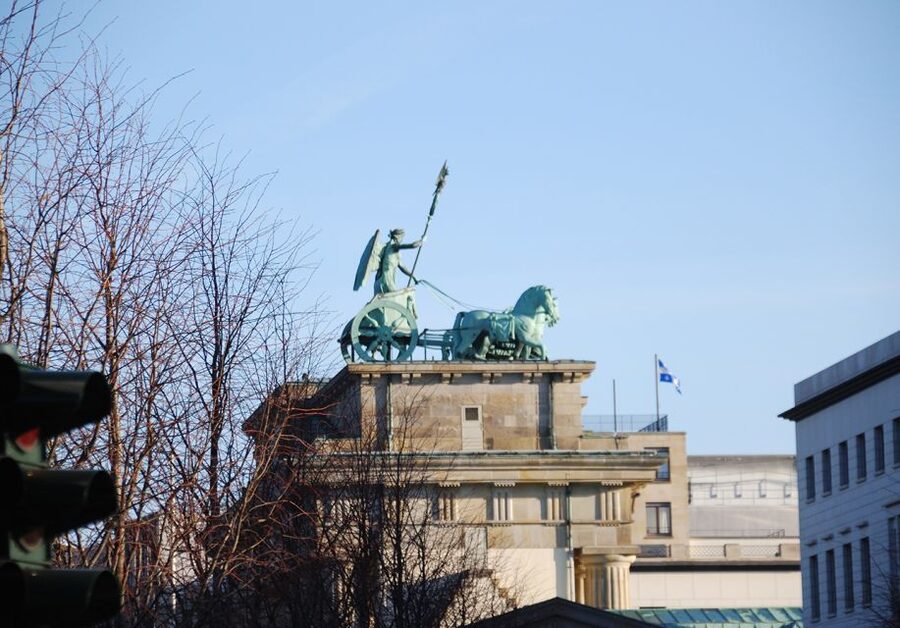
Meet your guide at the exit of S+U Brandenburger Tor station, exit B, in the direction of Pariser Platz and Straße des 17. Juni. Look for the Get Your Guide, You in Berlin flag.
This is a smart starting point. The Brandenburg Gate is Berlin’s most famous landmark, but this tour asks you to see it through the political use made of it during the Nazi period. It served as a setting for propaganda marches, turning a symbol of Berlin into a stage for public power and spectacle.
Your guide begins around Pariser Platz, where the grand setting can make the past feel polished and distant. The value of a walking tour here is that you can connect the buildings and open spaces rather than study them as isolated exhibits.
You should arrive ready to walk soon after meeting the guide. The route has several outdoor stops, and the tour does not promise time to enter every building. Its purpose is to explain what happened at these places and point out what remains.
More Walking Tours in Berlin
- Discover Berlin Half-Day Walking Tour
★ 5.0 · 9,624 reviews - Berlin: Third Reich and Cold War 2 Hour Walking Tour
★ 4.9 · 6,830 reviews - Berlin: Discover Berlin Walking Tour
★ 4.9 · 5,998 reviews
The Reichstag and the Nazi rise to power
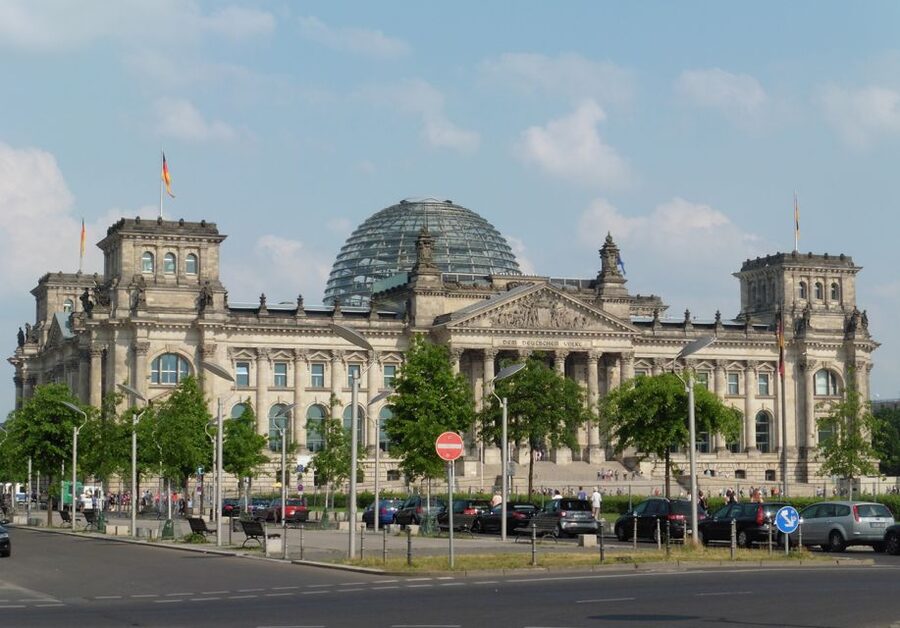
From the Brandenburg Gate, the route continues to the Reichstag, now the home of Germany’s Parliament. The building is important not only because of its role today, but also because the Nazi Party, the NSDAP, and Adolf Hitler came to power in 1933.
This stop gives the tour an important political frame. Nazi rule did not begin only with wartime battlefields or secret police offices. It developed through the breakdown and capture of political institutions. At the Reichstag, your guide can place the events of 1933 into the physical center of modern German government.
I find this especially useful if your knowledge of the period is stronger on World War II than on the years before it. The tour shows how the political road to dictatorship fits into Berlin’s civic center.
You will mainly see the building from outside during this walk. If you want to visit the Reichstag interior or its dome, that is a separate experience and is not part of this two-hour route.
Soviet tanks in the Tiergarten
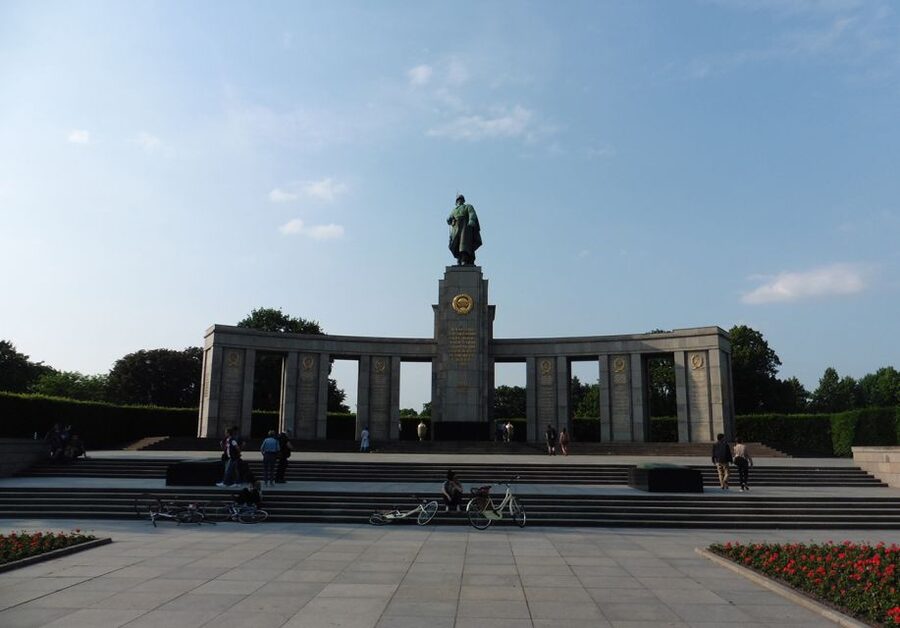
The walk then moves into Tiergarten, Berlin’s central park, for the Soviet War Memorial. Here you see Soviet T-34 tanks and artillery from World War II.
This is one of the tour’s most direct physical reminders of the war. A memorial can explain loss and victory, but military hardware makes the scale of the fighting easier to picture. The tanks also create a sharp contrast with the formal architecture around the Brandenburg Gate and Reichstag.
The stop works well in a walking itinerary because it changes the mood and setting. You leave the ceremonial heart of the city and enter a park where the memorial’s military presence carries the story.
The practical drawback is weather. Tiergarten is an outdoor stop, and the tour runs in rain, cold, and other conditions. Wear shoes suited to walking and clothing that can handle the forecast. One January group faced cold temperatures and icy streets, and guide Carlo reportedly took extra care with the route. That is useful reassurance, but it does not make winter footwear optional.
The Holocaust Memorial and Berlin’s memorial culture
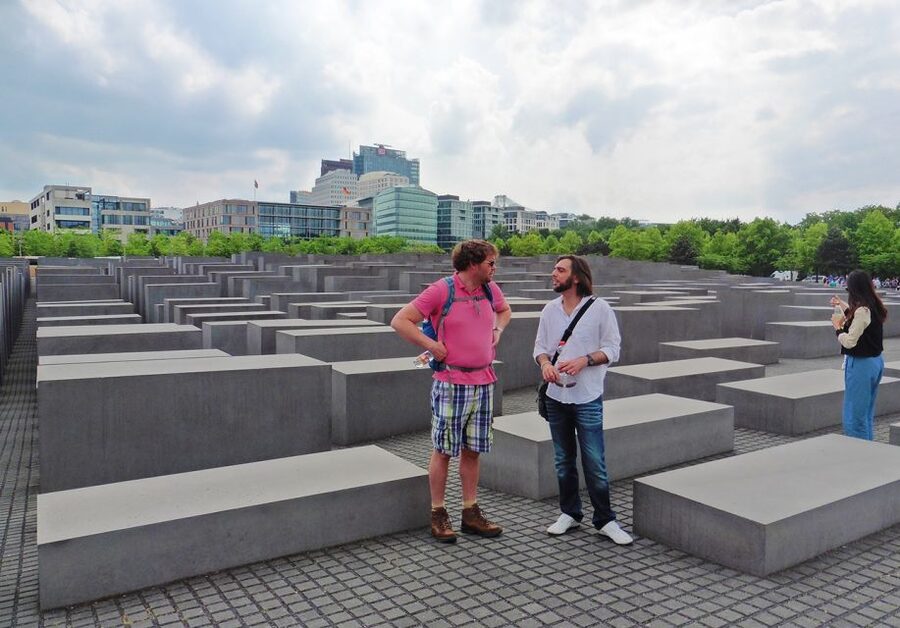
The next major stop is the Memorial to the Murdered Jews of Europe, usually called the Holocaust Memorial. The site’s rows of concrete blocks create a difficult, unsettling space in the middle of central Berlin.
This is not a place for a quick photo and a quick exit. Your guide helps connect the memorial to the Nazi persecution and murder of Europe’s Jews, while also placing it within the city’s wider system of remembrance.
The route’s treatment of the memorial is valuable because it follows political power with the human cost of that power. You are not simply ticking off famous sights. The sequence asks you to keep the victims in view while moving through the places where decisions were made.
Give yourself a little quiet attention here. A two-hour tour has to keep moving, so you may want to return on your own if you would like more time at the memorial or its information center.
Same city, a completely different kind of day:
- Berlin: Reichstag, Dome and Government District Guided Tour
★ 4.7 · 18,288 reviews - Berlin: 1-Hour City Tour by Boat with Guaranteed Seating
★ 4.3 · 16,993 reviews - Berlin: Boat Tour Along the River Spree
★ 4.4 · 11,252 reviews - Berlin: Hop-on Hop-off Bus Tour with Live Commentary
★ 4.3 · 8,579 reviews
Hitler’s bunker site and the former government district
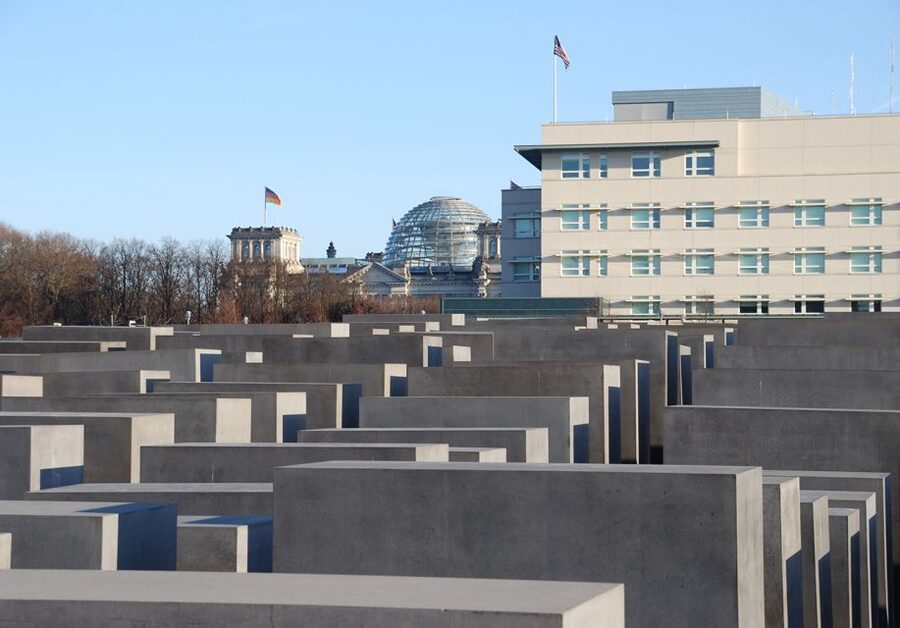
The walk continues to the location of Adolf Hitler’s bunker and the New Reich Chancellery. The bunker itself is not presented as a preserved attraction. Instead, you learn where the site was and how it fits into the final phase of the Nazi regime.
That distinction matters. Berlin has many places where the visible city does not match the weight of what happened there. A guide helps you read an ordinary-looking area as a historical site without turning it into a shrine.
You also explore the government district as it existed during World War II. This connects the bunker and Chancellery to the wider machinery of government. The emphasis is on location and function: where leaders worked, where power was concentrated, and how the district operated during the dictatorship.
For me, this is one of the strongest reasons to choose a guide rather than walk alone with a map. The former bunker site is easy to miss, and an unmarked or altered location can leave you with more questions than answers.
Johann Georg Elser and the German resistance
The route includes the Johann Georg Elser Memorial. Elser attempted to kill Hitler in 1939 with a bomb at the Bürgerbräukeller in Munich. The supplied tour information identifies the memorial as a stop and says the walk includes stories of German resistance against the dictatorship.
That focus is important. A tour about Nazi Berlin can become too centered on Hitler, Nazi architecture, and military command. Resistance stories restore some balance by showing that opposition existed, even under a brutal regime.
You will hear about resistance rather than simply see a monument. The guide’s role is to explain why the memorial matters and how individual acts of opposition fit into the broader history.
This stop may also make the tour more suitable for older teenagers and young adults. The material is serious, but it gives you a fuller picture than a story built only around Nazi leaders and wartime destruction.
Detlev-Rohwedder-Haus and the changing city
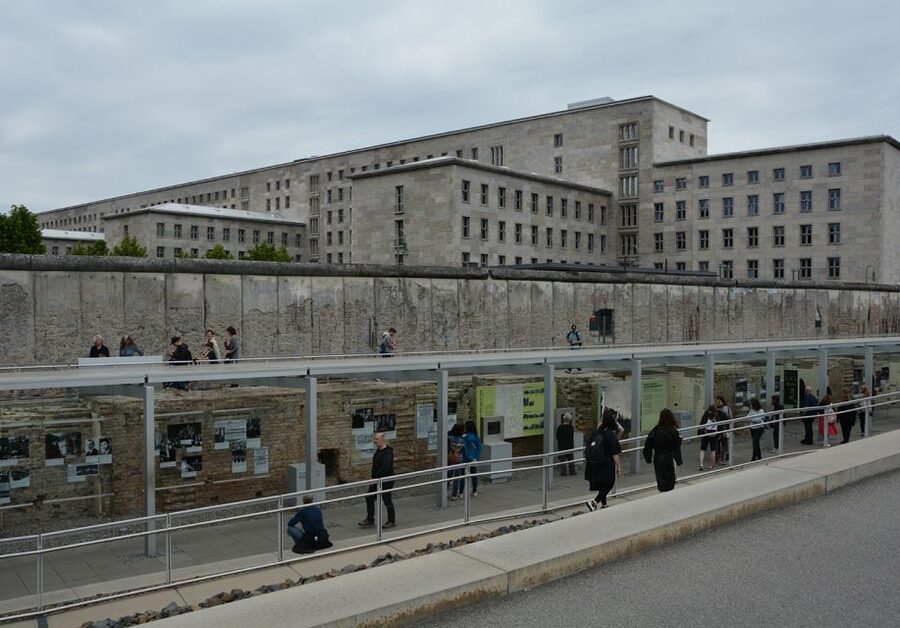
The itinerary includes the Detlev-Rohwedder-Haus, a large government building associated with the former Reich Aviation Ministry. It is also tied to the wartime government district.
The building helps show how Berlin’s political center changed over time. A city tour can make history feel too clean if it only points to memorials and museums. Here, you encounter a surviving structure that connects present-day Berlin with the buildings used by the Nazi state.
You should expect an exterior sightseeing stop rather than a full interior visit. The point is to understand the building’s role, location, and relationship to nearby sites.
This part of the walk is particularly useful if you want to see how modern Berlin has built around, preserved, or reinterpreted structures from the Nazi era. The guide can explain those connections while you are standing in the district itself.
Finishing at the Topography of Terror
The tour ends at the Topography of Terror Documentation Center. This is the most concentrated historical stop on the route, because the site marks the former headquarters of the SS, the Secret State Police, the Reich Security Main Office, and the Reich Aviation Ministry.
The walk gives you the locations first, then ends at a documentation center where the story can continue through more detailed material. That makes the finish practical. You can visit the center after the tour if you have time and want a longer, more museum-based look at the institutions behind Nazi terror.
The ending also gives the tour a useful structure. You begin with public propaganda at the Brandenburg Gate, pass through political power and wartime memory, and finish with the organizations that enforced the dictatorship.
Because the guided walk ends here, you are not rushed into another part of Berlin. You can stop for the center, continue sightseeing, or use the nearby area as a base for the rest of your day.
What the two-hour format does well
Two hours is enough to cover a strong central route without turning the day into a history marathon. You get a clear introduction to Nazi Berlin and see a mix of political buildings, memorials, surviving military objects, and documented sites.
The tradeoff is depth. You cannot expect every stop to receive the attention of a full museum visit. The tour works best as a framework that helps you understand the city and decide where to spend more time later.
The small group size improves the format. With no more than 10 participants, the guide can respond to questions and keep the group together without the feel of a large procession. Several tours led by Carlo or Carlos were described as lively, detailed, and flexible, including occasions when one person or a couple received what was effectively a private tour.
That does not guarantee a private group on your date. It does suggest that the limited size can make the walk feel personal, especially when the group is smaller than the maximum.
Price, pace, and practical value
At $43 per person, this is not the cheapest way to see central Berlin, but the price is reasonable if you value interpretation. Much of the route can be walked independently for free. What you are paying for is the connection between sites, the historical explanation, and the chance to ask questions.
The value is strongest for a first visit, for anyone who wants a focused introduction to the Nazi period, or for people who have seen the major landmarks but want to understand them in context. It is less compelling if you prefer to read independently, dislike serious subjects, or want extensive interior visits.
The tour is wheelchair accessible, though the information provided does not describe every surface or any specific accessibility arrangements at each stop. Ask the operator if you need details for your own mobility needs.
The meeting point is easy to reach by S-Bahn and U-Bahn at Brandenburger Tor station. Wear suitable clothes and comfortable walking shoes. Since the tour operates on public holidays and in all weather, check the forecast before leaving your hotel.
The live guide is listed as German-speaking. The tour description also refers to a certified, multilingual guide, but the confirmed language information for this activity is German. If you need another language, verify it before booking rather than assuming it will be available.
Who should take this Berlin history walk?
I would choose this for you if you want a compact, serious introduction to Berlin during the Nazi era. It suits history-minded adults, older teenagers, and anyone who wants more than a list of landmarks.
It also works well early in a Berlin visit. The route gives you a mental map of the government district and several major memorials, so later visits to the Reichstag area, Holocaust Memorial, or Topography of Terror can have more meaning.
I would be more cautious about booking it for young children. The subject is difficult, the pace is built around adult historical discussion, and the tour spends two hours outdoors. For teenagers, the resistance stories and visible wartime remains may make the history easier to connect with.
Guides Carlo and Carlos receive particular praise for explaining the subject with energy, answering questions, and telling the story in a way that holds attention. Guide quality always depends on the person assigned, but the small group and named guide feedback point to a more personal experience than a large bus tour.
Should you book it?
Book this tour if you want to understand how Berlin’s Nazi past is spread across the city rather than confined to one museum. The strongest features are the well-planned route, the surviving T-34 tanks and artillery, the resistance material, and the finish at the Topography of Terror.
Skip it if you want a light sightseeing stroll, guaranteed sunshine, or extensive time inside museums. This is a serious outdoor history walk in German, and the two-hour schedule favors a clear overview over exhaustive detail.
For most history-minded visitors, $43 is fair value for a small group and a guide who can make difficult sites readable. Bring good shoes, dress for the weather, and leave time after the tour for the Topography of Terror.
FAQ
Where does the Berlin National Socialism walking tour begin?
Meet at the exit of S+U Bhf. Brandenburger Tor, exit B, in the direction of Pariser Platz and Straße des 17. Juni. Look for the guide carrying the Get Your Guide, You in Berlin flag.
Where does the tour finish?
The tour finishes at the Topography of Terror Documentation Center.
How long does the walking tour last?
The tour lasts two hours.
What language is the tour conducted in?
The live tour guide language is German. The tour description also refers to a certified, multilingual guide, so confirm language availability before booking if you need a language other than German.
How large is the group?
The tour is limited to 10 participants.
Is the tour wheelchair accessible?
Yes, the activity is listed as wheelchair accessible.
Does the tour operate in bad weather or on public holidays?
Yes. The tour takes place in all weather conditions and on all public holidays. Suitable clothing and walking shoes are recommended.
Just added in Berlin
- Berlin & The Third Reich Private Guided Tour★ 5.0 · 3 reviews
- Private Analogue Photography Experience in Berlin★ 5.0 · 3 reviews
- Third Reich Quest Experience in Berlin★ 4.5 · 7 reviews
- Berlin Urbex Adventure and History Tour★ 5.0 · 9 reviews
- The Beauty of Berlin by Bike: Private Tour★ 5.0 · 59 reviews
- Berlin: Guided Bike tour of the Berlin Wall and Third Reich★ 5.0 · 160 reviews
- Beyond Currywurst: Berlin’s Hidden Street Food & Culture Tour★ 5.0 · 100 reviews
- Berlin Third Reich & Cold War Walking Tour With A Guide★ 5.0 · 7 reviews
Walking Tours, compared.




Berlin’s Best: 2 Hour Walking Tour Third Reich and the Cold War
Read our review →


Third Reich Berlin: Hitler and WWII Walking Tour
Read our review →Browse the lists this tour appears in