
Reviewed · NUREMBERG TOURS
Medieval Tour in Nuremberg in Spanish
Nuremberg’s best-known sights tell only part of the story. This Spanish-language walking tour takes you from Hauptmarkt to Kaiserburg through tales of witches, executioners, fountains, palace intrigue, and medieval legends. It gives the city a darker, stranger personality than you get from a quick look at Albrecht Dürer or the Christmas market.
I like the route because it is walkable and well focused, with ten stops spread over about two and a half hours. I also like the way it connects ordinary places, such as a bridge, alley, fountain, and old tower, to stories about daily work and city life. The main drawback is simple: you are outside for the entire tour, and the late afternoon timing can be uncomfortable in poor weather.
Key points to know before booking
- Spanish guide from Hauptmarkt to Kaiserburg: The route begins at Hauptmarkt at 3:30 pm and finishes at Nuremberg’s imperial castle.
- Dark medieval stories: Expect witches, executions, strange legends, Kaspar Hauser, and castle tales about flying horses.
- Ten compact stops: Most stops last 5 to 15 minutes, so the walk keeps moving without long museum visits.
- Guide Fede may lead the tour: He is praised for clear explanations, humor, and helping guests find the meeting point.
- Good value at $19.60: You get a 2.5-hour guided walk in Spanish, with no extra admission fees listed.
- Outdoor and group-based: The tour allows up to 30 people, uses a mobile ticket, and requires no paid entry to the stops.
Why this tour shows you another Nuremberg
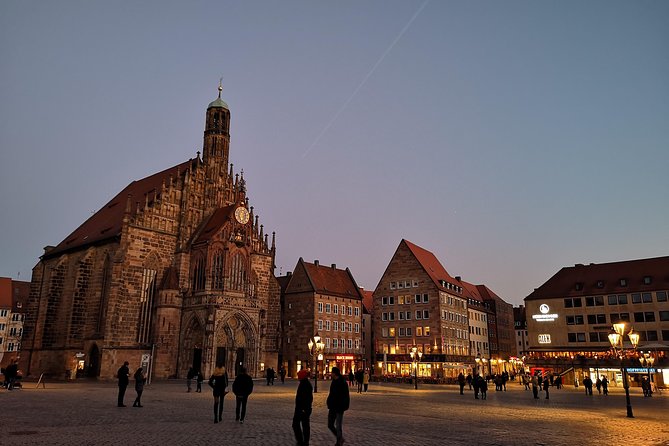
Nuremberg is easy to reduce to a few famous images: the Imperial Castle, Albrecht Dürer, the old center, and Christkindlesmarkt. Those are worthwhile, but they can make the city feel polished and orderly. This walk looks for the odd details beneath that surface.
You hear about witchcraft as a feared trade, not just a subject from a history book. You hear about the executioner, a necessary but shunned figure, and about fountains linked with folly, love, and death. The stories give meaning to streets and buildings you might otherwise pass without a second glance.
I find this approach especially useful if you have already seen the main sights or want an introduction with more character. The route does not depend on entering a long list of attractions. Instead, the guide uses the streets as the setting, pointing out how medieval work, belief, punishment, trade, and legend shaped the city.
The Spanish language is a major part of the experience. If you understand Spanish best, you can follow the details and humor without working through a second language. Guide Fede is specifically associated with the tour, and his style includes jokes, historical explanation, and practical help meeting up at the start.
A few more half-days in Nuremberg worth comparing
- Nuremberg: City Tour with the Bimmelbahn Train
★ 4.4 · 2,475 reviews - Nuremberg: Old Town Guided Walking Tour
★ 4.6 · 2,416 reviews - Nuremberg: Tunnels and Secret Passages in the City Wall Tour
★ 4.8 · 2,334 reviews
Starting at Hauptmarkt with Nuremberg’s city story
The tour begins at Hauptmarkt 14 at 3:30 pm. This central square is a practical meeting point, since it is one of the easiest places to find in the old center. The opening stop lasts about ten minutes and sets the basic story of Nuremberg.
You can expect the guide to place the rest of the walk in context here. The goal is not a long lecture. It is a quick orientation before moving into more unusual subjects, from medieval legends to the city’s working trades.
Because the tour is mobile-ticket based, you do not need a printed voucher. Still, I would arrive a little early. The guide may contact you to help with the meeting point, and it is easier to begin calmly than to search for a group at the exact start time.
St. Lorenz and the stories behind a major church
The next stop is St. Lorenz, where the group spends about ten minutes. The guide covers the church’s construction and its particular stories, giving you a reason to look beyond the exterior.
This stop works well in a walking tour because a church can otherwise become a quick photograph. You get a short explanation of how the building fits into Nuremberg’s medieval identity, then continue before the pace slows.
The supplied details do not promise an interior visit or admission. Treat St. Lorenz as a guided exterior stop unless the guide tells you otherwise. That keeps expectations clear and explains why no entrance fee is included.
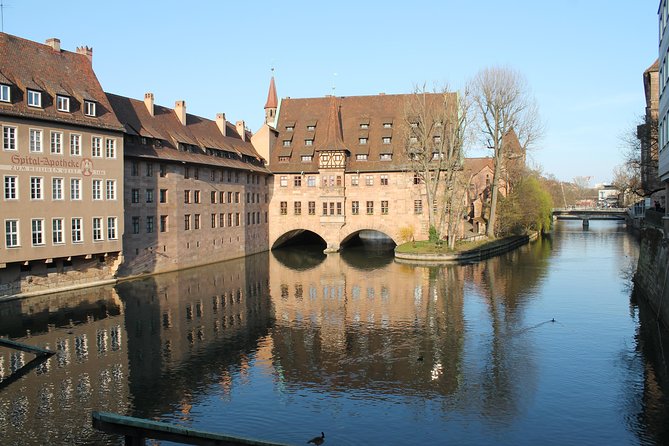
Heilig-Geist-Spital and the tale of Till Eulenspiegel
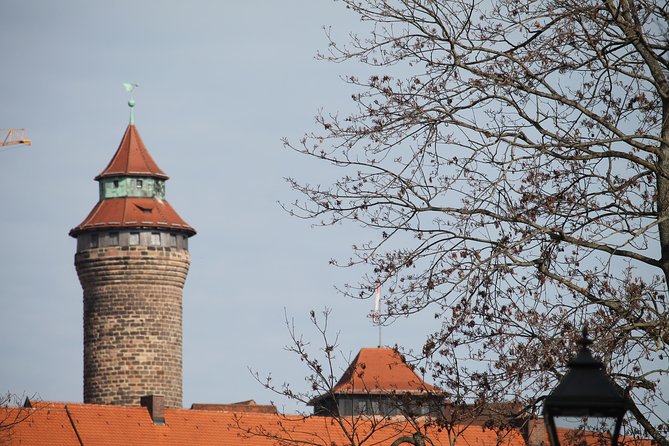
At Heilig-Geist-Spital, the subject changes from church construction to Till Eulenspiegel, a famous trickster figure in German folklore. The stop lasts around ten minutes.
This is one of the tour’s lighter moments. Nuremberg’s past is not presented only as punishment, superstition, and political intrigue. Stories of cleverness and mischief help show how medieval and later popular culture used humor to question authority and human foolishness.
You will want to listen closely here, especially if you are not familiar with Eulenspiegel. A short stop can cover a lot, and the pleasure comes from catching the twist in the tale rather than simply collecting a name.
Same city, a completely different kind of day:
- Nuremberg: Medieval Dungeons Guided Tour
★ 4.8 · 1,726 reviews - Nuremberg: Walking Tour of Former Nazi Party Rally Grounds
★ 4.7 · 1,665 reviews - Nuremberg: Historischer Kunstbunker WWII Art Bunker Tour
★ 4.8 · 921 reviews - Nuremberg: PLAYMOBIL®- FunPark
★ 4.7 · 863 reviews
Weisser Turm and the first city wall
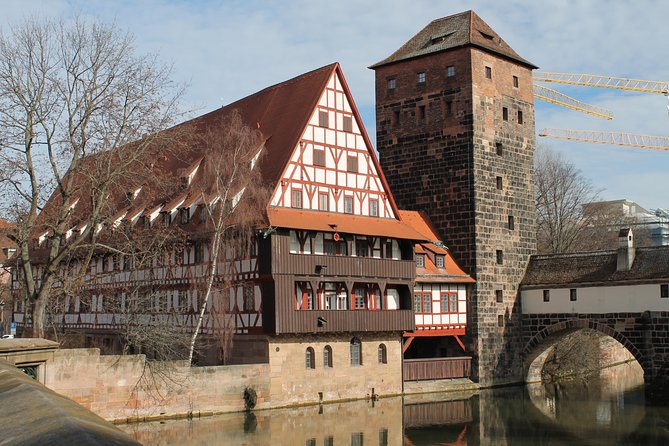
The walk continues to Weisser Turm, a five-minute stop connected with the first city wall. It is brief, but it introduces one of the tour’s useful themes: Nuremberg was not just a collection of pretty old buildings. Its walls defined movement, safety, trade, and status.
A short explanation at a tower can help you picture the old city as a defended settlement. You may not receive a long architectural discussion, but you will understand why the wall and its gates matter to the route.
This is also a reminder that the experience is a walking tour, not a castle or museum visit. Some stops are quick visual markers. The value comes from the full sequence rather than from any one five-minute pause.
Ehekarussell and the strange side of married life
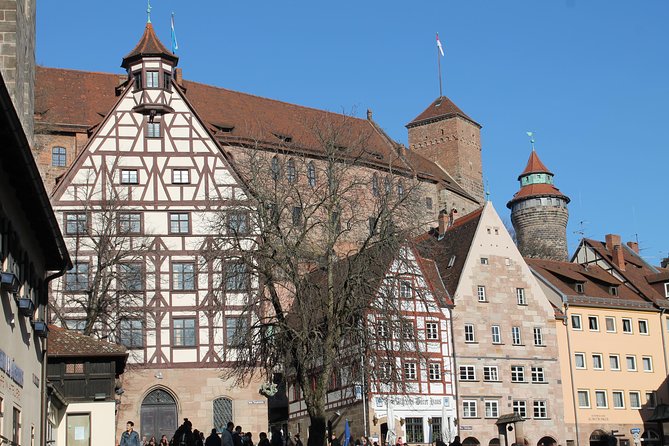
At Ehekarussell, the group spends about ten minutes at the fountain known as the source of the delights of married life. The title alone should warn you that this is not a sweet, simple monument.
The fountain gives the guide a way to talk about love, marriage, pleasure, and death through public art. It is one of the more memorable stops because the subject is familiar, but the treatment is pointed and theatrical.
I like this kind of stop because it breaks up the usual sightseeing routine. You are not only learning dates or names. You are asking what a city chooses to put in public view, and what its images say about the hopes and fears of ordinary people.
Unschlitthaus and the mystery of Kaspar Hauser
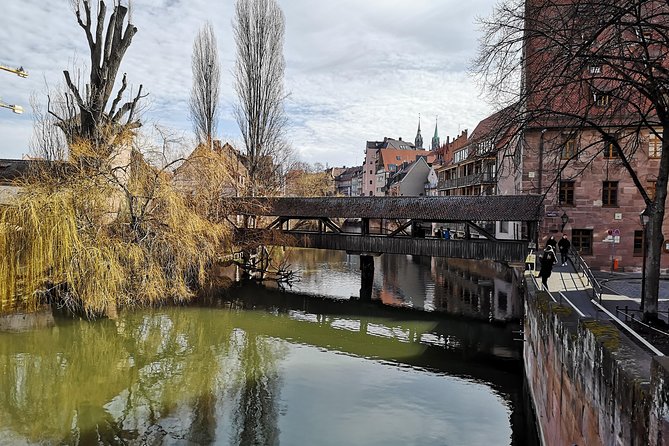
Unschlitthaus brings one of the tour’s most intriguing subjects: Kaspar Hauser, often described as the orphan of Europe. The guide connects his story with palace intrigues and one of Europe’s most mysterious cases.
The stop lasts about ten minutes. It is a good fit for anyone who likes unresolved stories, political suspicion, and individuals caught in forces larger than themselves. The subject also shifts the walk beyond the medieval period, showing how Nuremberg’s unusual stories continue into later history.
Do not expect a full investigation of every theory surrounding Hauser in ten minutes. Instead, you get the essential outline and the reason his story remains tied to Nuremberg. If this is the subject that interests you most, make a note of it and explore further after the walk.
The Hangman’s Bridge and Nuremberg’s least loved profession
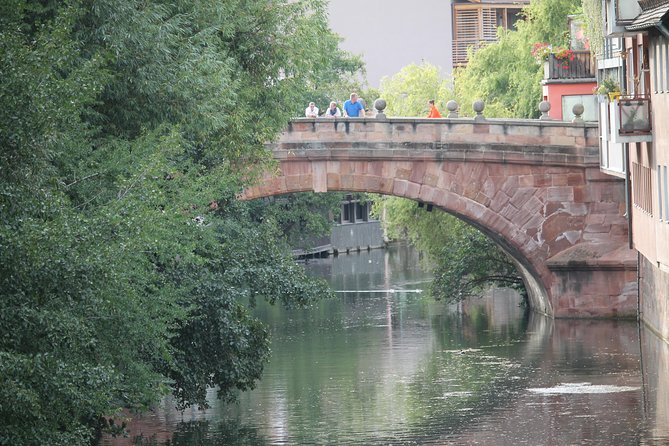
At the Hangman’s Bridge, the tour turns to the executioner of Nuremberg. The guide explains the trade, its place in society, and the achievements connected with the person who carried it out.
This is one of the route’s strongest themes because it deals with a job that a medieval city needed but did not warmly accept. The executioner occupied an uneasy position: important to public order, yet socially isolated.
A stop here can make the old city feel more human and less decorative. You begin to think about the people whose work kept the city functioning, including those placed outside respectable society. The subject is grim, but the guide’s use of humor helps keep the tone approachable rather than heavy.
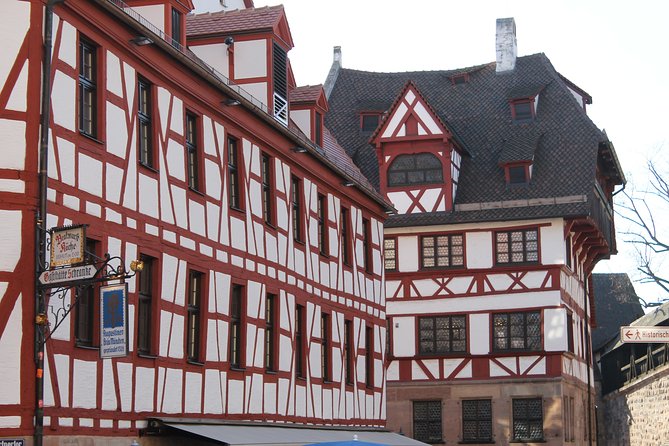
Weissgerbergasse, the most medieval-looking street
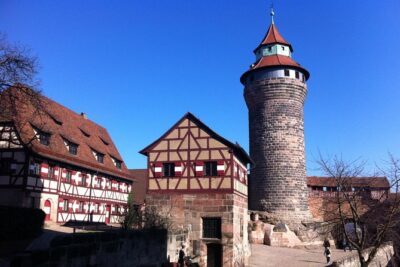
Weissgerbergasse is described as the most medieval street in Nuremberg, and the tour gives it about ten minutes. This is where the route’s visual side becomes especially important.
The street helps you connect the stories to a surviving urban setting. After hearing about trades and city walls, you see a lane that still communicates something of old Nuremberg’s shape and character. The guide also discusses medieval work and the trades that supported city life, including the type of information associated with Mendel’s book.
This is a good place to slow down and look carefully. Notice the street itself, the building fronts, and the way the route has moved from grand public places to a more intimate working neighborhood. The attraction is not a single ticketed sight. It is the sense of stepping into a preserved piece of the old city.
Beim Tiergärtnertor and the city walls
At Beim Tiergärtnertor, the guide spends about five minutes on Nuremberg’s walls and their less obvious history. The stop is short, so it will not satisfy someone looking for a full military history of the fortifications.
It does, however, help complete the walking route. You have already heard about the first wall at Weisser Turm. Here, the guide gives another point of reference and explains how the defenses relate to the city’s layout.
The location also prepares you for the final climb toward Kaiserburg. The tour has gradually moved through the old center, across bridges, past fountains, and along medieval streets. By the time you reach the castle, the city’s boundaries make more sense.
Kaiserburg and the final legends of the walk
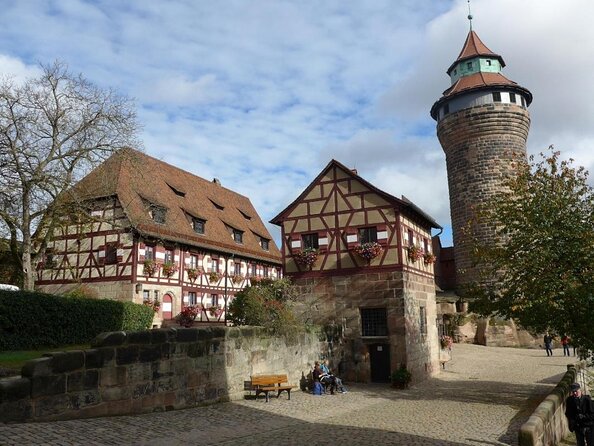
The tour ends at Kaiserburg, Nuremberg’s imperial castle, after a fifteen-minute stop. This is the longest stop on the route and a fitting finish, since the castle is one of the city’s major attractions.
The guide focuses on dark stories connected with the castle, including legends of flying horses and women of bad life. These tales give the final stop a different mood from a standard architectural explanation. You get the power and prestige of the castle, but also the rumors, fears, and moral stories that grew around it.
The end point is useful for planning the rest of your day. You finish at one of Nuremberg’s most important sights rather than being returned to the starting square. If you want to continue exploring the castle area, you are already there. The tour does not list castle admission as included, so any interior visit should be treated as a separate plan.
What $19.60 buys you
At $19.60 per person, this is a modestly priced guided experience. You are paying for about two and a half hours with a Spanish-speaking guide, a carefully arranged route, and interpretation at ten stops. The sights themselves do not require admission fees as part of the walk, which helps keep the cost predictable.
The value is strongest if you want stories rather than a simple orientation walk. You could pass many of these places for free on your own, but you would miss the links between the witch hunts, medieval trades, Kaspar Hauser, city defenses, and castle legends.
The group can include up to 30 people. That is not a private tour, so you should expect a shared experience and possibly a larger cluster at narrow streets or busy squares. In exchange, the price remains far below what you would usually pay for a private guide.
Timing, weather, and walking comfort
The 3:30 pm start gives you a useful way to fill an afternoon after visiting another sight. Since the tour ends at Kaiserburg, it can also serve as a route toward the castle rather than requiring a separate visit across town.
You will be outside for roughly two and a half hours. The tour operated pleasantly even in rain for guide Fede, but that does not make poor weather irrelevant. Bring suitable clothing and shoes, since the experience depends on walking between stops and standing while the guide speaks.
The listing says most people can participate, service animals are allowed, and the meeting point is near public transportation. It does not describe the route as private or adapted for every mobility need, so you should consider your own comfort with a city walking tour before booking.
Who will get the most from this walk
I would choose this tour if you want Nuremberg explained through stories with a dark edge. It suits history fans, Spanish-speaking visitors, and anyone who finds ordinary streets more interesting once someone explains what happened there.
It is also a good choice for a first afternoon in the city. The route introduces major reference points, finishes at Kaiserburg, and gives you subjects to explore later, such as Kaspar Hauser, medieval witchcraft, and the executioner’s role.
I would be more cautious if you want long indoor visits, detailed art history, or a slow architectural study. The stops are short, the pace keeps moving, and the main attraction is the guide’s narration rather than entry into monuments.
Booking is flexible in one useful way: you can cancel for a full refund up to 24 hours before the start time. Changes or cancellations inside that period are not refunded, and the activity requires a minimum number of participants.
Should you book Medieval Tour in Nuremberg in Spanish?
Book it if you want to hear Nuremberg’s old center explained in Spanish and prefer unusual human stories to a basic list of monuments. The route is affordable, the start and end points are practical, and the subjects range from fountains and folklore to witchcraft, punishment, and imperial power.
I would especially recommend it if guide Fede is leading your departure. His approach combines study, humor, and help with meeting up, which matters on a walking tour built around many short stops.
Skip it if you need a fully indoor activity or want extensive time inside the castle. For everyone else, $19.60 is a fair price for a lively route that shows you the city’s stranger, less polished side.
FAQ
How long does the Medieval Tour in Nuremberg in Spanish last?
The tour lasts approximately 2 hours and 30 minutes.
Where does the tour begin?
It begins at Hauptmarkt 14, 90403 Nürnberg, Germany.
Where does the tour end?
The tour ends at the Imperial Castle of Nuremberg, at Burg 17, 90403 Nürnberg, Germany.
What time does the tour start?
The scheduled start time is 3:30 pm.
Is admission to the attractions included?
The tour includes a Spanish-speaking guide. The listed stops have no admission ticket included, and castle admission is not listed as part of the experience.
How many people can join the tour?
The activity has a maximum group size of 30 people.
Just added in Nuremberg
- Tour en español al Campo Zeppelin★ 5.0 · 8 reviews
- Stein: Public guided tour of the “Old Mine” museum★ 4.5 · 18 reviews
- “Rotes Bier” and “Blaue Zipfel”. A historical-culinary walk★ 4.4 · 190 reviews
- Nuremberg: Old Town Guided Tour By Bus★ 4.4 · 198 reviews
- Nürnberg Bachelor(ette) Party with Night PubCrawl★ 4.2 · 5 reviews
- Nuremberg: Bar and Club Tour with Free Shots and Free Entry★ 3.8 · 23 reviews
- Nuremberg: WWII Tour, Courtroom 600 and 3rd Reich Sites★ 4.6 · 94 reviews
- Nürnberg kennenlernen: Highlights in der Altstadt★ 4.7 · 189 reviews
Nuremberg Tours, compared.

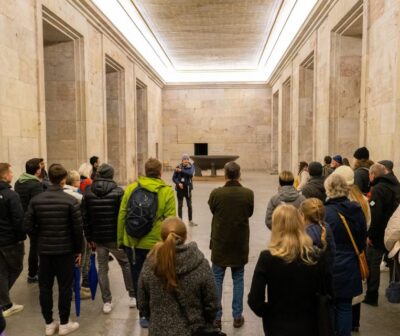
Walking Tour of Former Nazi Party Rally Grounds
Read our review →
Browse the lists this tour appears in