Reviewed · BERLIN TOURS
Berlin: Private Sightseeing Tour in Iconic Oldtimer VW Bus
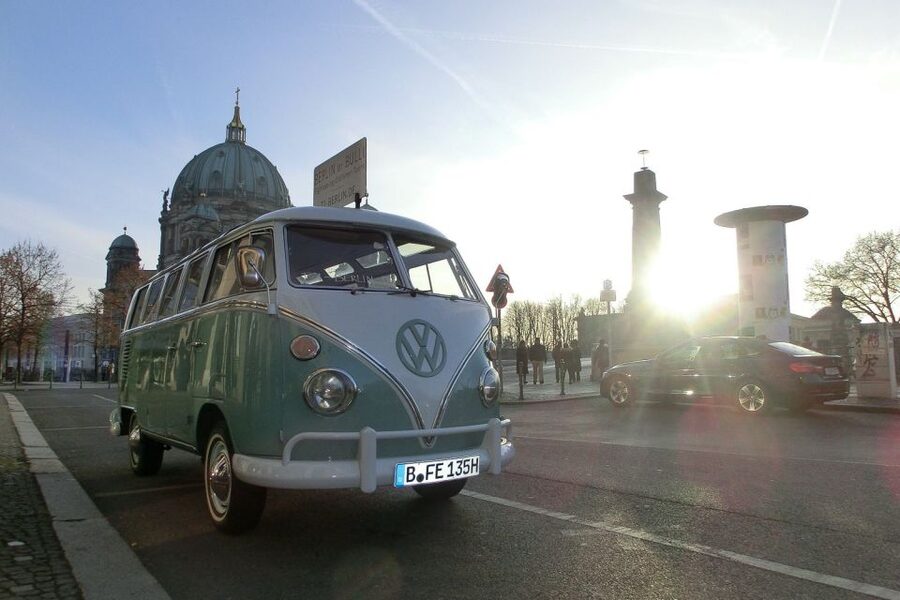
Berlin sightseeing gets a very different feel from the back seat of a 1965 VW T1 Samba. The restored van is not just transport. It is part of the show, drawing smiles, waves, and plenty of attention as it rolls through central Berlin. You cover major sights, but the small side roads and lesser-known stops give the tour more character than a standard coach ride.
I like the private format, which lets you ask questions and shape the route around your interests. I also like the photo booklet, since old images help you understand what Berlin looked like before war, division, demolition, and rebuilding changed the city. The main consideration is space: the van holds up to seven people, but anyone over 287 pounds, or 130 kilograms, cannot take part.
Key points at a glance
- A genuine 1965 T1 Samba: The carefully maintained vintage bus is a memorable part of the experience and a fine photo subject at Berlin’s landmarks.
- A private group of up to seven: You get a more personal ride, with room to ask questions and adjust the route.
- Major sights plus side streets: The two-hour drive links the Cathedral, Berlin Wall, Potsdamer Platz, Holocaust Memorial, TV Tower, and quieter historic corners.
- Guides with strong local knowledge: Rajko, Carsten, Carson, and other guides have been praised for clear storytelling and flexible arrangements.
- Historical photos on board: The printed booklet shows earlier views of sites and helps put Berlin’s difficult past into context.
- Pickup and all-weather comfort: Pickup at your accommodation, water, and heating when needed make the tour easy to fit into a Berlin stay.
Why a VW Samba changes the Berlin sightseeing experience
Berlin is spread out, and its most important sights belong to several different eras. Walking between them takes time. A large bus can cover the distance, but it often misses the narrow streets and quieter corners that make Berlin feel like a real city rather than a list of famous addresses.
This tour offers a middle ground. You ride slowly enough to see what is passing by, but you cover enough ground to get your bearings. One family with teenagers found the pace kept everyone interested, while another group used the ride early in its stay to decide which places deserved a longer visit later.
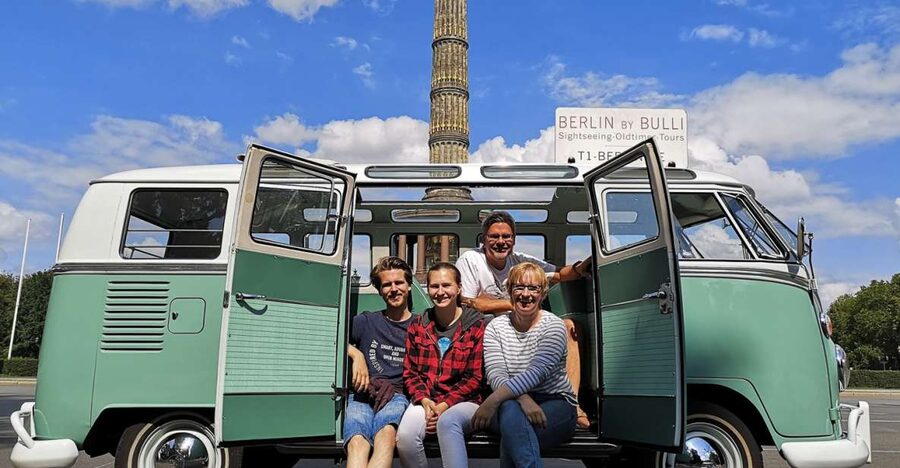
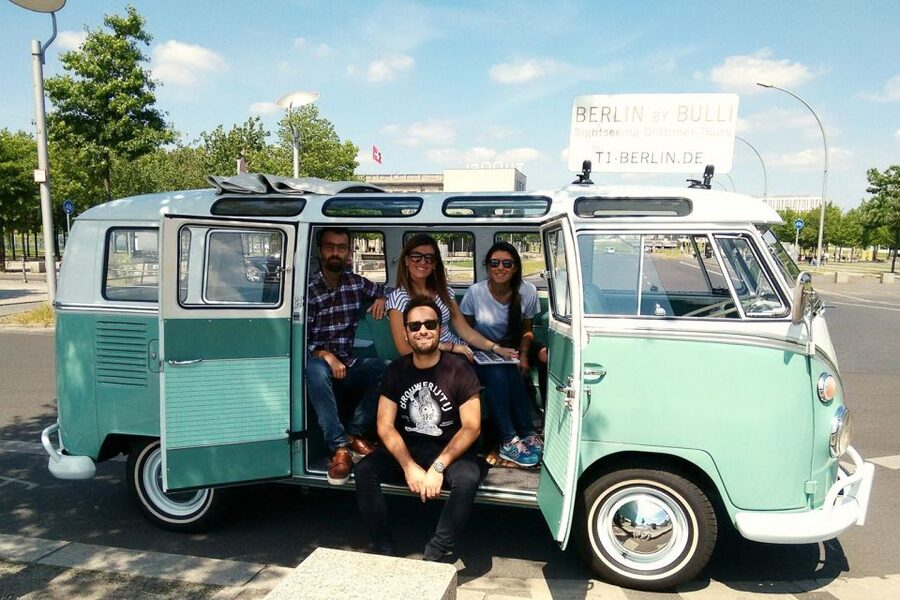
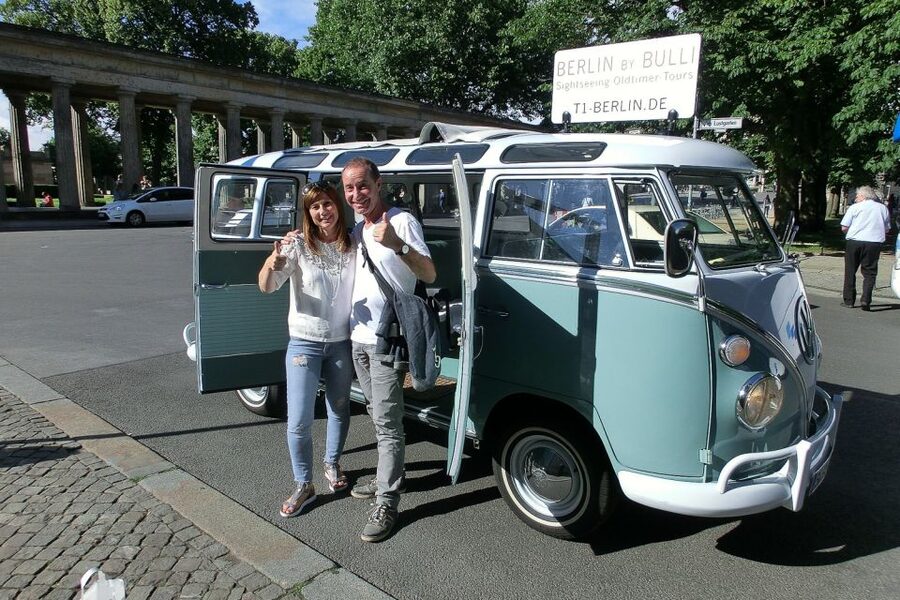
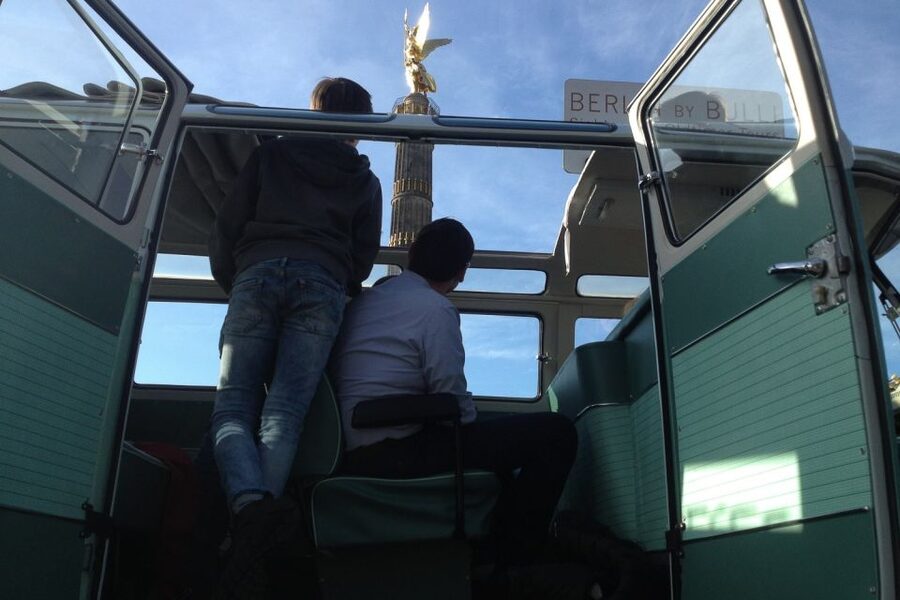
The vehicle matters. This is an original first-generation Volkswagen T1 Samba from 1965, restored and kept in very good condition. Its appearance attracts attention as you drive, and it gives you an enjoyable photo backdrop at places such as the Brandenburg Gate and other central sights.
That charm comes with a practical tradeoff. A vintage van is not as spacious as a modern minibus, and the 130-kilogram weight limit is firm. Still, for a group of friends or a family of up to seven, the private setting is far more personal than joining a large sightseeing vehicle.
A few more half-days in Berlin worth comparing
- Berlin: Reichstag, Dome and Government District Guided Tour
★ 4.7 · 18,288 reviews - Berlin: 1-Hour City Tour by Boat with Guaranteed Seating
★ 4.3 · 16,993 reviews - Berlin: Boat Tour Along the River Spree
★ 4.4 · 11,252 reviews
Starting with Berlin’s oldest center
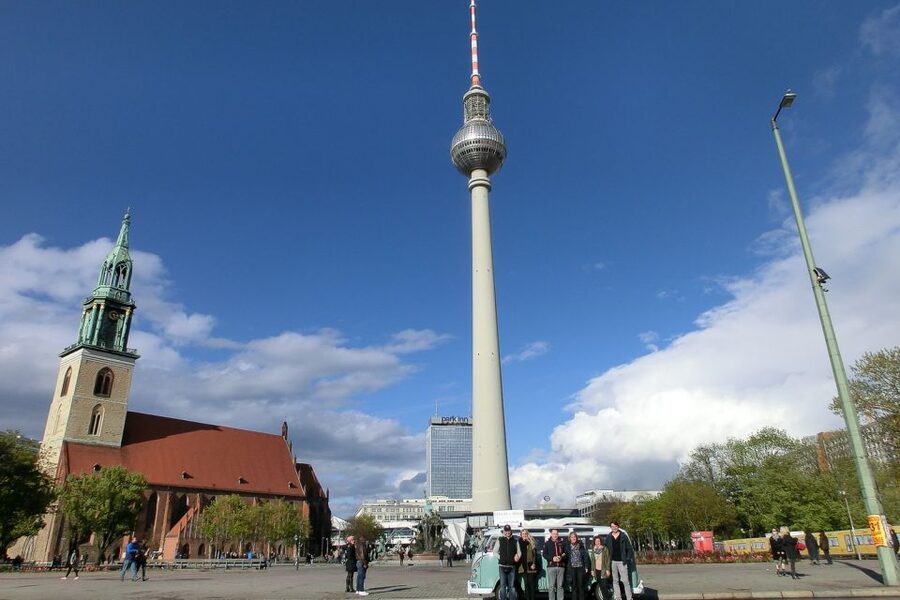
The route includes several sights around the historic center, where Berlin’s origins and modern capital meet. You can expect to pass Berlin Cathedral, the Alte Nationalgalerie, Berlin State Opera, the former Berlin City Palace site, Jungfern Bridge, Galgenhaus, Rotes Rathaus, Neptune Fountain, and St. Mary’s Church.
This part of the drive works best as a connected story rather than a string of photo stops. The Cathedral gives you one of Berlin’s most recognizable views, while Museum Island and the Alte Nationalgalerie show how much cultural and political weight is packed into a small area.
The Berlin State Opera and the surrounding streets add another layer. Here, grand buildings sit beside ordinary city traffic and modern urban life. A guide can point out how Berlin’s center changed across different eras, rather than presenting each building as an isolated monument.
Jungfern Bridge and Galgenhaus are especially useful additions because they are less obvious than the Cathedral or TV Tower. They help you see that Berlin’s story is not only about imperial buildings and twentieth-century conflict. There are older traces too, even if they are easy to miss while walking through the center.
Rotes Rathaus, Neptune Fountain, and St. Mary’s Church add further visual variety. You might not spend long at each place, but together they make the historic center easier to understand. The driver-guide can also use the photo booklet to show earlier views of buildings or streets that have been rebuilt, altered, or lost.
Potsdamer Platz and the city rebuilt from ruins
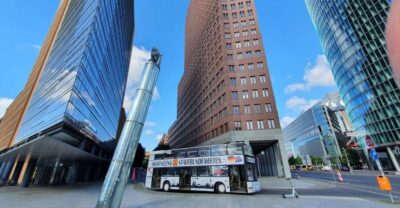
Potsdamer Platz is one of the clearest places to see Berlin’s modern transformation. The area changed dramatically after the Second World War and the division of the city. Today, it is known for modern architecture and major commercial development, but its importance comes from the gap between what was here before and what you see now.
This is where the printed photos are particularly useful. Looking at the present-day streets without context can make the area seem like another business district. Older images help you picture the damaged and divided city, then understand how quickly Potsdamer Platz became a symbol of reunified Berlin.
The drive also gives you a moving view of the city’s changing architecture. You do not need to spend the whole two hours standing in queues or crossing busy roads. Instead, you can compare different parts of Berlin from the comfort of the van, with the guide explaining what changed and why.
If modern architecture is not your main interest, this stop may feel less emotional than the Berlin Wall or Holocaust Memorial. Its value lies in the contrast. Berlin’s past is often visible in empty spaces, new buildings, and sharp breaks between architectural styles.
The Berlin Wall and the difficult twentieth century
The Berlin Wall is an essential part of any first visit, but the remaining sections can be hard to interpret without help. The wall was not simply a single barrier. It shaped daily life, separated families, and turned Berlin into a front line of the Cold War.
This tour allows the guide to explain that larger picture while showing you sections and related locations along the route. The smaller roads are useful here, since they can reveal how the wall cut through neighborhoods and ordinary streets rather than dividing only grand public places.
A strong feature is the use of historic photographs. You can look at a current street and then see how the same place appeared before or during division. Guides such as Rajko have been praised for bringing photos and research into the explanation, which makes the history easier to picture.
The subject matter is serious, and the short format means you will not get a full specialist course on the Wall. I see the tour as a solid introduction. You can note the places that interest you, then return later for a longer visit on foot.
Same city, a completely different kind of day:
- Discover Berlin Half-Day Walking Tour
★ 5.0 · 9,624 reviews - Berlin: Hop-on Hop-off Bus Tour with Live Commentary
★ 4.3 · 8,579 reviews - Berlin: Government District around the Reichstag Guided Tour
★ 4.7 · 8,447 reviews - Berlin: Reichstag, Plenary Chamber, Cupola & Government Tour
★ 4.6 · 8,422 reviews
Holocaust Memorial and the former Führer Bunker
The Holocaust Memorial is one of Berlin’s most powerful modern memorials. Its field of concrete blocks invites a quiet, personal response, but the meaning is not always obvious from a quick drive past. Your guide can explain the memorial’s place in Berlin and connect it to the wider story of Nazi Germany and the destruction of European Jewish life.
Nearby, the route includes the location associated with the Führer Bunker. There is no grand surviving building to tour. That absence is part of the point, and it can be confusing if you do not know what you are looking at.
A guide is valuable here because the site is easy to miss and easy to misunderstand. The experience focuses on location and historical context rather than a dramatic underground attraction. You should expect an explanation of what happened in this area, not an elaborate visible monument.
This section may be intense for some people, especially when combined with the Wall and other wartime sites in a short period. The private format helps because you can ask questions, pause, or request more attention to another part of Berlin if you prefer.
Photo stops, side roads, and flexible storytelling

The route is not described as a fixed hop-on, hop-off schedule. It is a private guided drive with a customized route, and the guide can stop at important locations to explain what you are seeing. Several groups appreciated being able to request sights or topics that mattered to them.
That flexibility is one of the strongest reasons to book privately. A family with teenagers can keep moving. A group with a strong interest in wartime history can spend more time on related sites. A first-time visitor can focus on orientation and the main landmarks.
The side roads add another useful layer. Berlin’s famous places are often surrounded by streets that reveal the city’s everyday scale. The guide can point out places that a large sightseeing bus would pass by, including older buildings, former boundaries, and locations connected with the city’s early history.
Do not expect to leave the bus at every sight. Two hours is enough for a broad introduction, not a full walking tour of each museum, church, memorial, or square. The best approach is to treat the ride as a moving overview, with selected stops and photo opportunities.
What the guides add to the ride
The guide is central to the experience. Rajko has been singled out for friendly, entertaining explanations and for using photos to show how Berlin’s sites looked in earlier periods. Carsten, Carson, and Ryco have also been named for clear guiding, good preparation, and a willingness to adjust the route.
That range of guide names suggests you should check who is assigned when you book, if that information is available. The individual guide shapes the tone of the two hours. Some people want a focused history lesson. Others prefer a relaxed conversation with local recommendations mixed in.
The guide can also help turn the tour into a useful first-day orientation. One group used it to identify places to revisit during the rest of its stay. Another received a recommendation for BRLO BRWHOUSE, a Berlin brewery and beer hall. Recommendations like that can be a welcome extra, though the tour’s main purpose remains sightseeing and history.
A practical strength is the seating arrangement. One group traveling with a 97-year-old parent found that he could sit in front beside the guide and hear the explanations clearly. The van is wheelchair accessible, but you should confirm the details of your individual mobility needs before booking.
Winter comfort, pickup, and the two-hour format
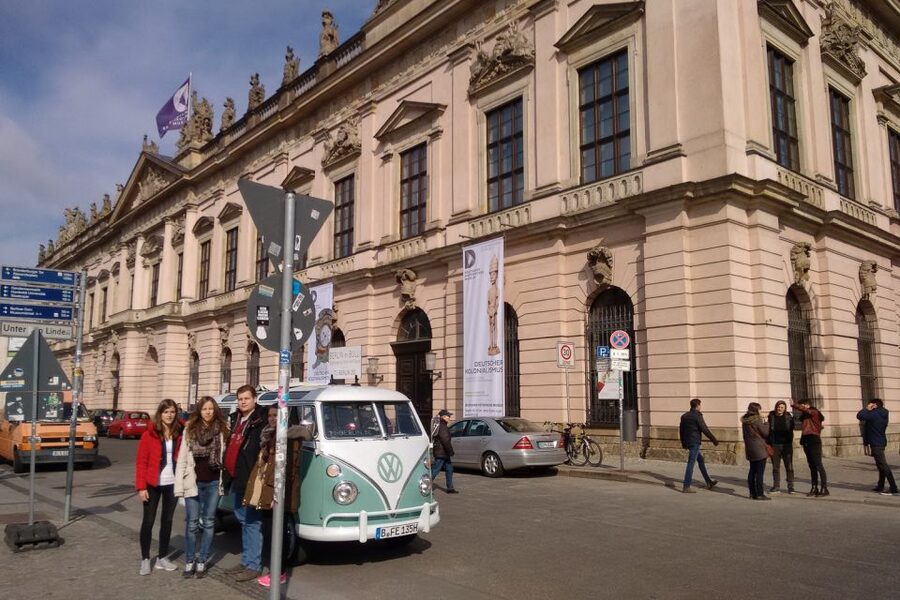
Pickup at your accommodation keeps the start simple, especially if you are staying outside the immediate historic center. The bus is heated when needed, and water is provided on board. A winter ride can still feel like a vintage vehicle experience rather than a standard modern transfer, but the heating is an important comfort.
The tour lasts two hours, though the exact starting time depends on availability. Some groups found the experience ran beyond the planned duration because nobody was watching the clock closely. You should not rely on extra time, but the guide may be flexible when the schedule allows.
The bus has also been used successfully in cold weather and light snow. That can add atmosphere, but weather will affect visibility and the comfort of taking photographs. In warmer months, the classic van becomes a pleasant open-feeling way to see the city, although the information provided does not promise an open roof or open windows.
The tour is offered in English, German, and Spanish. That makes it suitable for mixed-language groups, but you should select the language you need when checking availability.
Is $347 good value for up to seven people?
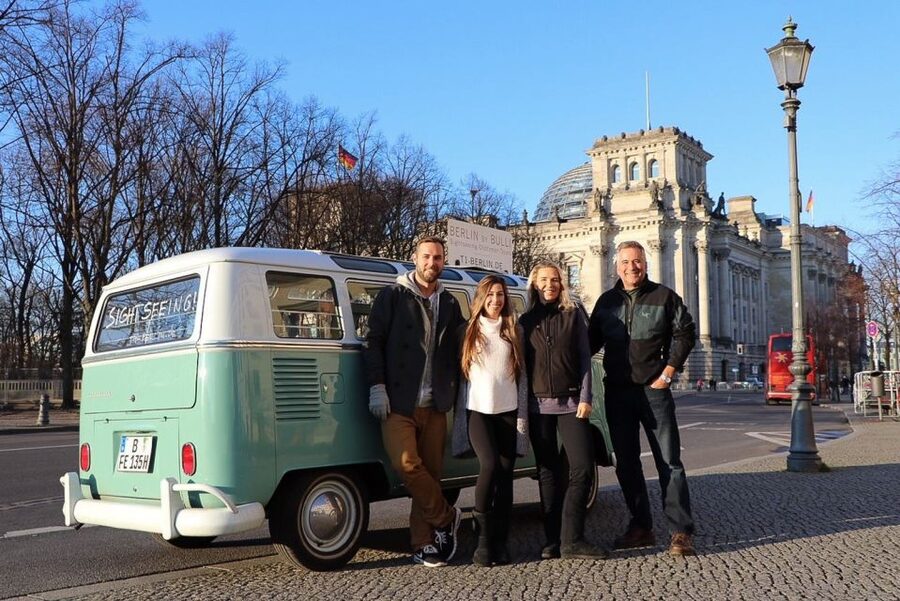
The price is $347 per private group of up to seven. At full capacity, that works out to about $50 per person for two hours. For a couple, the per-person cost is much higher, but you are paying for exclusive use of a restored vintage vehicle, a driver-guide, pickup, a customized route, historical photographs, and the freedom to ask for a more personal pace.
I think the value is strongest for a family or group of friends that would otherwise buy several seats on a standard sightseeing tour. You share the cost, avoid a large crowd, and get a vehicle that is itself part of the Berlin experience.
The value is weaker if your main goal is entering museums or spending long periods at each landmark. Admission to attractions is not listed as part of the tour, and two hours cannot replace a detailed visit to Museum Island, the Holocaust Memorial information center, or a Wall museum.
You also need to consider mobility and body size. The van is wheelchair accessible, but the maximum weight is 130 kilograms. If someone in your group needs a particular type of transfer or seating arrangement, confirm it before paying.
Cancellation is free up to 24 hours in advance, and you can reserve now and pay later. Those terms are useful if your Berlin schedule is still moving around.
Who should book this Berlin VW bus tour?
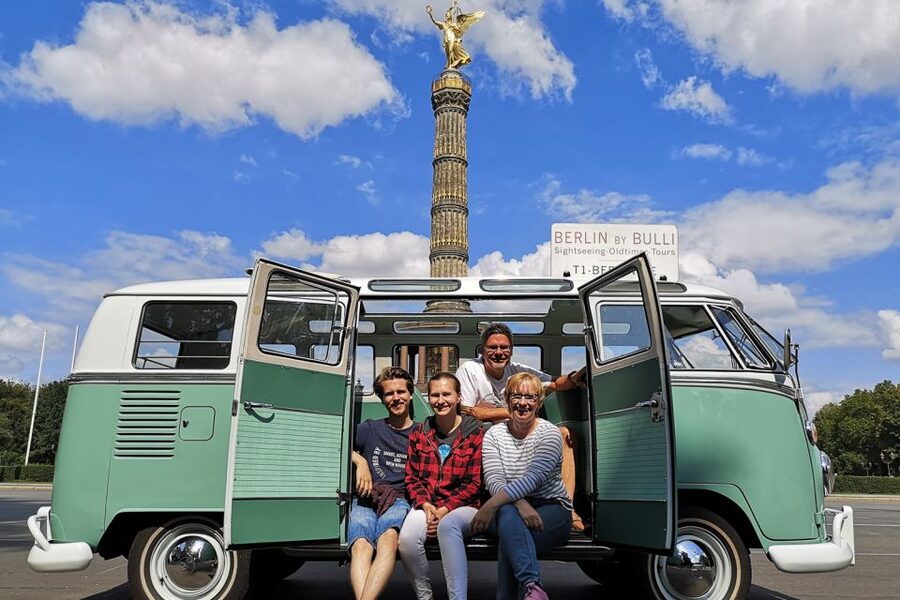
I would choose this tour for a first visit, a family group, or anyone who wants a broad introduction without spending the day on foot. It is also a good fit for people who enjoy old vehicles, photography, and personal stories more than rigid sightseeing schedules.
It suits older relatives particularly well if the seating and accessibility arrangements work for them. The front seat can make it easier to hear the guide, as one family discovered with a 97-year-old parent.
Teenagers may appreciate the unusual vehicle and the steady movement through the city. The private format also means the guide can keep explanations lively rather than delivering a one-size-fits-all speech.
I would choose something else if you want a long walking tour, museum entry, or a detailed specialist study of one period. The two-hour ride gives you a smart overview. You will still need to return to the places that catch your attention.
Should you book it?
Book this tour if you want Berlin’s major sights linked by a personal story, with a pristine vintage VW bus adding fun to the history. The strongest features are the private group format, the flexible route, the old photographs, and guides such as Rajko and Carsten who can explain both famous sites and overlooked corners.
The main limits are the short duration, the firm weight restriction, and the fact that you see many places rather than fully visiting them. For a group of up to seven, the price is reasonable and the experience feels distinct from a normal city bus.
I would use it near the start of a Berlin stay. You get a broad sense of the city, learn which sites deserve more time, and enjoy a memorable ride while doing it.
FAQ
How long is the Berlin VW bus tour?
The tour lasts two hours. Starting times depend on availability.
How many people can join the private tour?
The private group can include up to seven people.
What sights are included?
The route includes Berlin Cathedral, the Alte Nationalgalerie, Berlin State Opera, Potsdamer Platz, the Berlin Wall, the Holocaust Memorial, the former Führer Bunker location, Berlin City Palace, Jungfern Bridge, Galgenhaus, Rotes Rathaus, the TV Tower, Neptune Fountain, and St. Mary’s Church, along with other locations.
Is hotel pickup included?
Yes. Pickup at your accommodation is included.
Which languages are available?
The live guide is available in English, German, and Spanish.
Is the tour wheelchair accessible?
The activity is listed as wheelchair accessible. It is not suitable for people over 287 pounds, or 130 kilograms.
Just added in Berlin
- Berlin & The Third Reich Private Guided Tour★ 5.0 · 3 reviews
- Third Reich Quest Experience in Berlin★ 4.5 · 7 reviews
- Private Analogue Photography Experience in Berlin★ 5.0 · 3 reviews
- Berlin Urbex Adventure and History Tour★ 5.0 · 9 reviews
- The Beauty of Berlin by Bike: Private Tour★ 5.0 · 59 reviews
- Berlin: Guided Bike tour of the Berlin Wall and Third Reich★ 5.0 · 160 reviews
- Beyond Currywurst: Berlin’s Hidden Street Food & Culture Tour★ 5.0 · 100 reviews
- Berlin Third Reich & Cold War Walking Tour With A Guide★ 5.0 · 7 reviews
Berlin Tours, compared.
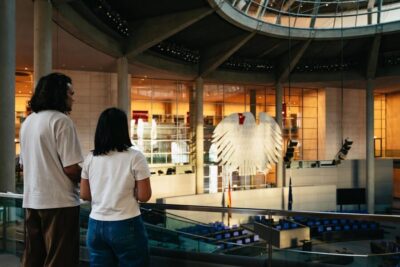
Reichstag, Dome and Government District Guided Tour
Read our review →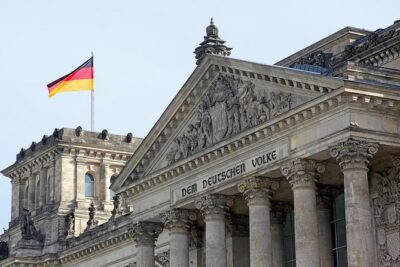
Reichstag, Plenary Chamber, Cupola & Government Tour
Read our review →