
Reviewed · WALKING TOURS
Berlin: Hidden Backyards Guided Walking Tour
Berlin’s most revealing spaces are often behind its street fronts. This two-hour walk leads you through the courtyards of Spandauer Vorstadt, where peeling walls, art studios, cafés, old workshops, and ivy-covered passages show a more personal side of Berlin than the grand sights do. The story here reaches from Jewish life around the New Synagogue to the district’s present-day creative scene.
I like the way the walk joins architecture with social history, rather than treating courtyards as pretty photo stops. I also like the chance to enter places such as Haus Schwarzenberg and Heckmann Höfe, spaces you could easily pass without realizing what is behind the entrance.
The main consideration is language. The activity is listed in English and German, but one booking reported receiving a German-only tour despite expecting English. Confirm your chosen departure language if the history is central to your visit.
Key points
- Haus Schwarzenberg: See a rough-edged courtyard filled with street art, studios, and traces of Berlin’s changing uses.
- Hackesche Höfe: Visit one of Mitte’s best-known courtyard complexes and compare its polished architecture with less formal backyards nearby.
- Jewish Berlin: Learn how the area around the New Synagogue became a center of Jewish life before its later transformation.
- Heckmann Höfe: Pause in a colorful 19th-century courtyard shaded by trees and ivy-covered buildings.
- A useful two-hour walk: The route is easy to fit into a day in Mitte and costs $23 per person, with no food or drinks included.
- Guide quality matters: Nick, Nicolas, Susanne, Lydia, and Alex have all been singled out for clear, lively storytelling and strong local context.
Why Berlin’s courtyards tell a better story
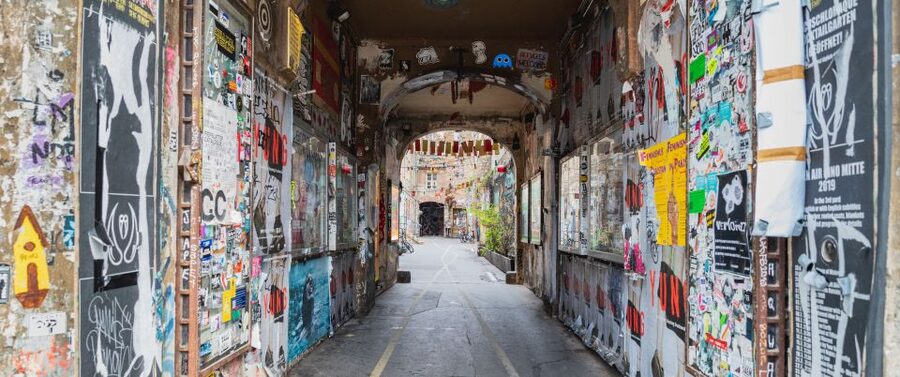
Berlin’s public face can feel monumental: Brandenburg Gate, Museum Island, the Berlin Wall, and broad avenues shaped by war and political power. This tour shifts your attention to the spaces behind the façades.
The courtyards of Spandauer Vorstadt reveal how Berliners lived and worked in tighter quarters. They connect apartment buildings, workshops, businesses, cultural rooms, and places of worship. Some are tidy and restored. Others remain rough, painted, patched, and visibly adapted over time.
That contrast is the point. You are not simply walking through attractive passageways. You are seeing how a central neighborhood changed from a working district into a center of Jewish life, then through war and division, and finally into one of Berlin’s more international and fashionable areas.
I find this kind of walk useful early in a Berlin visit because it gives you a framework for the city. Once you understand how the courtyards functioned, the streets around Hackescher Markt and Oranienburger Straße make more sense.
More Walking Tours in Berlin
- Discover Berlin Half-Day Walking Tour
★ 5.0 · 9,624 reviews - Berlin: Third Reich and Cold War 2 Hour Walking Tour
★ 4.9 · 6,830 reviews - Berlin: Discover Berlin Walking Tour
★ 4.9 · 5,998 reviews
Starting at Hackescher Markt
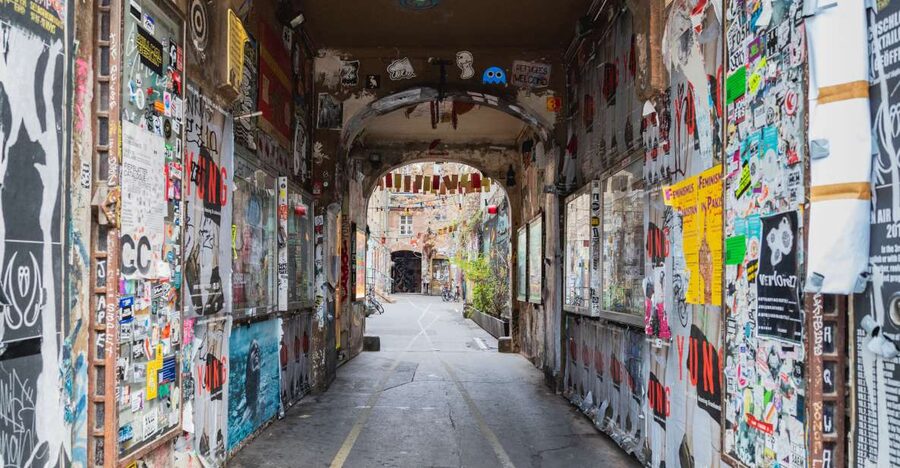
Meet your guide in front of the BUTLERS shop at Hackescher Markt 4. This is a central and easy-to-find location, but the surrounding area can be busy, so arrive with enough time to locate the shop and your guide.
The tour begins in Mitte, close to several major sights and public transport connections. That makes it a practical choice for a morning or afternoon between museum visits. The walk finishes around Oranienburger Straße, with two listed drop-off points on that street.
The route covers several courtyards and historic sites, but it is not presented as a long-distance hike. The pace is generally described as easy, and the two-hour length works well if you want a focused introduction without giving up half a day.
Hackesche Höfe and the art of the courtyard
Hackesche Höfe is one of the most recognizable stops. Its connected courtyards show a more decorative side of Berlin architecture, with designed façades and carefully arranged spaces rather than the rougher, improvised feel found elsewhere on the route.
Your guide uses the complex to explain how Berlin’s courtyards were built and used. These were not designed only for strolling. They linked residential buildings with commercial and working areas, creating a practical inner world behind the street.
For you, the value is the explanation of what you are looking at. Without context, it is easy to photograph the tiles, façades, and passageways and move on. With a guide, the courtyards become evidence of Berlin’s urban development and changing social structure.
Hackesche Höfe can also be one of the busier sections of the walk. If you prefer quiet streets and completely empty spaces, this is not the most secluded part of the route. Still, it provides an important comparison with the less polished courtyards that follow.
Haus Schwarzenberg, where the walls still feel alive
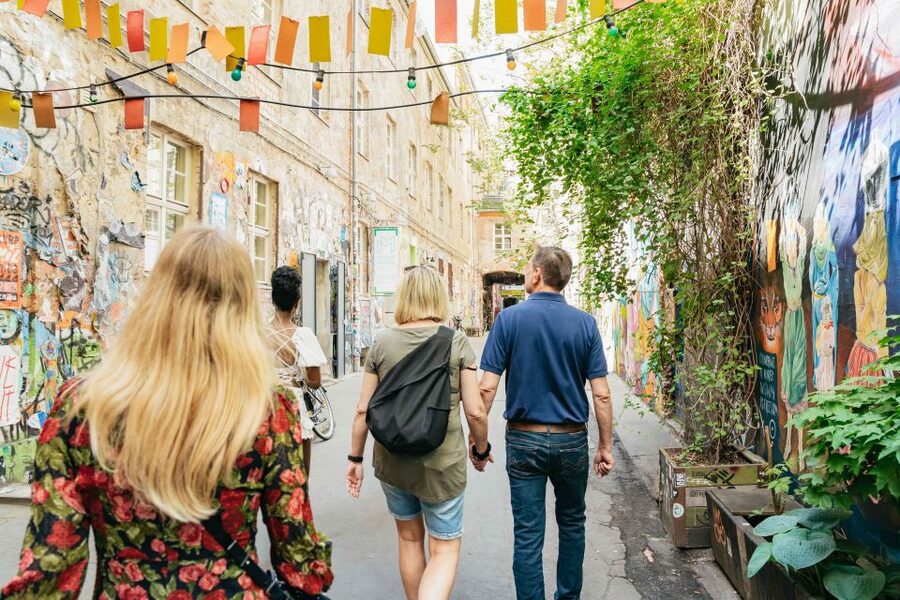
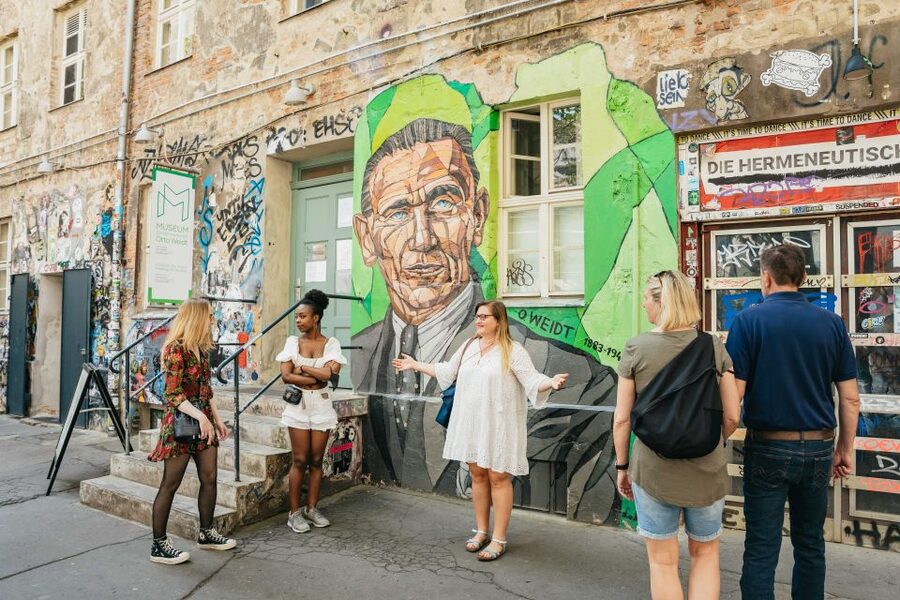
Haus Schwarzenberg offers the sharpest change of mood. Its courtyard is associated with artists and creative studios, and the walls carry layers of street art. The setting feels less finished and less commercial than Hackesche Höfe.
This is one of the tour’s strongest stops because the building’s current use sits beside evidence of its earlier functions. The courtyard is not presented as a restored relic frozen in the past. It has been reused, marked, and adapted.
I like places such as this because they show why Berlin’s appeal cannot be reduced to grand monuments. The cracked surfaces and painted walls are part of the story. They reflect a city where old buildings have repeatedly been given new lives.
Your guide can also help you read the courtyard as more than an art backdrop. The changing uses of the buildings connect to wider shifts in work, housing, and culture in the district. It is a good place to ask questions if you want to understand how Berlin’s creative identity grew out of older urban spaces.
Same city, a completely different kind of day:
- Berlin: Reichstag, Dome and Government District Guided Tour
★ 4.7 · 18,288 reviews - Berlin: 1-Hour City Tour by Boat with Guaranteed Seating
★ 4.3 · 16,993 reviews - Berlin: Boat Tour Along the River Spree
★ 4.4 · 11,252 reviews - Berlin: Hop-on Hop-off Bus Tour with Live Commentary
★ 4.3 · 8,579 reviews
The Jewish quarter around the New Synagogue

The walk places the courtyards within the history of Jewish Berlin. Spandauer Vorstadt became a major center of Jewish life around the New Synagogue, and the tour explains how that community shaped the neighborhood.
The subject is important, but the format keeps it tied to actual streets and buildings. You are not sitting through a detached lecture. You are moving through the places where religious, commercial, residential, and cultural life once met.
The route also touches on Auguststraße, an area that helps connect the district’s past with its current international character. The historical story includes difficult periods and major change, but the strongest guides keep the presentation grounded and human.
Several departures have been led by guides praised for making complicated history easy to follow. Nick is especially noted for combining a broad view of Berlin’s past with stories about individual places. Nicolas has been described as informal and friendly in his delivery, while Susanne is known for an energetic presentation style.
That personal delivery matters here. Berlin’s history can quickly become a list of dates and political events. A good guide turns it into a story about buildings, residents, religious life, architecture, and the ways people used the city.
Rosenhöfe and the quieter passages
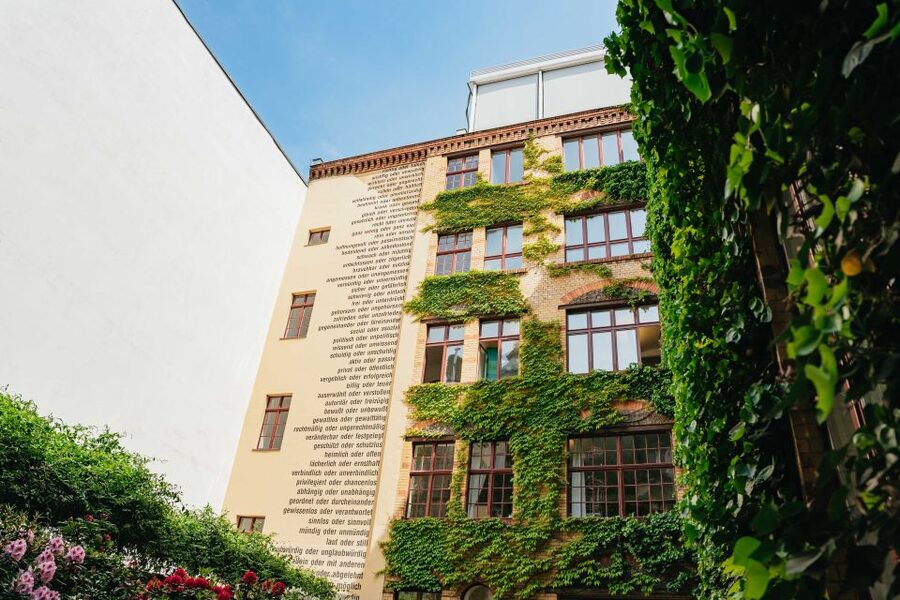
Rosenhöfe is another stop along the route. Compared with the better-known Hackesche Höfe, it gives you another chance to see how courtyard architecture varies within a small area.
The value of including several courtyards is comparison. One may feel formal and restored. Another may be used by artists. A third may function as a calmer pocket away from the main street. Taken together, they show that Berlin does not have one single courtyard style or one fixed story.
This is also where a guide saves you time. Some entrances look private or ordinary from the sidewalk. You may not think to enter, and you should not wander into residential spaces without guidance. The tour takes you to places that are open or appropriate to visit and explains what makes them significant.
Sophienkirche and the surrounding neighborhood
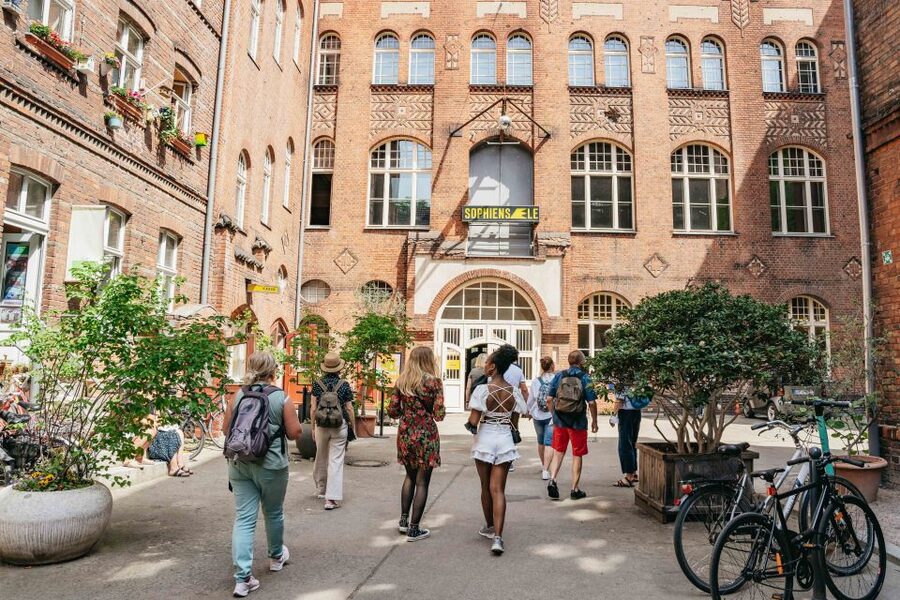
Sophienkirche adds a religious and architectural marker to the route. Its presence helps broaden the tour beyond courtyards and Jewish history, showing how different institutions and communities occupied the same part of Berlin.
The church is part of the neighborhood story rather than a long interior visit. Expect the guide to use it as a point of reference while explaining how the surrounding quarter developed.
The tour’s strength is this layering. You see a courtyard, a church, a street, and an old building, then learn how each fits into the larger district. It is a better approach than treating every stop as an isolated attraction.
Auguststraße and the move toward modern Berlin
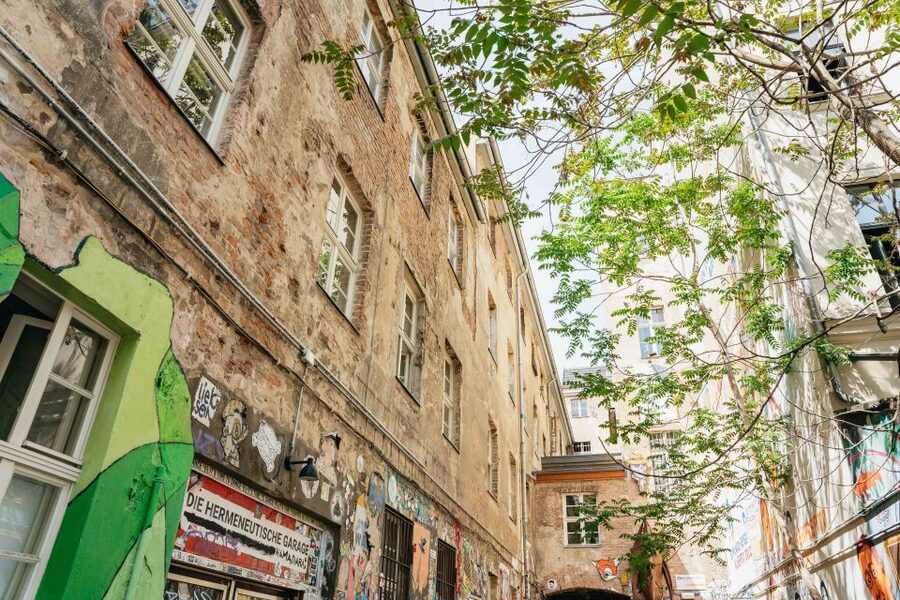
Auguststraße helps show the area’s transformation into a fashionable, creative, and international part of Mitte. The street sits within a neighborhood that has seen major shifts in population, business, art, and tourism.
That transformation is worth examining carefully. The tour does not present the district as if it has always been stylish. Its character comes from many changes, including the reuse of older buildings and the arrival of new cultural and commercial activity.
You will notice that some parts of the route feel carefully restored, while others retain a rougher appearance. That mix is central to the experience. It also means you should not expect every stop to look picture-perfect.
A pause at Heckmann Höfe
Heckmann Höfe is the route’s most relaxed courtyard stop. Trees, ivy-covered buildings, and colorful details give it the feel of a small retreat from Oranienburger Straße.
The space dates to the 19th century and now works as a popular local meeting place. It is a useful final courtyard because it brings together several ideas from the walk: older construction, changing uses, creative activity, and the desire for calm in a central city.
You may be able to pause here and take in the setting rather than rushing through for a photograph. The contrast between the busy street outside and the quieter courtyard inside is exactly what makes Berlin’s back alleys so rewarding.
Still, keep expectations realistic. This is a guided walking tour, not a café crawl or food experience. Food and drinks are not included, and any stop here is about the space and its history rather than a scheduled refreshment break.
What the $23 price delivers
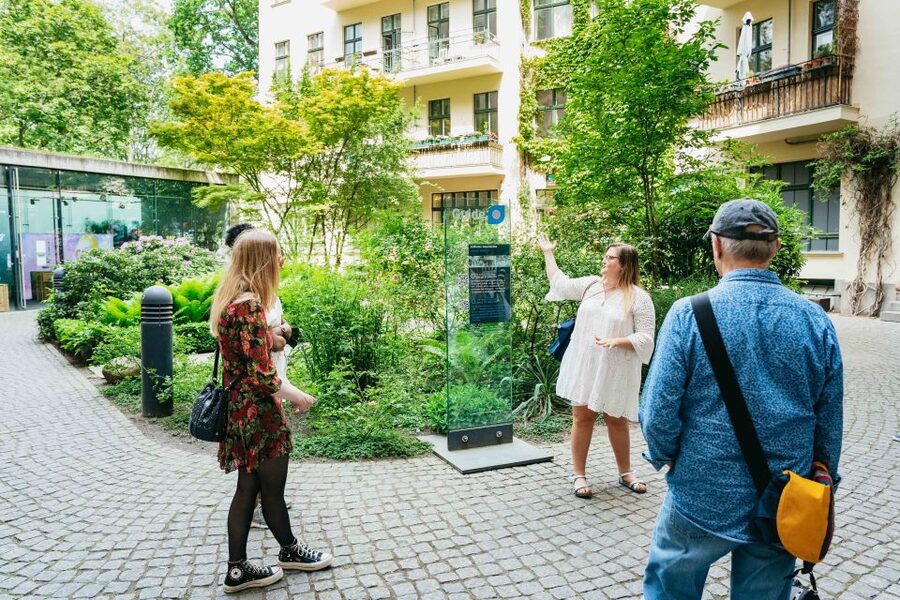
At $23 per person, the tour offers good value if you want context rather than only directions. You are paying for two hours with a live guide, access to a planned route through several courtyards, and an explanation of how the district changed.
You could walk past some of these courtyards alone, but you would miss much of their meaning. The price is especially fair if you are interested in architecture, Jewish Berlin, urban history, street art, or the way old buildings are reused.
The tour is less useful for someone who wants a long stop at every site or plenty of free time for photographs. Two hours requires steady movement. The guide must keep the group together and cover a broad story.
There is also no food or drink included, so plan a café stop before or after. Finishing on Oranienburger Straße makes that easy, though the activity itself does not promise a particular restaurant or break.
Guides who shape the experience
The strongest part of this walk is the guide’s delivery. The information covers several centuries and can easily become dense, so a clear storyteller makes a major difference.
Nick has been praised for taking groups beyond a basic courtyard tour and connecting the stops to roughly 600 years of Berlin history. Nicolas is known for an informal style that feels conversational. Susanne has led energetic departures, and Lydia and Alex have also been praised for adding useful local background.
The guide roster can change, so you should not book expecting one particular person unless the booking page confirms it. The consistent theme is a guide who explains architecture and history in an accessible way rather than simply naming buildings.
If you have intermediate German, one past participant found the tour manageable with occasional checks from the guide. Still, the activity is listed in English and German, and another person reported receiving German only. For an English-language booking, verify the language before setting off.
Weather, access, and practical planning
The walk takes place rain or shine. Berlin’s weather can change quickly, so wear shoes suited to uneven city pavements and bring rain protection when the forecast looks uncertain. A past departure remained enjoyable in heavy rain, while another took place in bitter cold, but that does not make bad weather comfortable.
The activity is listed as wheelchair accessible. If you need specific assistance, confirm the details at booking, since the supplied information does not describe pavement conditions or the exact accessibility of every courtyard entrance.
Free cancellation is available up to 24 hours before the tour for a full refund. You can also reserve now and pay later, which helps if your Berlin schedule is still shifting.
Because the tour starts and ends in central Mitte, it fits well alongside nearby sights. You might pair it with Hackescher Markt, Museum Island, the New Synagogue area, or Oranienburger Straße, but leave enough time so you are not rushing from one appointment to the next.
Who should book this walk
I would recommend it most strongly to first-time Berlin visitors who have already seen the main monuments and want a closer look at everyday urban spaces. It is also a good choice for repeat visitors who want something more local than another major museum.
Architecture fans will get plenty from the changing façades and courtyard layouts. People interested in Jewish history will value the focus on the area around the New Synagogue. Street-art fans will appreciate Haus Schwarzenberg, while anyone curious about Berlin’s creative culture will enjoy seeing how old spaces now support studios and cultural activity.
Families with older children may find the route engaging because the courtyards provide visual variety. Very young children may find two hours of historical explanation less appealing, especially in poor weather.
Should you book the Hidden Backyards Tour?
Book this tour if you want Berlin explained through small spaces and human stories, not just headline sights. The $23 price is sensible, the walk is short enough to fit into a busy itinerary, and the route reaches places you might not confidently find alone.
Skip it if you want a food tour, a long architectural lecture at each stop, or a fully private experience. Also check the tour language carefully, especially if you need English.
For most visitors, this is a smart Mitte walk: practical, reasonably priced, and full of the kind of details that make the city easier to understand after you leave the courtyard and return to the street.
FAQ
How long does the Hidden Backyards Guided Walking Tour last?
The tour lasts two hours.
How much does the tour cost?
The price is $23 per person.
Where does the tour begin?
Meet your guide in front of the BUTLERS shop at Hackescher Markt 4.
Where does the tour finish?
The listed drop-off points are on Oranienburger Straße.
Which courtyards and sights are included?
The route includes Haus Schwarzenberg, Hackesche Höfe, Rosenhöfe, Sophienkirche, Auguststraße, and Heckmann Höfe.
Is the tour offered in English?
The activity is listed with English- and German-speaking guides. One booking reported a German-only departure, so confirm the language when you reserve.
Is the walk wheelchair accessible?
Yes, the activity is listed as wheelchair accessible.
What happens if it rains?
The tour runs rain or shine. Bring suitable clothing and footwear for the weather.
Just added in Berlin
- Berlin & The Third Reich Private Guided Tour★ 5.0 · 3 reviews
- Third Reich Quest Experience in Berlin★ 4.5 · 7 reviews
- Private Analogue Photography Experience in Berlin★ 5.0 · 3 reviews
- Berlin Urbex Adventure and History Tour★ 5.0 · 9 reviews
- The Beauty of Berlin by Bike: Private Tour★ 5.0 · 59 reviews
- Berlin: Guided Bike tour of the Berlin Wall and Third Reich★ 5.0 · 160 reviews
- Beyond Currywurst: Berlin’s Hidden Street Food & Culture Tour★ 5.0 · 100 reviews
- Berlin Third Reich & Cold War Walking Tour With A Guide★ 5.0 · 7 reviews
Walking Tours, compared.


Berlin’s Best: 2 Hour Walking Tour Third Reich and the Cold War
Read our review →
Third Reich Berlin: Hitler and WWII Walking Tour
Read our review →
Browse the lists this tour appears in