
Reviewed · SHORE EXCURSIONS
Explore Berlin Shore Excursion: Top Attractions Private Tour from Warnemuende
Berlin’s most important stories are packed into this long day: Nazi power, wartime destruction, the Cold War border, and the city’s hard-won reunification. This private shore excursion gives you a guide, a driver, and a vehicle for the long run from Warnemünde to the capital, so you can cover far more than a train trip and taxi hopping would allow.
I especially like the private format, which lets your group ask questions and adjust the pace. I also like the mix of famous sights and more serious places, particularly the Berlin Wall Memorial and the Soviet War Memorial. The tradeoff is clear: at $1,075.31 per person, this is an expensive day, and twelve hours includes the journey between the port and Berlin.
Key points to know before booking
- A full Berlin day from Warnemünde: You get about 12 hours for transport, sightseeing, and the return to your ship.
- Private guide and driver: Your group travels together in an air-conditioned minibus and meets an expert guide in Berlin.
- History beyond the postcard sights: The route covers Nazi Germany, World War II, the Cold War, reunification, and earlier German politics.
- Mostly short stops: The schedule fits ten major locations, but many visits last only 12 to 35 minutes.
- Strong guide-led experience: Phil and Brian Bell are named in particularly positive comments for clear explanations, flexibility, and use of photographs on an iPad.
- Best for small groups with a firm budget: Group discounts may help, but the listed per-person cost is high.
Why this private Berlin trip makes sense from Warnemünde
The main problem with seeing Berlin from a cruise port is distance. Warnemünde is on the Baltic coast, while Berlin is inland, so a visit requires careful timing. This tour removes the most stressful parts: a driver meets you dockside, takes you to Berlin in a private air-conditioned minibus, and brings you back to the ship.
You then meet your guide in Berlin rather than spending the whole day with one person in the vehicle. The arrangement gives you a separate driver and guide, which is useful on a packed sightseeing day. Your driver remains with the group, according to the experience details, so you do not need to sort out taxis between widely scattered sights.
This is not a relaxed museum day. It is a broad introduction to Berlin, with ten stops covering the city from the Middle Ages and Prussian era through Nazi rule, World War II, the Cold War, and reunification. The short stop lengths make that possible, but they also mean you should expect orientation, explanation, and photographs rather than long visits inside museums.
The price deserves a close look. At $1,075.31 per person, the tour makes the most sense for a group that values privacy, ship-safe transport, and a tailored guide. Since group discounts are offered, the cost may become more reasonable for a larger private party. Food and drinks are not included, so you should plan for those separately.
More Shore Excursions in Rostock
- All-in-One Berlin Shore Excursion from Warnemunde
★ 4.5 · 293 reviews - Best Berlin Shore Excursion from Warnemunde or Rostock Port
★ 4.8 · 200 reviews - Lovely Rostock and Warnemünde Shore Excursion for Cruise Ships
★ 5.0 · 44 reviews
Reichstag and the political heart of modern Germany
The Reichstag is a strong opening stop because its story reaches across several eras. Built in 1894, it played a role in the Weimar Republic, witnessed the rise of the Nazis, suffered damage during World War II, and later became a symbol of modern German democracy.
The tour allows about 15 minutes here, with admission listed as free. That is enough for a focused explanation and exterior views, but you should not assume you will have time for a full building visit. The modern glass dome, designed by Norman Foster, is one of Berlin’s best-known features and offers broad city views when access is available.
Your guide can help connect the building to the political changes around it. That context matters because the Reichstag is not simply an attractive government building. It helps explain how Germany moved from monarchy to republic, dictatorship, division, and reunified democracy.
East Side Gallery and Berlin’s divided city
The East Side Gallery gives you one of the easiest ways to see how the Berlin Wall changed meaning after 1989. A 1.3-kilometer stretch of the former wall now carries more than 100 murals by artists from around the world.
You have about 20 minutes here. That is plenty for several photographs and a quick look at the artwork, but not enough to inspect every mural. The paintings reflect hopes of reunification, freedom, political change, and human rights, so your guide adds useful background to what might otherwise seem like a long outdoor art display.
The location beside the Spree River also gives you a change of mood after the formal government district. I like this stop because the wall is not treated only as a relic. Its painted surface shows how Berlin turned a structure of control into a public space for expression.
The Soviet War Memorial in Tiergarten
The Soviet War Memorial in Tiergarten is a solemn stop. It honors Soviet soldiers killed during the Battle of Berlin in 1945, the final major fighting that ended Nazi rule in the city.
The large statue of a Soviet soldier holding a raised sword dominates the site. A cemetery contains thousands of Soviet soldiers, and the grounds are carefully maintained. Your guide can explain both the memorial’s purpose and the complicated political meaning of Soviet victory and postwar influence in Berlin.
The scheduled visit is only 15 minutes, so expect a brief, respectful pause rather than a long study of the site. I consider this stop valuable because it widens the story beyond the usual American and Western European view of the war. It also prepares you for the later Cold War sites by showing how the Soviet presence shaped Berlin after 1945.
Same city, a completely different kind of day:
- Rostock: Guided tour of the historic city center
★ 4.5 · 311 reviews - Rostock: City Walking Tour
★ 4.9 · 198 reviews - Rostock: Full-Day, Half-Day, or Sunset Sailing Experience
★ 4.7 · 174 reviews - Rostock: Warnemünde and Rostock Half-Day Shore Trip
★ 4.7 · 158 reviews
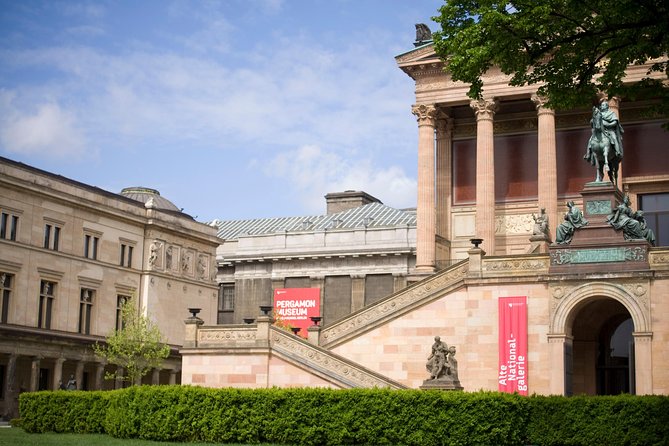
Museum Island and Berlin’s cultural center
Museum Island sits in the Spree and contains five major museums in one UNESCO World Heritage site. The group includes the Pergamon Museum, Neues Museum, Altes Museum, Bode Museum, and Alte Nationalgalerie.
The named collections include ancient monuments such as the Ishtar Gate, the bust of Nefertiti, Greek and Roman objects, Byzantine art, sculpture, and nineteenth-century paintings by artists including Monet and Manet. The buildings themselves are also part of the attraction, with classical designs beside later architectural additions.
Your stop lasts about 20 minutes, with admission listed as free. That means you should treat this as an architectural and city-orientation visit, not as a museum tour. You will get a sense of the island and its importance, while a separate ticket and much more time would be needed to explore the collections properly.
This is one place where the short schedule may frustrate art lovers. If seeing Nefertiti or the ancient architecture inside the museums is your top goal, this tour does not offer enough time for that. If you want a quick introduction while keeping the day focused on Berlin’s political past, it fits well.
The Führerbunker site and the end of Nazi Berlin
The Führerbunker stop deals with Adolf Hitler’s final days in April 1945. The underground complex beneath the Reich Chancellery was used as an air-raid refuge and contained private rooms for Hitler and his close associates. Hitler married Eva Braun there on April 29, 1945, and both died by suicide the next day as Soviet forces closed in.
The bunker was largely destroyed after the war and filled in, so there is little physical structure to see today. That is important to understand before you arrive. This is a historical location marked by explanation, not an underground attraction with rooms open for viewing.
The scheduled 15 minutes should be enough for your guide to explain the site and its place in the collapse of Nazi Germany. I appreciate the inclusion because it prevents the tour from presenting only grand monuments. It also requires a serious tone. There is no spectacle here, and that is exactly why the guide’s framing matters.
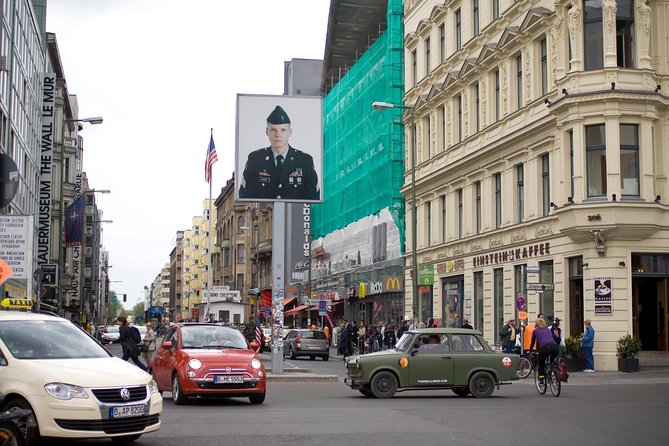
Checkpoint Charlie and the Cold War border
Checkpoint Charlie was once a key crossing between East and West Berlin. Today, the site is famous, but its meaning comes from the tense years when the city was divided and American, Soviet, and East German authorities controlled movement.
Your guide will cover the 1961 tank standoff between American and Soviet forces, escape attempts, and the checkpoint’s role in the wider Cold War. The nearby museum focuses on espionage, escape plans, and the Berlin Wall.
The stop lasts 15 minutes, so you should not expect a full museum visit. The checkpoint itself can feel more like a photo stop than a preserved border crossing, which makes clear explanation especially useful. I would listen closely here and treat the location as a starting point for understanding the wider division of Berlin, not as a complete museum experience by itself.
Bernauer Strasse and the human cost of the Wall
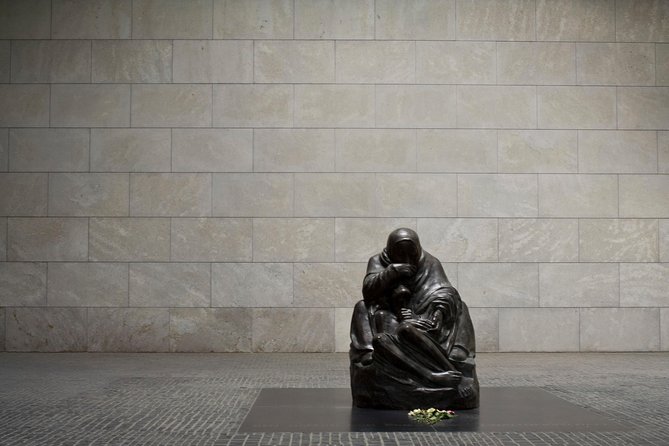
The Berlin Wall Memorial at Bernauer Strasse is likely the most emotionally direct Cold War stop on the route. This was an area where families and individuals attempted dangerous escapes, including efforts through tunnels such as Tunnel 57 and Tunnel 29.
The site preserves sections of the Wall and original watchtowers. Your guide will explain how the border worked and share the stories of people who tried to cross it. Unlike a simple checkpoint photograph, Bernauer Strasse helps you understand the physical barriers and the risks faced by people living beside them.
The visit lasts about 35 minutes, the longest stop in the schedule. That extra time matters. You can look at the surviving structures, hear personal accounts, and grasp how the Wall cut through ordinary neighborhoods.
For me, this is one of the most valuable stops because it puts human choices at the center of Cold War history. It also balances the grand political story told at Checkpoint Charlie with the daily reality of divided families and restricted movement.
Brandenburg Gate and the story of reunification
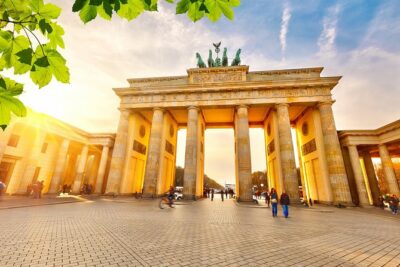
The Brandenburg Gate is the tour’s most recognizable photo stop. Built in the late eighteenth century for King Frederick William II of Prussia, the neoclassical gate has twelve Doric columns and a Quadriga, a chariot drawn by four horses, on top.
The gate later became a symbol of division. During the Cold War, it sat beside the Berlin Wall and was closed off with barbed wire. After the Wall fell in 1989, the reopened gate became one of the clearest public symbols of German reunification.
The stop lasts 12 minutes, so you will have time for photographs and a concise explanation. Look along Unter den Linden Boulevard and toward the Reichstag. The setting helps you connect the gate’s royal beginnings with its later role in twentieth-century German politics.
Bebelplatz and the danger of censorship
Bebelplatz is a compact square with a heavy story. On May 10, 1933, Nazi students burned thousands of books considered un-German. The event showed how censorship and political intimidation reached into the intellectual life of Berlin.
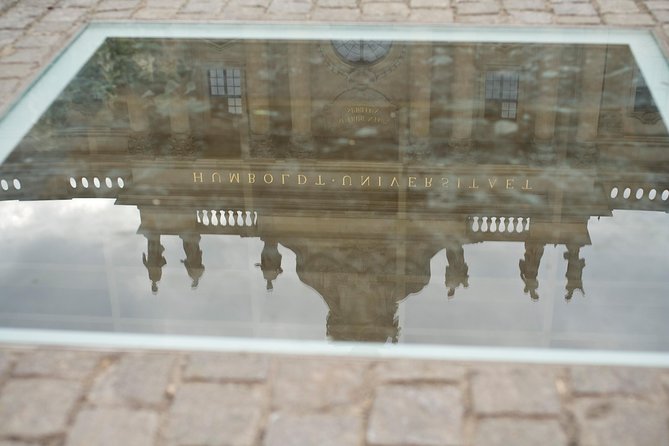
A glass panel set into the pavement reveals empty bookshelves below ground. The memorial is easy to miss if you do not know where to look, so your guide’s explanation adds real value. The square also includes the State Opera House and Humboldt University, linking the book burning to the city’s long academic and cultural traditions.
The visit lasts 15 minutes. That is enough to see the memorial and understand its meaning, though not enough to linger over the surrounding buildings. This is a good example of why a guide helps on a fast city tour. Without context, the empty shelves are an understated design. With context, they become a sharp reminder of what the regime tried to erase.
Gendarmenmarkt and Berlin’s grand architecture
Gendarmenmarkt closes the sightseeing route with a more decorative view of central Berlin. The square is framed by the Konzerthaus and the French and German Churches, creating a formal mix of Baroque and neoclassical architecture.
The site dates back to the seventeenth century and has long been linked with Berlin’s cultural life. It also hosts events and, in winter, a Christmas market. Your visit lasts about 16 minutes, enough for photographs and a short walk through the square.
After so many sites tied to war and dictatorship, this stop gives you a calmer look at Berlin’s architecture. It also rounds out the tour by showing that the city is not defined only by the Wall, Hitler, and the Cold War.
What the guide can add to a packed schedule
The strongest part of this experience is not simply the number of landmarks. It is the chance to have one person connect them. The route jumps from Prussian kings to Nazi censorship, Soviet victory, Cold War escapes, and reunification. Without a guide, those stops could feel like unrelated points on a map.
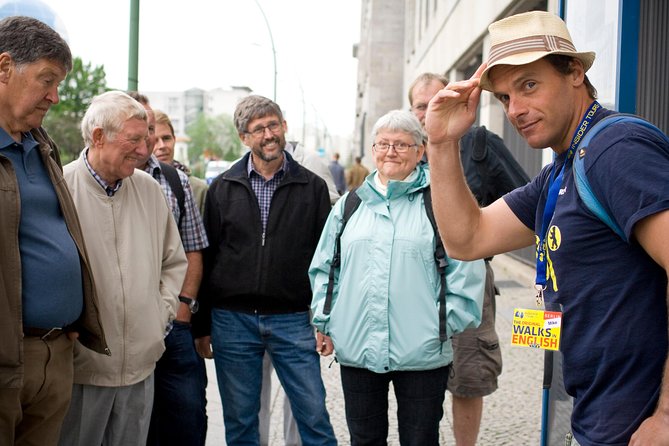
Phil is specifically praised for explaining World War II and Germany’s role in the conflict to a family member interested in that subject. He used photographs on an iPad to clarify places and events. Brian Bell is described as professional, friendly, flexible, and able to answer detailed questions about Germany’s past and present.
Those names do not guarantee which guide you will receive, but they show the kind of guide-led experience the tour aims to provide. I would tell your guide early if your group cares most about Nazi Germany, Cold War Berlin, architecture, or general German history. The private format makes that request more practical than it would be on a large coach tour.
Timing, comfort, and the ship connection
The driver meets you dockside in a modern air-conditioned vehicle or minibus. Your cruise ship name, docking time, disembarkation time, and required re-boarding time must be supplied when you book. That information is essential because the day is built around the ship’s schedule.
The experience lasts about 12 hours and includes port pickup and drop-off, round-trip private transport, and the Berlin sightseeing program. Food and drinks are not included, so plan for your own meals during the day. The supplied details do not specify a restaurant or meal break, so ask about the day’s eating plan before departure.
The route contains many stops, but the pace is brisk. Most locations last between 12 and 20 minutes, with the Berlin Wall Memorial receiving 35 minutes. You will see a great deal, but you should not expect long interior visits or much unplanned wandering.
Confirmation is normally sent at booking. If you book within five days of travel, confirmation may arrive within 48 hours and depends on availability. Free cancellation is available up to 24 hours before the start time. Changes or cancellations within 24 hours are not accepted for a refund.
Who should book this private shore excursion?
I would choose this tour if you have one day in port, want a broad first look at Berlin, and care more about historical context than extended museum time. It is also a good match for families, since a private guide can adjust explanations and answer specific questions.
The tour suits groups that value a private vehicle and a direct ship connection. It can also work well for people who do not want to navigate German rail connections under cruise-time pressure.
I would hesitate if you want a slow day, a long meal, or serious time inside Museum Island’s collections. I would also compare the total group price carefully. At $1,075.31 per person, the convenience must matter to you, and the value improves when the cost is shared through the available group discount.
Should you book it?
Book this experience if your priority is seeing Berlin’s major political and historical sites in one protected day from Warnemünde. The combination of private transport, a separate driver and guide, and a ship-focused schedule removes much of the risk that comes with arranging the journey yourself.
The best reasons to book are the clear historical range, the Berlin Wall Memorial, and the chance to ask questions in a private group. The main reasons to pass are the high price and the short time at each stop.
For a first Berlin visit from a cruise, I find the plan sensible and ambitious. Just treat it as a guided overview rather than a museum-heavy exploration, and confirm your group size, guide arrangements, meal plan, and ship timing before paying.
FAQ
How long does the shore excursion last?
The experience lasts approximately 12 hours, including transportation between Warnemünde and Berlin and the sightseeing stops.
Where does pickup take place?
Pickup is offered dockside at the cruise ship in Warnemünde. The driver waits in a modern air-conditioned vehicle or minibus.
Is transportation included?
Yes. The tour includes port pickup and drop-off, round-trip private transfer, and transport by air-conditioned minibus.
Is the tour private?
Yes. Only your group participates in the private tour or activity.
Is a guide included?
Yes. The experience includes a separate driver and guide. The driver takes you to Berlin, where you meet your guide.
What information must cruise passengers provide when booking?
You must provide your ship name, docking time, disembarkation time, and re-boarding time.
Are food and drinks included?
No. Food and drinks are not included in the tour price.
Will I enter the museums on Museum Island?
Museum Island is included as a sightseeing stop, but admission is listed as free and the stop lasts about 20 minutes. The supplied details do not confirm entry to any museum or a dedicated museum visit.
How much time is spent at the Berlin Wall Memorial?
The stop at the Berlin Wall Memorial lasts about 35 minutes. You can see preserved sections of the Wall and original watchtowers while hearing about escape attempts and life in divided Berlin.
Can I cancel for a full refund?
Yes, if you cancel at least 24 hours before the experience start time. Cancellations or changes made less than 24 hours before the start time are not refunded.
Just added in Rostock
- Rostock: Tour with the Rostocker Executioner★ 4.7 · 28 reviews
- Rostock: Hot Rod Sightseeing Tour to Warnemünde★ 5.0 · 19 reviews
- Rostock: Private Guided Walking Tour★ 5.0 · 4 reviews
- Rostock: Hot Rod Harbor City Tour★ 4.9 · 16 reviews
- Güstrow: Guided tour of the historic city center★ 4.6 · 12 reviews
- Discover Rostock: A Guided City Tour for Cruise Guests★ 3.7 · 7 reviews
- Distillery tour with guide!★ 4.7 · 14 reviews
- Brewery tour with guide!★ 4.8 · 13 reviews
Shore Excursions, compared.
All-in-One Berlin Shore Excursion from Warnemunde
Read our review →
Best Berlin Shore Excursion from Warnemunde or Rostock Port
Read our review →
All-in-One: Beautiful Lübeck: Shore Excursion from Kiel Port
Read our review →
Lovely Rostock and Warnemünde Shore Excursion for Cruise Ships
Read our review →
Browse the lists this tour appears in