Reviewed · BERLIN TOURS
The porcupine anniversary program: I still have a Tesla in Berlin
Berlin’s Die Stachelschweine turns political panic into a fast cabaret show. The anniversary program, Ich hab’ noch einen Tesla in Berlin, imagines Germany in 2028, where a cheese roll costs 14 euros, half the country’s taxes go to interest payments, and Berlin may be sold off to rescue the national budget.
I like the sharp mix of black humor and music, and I like that the jokes aim at current politics rather than offering a safe, old-fashioned revue. The three actors, Santina Maria Schrader, Mirja Henking, and Sebastian Stert, carry a show designed to make you laugh and think. The main drawback is simple: the performance is entirely in German, so you need strong German skills to follow the wordplay.
Key points to know before booking
- The show imagines Germany in 2028: Expect satire about debt, housing, transport, retirement, Tesla, and Berlin real estate.
- The theater is in the Europacenter: Enter through the basement entrance, then exchange your voucher at the box office.
- The performance lasts two hours: It is a focused evening of cabaret rather than a long theater production.
- The cast combines acting and music: Santina Maria Schrader, Mirja Henking, and Sebastian Stert perform a script by Frank Lüdecke and Sören Sieg.
- The ticket costs $45 per person: That is fair value if you want live political theater in German, though less useful if you cannot follow fast dialogue.
- You select a seating category, not exact seats: Wheelchair access is available, and the booking is limited to six participants.
A 2028 Germany where Berlin is for sale
The central joke arrives in the form of a national emergency. Germany’s debt keeps rising, basic food has become painfully expensive, major companies have moved to Asia, and Volkswagen and BMW now belong to Tesla. The country’s credit rating has fallen to BB, while interest payments swallow half of all tax income.
That setup gives the writers room to aim at several familiar targets at once. The show plays with political promises, government debt, the housing crisis, electric cars, social media power, and Berlin’s reputation as a city that can be both idealistic and financially chaotic.
The imagined government is led by Chancellor Wagenknecht, with Pistorius as vice chancellor. Pistorius comes up with a plan to pay for generous election promises: retirement at 55, free public transport, and rents capped at 1989 levels. The answer is to sell Berlin as Germany’s last piece of valuable silverware.
That premise is deliberately oversized, but it also gives the evening a clear plot. You are not simply watching disconnected sketches about the news. The characters have a problem, a scheme, and a growing sense that the scheme is escaping their control.
A well-known electric-car developer and owner of a microblogging service moves quickly when Berlin goes on the market. From there, the plan begins to unravel. The humor comes from the collision between grand political promises and the messy reality of trying to pay for them.
A few more half-days in Berlin worth comparing
- Berlin: Reichstag, Dome and Government District Guided Tour
★ 4.7 · 18,288 reviews - Berlin: 1-Hour City Tour by Boat with Guaranteed Seating
★ 4.3 · 16,993 reviews - Berlin: Boat Tour Along the River Spree
★ 4.4 · 11,252 reviews
Inside Die Stachelschweine at the Europacenter
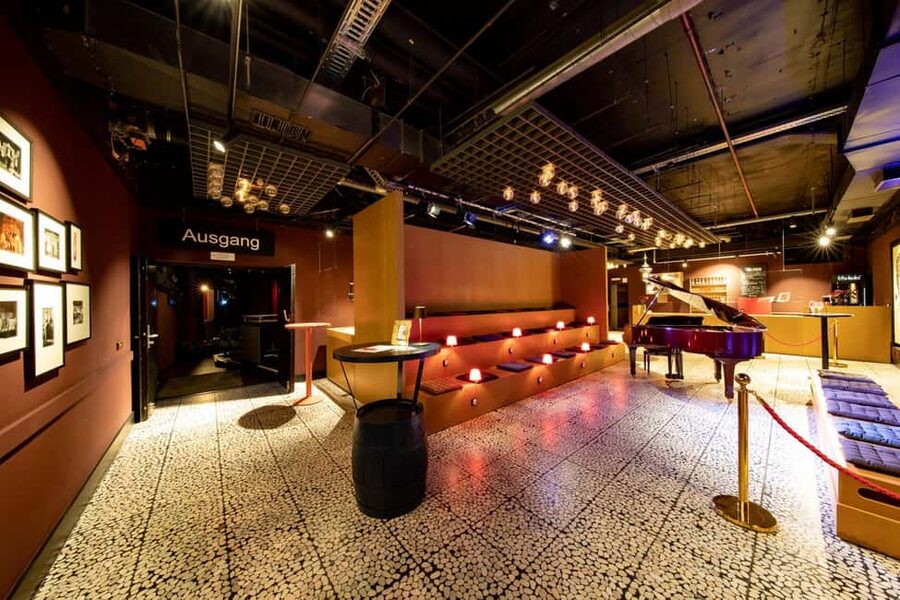
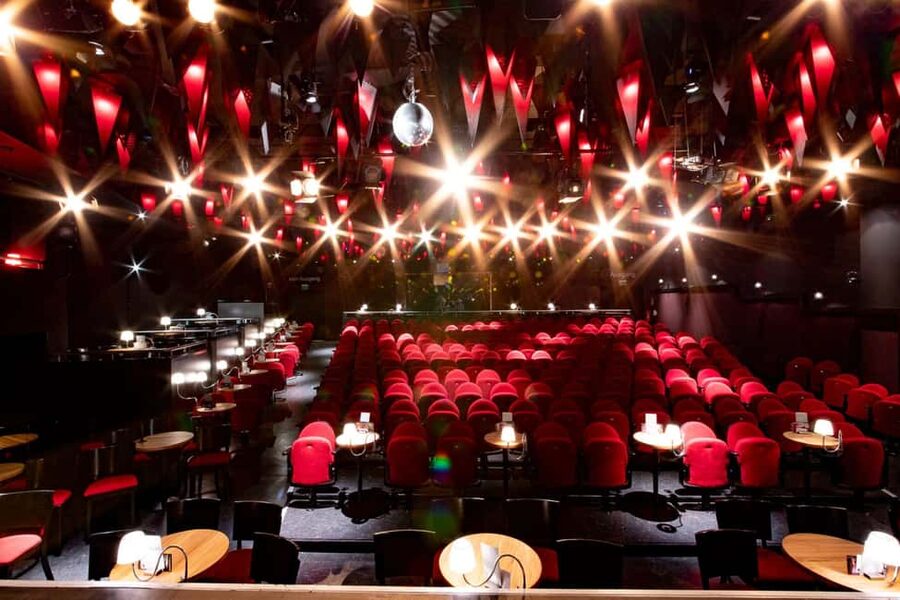
The theater entrance is in the basement of the Europacenter, one of Berlin’s familiar central landmarks. This is not a palace-style theater hidden behind a grand facade. The basement setting fits the cabaret tradition: you go downstairs, exchange your voucher, find your place, and settle in for a close-up evening of political jokes.
The ticket includes admission to Ich hab’ noch einen Tesla in Berlin. Before the show, you need to exchange your voucher at the box office. Give yourself enough time for that step, since the voucher is not the final theater ticket.
Your booking lets you choose a seating category, but not a specific seat. That matters if you care about your exact view or want to sit beside a particular person. The activity is listed as a small group of no more than six participants, though that describes the booking arrangement rather than the total size of the theater audience.
Wheelchair access is available. If you need a particular seating position, ask about the seating category when booking, since exact seats are not selected in advance.
The show’s political targets
The program’s humor depends on recognizing German politics and public debate. Its imagined names and policies are part of the joke, but the show also assumes you can follow references quickly in spoken German.
The subjects are easy to identify even when the wordplay is not:
- National debt and interest payments
- The high cost of everyday food
- German industrial companies moving abroad
- Electric cars and Tesla
- Free public transport
- Retirement policy
- Rent controls
- Berlin property development
- Social media influence
- The idea of selling off public assets
This is political satire, not a sightseeing performance about Berlin. You will not receive a guided introduction to the city, and the theater itself is the destination. The Berlin connection comes through the jokes, the setting, and the idea that the capital can somehow be turned into a financial rescue package.
I like that the premise lets the writers approach serious issues without making the evening feel like a lecture. The comedy is built around an absurd plan, but the pressure behind it feels recognizable. High rents, expensive food, public transport, debt, and corporate power are not abstract topics for people living in Germany.
A three-actor cast with musical punch
Santina Maria Schrader, Mirja Henking, and Sebastian Stert perform the show. Their work is supported by a script from Frank Lüdecke and Sören Sieg, with Lüdecke also directing. Luca Fazioli provides the music, with arrangements by Martin Rosengarten.
The music matters because this is cabaret rather than a straight political play. Songs and musical passages give the show a change of pace, letting the performers move from dialogue into a more heightened comic style. If you prefer political humor with rhythm and theatrical variety, this format should suit you better than a stand-up routine.
The three-person cast also keeps the evening focused. Instead of a large production with many scene changes, the show relies on quick shifts in character, argument, and tone. That helps explain the two-hour running time. The pace is meant to stay brisk, with little room for the political crisis to sit still.
The program has been written for the 75th anniversary of STACHELSCHWEINE. That anniversary setting adds a sense of continuity: you are seeing a new show from a long-running Berlin cabaret theater, not a temporary comedy act assembled around one news story.
Same city, a completely different kind of day:
- Discover Berlin Half-Day Walking Tour
★ 5.0 · 9,624 reviews - Berlin: Hop-on Hop-off Bus Tour with Live Commentary
★ 4.3 · 8,579 reviews - Berlin: Government District around the Reichstag Guided Tour
★ 4.7 · 8,447 reviews - Berlin: Reichstag, Plenary Chamber, Cupola & Government Tour
★ 4.6 · 8,422 reviews
What the German requirement really means
The performance is in German, and knowledge of German is required. This is the most important booking decision.
Political cabaret depends on timing. A punch line may come after a quick exchange, a song may twist a familiar phrase, and a reference may only make sense if you understand the political context. Even if you know some German, fast dialogue can be difficult, especially when several characters are arguing or the jokes rely on double meanings.
I would choose this show only if you are comfortable following spoken German for two hours. A basic tourist vocabulary will not be enough. If you are fluent or close to fluent, the language is part of the appeal because the satire is aimed at German political life in its own language.
The show may still be visually understandable in places, especially when the actors use broad comic situations. But you should not count on that. This is not a pantomime or a performance designed for international audiences.
Is $45 a fair price?
At $45 per person, the experience sits in a reasonable range for a two-hour live theater evening in central Berlin. The value comes from the complete performance: a ticket to the theater, a named cast, original writing, direction, music, and a program created for the theater’s 75th anniversary.
The price is easier to justify if you already enjoy political theater or want an evening that connects directly to German public life. You are paying for a live performance with actors in front of you, not a generic nightlife activity.
The value drops if you are unsure about German. A language barrier can turn a sharp political comedy into a sequence of gestures and fragments. In that case, the problem is not the ticket price itself. It is that the main product, the jokes and wordplay, depends on comprehension.
The booking terms help if your schedule is uncertain. You can reserve now and pay later, and cancellation is free up to 24 hours before the performance for a full refund. Starting times depend on availability, so check the available date and time before building the rest of your evening around it.
How the two-hour evening works
This is a single theater performance, not a guided walk with multiple stops. Your practical sequence is straightforward:
- Go to the basement entrance of the Europacenter.
- Exchange your voucher at the box office before the performance.
- Take your seat within the selected seating category.
- Watch the two-hour anniversary program.
- Finish back at the theater entrance.
The interest comes from the changing political situation inside the play. Germany begins under crushing financial pressure. The government searches for a way to fund popular promises. Berlin becomes the proposed solution. The developer and electric-car figure enters the picture. Then the plan starts going wrong.
That structure gives you more to follow than a series of unrelated topical jokes. The story moves from budget crisis to secret plan to comic collapse. I would expect the evening to work best when you pay attention to the political logic, because each new proposal builds on the earlier absurdity.
The exact staging, songs, and scene order are not specified, so I would not book this expecting a particular musical number or set piece. What is clear is the overall style: quick, topical cabaret with music, black humor, and Berlin understatement.
Who will enjoy this most?
This is a good pick for you if you:
- Speak German well enough to follow fast political dialogue
- Enjoy satire about government and public policy
- Want live theater rather than a standard Berlin attraction
- Like music mixed with comedy
- Have an interest in current German debates about housing, transport, cars, and public finance
- Prefer a two-hour evening activity in a central theater
It is less suitable if you want English-language entertainment, a historical introduction to Berlin, or a relaxed musical with a simple story. The subject matter is topical, and some references may land best if you already know something about German politics.
The performance also suits a couple or small group looking for a night out with more edge than a conventional show. The listed rating of 4.6 out of 5 from 159 ratings suggests strong overall satisfaction, and the most useful praise points to the combination of laughter and thought. That is the right expectation: you should come for comedy, but not expect the evening to leave politics at the door.
Why the theater setting matters
Die Stachelschweine is described as Berlin’s first cabaret theater. That gives the activity a particular place in the city’s performing arts tradition. Cabaret has long provided a way to comment on politics through sketches, songs, irony, and caricature.
You are not watching a polished international spectacle built to work without language. You are seeing a German-language performance shaped for an audience that understands the references. That makes the experience more local, but it also makes the language requirement firm.
The basement location in the Europacenter adds to the sense that this is an established city theater rather than a temporary event. The setting is practical and central, while the subject matter points straight at Berlin’s political personality: idealistic promises, financial trouble, property deals, and a belief that some new plan might fix everything.
My booking advice
I would book Ich hab’ noch einen Tesla in Berlin if you speak German comfortably and want a smart, current evening of Berlin cabaret. The combination of three actors, live music, black humor, and a 2028 financial crisis gives you a clear story with plenty of room for political jokes.
I would skip it if you need English, subtitles, or a sightseeing experience. The $45 price is reasonable for the right audience, but the language barrier cannot be worked around. Check the start time, choose the seating category that suits you, and exchange your voucher before the performance.
FAQ
Where does the cabaret performance take place?
The theater entrance is in the basement of the Europacenter in Berlin.
How long does the performance last?
The activity lasts two hours.
What language is the performance in?
The play is performed in German, and knowledge of German is required.
What does the ticket include?
The ticket includes admission to Ich hab’ noch einen Tesla in Berlin at Die Stachelschweine.
Can I choose my exact seat?
You can choose a seating category, but you cannot select an exact seat.
Is the theater wheelchair accessible?
Yes, the activity is wheelchair accessible.
Can I cancel or pay later?
You can cancel up to 24 hours in advance for a full refund. You can also reserve now and pay later, so no payment is required at the time of booking.
Just added in Berlin
- Berlin & The Third Reich Private Guided Tour★ 5.0 · 3 reviews
- Third Reich Quest Experience in Berlin★ 4.5 · 7 reviews
- Private Analogue Photography Experience in Berlin★ 5.0 · 3 reviews
- The Beauty of Berlin by Bike: Private Tour★ 5.0 · 59 reviews
- Berlin: Guided Bike tour of the Berlin Wall and Third Reich★ 5.0 · 160 reviews
- Berlin Urbex Adventure and History Tour★ 5.0 · 9 reviews
- Beyond Currywurst: Berlin’s Hidden Street Food & Culture Tour★ 5.0 · 100 reviews
- Berlin Third Reich & Cold War Walking Tour With A Guide★ 5.0 · 7 reviews
Berlin Tours, compared.
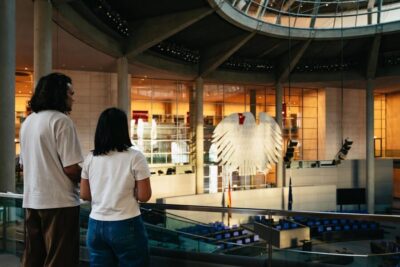
Reichstag, Dome and Government District Guided Tour
Read our review →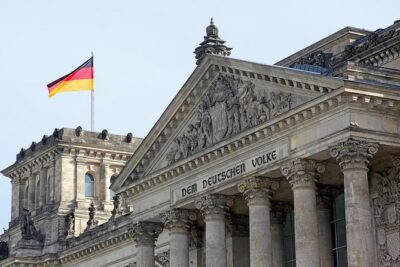
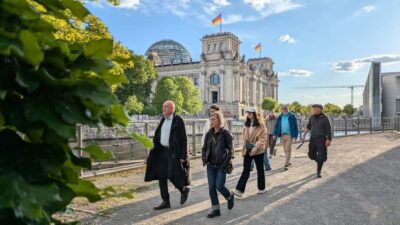
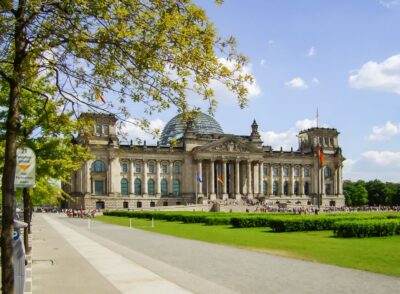
Reichstag, Plenary Chamber, Cupola & Government Tour
Read our review →