
Reviewed · WALKING TOURS
Regensburg: Private Walking Tour With Professional Guide
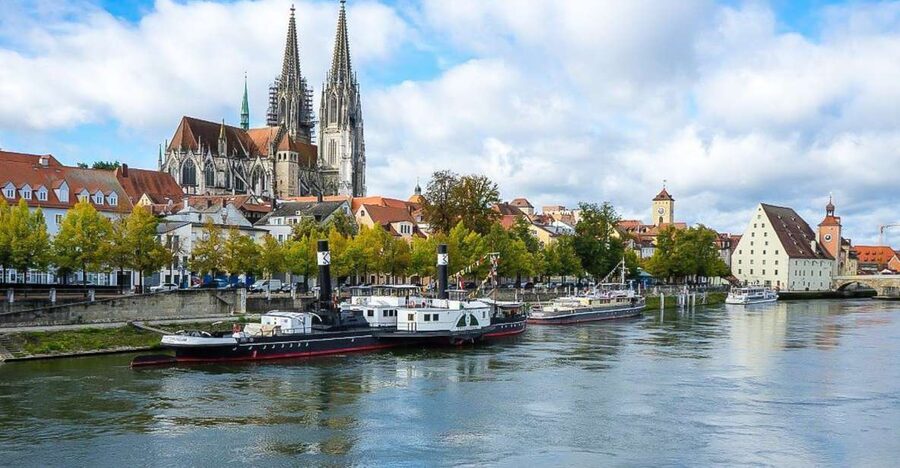
Regensburg’s great strength is how much medieval city survives in one compact center. On this private walk, you move from the old Stone Bridge to the cathedral, palace, town hall, and narrow streets lined with more than 1,500 historic buildings, rather than seeing isolated monuments one at a time.
I like the private format, which lets your group focus on the questions and periods that interest you. I also like the guide’s reported style: detailed, lively, and far from dry, with one English-language review praising the small facts that made medieval and 16th- and 17th-century life easier to understand. The main drawback is the tight two-hour schedule, especially if you want interior visits, since admission fees are not included.
Key points to know before you book
- The Stone Bridge gives the tour a strong opening: This well-preserved medieval crossing is one of Germany’s oldest.
- Regensburg Cathedral is the visual centerpiece: You’ll see a classic Bavarian Gothic church and learn about the Regensburger Domspatzen boys’ choir.
- Schloss Thurn und Taxis is still used by nobility: It is one of the few German palaces that remains in the hands of its historic aristocratic family.
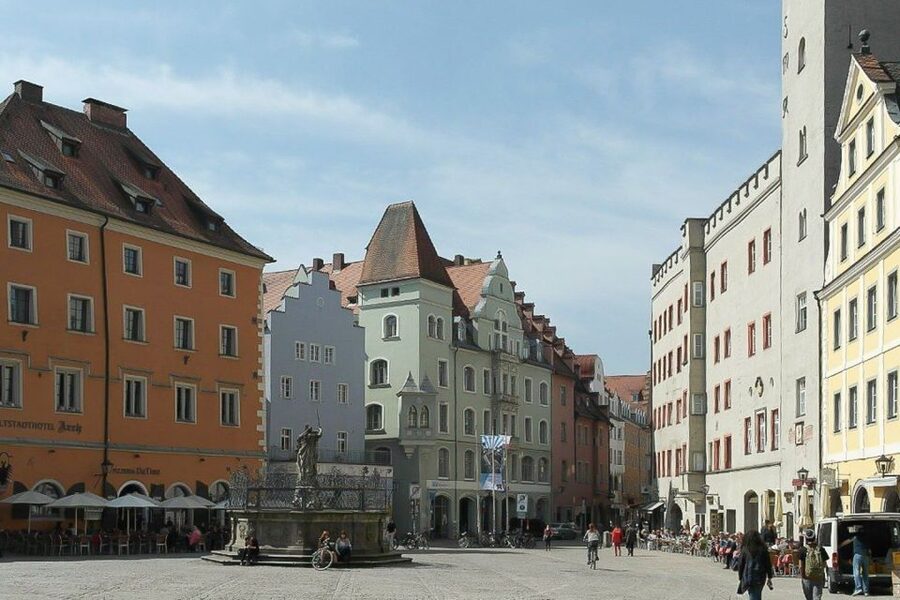
- The Old Town is unusually intact: More than 1,500 historic buildings make the walk feel like a broad medieval district, not a single restored street.
- A private group changes the pace: Your party of up to 15 gets one guide, with German and English available.
- The tour is best for independent sightseeing: It gives you context and orientation, but it does not include entrance tickets.
Why Regensburg works so well on foot
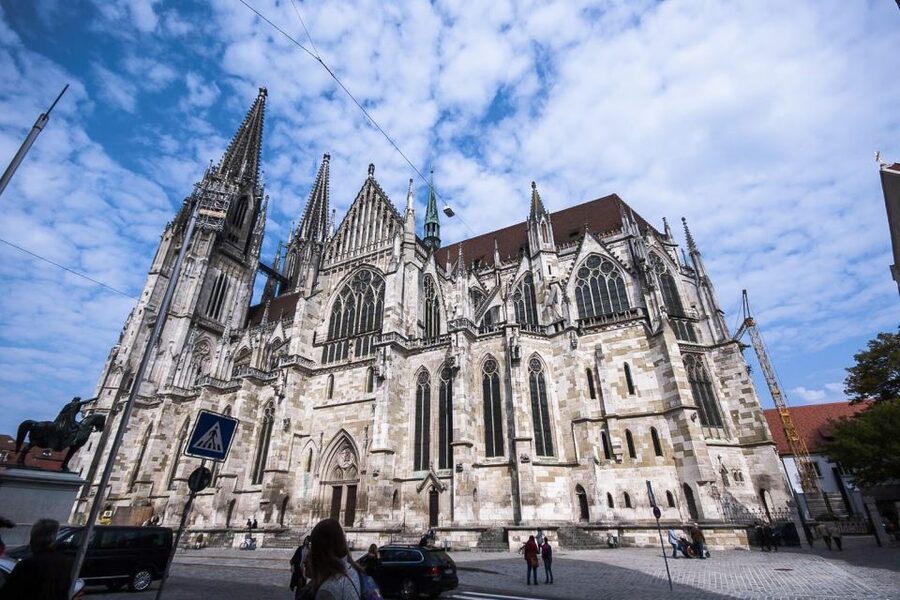
Regensburg is one of Bavaria’s oldest cities, and its name is linked to the idea of a fortress by the River Regen. You do not need to memorize that origin to enjoy the walk, but it helps explain why the city’s position and old buildings matter.
The tour begins under the clock at the square of the main train station. That is a practical meeting point if you are arriving by rail or using the station as your base for the day. From there, the guide leads your private group toward the historic center and its major sights.
The appeal is not simply the number of monuments. It is the way they sit within a large, preserved urban area. You can look at the Stone Bridge, then continue through streets where the architecture keeps telling the story. This makes the tour useful early in your visit, since you gain a framework for exploring on your own afterward.
I would not expect a museum-style presentation with long stops at every building. Two hours is enough for a focused introduction and an outdoor look at the major sights. It is not enough for an exhaustive tour of every corner of a town with more than 1,500 historic structures.
More Walking Tours in Bavaria
- Augsburg: Walking Tour with Fuggerei
★ 4.6 · 2,245 reviews - Regensburg: Guided City Walking Tour of the Old Town
★ 4.7 · 1,395 reviews - Passau: City Highlights Guided Walking Tour
★ 4.8 · 351 reviews
Crossing the Stone Bridge
The Stone Bridge is one of the clearest reasons to choose a walking tour instead of simply ticking Regensburg off a day-trip list. It is described as one of the oldest and best-preserved medieval bridges in Germany, so the guide can connect the river crossing with the city’s wider development.
A bridge is easy to overlook when you are rushing toward a cathedral. Here, it deserves your attention. Its importance is not just visual. It represents the practical side of medieval Regensburg, linking the city across the river and helping explain why this location mattered.
Your guide can also give you a better sense of scale than a quick photograph allows. Look at the stonework, the length of the crossing, and the way it leads your eye toward the historic center. The experience is outdoors, so comfortable shoes are sensible, particularly if you plan to keep walking after the tour.
The bridge is also a good example of what you are buying with a guide. A self-guided walk can show you the structure. A live guide can explain why it mattered, how it fits the city, and what details deserve a second look.
Regensburg Cathedral and the Domspatzen
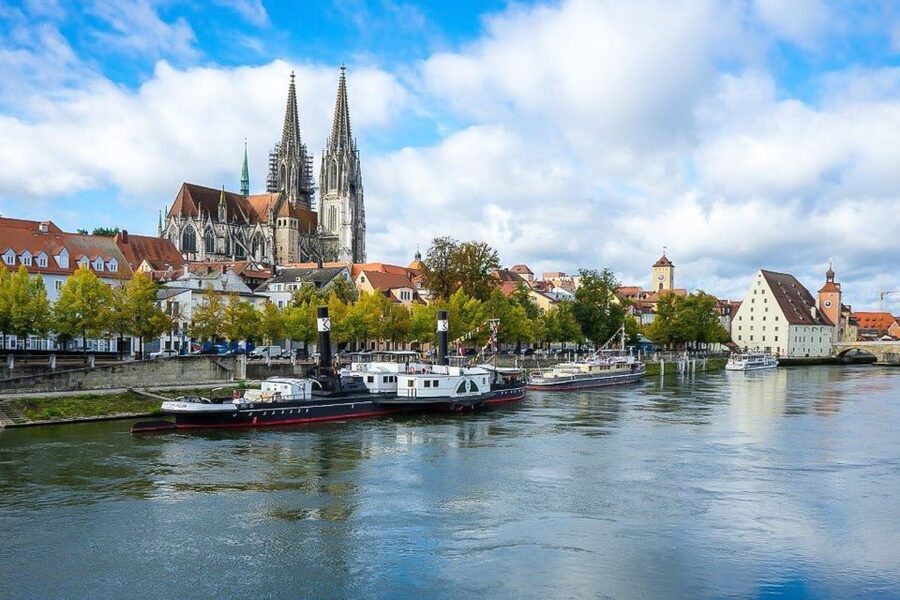
The Regensburger Dom is the tour’s most imposing religious building. It is presented as a classic example of Bavarian Gothic architecture, and its location in the picturesque center makes it one of the easiest sights to remember after the walk.
You will see the exterior as part of the route, but do not assume that an interior visit is included. Entrance fees are excluded, and the activity details do not promise entry into the cathedral or any other paid site. If you want to go inside, treat that as a separate plan and confirm the current admission arrangements.
The cathedral is also linked with the Regensburger Domspatzen, a famous boys’ choir. That detail adds a human and musical layer to the architecture. Instead of seeing only stone, you get a reminder that the cathedral remains connected with an active tradition.
This is where the guide’s storytelling matters. One highly positive English-language assessment singled out the small historical facts about life in Regensburg during the Middle Ages and the 16th and 17th centuries. That kind of detail can make the cathedral easier to understand as part of a living city, rather than just a Gothic façade.
Schloss Thurn und Taxis, a palace with a present-day role
Schloss Thurn und Taxis offers a different kind of history. It is a city palace still held by the old aristocratic family of the same name, and it remains in use by German nobility. The tour presents it as one of the few surviving German palaces with that connection.
That current use gives the stop a little more bite than a standard palace façade. You are not only looking at a former residence turned display site. You are seeing a place that still has a relationship with the family whose name it carries.
Again, the distinction between seeing and entering matters. The tour includes a look at the palace, but entrance fees are not part of the $340 price. The supplied details do not promise an interior tour, so plan on an exterior visit unless your guide confirms something different.
For me, this is one of the most unusual stops because it links Regensburg’s medieval setting with Germany’s surviving nobility. It also gives the tour some variety. The Stone Bridge speaks to trade and movement, the cathedral to religion and music, and Schloss Thurn und Taxis to aristocratic life.
Same city, a completely different kind of day:
- Regensburg: City Tour with the Bimmelbahn Train
★ 4.3 · 1,010 reviews - Passau: Crystal Ship Sightseeing Cruise
★ 4.6 · 705 reviews - Regensburg: Klinger’s Sightseeing Boat Tour to Walhalla
★ 4.6 · 507 reviews - Passau: Floating City Highlights Tour on the Danube and Inn
★ 4.5 · 452 reviews
The Old Town’s 1,500 historic buildings
The UNESCO-listed Old Town is the broadest part of the experience. Regensburg has one of the largest medieval town areas north of the Alps, with more than 1,500 historic buildings. That figure matters because it tells you this is not a small decorative quarter built around a single landmark.
You will walk through a real city center with a long architectural record. The pleasure comes from the accumulation: façades, lanes, public buildings, and monuments forming a connected setting. A guide helps you sort the important from the merely old.
The tour description highlights the town hall as another major sight. No detailed interior itinerary is given, so I would treat it as an exterior stop unless your guide says otherwise. Still, seeing it within the Old Town helps you understand how civic power fits alongside the cathedral and aristocratic palace.
This is also where the two-hour limit becomes noticeable. You can cover the main sights and get useful context, but you will not inspect all 1,500 buildings. That is not a flaw so much as a choice. The tour gives you a map in your head, then leaves room for a longer independent walk.
What the private format really adds
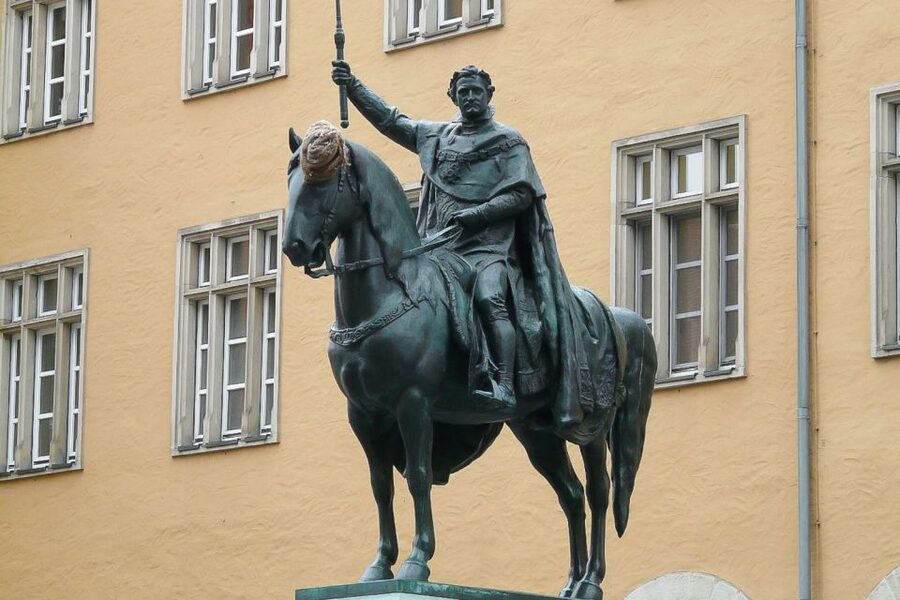
The booking covers a private group of up to 15 people with a professional local guide. German and English are available, so choose the language that lets you ask questions easily and follow historical explanations without effort.
A private tour is especially useful if your group has mixed interests. You can ask for more attention to architecture, religious history, aristocratic buildings, or everyday life, depending on what catches your interest. The supplied feedback points to an enthusiastic and lively style, with praise for a city guide who made the material interesting and avoided a dull presentation.
That said, private does not mean unlimited customization. The published duration remains two hours, and the main attractions are set out in advance. You should see the private format as a way to make the standard route more personal, not as a completely custom full-day program.
The economics depend on group size. At the full capacity of 15, $340 works out to about $22.67 per person before any admission fees. For two people, it is $170 each, which is a much higher price than joining a shared group. Families or larger parties get the best value, while a couple should decide if personal attention and a private pace are worth the premium.
Timing, walking effort, and practical limits
Two hours is a manageable length for most people who are comfortable walking through a historic center. The tour is not suitable for wheelchair users, so accessibility should be a deciding factor before booking.
The meeting point is under the clock at the square of the main train station. Arrive with enough time to identify the correct clock and locate your guide. Since the route is in the Old Town, good walking shoes will help, even though the exact surface and route length are not specified.
Do not build your plan around included entry tickets. They are not included, and the experience is primarily a guided walk past and around the sights. If you want to enter the cathedral or palace, set aside extra time and money, then confirm what is possible on your chosen date.
The tour offers free cancellation up to 24 hours before the start time, and you can reserve now while paying later. Those policies are useful if your Bavarian itinerary is still moving around, but the main value remains the guide and the concentrated introduction to the city.
Who will get the most from this walk
I would recommend it most strongly to first-time visitors who want a clear orientation before exploring Regensburg on their own. It also suits families, groups of friends, and anyone who prefers asking questions instead of reading plaques.
History fans should appreciate the range of subjects packed into the route: the city’s early identity, medieval construction, Gothic religious art, aristocratic life, civic buildings, and later periods reaching into the 16th and 17th centuries.
The tour is less suitable if you want long interior visits, a slow photography walk, or a fully accessible route. It may also feel expensive for one or two people, particularly if you plan to pay additional entrance fees afterward.
The rating is 4.2 from 16 reviews, with especially strong praise for lively delivery, detailed explanations, and charming city guiding. One English-language assessment was particularly positive about the everyday historical facts, while German-language feedback highlighted an energetic and well-organized presentation. Those are useful signals, but the small number of ratings means I would keep expectations sensible rather than treating the score as a guarantee.
Should you book the Regensburg private walking tour?
Book it if you want the main sights tied together by a live guide and you are traveling with a group large enough to share the $340 cost. The Stone Bridge, cathedral, Schloss Thurn und Taxis, town hall, and broad Old Town make a strong two-hour route, and the praise for lively historical storytelling is encouraging.
Skip it if you need wheelchair access, want included interior admissions, or prefer to explore every street at your own pace. For a couple, compare the private price with other guided options. For a family or group of up to 15, the cost becomes more reasonable, and the private setting gives you a better chance to shape the conversation around your interests.
FAQ
How long is the Regensburg private walking tour?
The tour lasts two hours.
Where do I meet the guide?
Meet the guide under the clock at the square of the main train station in Regensburg.
What sights are included in the route?
The route includes the Stone Bridge, Schloss Thurn und Taxis, Regensburg Cathedral, the town hall, and the historic Old Town with more than 1,500 buildings.
Is the tour private?
Yes. It is a private group tour for up to 15 people.
Which languages are available?
The live guide is available in German and English.
Are entrance fees included?
No. Entrance fees are not included in the tour price.
Just added in Bavaria
- Rafting classic Iller – Level 2 white water tour★ 4.5 · 29 reviews
- Canyoning Starzlachklamm★ 5.0 · 51 reviews
- Family rafting Iller – white water rafting level 1★ 5.0 · 12 reviews
- Bavarian Schnitzel Cooking Class in Oberaudorf Farmhouse★ 5.0 · 21 reviews
- Augsburg – Private Historic Tour★ 5.0 · 3 reviews
- Classic city tour in the World Heritage City of Augsburg★ 4.0 · 41 reviews
- Kloster Andechs: Brauerei-Tour mit Virtual Reality entdecken★ 4.7 · 15 reviews
- Regensburg citytour rickshaw-pedicab★ 4.3 · 20 reviews
Walking Tours, compared.



Berlin’s Best: 2 Hour Walking Tour Third Reich and the Cold War
Read our review →
Third Reich Berlin: Hitler and WWII Walking Tour
Read our review →Browse the lists this tour appears in