
Reviewed · BEER TOURS
“Rotes Bier” and “Blaue Zipfel”. A historical-culinary walk
Nuremberg’s food story is much bigger than sausage and gingerbread. This two-hour walk connects the old town’s churches, market squares, brewery, and historic buildings with samples of red beer, bratwurst, and gingerbread. The guide also tackles curious questions, from why the sausage is called bratwurst to how much meat ordinary citizens ate.
I like the way the tour ties food to real places instead of treating the tastings as a string of unrelated snacks. I also like the compact route, with short walks between stops and a final visit to Altstadthof Brewery. The main caution is simple: the tour is held in German, and some of the small snacks may feel modest for the price if you arrive expecting a full meal.
Key points to know before booking

- Red beer at Altstadthof Brewery: The tour finishes at Nuremberg’s Hausbrauerei Altstadthof, where local brewing tradition takes center stage.
- Small Nuremberg bratwurst: You learn why this local sausage is so short and taste a genuine Nuremberg example at Bratwurst Röslein.
- Food history in real locations: Rathaus, Hauptmarkt, Trödelmarkt, Unschlitthaus, and St. Sebaldus Church become part of the story.
- German-speaking guides: Sonja has been praised for clear, witty explanations, though you need enough German to follow the tour.
- About $29 per person: That is fair if you value the guide and tastings, but the food portions are snacks rather than lunch.
- Rain or shine: Wear comfortable shoes and clothing suited to the weather because the route is outdoors.
Why Nuremberg’s food history makes a good walking tour
Nuremberg is easy to associate with its famous sausage and gingerbread. This tour gives those foods a setting. You walk through the historic center while hearing how cooks, brewers, traders, and city residents shaped local eating habits.
That approach matters because food can make old buildings easier to understand. A market square was not just a pretty place for photographs. It was tied to trade, supplies, regulation, and daily meals. A church stop can open a discussion about customs and city life. A brewery visit shows that beer is not simply a drink added at the end of a sightseeing day.
I like the range of questions built into the tour. You hear why bratwurst carries its name, what makes Nuremberg gingerbread different, and how cooks in the city knew forms of ravioli long before modern Italian restaurants appeared. You also hear about meat consumption, the meaning of Devil’s Kitchen, and the connection between Nuremberg food and the planner of the English Garden.
Those subjects give the guide room to move beyond a standard list of monuments. The result should suit you if you want history explained through everyday life rather than only through rulers, wars, and grand architecture.
More Walking Tours in Nuremberg
- Nuremberg: Old Town Guided Walking Tour
★ 4.6 · 2,416 reviews - Nuremberg: Walking Tour of Former Nazi Party Rally Grounds
★ 4.7 · 1,665 reviews - Nuremberg Old Town and Nazi Party Rally Grounds Walking Tour in English
★ 4.5 · 504 reviews
Starting at the Altes Rathaus
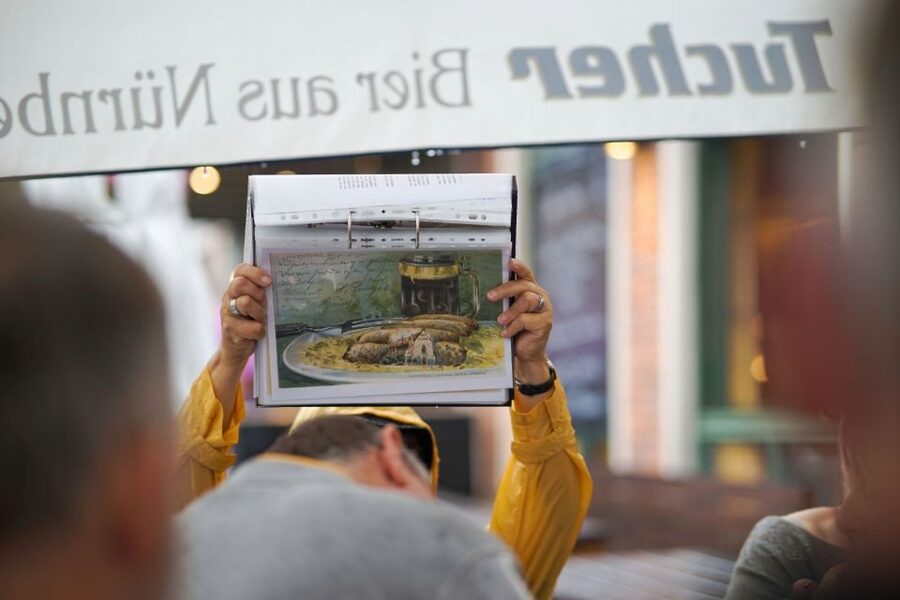
Meet your guide in front of the main entrance of the Alte Rathaus, or Old Town Hall, at Rathausplatz 5. Look for the picture folder and the green logo of Geschichte Für Alle e.V. That detail matters because the square can be busy, and a clear meeting sign makes the first few minutes less stressful.
The walk begins with a guided look at the Rathaus area. The tour does not simply use the building as a meeting point. It uses the civic center to set up the relationship between city government, trade, food rules, and public life.
You should arrive ready to listen while standing or walking. No transportation is included, and the experience is entirely on foot. The route is wheelchair accessible, though the activity takes place outdoors and includes several stops across the old town.
Bratwurst Röslein and the small sausage question
After about five minutes on foot, the group reaches Bratwurst Röslein. This is where the tour’s most famous food topic gets a proper place in the story.
Nuremberg bratwurst is known for its small size. Rather than treating that as a novelty, the guide explains why the sausage is made that way and why it is called bratwurst. You get to taste a real Nuremberg bratwurst, which makes the explanation more useful than a purely historical talk.
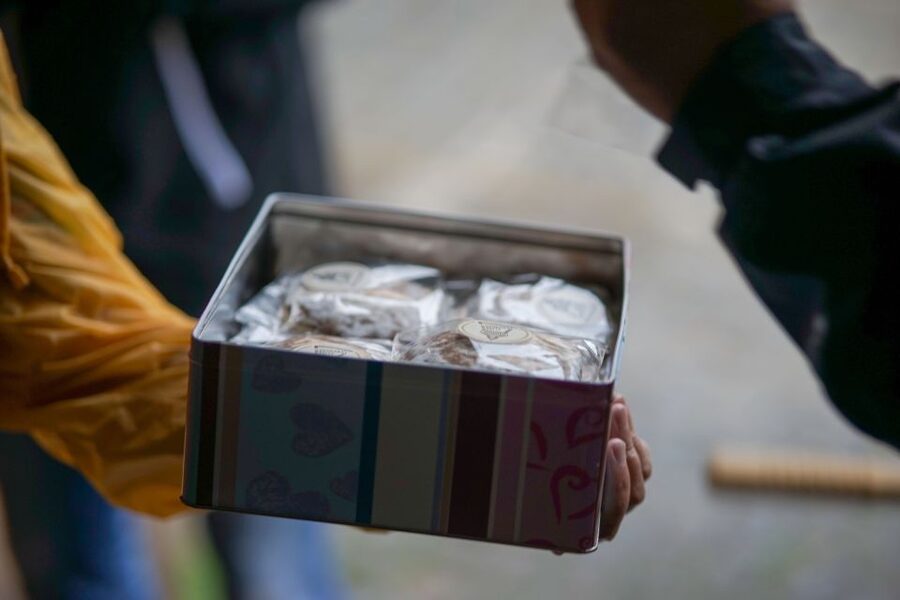
Do not think of this as a full plate of sausages. The food served along the walk is designed for tasting as the story continues. If you are hungry, have a meal before or after the tour. The tastings give you a sense of the food, but they are not meant to replace lunch.
This stop should please anyone who wants a local specialty explained in its own city. It also gives families and first-time visitors a clear food reference early in the walk.
Hauptmarkt: gingerbread, trade, and daily food
The route continues with a short three-minute walk to Hauptmarkt Nürnberg. The market square is one of the natural places to discuss food because it connects commerce and eating in a direct way.
Here, the guide addresses Nuremberg gingerbread and what makes it special. The description promises the best gingerbread in the world, but you should read that as a proud local claim rather than a scientific ranking. The useful part is learning why this sweet became associated with Nuremberg and tasting it in the city where the tradition matters.
A second stop at Hauptmarkt, listed at Hauptmarkt 2, adds another guided tasting. The short distance between these points keeps the tour moving without wearing you out. You do not spend long stretches marching from one part of the city to another.
I like this part of the route because the market setting gives the gingerbread a practical context. Food traditions survive because people buy, sell, share, and adapt them. Standing in a major market area helps you picture that process more clearly than a snack served in an isolated café.
More Beer Tours in Nuremberg:
- Cologne: Brewery Tour with 3 Kölsch Beer Tastings
★ 4.7 · 3,108 reviews - Bavarian Beer and Food Evening Tour in Munich
★ 4.5 · 1,575 reviews - Düsseldorf: Brewery Tour with Alt Beer Tastings
★ 4.7 · 1,523 reviews - Düsseldorf: Altbier-Safari Beer Walking Tour
★ 4.4 · 1,150 reviews
Trödelmarkt and the city’s food questions
From Hauptmarkt, you walk about five minutes to Trödelmarkt 13. This stop continues the historical side of the experience, with another small tasting along the way.
The tour’s food questions become broader here. You may hear about how much meat Nuremberg citizens ate and how local cooking developed over time. The point is not only to name dishes. It is to ask who had access to certain foods, how cooking reflected city life, and why some ideas remained part of the local identity.
The guide also covers the story of ravioli in Nuremberg cooking. That is the sort of unexpected detail that gives the walk its character. It reminds you that old European food traditions did not develop in sealed national boxes. Ingredients, techniques, and recipes moved through trade and contact.
Because the tour is in German, you should be comfortable following a spoken explanation while walking and eating. If you understand only basic German, you may still enjoy the food and sights, but you will miss much of the value. The historical material is the main reason to book this particular walk.
Unschlitthaus and the meaning of Devil’s Kitchen
The next five-minute walk leads to Unschlitthaus. This stop adds another layer to the city’s working history and provides a place for the guide to explain more food-related terms and customs.
One subject is Devil’s Kitchen. The name alone is memorable, but the value comes from learning what it meant in its Nuremberg setting. A good guide can turn an unfamiliar phrase into a clue about how people understood cooking, labor, morality, or city life.
The tour also asks larger questions about the cooking pot. What did people prepare? How did cooks work? Which foods were common, and which carried a special status? You should expect the guide to connect these ideas to the places around you, rather than present a long lecture detached from the streets.
There is another tasting here, but again, portions are small. One person who enjoyed the tour still felt that the snacks could be more substantial. I would treat the food as a series of samples that support the story, not as a progressive meal.
St. Sebaldus Church and food beyond the table
After about ten minutes on foot, the group reaches St. Sebaldus Church. This is the longest walk between stops, though ten minutes is still easy for most people wearing comfortable shoes.
The church gives the tour a change of mood. Until this point, much of the route centers on markets, shops, and civic spaces. At St. Sebaldus, the guide can place food customs within the wider social and religious life of Nuremberg.
The tasting here keeps the culinary thread alive, while the building offers a reminder that food history is never only about recipes. Eating habits connect with calendars, celebrations, fasting, charity, trade, and status. The tour’s questions about meat and cooking make more sense when you think about these wider pressures on daily life.
I would not book this as a church tour. The focus remains food history, and the church is one stop in a larger route. Still, it gives the walk visual variety and prevents the experience from feeling like a continuous series of restaurant visits.
Finishing with red beer at Altstadthof Brewery
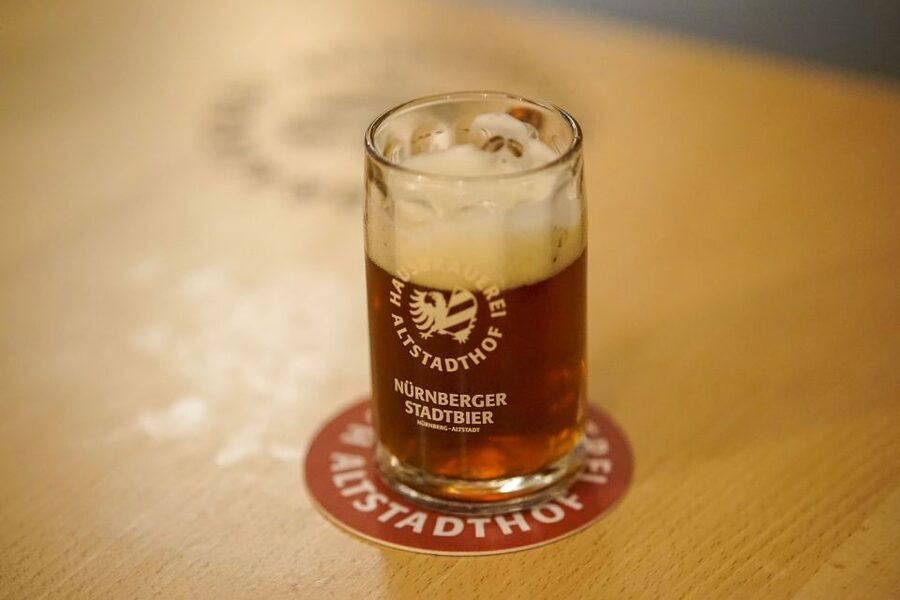
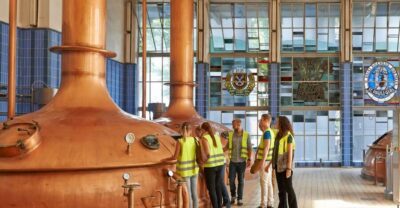
The final five-minute walk brings you to Hausbrauerei Altstadthof, also called the Rotbierstüberl, Brewery and Whisky Distillery. The tour ends here with a visit to the brewery and a taste of local red beer.
This is the natural finish. You have heard about Nuremberg’s ingredients, cooking traditions, markets, and food customs. Now you get a drink linked to the city’s brewing identity. The distinctive red beer is one of the main reasons to choose this tour instead of a general old-town walk.
The brewery stop also gives you a chance to slow down after the walking portion. Depending on the timing and the group, you may have room for questions. The guide’s willingness to answer questions is one of the strongest features of the experience, and Sonja has been specifically praised for explaining the material with knowledge, humor, and a lively command of German.
Do not expect the brewery stop to become a long evening at the bar. The listed duration is two hours, so the tasting is part of a timed route. If you want a full brewery meal or a longer beer session, plan that separately.
How good is the value at $29?
At about $29 per person, the price is reasonable if you want a guided historical walk with several food samples and beer. You are paying for the guide’s explanations, not just for the cost of the bratwurst, gingerbread, and drink.
The value improves if you care about local context. A self-guided walk can take you past Rathaus, Hauptmarkt, St. Sebaldus Church, and the old streets, but it will not automatically explain why Nuremberg bratwurst is small or how food traditions connect with the city’s past.
The value is weaker if you are looking for a filling food tour. The snacks are described as numerous, but they remain tastings. One practical solution is to eat a light meal before the start and use the tour to sample specialties without feeling rushed or hungry.
The two-hour length is another plus. You get a focused introduction to Nuremberg food without giving up an entire afternoon. The short walks between most stops make the schedule efficient, while the ten-minute stretch to St. Sebaldus gives the group a little breathing room.
Who will enjoy this German-language walk?
I would recommend it to you if you meet most of these conditions:
- You want Nuremberg food explained through local history.
- You understand German well enough to follow a live guide.
- You prefer small tastings to a long sit-down meal.
- You enjoy walking through old-town streets and stopping at historic sites.
- You want to try red beer, Nuremberg bratwurst, and gingerbread in one outing.
- You appreciate a guide who can handle questions and add humor to the facts.
It is less suitable if you need an English tour, want a large lunch, or dislike outdoor walks in uncertain weather. The tour runs rain or shine, so bring weather-appropriate clothing and comfortable shoes.
The wheelchair-accessible format is useful, but the information provided does not describe every surface or restroom arrangement along the route. If you need specific access details, confirm them before booking.
The tour has a rating of 4.4 from 190 reviews, and the strongest praise centers on the guide quality, clear explanations, interesting locations, and the mix of stories with tastings. Sonja is one named guide singled out for her humor and command of the material. The main reservation is the size and quality of some snacks, not the historical content.
Should you book this Nuremberg food walk?
Book it if you want a short, German-language introduction to Nuremberg’s culinary identity and you like learning the reason behind a dish, not simply eating it. The route covers the old town efficiently, includes the city’s essential food symbols, and ends with red beer at Altstadthof Brewery.
Skip it if you need English, expect a full meal, or want a tour devoted only to brewing. For the right audience, $29 buys a useful mix of local food, city history, and practical orientation. Have something small to eat beforehand, arrive at the Alte Rathaus with comfortable shoes, and come ready to listen as much as taste.
FAQ
Where does the tour start?
Meet the guide in front of the main entrance of the Alte Rathaus at Rathausplatz 5 in Nuremberg.
How do I identify the guide?
Look for a guide carrying a picture folder and displaying the green logo of Geschichte Für Alle e.V.
How long does the experience last?
The walking tour lasts two hours.
What language is the tour held in?
The tour is held in German with a live German-speaking guide.
Is the tour wheelchair accessible?
Yes, the activity is listed as wheelchair accessible.
What food and drinks are included?
The experience includes snacks and beer. The route includes tastings of Nuremberg bratwurst, gingerbread, and local red beer.
Is transportation included?
No. Transportation to and from the meeting point is not included.
Does the tour run in bad weather?
Yes. The tour takes place rain or shine, so bring weather-appropriate clothing.
What should I wear?
Wear comfortable shoes and clothing suited to the weather because the experience takes place on foot outdoors.
Can I cancel for a full refund?
Yes. You can cancel up to 24 hours in advance for a full refund. You can also reserve now and pay later.
More History Tours in Nuremberg
- Nuremberg: 1.5-Hour Private Tour through Historical Old Town
★ 4.8 · 283 reviews - Nuremberg: World War 2 History Tour with Beer Tasting
★ 5.0 · 4 reviews - Leipzig: City History Canal Sightseeing Tour on a Motorboat
★ 4.7 · 6,232 reviews - Berlin: Natural History Museum Entrance Ticket
★ 4.6 · 3,382 reviews
Just added in Nuremberg
- Tour en español al Campo Zeppelin★ 5.0 · 8 reviews
- Stein: Public guided tour of the “Old Mine” museum★ 4.5 · 18 reviews
- Nuremberg: Old Town Guided Tour By Bus★ 4.4 · 198 reviews
- Nürnberg Bachelor(ette) Party with Night PubCrawl★ 4.2 · 5 reviews
- Nuremberg: Bar and Club Tour with Free Shots and Free Entry★ 3.8 · 23 reviews
- Nuremberg: WWII Tour, Courtroom 600 and 3rd Reich Sites★ 4.6 · 94 reviews
- Nürnberg kennenlernen: Highlights in der Altstadt★ 4.7 · 189 reviews
- Tour del tercer Reich por Núremberg en español★ 5.0 · 23 reviews
Beer Tours, compared.
Beer and Food Tour with Dinner & Oktoberfest Museum
Read our review →
Munich’s Beer Halls and Breweries: 3-Hour Guided Tour
Read our review →

Browse the lists this tour appears in