
Reviewed · LUBECK TOURS
Lübeck: Classic Tour of the Hanseatic City
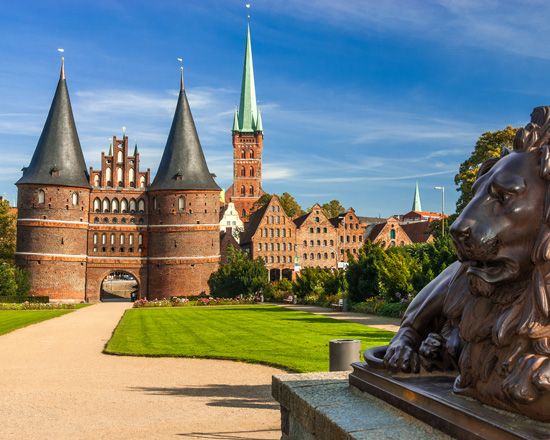
Lübeck’s Holsten Gate gives this private walk a strong start: two great brick towers, a medieval skyline, and the old trading city opening behind them. You’ll follow the route through salt warehouses, the former port district, town hall, St. Mary’s Church, and the streets tied to the Mann family. I like the compact 90-minute plan and the private group format, which lets you focus on the city instead of keeping pace with strangers.
I also like that the tour connects grand sights with smaller details, including decorated merchant houses and the little Teufelchen figure. Guides such as Christel and Frau Stump have received especially warm praise for their friendly manner and command of Lübeck’s story. The main tradeoff is time: 90 minutes gives you a useful introduction, but not a full look inside every major church or museum.
Key points to know before you book
- The tour begins at Holsten Gate: You meet directly at Lübeck’s best-known landmark, with no transfer included.
- You get a private group for up to six: The $259 price is for the group, not each person, making the math much better when six people share it.
- The route covers Lübeck’s core sights: Expect the salt warehouses, old port area, town hall, St. Mary’s Church, Teufelchen, and Buddenbrook House.
- The focus is architecture and city history: Brick churches, merchant houses, decorated facades, and the Hanseatic trading past shape the walk.
- English and German guiding is available: The live guide speaks either German or English.
- The strongest praise centers on the guides: Christel and Frau Stump are singled out for being friendly, clear, and well informed about Lübeck.
Why Lübeck makes such a good walking city
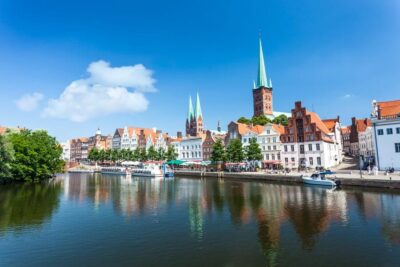
Lübeck is compact in character, even if its story is large. The old town is surrounded by water and shaped by centuries of Baltic trade. Its brick buildings and church towers create a look that feels different from the stone centers of southern Germany.
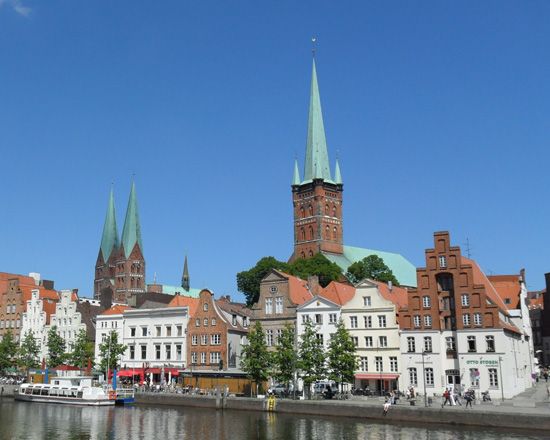
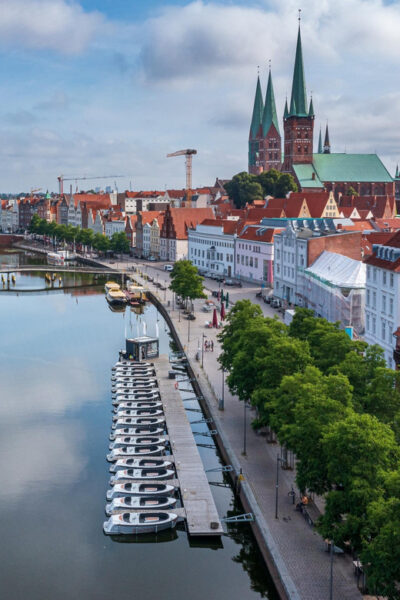
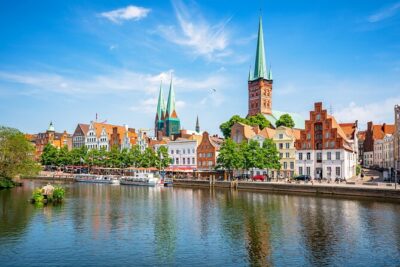
The city is often called the City of Seven Spires, a reference to the towers that define its skyline. This walk concentrates on the historic center and introduces the five main churches, including St. Mary’s. You will not simply collect isolated photo stops. The guide’s job is to show how the churches, merchant houses, port, and town hall fit together as parts of one trading city.
That is the real value of a guided walk here. Lübeck’s architecture carries clues, but those clues are easy to miss when you stroll alone. Brickwork, building scale, street patterns, and the old merchant houses all point back to the city’s Hanseatic role. A guide can turn attractive buildings into a readable story.
Lübeck received UNESCO World Heritage recognition in 1987, the first German site to receive that status. The designation matters because the old town retains a cohesive medieval structure, not just a few famous monuments. You get a sense of that unity as the route moves from the gate toward the center.
A few more half-days in Lubeck worth comparing
- Lübeck: 1-Hour Splash Bus City Tour
★ 4.0 · 2,626 reviews - Lübeck: entertaining guided tour to old town highlights
★ 4.7 · 594 reviews - Lübeck: Entertaining Tour Through Hidden Courtyards
★ 4.8 · 483 reviews
Starting beneath the Holsten Gate
The meeting point is right at the Holsten Gate, or Holstentor. This is practical and easy to understand, since the gate is one of the city’s main symbols and a natural place to begin a first look at Lübeck.
The gate also sets the tone for the walk. Its brick construction tells you at once that Lübeck’s identity is tied to North German brick architecture. From here, the guide can place the city in context before leading you into the old town.
Because transfers are not included, you should arrange your own way to Holsten Gate. The tour itself is on foot, and the 90-minute duration means the route is designed as a focused introduction rather than a day-long survey.
At the start, pay attention to the view back toward the gate as the route progresses. One pleasure of Lübeck is seeing how a single building relates to the wider skyline. The gate is not merely a convenient meeting point. It is your first piece of the city’s architectural story.
Salt warehouses and the old port district
From Holsten Gate, the route continues to the Salzspeicherhäusern, the traditional salt storage buildings. These warehouses are a useful reminder that Lübeck’s prosperity came from trade, storage, and movement of goods, not just from impressive civic buildings.
The route then passes the former industrial heart of the city, the Port of Lübeck. That connection gives the tour more substance than a simple church-and-town-hall walk. You see the relationship between the buildings at the center and the commercial activity that supported them.
I like this part because it helps you read Lübeck as a working city. The Hanseatic label can sound abstract in a guidebook, but warehouses and port activity make it concrete. The city’s wealth was built through northern European commerce, and the route lets you see that commercial side before turning toward the civic center.
Do not expect a long port visit or a separate harbor excursion. The port is one stage in a compact walking route. Its purpose is to connect Lübeck’s architecture to trade and industry, not to provide a full waterfront tour.
Town hall and the marks of Hanseatic power
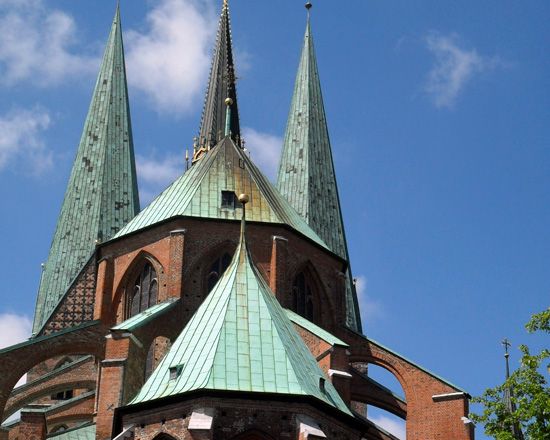
The next major stop is Lübeck’s town hall, known for its traditional Hanseatic architecture and long civic importance. This is where the tour shifts from commerce to government and public life.
The town hall works well in the sequence because you have just seen the port and warehouses. Now you can consider who organized the city, protected its trade, and expressed its power through public buildings. The guide’s historical explanation should help you connect those pieces.
This is also a good place to listen for the difference between a city that was merely old and one that was a major force in northern Europe. Lübeck’s importance came from its position and its trading network. The town hall gives that influence a formal face.
The stop is viewed as part of the walking tour, and the supplied details do not promise an interior visit. If you want extensive time inside the town hall, ask the guide what is possible at the time of booking. For most people, the value here is the exterior architecture and the story attached to it.
Same city, a completely different kind of day:
- SEA LIFE Timmendorfer Strand Ticket
★ 4.0 · 256 reviews - Lübeck: Electric Boat Rental – without driving licence
★ 4.8 · 174 reviews - SEA LIFE Timmendorfer Strand Admission Ticket
★ 3.5 · 157 reviews - Lübeck: Hanseatic League History Walking Tour
★ 4.9 · 57 reviews
St. Mary’s Church and the five-church skyline
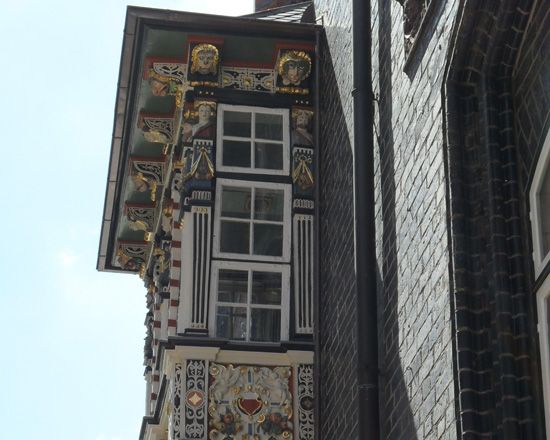
St. Mary’s Church is one of the signature stops, and it represents the larger church skyline that gives Lübeck its nickname. The tour also points out the five main churches, so you get a broader sense of the city’s religious and architectural center even though St. Mary’s is the named church stop.
Lübeck’s churches are important not only because of their size. Their towers help explain the city’s shape from a distance, while their brick construction ties them to the regional building tradition. The result is a skyline that feels unified rather than assembled from unrelated landmarks.
St. Mary’s also gives the guide a chance to explain how religion, civic pride, and merchant wealth intersected. In a major Hanseatic city, churches were places of worship, but they also expressed the confidence and resources of the community.
The tour details do not include entry fees, an interior visit, or time for a full church inspection. That is worth keeping in mind. You should see this walk as an orientation to Lübeck’s major architecture, with extra time later if you want to explore church interiors on your own.
Teufelchen, small streets, and decorated houses
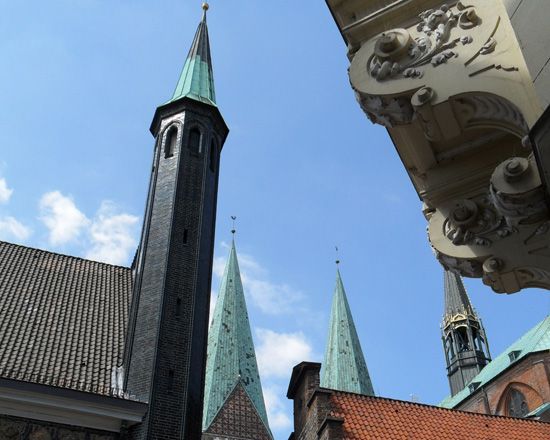
One of the more charming details is the Teufelchen, or little devil. It is the sort of small feature that can disappear when you rush from one major monument to the next. Having a guide point it out gives the route a lighter, more human touch.
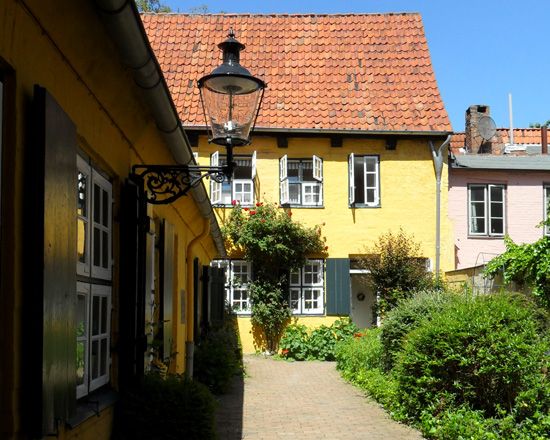
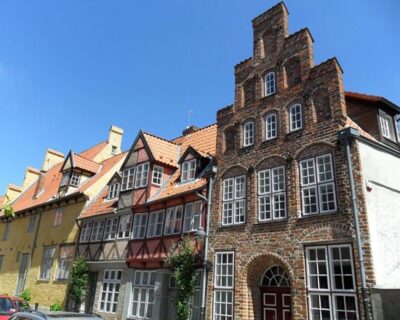
The walk then takes you through smaller streets and past decorated houses. This is where Lübeck’s personality comes through most clearly. Large churches and gates explain the city’s public image, but narrow streets and individual facades show how people shaped the old town at a more personal scale.
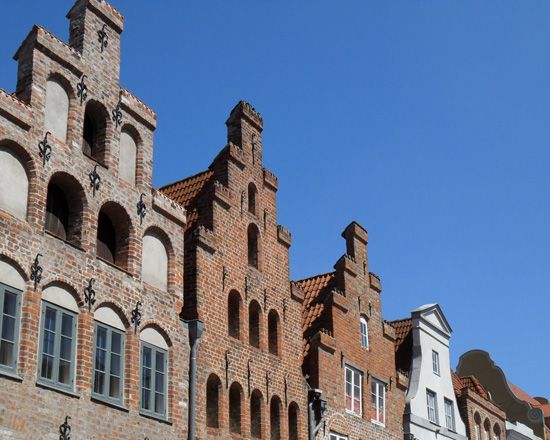
You will also see traditional Kaufmannshäuser, or merchants’ houses. These buildings are central to understanding the city’s trading past. Their presence links everyday urban life to the Hanseatic economy, showing that the city’s story belongs to merchants, families, workers, and civic leaders alike.
I would pay close attention to the guide’s descriptions here. Facade details may look decorative at first glance, but they can help explain the status and identity of the people who lived or worked in these buildings. The walk’s shorter side streets keep the experience from becoming a procession of only famous landmarks.
Buddenbrook House and the Mann connection
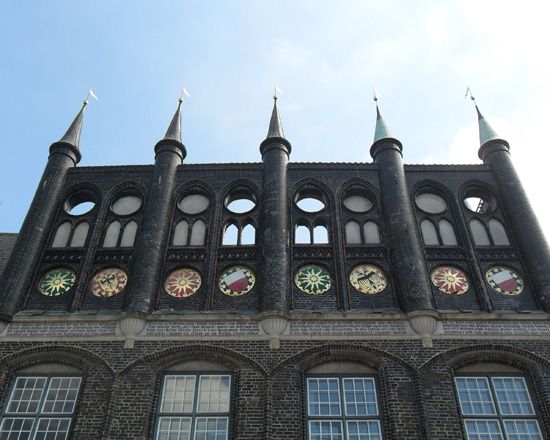
The final section leads toward Buddenbrook House and the streets connected with the Brothers Mann. This gives the tour a literary thread alongside its architecture and trade history.
The Mann connection helps broaden your picture of Lübeck. The city is not only a medieval or Hanseatic setting. It also became a place associated with family memory, literature, and the way writers interpret their home city.
The route ends with decorated houses around Buddenbrook House, making the finish more intimate than another grand monument would be. You move from the city’s public face to its streets and domestic settings.
The supplied information does not include admission to Buddenbrook House, so treat this as an exterior stop and neighborhood walk unless your guide tells you otherwise. If the house is a major reason for your visit, allow separate time for it beyond the 90-minute tour.
What the private format changes
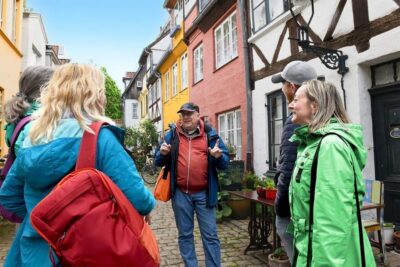
This is a private group for up to six people. That is the most important practical feature after the route itself. You can ask questions without feeling that you are holding up a large crowd, and the guide can adjust the explanation to your interests within the fixed 90-minute window.
The format works especially well for families, couples traveling with friends, and small groups who want one shared introduction. It is also useful if some people in your group already know Lübeck while others are seeing it for the first time.
The price is $259 per group. Split six ways, that is about $43.17 per person. For two people, the effective cost is much higher, about $129.50 each, so value depends heavily on group size.
That price buys a professional guide, not food, drinks, or transfers. You are paying for a focused private introduction to the old town and the ability to share the guide’s attention. A larger group might find a standard public tour cheaper, but a small group that values privacy may find this arrangement worthwhile.
What the guide adds to the experience
The guide quality matters a great deal on a short city walk. With only 90 minutes, clear storytelling and good pacing can make the difference between a useful introduction and a quick list of names.
The strongest guide feedback is tied to Christel and Frau Stump. Christel, also written as Crystal in one English-language comment, is described as friendly and well informed about Lübeck. Frau Stump is praised for both her subject knowledge and her way of handling the group.
Those details suggest the experience is at its best when the guide brings the city to life through explanation rather than simply pointing out buildings. You should expect a live guide in German or English, with stories about Lübeck’s history and architecture.
The overall rating is 4.8 from 64 reviews, a strong result. One four-star rating specifically notes the range of background information about Lübeck, which points to the tour’s main strength: giving you a broad framework in a short time. It is not designed as a specialist architectural seminar, but it should leave you better oriented.
Who should book this Lübeck walk?
I would choose this tour if you have limited time in Lübeck and want the old town explained in a clear order. The route takes in the city’s most recognizable symbols, then adds warehouses, merchant houses, smaller streets, and the Mann connection.
It suits first-time visitors who want context before exploring alone. It also fits a private group that prefers asking questions and moving at its own pace within a set route.
This is less suitable if your main goal is extensive interior access to churches, museums, or Buddenbrook House. The tour details promise a guided walk and historical commentary, not admission to attractions or a long stop inside each one.
It is also not the best match for anyone seeking food or drink as part of the outing. Those are not included. Think of the experience as a compact architectural and historical walk.
For planning, leave yourself extra time before or after the tour. The 90 minutes can introduce the old town, but Lübeck rewards a slower second look at the places that catch your interest. The guided portion gives you the map in your head. Your own time afterward lets you follow it.
Should you book the Classic Tour of Lübeck?
Book it if you want a private, well-focused introduction to the city’s Hanseatic center, especially if you can divide the $259 cost among several people. The route covers the landmarks most visitors hope to see, while the salt warehouses, merchant houses, Teufelchen, and small streets keep it from feeling like a basic gate-and-church circuit.
I would be more cautious if you are traveling as only one or two people and are focused on keeping costs low. The private price is far better for a group of six than for a couple.
For most first visits, this is a sound choice: short, central, led in English or German, and built around Lübeck’s defining architecture. Just book it for orientation and storytelling, not for long interior visits or a complete exploration of every church and museum.
FAQ
How long does the Lübeck Classic Tour last?
The walking tour lasts 90 minutes.
Where does the tour meet?
The meeting point is directly at the Holsten Gate, also called Holstentor.
Is the tour private?
Yes. It is offered as a private group experience.
How many people can join the private group?
The price covers a group of up to six people.
What languages does the guide speak?
Live guiding is available in German and English.
What sights are included on the route?
The route includes Holsten Gate, the salt warehouses, the former Port of Lübeck, the town hall, Teufelchen, St. Mary’s Church, traditional merchant houses, and the streets around Buddenbrook House.
Does the tour include the five main churches?
The tour presents Lübeck’s five main churches as part of the city skyline, with St. Mary’s Church named as a specific stop.
Is food or drink included?
No. Food and drinks are not included.
Are transfers included?
No. Transfers are not included. You meet at Holsten Gate.
How much does the tour cost?
The price is $259 for a private group of up to six people.
Can I cancel the tour?
Yes. You can cancel up to 24 hours in advance for a full refund. You can also reserve now and pay later.
Just added in Lubeck
- Timmendorfer Strand: SEA LIFE Behind the Scenes Tour★ 4.9 · 15 reviews
- Lübeck Day Pass – Day ticket for Lübeck museums★ 4.0 · 15 reviews
- Lübeck: Old Town Highlights Private Walking Tour★ 4.8 · 8 reviews
- Lübeck: Express Walk with a Local★ 4.9 · 10 reviews
- Lübeck: Private Historical and Architectural Walking Tour★ 4.5 · 6 reviews
- Lübeck: Architecture and Local Craft Private Guided Tour★ 4.0 · 6 reviews
- From Kiel: Lübeck Shore Excursion★ 4.6 · 15 reviews
- Lübeck: Hanseatic League History Walking Tour★ 4.9 · 57 reviews
Lubeck Tours, compared.
entertaining guided tour to old town highlights
Read our review →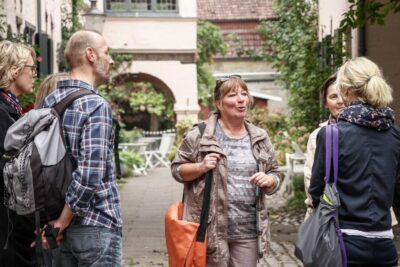


All-in-One: Beautiful Lübeck: Shore Excursion from Kiel Port
Read our review →Browse the lists this tour appears in