
Reviewed · LUBECK TOURS
Lübeck: Entertaining Tour Through Hidden Courtyards
Lübeck’s best stories often sit behind its grand brick facades. This 90-minute walk leads you through medieval courtyards and narrow corridors, places easy to miss if you stick to the main streets. You’ll see where workers lived, how the Hanseatic city coped with a growing population, and how widows of merchants and shipowners were housed.
I like two things right away: the focus on daily life, not just major monuments, and the small-group setting, which leaves room for questions. The tour also offers a useful look at Lübeck beyond its famous gates and churches. The main limitation is simple: the tour is conducted in German, so it will not work well if you cannot follow German conversation.
Key points to know before you book
- Medieval living quarters: See tiny stalls and cramped corridors created when Lübeck’s population grew.
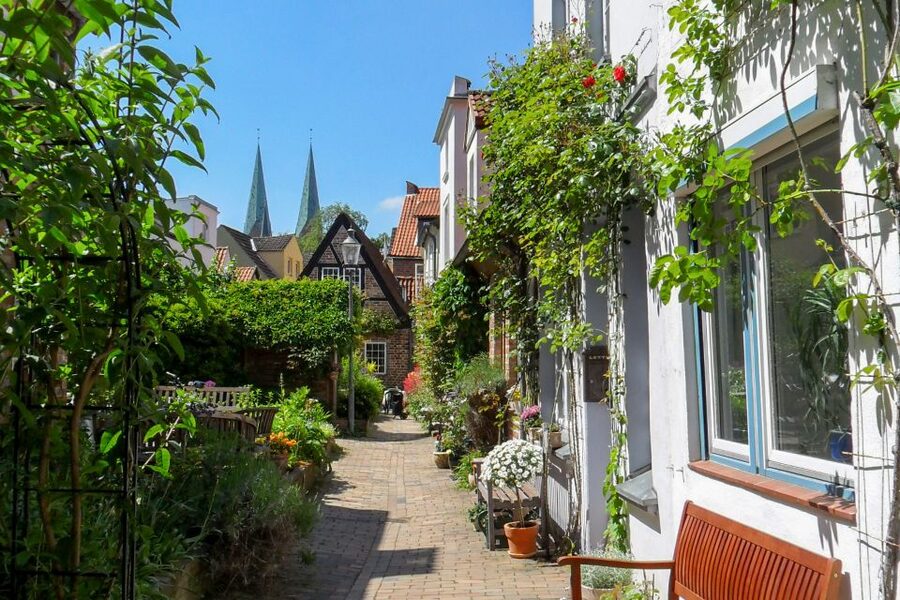
- Courtyards behind the facades: Walk into picturesque yards and passageways that many visitors miss.
- Hanseatic context: Learn how trade and population growth changed the shape of the old town.
- Monastery courtyards: Visit spaces linked to the housing of merchant and shipper widows.
- Private German-language format: A private group allows a more personal pace and questions.
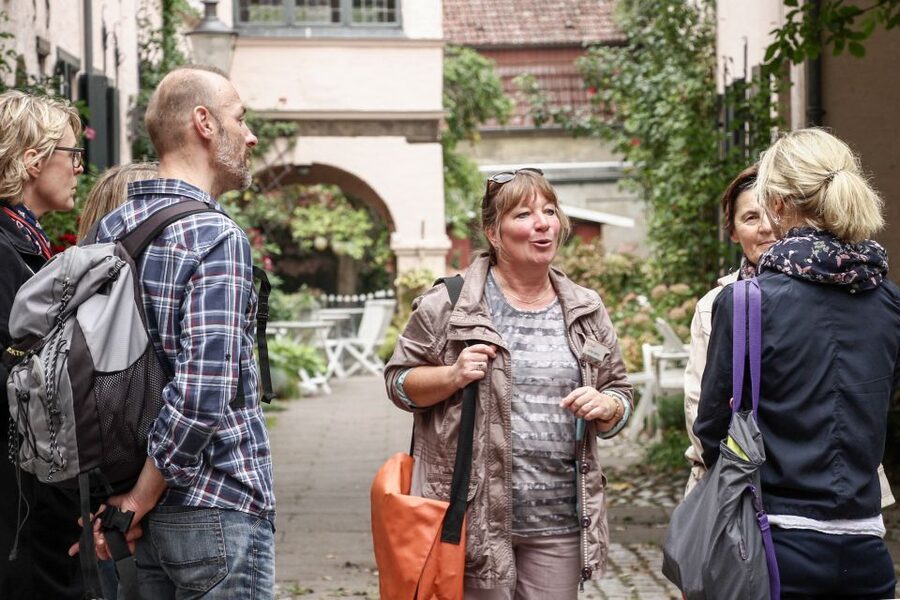
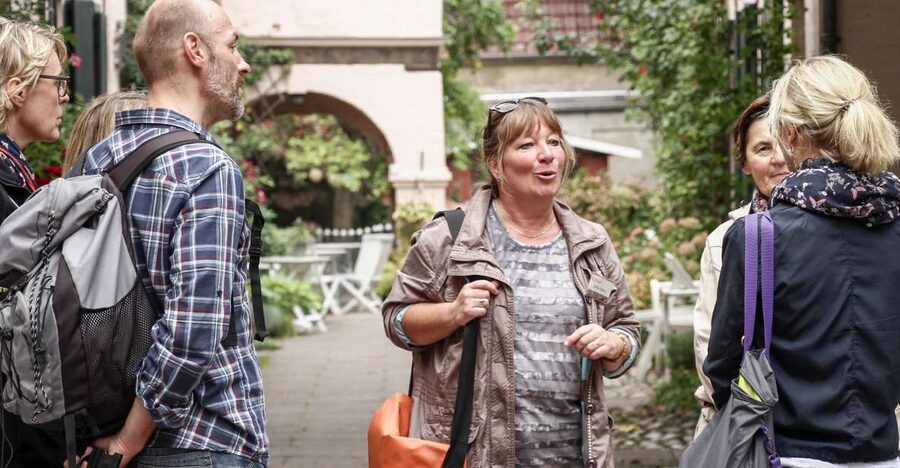
- Simple meeting point: Find the guide outside the city at Burgtor, carrying an orange bag marked k3.
Why Lübeck’s courtyards tell a better story than another postcard view
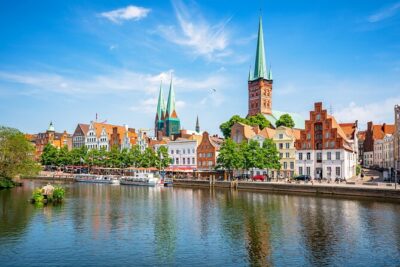
Lübeck is famous for its brick Gothic skyline, its old city gates, and its place in the Hanseatic League. Those sights matter, but they can leave you with a polished version of the city: grand merchants, tall churches, and ships moving goods across northern Europe.
This tour shifts your attention to the people who had to fit into that successful city. As Lübeck grew during the Middle Ages, available space inside the old town became scarce. The answer was not broad new streets. Instead, people created narrow passageways between front buildings and packed small homes into spaces behind them.
That basic fact gives the walk its shape. You are not only looking at attractive courtyards. You are learning why they exist. A crooked lane or low entrance becomes evidence of a city trying to solve a housing problem many centuries ago.
I find that kind of context more useful than a string of dates. Once you understand the pressure on land, the tight corridors make sense. The old town begins to feel less like a museum and more like a working place where families, laborers, merchants, and widows all needed somewhere to live.
A few more half-days in Lubeck worth comparing
- Lübeck: 1-Hour Splash Bus City Tour
★ 4.0 · 2,626 reviews - Lübeck: entertaining guided tour to old town highlights
★ 4.7 · 594 reviews - SEA LIFE Timmendorfer Strand Ticket
★ 4.0 · 256 reviews
Starting outside the Burgtor
The meeting point is in front of the Burgtor at Burgtorbrücke 2, on the outside of Lübeck’s old town. Look for the guide carrying an orange bag with the k3 logo.
This is a practical meeting point because the Burgtor is one of the city’s major old-town landmarks. Still, pay attention to the wording: you meet outside the city rather than deep inside the historic center. Give yourself enough time to reach the gate and locate the guide before the walk begins.
The tour begins with an important sense of place. The Burgtor marks the transition into Lübeck’s historic core, and from there the guide takes you away from the broad, obvious route. You will soon be looking for entrances and passages rather than simply walking from one monument to the next.
Since the guide speaks German, this opening is also a good moment to decide if the pace and language suit you. The experience depends on spoken explanation. It is not simply a walk through picturesque lanes where you can rely on scenery alone.
Narrow corridors built for a growing city
The central subject is Lübeck’s medieval housing. The city’s population increased sharply during the Middle Ages, helped by its role in the Hanseatic League. More people meant more demand for living space, but the old town had limited room inside its existing boundaries.
The solution was compact and sometimes awkward. Narrow corridors were cut between front buildings, leading to small courtyards behind them. These passageways could be crooked, tight, and easy to overlook from the main street.
You will hear how these spaces were used and why the small stalls were created. The word stall can sound modest, and that is the point. These were not grand town houses. They were small dwellings connected with working people and the practical business of city life.
I like this part because it adds social history to Lübeck’s architecture. The handsome buildings facing the street were only one layer. Behind them, workers lived in much simpler quarters. The tour helps you picture the difference between public facades and private living space without turning the walk into a dry architecture lecture.
The corridors also reward close attention. You may pass a plain entrance without realizing it leads to a courtyard with its own shape and character. The guide’s role is to point out those details and explain why the passage was built where it was.
Courtyards that reward a slower pace
The courtyards are the visual heart of the walk. You will follow narrow paths into small, picturesque spaces tucked behind the main buildings. Their appeal is not only that they are pretty. They show how much of Lübeck’s life was organized away from the grand streets.
The best way to approach these yards is with patience. Do not expect one huge landmark or a dramatic reveal. The pleasure comes from a series of modest discoveries: a narrow entrance, a bend in a corridor, a compact yard, and a bit of history that explains the arrangement.
This format suits people who enjoy details. If you want a fast checklist of Lübeck’s biggest sights, the route may feel specialized. If you like seeing how an old city actually functioned, it offers a useful change of pace.
The guide also connects the courtyards to the city’s sightseeing highlights. You will still learn where you are within Lübeck’s old town, but the emphasis stays on places that are easy to pass without noticing. That balance gives you both orientation and local texture.
Same city, a completely different kind of day:
- Lübeck: Electric Boat Rental – without driving licence
★ 4.8 · 174 reviews - SEA LIFE Timmendorfer Strand Admission Ticket
★ 3.5 · 157 reviews - Lübeck: Classic Tour of the Hanseatic City
★ 4.8 · 64 reviews - Lübeck: Hanseatic League History Walking Tour
★ 4.9 · 57 reviews
Monastery courtyards and the lives of widows
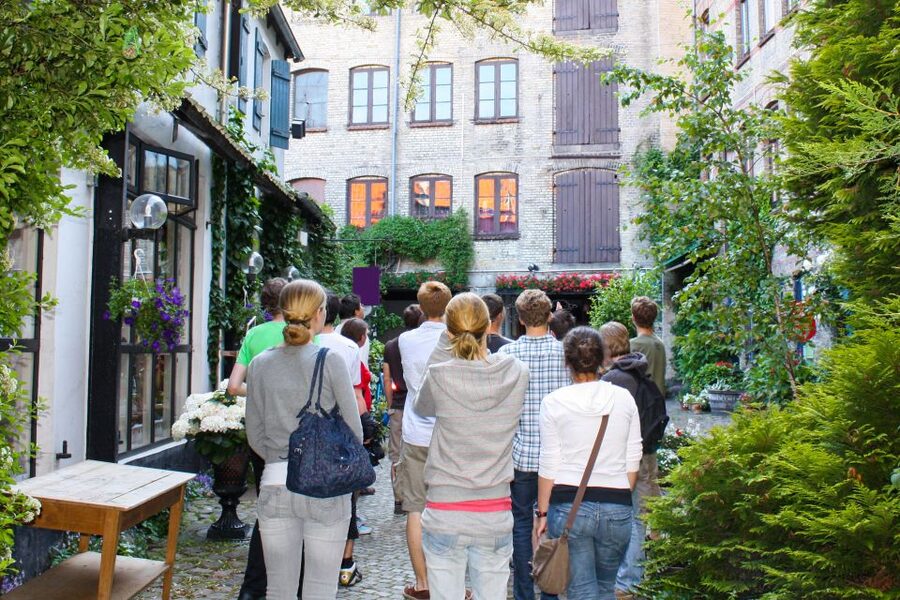
Another important part of the route is the look at monastery courtyards. These spaces take the story beyond worker housing and into the social arrangements of the period.
You will learn how merchant and shipper widows were housed. That detail matters because Lübeck’s trade economy affected more than the men who owned ships or handled commerce. When a merchant or shipper died, his widow still needed a place to live. The courtyards offered one form of organized housing within the old town.
This is one of the more human parts of the experience. You are not only hearing about the Hanseatic League as a network of ports and trade routes. You are seeing how commercial success, family loss, and housing needs shaped real spaces.
The monastery courtyards also add variety to the walk. Rather than seeing only workers’ stalls and service corridors, you move through spaces connected with a different group of residents. The guide can show how the courtyards functioned and why they were significant in Lübeck’s urban life.
A private group makes questions easier
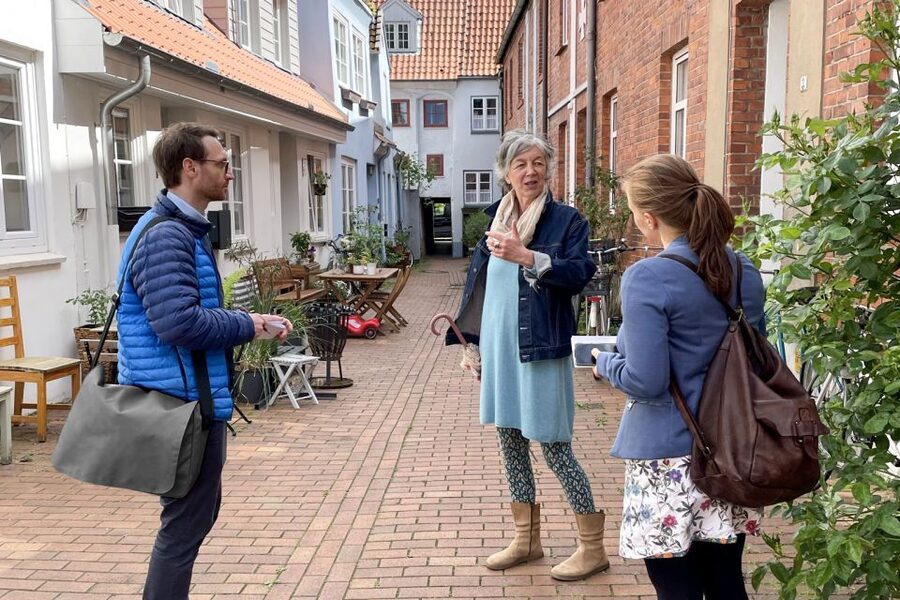
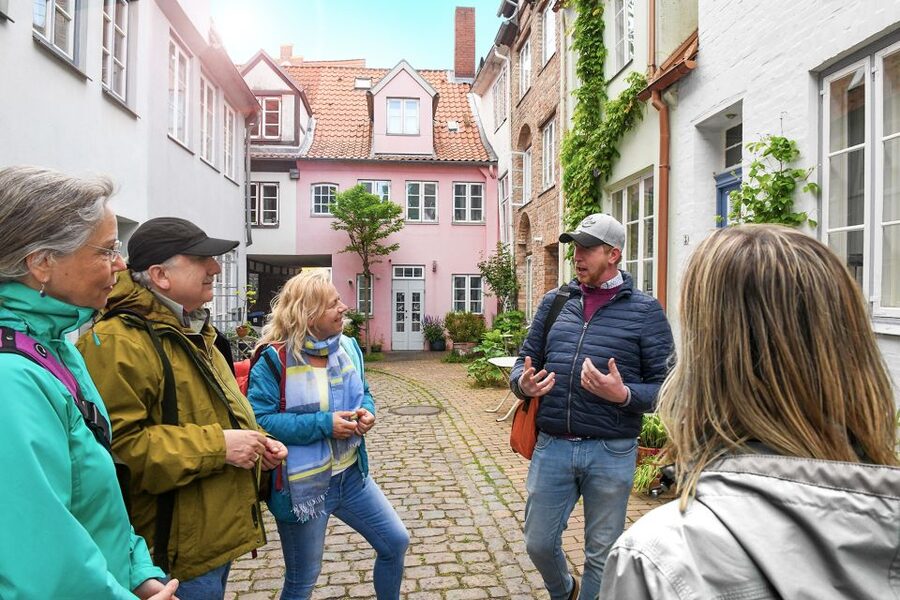
This is sold as a private group tour, and that changes the feel of a history walk. You do not have to compete with a large crowd to hear the guide or ask about a detail that catches your attention.
A small format is especially useful in narrow corridors and courtyards. These are not broad public squares designed for a large gathering. A compact group can move through the spaces with less fuss, and the guide can respond to individual interests.
The experience is also described as entertaining and informative. That combination matters. The subject could easily become a list of dates, building names, and trade terms. Instead, expect the guide to explain the background through stories about housing, work, population growth, and family life.
You should still keep your expectations realistic. The guide’s name is not provided in the available tour details, and there is no promise of a particular guide. What is clear is that the tour is led live in German by k3 stadtführungen.
How much does the tour offer for $20?
At $20 per person, the walk is priced like a focused city experience rather than a full-day sightseeing program. You are paying for 90 minutes with a live guide and access to a subject that is hard to appreciate from a city map alone.
The value depends on your interests. If you already know Lübeck well and have spent time exploring its courtyards, you may find the route less essential. If this is your first visit, or if you want more than the standard view of the Holsten Gate and major churches, the price is reasonable for a compact introduction to the old town’s lesser-seen spaces.
The private-group format strengthens the value. A guide can explain why a passage exists, answer a question about the Hanseatic League, or slow down when a courtyard deserves a closer look. That personal contact is more useful here than a simple audio guide because the route depends on places that may be hard to interpret on your own.
Children up to age five join free. The tour lasts 1.5 hours, long enough to offer real historical context without taking over your day.
Language, timing, and who will enjoy this most
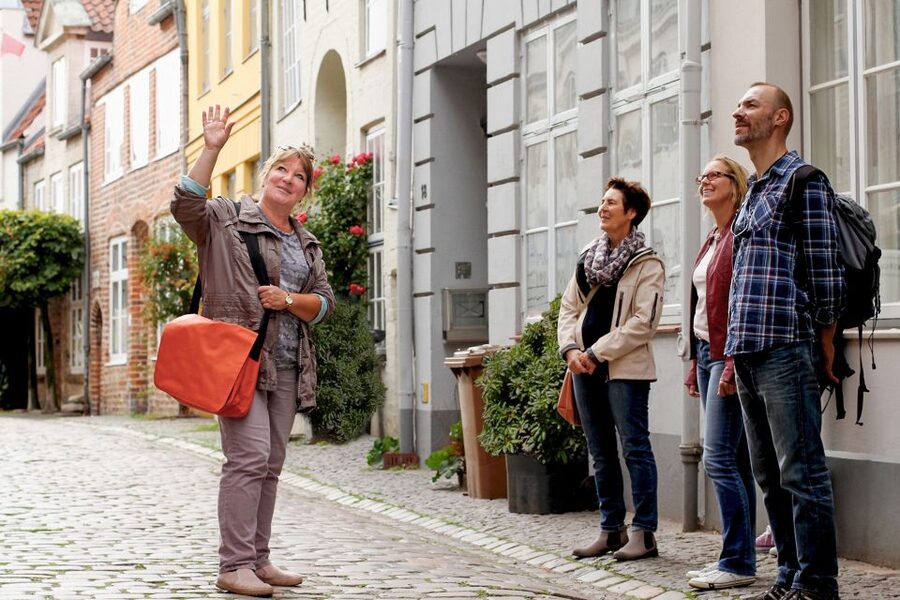
The tour is in German. This is the most important practical point in the entire description. You need enough German to follow a live explanation of medieval housing, Lübeck’s trade role, and the stories connected with the courtyards.
It is a strong match for:
- German-speaking visitors who want more than the main sights
- People interested in urban history and everyday life
- Repeat visitors looking for places beyond the usual route
- Small groups who prefer to ask questions
- Families with young children who can manage a 90-minute walk
It is less suitable if you need an English-language tour or if you are looking for a broad introduction to every major sight in Lübeck. The walk concentrates on courtyards, corridors, monastery spaces, and the history behind them.
You should also be comfortable walking for 90 minutes through narrow old-town passages. No special physical requirements are stated, so I would not assume more than the basic demands of a guided city walk. If you have concerns about the route, ask the provider before booking.
Booking flexibility and simple planning tips
You can cancel up to 24 hours before the start for a full refund. You can also reserve now and pay later, which helps if your day in Lübeck is not yet fixed.
For the smoothest start, plan your route to Burgtor before the tour day. The guide waits outside the old town with the orange k3 bag, so do not search only among the inner courtyards. Arriving early is sensible because the meeting point is near a gate and bridge, not at a major indoor ticket office.
Wear ordinary walking shoes. The tour is built around narrow paths and courtyards, and comfort matters more than formal clothing. Since many of the best spaces are compact, a small bag is easier to manage than bulky luggage.
The 90-minute length also makes the tour easy to fit around other plans. You can use it as an introduction early in your visit, then return to the courtyards you want to see again. Or schedule it after exploring the main sights, when you are ready for a more local look at the old town.
My verdict: book it if you want the Lübeck behind the facades
I would recommend this tour if you speak German and want to understand how Lübeck’s old town worked at street level. Its strongest points are the access to courtyards and corridors, the clear focus on housing and daily life, and the private format that leaves room for questions.
The tour is not the right choice for an English-language introduction or for someone who wants a grand tour of every headline sight. It is also more about small discoveries than dramatic monuments.
For German-speaking visitors, $20 buys a focused look at the city’s less obvious spaces, with enough Hanseatic and social history to make the architecture meaningful. Meet at the Burgtor, find the orange k3 bag, and prepare to look past the front doors. That is where this Lübeck story begins.
FAQ
Where does the Lübeck courtyard tour meet?
Meet the guide in front of the Burgtor at Burgtorbrücke 2, outside Lübeck’s old town.
How do I recognize the guide?
Look for a guide carrying an orange bag with the k3 logo.
How long does the tour last?
The walking tour lasts 1.5 hours.
What language is the tour conducted in?
The tour is conducted in German.
Is this a private tour?
Yes. The group type is listed as a private group.
What does the tour include?
It includes a guided walking tour and a live guide.
What will I see on the route?
You will see courtyards, corridors, narrow paths, small workers’ stalls, and monastery courtyards.
What history does the guide explain?
The guide explains Lübeck’s role in the Hanseatic League, the city’s medieval population growth, the creation of narrow corridors, and housing for merchant and shipper widows.
Can children join the tour?
Yes. Children up to five years old can join for free.
Can I cancel the booking?
Yes. You can cancel up to 24 hours in advance for a full refund.
Just added in Lubeck
- Timmendorfer Strand: SEA LIFE Behind the Scenes Tour★ 4.9 · 15 reviews
- Lübeck Day Pass – Day ticket for Lübeck museums★ 4.0 · 15 reviews
- Lübeck: Old Town Highlights Private Walking Tour★ 4.8 · 8 reviews
- Lübeck: Express Walk with a Local★ 4.9 · 10 reviews
- Lübeck: Private Historical and Architectural Walking Tour★ 4.5 · 6 reviews
- Lübeck: Architecture and Local Craft Private Guided Tour★ 4.0 · 6 reviews
- From Kiel: Lübeck Shore Excursion★ 4.6 · 15 reviews
- Lübeck: Electric Boat Rental – without driving licence★ 4.8 · 174 reviews
Lubeck Tours, compared.
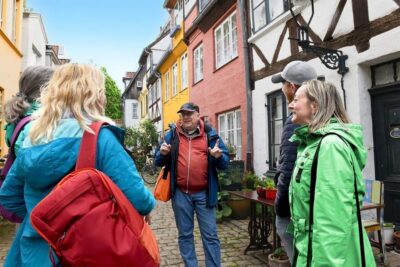
entertaining guided tour to old town highlights
Read our review →
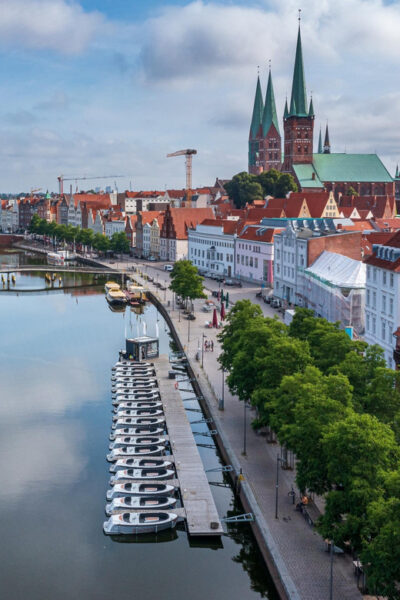

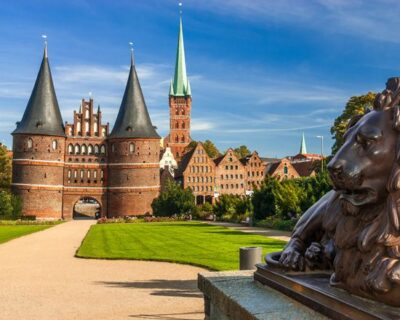
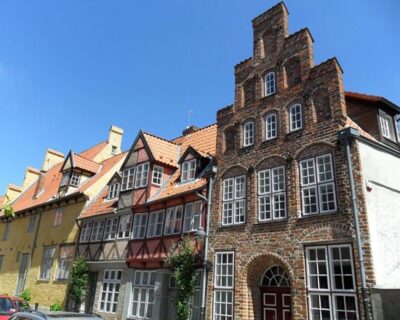
All-in-One: Beautiful Lübeck: Shore Excursion from Kiel Port
Read our review →Browse the lists this tour appears in