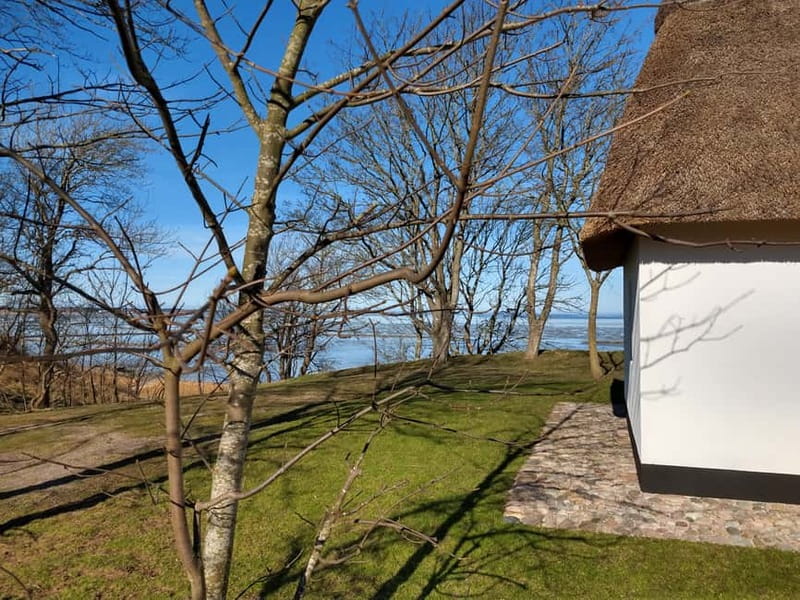
Reviewed · WALKING TOURS
Keitum: Guided Village Walking Tour
Keitum’s most surprising feature is how much history sits inside a small village walk. In 2.5 hours, you move from thatched Frisian homes and artisan workshops to the Wadden Sea, then on to the ancient burial mounds of Harhoog and Tipkenhoog.
I like the route for two clear reasons: it gives you a close look at traditional Sylt architecture, and it reaches the tidal shore instead of keeping you in the village center. The possible drawback is just as clear: the tour is in German, and the historical detail may not satisfy you if you want a formal, date-heavy history lecture.
Key points to know before booking
- A village walk with a prehistoric finish: The route includes the Stone Age burial mounds of Harhoog and Tipkenhoog.
- Thatched homes and walled gardens: You pass old Frisian houses, some dating to 1640, along narrow lanes and rustic paths.
- A look at working village culture: Glassblowers, goldsmiths, and other artisan shops help explain Keitum today.
- Sea views are part of the plan: The Wadden Sea brings open horizons, wind, and a change of pace from the village streets.
- German-language guiding: Jörg Ridder leads the tour, so you should be comfortable following a live tour in German.
- A weatherproof outing: The tour runs rain or shine, so shoes, rain gear, and proper clothing matter.
Keitum begins with old homes, not a museum display
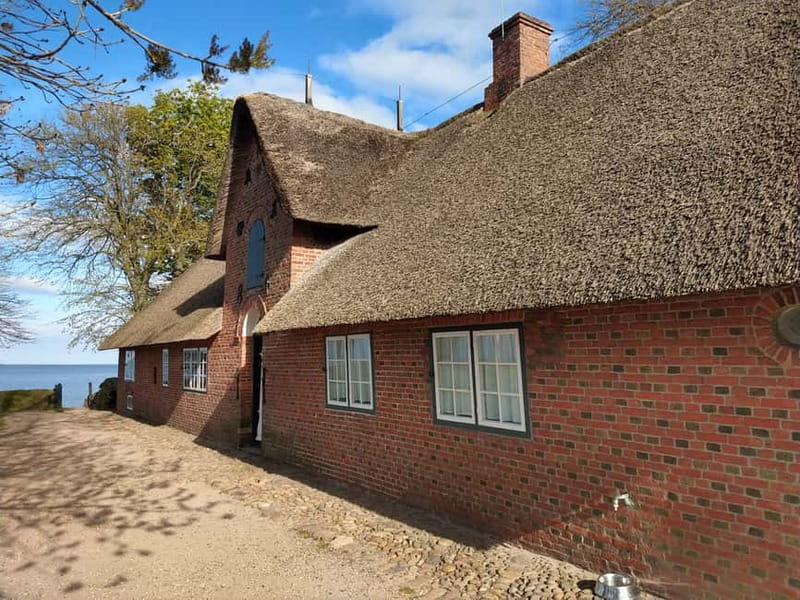
Meet Jörg Ridder at the bus station called Keitum Mitte. From there, the walk starts in the village center, where the first sights are the homes themselves.
Keitum is known for its classic North Sea island architecture. That means thatched roofs, sturdy-looking walls, compact lanes, and gardens protected by traditional Frisian boundaries. Some homes are as old as 1640, giving the village a sense of age that is easy to miss if you only pass through by bus or car.
I like this opening because it puts local life first. You are not starting with a large monument or a staged presentation. You begin by walking slowly past houses, gardens, and small streets, with Jörg explaining what makes the village distinct.
The pace should suit you if you prefer looking closely rather than racing between sights. Small, curving alleyways make the route more intimate, though they also mean this is not a broad, open promenade from the start. Wear shoes that feel good for steady walking on rustic paths.
More Walking Tours in Germany:
- Discover Berlin Half-Day Walking Tour
★ 5.0 · 9,624 reviews - Berlin: Third Reich and Cold War 2 Hour Walking Tour
★ 4.9 · 6,830 reviews - Munich: Third Reich & WWII Walking Tour
★ 4.6 · 6,181 reviews
Narrow lanes reveal Keitum’s creative side
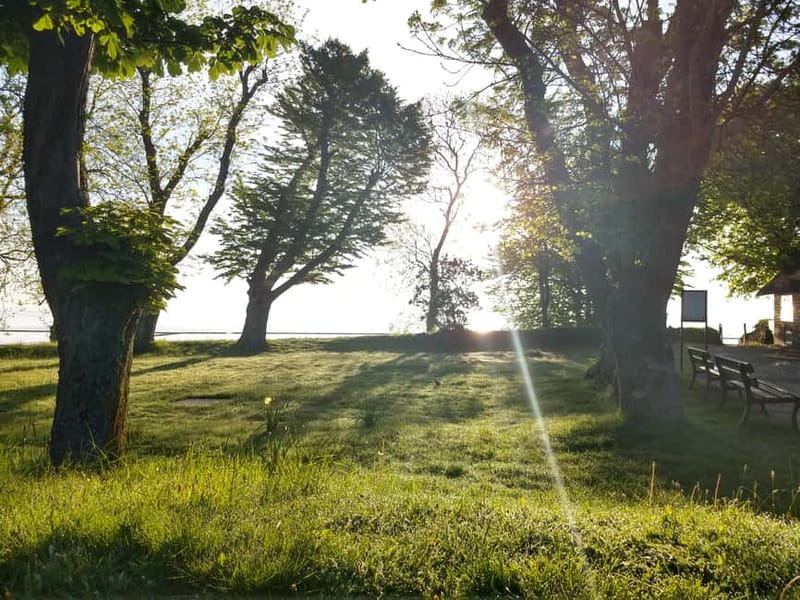
Keitum is also known for its artisan community. Along the route, you pass glassblower and goldsmith workshops, which add a modern working layer to the older homes.
That combination matters. Without it, the village could feel like a collection of preserved façades. The workshops show that Keitum is not only about its past. It also has a creative identity in the present.
You will not be taking a dedicated craft class, and the tour does not include food or drinks. Still, walking past these businesses helps you understand why Keitum has an artistic reputation. Jörg’s job here is to connect what you see in the street with the wider story of the village.
The narrow lanes are one of the more enjoyable parts of the route, especially if you like details: rooflines, garden walls, small shopfronts, and changes in the way homes meet the street. If your main goal is shopping, this is not a shopping tour. The artisan shops are part of the setting and story, not the central activity.
From the green heart to the old whaling economy
Keitum is often called the green heart of Sylt, a name that fits the village’s gardens and planted spaces. The walk gives you time to notice how much of the village’s character comes from the relationship between homes, walls, and greenery.
Jörg also explains Keitum’s connection to the island’s whaling economy and its cultural life in the 18th century. This is the point where the village stops being merely pretty. The houses begin to suggest the work, money, and trade that helped shape local society.
A key consideration is the style of the historical storytelling. The tour is designed as a guided village walk, not a specialist seminar. One three-star assessment found it less suitable for someone seeking strictly historical information about Keitum. I would take that as useful advice: book this for a broad, entertaining introduction to the village, not for an academic account with every date and source laid out.
That does not make the history unimportant. It simply sets the right expectation. You are learning while moving through the places connected with the story, which can make the information easier to remember than a list of facts in a room.
The Wadden Sea changes the mood of the walk

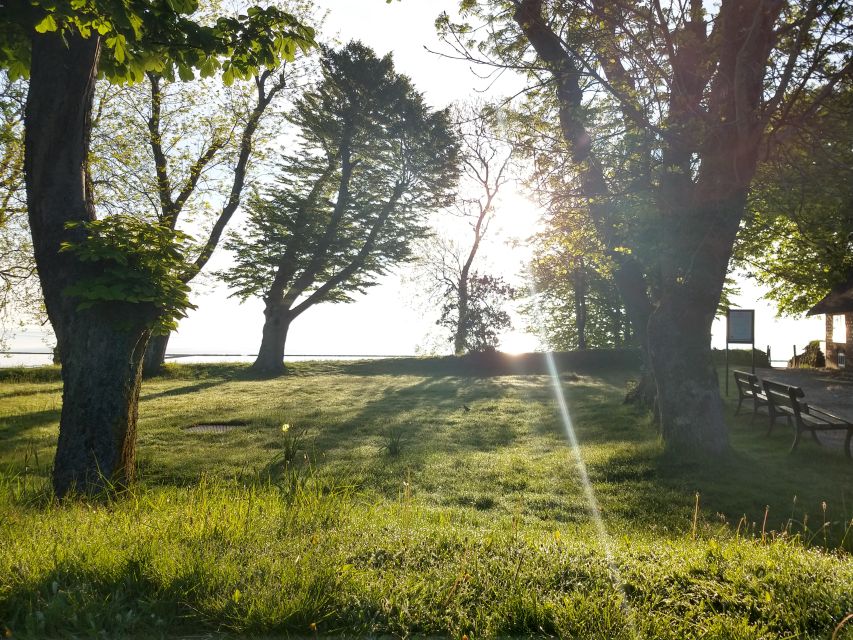
After the village streets, the route heads toward the shoreline. This is a welcome change. You leave behind close lanes and walled gardens for wide views across the Wadden Sea.
The tidal side of Keitum brings fresh air and a more open feeling. The sea view is not just a scenic pause. It helps explain the setting of the village and its connection to the North Sea world. Bring a jacket even if the weather looks mild, since wind can make the shore feel cooler than the village center.
I like that the walk does not treat the Wadden Sea as a distant backdrop. You actually go down to the water side and spend part of the tour looking outward. The open horizon offers a useful contrast to the compact architecture earlier in the route.
The shore section is also where weather matters most. This tour operates rain or shine. A dry day will make the views easier to enjoy, but rain gear is not optional if the forecast is uncertain. Comfortable shoes and clothing suited to the conditions will make a bigger difference than fashionable footwear.
Same city, a completely different kind of day:
- Berlin: Reichstag, Dome and Government District Guided Tour
★ 4.7 · 18,288 reviews - Berlin: 1-Hour City Tour by Boat with Guaranteed Seating
★ 4.3 · 16,993 reviews - Hamburg: Sex and Crime in St. Pauli Tour for Ages 18+
★ 4.7 · 15,447 reviews - Hamburg: 1.5-Hour Harbor and Speicherstadt Day Cruise
★ 4.6 · 14,200 reviews
Harhoog and Tipkenhoog put prehistory on the route
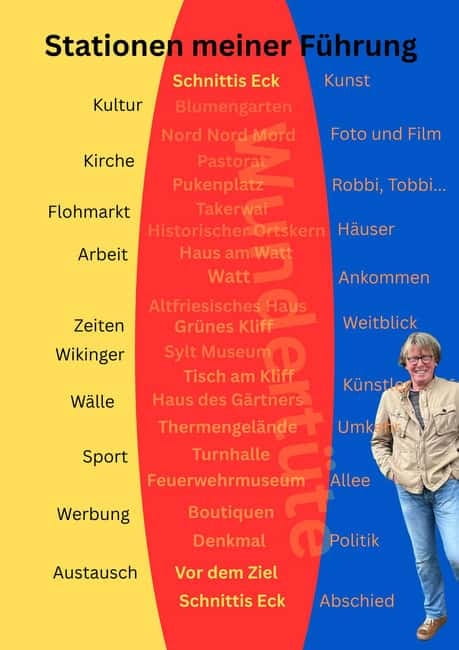
The final major sights are the Stone Age burial mounds of Harhoog and Tipkenhoog. These ancient mounds give the walk a much older time frame than the 17th and 18th-century stories heard in the village.
Their value comes partly from the setting. You are not simply being shown a prehistoric object in a display case. You reach the mounds during a walk from Keitum’s homes to the tidal shore, so the route links village life, sea views, and early human history in one experience.
Jörg explains Keitum’s Stone Age roots at this point. If you enjoy seeing how a place developed across many periods, this is likely the most distinctive part of the tour. The mounds also give the ending more substance than a final stroll past another row of houses.
Do keep your expectations measured. The supplied details identify the mounds and the Stone Age connection, but they do not promise excavation displays, interiors, or a long archaeological presentation. You are visiting outdoor historic sites with a guide, not entering a full archaeological museum.
What Jörg Ridder adds to the experience
Jörg Ridder is the named guide for this walk, and the tour’s tone appears to depend heavily on his way of presenting Keitum. The program is described as more than a standard local walk, with an emphasis on interesting and entertaining storytelling.
That is important because the route itself is pleasant but not difficult to understand without help. You can see that Keitum has old homes, gardens, workshops, and a shore. Jörg’s role is to explain why those details matter and how they connect.
The tour is conducted in German. If you understand German comfortably, you should get the full benefit of the stories and explanations. If you do not, the route’s visual appeal will still be there, but the cultural and historical side will be much harder to follow.
The strong overall rating of 4.6 from 134 ratings suggests that the experience works well for many people. Still, the lower assessment about historical depth is worth keeping in mind. A guided walk can be lively and enjoyable while still leaving a serious history enthusiast wanting more detail.
Is $22 a fair price for 2.5 hours?
At $22 per person, this is a reasonable price for a 2.5-hour guided walk, especially if you want context rather than simply directions through Keitum. The fee covers the guide and walking tour, while food, drinks, and transport are separate.
The value comes from the range of the route. You see village architecture, walled gardens, artisan workshops, cultural history, the Wadden Sea, and Stone Age burial mounds in one outing. Paying for that connection can make sense if you are new to Keitum or want a stronger understanding of what you are seeing.
It is less compelling if you only want a quick look at the village or if you prefer exploring at your own pace. The walk takes 2.5 hours, and much of its value depends on listening to Jörg rather than collecting a long list of major monuments.
There is no hotel pickup or drop-off. You need to reach Keitum Mitte yourself, and the tour returns to that same meeting point. The return to the starting place is handy for planning the rest of your day.
Who will enjoy this Keitum walk most?
I would choose this tour if you like small villages, traditional buildings, local stories, and outdoor sightseeing. It suits anyone who wants more than a quick photograph of a thatched roof but does not need a highly technical history course.
It should also work well for people who enjoy changing scenery during a walk. The route moves from protected gardens and narrow lanes to open sea views, then to prehistoric burial mounds. That variety keeps the 2.5 hours from feeling like one long street tour.
You should think twice if you need an English-language guide. The stated language is German, and there is no indication of an English option. You should also reconsider if rain would spoil the day for you, since the tour runs in all weather.
Families and mixed-interest groups may find the route useful because it offers several entry points: architecture for some, crafts for others, sea views for others, and prehistory for those who like older stories. The walking format does mean everyone should be ready for a full 2.5 hours outdoors.
Simple preparation makes a big difference

Wear comfortable shoes. The route includes narrow lanes and rustic paths, and good footwear will let you pay attention to the village instead of your feet.
Bring rain gear and dress for the weather. The Wadden Sea section can feel exposed, and the tour does not stop simply because the forecast is poor.
There is no food or drink included, so plan around that. The details provided do not specify refreshment stops, so do not count on the tour to supply them.
You can cancel up to 24 hours in advance for a full refund, and the reserve-now, pay-later option gives you some flexibility. Those terms are useful when the weather forecast is uncertain, though you still need to decide if you are comfortable booking an outdoor activity in changeable conditions.
Should you book the Keitum guided walk?
Book it if you want a well-rounded introduction to Keitum in German, with old Frisian homes, artisan culture, the Wadden Sea, and Stone Age burial mounds all connected in one route. At $22, the price is fair for the length and range of the walk.
Skip it if you want an English tour, a short self-guided wander, or an intensive archaeological history lesson. For the right visitor, the best part is the mix of ordinary village streets and very old sites. Keitum feels most interesting when you see both at once.
FAQ
Where does the Keitum walking tour begin?
The tour begins at the bus station called Keitum Mitte.
Where does the tour end?
The activity ends back at the meeting point at Keitum Mitte.
How long does the tour last?
The walking tour lasts 2.5 hours. Starting times depend on availability.
What language is the tour conducted in?
The live tour guide conducts the experience in German.
Who guides the tour?
The named guide is Jörg Ridder.
What sights are included?
The route includes old Frisian homes, walled gardens, narrow village lanes, artisan workshops, the Wadden Sea shoreline, and the Stone Age burial mounds of Harhoog and Tipkenhoog.
Is hotel pickup included?
No. Hotel pickup and drop-off are not included, so you need to reach the Keitum Mitte meeting point yourself.
What should I bring?
Bring comfortable shoes, rain gear, and clothing suitable for the weather. The tour operates rain or shine.
Just added in Germany
- Berlin & The Third Reich Private Guided Tour★ 5.0 · 3 reviews
- Third Reich Quest Experience in Berlin★ 4.5 · 7 reviews
- Private Analogue Photography Experience in Berlin★ 5.0 · 3 reviews
- Berlin Urbex Adventure and History Tour★ 5.0 · 9 reviews
- The Beauty of Berlin by Bike: Private Tour★ 5.0 · 59 reviews
- Berlin: Guided Bike tour of the Berlin Wall and Third Reich★ 5.0 · 160 reviews
- Beyond Currywurst: Berlin’s Hidden Street Food & Culture Tour★ 5.0 · 100 reviews
- Berlin Third Reich & Cold War Walking Tour With A Guide★ 5.0 · 7 reviews
Walking Tours, compared.





Berlin’s Best: 2 Hour Walking Tour Third Reich and the Cold War
Read our review →