
Reviewed · ROSTOCK TOURS
Discover Rostock: A Guided City Tour for Cruise Guests
Rostock’s 1472 astronomical clock is the star of this half-day outing, but the trip is really about seeing how a working port city grew from its Hanseatic roots. You travel from Warnemünde by train and tram, then walk through the old center with an English-speaking guide.
I like two things here: public transport gets you straight into local life, and church admission is included rather than left as an extra decision. I also like the free time at the end, since you can browse Kropeliner Strasse or sit at a café at your own pace. The main concern is meeting clearly at the cruise terminal. One group lost about 30 minutes after confusion over the meeting spot, and one guide was hard to hear because her voice was low.
Key points at a glance
- The 1472 astronomical clock: See St. Mary’s Church and its famous clock during a 45-minute visit.
- A local train and tram ride: Your transport ticket covers the journey from Warnemünde to central Rostock and the return trip.
- A compact old-town walk: Cover about 1.5 kilometers, including the university, Town Hall, New Market Square, Kropeliner Strasse, and medieval defenses.
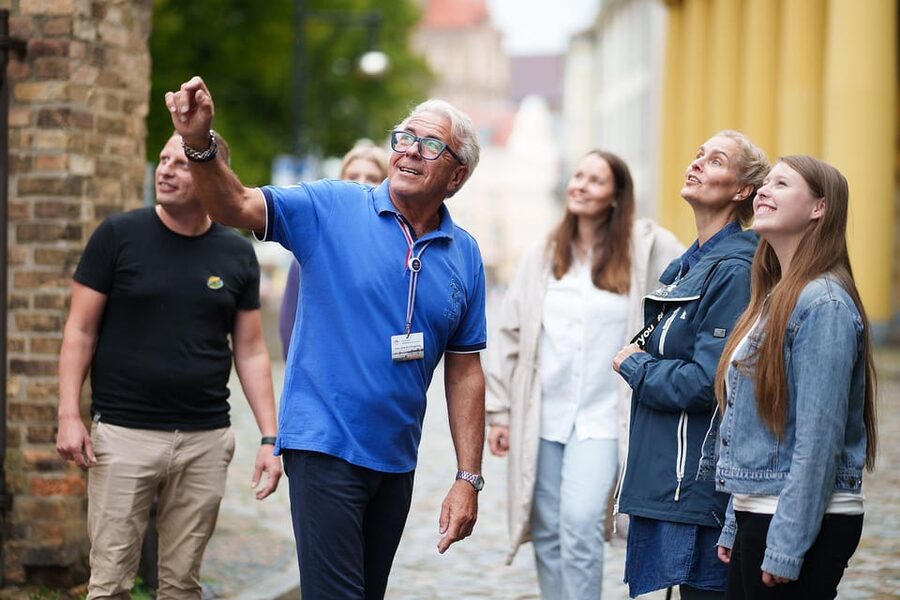
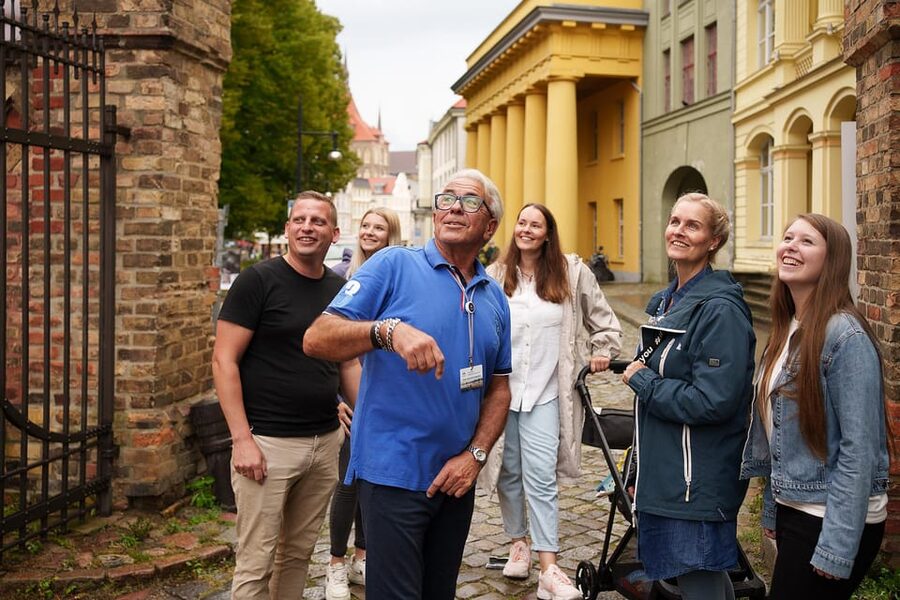
- An English-speaking guide: The group can include up to 20 people, so stay close and listen carefully on busy streets.
- Free time in Rostock: After the guided portion, you can shop, stop for a drink, or explore on your own.
- A cruise-friendly schedule: The full outing lasts about 3.5 hours, with the return to Warnemünde done independently using the supplied ticket.
Starting at Warnemünde Cruise Center
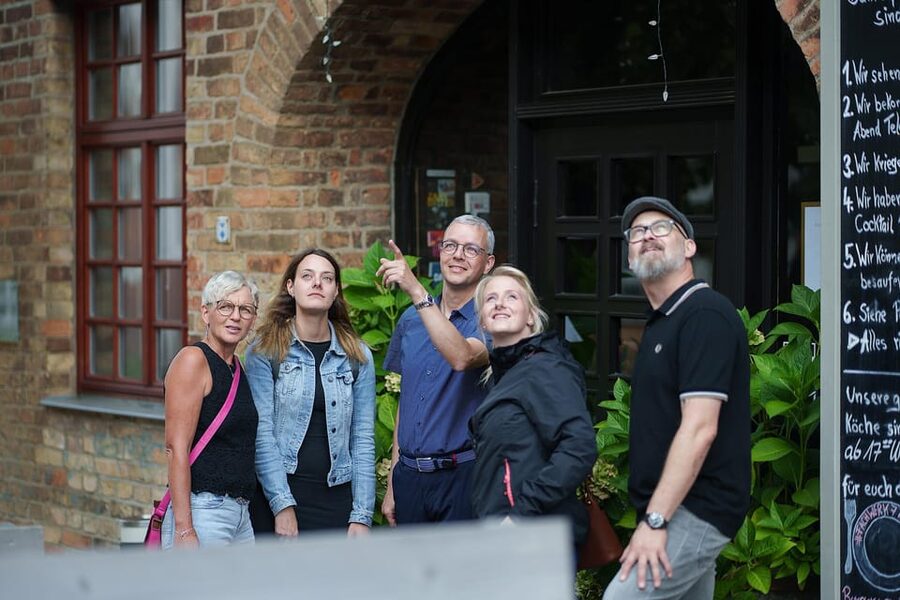
Your day begins at the exit of Warnemünde Cruise Center. Look for a guide holding a sign that says Rostock City Tour. This detail matters, since the terminal area can be confusing when several shore activities are starting at once.
I suggest leaving the ship with your phone charged and your meeting details ready to check. Bring cash as well, since it is listed among the suggested items, along with comfortable shoes, weather-appropriate clothing, and a camera. The tour is not designed for wheelchair users or people with visual impairments.
The guide meets you at the terminal, then accompanies you toward central Rostock. This is not a private car transfer. You use local public transport, which keeps the price down and gives you a quick look at how people move between the seaside district and the inland city.
One useful warning: do not wander off to find the group. Stay near the cruise terminal exit and check the exact meeting instructions before leaving the ship. A previous group lost around half an hour because the meeting point was unclear. That is a serious amount of time on a 3.5-hour outing.
A few more half-days in Rostock worth comparing
- Rostock: Guided tour of the historic city center
★ 4.5 · 311 reviews - All-in-One Berlin Shore Excursion from Warnemunde
★ 4.5 · 293 reviews - Best Berlin Shore Excursion from Warnemunde or Rostock Port
★ 4.8 · 200 reviews
Riding the train and tram to Rostock
The journey to Rostock takes about 30 to 45 minutes by commuter train and tram. The itinerary allows about 30 minutes for each public transport segment, but the total trip can vary with connections and timing.
Your ticket is included, and the guide accompanies you on the outward journey. This makes the transfer much easier than finding a taxi or trying to work out the route alone. It also gives you a feel for the relationship between Warnemünde, the cruise stop, and Rostock’s city center.
The train and tram ride is transportation first, not a sightseeing tour. You should not expect a narrated excursion with special views at every turn. Its value is practical: you get from the ship to the old town without arranging a separate transfer, and you travel in a way local residents use.
The return works differently. After your time in Rostock, you use the provided ticket and follow the guide’s instructions to catch the train back to Warnemünde. The guide does not accompany you on the return. This is easy enough for visitors comfortable with public transport, but you need to pay attention before separating from the group.
Walking through Rostock’s old center
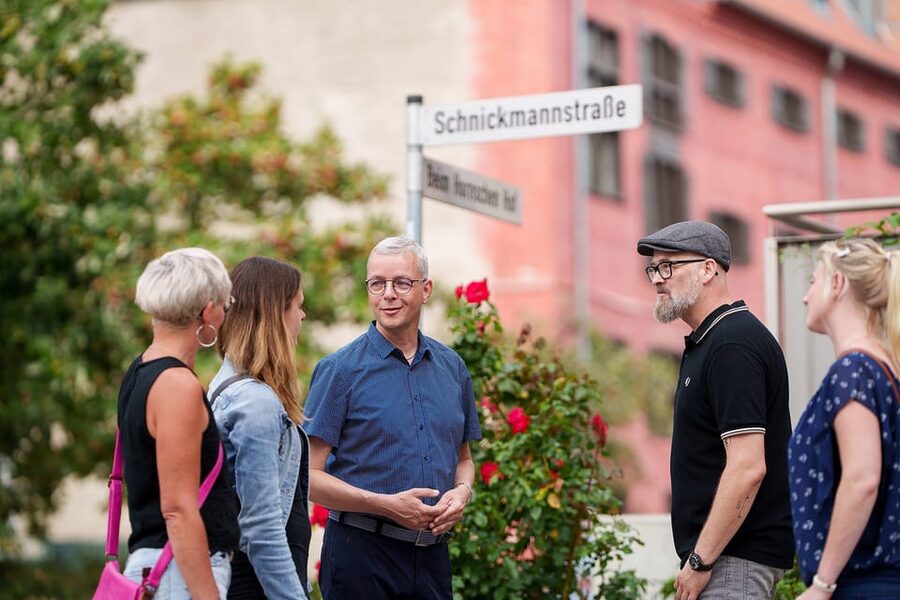
The guided walk covers about 1.5 kilometers, or roughly one mile. That distance is modest, but you should be able to walk for 15 to 20 minutes at a time, often on city streets and through public squares.
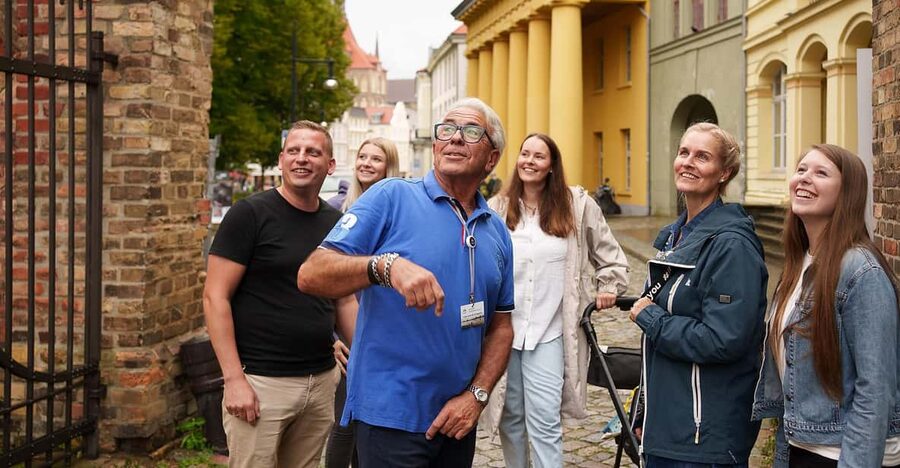
Rostock grew as a Hanseatic trading city, and its old center still shows the marks of that past. Your guide connects the buildings to the city’s development and adds anecdotes about both earlier times and modern Rostock. The appeal is not just ticking off monuments. It is understanding how the streets, walls, churches, and civic buildings fit together.
The group size can reach 20 people. That is not enormous, but it is large enough for the guide to get separated from the rear of the group near crossings or busy pedestrian areas. Keep the sign or guide in sight, and do not assume every stop will be announced loudly enough for everyone to hear.
The quality of the commentary matters here. One account described a friendly guide whose delivery lacked energy and was difficult to follow because her voice was too quiet. That does not mean every guide will have the same style, but it is a useful reason to stand near the front and speak up if you cannot hear.
University of Rostock and its 1419 origins
The University of Rostock dates from 1419 and is one of the oldest universities in Northern Europe. It gives the tour a useful window into the city beyond churches and merchants.
Your guide explains the university’s place in Rostock’s civic life and its contributions to science and education. The stop is especially worthwhile if you like the way old cities remain active places rather than open-air museums.
The information provided does not promise a long interior visit to university buildings. Expect to see and discuss the university as part of the city walk, not to attend a campus tour. Even so, it helps set the tone for Rostock as a center of learning as well as trade.
Same city, a completely different kind of day:
- Rostock: City Walking Tour
★ 4.9 · 198 reviews - Rostock: Full-Day, Half-Day, or Sunset Sailing Experience
★ 4.7 · 174 reviews - Rostock: Warnemünde and Rostock Half-Day Shore Trip
★ 4.7 · 158 reviews - Rostock: Electric Boat Rental on the Warnow River
★ 4.8 · 106 reviews
St. Mary’s Church and the astronomical clock
St. Mary’s Church, or Marienkirche, is the most important interior visit on the route. Admission is included, and the visit is scheduled for about 45 minutes.
The church is a major example of Brick Gothic architecture, a style closely associated with northern Germany and the former Hanseatic world. The red brick exterior and tall interior give the building a strong sense of place without relying on elaborate stone carving.
The main draw is the astronomical clock, built in 1472. It is not simply a decorative clock on a wall. It reflects the medieval interest in tracking time, calendars, and the movement of the heavens. Your guide shares stories about its construction and the legends connected with it.
This is where the tour earns much of its price. You are not just passing the church for a photograph. You have time set aside to enter, see the clock, and hear why it matters. If you enjoy historic churches, old mechanical devices, or carefully made objects, this should be your most memorable stop.
The church visit also gives you a break from the street walk. You still need to remain with the group and listen to the guide, but the pace is likely calmer than it is on the pedestrian route.
New Market Square and Rostock’s Town Hall
Neuer Markt, or New Market Square, is the city’s civic center and one of the clearest places to see Rostock’s public face. The Town Hall has a Baroque façade, while the square provides room to understand how the city’s government and commerce once worked together.
Your guide uses the square to explain Rostock’s past and present. Look for the way different building periods meet here. The value of a guided stop is that you get a reason to look beyond the most obvious façade.
The square may also be one of the livelier parts of the walk, with people moving through the center and local activity around you. This is not a quiet museum setting. If you want close-up photographs or a long look at architectural details, use the free time later rather than trying to linger during the group visit.
Kropeliner Strasse and the medieval city wall
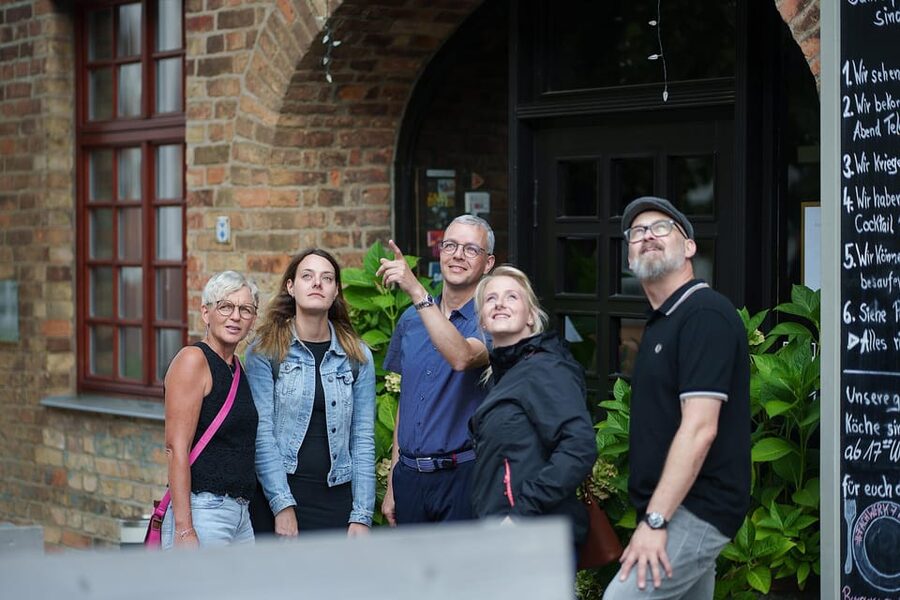
Kropeliner Strasse is a pedestrian street lined with shops, cafés, and older buildings. It gives you a change of pace after the formal churches and civic landmarks. Here, Rostock feels like a city people use for ordinary errands, coffee, and shopping.
You may want to note a shop or café for your free time. The street is a natural place to return after the guide finishes, especially if you prefer a little independent wandering rather than another scheduled sight.
The tour also reaches remains of Rostock’s medieval city wall and gates, including Kropeliner Tor. These defenses show the practical side of the city’s past. A trading town needed protection, and the gates controlled movement through the walls.
Do not expect a complete medieval fortification system. The route focuses on surviving sections and selected gates. Their importance comes from what they help you picture: a compact walled city with limited entry points, commercial power, and a need to guard its streets and harbor connections.
Free time for your own Rostock plans
After the guided section and church visit, you get free time in Rostock. This is a strong feature because guided tours can sometimes fill every minute with commentary and leave no room for personal interests.
You can use the time for a café, souvenir shopping, photographs, or another look at a favorite square. The information provided does not specify how much free time you receive, so treat it as a flexible pause within the total 3.5-hour schedule rather than a full afternoon at leisure.
Keep an eye on the clock. Your return to Warnemünde is self-guided, and the cruise ship will not wait for a casual detour. Before leaving the group, make sure you understand which train and tram connections to use and where the return journey begins.
The guide supplies clear instructions for catching the train back. Still, I would repeat the route on your phone and ask questions before setting off. A charged smartphone is specifically recommended, and it is a sensible safeguard for the return trip.
What the $56 price really covers
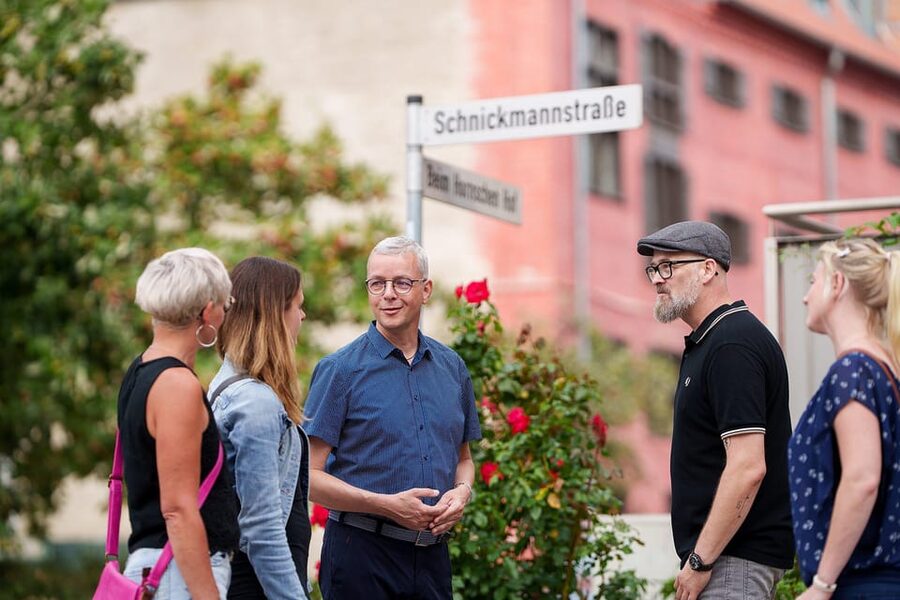
At $56 per person, this is not the cheapest way to see a city if you only want a quick look at the streets. The price includes an English-speaking guide, the outward accompaniment from Warnemünde, public transport tickets for the commuter train and tram, and admission to St. Mary’s Church.
That package has real value for cruise passengers. You avoid arranging transport from the port, you get context at the main sights, and you enter one of Rostock’s key churches without buying a separate ticket. The transport alone is not the reason to book, but it makes the outing practical.
The price is less attractive if you want a private tour, a slow architectural study, or a fully escorted return to the ship. The group can have up to 20 people, and the return is on your own. You are paying for an efficient introduction to Rostock, not a personalized day with door-to-door service.
Food and drinks are not included. Plan to buy those during your free time or before the tour, but do not let a café stop eat into the return schedule.
Who will get the most from this tour
I would choose this outing if you are arriving at Warnemünde by cruise ship and want to see more than the port area without handling every detail yourself. It suits first-time visitors who want a clear introduction to Rostock’s old center, its university, its churches, and its city walls.
It also works well for anyone who enjoys a short walking tour with one substantial interior visit. The astronomical clock gives the route a clear focus, while the free time prevents the day from feeling too rigid.
You should think twice if you need step-free access, have difficulty walking for 15 to 20 minutes at a time, or strongly prefer a quiet guide with a small private group. You may also want another option if navigating public transport alone would cause stress after the tour.
Because the guide’s voice and delivery can affect the experience, stand near the front and ask for repetition when needed. The strongest praise available focuses on the guide’s command of the subject, while the main criticism concerns low volume and a lack of sparkle. In practical terms, the information can be useful even if the presentation is not equally lively every time.
Should you book Discover Rostock?
Book this tour if you want an organized route from Warnemünde to Rostock, a guided look at the old town, and entry to St. Mary’s Church for $56. The 1419 university, Town Hall, New Market Square, medieval gates, and Kropeliner Strasse give you a solid three-hour introduction.
I would not book it without first confirming the meeting point and planning the independent return. Arrive at the cruise terminal exit early, find the guide with the Rostock City Tour sign, keep your phone charged, and listen closely to the transport instructions.
For an independent-minded cruise passenger who wants history without spending the whole day on a formal excursion, this is a sensible choice. Its best moments are specific and worthwhile, especially the astronomical clock and the glimpse of Rostock beyond the waterfront. Its weak points are the possible confusion at the start, the group size, and the fact that your ride home is your responsibility.
FAQ
Where does the Rostock city tour begin?
Meet the guide at the exit of Warnemünde Cruise Center. The guide will hold a sign reading Rostock City Tour.
How do I travel from Warnemünde to Rostock?
The group uses local public transport, including a commuter train and tram. The outward journey takes about 30 to 45 minutes, and the transport ticket is included.
How long does the full activity last?
The activity lasts about 3.5 hours, including public transport and the guided time in Rostock. Check availability for the specific starting time.
Is St. Mary’s Church included?
Yes. Admission to St. Mary’s Church is included, with about 45 minutes scheduled for the visit. The church contains an astronomical clock built in 1472.
How much walking is involved?
The walking route is about 1.5 kilometers, or approximately one mile. You should be able to walk for 15 to 20 minutes at a time.
How do I return to Warnemünde?
You return independently using the provided public transport ticket. The guide gives instructions for catching the train back to Warnemünde before the group separates.
Just added in Rostock
- Rostock: Tour with the Rostocker Executioner★ 4.7 · 28 reviews
- Rostock: Hot Rod Sightseeing Tour to Warnemünde★ 5.0 · 19 reviews
- Rostock: Private Guided Walking Tour★ 5.0 · 4 reviews
- Rostock: Hot Rod Harbor City Tour★ 4.9 · 16 reviews
- Güstrow: Guided tour of the historic city center★ 4.6 · 12 reviews
- Distillery tour with guide!★ 4.7 · 14 reviews
- Brewery tour with guide!★ 4.8 · 13 reviews
- Explore Berlin Shore Excursion: Top Attractions Private Tour from Warnemuende★ 5.0 · 41 reviews
Rostock Tours, compared.

All-in-One Berlin Shore Excursion from Warnemunde
Read our review →
Best Berlin Shore Excursion from Warnemunde or Rostock Port
Read our review →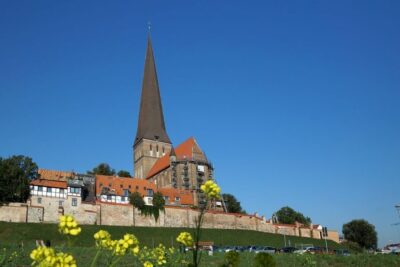

Full-Day, Half-Day, or Sunset Sailing Experience
Read our review →
Browse the lists this tour appears in