
Reviewed · WALKING TOURS
Berlin: Discover Berlin Walking Tour
Berlin’s past is unusually visible from the pavement. In a few city blocks, you can move from Prussian grandeur to the Nazi book burning site, then on to the Berlin Wall and the place where Hitler died. This history-focused walking tour ties those pieces together instead of treating each monument as an isolated photo stop.
I like the clear storytelling and the chance to ask questions as you go. I also like the choice of a shorter or longer outing, plus guides such as Anja, Gregor, Joel, and Georgia, who bring different personal and professional angles. The main drawback is simple: you are outside for up to four hours, and Berlin weather does not take the day off.
Key points
- A full central Berlin route: See the Brandenburg Gate, Checkpoint Charlie, Museum Island, Bebelplatz, Berlin Cathedral, Palace Square, and major Cold War sites.
- History with a clear thread: The guide links medieval Berlin, Prussia, imperial Germany, Nazism, the divided city, and present-day Berlin.
- Serious places handled with care: Visit the memorial to Europe’s murdered Jews, the Nazi book burning site, and the former Hitler bunker location.
- Strong guide-led experience: Guides including Anja, a historian-archeologist, and Berlin local Gregor are praised for clear explanations and personal context.
- Useful for a first visit: The route gives you a strong map of central Berlin and ideas for what to see next.
- Flexible format: Choose a 2-hour or 4-hour option, with English and German tours and private groups available.
Why this walking tour helps Berlin make sense
Berlin can feel like several cities placed on top of one another. Grand royal buildings sit beside stark memorials. A modern office block may cover a Cold War border crossing. A quiet patch of pavement can mark one of the darkest moments in European history.
That is why I find a guided walk useful here. You are not only seeing the Brandenburg Gate or Checkpoint Charlie. You are learning how Berlin changed hands, systems, borders, and identities over time.
The tour begins with Berlin’s early origins and moves through Prussian and imperial power before reaching the Nazi period, the Cold War, reunification, and present-day life. The guide’s job is to keep that long story understandable. The best comments describe guides who explain difficult subjects in plain language, add humor at the right moments, and leave room for questions.
This is not a museum visit, so you will not go inside every major building. Its value comes from seeing how the city fits together outdoors. For a first day in Berlin, that context can save you from looking at famous places without knowing why they matter.
More Walking Tours in Berlin
- Discover Berlin Half-Day Walking Tour
★ 5.0 · 9,624 reviews - Berlin: Third Reich and Cold War 2 Hour Walking Tour
★ 4.9 · 6,830 reviews - Berlin’s Best: 2 Hour Walking Tour Third Reich and the Cold War
★ 5.0 · 5,486 reviews
Brandenburg Gate and the symbols of a changing city
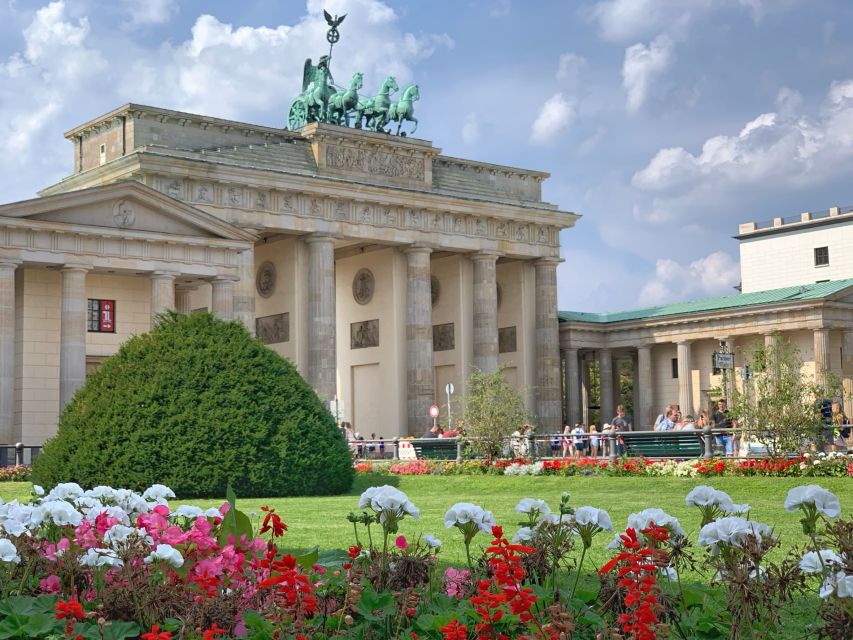
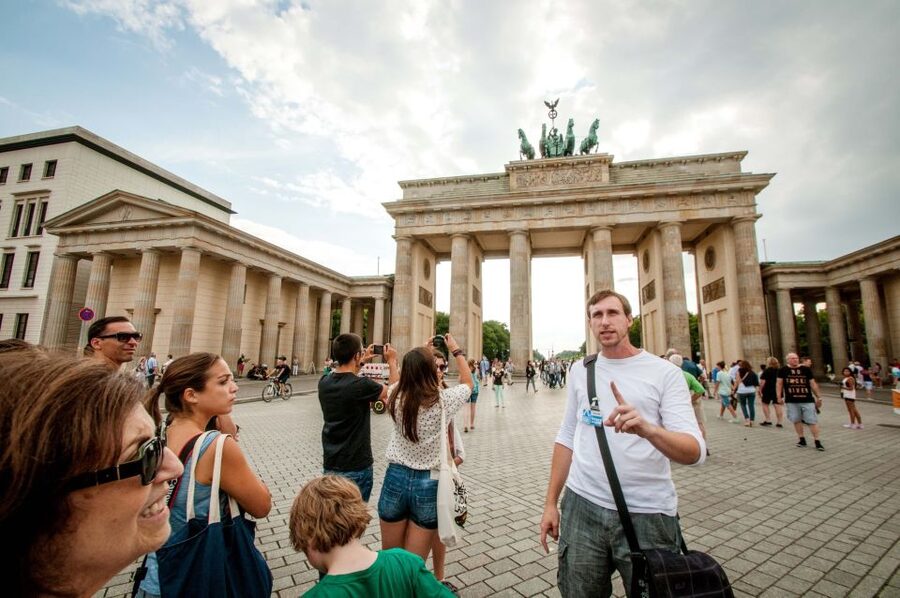
The Brandenburg Gate is one of Berlin’s essential stops, but its meaning has shifted several times. Once part of a royal city, it later became a symbol of division when the Berlin Wall ran nearby. After reunification, it became an emblem of a single Germany.
A guide can use the gate to explain Berlin’s changing political identity rather than simply pointing out its columns and chariot sculpture. You will also get a sense of how open the central city feels today compared with the restricted border zone that once surrounded this area.
The gate is also a practical orientation point. From here, the tour can connect several major sights on foot, including the Reichstag area, the Memorial to the Murdered Jews of Europe, and former government districts. The exact order can vary, so listen for the guide’s route instructions and stay close when the group moves on.
The Memorial to the Murdered Jews of Europe
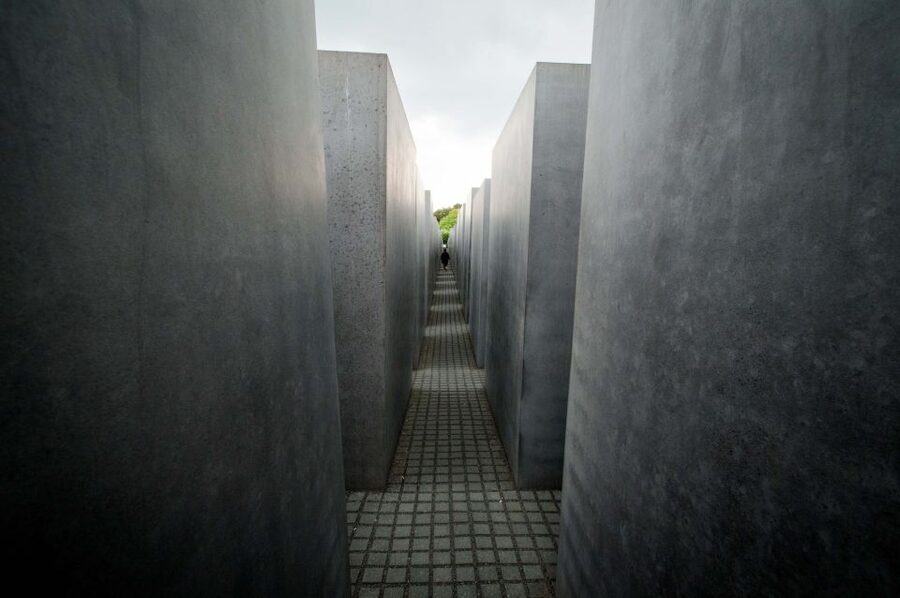
The memorial, made up of many concrete blocks, is one of Berlin’s most discussed modern landmarks. Its design is deliberately open to interpretation, and the tour gives you a chance to hear about the arguments and questions surrounding it.
The memorial is not a traditional statue with a single message written on a plaque. As you walk among the blocks, the ground changes and the views shift. The setting invites thought, but the place also requires respect. This is not a stop for loud jokes or hurried posing.
The guide can also place the memorial in the wider story of Nazi persecution. That context matters. Without it, the site can become only an unusual architectural attraction. With it, you understand why this central location was chosen and why Berlin continues to confront this part of its past in public spaces.
The tour may also point toward the former bunker area nearby. You will not enter Hitler’s bunker, but you will stand above the site where he took his life in April 1945. A small location can carry a great deal of historical weight, especially when the guide explains the final days of the Nazi regime and what happened to Berlin around it.
Bebelplatz and the Nazi book burning
Bebelplatz is one of the most memorable stops because the event connected to it is easy to miss if you walk by alone. In 1933, Nazi-organized book burnings took place here, targeting works by Jewish, socialist, liberal, and other writers.
The memorial is set into the square itself. You look down through glass at empty bookshelves below ground. It is a restrained design, and the lack of books makes the point more forcefully than a long inscription might.
This is also a good example of what the guide adds. The physical location is clear, but the political meaning needs explanation. You can learn how the book burning fit into the wider campaign against free thought, academic life, and public opposition.
Bebelplatz also sits among grand buildings linked to Berlin’s royal and intellectual past. That contrast is important. A beautiful square can hold a painful memory, and the tour repeatedly shows how Berlin places difficult history beside ordinary modern life.
Same city, a completely different kind of day:
- Berlin: Reichstag, Dome and Government District Guided Tour
★ 4.7 · 18,288 reviews - Berlin: 1-Hour City Tour by Boat with Guaranteed Seating
★ 4.3 · 16,993 reviews - Berlin: Boat Tour Along the River Spree
★ 4.4 · 11,252 reviews - Berlin: Hop-on Hop-off Bus Tour with Live Commentary
★ 4.3 · 8,579 reviews
Museum Island, Berlin Cathedral, and Palace Square
Museum Island gives the walk a change of mood. The area gathers several major museums and sits beside the River Spree, with Berlin Cathedral forming one of the city’s most recognizable views.
Depending on the route and timing, you may see the cathedral from outside and learn how the island developed as a center of art, scholarship, and state power. The tour is not a substitute for visiting the museums themselves, but it helps you decide which ones deserve your time later.
Palace Square adds another layer. Berlin’s former royal center has been altered, rebuilt, and debated over the years. The surrounding architecture shows the city’s habit of arguing with its own past. You may see traces of monarchy, wartime destruction, East German planning, and modern reconstruction within a short walk.
I particularly like this part of the route because it prevents Berlin’s story from becoming only a lesson about war and division. The city also has medieval beginnings, royal ambitions, scientific achievements, cultural figures, and modern debates about how the past should appear in public.
The guide may bring in figures such as Albert Einstein and Marlene Dietrich, along with political leaders and ordinary Berliners who shaped the city’s character. These personal stories help break up the dates and make the city feel less like a textbook.
Checkpoint Charlie and the Cold War city
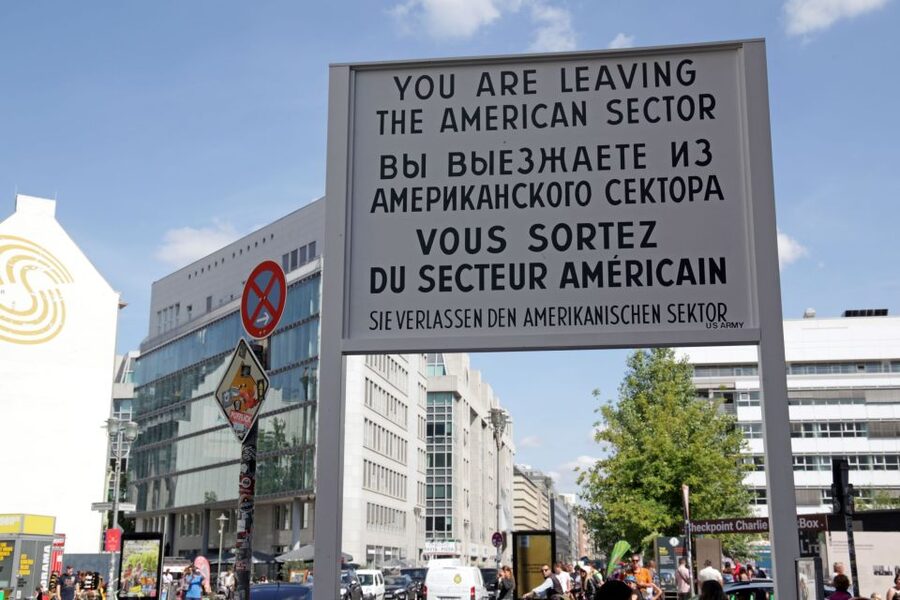
Checkpoint Charlie is one of Berlin’s most famous former crossing points. It was used by Allied forces and became a symbol of the divided city. Today, the area is busy and commercial, which can surprise people expecting a preserved border zone.
That difference is worth discussing. The famous guardhouse and signs recall the Cold War, but much of the surrounding area has changed. A guide can help you separate the original border crossing from later displays and explain how escapes, confrontations, and political tension played out here.
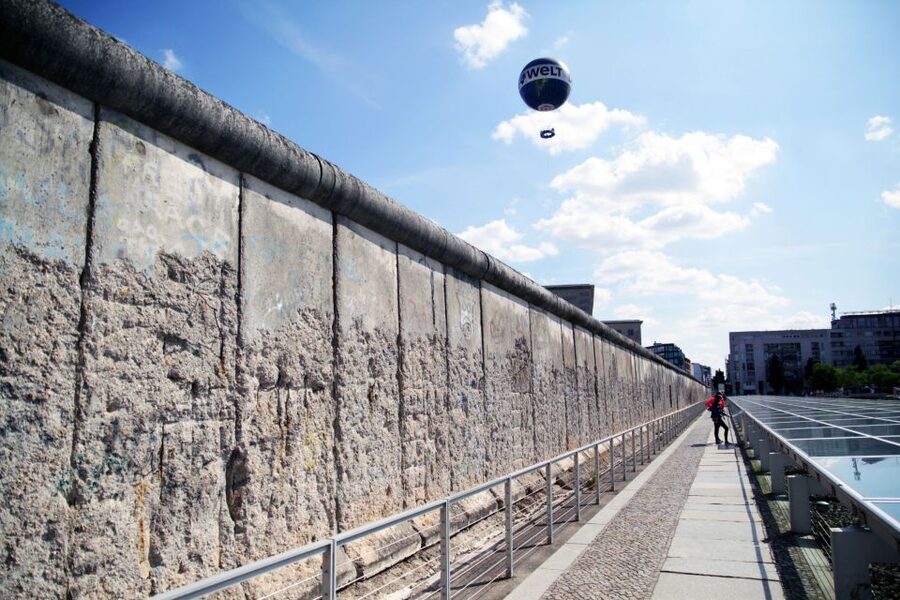
The tour also covers places connected with daring attempts to cross the Berlin Wall before it fell in 1989. These stories show that the Wall was not just a concrete barrier. It cut through neighborhoods, separated families, controlled movement, and shaped daily life for decades.
You may find the Cold War section especially useful if you know the basic dates but have trouble picturing the divided city. The guide can explain how West Berlin functioned as an isolated enclave, how East German controls worked, and why the Wall’s fall became such a powerful moment.
Hitler’s bunker site and difficult history

The former Hitler bunker site is not a grand memorial. That is part of the point. You stand above the location rather than entering a preserved underground attraction, and the surrounding modern buildings make the place look almost ordinary.
A guide’s explanation gives the site meaning without turning it into a shrine. You learn about Hitler’s final days, the collapse of Nazi Germany, and the deliberate choice not to create a dramatic monument at the location.
This stop can feel stark, especially for visitors who expect a clearly marked museum. It works best when you listen closely and allow the guide to explain what happened and why the physical site looks as it does today.
The tour’s treatment of Nazi history is one of its strongest features. It does not isolate Hitler from the wider story. The book burning, the memorial to murdered Jews, the government district, wartime destruction, and the bunker site form connected parts of a larger history.
The guides make the difference
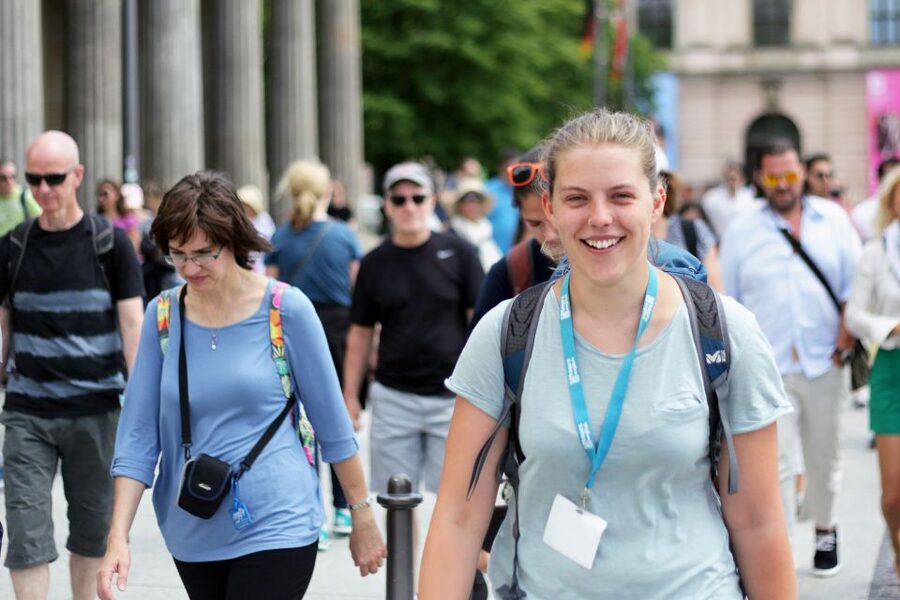
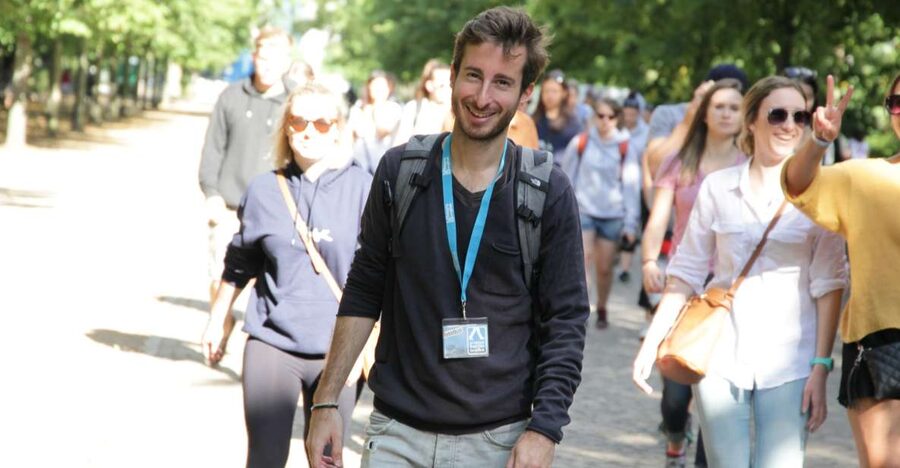
The route covers a lot, but the guide determines how much of it you retain. The strongest guide descriptions point to warmth, clear explanations, humor, personal stories, and an ability to answer questions without losing the thread.
Anja brings a particularly strong academic background as a historian-archeologist. Her approach connects Berlin’s early development with the events that shaped the modern city. Gregor draws on his connection to Berlin and family experiences of a city that changed dramatically during his lifetime.
Joel is praised for keeping people comfortable in difficult weather, stopping in sheltered places for longer explanations, and offering practical ideas for the rest of a Berlin visit. That sort of care matters on a walking tour, especially in winter. Other guides, including Tobi, Luisa, Georgia, Stefan, Walid, and Glen, are noted for energy, humor, and clear historical storytelling.
You cannot select a particular guide unless the booking option says so, and the guide assigned to your departure may differ. Still, the repeated strength of the guiding approach is important. This experience depends less on special equipment or access and more on the person leading you.
Groups can ask questions along the way. That is useful if you are traveling with children or teenagers who need the story explained in smaller pieces. One family found that the steady pace and regular stops worked well for a 13-year-old, which suggests the tour can suit mixed-age groups when the guide keeps the language clear.
Two hours or four hours?
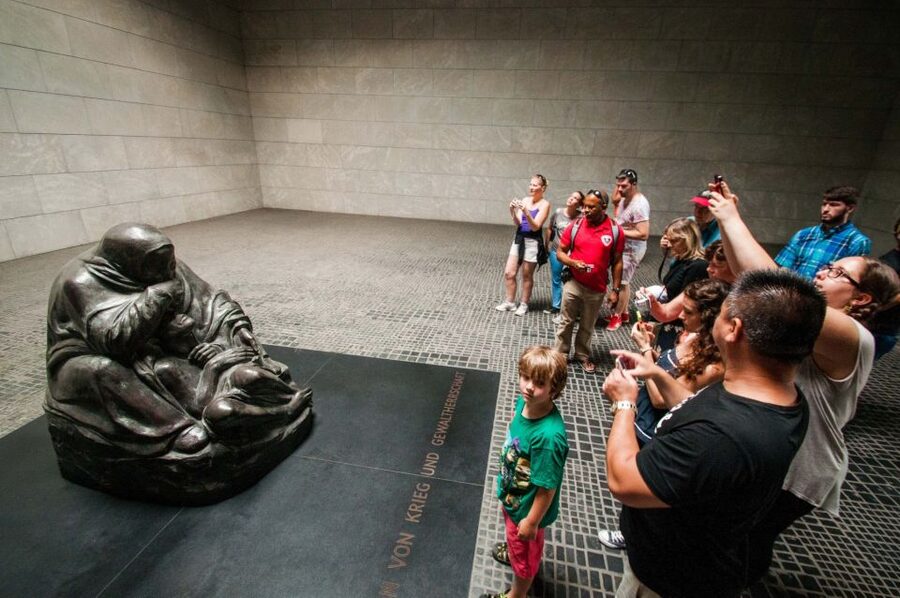
The shorter option works well if you want a fast orientation or have only a small gap in your schedule. You can expect a brisk look at several central sights, but there will be less time for extended questions and detailed stories.
The longer option is the better choice if Berlin’s history is your main reason for booking. It gives the guide more room to connect the eras, pause at serious memorials, and explain the city beyond a list of famous names.
Do not think of the 4-hour option as a museum substitute. You will see many sites from outside and cover a fair amount of ground. The reward is breadth and context, not long indoor visits.
I would avoid placing a demanding restaurant reservation immediately afterward. The tour is designed as a sustained walk, and a short pause does not turn it into a relaxed sightseeing bus ride. Wear weather-appropriate clothing, as the outing runs in rain, cold, or sunshine.
Is $23 a fair price?
At $23 per person, this is a strong value if you want a historical orientation to central Berlin. A guide can show you many major locations in one outing and help you understand what you are seeing. That saves you from spending your first day piecing the city together from separate plaques and guidebook paragraphs.
The value is highest for first-time visitors, history fans, and anyone with only one or two days in Berlin. It is also useful early in a longer stay, since you can use the route to choose which museums and memorials to revisit at your own pace.
The price does not include entry to museums or indoor attractions. That is not a flaw, but you should budget separately if you want to explore Museum Island or other buildings after the walk.
A private group is available, which may suit families or friends who want a more personal pace. For many people, though, the standard tour should provide the best balance of cost and information.
Who should book this Berlin walk?
I would choose this tour if you want the major sights explained rather than simply photographed. It suits people who enjoy political and social history, but the guides appear able to keep the subject approachable with humor and everyday examples.
It is also a good fit for a first visit. You will see enough of central Berlin to get your bearings, learn which places deserve a second look, and receive ideas for the rest of your stay.
Families can benefit from the regular stops and question time, though younger children may find the Nazi and Holocaust sections difficult. The tone is serious when it needs to be, and parents should decide if that subject matter suits their group.
You may prefer another format if you have limited mobility, dislike walking in poor weather, or want long indoor visits. The tour takes place rain or shine, and the route is built around outdoor historical sites.
Should you book the Discover Berlin Walking Tour?
Book it if you want one well-planned walk to connect Berlin’s biggest historical themes. The strongest reason to go is the guide-led context, especially at places such as Bebelplatz, the former bunker site, Checkpoint Charlie, and the Holocaust memorial, where the meaning is easy to miss without explanation.
Choose the longer option if you have the time and care most about history. Choose the shorter one if you mainly need an introduction before exploring on your own.
At $23, the tour earns its place in a first Berlin itinerary. Bring suitable clothing, keep some energy for the walk, and approach the serious sites with respect. If you do that, you will leave with more than a checklist of landmarks. You will understand how the city’s past still shapes what you see today.
FAQ
How long does the Discover Berlin Walking Tour last?
You can choose an option lasting 2 to 4 hours. Starting times depend on availability.
What sights are included?
The tour covers major central Berlin sights including Checkpoint Charlie, the Brandenburg Gate, Museum Island, Berlin Cathedral, Palace Square, Bebelplatz, the Berlin Wall, the Memorial to the Murdered Jews of Europe, and the former Hitler bunker site.
Is the tour available in English?
Yes. Live tours are offered in English and German.
Is this a private tour?
A private group option is available. The meeting point and exact format depend on the option you book.
Does the tour enter museums or the former bunker?
The provided details describe an outdoor walking tour. You stand above the former bunker site and visit areas such as Museum Island, but indoor museum entry is not included.
Does the tour operate in bad weather?
Yes. The tour runs rain or shine, so you should bring weather-appropriate clothing.
How much does the tour cost?
The listed price is $23 per person.
Can I cancel or pay later?
You can cancel up to 24 hours before the tour for a full refund. A reserve-now, pay-later option is also available.
Just added in Berlin
- Berlin & The Third Reich Private Guided Tour★ 5.0 · 3 reviews
- Third Reich Quest Experience in Berlin★ 4.5 · 7 reviews
- Private Analogue Photography Experience in Berlin★ 5.0 · 3 reviews
- Berlin Urbex Adventure and History Tour★ 5.0 · 9 reviews
- The Beauty of Berlin by Bike: Private Tour★ 5.0 · 59 reviews
- Berlin: Guided Bike tour of the Berlin Wall and Third Reich★ 5.0 · 160 reviews
- Berlin Third Reich & Cold War Walking Tour With A Guide★ 5.0 · 7 reviews
- Shared Underground Party Tour in Berlin★ 4.5 · 9 reviews
Walking Tours, compared.


Berlin’s Best: 2 Hour Walking Tour Third Reich and the Cold War
Read our review →
Third Reich Berlin: Hitler and WWII Walking Tour
Read our review →
Browse the lists this tour appears in