Reviewed · BERLIN TOURS
Berlin: Die Stachelschweine-Steglitz, wir haben ein Problem!
Berlin’s first Kabarett theatre turns a wild political fantasy into sharp stage comedy. In Steglitz, wir haben ein Problem!, Berlin plans to colonize Mars after the Americans, Russians, Chinese, Indians, and Elon Musk fail to do it. The mission is led by a former BVG coordinator and powered by an infamous heat pump.
I like the close-up live setting, where political jokes land in a small theatre rather than through a screen. I also like the specific Berlin targets, from affordable housing and climate politics to the city’s rivalry with Bavaria. The main catch is simple: the play is in German, so limited German will make the satire hard to follow.
Key points to know before booking
- Berlin’s Mars mission: The comedy sends randomly selected Berliners to build a discrimination-free community on Mars.
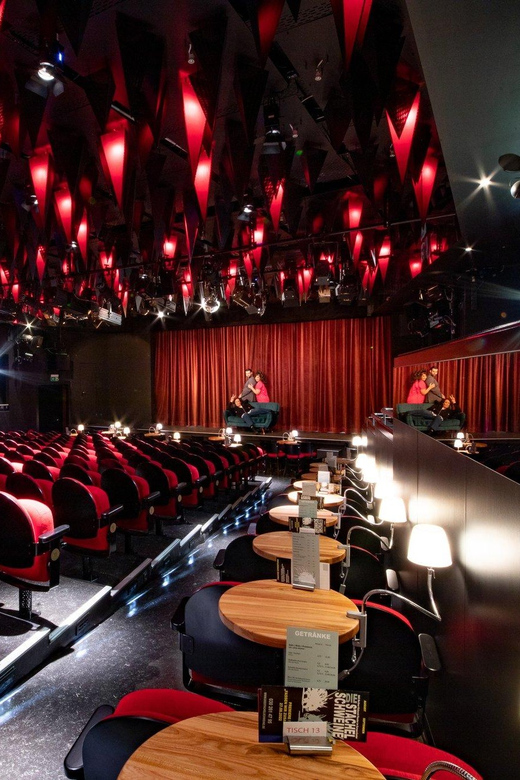
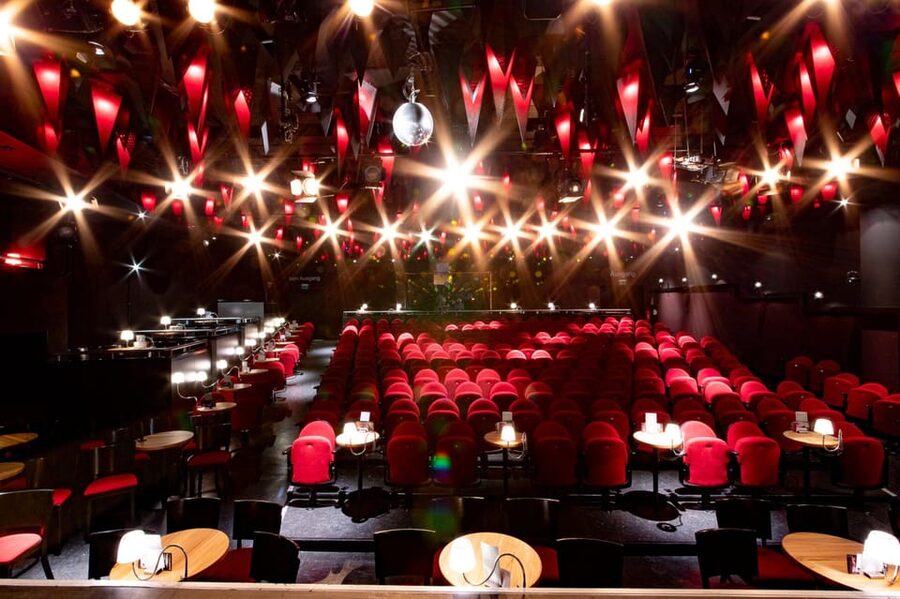
- A classic cabaret setting: Die Stachelschweine operates in the basement of the Europa Center, a central Berlin landmark.
- Three named performers: Santina-Maria Schrader, Heike Ostendorp, and Robert F. Martin carry the production.
- Political comedy with music: Expect fast pacing, pointed jokes, and musical elements rather than a straight dramatic play.
- Category seating: You choose a seating category, not an exact seat.
- A German-language evening: German proficiency is advised, especially if you want to catch the political wordplay.
Berlin politics gets a Mars launch

The basic joke is wonderfully Berlin: if the city cannot solve its problems on Earth, perhaps it should send the whole project to Mars. The play imagines local visionaries mounting a space mission under the leadership of a former BVG coordinator, with Berlin astronauts selected at random.
That premise gives the performers room to poke at familiar subjects. Affordable housing, climate protection, political ambition, public spending, and the Berlin Senate all enter the comic orbit. Even the proposed heat pump becomes part of the absurd machinery.
I like this setup because it is not generic space comedy. The Mars mission is a way to talk about Berlin itself. The fictional colony, called Mars-Community 1, is supposed to have no discrimination, no exploitation, and affordable housing. Those ideals sound noble, but placing them in a Berlin political project makes the joke sharper. You can expect the production to ask whether a city that struggles with ordinary administration is ready to manage an interplanetary settlement.
The story also widens its aim. Politicians, Berlin climate protectors, extroverted artists, and philosophical allotment gardeners become part of the mission. Foreign secret services enter the plot, and Bavaria has its own reason to pay attention. The proposed 50 billion euro cost, financed through state financial equalization, gives the satire another local pressure point.
You do not need to know every detail of Berlin politics to understand the broad comic idea. Still, the more familiar you are with German public life, the more of the smaller jokes you are likely to catch. Names such as Kai Wegner and Franziska Giffey appear in the premise, so this is firmly political cabaret, not a neutral science-fiction play.
A few more half-days in Berlin worth comparing
- Berlin: Reichstag, Dome and Government District Guided Tour
★ 4.7 · 18,288 reviews - Berlin: 1-Hour City Tour by Boat with Guaranteed Seating
★ 4.3 · 16,993 reviews - Berlin: Boat Tour Along the River Spree
★ 4.4 · 11,252 reviews
Inside Die Stachelschweine at the Europa Center
The theatre is in the basement of Berlin’s Europa Center. That location matters because it gives the evening a distinctly urban Berlin frame. You are not heading out to a distant performance hall or a large concert venue. You meet at the theatre entrance, then return to the same place when the two-hour performance ends.
Die Stachelschweine is presented as Berlin’s first Kabarett theatre. In Germany, Kabarett generally means political and social satire delivered through performance, often with sharp commentary, character work, and music. It is different from a standard stand-up set because the material can unfold through scenes and recurring ideas.
That format suits this play. The story brings together politicians, artists, gardeners, and officials, so the actors can shift between characters and viewpoints. The production is described as subtle, mean, pointed, and fast-paced. Those qualities suggest a show built around quick changes and tightly timed jokes rather than a slow, plot-heavy drama.
The basement setting also puts the audience close to the stage. I like that for political comedy. Facial expressions, pauses, and small gestures matter, and a smaller room can make the evening feel more direct than a large theatre production. You should not expect the scale or spectacle of a major musical. The appeal is the live exchange between performers, text, music, and audience.
Three performers, many Berlin characters
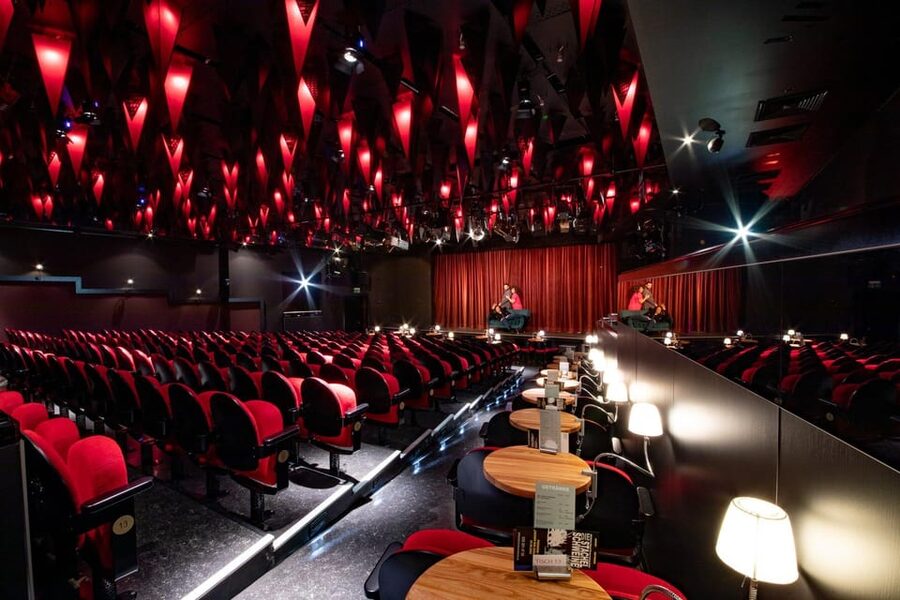
Santina-Maria Schrader, Heike Ostendorp, and Robert F. Martin play the production’s characters. The cast must cover a broad range of people connected to the Mars plan, including ambitious politicians, climate activists, artists, and allotment gardeners.
That mix is useful for the comedy. Each group brings its own language and priorities, and the mission becomes a meeting point for competing ideas. A politician may speak in grand promises, while a gardener may think in practical terms. An artist may push the project toward spectacle, while a climate protector may focus on the heat pump and environmental consequences.
The production’s music is another important part of the evening. It breaks up the political speeches and helps keep the pace moving. If you prefer a quiet spoken play, the musical sections may not be your favorite part. If you enjoy cabaret, they are likely to fit the format well.
The performers are not listed as tour guides, and this is not a guided visit. You are attending a staged show with a fixed cast and a two-hour running time. That distinction is worth making because the experience depends on following the performance, not on receiving historical commentary about Berlin or the Europa Center.
What the Mars plot says about Berlin

The strongest material comes from the collision between a huge vision and very familiar city problems. Berlin wants a Mars colony, yet the fictional project still has to deal with housing, government finance, climate policy, and political rivalry.
The affordable-housing goal is especially pointed. Mars-Community 1 promises housing that Berlin has long struggled to provide on Earth. The joke works because the plan is both wildly unrealistic and strangely practical. A new planet offers a blank slate, but the people building it bring their old habits with them.
The heat pump adds another layer. It is presented as an infamous piece of equipment, turning a current policy argument into a space-age prop. You do not need to study energy policy before the show, but some familiarity with Germany’s climate debates will help you recognize the references.
Bavaria’s reaction to the proposed 50 billion euro cost brings regional politics into the story. The question of who should pay is as important as the question of how to reach Mars. That is classic political cabaret territory: a rocket launch becomes a debate about budgets, states, and responsibility.
The inclusion of foreign secret services keeps the story from becoming only a local government sketch. At the same time, the central joke remains firmly Berlin. The city wants to prove it belongs among the world’s top three, then proposes one of the most impractical projects imaginable.
Same city, a completely different kind of day:
- Discover Berlin Half-Day Walking Tour
★ 5.0 · 9,624 reviews - Berlin: Hop-on Hop-off Bus Tour with Live Commentary
★ 4.3 · 8,579 reviews - Berlin: Government District around the Reichstag Guided Tour
★ 4.7 · 8,447 reviews - Berlin: Reichstag, Plenary Chamber, Cupola & Government Tour
★ 4.6 · 8,422 reviews
How long the evening lasts and what the price means
The show runs for about two hours. That is long enough for a complete night out, but short enough to fit around dinner or another central Berlin plan. Starting times vary, so you need to check the available date and time before booking.
At $45 per person, this is not a bargain-basement theatre ticket. The value depends on what you want from the evening. You are paying for a live professional production, a central venue, a named cast, music, and two hours of political comedy. For someone who enjoys German-language cabaret, the price is reasonable for a dedicated theatre experience.
The value drops if you cannot follow German. Political satire depends on wording, timing, and references. Even when the broad action is clear, a missed phrase can mean missing the point of an entire scene. I would not book this as a casual visual show if you speak little or no German.
The rating of 4.5 from 32 submitted ratings gives the experience a solid public response, but the written comments are brief. One highlights the originality, another describes the evening as interesting and varied with strong cabaret performances, and another says the experience was great fun. That matches the format: the production’s biggest strengths are its unusual premise, variety, and comic energy.
Seating, arrival, and accessibility

You choose a seating category rather than a precise seat. This gives you some control over the price or position category, but not over the exact chair. If sitting in a particular place matters to you, keep that limitation in mind.
Arrive at the entrance to Die Stachelschweine in the basement of the Europa Center. You must exchange your voucher at the ticket counter before the show begins. Allow enough time for that step so you are not trying to handle the exchange as the curtain approaches.
The activity ends back at the theatre, which keeps the logistics simple. There is no bus transfer, walking route, or separate return point to manage. The theatre is also wheelchair accessible. Pets are not allowed, although assistance dogs are permitted.
Cancellation is flexible if your plans are uncertain. You can cancel up to 24 hours in advance for a full refund, and you can reserve now while paying later. These terms are useful for a Berlin trip with changing plans, though you should still check the exact conditions attached to your booking.
Who will enjoy this most

I would recommend this show first to visitors who already enjoy political comedy, German cabaret, or theatre with a strong local point of view. It suits a night when you want something more distinctly Berlin than a general sightseeing attraction.
It is also a good choice for German speakers looking for current political humor. The play draws on Berlin’s government, housing debates, climate arguments, and regional tensions. Those references give the show its character.
You may enjoy it less if you want a serious theatre drama, a large-scale musical, or a performance that works without much language. The Mars theme is playful, but the show is not built around visual science-fiction effects. Its tools are satire, character changes, music, and political ideas.
The two-hour length works well for a compact evening. You can make the show one part of a central Berlin night, but the information provided does not include a specific intermission or a detailed running order. Do not plan around a precise break unless the theatre confirms one.
Practical advice for choosing this performance
Read the title carefully before you book. Steglitz, wir haben ein Problem! is a German-language political satire, not a sightseeing tour of Steglitz and not a space exhibit. You are going to sit in a theatre and watch a scripted show.
Think about your German level honestly. If you can follow spoken German and recognize common political references, the satire should be much more rewarding. If you only know a few phrases, you might still enjoy the performers and music, but the main jokes will be difficult to track.
If you are deciding between this and a larger entertainment show, consider the kind of evening you want. Die Stachelschweine offers a smaller, more direct performance with a distinctly Berlin subject. Its strength is the writing and delivery, not spectacle.
The unusual premise is a real advantage. A Berlin-led Mars mission, a former BVG coordinator, randomly selected astronauts, a heat pump, allotment gardeners, and a 50 billion euro funding question give the production plenty of comic material. It is specific enough to feel local, yet broad enough to support a full two-hour show.
Should you book Die Stachelschweine?
Book it if you want German-language political satire in a central Berlin theatre and like comedy that takes aim at current public life. The original Mars plan, local references, music, and three-performer cast offer a lively alternative to standard sightseeing.
Skip it if you need English, want exact seat selection, or prefer a visual attraction with little dialogue. For the right audience, $45 buys a focused evening of Berlin humor in an intimate cabaret setting. For anyone unsure about German, the language issue is the deciding factor.
FAQ
Where does the performance take place?
It takes place at Die Stachelschweine in the basement of the Europa Center in Berlin.
How long is the show?
The activity lasts about two hours.
Is the performance in English?
No. The play is in German, and German proficiency is advised.
What is the play about?
It follows a Berlin plan to colonize Mars under the leadership of a former BVG coordinator. The story includes politicians, climate protectors, artists, allotment gardeners, foreign secret services, and a debate over the 50 billion euro cost.
Who performs in the show?
The listed performers are Santina-Maria Schrader, Heike Ostendorp, and Robert F. Martin.
Can I choose my exact seat?
No. You can select a seating category, but not a precise seat.
Is the theatre wheelchair accessible?
Yes, the activity is wheelchair accessible. Pets are not allowed, but assistance dogs are permitted.
Just added in Berlin
- Berlin & The Third Reich Private Guided Tour★ 5.0 · 3 reviews
- Third Reich Quest Experience in Berlin★ 4.5 · 7 reviews
- Private Analogue Photography Experience in Berlin★ 5.0 · 3 reviews
- Berlin Urbex Adventure and History Tour★ 5.0 · 9 reviews
- The Beauty of Berlin by Bike: Private Tour★ 5.0 · 59 reviews
- Berlin: Guided Bike tour of the Berlin Wall and Third Reich★ 5.0 · 160 reviews
- Beyond Currywurst: Berlin’s Hidden Street Food & Culture Tour★ 5.0 · 100 reviews
- Berlin Third Reich & Cold War Walking Tour With A Guide★ 5.0 · 7 reviews
Berlin Tours, compared.
Reichstag, Dome and Government District Guided Tour
Read our review →


Reichstag, Plenary Chamber, Cupola & Government Tour
Read our review →