
Reviewed · CONCENTRATION CAMP MEMORIALS
Visita en español al campo de concentración Sachsenhausen
Sachsenhausen is not a sightseeing stop in the usual sense. It is a place of imprisonment, forced labor, and murder, and the value of this visit comes from having a Spanish-speaking guide explain what happened in the very spaces where it happened. You’ll see the entrance, barracks, command post, execution area, kitchen, casino, armory, and Tower A, rather than simply walking through a museum with labels.
I especially like two things here. First, the tour gives Spanish-speaking visitors a clear way into difficult history, with guides such as Alberto, Vicente, Micaela, Eduardo, Jorge, and Francisco praised for patient, detailed explanations. Second, the organized meeting in central Berlin makes a place outside the city easy to reach.
The main drawback is time. The full activity lasts about five hours, but the guided visit inside Sachsenhausen is about three hours. Some people find the pace tight, especially with children, and you must buy your own ABC transport ticket before setting out.
Key points to know before you book
- Spanish-language history: The guide explains daily life, Nazi persecution, and the camp’s wider wartime setting in Spanish.
- Several important camp areas: You visit Tower A, the barracks, command facilities, the execution area, kitchen, armory, casino, and other former camp buildings.
- Early central meeting point: The group meets at Pariser Platz 4 at 9:00 a.m., near Berlin’s Brandenburg Gate area.
- About three hours at the memorial: The visit is serious and focused, but some people may want more time to explore alone.
- Public transport is not included: You must bring a valid ABC transit ticket.
- Small enough for a guided experience: The maximum group size is 30 people, and the group may be divided between guides.
Why Sachsenhausen needs a guide in Spanish
Sachsenhausen can be visited independently, but the site is spread out and much of what you see requires explanation. Empty ground, reconstructed buildings, foundations, and memorials do not always tell you what took place there. A good guide connects these physical remains with the camp’s system of control and the daily reality of prisoners.
That matters even more when Spanish is your preferred language. You can follow complex subjects without stopping to translate every panel, and you can ask questions as they come up. The guides are not simply there to lead you from one point to the next. Alberto is praised for his warmth and command of history, while Vicente is noted for making the past feel immediate. Micaela, Eduardo, Jorge, and Francisco are also singled out for clear explanations, patience, and care.
The tone is serious. This is not a tour built around entertainment, dramatic effects, or easy stories. The best moments come when the guide explains how the camp operated, how prisoners lived, and how each building fitted into the wider machinery of Nazi persecution.
More Concentration Camp Memorials in Berlin
- Berlin: Sachsenhausen Concentration Camp Tour in English
★ 5.0 · 5,711 reviews - Berlin: Sachsenhausen Concentration Camp Memorial Tour
★ 4.7 · 3,716 reviews - Sachsenhausen Concentration Camp Bus Tour in English from Berlin
★ 5.0 · 1,962 reviews
Meeting at Pariser Platz at 9:00 a.m.
Your day begins at Pariser Platz 4 in central Berlin at 9:00 a.m. Arriving early is sensible. The experience depends on the group leaving together, and the early start gives you time to reach Oranienburg and visit the memorial without turning the day into a rushed sprint.
Transport to Sachsenhausen is part of the practical appeal, but the ABC transit card is not included. You need to buy it yourself before the tour. This is an easy detail to miss when comparing prices, so add that cost to the advertised $34.58 per person.
The meeting arrangement also helps if you are unfamiliar with Berlin. The guide or guides explain the transfer, keep the group together, and provide direction at the memorial. One reported arrangement divided the group between two guides, allowing each section to remain manageable. With a maximum of 30 people, that is a reasonable size for a site where you need to hear detailed explanations.
The overall activity lasts about five hours. The exact balance between transport, orientation, and the time at Sachsenhausen can feel different depending on the group and the guide. Plan to spend much of the morning and early afternoon on the outing rather than trying to fit another major attraction immediately afterward.
Entering through Tower A
The visit inside Sachsenhausen includes the main entrance and Tower A, one of the camp’s defining points. Entering through this area gives the guide a natural place to explain the organization of the camp and the way the site was controlled.
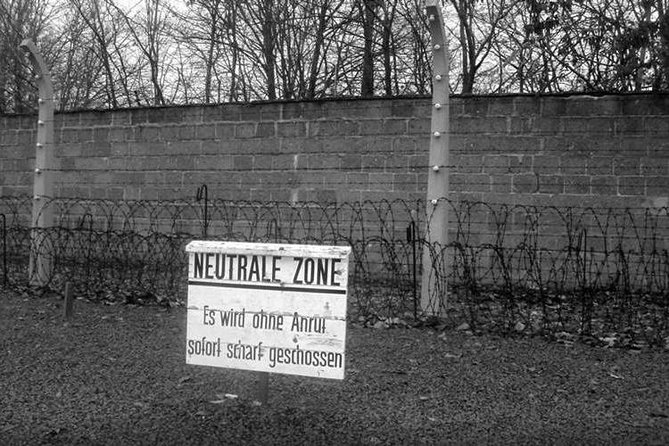
The entrance is also where the physical scale of the camp begins to make sense. You are not just viewing a single building. The route takes you through a memorial area made up of former facilities, surviving structures, reconstructed sections, and marked locations.
This is a useful early part of the tour because it gives you a map in your head. Later, when the guide discusses the barracks, command facilities, or execution area, you can understand where each part belonged. Without that orientation, the site can feel like a series of disconnected stops.
Expect the atmosphere to become quiet and reflective. The guide’s job is to explain, not to turn the entrance into a theatrical scene. Several guides are praised for a respectful manner, which is particularly important at a place where sensational language would be out of place.
Barracks, kitchen, and prisoner life
The barracks and kitchen help shift the focus from Nazi administration to the people imprisoned at Sachsenhausen. This is where explanations about routine, living conditions, hunger, overcrowding, and discipline can give the visit its human weight.
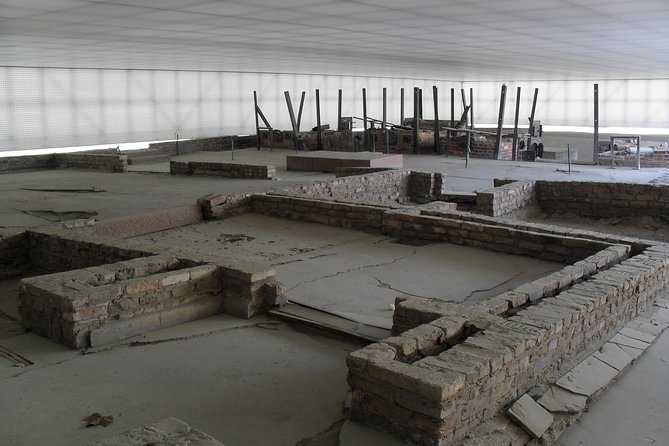
You may find the remaining structures less visually complete than you expect. That is one reason the guide matters so much. The camp is not preserved as a fully furnished historic set, and some areas consist of outlines, remnants, or memorial displays. The physical absence can be confronting, but it also means you must listen carefully to understand what stood there and how it was used.
The kitchen is a particularly useful stop because it connects to the basic mechanics of camp life. Food, work, punishment, and survival were not separate subjects. They formed part of the daily system imposed on prisoners. A guide who explains these connections gives you more than a list of buildings.
If you are visiting with children, think about their ability to manage both the subject matter and the walking pace. One complaint concerned children being expected to keep up with a tightly timed visit. The tour may suit older children and teenagers who can engage with difficult history, but parents should be ready for a demanding and emotional morning.
Same city, a completely different kind of day:
- Berlin: Reichstag, Dome and Government District Guided Tour
★ 4.7 · 18,288 reviews - Berlin: 1-Hour City Tour by Boat with Guaranteed Seating
★ 4.3 · 16,993 reviews - Berlin: Boat Tour Along the River Spree
★ 4.4 · 11,252 reviews - Discover Berlin Half-Day Walking Tour
★ 5.0 · 9,624 reviews
The command post, casino, and armory
The command area, casino, and armory show another side of Sachsenhausen. These sites help explain the separation between the people running the camp and those imprisoned inside it. The guide can place administrative and military functions alongside the prisoners’ living quarters, making the camp’s structure easier to understand.
The word casino can sound oddly casual in English, so expect the guide to provide the necessary context rather than treating it as a normal leisure venue. Here, the value is not in the building’s name alone. It is in understanding the hierarchy and daily operation of the camp.
The armory and command facilities also widen the story beyond individual acts of cruelty. You learn how an organized system required buildings, staff, orders, surveillance, and routines. That broader explanation is one of the strongest reasons to choose a guided visit instead of simply walking around on your own.
The quality of the experience depends heavily on how the guide handles this material. The most praised guides answer questions, offer details beyond familiar documentary summaries, and connect Sachsenhausen with the history of the Second World War. That can make the visit feel like a serious history lesson rather than a quick stop at a memorial.
The execution area and the hardest part of the visit
The execution area is likely to be one of the most difficult stops. You are asked to face the purpose of the site directly, without the distance that comes from reading about it in a book. The guide’s role here is to explain what occurred and why the location matters, while keeping the tone respectful.
This is not a part of the tour to rush through with a camera. Give yourself room to listen and think. The subject is upsetting, and the visit may leave you quiet for a while afterward. That is not a flaw in the experience. It is a sign that the memorial is asking you to confront history rather than consume it as entertainment.
The execution area also shows why the tour is not suitable for every casual day out. If you want light sightseeing, this will feel too heavy. If you believe a visit to Berlin should include serious attention to the crimes of the Nazi era, this is one of the more direct ways to do it.
What the three-hour visit feels like
The guided time inside the camp is about three hours. That is long enough to cover the main locations, but it does not allow unlimited time at every display or for extended independent exploration.
I see this as a reasonable tradeoff for a first visit. The site is large, the subject is demanding, and a guide can help you focus on the places that matter most. Still, one person felt another 45 minutes would have allowed more time to explore. If you like reading every panel or pausing alone at each memorial, you may find the schedule too tight.
The pace can also depend on the guide. Several people praise careful time management, while one complaint describes the timing as stressful. You may need to stay with the group and move on when the guide calls time. Ask questions as you go, rather than saving everything for the end.
The tour is conducted in all weather. Much of the visit takes place outdoors, so wear comfortable shoes and dress properly for the forecast. Winter can be especially harsh in an open memorial setting. Bring warm layers, gloves, and a hat in cold weather, and do not assume that a sunny Berlin morning will remain comfortable for several hours.
Is $34.58 good value?
At $34.58 per person, the price is fair if you want transport coordination and a Spanish-language guide who explains the memorial in depth. The admission ticket to the memorial is included, while food, drinks, and the ABC transit card are extra.
The value comes from the human explanation. You are paying for more than access to the grounds. You receive a planned route through the important areas, background on the camp, help with directions, and the chance to ask questions in Spanish. For many visitors, that makes the cost worthwhile.
The price is less appealing if you prefer to move slowly, read independently, or spend extra time in one section. You may feel that the fixed schedule gives you less freedom than an independent visit. Also remember that children pay, and families may find the group pace harder to manage.
With an average booking lead time of about 12 days, it is sensible to reserve ahead if your Berlin schedule is fixed. Free cancellation is available until 24 hours before the start time. Changes or cancellations inside that window are not accepted, and a minimum number of participants is required for the tour to operate.
Who should choose this Sachsenhausen visit?
I would choose this tour if you want a structured, serious visit and prefer to hear the history in Spanish. It suits adults, older teenagers, history students, and anyone who feels that a memorial of this kind is easier to understand with a guide.
It is also a good choice if you are staying in Berlin and do not want to work out the route to Oranienburg alone. The central meeting point, group transfer, and guide support remove much of the day’s practical friction.
I would think twice if you dislike fixed schedules or need a slow pace. Families with young children should consider the difficult subject matter, the walking, and the possibility of limited time at each stop. The experience allows service animals and is near public transportation, and most people can participate, but it remains a demanding historical visit rather than an easy half-day outing.
Should you book it?
Book this Sachsenhausen tour if a Spanish-speaking guide, organized transport from central Berlin, and a focused route through the memorial are important to you. The strongest part is the explanation: guides such as Alberto, Vicente, Micaela, Eduardo, Jorge, and Francisco are praised for clarity, patience, and respect.
Do not book it expecting a relaxed museum visit or plenty of free time. You will face painful history, walk outdoors in all weather, buy your own ABC transit ticket, and follow a schedule that some people find brisk. For the right visitor, the $34.58 cost buys useful context and a more meaningful understanding of a place that should never be treated as ordinary sightseeing.
FAQ
Where does the Sachsenhausen tour begin?
The tour begins at Pariser Platz 4, 10117 Berlin, Germany, at 9:00 a.m.
Where does the visit end?
The listed end point is Sachsenhausen Memorial & Museum, Str. d. Nationen 22, 16515 Oranienburg, Germany.
How long does the experience last?
The full activity lasts approximately five hours. The guided visit inside and outside the former camp facilities lasts about three hours.
Is the tour conducted in Spanish?
Yes. The experience is designed for Spanish-speaking visitors and includes a Spanish-language guide.
Which parts of Sachsenhausen are visited?
The route includes the armory, entrance, casino, command post, Tower A, execution area, barracks, kitchen, and other former camp facilities.
Is public transportation included?
No. You must bring your own ABC transit card. Food and drinks are also not included, apart from any value-added offers specified in the guidebook.
Can I cancel for a full refund?
Yes. You can cancel at least 24 hours before the experience starts for a full refund. Cancellations or changes made less than 24 hours before the start time are not accepted for a refund.
Just added in Berlin
- Berlin & The Third Reich Private Guided Tour★ 5.0 · 3 reviews
- Third Reich Quest Experience in Berlin★ 4.5 · 7 reviews
- Private Analogue Photography Experience in Berlin★ 5.0 · 3 reviews
- Berlin: Guided Bike tour of the Berlin Wall and Third Reich★ 5.0 · 160 reviews
- Berlin Urbex Adventure and History Tour★ 5.0 · 9 reviews
- The Beauty of Berlin by Bike: Private Tour★ 5.0 · 59 reviews
- Beyond Currywurst: Berlin’s Hidden Street Food & Culture Tour★ 5.0 · 100 reviews
- Berlin Third Reich & Cold War Walking Tour With A Guide★ 5.0 · 7 reviews
Concentration Camp Memorials, compared.
Sachsenhausen Concentration Camp Tour in English
Read our review →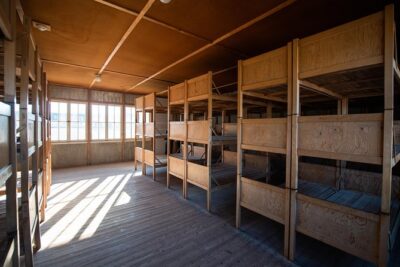
Dachau Concentration Camp Memorial Site Tour from Munich by Train
Read our review →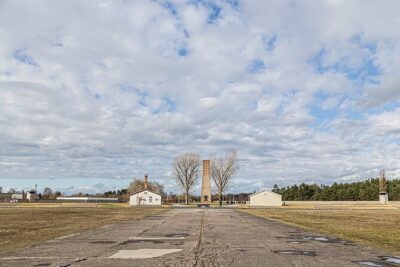
Sachsenhausen Concentration Camp Memorial Tour
Read our review →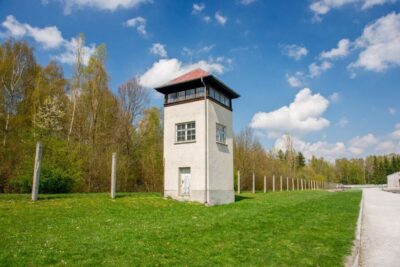
From Munich: Dachau Memorial Site Half-Day Trip
Read our review →
Sachsenhausen Concentration Camp Bus Tour in English from Berlin
Read our review →Sachsenhausen Concentration Camp Tour in English
Read our review →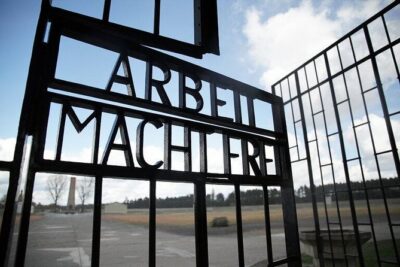
Sachsenhausen Concentration Camp Memorial Tour (Max. 15 Guests)
Read our review →Browse the lists this tour appears in