
Reviewed · CASTLE TOURS
Stein: Guided tour of Count von Faber-Castell’s castle
Count von Faber-Castell’s castle in Stein is an unusual sight: a grand family home tied directly to one of the world’s best-known pencil makers. The exterior looks medieval, but the rooms take you through several later styles, from Gothic and Renaissance touches to Empire, Classicism, and Art Nouveau. I like the way the tour connects a working industrial family with German aristocratic life, rather than treating the castle as a pretty shell.
I also like two practical extras: the small souvenir included with admission and the 15% shop discount available on the day of a weekday tour. The guide-led visit lasts about 90 minutes, which gives you enough time for context without taking over your day. One drawback is important: interior photography is not allowed, and the historic premises are not barrier-free, with some long walks and uneven sections possible.
Key points to know before you go
- A castle with a pencil-making family at its center: The visit links Faber-Castell’s industrial growth with the private world of the counts.
- Several architectural periods in one tour: Expect Romanesque, Gothic, Renaissance, Empire, Classicist, and Art Nouveau elements.
- A 90-minute guided visit: The tour begins and ends at the Faber-Castell Visitor Center in Stein.
- German and English tours are available: Check the departure time carefully when booking.
- Photography is prohibited indoors: Bring your eyes and your memory rather than planning an interior photo album.
- Good extras for a modest price: Admission is $14 per person and includes a souvenir, plus 15% off in the castle shop on weekdays.
Why this castle is more than a pretty building
The first surprise is the subject itself. This is not simply a royal residence detached from daily life. The castle belongs to the story of Faber-Castell, a company that grew from a traditional German family business into a major name in writing instruments.
That connection gives the tour a useful thread. You are not only looking at rooms, towers, columns, and decorative details. You are also learning how a family balanced commerce, status, invention, and tradition over more than 260 years.
I find that especially helpful if you are not usually a castle specialist. Some palace tours can feel like a parade of rooms with unfamiliar names and dates. Here, the family and company story gives the building a clearer purpose. You can look at the architecture while keeping an eye on the people who lived there and the business that paid for it.
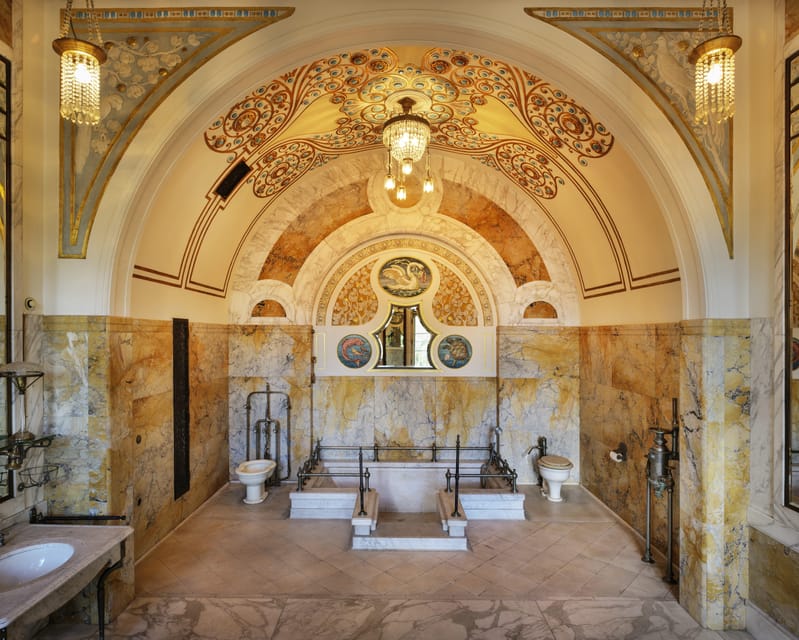
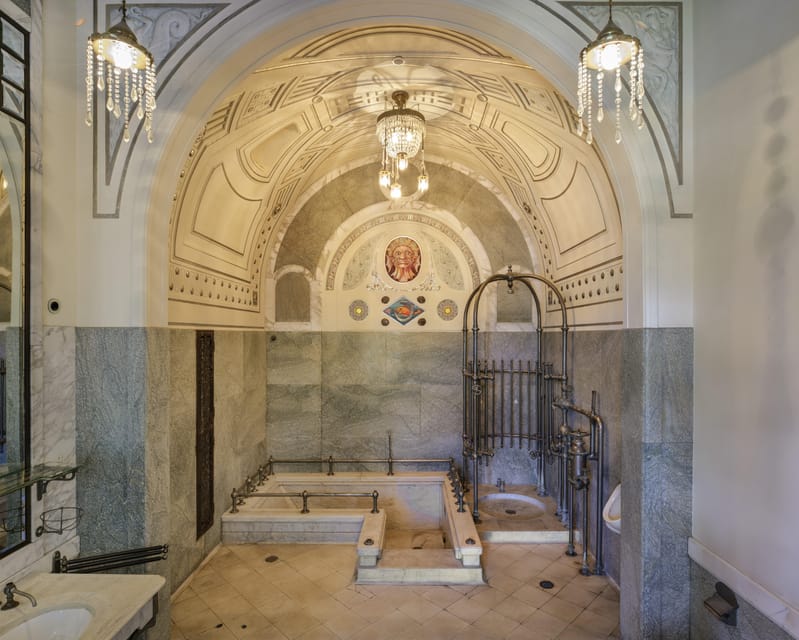
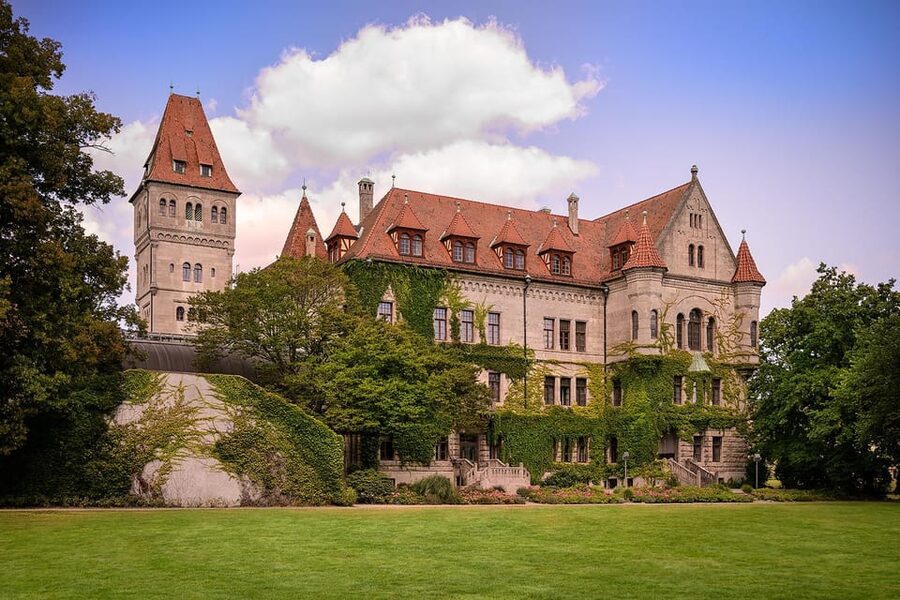
The castle’s exterior sets up a deliberate contrast. Romanesque arches, columns, round towers, and corner towers give it a medieval appearance. Inside, the story changes. The rooms reflect a range of styles, including Romanesque, Gothic, Renaissance, Empire, Classicism, and Art Nouveau.
That mix is the main visual reward. You are not visiting one perfectly uniform design period. You are moving through changing tastes and changing ideas about how a wealthy family should live.
More Castle Tours in Swabia:
- Sigmaringen: Hohenzollern Castle Admission & Audio Guide
★ 4.9 · 15 reviews - Segway Tour: Gerberbach, Schlosspark & Castle Weinheim
★ 4.9 · 14 reviews - From Munich: Neuschwanstein & Linderhof Castle Full-Day Trip
★ 4.5 · 12,494 reviews
Beginning at the Faber-Castell Visitor Center
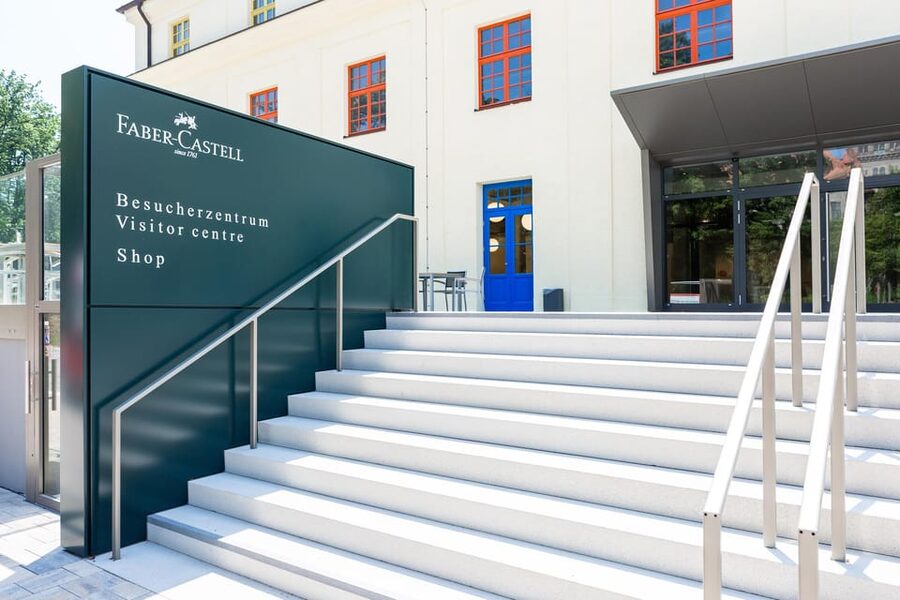
The tour starts at the Faber-Castell Visitor Center, also identified as Faber-Castell Erleben. Booking is required, so you should arrive with your reservation details ready and allow enough time to find the meeting point.
The visit is guided rather than self-paced. That matters here because the architectural details are only half the story. A guide can explain how the family, the castle, and the company fit together, and can point out features you might otherwise pass without noticing.
Tours are offered in German and English. Some material is presented in its original language, so you may encounter names, labels, or historic references that are not fully translated. If you want the English tour, check the selected departure time when you reserve.
The tour runs for about 1.5 hours and returns to the same visitor center. That makes it easy to pair with another Faber-Castell activity, such as the production visit, the Old Mine museum, or the special tour about the castle as a press camp. Those are separate experiences, so do not assume they are included in the $14 castle admission.
Seeing the medieval-looking exterior
Before the interiors take over, spend a moment looking at the outside. The Romanesque arches and columns, along with the round and corner towers, give the castle a fortified, old-world character.
The medieval appearance is part of the fun, but it can also mislead you. The building is not a simple time capsule from the Middle Ages. The interior moves through later artistic periods, and the guided explanation helps make sense of that contrast.
I would not rush the approach. Look at how the towers shape the building and how the arches frame the façade. You do not need specialist architectural training to enjoy it. The important point is that the exterior presents the family as traditional and established, while the company story reflects invention and commercial progress.
That combination is one of the tour’s strongest ideas. Faber-Castell’s identity rests on both sides: old family values and a modern industrial spirit.
Inside the castle, six styles in one visit

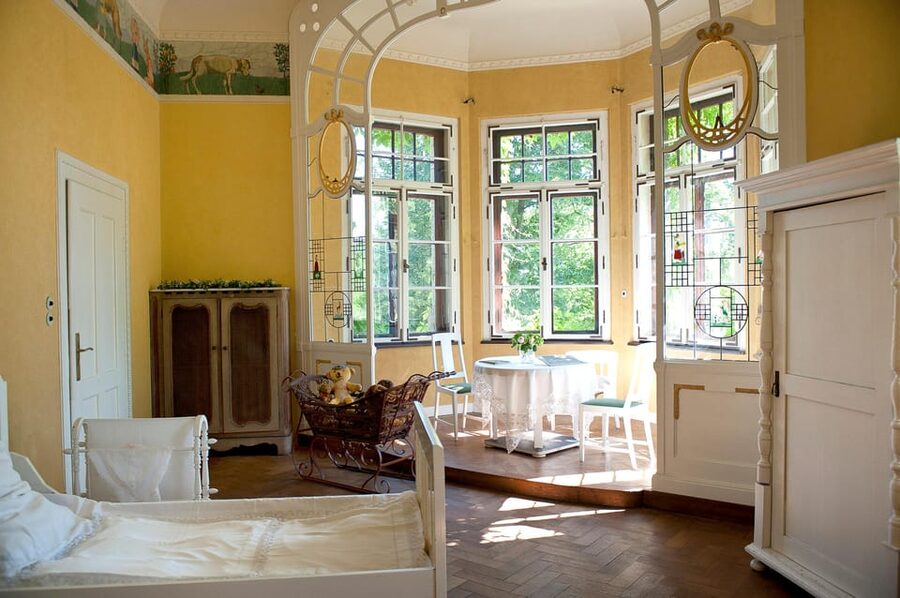
The interior is where the tour earns its place on a Bavaria sightseeing plan. You can expect a series of rooms and features connected to several periods: Romanesque, Gothic, Renaissance, Empire, Classicism, and Art Nouveau.
The variety means you should pay attention to changes in decoration and form. Gothic and Renaissance references suggest a different mood from the more controlled lines of Classicism. Empire design brings another visual language, while Art Nouveau points toward a later taste in ornament and shape.
The tour is not presented as a design exam. Your guide explains what you are seeing and places the rooms within the family story. That is useful because a grand room can look impressive without being easy to interpret.
The best approach is to let the guide provide the framework, then use your own eyes. Notice how the rooms differ from one another. Watch for changes in decorative detail, proportion, and mood. Since photography is not allowed inside, you will need to slow down and remember the parts that appeal to you.
The no-photo rule is the clearest downside of the visit. Several people specifically objected to it, especially because a castle interior seems like a natural place for photographs. The rule may also make it harder to recall the exact details later. On the other hand, it keeps the group focused and avoids the familiar problem of visitors stopping constantly to take pictures.
A few more half-days in Swabia worth comparing
- Ulm: City Center Walking Tour with Minster Visit
★ 4.7 · 831 reviews - Sinsheim: Technik Museum Day Pass and IMAX 3D Ticket
★ 4.8 · 616 reviews - Karlsruhe: 24-Hour Hop-On Hop-Off Sightseeing Bus Ticket
★ 4.4 · 362 reviews - Heilbronn: 24h Hop-on Hop-off City Sightseeing Bus Tour
★ 4.3 · 85 reviews
The Faber-Castell family and company story
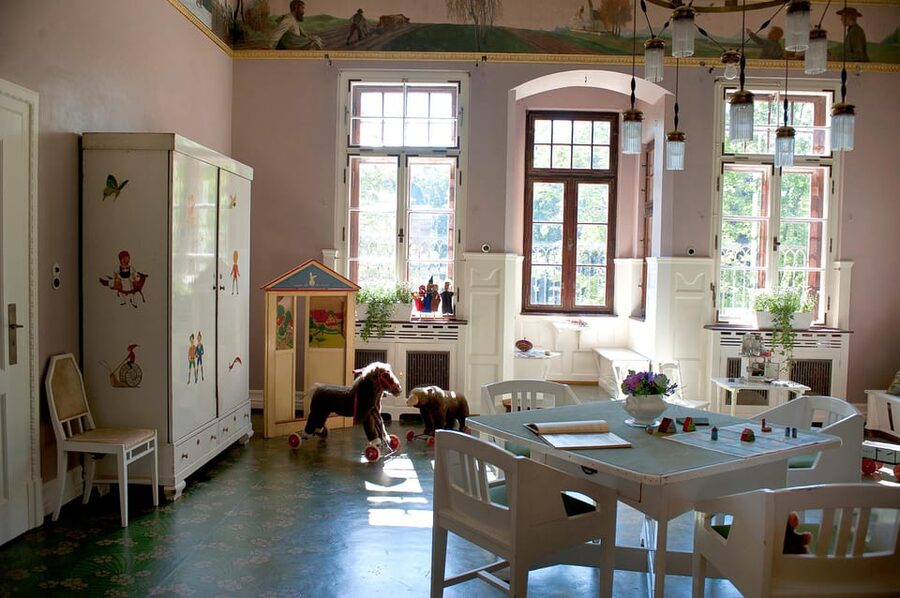
The exhibition on the family and company covers more than 260 years. That long span gives the visit substance. You are not looking at an isolated noble residence with no connection to the present.
The company story also explains why this castle is part of a wider Faber-Castell visit in Stein. The same site brings together the castle, pencil production, the Old Mine museum, and a special tour focused on the building’s use as a press camp.
You should think of the castle tour as the cultural and domestic part of that story. The production visit deals more directly with how pencils are made. The castle shows the family setting and the social world behind the company.
The historical explanations also reach into the difficult parts of the twentieth century. The tour discusses what happened to the castle during the Third Reich and after the war. One particularly striking detail concerns the period when American forces used the castle for years as an officers’ mess and recreational space. A wall was removed to create a bowling alley.
That detail gives the building a human scale. It also shows why a guided tour is more useful than simply walking through attractive rooms. A guide can explain how the building changed use over time, including periods that do not fit the image of a quiet aristocratic home.
What the 90-minute format feels like
Ninety minutes is a sensible length for this visit. It is long enough for the guide to explain the family, the architecture, and the castle’s later history. It is short enough to fit into a day in Stein without making you give up every other plan.
The tour is not a quick photo stop. You should expect to walk and listen for most of the visit. The historic premises are not barrier-free, and the site advises you to plan for long distances and wear sturdy shoes.
That advice deserves attention. Even if the tour itself is not strenuous, older buildings can involve awkward routes, changes in surface, and sections that are less convenient than a modern museum. If you have mobility concerns, ask for current access details before booking. The available information does not promise full accessibility.
A guide-led format also means the pace is set for the group. You cannot linger indefinitely in one room or skip ahead. For most people, that is a fair trade for the explanations, but independent visitors who prefer to explore alone may find the structure restrictive.
The quality of the guiding is one of the strongest parts of the experience. The guide is described as warm, enthusiastic, and able to answer questions about the family and the castle. That matters because the visit depends heavily on storytelling. The building provides the setting, but the guide supplies the links between its rooms, occupants, and changing uses.
The price, souvenir, and shop discount
At $14 per person, the tour offers good value if you enjoy historic buildings and guided interpretation. The admission includes the 90-minute castle tour and a souvenir, so you are not paying only for access to the rooms.
The souvenir is a small touch, but it adds to the sense that this is a complete experience rather than a basic entrance ticket. It also fits naturally with the Faber-Castell setting.
On weekdays, Monday through Friday, you receive 15% off in the castle shop on the day of your tour. If you already plan to buy pencils, stationery, or a keepsake, that discount improves the value. It is less useful if you are not interested in shopping, and the information does not state that the discount applies on weekends.
I would treat the shop discount as a bonus, not the main reason to book. The castle and the family story need to appeal to you first. If they do, the souvenir and discount are welcome extras.
Who will enjoy this castle tour most
I would recommend the tour to several kinds of visitors. It suits anyone who enjoys castles but wants more than a standard royal residence. The link to Faber-Castell gives the visit a strong business and family angle.
It is also a good choice for design and architecture fans. The range of styles means you can compare several periods during one guided walk. You do not need advanced knowledge, since the guide provides the basic context.
Families and children interested in pencils may find the wider Faber-Castell setting appealing, especially if you add the production tour. The castle visit itself focuses on architecture, family history, and historic use, so younger children who need constant hands-on activity may find parts of it quiet.
History-minded visitors should appreciate the discussion of the Third Reich, the postwar period, and the American occupation of the castle. These details prevent the tour from becoming a polished parade of noble rooms.
I would be less likely to recommend it to someone who needs full step-free access, wants to take indoor photographs, or dislikes guided groups. The site is not barrier-free, long walks are possible, and interior photography is prohibited.
How to plan your visit in Stein
Reserve in advance because booking is required. When choosing your time, confirm that the tour language works for you. German and English are available, but some content appears in its original language.
Wear sturdy shoes. This is practical advice, not a fashion note. The premises include historic areas and are not barrier-free, so comfortable footwear will make the 90-minute visit easier.
If you want to use the 15% shop discount, schedule the visit from Monday through Friday and leave time to browse on the same day. The discount is tied to the day of the tour.
You can also consider adding another Faber-Castell experience, but keep the schedules separate in your planning. The production visit, Old Mine museum, and special press camp tour are listed as additional sightseeing options, not as parts of this castle ticket.
The tour begins and ends at the Faber-Castell Visitor Center. That simple arrangement makes the visit easy to organize, especially if you are building a half-day around the company’s headquarters.
Should you book the Count von Faber-Castell castle tour?
Book it if you want a guided look at a distinctive Bavarian castle with a strong family and company story. The $14 price is fair for 90 minutes of interpretation, a souvenir, and, on weekdays, a 15% shop discount.
The best reasons to go are the variety of interior styles, the connection between aristocratic life and industrial progress, and the less polished historical details about the Third Reich and the postwar use of the building. The main cautions are the no-photo rule and limited accessibility.
If you enjoy architecture, company history, or unusual castles, I would put this on your Stein plan. If you only want a quick exterior photograph or require a fully accessible site, choose with care.
FAQ
How long does the castle tour last?
The guided tour lasts approximately 1.5 hours, or 90 minutes.
Where does the tour begin and end?
The tour begins and ends at the Faber-Castell Visitor Center, also identified as Faber-Castell Erleben in Stein.
What languages are available?
The live tour guide is available in German and English. Some content is presented in its original language.
What is included in the ticket?
The ticket includes the guided tour of Count von Faber-Castell’s castle, a souvenir, and a 15% discount in the castle shop on the day of the tour from Monday through Friday.
Can I take photographs inside the castle?
Interior photography is not allowed.
Is the castle accessible for visitors with limited mobility?
The premises are not barrier-free. You should plan to walk long distances and wear sturdy shoes.
Just added in Swabia
- Guided tasting of Cider★ 5.0 · 4 reviews
- Ulm Private Walking Tour With A Professional Guide★ 5.0 · 5 reviews
- Villingen-Schwenningen Scavenger Hunt and Sights Self-Guided Tour★ 4.5 · 3 reviews
- Premium Zone Lasertag in Göppingen★ 4.5 · 6 reviews
- Sigmaringen: Hohenzollern Castle Admission & Audio Guide★ 4.9 · 15 reviews
- Segway Tour: Old Town Hall, Water Tower & Ehrenhof★ 5.0 · 21 reviews
- Mannheim: Segway Tour along the Neckar River★ 5.0 · 15 reviews
- Segway Tour of Mannheim: Rhein, Waldpark, and Lindenhof★ 5.0 · 13 reviews
Castle Tours, compared.

From Munich: Neuschwanstein & Linderhof Castle Full-Day Trip
Read our review →
From Munich: Neuschwanstein Castle Full-Day Trip
Read our review →

Premium Neuschwanstein Castle and Linderhof VIP Tour from Munich
Read our review →

Browse the lists this tour appears in