
Reviewed · CASTLE TOURS
Potsdam: City and Castles Tour
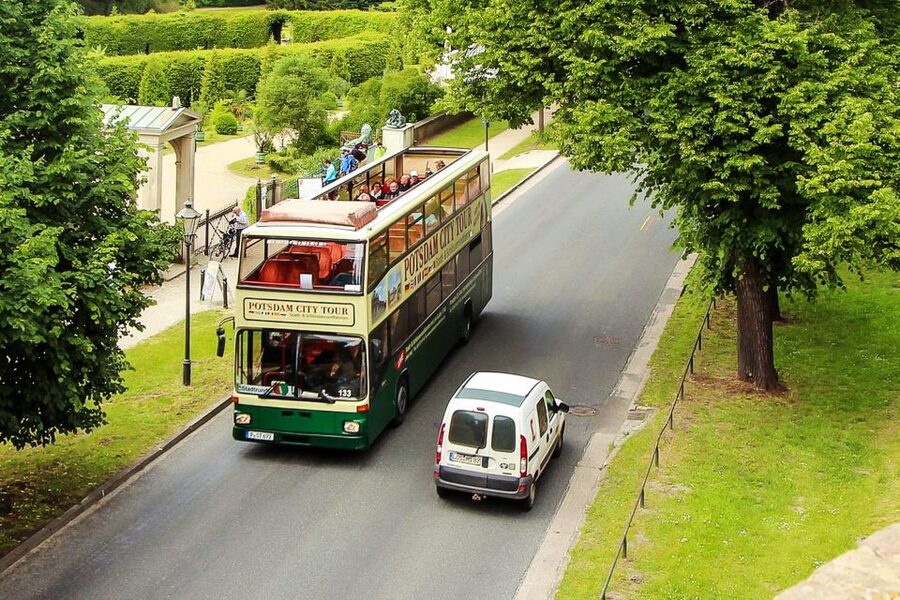
Potsdam packs royal palaces, Cold War history, Russian cottages, and a handsome old town into one very busy afternoon. This tour gives you a useful first look by bus, then gets you out for short walks at the places that matter most, including Sanssouci and Cecilienhof.
I like the large amount of ground covered in only three hours, and I like the practical mix of transport and walking. The English audio guide works on the bus, while the guide can answer questions in English at the stops. That makes this a good choice if you are short on time.
The main consideration is language. German is the main live commentary, so English speakers receive audio narration on the bus and printed material during the walks. You will see palace exteriors and gardens, but entry fees are not included.
Key points at a glance
- See Potsdam’s major sights in three hours: The route links the old town, Dutch Quarter, Glienicke Bridge, Cecilienhof, Alexandrowka, and Sanssouci.
- Use English audio on the bus: Audio is offered in English, Italian, Russian, Spanish, and French, while the guide speaks mainly German.
- Expect short walks, not palace visits: You explore grounds and exteriors, but entry to Sanssouci or other buildings costs extra.
- Look for Frederick II’s grave: The modest grave near Sanssouci adds a personal note to the grand palace setting.
- Allow time afterward: The tour is an introduction, leaving you free to return to the palace or old town that interests you most.
- Meet outside Potsdam central station: Give yourself a few minutes to find the bus in front of the station.
Why Potsdam works well as a half-day outing
Potsdam is close enough to Berlin for an easy day trip, but its sights are spread across a wide area. The old town sits apart from the palace grounds, and places such as Alexandrowka and Cecilienhof are not best understood as a quick walk from the station.
That is where this tour earns its price. For $29, you are paying for transport between several distant sights, a guide, an audio system, and a compact introduction to Potsdam’s royal and modern history. A public bus can move you around, but it will not give you the same joined-up explanation of Frederick II, the palaces, the Soviet presence, and the city’s unusual mix of German, Dutch, and Russian architecture.
I would use this tour as a first orientation, not as a replacement for a full palace day. You get the shape of Potsdam and enough background to decide where you want to spend more time later.
The advertised duration is three hours. One account described a four-hour outing, so avoid booking a tight connection immediately afterward. The pace is purposeful, with several brief walks rather than one long visit.
More Castle Tours in Potsdam
- Potsdam: Palace Tour by Boat
★ 4.5 · 2,369 reviews - Potsdam: Sanssouci Palace and Prussian Palaces Entry Ticket
★ 4.5 · 2,101 reviews - From Berlin: Potsdam and Sanssouci Palace Tour with Entry
★ 4.5 · 1,094 reviews
Starting at Potsdam central station
The meeting point is at Potsdam central station, outside the station building. That sounds simple, but the station can feel larger than expected when you arrive in an unfamiliar city, so look for the bus in front rather than wandering inside.
The tour begins with a bus ride through central Potsdam. This gives you a quick sense of how the city fits together before the walking stops begin. You pass the Baroque old town and the Dutch Quarter, then continue toward the Glienicke Bridge.
A useful tip is to arrive early enough to sort out your audio equipment. The English narration is delivered through headphones, and the live German commentary continues in the bus. Most English-speaking passengers find the arrangement workable, though the two sound sources can compete a little. The recorded narration also depends on location and timing, so it may occasionally begin just before or just after the sight comes into view.
The old town and Dutch Quarter
Potsdam’s old town gives the tour its architectural opening. Baroque buildings and ordered streets reflect the city’s long connection with the Prussian court. You do not get a long free period here at the start, but seeing it from the bus helps you recognize the center when you return later.
The Dutch Quarter is one of Potsdam’s more distinctive areas. Its red-brick buildings were built for Dutch craftsmen invited to the city in the eighteenth century. The neighborhood feels quite different from the grand palace grounds, and that contrast is part of the appeal.
I like this section because it keeps Potsdam from becoming only a palace tour. You see a city shaped by royal planning, immigration, military power, and court taste. If you have time after the tour, the old town is a sensible place to wander, eat, or simply revisit the streets you first saw through the bus window.
Glienicke Bridge and the Forbidden City
The route continues toward Glienicke Bridge, one of the best-known Cold War locations in the Potsdam area. The bridge became associated with the exchange of captured spies, giving it a place in twentieth-century history far beyond its attractive setting over the water.
The tour also explains the area known as the Forbidden City. Here the focus shifts from Prussian kings to the Soviet presence after the Second World War. The name refers to the restricted Soviet military intelligence compound in Potsdam, and this part of the tour helps connect the city’s palace past with its divided postwar era.
You will not get a long museum visit at this point. Instead, you receive context while moving through the city. That is useful if you are new to Potsdam, but it can feel brief if Cold War history is your main reason for coming.
Same city, a completely different kind of day:
- Berlin: World Heritage Cruise to Potsdam
★ 4.5 · 1,435 reviews - Berlin: Sachsenhausen Concentration Camp and Potsdam Tour
★ 4.6 · 1,334 reviews - Potsdam by Boat: Island Cruise
★ 4.6 · 1,308 reviews - Potsdam: City Sightseeing Hop-On Hop-Off Bus Tour
★ 4.2 · 864 reviews
Cecilienhof and the politics of a palace
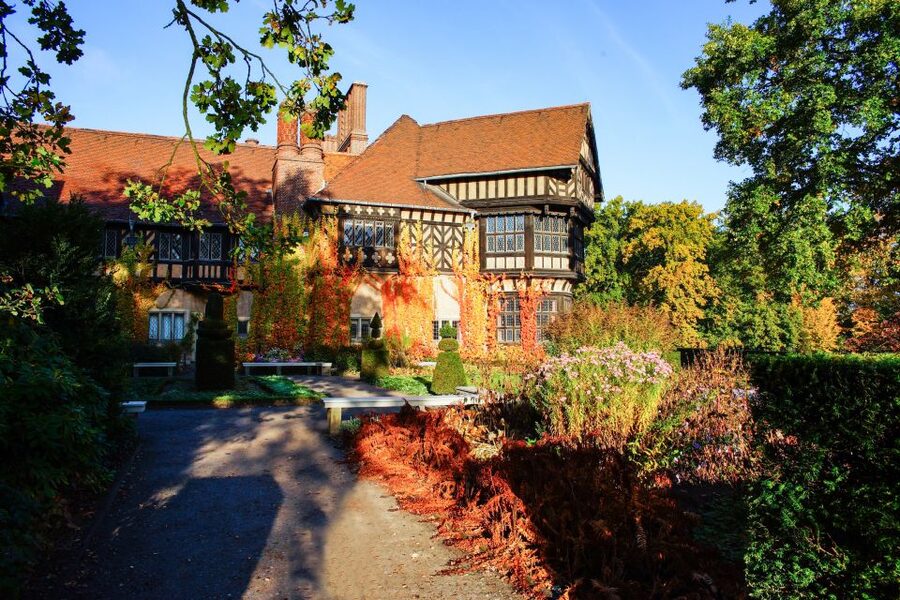
Cecilienhof is one of the most important stops. Unlike the formal Baroque palaces, it has the appearance of an English country estate, with brickwork and Tudor-style details. Its importance comes from the Potsdam Conference, held there in 1945, when Allied leaders met to discuss the shape of postwar Europe.
The walking stop lets you look around the building and its grounds while the guide explains the setting. English-speaking visitors receive a booklet, and the guide can provide extra explanations in English when asked. The live guide is the strongest part of the experience here because a human explanation can point out what matters in the setting instead of leaving you with names and dates alone.
The time is limited. One practical complaint is that a short stop can feel too short for photographs and a proper look at the building. If Cecilienhof is high on your list, plan to return independently, or book a longer visit that includes the interior.
Alexandrowka, Potsdam’s Russian colony
Alexandrowka is a welcome change of pace. This small settlement of traditional Russian wooden houses was created in memory of Tsar Alexander I and for Russian singers connected with the Prussian court. The houses, gardens, and village layout give you a glimpse of the personal and diplomatic links between Prussia and Russia.
The colony is sometimes called Little Siberia, though the nickname should not make you expect a remote wilderness. It is part of Potsdam, and the stop is short. What makes it special is the intimate scale. After palace facades and formal gardens, these wooden homes make royal history feel more domestic.
The guide explains why the settlement exists and how it fits into Frederick William III’s relationship with Russia. The printed booklet matters here if you do not speak German, since the live talk may be aimed mainly at German speakers. Still, the houses are easy to appreciate visually, and the stop adds variety to the route.
Sanssouci terraces and Frederick II’s grave
The grand finale is Sanssouci, Potsdam’s most famous palace complex. The tour takes you to the celebrated terraces and through the surrounding gardens, where you can see the palace from outside and appreciate its position above the vineyards.
Sanssouci was Frederick II’s summer retreat, a place designed for privacy, music, conversation, and relief from court ceremony. The building is not enormous by royal standards, which is part of its charm. It feels more like a refined country home than a monument meant to intimidate.
The terraces are one of the best photo stops on the tour, but do not expect enough time to cover the entire park. Sanssouci’s grounds spread well beyond the route, with additional palaces, sculptures, paths, and formal plantings. You get the essential introduction, then can choose to return for a longer walk.
Frederick II’s grave is near the palace. It is surprisingly plain compared with the surrounding royal buildings, and that contrast makes the stop memorable. Potatoes are often left at the grave because Frederick encouraged their cultivation in Prussia, a small and slightly funny detail that brings the famous ruler down to earth.
The tour does not include palace admission. If you want to enter Sanssouci, access must be purchased on the day of the tour, and entry is separate from the $29 price. Check the available arrangement when booking, since your schedule may not leave enough time for an interior visit.
What the language setup feels like
This is the most important detail for non-German speakers. The main live commentary is primarily in German. On the bus, you use an audio guide in your chosen language, including English, Italian, Russian, Spanish, or French.
During the walking portions, the guide can explain sights in English and answer questions, but the amount of English may depend on the makeup of the group. If most people speak German, the guide naturally spends more time in German. You receive an English booklet for the walking stops, which fills in key facts but does not always match the detail of a full live explanation.
Guides such as Victoria, Reinhardt, Thomas, and Oliver have been praised for being clear, lively, and helpful with English speakers. The guide assigned to your departure may be different, but the pattern is consistent: the staff generally try to include non-German speakers, especially at the stops.
I would book this tour if you are comfortable with a mixed-language format. If you want every story delivered live in English, choose a dedicated English-language tour instead. If you mainly want to see Potsdam and understand the basics, the audio guide and booklet do the job.
The bus, walking, and comfort level
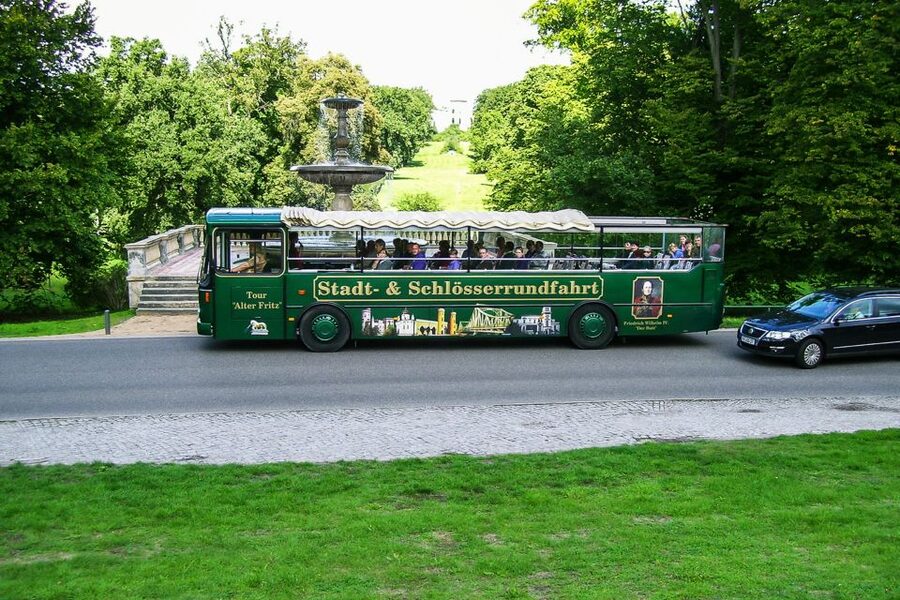
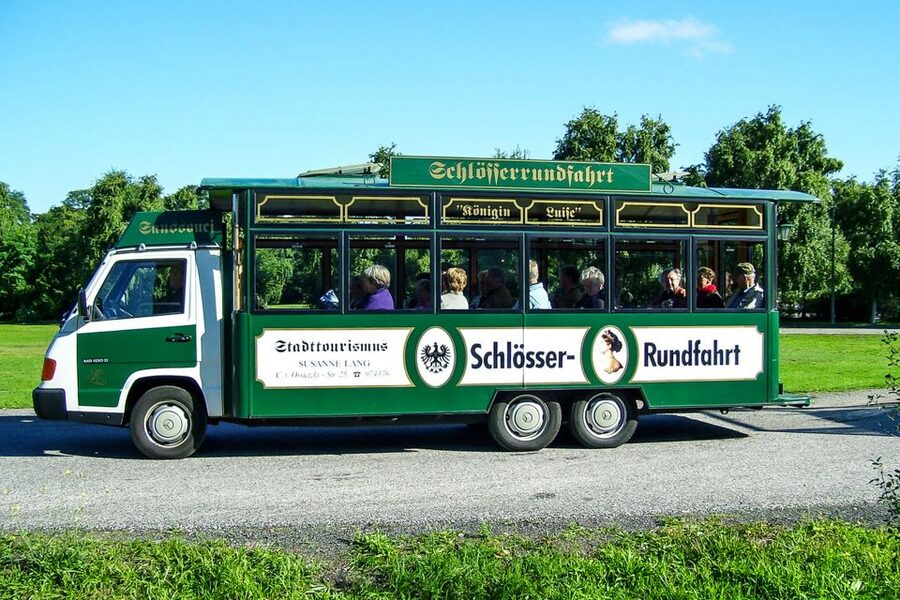
The bus is the practical backbone of the tour. It saves you from arranging separate transport between the city center, Glienicke Bridge, Cecilienhof, Alexandrowka, and Sanssouci. That matters on a warm day, in winter, or when someone in your party cannot manage a long walk.
The seating can be close, with limited legroom in some places. Tall passengers may find the area behind the baggage section tight, and older buses can feel less comfortable than a modern sightseeing coach. The open nature of some transport can also mean occasional exhaust smells.
The walking sections are short, but you should still wear comfortable shoes. You will be outside at palace grounds and historic neighborhoods, with little built-in time for a drink or snack. Bring water, especially in summer. The tour does not promise a refreshment break, and one busy summer departure felt too long without one.
The arrangement works well for families, older people, and anyone who wants an overview without walking across all of Potsdam. It is less suited to someone who wants long, quiet time at each palace.
How much value do you get for $29?
At $29, the tour is fairly priced for the amount of city it covers. You receive bus transport, walking commentary, an audio guide, and booklets, while the tour connects sights that would take more planning to visit independently.
The price looks even better if you have only one day in Potsdam or are visiting from Berlin and want a clear structure. You can see the main palace areas, identify the places worth returning to, and finish with the rest of the afternoon free.
The value drops if your main goal is to enter several buildings. Admission is not included, and the stops are too short for a detailed palace visit. In that case, spend more time at Sanssouci or Cecilienhof on your own after the tour, or choose a full-day experience.
Who should book this Potsdam tour?
Book it if you want:
- A quick first look at Potsdam’s main sights
- Transport between widely separated locations
- A mix of royal, Russian, Dutch, and Cold War history
- Short walks rather than a full day on foot
- English audio support without needing a fully English-speaking group
- Time afterward to explore Sanssouci or the old town independently
Think twice if you need live English commentary at every stop, want to enter several palaces, or prefer slow photography and long garden walks. The tour is designed to show you the highlights, not to let you linger.
My verdict on the Potsdam City and Castles Tour
I would choose this as a well-priced orientation tour, especially early in a Potsdam visit. The route is broad, the guide adds useful historical links, and the bus solves the problem of distance between the city and the palaces.
English speakers should book with clear expectations. You will have a solid audio guide and written material, plus chances to speak with the guide in English, but German remains the main live language. If that arrangement suits you, $29 buys a lot of Potsdam in a short time.
Go early if you can, then use the afternoon to return to Sanssouci, enter a palace, or explore the Dutch Quarter at your own pace.
FAQ
Where does the Potsdam City and Castles Tour begin?
The meeting point is at Potsdam central station, outside the station building. Look in front of the station for the tour bus.
How long does the tour last?
The stated duration is three hours. Some departures may take longer, so leave extra time before any train or later booking.
Is the tour available in English?
The main live commentary is primarily in German. English speakers receive an English audio guide on the bus, an informative booklet for the walking stops, and can ask the guide for explanations in English.
Which audio guide languages are available?
The audio guide is offered in English, Italian, Russian, Spanish, and French.
Does the tour enter Sanssouci Palace?
No. The tour visits the Sanssouci terraces, gardens, and Frederick II’s grave, but palace entry is not included. Sanssouci access can only be purchased on the tour day, and entry fees are separate.
What sights does the tour visit?
The route includes Potsdam’s old town, the Dutch Quarter, Glienicke Bridge, the Forbidden City area, Cecilienhof, Alexandrowka, and Sanssouci.
Is the tour suitable for someone who does not want to walk far?
It combines a bus ride with several short walks. This makes it more manageable than a full walking tour, but you still need to walk around palace grounds and historic sites.
Just added in Potsdam
- Private Sightseeingtour im Taxi nach Potsdam und Sanssouci★ 5.0 · 12 reviews
- Potsdam: Private Walking Tour of Potsdam and Sanssouci★ 4.8 · 28 reviews
- Potsdam: Jägervorstadt Outdoor Crime Mystery Tour★ 4.4 · 4 reviews
- Potsdam: Outdoor Escape Game★ 4.4 · 22 reviews
- Potsdam highlights half day Sanssouci Tour★ 5.0 · 5 reviews
- From Berlin: Potsdam Half-Day Tour in Spanish★ 4.6 · 135 reviews
- Potsdam: Biosphäre Potsdam Entry Ticket★ 4.6 · 289 reviews
- Potsdam & Sanssouci Gardens Private Tour With Jacob★ 4.6 · 7 reviews
Castle Tours, compared.
From Munich: Neuschwanstein & Linderhof Castle Full-Day Trip
Read our review →
From Munich: Neuschwanstein Castle Full-Day Trip
Read our review →
Premium Neuschwanstein Castle and Linderhof VIP Tour from Munich
Read our review →
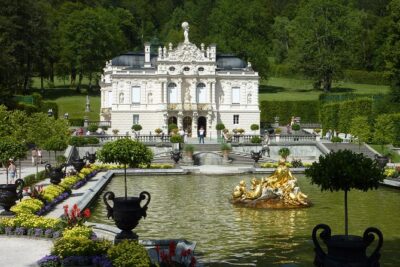
Neuschwanstein Castle and Linderhof Palace Day Trip from Munich
Read our review →Browse the lists this tour appears in