
Reviewed · WALKING TOURS
Oberammergau Private Guided Walking Tour
Oberammergau is famous for its Passion Play, but the play is only one part of the story. This private walk links 18th-century frescoed houses, medieval pilgrimage routes, wood carving, the Black Plague, and the village’s wartime past in a compact 90-minute tour.
I like the private format, which gives your group a guide’s full attention and allows some on-the-spot customization. I also like the human scale of the walk: you explore the village streets while hearing how pilgrims, markets, monasteries, artists, and local families shaped Oberammergau. The main drawback is the short duration. Ninety minutes is enough for a strong introduction, but not for a slow, detailed visit to every major sight.
Key points at a glance
- The Passion Play grew from a plague vow: Learn how the Thirty Years War and the return of the Black Plague led to Oberammergau’s famous religious drama.
- Wood carving is tied to pilgrimage: The walk explains how routes between Germany, Italy, and Rome helped local carving reach a wider market.
- Ettal Monastery is part of the story: Oberammergau’s early development is linked to the nearby monastery and its elite boarding school.
- The village mixes sacred and everyday life: Frescoed homes, fairy-tale references, markets, and religious traditions share the same streets.
- World War II left a less familiar mark: Hear about the Wehrmacht headquarters and the Messerschmitt factory connected with the area.
- Private guiding changes the pace: Your group of up to 15 can ask questions and request some adjustments during the walk.
Why Oberammergau is more than a Passion Play village
The Passion Play is the obvious starting point. It gives Oberammergau international fame and draws attention to the village’s religious traditions. Yet the play makes more sense once you understand the fear and uncertainty that shaped it.
Oberammergau lies in Bavaria’s Ammer Valley and takes its name from the Ammer River. Its roots reach back to the late Bronze Age, though the settlement that developed into the modern village began around a small monastery in the ninth century.
That location mattered. The village sat along routes used by pilgrims traveling between Germany and Italy on their way to Rome. Pilgrims brought more than religious devotion. They brought money, stories, trade, and demand for souvenirs and devotional objects.
This is where the village’s wood carving tradition enters the picture. From the 14th century onward, Oberammergau became an important center for carved wooden work. The walk helps you connect this craft to the roads passing through the valley, rather than treating wood carving as an isolated local hobby.
I find that context useful because it explains why the village developed a distinctive identity. Oberammergau was not simply a remote mountain settlement. It was a place where travelers passed through, markets operated, religious institutions held influence, and local crafts found buyers.
More Walking Tours in the Bavarian Alps:
- Discover Berlin Half-Day Walking Tour
★ 5.0 · 9,624 reviews - Berlin: Third Reich and Cold War 2 Hour Walking Tour
★ 4.9 · 6,830 reviews - Munich: Third Reich & WWII Walking Tour
★ 4.6 · 6,181 reviews
Meeting at the tourist office on Eugen-Papst-Straße
The tour begins in front of the tourist office at Eugen-Papst-Straße 9A, 82487 Oberammergau. This is a practical meeting point because you can arrive with the village’s visitor services nearby and get your bearings before the walk starts.
Your guide speaks English or German, and the group is private. That matters more here than it would on a broad city tour. Oberammergau’s story has several layers, and you may want to pause over the painted fronts, ask about the Passion Play, or spend more time on the wood carving tradition.
A 90-minute walk also calls for sensible expectations. You should arrive ready to keep moving and listen as the guide shifts between religious history, local craft, folklore, and wartime subjects. This is an orientation tour, not a full day of museum visits.
No entrance fees are included. The core experience is the guided walk through the village, so you should not book it expecting admission to a separate attraction. If you want longer visits inside particular sites, check what is open and what requires its own ticket.
Following the road between Germany, Italy, and Rome
One of the most useful parts of the walk is the explanation of Oberammergau’s position on pilgrimage routes. The village’s story is partly a story of movement. People heading toward Rome passed through the region, and their presence helped support markets and local trades.
You can think of the pilgrimage route as an old economic network. Pilgrims needed food, shelter, religious objects, and practical goods. Local makers could sell carved figures and other work to people who carried those objects onward.
The guide links this trade to the growth of wood carving from the 14th century. That connection gives the craft a clearer purpose. You are not just looking at a traditional art form. You are learning why that art took root in this particular place.
The tour may suit you especially well if you enjoy seeing how geography affects culture. The Ammer Valley, the route toward Italy, and the nearby monastery all helped shape the village. The story is less about one famous building and more about the forces that made Oberammergau different from other Bavarian towns.
Reading the painted houses and Märchenhäuser
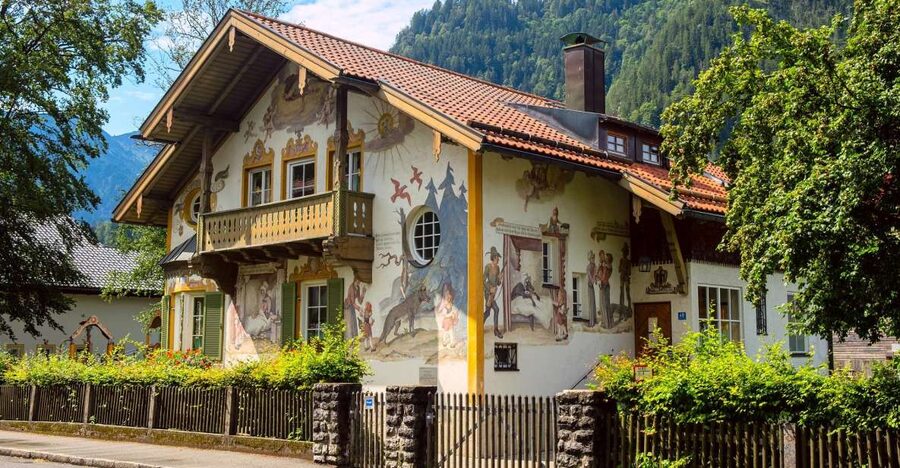
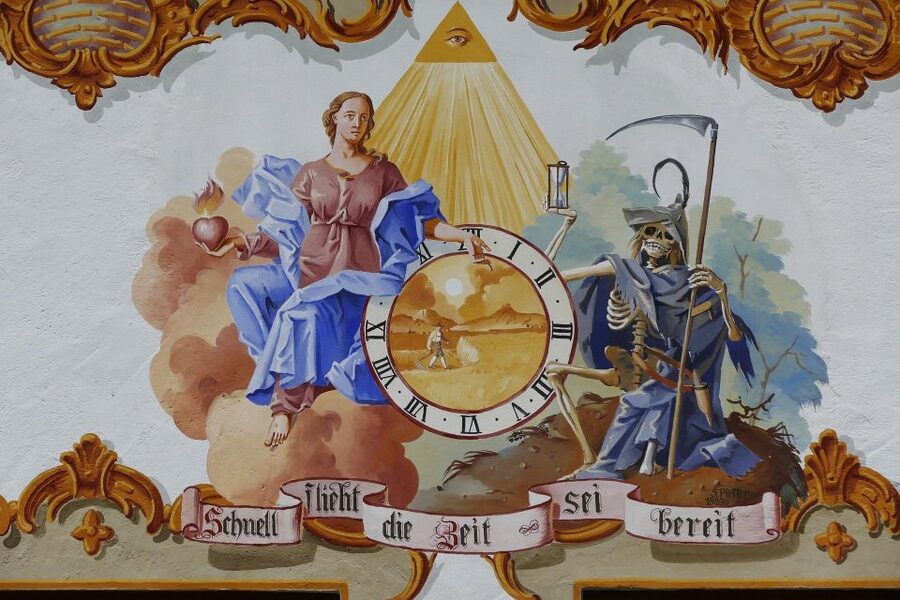
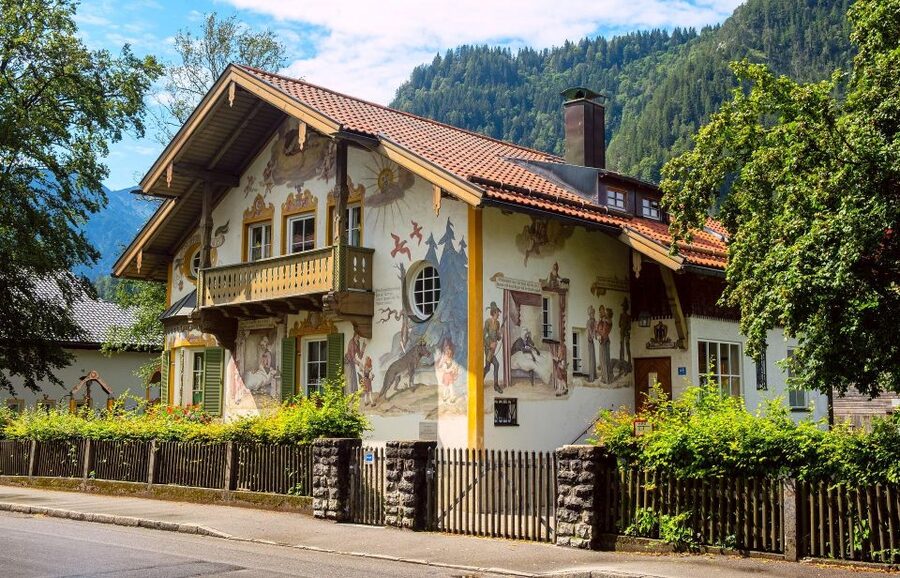
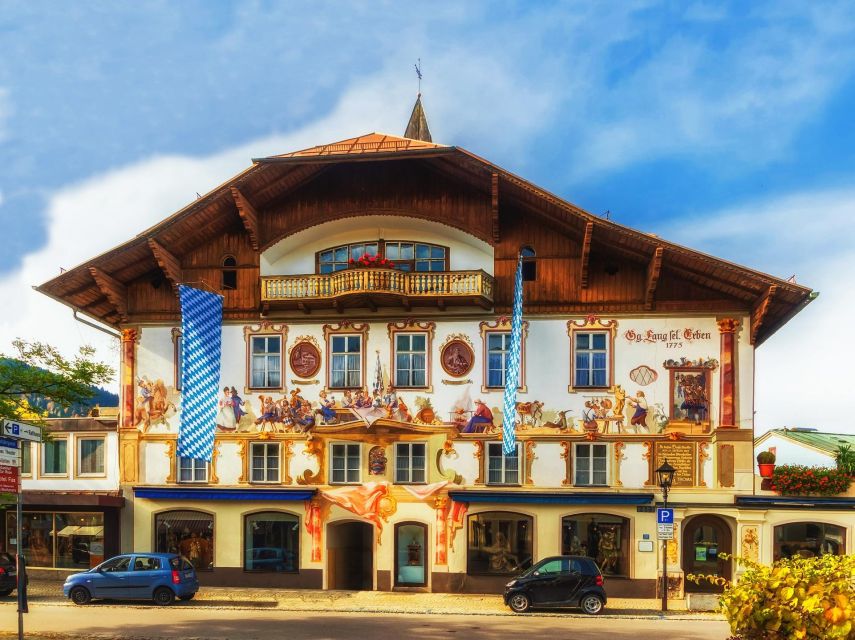
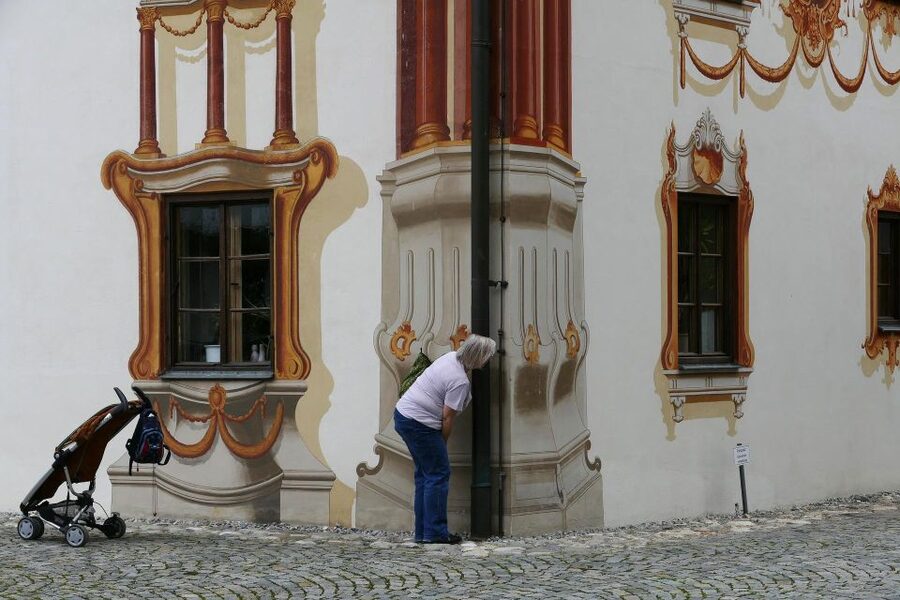
Oberammergau’s houses are part of the experience. The village is known for 18th-century frescoes painted on its buildings, and these façades give the streets a visual character that can be easy to admire without understanding.
A guide helps you look at the houses as expressions of local faith, daily life, and storytelling. The walk also brings in the Märchenhäuser, or fairy-tale houses, and their connection to older German oral folklore gathered by the Brothers Grimm in the early 19th century.
This sacred and worldly mix is one of Oberammergau’s best features. A religious scene may appear on one building, while another points toward folk stories or ordinary village life. You are not asked to choose between the holy and the playful. Both belong to the town’s public face.
I like this part because it rewards close attention. Without a guide, you might notice colorful paintings but miss the references behind them. With a private guide, you can ask which stories are religious, which are drawn from folklore, and how the village uses its façades to preserve memory.
The drawback is that a 90-minute schedule can only introduce these details. If painted architecture is your main interest, you may want extra time afterward to walk the streets again at your own pace.
A few more half-days in the Bavarian Alps worth comparing
- From Munich: Zugspitze Mountain Van Tour with Garmisch Town
★ 4.8 · 653 reviews - From Munich: Tour of Germany’s Highest Peak Zugspitze
★ 4.7 · 214 reviews - From Munich: Herrenchiemsee Palace and Boat Trip Day-Tour
★ 4.8 · 129 reviews - Half Day Private Tour Linderhof Castle & Oberammergau incl Ettal
★ 4.5 · 119 reviews
From war and plague to the Passion Play
The Passion Play’s origins are tied to crisis. The Thirty Years War brought suffering across Europe, and the return of the Black Plague added another threat. In Oberammergau, these events helped lead to the promise that the community would perform the Passion of Christ.
The play represents the final days of Christ and became one of Oberammergau’s defining traditions. Its importance is not only theatrical. It reflects how a community responded to illness, loss, and fear through a shared religious act.
Your guide explains the tradition as part of the village’s wider history, not as a detached show for visitors. You learn how the play developed from a local vow and how its cast has remained exclusive to Oberammergau residents.
That local requirement is a key detail. It means the Passion Play is bound to the community itself. The performers are not simply hired for a production brought into town. The tradition belongs to the people who live there, and that gives the event a strong sense of continuity.
The tour is useful even when no performance is taking place. You can understand the play’s place in village life without needing an entrance ticket to a show. If attending a performance is your main goal, though, this walking tour should be treated as background and orientation rather than a substitute for a performance ticket.
The wood carving tradition in local context
Oberammergau’s wood carving legacy is one of the tour’s most distinctive subjects. The tradition reaches back centuries and is tied to pilgrimage, markets, and the movement of religious objects through the region.
The guide helps explain how an alpine village became a center for this work. The story gives you a better way to judge the craft. Rather than seeing carved objects only as souvenirs, you can place them within a long line of local production and trade.
This is also where the connection between sacred and practical life becomes clear. Religious demand supported carving, but market access mattered just as much. Pilgrims created customers, and the village’s position gave local makers a route to those customers.
You should ask questions if you want to know more about how the tradition changed over time, since the tour allows some customization on the spot. The provided information does not promise a workshop visit or a carving demonstration, so book this for the historical explanation rather than a hands-on craft session.
Ettal Monastery and the village’s early identity
Oberammergau’s early story is linked to Ettal Monastery, located nearby. The tour explores that connection and also refers to the monastery’s elite boarding school.
That relationship adds an institutional layer to the village. Oberammergau was shaped not only by farmers, craftspeople, pilgrims, and performers, but also by a powerful religious center in the surrounding area.
You will not be getting a full guided visit of Ettal Monastery on this walk. Instead, the guide uses the connection to explain how Oberammergau fit into the wider region. This is valuable if you are visiting both places, since it helps you see them as connected parts of Bavarian history rather than unrelated stops.
The monastery topic also ties back to the Passion Play and wood carving. Religious institutions created demand for art and ceremony, while pilgrims helped spread both. One story supports the next.
A less familiar wartime chapter
The tour also covers Oberammergau during World War II. Two specific subjects are highlighted: the Wehrmacht headquarters and a Messerschmitt factory.
These details complicate the usual picture of Oberammergau as a village of frescoes, folk tales, and religious performance. The area was also connected to military organization and aircraft production during a dark period of German history.
I value the inclusion of this material because it keeps the walk from becoming a postcard-only version of Bavaria. A good local history tour should show the pleasant and difficult parts together. Here, the wartime story adds weight to the older themes of pilgrimage, craft, faith, and community.
The information supplied does not specify the exact buildings visited or whether any interior is entered. Expect the guide to discuss these connections during the village walk rather than assume a separate museum or factory tour.
What the private format is worth at $280
The price is $280 per group of up to 15 people, not $280 per person. For a full group, that can be a reasonable way to secure a private guide, especially when the cost is shared among family or friends.
For two people, the price is much harder to justify on simple sightseeing value. You are paying for privacy, a dedicated guide, and the ability to shape parts of the conversation, not for a long itinerary or included admissions.
I would consider the tour a better value for a group that cares about local history and wants to ask questions. A family, small tour party, or group combining Oberammergau with Ettal may get more from the private format than independent visitors who only want a quick look at the painted houses.
The strongest value comes from the guide’s personal attention. Ekaterina has led the walk with lively interaction for a group of four, bringing the village’s stories together with historical notes. Her role shows what this format can offer at its best: a walk that feels directed toward your group rather than delivered to a crowd.
Still, compare the price with your own interests. If you mainly want photographs and a brief look around, you can walk the village without booking a private tour. If you want the links between plague, pilgrimage, carving, folklore, WWII, and the Passion Play, the guide provides the structure that independent sightseeing may lack.
Who should book this walk?
I would recommend it to you if you enjoy compact history walks with several connected themes. It is especially useful for first-time visitors who want to understand why Oberammergau became famous and how its traditions fit together.
The tour also suits:
- Families or friends who prefer a private group
- Visitors interested in the Passion Play beyond the performance itself
- People curious about wood carving and pilgrimage trade
- Travelers combining Oberammergau with nearby Ettal
- History-minded visitors who want the WWII chapter included
- Anyone who prefers a live English or German-speaking guide
You may want to skip it if you dislike guided walks, have only a few minutes in town, or want extended interior visits. The 90-minute length gives you a focused introduction, not an all-day exploration.
Wear comfortable shoes and arrive at the tourist office meeting point with enough time to begin promptly. The tour is short, so arriving late could mean missing part of the sequence that connects the village’s major stories.
Should you book the Oberammergau private walk?
Book it if you want the village explained rather than simply photographed. The Passion Play, painted houses, wood carving, Märchenhäuser, Ettal connection, plague story, and WWII history make more sense when a guide ties them together.
I would be most inclined to book for a private group of several people, where the $280 cost is shared. The personal format, English or German guiding, and option to adjust parts of the walk make it more useful than a standard group introduction.
Skip it if you are looking for included attraction tickets or a lengthy visit inside specific sites. For a focused first look at Oberammergau, though, this is a practical and unusually broad 90-minute introduction.
FAQ
Where does the Oberammergau walking tour meet?
The meeting point is in front of the tourist office at Eugen-Papst-Straße 9A, 82487 Oberammergau, Germany.
How long does the tour last?
The walking tour lasts 90 minutes.
How much does the private tour cost?
The price is $280 per private group of up to 15 people.
Is the tour private?
Yes. It is offered as a private group experience, with a local professional guide assigned to your group only.
Which languages are available?
The tour is available in English and German.
Are entrance fees included?
No. Entrance fees are not included in the tour price.
What subjects does the tour cover?
The walk covers Oberammergau’s monastery roots, Ettal Monastery, pilgrimage routes, wood carving, the Thirty Years War, the Black Plague, the Passion Play, Märchenhäuser, and World War II connections involving the Wehrmacht headquarters and Messerschmitt factory.
Can the tour be customized?
Some customization is possible on the spot with your local guide.
Can I cancel for a full refund?
Yes. You can cancel up to 24 hours in advance for a full refund. You can also reserve now and pay later.
Just added in the Bavarian Alps
- Canyoning Starzlachklamm – Level 2 tour in the Allgäu★ 5.0 · 11 reviews
- Starzlachklamm Allgäu: Canyoning beginner tour★ 5.0 · 7 reviews
- Stand Up Paddling at lake Chiemsee★ 4.5 · 5 reviews
- Snowshoe hike in the Allgäu★ 5.0 · 7 reviews
- Ehrwald: Hiking Tour into breath taking Nature★ 5.0 · 4 reviews
- Private Van Tour to the Royal Palace of Herrenchiemsee★ 5.0 · 6 reviews
- A Private Day Tour of Garmisch-Partenkirchen and the Zugspitze Mountain★ 5.0 · 17 reviews
- Rafting on the Isar★ 4.0 · 20 reviews
Walking Tours, compared.

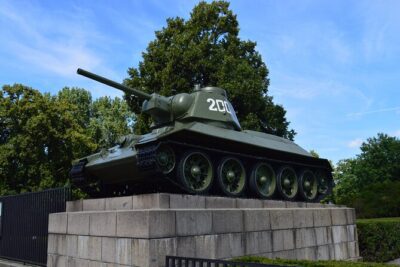
Berlin’s Best: 2 Hour Walking Tour Third Reich and the Cold War
Read our review →
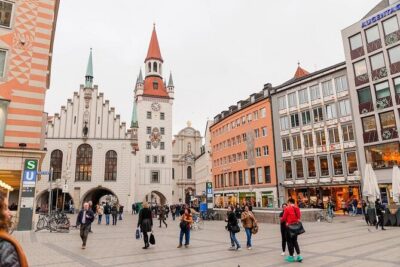
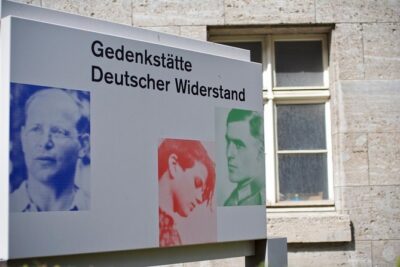
Third Reich Berlin: Hitler and WWII Walking Tour
Read our review →Browse the lists this tour appears in