
Reviewed · CONCENTRATION CAMP MEMORIALS
Munich World War II Sites Including Dachau Concentration Camp
Dachau is the heart of this experience, but the Munich walking tour gives the camp a wider political setting. You begin with the former concentration camp and later walk through the city where the Nazi movement first gathered power. The combination is useful because you see both the machinery of persecution and the streets tied to its rise.
I like the way the tour uses public transport, keeping the price at about $105.21 while showing you how Munich connects to Dachau. I also like the guides’ strong reputation, with Jake, Ian, Scott, Steve, Nick, Connie, and Sam all singled out for clear and respectful teaching. The main drawback is simple: this is a long day, with plenty of walking, standing, and information.
Key points
- Dachau comes first: Spend about three hours with a guide at the memorial, museum, reconstructed barracks, crematorium, and former administration area.
- Munich fills in the story: Walk through Old Town sites tied to Hitler, the early Nazi Party, the Gestapo, and the Beer Hall Putsch.
- Public transport keeps costs down: The group uses a train and city bus to reach Dachau, with transport covered by the tour operator.
- Expect a serious, demanding day: The full program runs about 8 hours and 30 minutes, with little time to sit between stops.
- Good for a short Munich stay: You cover the city’s main Nazi-era locations and Dachau in one booking.
- Age and group limits matter: The tour is for people aged 13 and older, and the group can include up to 25 people.
Two connected lessons about Munich and Dachau
This is not a casual sightseeing day. It asks you to spend the morning at a former concentration camp and the afternoon tracing the rise and fall of Nazi Germany through Munich. The subject is painful, and the best guides treat it with care rather than theatrical drama.
The day begins at Radius Tours on Dachauer Strasse 4, near Munich’s main railway station. You meet at 9:00 a.m., join your guide, and travel north by public train and bus to Dachau. After the memorial visit, you return to Munich, take a short break for food or rest, and join a separate walking tour in the city center.
You should think of this as two linked tours rather than one uninterrupted commentary. The Dachau portion and the Munich portion may have different guides. Names praised for their teaching include Jake, Ian or Iain, Scott, Steve, Nick, Connie, Sam, Josh, and Richard, but your guide is not fixed in advance by the information provided.
More Concentration Camp Memorials in Munich
- Dachau Concentration Camp Memorial Site Tour from Munich by Train
★ 4.5 · 5,637 reviews - From Munich: Dachau Memorial Site Day Tour
★ 4.8 · 2,723 reviews - From Munich: Dachau Memorial Site Half-Day Trip
★ 4.7 · 2,526 reviews
Dachau Memorial Site, three hours of difficult but necessary history
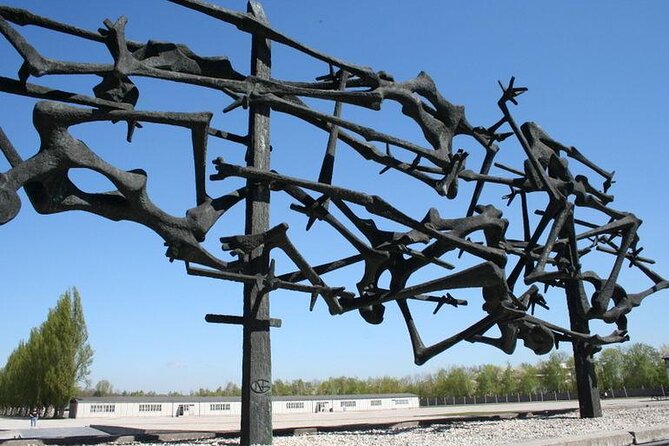
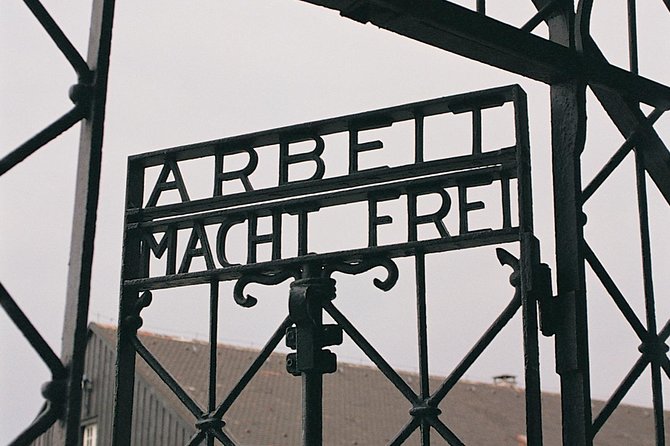
Dachau was the first Nazi concentration camp in Germany and later served as a model for camps built afterward. That fact gives the site special importance, but the visit is not valuable simply because it is old or famous. It helps you see how imprisonment, forced labor, terror, and mass murder were organized through a physical place.
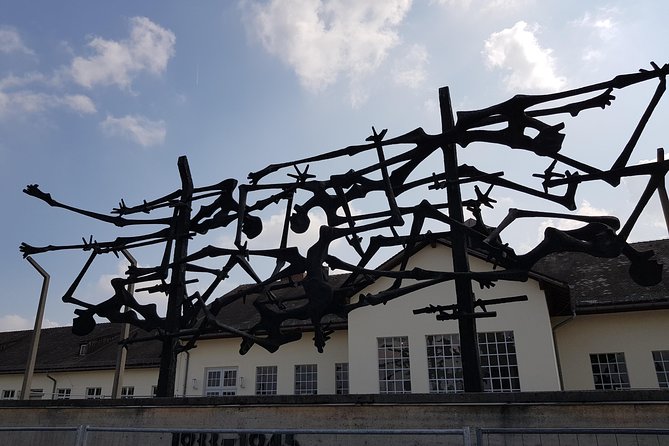
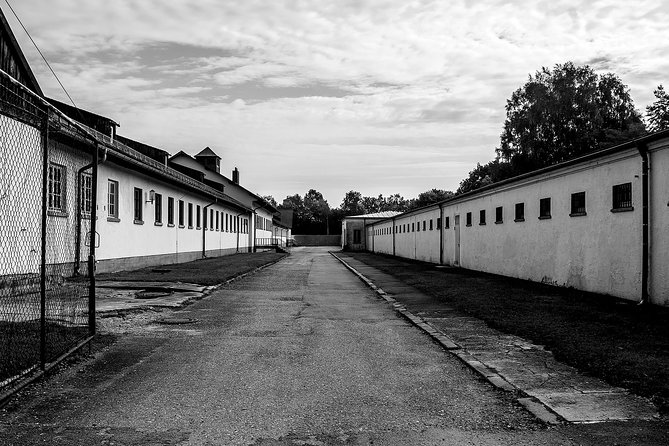
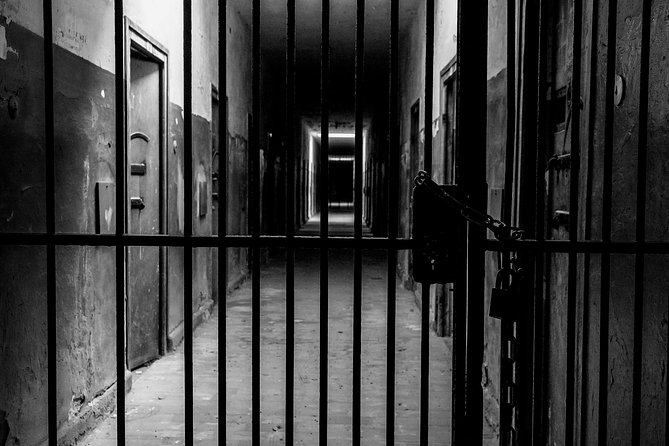
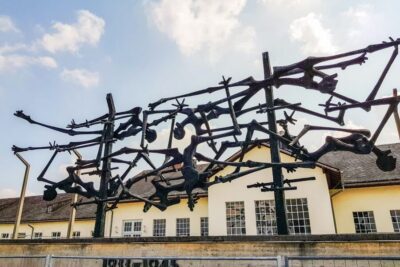
Your guide leads you through the memorial grounds and museum, using photographs and documents to explain what happened there. You see reconstructed cell blocks, the former administration headquarters, and the crematorium area. Some buildings have been reconstructed or no longer survive, so this is not a perfectly preserved camp frozen in time. That can disappoint people who expect every original structure to remain, but the museum material and site layout help explain what stood there and how the camp operated.
The visit lasts about three hours. That is enough time to gain a clear understanding of the site, but not enough to read every display at leisure. If you prefer a slow, self-guided museum visit, you may find the schedule too brisk. If you have only one day available for this subject, the guide gives you a useful framework and points out details you might miss alone.
The tone matters here. Guides such as Jake, Ian, Scott, and Connie were praised for combining serious facts with a human approach. Connie, in particular, was noted for using quotations from people who experienced imprisonment and for finding shade and places to sit on a hot day. That kind of care is important at a site where the information can become overwhelming.
Your guide also handles the transport and keeps the group together. You use a public train and a city bus, and the bus can be crowded. The trip is not a private coach transfer, so you should expect ordinary Munich public transport rather than a quiet, direct ride. The advantage is a lower tour price and a more accessible format. The disadvantage is less comfort and less control over the journey.
Wear practical clothes and shoes. You will spend time outside, and conditions can change from cold to hot. Bring water and a snack for the full day. Food and drinks are not included, and the schedule gives you a break in Munich rather than a supplied meal.
A short break before Munich’s Nazi-era streets
After Dachau, the group returns to Munich for a brief break before the city walking tour. This pause is useful, but do not expect a long lunch. The entire experience begins at 9:00 a.m. and runs for about 8 hours and 30 minutes, so you should plan to eat quickly and keep your afternoon energy in reserve.
The second part lasts about two and a half to three hours. It is conducted on foot around central Munich, with stops in and around Old Town. Much of the value comes from seeing ordinary city streets in a different frame. You are not only looking at attractive buildings. You are asking how political movements used public places, institutions, and symbols.
Königsplatz and Munich’s role in the Nazi movement
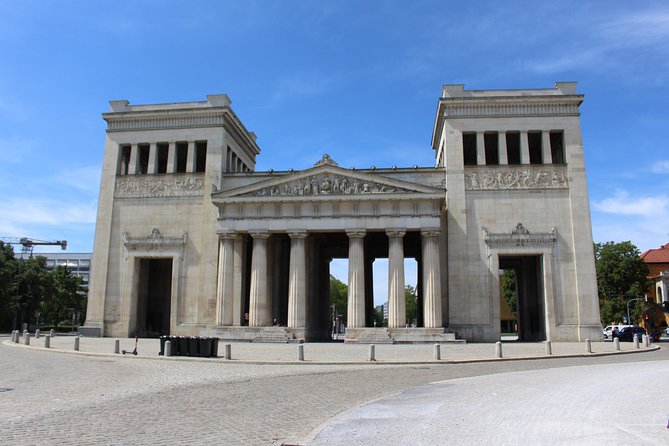
Königsplatz is one of the key stops. The square was used as a major marching ground by the Nazi Party, and its broad open space helps you understand how public architecture could serve political display. A stop here also connects the city tour to the physical scale of Nazi rallies and ceremonies.
The visit is not a conventional monument tour. Much of Munich has changed, and some wartime buildings or Nazi-era features have been removed, damaged, or reconstructed. Good guides use old photographs to show you the difference between then and now. Jake was praised for bringing images that made those changes easier to understand.
The tour concludes around Königsplatz or near Munich Central Station, with the supplied meeting information also describing the tour office as the end point. Either way, you finish in central Munich with easy access to the station area.
Same city, a completely different kind of day:
- Munich: Third Reich & WWII Walking Tour
★ 4.6 · 6,181 reviews - Third Reich Walking Tour Munich
★ 4.5 · 4,291 reviews - Munich Hop-On Hop-Off Tour: 1-Day or 2-Day Ticket
★ 4.3 · 4,161 reviews - Munich: Old Town & Viktualienmarkt City Walk in German
★ 4.7 · 2,304 reviews
Old Town sites linked to Hitler and the Gestapo
The Munich walk continues through places tied to Hitler’s early political career and the Nazi state. You see the building where Hitler first joined the Nazi Party and learn how Munich became an important base for the movement.
You also visit the former Gestapo headquarters. The building itself may not offer a dramatic interior visit, but the location helps explain how secret police power operated within the city. The guide’s job is to connect the address to the wider system of arrests, surveillance, intimidation, and state violence.
The route includes the site of the 1923 Beer Hall Putsch, also called the Munich Putsch. This failed attempt to seize power became an important part of Hitler’s political story. At the site, the guide explains how the event shaped his public profile and later political strategy.
This part of the day is especially useful if you know the broad outline of World War II but want to understand the steps before the war. The focus is not only on battles. You learn about social issues, political events, institutions, and people linked to the Third Reich. That context makes the Dachau visit easier to place within the larger story.
Guide quality and the problem of too much information
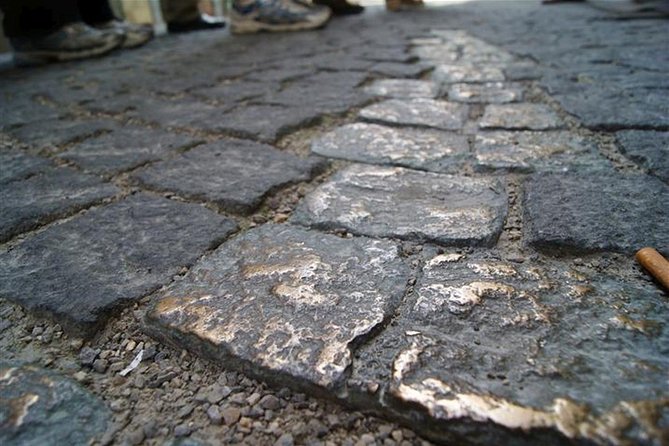
The strongest feature of this experience is the human guide. Names change from one departure to another, but several guides have been praised for knowing the subject, answering questions, and handling difficult material with respect.
Jake is frequently described as engaging and able to shift between humor and seriousness without treating the subject lightly. Ian and Iain were praised for making the camp visit personal and clear. Scott was noted for presenting the material in an educational and respectful way, while Steve received strong marks for making the city sites interesting. Connie’s attention to heat and rest breaks is a reminder that good guiding includes looking after the group, not just reciting facts.
There is a tradeoff. The tour covers a great deal in one day, and some guides provide so much detail that the information can feel dense. One city guide was described as less engaging than the Dachau guide, and another issue raised was difficulty hearing in noisy streets or echoing spaces. The group size can reach 25 people, so you should stay close and ask the guide to repeat anything you miss.
The walking pace can also be brisk. Someone who struggles with long periods on their feet may prefer separate shorter tours. This full-day format works best if you are comfortable walking through Munich, standing at outdoor sites, and concentrating for several hours.
Is $105.21 a fair price?
At about $105.21 per person, the price is reasonable for what is included. You receive a guided Dachau visit, a Munich Third Reich walking tour, local guides, and the public train and bus transport used for the Dachau portion. You do not pay extra for hotel pickup, but you do need to reach the meeting point yourself.
The value comes from combining two substantial experiences in one day. Booking them separately could take more planning and create a gap between the camp visit and the city sites. Here, the guides provide the historical link.
The low price also reflects the use of public transport rather than a private coach. A bus transfer might feel easier, but it would likely raise the cost and would not necessarily save much time. If comfort and direct transport matter more to you than price, this may not be your ideal arrangement. If you want a serious history day without paying for a private vehicle, the format makes sense.
Who should book this full-day experience?
I would choose this tour if you have limited time in Munich and want both Dachau and the city’s Nazi-era locations. It is also a good fit if you prefer having difficult sites explained by a guide instead of trying to interpret the museum and memorial alone.
You should book it if you are ready for a sober subject and a physically active schedule. People aged 13 and older may attend, but the content is not light, and proof of age may be required.
I would think twice if you want long, quiet reading time at Dachau. Three hours on site gives you a solid introduction, but a self-guided visit could allow more time with individual exhibits. I would also avoid this format if you dislike public transport, crowded buses, long walks, or tightly scheduled days.
The tour is offered in English and accepts up to 25 people. Confirmation arrives at booking, and cancellation is free up to 24 hours before the start time. A minimum group size is required, so a cancellation by the operator could lead to another date, another experience, or a full refund.
Should you book the Munich and Dachau combination?
Book it if you want an efficient, serious introduction to Nazi Germany in Munich. The strongest reason to choose it is the connection between Dachau and the city streets where the Nazi movement grew. The strongest reason to skip it is the pace: eight and a half hours of public transport, walking, standing, and heavy information is a lot.
For many people, this will be a worthwhile use of one Munich day, especially with a strong guide such as Jake, Ian, Scott, Steve, or Connie. Bring water, wear comfortable shoes, stay close to the group, and allow yourself quiet time afterward. This is history best approached with attention and respect, not rushed between lighter sightseeing stops.
FAQ
How long does the Munich and Dachau tour last?
The experience lasts approximately 8 hours and 30 minutes. It begins at 9:00 a.m. and includes the Dachau visit, a break, and the Munich Third Reich walking tour.
Where does the tour begin?
You meet at Radius Tours, Dachauer Strasse 4, 80335 Munich, Germany. The meeting point is near Munich Central Station.
How do you get to Dachau?
The group travels by public train and city bus. The tour operator covers the transport used for the trip.
Is hotel pickup included?
No. Hotel pickup and drop-off are not included, so you must reach the meeting point yourself.
How much time do you spend at Dachau?
The guided visit at Dachau takes about three hours. It includes the memorial grounds, museum, reconstructed cell blocks, crematorium, and former administration headquarters.
What Munich sites are included?
The walking tour includes Königsplatz, Munich Old Town locations connected to the Third Reich, the building where Hitler first joined the Nazi Party, the former Gestapo headquarters, and the site of the 1923 Beer Hall Putsch.
Is food included?
No. Food and drinks are not included. You receive a short break between the two tour sections, when you can arrange your own food.
What age group can join?
The tour is open to people aged 13 and older. Children under 13 are not permitted, and proof of age is required.
How large can the group be?
The maximum group size is 25 people.
Is cancellation free?
Yes. You can cancel at least 24 hours before the experience begins for a full refund. Changes or cancellations made less than 24 hours before the start time are not accepted for a refund.
Just added in Munich
- Private transfer: Vilshofen to Munich with 2h sightseeing stop★ 5.0 · 6 reviews
- Pub crawl incl. Oktoberfest museum guided tour with beer tasting (private)★ 5.0 · 5 reviews
- South Tyrolean specialties and wine tasting★ 5.0 · 5 reviews
- Size Matters Beer Tour Munich★ 4.6 · 105 reviews
- Short & sweet: Tasting the Viktualienmarkt★ 4.8 · 37 reviews
- Secret Food Tours Munich★ 4.8 · 5 reviews
- Munich: Romantic Wine Experience for Two at Viktualienmarkt★ 4.2 · 14 reviews
- Munich: Resistance against Hitler – Historical Walking Tour★ 5.0 · 5 reviews
Concentration Camp Memorials, compared.
Sachsenhausen Concentration Camp Tour in English
Read our review →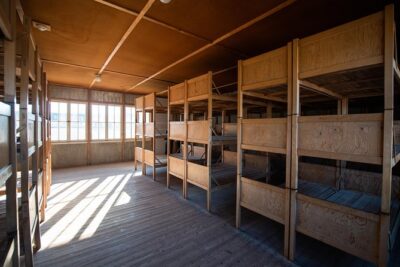
Dachau Concentration Camp Memorial Site Tour from Munich by Train
Read our review →
Sachsenhausen Concentration Camp Memorial Tour
Read our review →
From Munich: Dachau Memorial Site Half-Day Trip
Read our review →
Sachsenhausen Concentration Camp Bus Tour in English from Berlin
Read our review →Sachsenhausen Concentration Camp Tour in English
Read our review →
Sachsenhausen Concentration Camp Memorial Tour (Max. 15 Guests)
Read our review →Browse the lists this tour appears in