
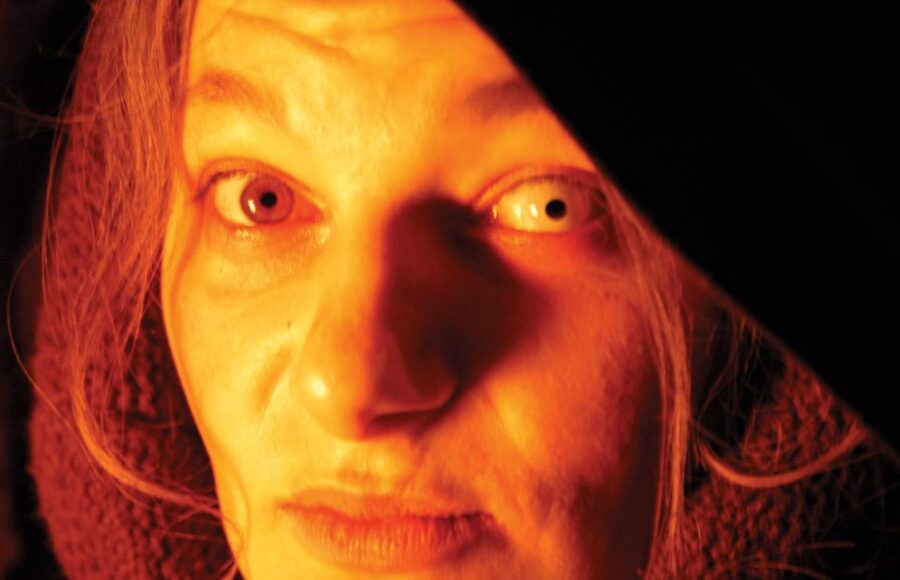
Reviewed · MUNICH TOURS
Munich: Scary Tour with actors in GERMAN
Munich’s old center takes on a darker mood after sunset, when costumed actors bring witch hunts, torture, executions, prostitution, and devil legends into the streets. I like the way this tour uses short scenes to break up the history, and I like that it connects old stories to places you can still see, from the Frauenkirche to the Old Town Hall.
The tour also gives you more than spooky folklore. You hear why execution sites were outside the city, how a hangman lived, and why Munich’s old red-light district disappeared from the center. The main consideration is language: the entire experience is in German, so it suits German speakers best and may be difficult to follow if you depend on English or Chinese.
Key points at a glance
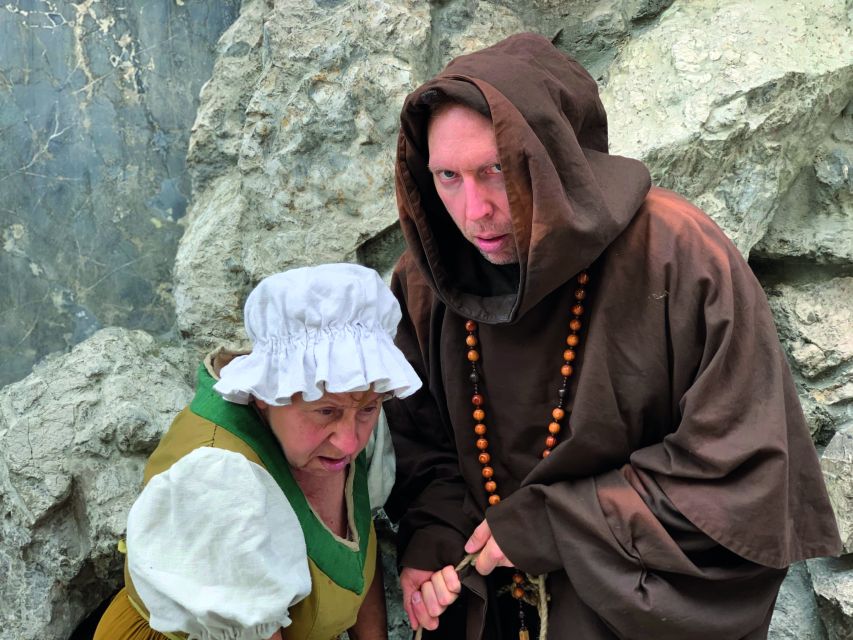
- Historic Munich after dark: Walk through the old center as actors recreate stories from the city’s darker past.
- A theatrical route: Scenes feature witches, a hangman, an alchemist, a goldsmith, a duchess, Jesuit clergy, and the Devil.
- Six major stops: Follow the route from Karlstor and Neuhauser Tor to St. Michael’s Church, Frauenkirche, the Town Hall, St. Peter’s Church, and the Old Town Hall.
- More history than jump scares: The focus is on witch trials, punishment, prostitution, religious beliefs, and old city law.
- Useful practical details: The tour lasts 90 minutes, costs about $46 per person, and runs rain or shine.
- German-language performance: A live guide and professional actors lead the experience, with some audience participation.
Starting beneath Karlstor with Munich’s darker side
Meet under the archway of Karlstor at Karlsplatz, also called Stachus. Look for the guide carrying a big blue bag marked with the white words Weis(s)er Stadtvogel. That is the clearest way to find the group in a busy square.
The opening story centers on Neuhauser Tor, the old city gate where condemned people were led out of Munich toward the execution grounds. This detail gives the route a useful frame. Punishment did not happen in a random corner of town. Execution sites were placed outside the walls, keeping death and public shame at a distance from daily civic life.
You then move along historic Salzstraße. The street name hints at the importance of salt in medieval and early modern trade, though this tour turns your attention toward crime, faith, and punishment rather than commerce. The walk is short enough to keep the group moving, but the actors give each stop a clear dramatic purpose.
The mood is theatrical, not a haunted-house attraction. Expect historic costumes, acted scenes, grim subjects, and occasional humor. The actors do not simply recite dates. They use characters and disputes to show how people in earlier centuries understood sin, illness, bad luck, and public order.
A few more half-days in Munich worth comparing
- Munich: Third Reich & WWII Walking Tour
★ 4.6 · 6,181 reviews - Dachau Concentration Camp Memorial Site Tour from Munich by Train
★ 4.5 · 5,637 reviews - Third Reich Walking Tour Munich
★ 4.5 · 4,291 reviews
Witch hunts at St. Michael’s Church
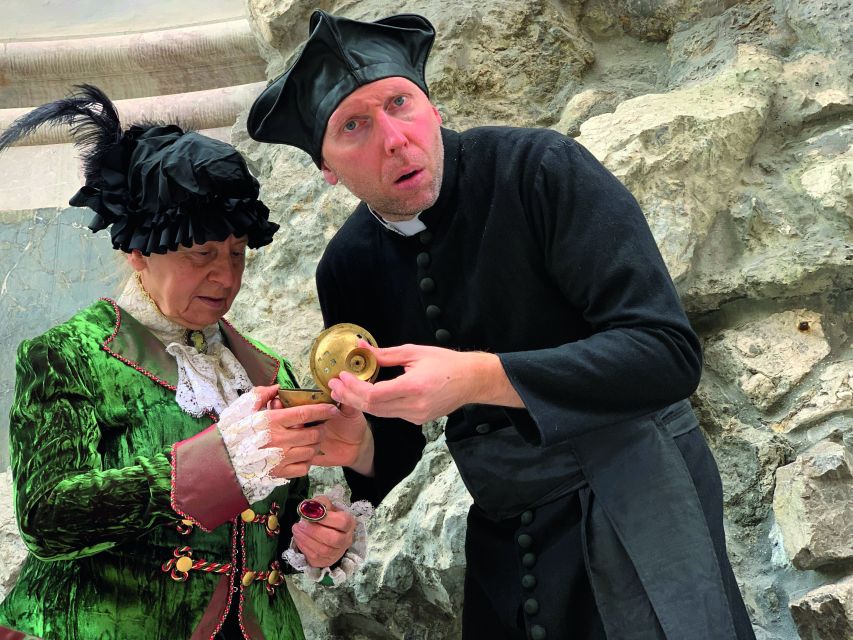
At the former Jesuit school, the story moves into the period of witch hunts. A scene involving Duchess Renata and Jesuit Father Ignatius places you inside the religious and political arguments of the 16th century.
The setting matters. St. Michael’s Church was built during a period when religious confidence and fear could exist side by side. When the church tower collapsed during construction, many people did not see a structural failure or an accident. The event was blamed on accursed bad women, meaning alleged witches.
This is one of the tour’s strongest ideas: the city’s buildings are not just backdrops. They help explain how old beliefs took hold. A storm, a collapse, a failed harvest, or a sudden illness could be tied to supernatural forces. The performance makes those fears easier to understand without asking you to accept them as fact.
The witch stories include potions, broom rides, toad tongues, and children’s hands. These details are grim, but the tour also explains how such images became attached to witchcraft. The familiar broom is treated as a question to explore, not simply a decoration for Halloween.
Because this section is acted, you may be asked to respond or take part in a scene. The audience involvement is meant to pull you out of passive listening. It can also make the experience feel less formal than a standard city walk. If you prefer a quiet lecture, this may feel a little busy. If you enjoy live theater, it adds energy.
A goldsmith, the Frauenkirche, and the Devil’s shoe size
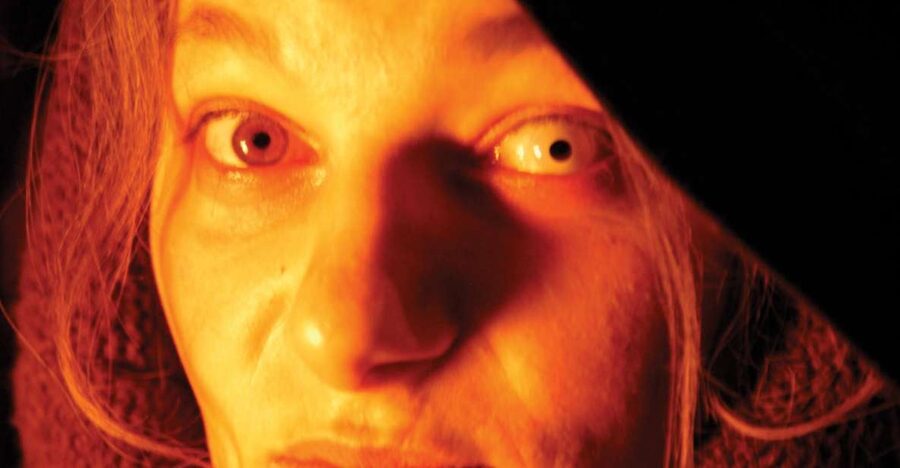
Near the Schöner Turm, you hear the sad story of an unfortunate goldsmith. The tale adds another side to Munich’s old justice system. Not every person caught up in suspicion was a witch. Craftsmen, accused criminals, fraudsters, and ordinary people could all face severe consequences when reputation and law turned against them.
A blast of wind then leads into the story of the Frauenkirche, Munich’s famous twin-towered church. Here, the Devil himself enters the drama. The central legend says that the Devil helped the master builder construct the church, creating a bargain that carries a price.
The story explains the famous Devil’s Footprint inside the Frauenkirche and the strong wind said to blow near the church. It also answers a wonderfully odd question: what was the Devil’s shoe size? This is the kind of small, memorable detail that makes a city walk stick in your mind.
The church stop works best if you already know a little about the building. You may want to look up at the towers and notice how different the church feels from the more playful performance around it. The tour does not replace a proper visit inside the Frauenkirche, and the focus is on the legend rather than the full architectural story.
Still, the contrast is useful. Munich’s most recognizable church becomes a place where construction, theology, local folklore, and physical evidence meet. You get a story to remember, along with a reason to look more closely at the church later.
The Town Hall and Marco Bragadino’s false gold
The route continues to the magnificent Town Hall, where the alchemist Marco Bragadino awaits. He presents himself as a man who can turn base materials into gold. His character brings fraud and wishful thinking into the tour.
Bragadino is not treated as a dry historical footnote. The actor uses his supposed skills to draw you into the world of alchemy, where science, magic, medicine, religion, and deception were not always clearly separated. People wanted cures, wealth, and secret knowledge. A confident alchemist could use that desire to gain attention and money.
This stop also gives the performance a change of pace. The witch stories are linked to fear and persecution. Bragadino’s scene brings in theatrical charm and trickery. You still learn about old beliefs, but the tone becomes more playful.
The route’s mix of serious history and humor is one of its better features. Subjects such as torture and execution can become exhausting if delivered in one long stretch. Short performances help keep the 90-minute walk moving. Recent feedback especially praised the way the actors interrupt monotony, explain connections, and make the background information easier to follow.
Same city, a completely different kind of day:
- Munich Hop-On Hop-Off Tour: 1-Day or 2-Day Ticket
★ 4.3 · 4,161 reviews - From Munich: Dachau Memorial Site Day Tour
★ 4.8 · 2,723 reviews - From Munich: Dachau Memorial Site Half-Day Trip
★ 4.7 · 2,526 reviews - Munich: Old Town & Viktualienmarkt City Walk in German
★ 4.7 · 2,304 reviews
At St. Peter’s Church, meet Munich’s hangman
At St. Peter’s Church, the tour turns to the everyday life of the hangman. This is more useful than simply hearing about public executions. You learn how the hangman looked, why people avoided him, and how he could obtain a gallows rope.
The hangman occupied an unusual place in old society. His work was needed by the authorities, yet the job carried social stigma. The tour also explores the surprising link between hangmen and prostitution. In Munich, hangmen were not only involved with torture chambers and the gallows. They also worked as pimps.
That connection is one of the tour’s more distinctive subjects. It shows how people pushed to the edge of society sometimes handled other work that respectable citizens would not touch. You get a picture of social rank and exclusion, not just a collection of gruesome facts.
A second scene involves a beautiful woman escaping certain death. The moment adds suspense and gives the evening a human story rather than a simple parade of punishments. It also helps balance the material. The tour is dark, but it is not relentlessly bleak.
St. Peter’s Church itself is an important landmark, and you should take a moment to notice where you are. The experience keeps its attention on the story, so it is not a full church visit or art-history lesson. Think of the building as a historic stage and a marker in the city route.
The Old Town Hall and the former torture chamber
At the Old Town Hall, the tour enters one of its grimmest chapters. You cross the site of the former torture chamber while hearing stories about interrogation and punishment.
The point is not to provide a technical catalog of torture devices. Instead, the scene explains how authorities used fear to maintain order and force confessions. That distinction matters. Old justice systems often treated confession as proof, even when the methods used to obtain it were brutal and unreliable.
The setting near the old civic center makes the subject feel close to city government. Torture and execution were not outside the law. They were part of the official system, carried out under civic and religious authority.
For some people, this will be the most uncomfortable part of the evening. The subject matter includes executions, torture, witch hunts, and prostitution. It is not a good fit if you want a gentle introduction to Munich or a light folklore walk. The performances may soften the mood with humor, but the themes remain serious.
Platzl and Munich’s old red-light district
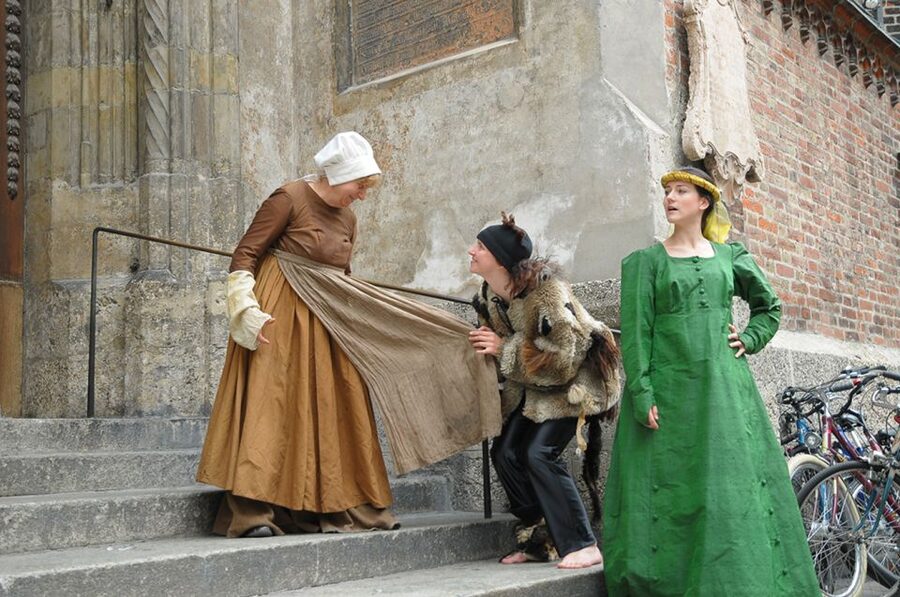
The final major chapter takes place around Platzl, which was Munich’s red-light district until the 1972 Olympic Games. The tour links this local story to the famous song Skandal im Sperrbezirk by the Spider Murphy Gang.
The point is not only that prostitution existed in the old center. You also learn how city leaders reshaped the central district into a cleaner, more respectable image. By the 1970s, there was no longer a place for the old businesses around Platzl.
This gives the tour a useful modern ending. The past is not limited to witch trials and medieval punishment. Cities keep changing their public image, and Munich’s historic center has also been cleaned up, regulated, and marketed over time.
The red-light district section may be especially interesting if you have heard the song or know Munich as a polished destination. It reveals the gap between the city’s pleasant public face and the activities that once took place in the same streets.
What the $46 price buys you
At about $46 per person, this is not the cheapest way to walk around central Munich. You can see the main landmarks on your own for free, and many visitors will prefer a standard history tour if they want architecture, art, or royal history.
The value comes from the live performances. You get a professional guide, a team of actors in historic costumes, and a route that ties stories to specific locations. A normal walking tour might point out the Frauenkirche or Town Hall. This one gives you a cast of characters and a reason to remember each stop.
The 90-minute length also helps. You receive a focused evening experience without giving up an entire night. The tour covers a lot, but it does not pretend to be an all-purpose Munich introduction. It is a themed walk with a clear interest in the city’s darker customs and beliefs.
The price makes the most sense for you if you value theater, audience participation, and unusual local stories. It makes less sense if you want detailed architectural commentary, an English-language guide, or a quiet stroll.
Language, weather, and access
The live guide speaks German, and the actors perform in German. This is not a tour with a stated English or Chinese option. If your German is limited, you may still understand the visual action and recognize some locations, but much of the humor and historical explanation will be lost.
You should also dress for the forecast. The tour runs rain or shine, and the route is outdoors between stops. Comfortable shoes are sensible because you walk through the historic center for 90 minutes. No special equipment is listed, but you should be ready to remain outside for the full experience.
The activity is wheelchair accessible. Since the walk takes place through central Munich, you may still want to confirm current route details if a particular access need is important to you. The stated accessibility is a useful point in its favor.
Cancellation is flexible if your plans are uncertain: you can cancel up to 24 hours in advance for a full refund, and you can reserve now and pay later. These policies help, but the bigger practical issue remains the German language and the rain-or-shine format.
Who should book this theatrical Munich walk?
I would choose this tour for a German-speaking visitor who has already seen the main sights and wants a different way to understand them. It is also a good fit for people who like live theater, local legends, historical crime, and stories that connect everyday places with uncomfortable questions.
Families with older children may enjoy the acting, but the topics are not mild. Witch hunts, torture, executions, prostitution, and death are central to the evening. The suitability depends less on age alone than on how comfortable your group is with grim material.
You should skip it if you want Munich’s royal palaces, museums, music, or traditional food culture. You should also think twice if you need a tour in English or Chinese. The performance style can make German history easier to remember, but it cannot remove the language barrier.
Final call
Book this tour if you want Munich’s old center presented as a stage, with actors bringing witches, hangmen, alchemists, and the Devil into the story. The strongest features are the well-connected route, the lively performances, and the unusual subjects that ordinary sightseeing often leaves out.
At $46, the experience earns its price through the actors and the focused 90-minute format. Just arrive ready for German, outdoor walking, and dark material. If those conditions suit you, this is a memorable way to see familiar Munich landmarks from an unsettling and often funny angle.
FAQ
Where does the tour meet?
The meeting point is under the archway of Karlstor at Karlsplatz, also known as Stachus. Look for the guide carrying a big blue bag with the white words Weis(s)er Stadtvogel.
How long does the tour last?
The tour lasts 90 minutes.
What language is the tour in?
The live guide and theatrical performances are in German. No English or Chinese option is listed.
What places does the route visit?
The route includes Neuhauser Tor, St. Michael’s Church, the Frauenkirche, the Town Hall courtyard, St. Peter’s Church, the Old Town Hall, and Platzl.
What subjects does the tour cover?
The tour covers witch hunts, prostitution, torture, executions, hangmen, alchemy, historic beliefs, and legends connected with the Devil and the Frauenkirche.
Is the tour wheelchair accessible?
Yes, the activity is listed as wheelchair accessible.
What happens if it rains?
The tour takes place rain or shine, so you should be prepared to walk outdoors in wet weather.
Just added in Munich
- Private transfer: Vilshofen to Munich with 2h sightseeing stop★ 5.0 · 6 reviews
- Pub crawl incl. Oktoberfest museum guided tour with beer tasting (private)★ 5.0 · 5 reviews
- South Tyrolean specialties and wine tasting★ 5.0 · 5 reviews
- Size Matters Beer Tour Munich★ 4.6 · 105 reviews
- Short & sweet: Tasting the Viktualienmarkt★ 4.8 · 37 reviews
- Secret Food Tours Munich★ 4.8 · 5 reviews
- Munich: Romantic Wine Experience for Two at Viktualienmarkt★ 4.2 · 14 reviews
- Munich: Resistance against Hitler – Historical Walking Tour★ 5.0 · 5 reviews
Munich Tours, compared.
Dachau Concentration Camp Memorial Site Tour from Munich by Train
Read our review →
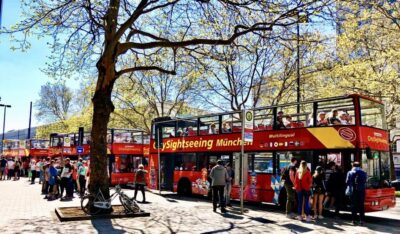
Munich Hop-On Hop-Off Tour: 1-Day or 2-Day Ticket
Read our review →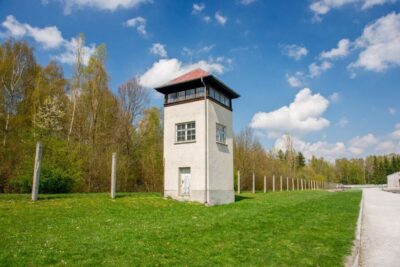
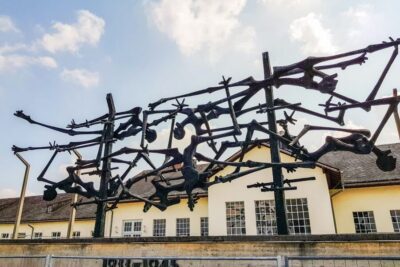
From Munich: Dachau Memorial Site Half-Day Trip
Read our review →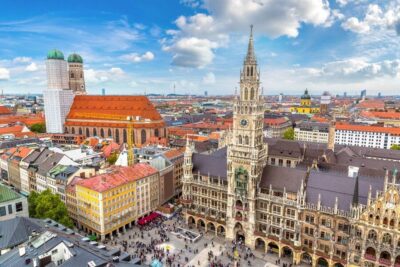
Old Town & Viktualienmarkt City Walk in German
Read our review →
City Bus Tour & FC Bayern Munich Allianz Arena Tour
Read our review →Browse the lists this tour appears in