
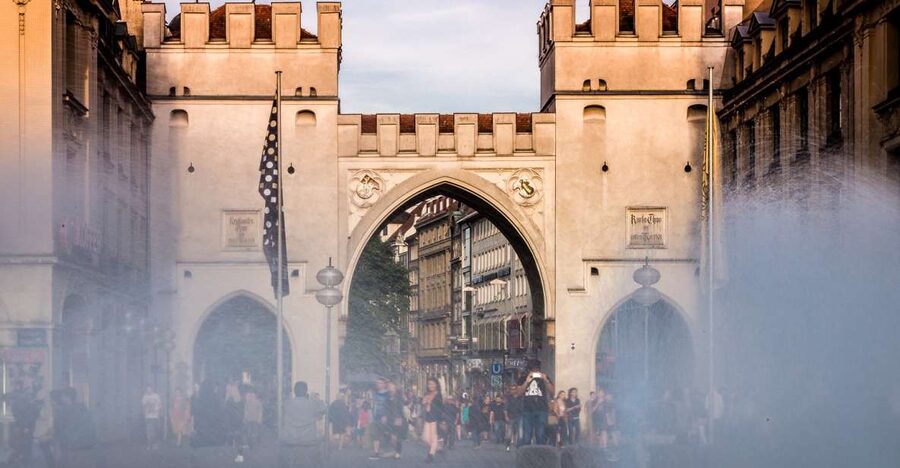
Reviewed · MUNICH TOURS
Munich – Illuminati & other Secret Societies, Tour in German
Munich’s old center is full of symbols that most people walk past without a second look. This tour turns the city into a clue hunt, linking the Illuminati, Freemasons, Knights Templar, and other orders to places from Karlstor to Promenadeplatz.
I like the clear two-hour route and the way it ties secret societies to real Bavarian politics. I also like the chance to study buildings such as St. Michael’s Church and Frauenkirche with a guide who explains what the markings mean, rather than leaving you to guess. The main drawback is language: the regular tour is in German, and English is offered only as a private tour.
Key points at a glance
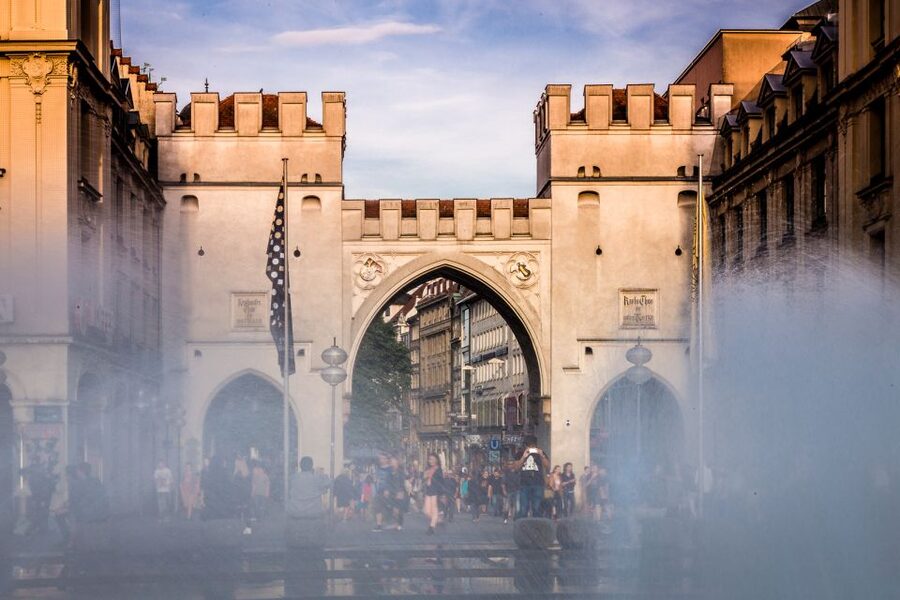
- Karlstor meeting point: Begin directly beneath the arch at Neuhauser Str. 47, an easy central location.
- A clue-filled city walk: Follow a route through the Old Academy, St. Michael’s Church, Frauenkirche, and Promenadeplatz.
- Illuminati and Bavarian power: Hear how a Bavarian elector moved to end the influence of the Illuminati and Freemasons.
- Medieval roots of Masonry: Learn how medieval cathedral-building lodges helped shape later Masonic traditions.
- A wider cast of secret orders: The story includes the Knights Templar, Order of the Golden Fleece, and Guglmen.
- German-speaking guide: Guides such as Albert have led especially engaging versions, with time for questions and comments.
Starting beneath Karlstor in central Munich
The tour begins directly under the arch of Karlstor, at Neuhauser Str. 47. This is a practical meeting point in the middle of Munich, so you can fit the walk around other sightseeing in the old town.
From here, the guide sets up the main question: how much of Munich’s political and religious past was shaped by groups that preferred to work out of public view? The answer is not a simple conspiracy tale. You hear about real organizations, real symbols, and real political reactions, alongside the legends that grew around them.
That balance matters. Secret-society tours can easily become a string of wild claims. This one is built around the history of Bavaria and the buildings along the route, so you have something solid to look at while the stories unfold.
You should expect a walking tour rather than a conventional overview of Munich. It is not designed to cover every major sight, explain the city’s full timeline, or take you inside a long list of museums. The route stays focused on the marks left by secret groups and the people who opposed them.
A few more half-days in Munich worth comparing
- Munich: Third Reich & WWII Walking Tour
★ 4.6 · 6,181 reviews - Dachau Concentration Camp Memorial Site Tour from Munich by Train
★ 4.5 · 5,637 reviews - Third Reich Walking Tour Munich
★ 4.5 · 4,291 reviews
The Old Academy and the city’s coded details
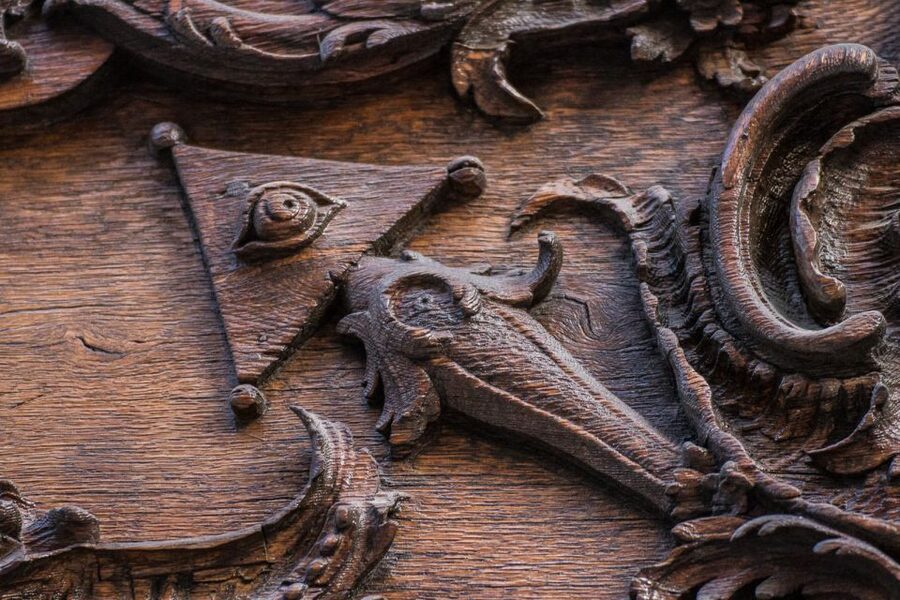
The Old Academy is one of the first important stops. Here, your guide points out details that passersby usually ignore and explains how symbols can carry several meanings at once.
The value of this part is not just spotting a carving or emblem. You learn how to read a building as a political document. A symbol may reflect a religious order, a ruler’s ambition, a society’s ideals, or a later interpretation placed on an older design.
The tour also introduces the Bavarian Elector who acted against the Illuminati and Freemasons. This gives the story a useful political center. Instead of treating the Illuminati as a shadowy force floating above history, the guide explains how authorities responded to the perceived threat and tried to stop its influence.
You will hear the question that drives much of the tour: were these groups mainly radical Enlightenment thinkers, or were they trying to control political and social life? The guide does not simply hand you a yes-or-no answer. The appeal lies in hearing how secrecy, reform, fear, and power became tangled together.
St. Michael’s Church and the Masonic story
St. Michael’s Church brings the conversation toward religion, authority, and the visual language of power. The church is one of the city’s key places for this subject, and the guide uses it to show how symbols can be read in the context of both faith and politics.
The tour then reaches back to the medieval roots of Freemasonry. You learn about the dombau huts, the medieval cathedral-building lodges whose working traditions helped inspire later Masonic ideas.
This is one of the most useful parts of the experience because it gives Freemasonry a longer background than the familiar modern image of secret handshakes and closed meetings. The story begins with skilled builders and organized lodge traditions, then follows the way those ideas were remembered and reshaped over time.
The connection to Munich and Bavaria remains important. The guide explains the role Masons played in the founding of the Kingdom of Bavaria, giving you a reason to care about the subject beyond the mystery. The point is not only who belonged to a society, but how those networks may have affected the formation of a state.
Frauenkirche and symbols most people miss
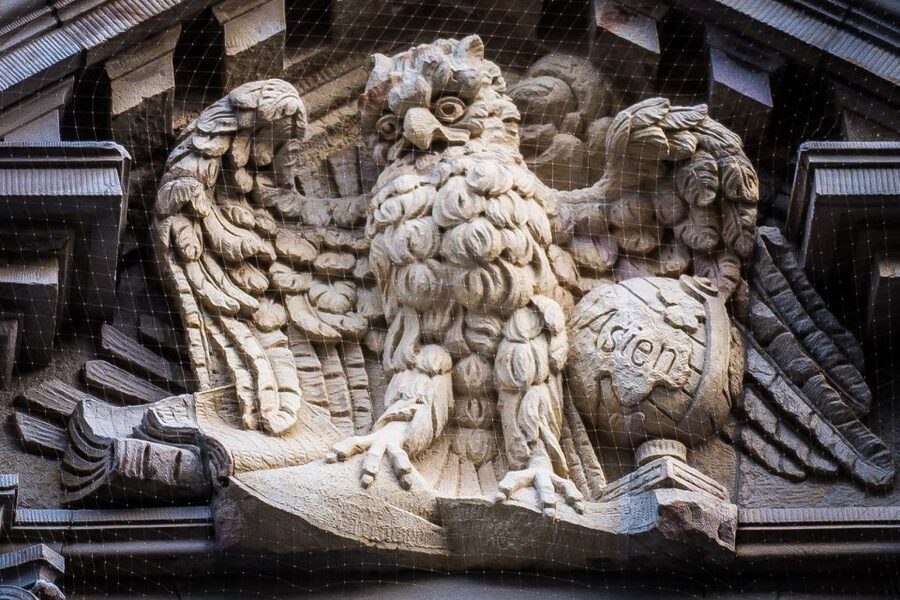
At Frauenkirche, the tour continues its search for symbols in one of Munich’s most recognizable settings. You may have seen the church before, but this visit changes your task. Rather than simply admire the exterior or pass through the square, you are asked to notice signs connected with the orders discussed along the way.
The guide’s role is especially important here. You are not expected to arrive with a background in Masonic signs, Illuminati history, or medieval guilds. The explanations help separate an intentional emblem from a detail that only looks mysterious after the fact.
The Order of the Golden Fleece also enters the story. Its insignia appears in several places around Munich, and the tour explains why that symbol matters. This adds a royal and dynastic thread to the walk, broadening the subject beyond the Illuminati and Freemasons.
That wider scope is both a strength and a possible weakness. I like the range because Munich’s secret-society story is not limited to one organization. But if you want a tightly focused tour only about the Illuminati, some sections may feel like side paths.
Same city, a completely different kind of day:
- Munich Hop-On Hop-Off Tour: 1-Day or 2-Day Ticket
★ 4.3 · 4,161 reviews - From Munich: Dachau Memorial Site Day Tour
★ 4.8 · 2,723 reviews - From Munich: Dachau Memorial Site Half-Day Trip
★ 4.7 · 2,526 reviews - Munich: Old Town & Viktualienmarkt City Walk in German
★ 4.7 · 2,304 reviews
Promenadeplatz and the final questions
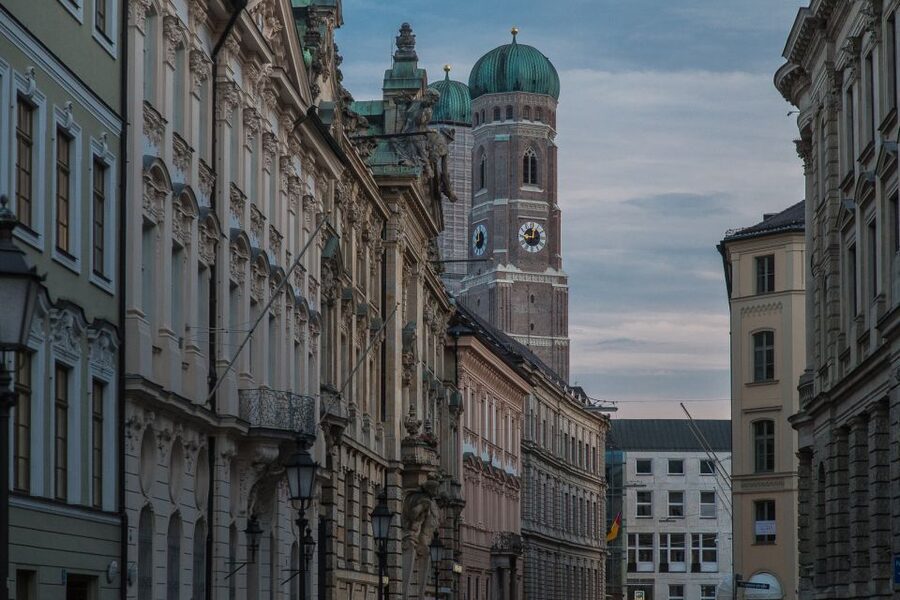
The walk ends at Promenadeplatz, after moving through several of the Munich locations most closely tied to the subject. By this point, the tour has introduced medieval building lodges, Enlightenment-era societies, Bavarian rulers, royal orders, and the symbols that connect them.
The ending is more about questions than a neat solution. Are these groups still influential today? Did they truly shape political events, or did later generations give them more power in the imagination than they ever held in life? You can ask your guide directly, and the format allows room for questions and comments.
This flexibility is worth noting. A recent tour with Albert was praised for the way he handled questions and kept the subject interesting from start to finish. The strongest guides for this kind of experience do not just recite names and dates. They explain why the symbols matter and respond when you want to follow one thread further.
One caution: the route can feel more general than specifically Munich-focused at times. If your main goal is a traditional city walk, this will not replace a tour of Munich’s major sights. You are getting a specialized history walk, with Munich serving as the setting and evidence.
How much does $29 buy you?
At $29 per person, this is a fair price for a two-hour guided walk in central Munich. You are paying for a focused subject, live interpretation, and a route that links several notable buildings rather than simply providing a lecture in one place.
The value depends on your interest. If you enjoy political history, symbols, religious buildings, and stories that sit between documented fact and popular legend, the price is sensible. You also receive a small gift, though the details of that gift are not specified.
The value is weaker if you want a broad introduction to Munich. A standard old-town tour would likely cover more general landmarks and city history. This experience asks you to care about secret organizations, hidden influence, and the way symbols are used in public spaces.
The two-hour length is a good fit for most schedules. It is long enough to develop the subject without making the theme feel endless. You can also reserve now and pay later, and cancellation is free up to 24 hours before the start time. Those terms make it easier to fit the walk into a changing Munich itinerary.
Who will enjoy this Munich walk?
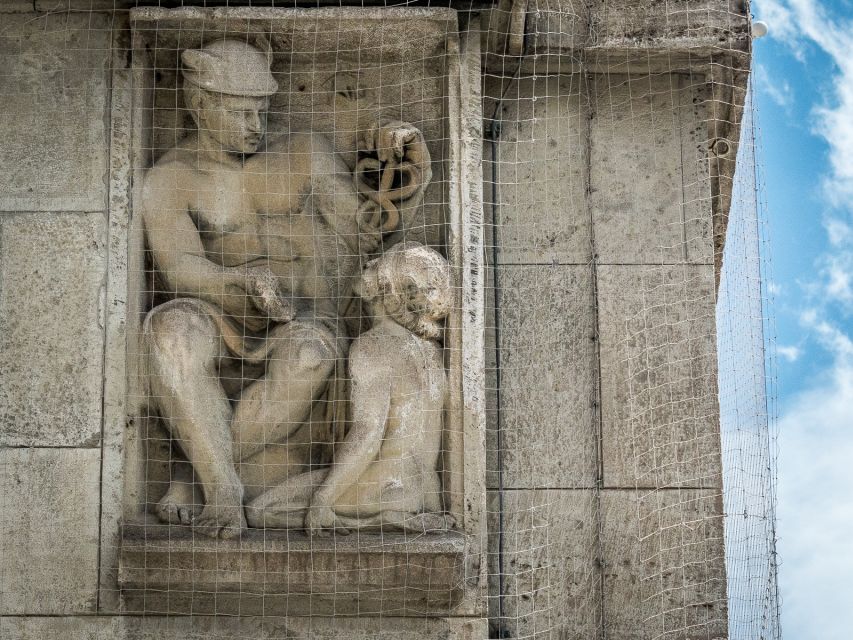
I would choose this tour for you if you already know the main sights and want a different way to see the center. It also suits anyone interested in the Enlightenment, royal power, church symbolism, medieval building traditions, or the real history behind famous secret-society stories.
It is a good match for:
- Visitors who enjoy looking closely at buildings and emblems
- History fans who prefer a narrow subject over a general city tour
- People curious about the Illuminati and Freemasonry without wanting a purely sensational story
- German speakers who like asking questions during a live walk
- Return visitors to Munich who have already seen the main sights
I would think twice if you do not understand German. The regular tour is German-language, and English is available only for a private booking. The tour is wheelchair accessible, which makes it a practical option for many visitors, though the experience remains a walking route through the city center.
You should also know that the theme can be broad. The tour covers several societies and historical periods, from medieval cathedral builders to the Illuminati and the Golden Fleece. That variety keeps it lively, but it means no single group receives every minute of the two hours.
How to get the most from the experience
Arrive at Karlstor with the subject in mind, but do not worry about preparing a long list of names. The guide supplies the background and points out the details you would probably miss on your own.
Listen for the difference between a group’s stated aims, the fears surrounding it, and the later legends attached to it. That is where the tour is most useful. You are not only collecting secret-society trivia. You are seeing how governments, churches, rulers, and ordinary city spaces can become part of a story about hidden influence.
Keep room for questions. The tour works best when you ask about a symbol or challenge an explanation that seems too neat. Albert, one of the guides associated with the experience, has been especially good at responding to participant comments and follow-up questions.
Since the tour is in German, make sure you are comfortable following a detailed spoken explanation in that language. The subject includes historical terms and several organizations with similar-sounding names. If your German is limited, a private English tour is the stated alternative.
Should you book the Illuminati and Secret Societies tour?
Book it if you want a focused, thoughtful walk through Munich’s symbols, political history, and secret-society traditions. At $29, the two-hour format offers good value when you treat it as a specialist experience rather than a standard city tour.
Skip it if you want broad sightseeing, a tour in English, or a simple explanation of one conspiracy theory. The subject ranges from Knights Templar and medieval building lodges to the Illuminati, the Golden Fleece, and the Guglmen. That is a lot to cover.
For German-speaking visitors with an interest in how power and symbolism shape a city, this is an unusual way to spend two hours in Munich. Go ready to look up, look closer, and ask questions.
FAQ
Where does the tour begin?
The meeting point is directly under the archway of Karlstor, at Neuhauser Str. 47, 80331 Munich.
How long does the tour last?
The tour lasts two hours.
What language is the tour in?
The live tour is conducted in German. English is available only for a private tour.
How much does the tour cost?
The listed price is $29 per person.
Is the tour wheelchair accessible?
Yes, the activity is wheelchair accessible.
Which Munich sights are included on the route?
The route includes the Old Academy, St. Michael’s Church, Frauenkirche, and Promenadeplatz, beginning at Karlstor.
Which secret societies are discussed?
The tour covers the Illuminati, Freemasons, Knights Templar, the Order of the Golden Fleece, and the Guglmen, among other groups.
Is a guide included?
Yes, the experience includes a live German-speaking guide.
Is anything included besides the guided tour?
A small gift is included.
Just added in Munich
- Private transfer: Vilshofen to Munich with 2h sightseeing stop★ 5.0 · 6 reviews
- Pub crawl incl. Oktoberfest museum guided tour with beer tasting (private)★ 5.0 · 5 reviews
- South Tyrolean specialties and wine tasting★ 5.0 · 5 reviews
- Size Matters Beer Tour Munich★ 4.6 · 105 reviews
- Short & sweet: Tasting the Viktualienmarkt★ 4.8 · 37 reviews
- Secret Food Tours Munich★ 4.8 · 5 reviews
- Munich: Romantic Wine Experience for Two at Viktualienmarkt★ 4.2 · 14 reviews
- Munich: Resistance against Hitler – Historical Walking Tour★ 5.0 · 5 reviews
Munich Tours, compared.
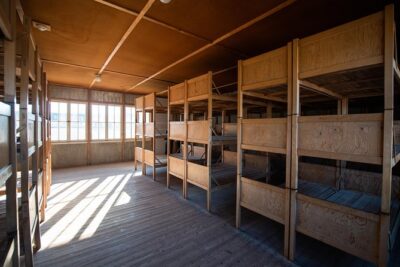
Dachau Concentration Camp Memorial Site Tour from Munich by Train
Read our review →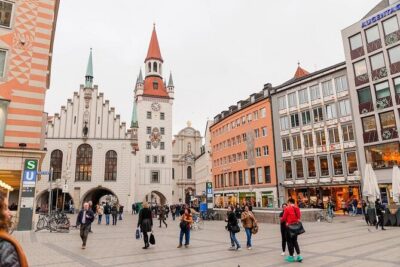
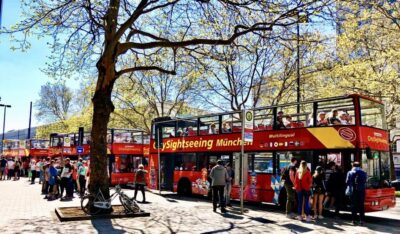
Munich Hop-On Hop-Off Tour: 1-Day or 2-Day Ticket
Read our review →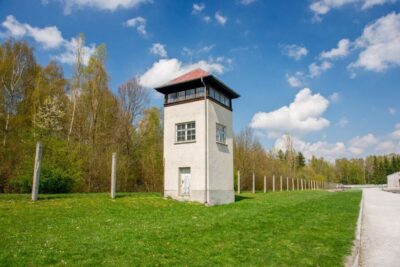
From Munich: Dachau Memorial Site Half-Day Trip
Read our review →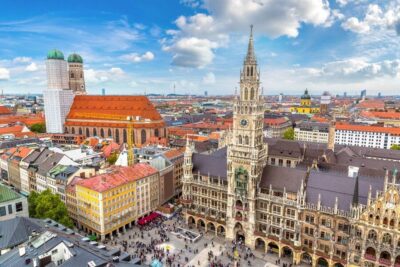
Old Town & Viktualienmarkt City Walk in German
Read our review →
City Bus Tour & FC Bayern Munich Allianz Arena Tour
Read our review →Browse the lists this tour appears in