
Reviewed · WALKING TOURS
Mannheim, guided walking tour: Industrial culture at the commercial port
Mannheim’s commercial port is not a postcard backdrop. It is a working place, with container ships, loading stations, warehouses, canals, and bridges still tied to the city’s daily life. This two-hour walk connects that modern trade with the people who built their lives around the docks.
I like the route’s clear sense of place, from Teufelsbrücke, Mannheim’s oldest preserved bridge, into the port and on to Jungbusch. I also like the human angle: you learn about port workers, sack carriers, housing, and the city’s changing neighborhoods, not just dates and buildings. The main drawback is that the tour is in German and runs in all weather, with no wheelchair access.
Key points to know before you book
- Teufelsbrücke begins the story: Start at Mannheim’s oldest preserved bridge, a surviving link to the city’s early industrial age.
- The port is still a working place: Expect container ships, loading areas, warehouses, waterways, and commercial activity rather than a polished sightseeing zone.
- Bridges are part of the attraction: The route crosses and studies several examples of Mannheim’s bridge and industrial architecture.
- Jungbusch adds a strong neighborhood contrast: Former port workers’ homes and sack carriers’ quarters are now associated with art, nightlife, and multicultural city life.
- The tour is conducted in German: Some material is presented in its original language, so language ability matters.
- Plan for outdoor walking: Bring comfortable shoes and weather-appropriate clothing. Pets are not allowed, and the route is not suitable for wheelchair users.
Teufelsbrücke, where Mannheim’s industrial story begins
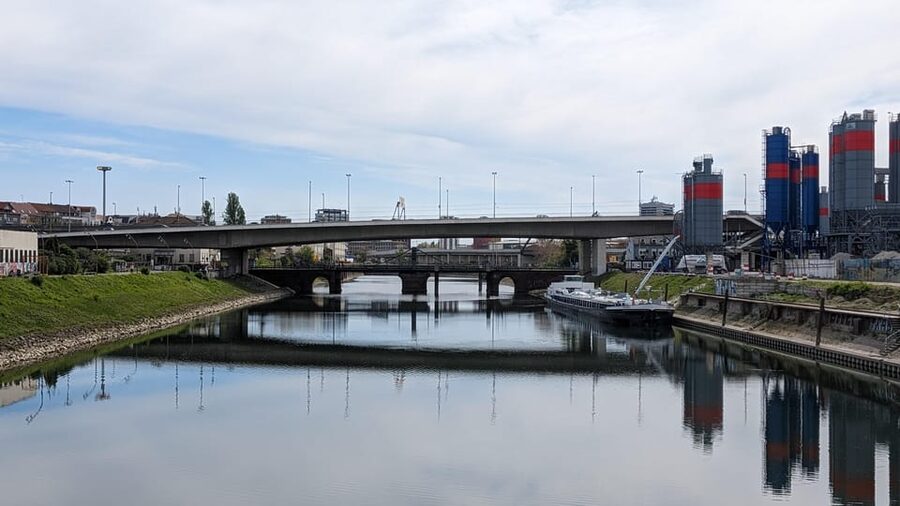
The meeting point is the Teufelsbrücke, or Devil’s Bridge. It is described as the oldest preserved bridge in Mannheim, making it a useful starting point for a walk about industry and transport. Rather than beginning with a broad city overview, the tour places you beside a physical remnant from the early industrial age.
That choice gives the walk a firm anchor. You can look at the bridge and consider how crossings, canals, and river access helped Mannheim grow. The city’s position where the Neckar meets the Rhine has made shipping important for centuries, and the route uses that geography as its main subject.
You should arrive ready to walk rather than linger in one place. The tour lasts two hours, so the guide needs to keep moving while explaining the structures and stories along the way. The bridge is an especially good first stop for anyone interested in how infrastructure changes a city.
More Walking Tours in Swabia
- Ulm: City Center Walking Tour with Minster Visit
★ 4.7 · 831 reviews - Karlsruhe: Guided City History & Culture Walking Tour
★ 4.5 · 79 reviews - Ulm: Scavenger Hunt Self-Guided Walking Tour
★ 4.6 · 71 reviews
Following the canals into a working port
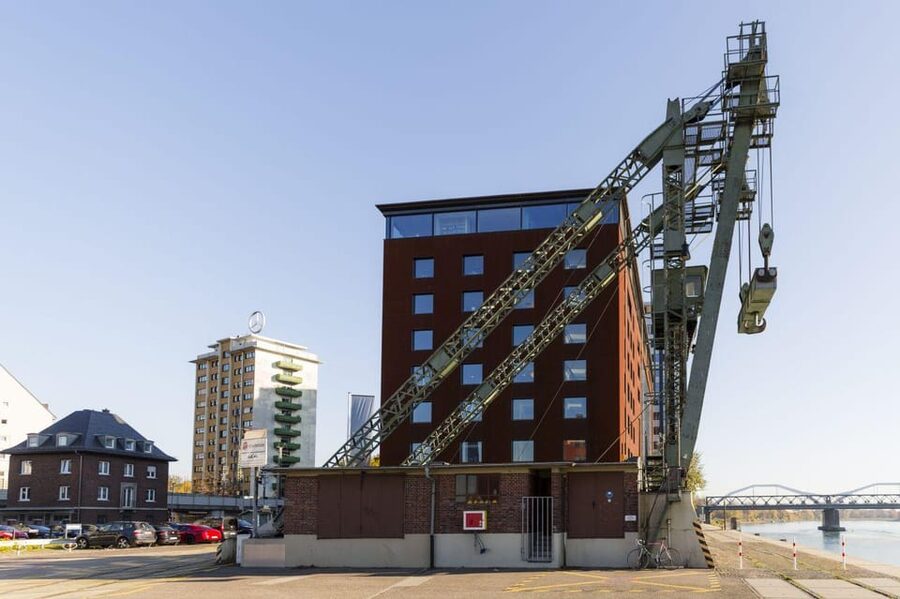
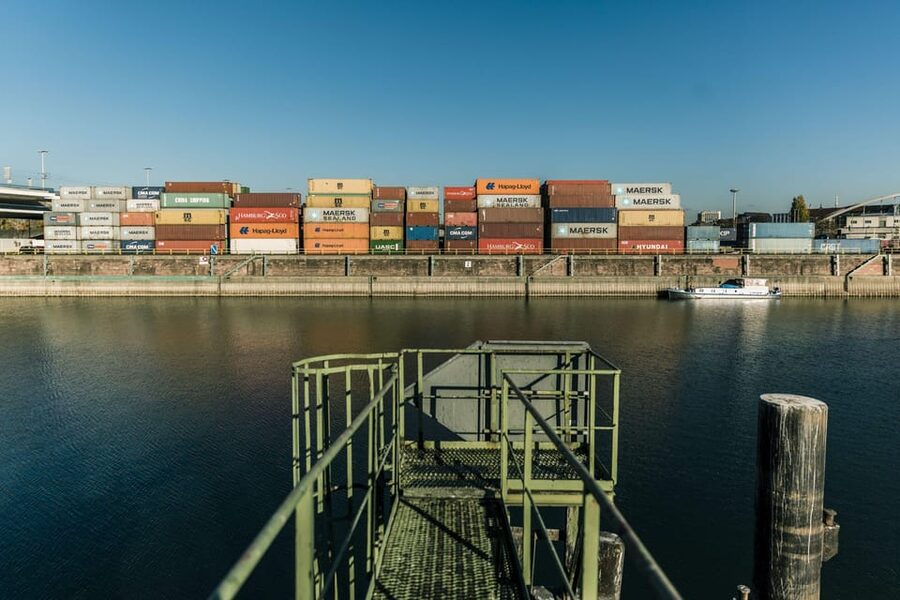
From Teufelsbrücke, the walk heads through the port area. This is not an old harbor preserved only for display. It is one of Europe’s most important inland ports, and the tour helps you read its current activity as part of Mannheim’s identity.
You can expect views of large container ships, loading stations, warehouses, and connecting waterways. The port gives Mannheim a broad commercial reach despite being inland. Its location on the Rhine and near the Neckar explains why trade has mattered here for so long.
I like this part of the experience because it shows infrastructure in use. You are not simply looking at an attractive old building and hearing that it once mattered. You are seeing a transport system that still supports trade, while learning how its role has changed over time.
The setting also has a certain roughness. Heavy industry, working docks, and large warehouses are useful subjects, but they may not suit someone seeking a quiet or decorative city walk. The appeal comes from scale, function, and the connection between water and commerce.
Bridges, waterways, and the shape of the city
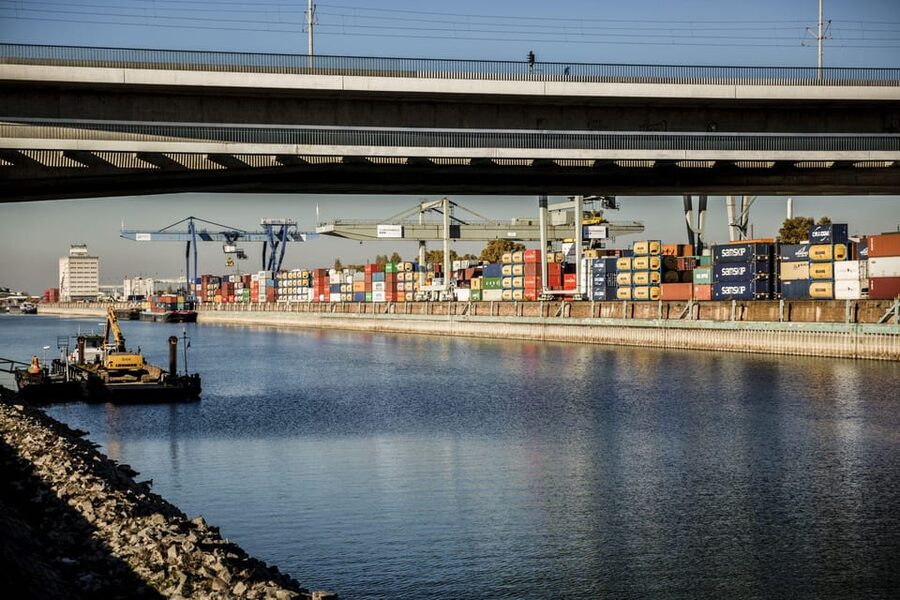
Water crossings appear again and again along the route. The guide uses them to explain Mannheim’s bridge architecture and the practical demands of moving people and goods through the port district.
This makes the tour a good fit if you enjoy noticing details that are easy to pass without thought. A bridge is not only a way to get from one side to the other. In Mannheim’s port, it also reflects the city’s industrial needs, its channels, and its links to regional and international trade.
The route’s repeated crossings should help you understand the area spatially. You are not learning about the port as an isolated fact. You are walking through the network that connects the Neckar, Rhine, canals, docks, and neighborhoods.
The tour does not promise an engineering lecture, so you should expect an accessible introduction rather than highly technical analysis. The value is in seeing several structures in context and learning why they matter to the city’s development.
The people behind the warehouses
A strong feature of this walk is its attention to working life. The guide discusses the beginnings of industrial culture and the living conditions of port workers, including the workers and sack carriers who once lived near the docks.
That human focus keeps the tour from becoming a list of shipping statistics. The port was not only a place where goods arrived and departed. It was also a workplace, a source of income, and the center of daily life for people who lived close by.
You may find this section especially useful if you want to understand Mannheim beyond its central streets. Industrial districts often explain a city’s social character as much as its grand civic buildings do. The route shows how labor, housing, transport, and trade were tied together.
The material also gives Jungbusch more meaning later in the walk. When you see the neighborhood as a former workers’ district rather than simply a nightlife area, its current identity becomes easier to understand.
Same city, a completely different kind of day:
- Sinsheim: Technik Museum Day Pass and IMAX 3D Ticket
★ 4.8 · 616 reviews - Karlsruhe: 24-Hour Hop-On Hop-Off Sightseeing Bus Ticket
★ 4.4 · 362 reviews - Heilbronn: 24h Hop-on Hop-off City Sightseeing Bus Tour
★ 4.3 · 85 reviews - Mannheim, guided Walking Tour: Discover Mannheim
★ 4.5 · 62 reviews
Jungbusch, from workers’ quarter to creative district
The final detour leads to Jungbusch, separated from the port by the connecting canal. This neighborhood once housed port workers and sack carriers. Today it is known as a bohemian art district, a multicultural part of Mannheim, and a local nightlife hotspot.
That contrast is one of the route’s best features. You begin among docks, bridges, and warehouses, then move into a district where the city’s creative and social life is more visible. The tour does not treat the port and Jungbusch as unrelated stops. It shows how the working district grew beside the trade that supported it.
Jungbusch is worth seeing even if you are not planning a night out. Its importance here is that it shows urban change in a compact area. A former workers’ neighborhood can take on a new role without losing its connection to the port.
You should keep your expectations realistic. The tour is a guided walk through the district, not a food tour, bar crawl, or evening entertainment package. Food and drinks are not included, so you can explore those options afterward on your own if the neighborhood appeals to you.
What the German-language format means for you
The live guide speaks German, and some content is presented in its original language. You will get the most from the tour if you can follow spoken German comfortably.
For German speakers, this format allows the guide to explain local history and social changes in a direct way. The tour has been described as very informative, with detailed explanations of both past activities and the port’s current role. That emphasis suits anyone who wants more than a quick orientation walk.
If your German is limited, think carefully before booking. The route itself is easy to understand visually, but much of the value comes from explanations about industry, working conditions, bridges, and neighborhood change. The tour does not list an English-language option.
No individual guide name is provided, so you should not book expecting a particular named guide. The provider is Mannheim erleben GmbH, and the experience is presented as a live guided city tour.
Is two hours enough for the port?
Two hours is a sensible length for this subject. The route covers a historic bridge, port waterways, industrial structures, worker history, and Jungbusch without turning into a full-day commitment.
You should expect a steady walking pace with stops for explanation. Since the experience is outdoors and the port is a functioning commercial area, comfortable shoes matter more than dressy clothing. Weather-appropriate layers are also important because the tour runs in all weather.
There is no transportation included to or from Teufelsbrücke. You need to arrange your own way to the meeting point and your return afterward. The tour itself is a walking experience, not a hop-on, hop-off outing.
The route is not suitable for wheelchair users. That is important to check before booking, especially because bridges, waterways, and industrial areas can involve surfaces or crossings that are not accessible. Pets are also not allowed.
What $17 gets you
At $17 per person, this tour offers good value if you want a focused introduction to a part of Mannheim that many short city visits skip. You are paying for two hours with a live guide, not for admission to a museum, a meal, or transportation.
The price makes most sense for someone interested in ports, architecture, urban change, or local working life. If you only want Mannheim’s most famous central sights, another city walk may suit you better. This experience gives its time to the commercial port and Jungbusch, so its value depends on your interest in those places.
The tour also benefits from its compact subject. You leave with a clearer idea of why Mannheim became important, how the port works, and how nearby housing developed. That is a useful return for two hours, especially at this price.
You can reserve now and pay later, which helps if your schedule is still changing. Free cancellation is available up to 24 hours before the start time. Check the exact starting time when booking, since availability controls the departure options.
A practical note about the meeting point
Take a moment to confirm the group and provider at Teufelsbrücke before the walk starts. Two groups have been scheduled at the same time in the past, including a private group, creating confusion for one person who joined the wrong one.
This is a small but useful precaution. Have your booking details ready and make sure you are with the Mannheim erleben GmbH tour rather than another group meeting nearby. The meeting point is clear, but a busy port setting and simultaneous departures can still cause mix-ups.
Who should book this walk?
I would choose this tour if you want to understand Mannheim as a trading and industrial city, not just as a collection of central landmarks. It suits German-speaking visitors who enjoy working architecture, bridges, canals, local history, and neighborhoods in transition.
It is also a good choice for repeat visitors who have already seen the central city and want a different side of Mannheim. The port and Jungbusch offer a more local, practical view of how the city works and how its districts change.
You may want to skip it if you need an English-language tour, cannot manage an outdoor walk, use a wheelchair, or prefer museums and grand historic interiors. The port is a working environment, and the tour takes place in all weather.
Should you book Mannheim’s port walk?
Book it if the idea of following Mannheim’s industrial story from Teufelsbrücke through the port to Jungbusch appeals to you. The strongest parts are the clear route, the attention to port workers and living conditions, the bridge architecture, and the contrast between working docks and a creative neighborhood.
At $17, it is a modest-cost way to see a less familiar side of the city. Just make sure German works for you, wear sturdy shoes, check the group at the bridge, and come prepared for rain or sun. If those conditions fit, this is a practical and thoughtful introduction to Mannheim’s waterways, industry, and changing urban life.
FAQ
Where does the Mannheim port walking tour meet?
The tour meets at Teufelsbrücke, also called Devil’s Bridge, the oldest preserved bridge in Mannheim.
How long does the tour last?
The walking tour lasts two hours.
What language is the tour in?
The live tour guide speaks German. Some content is shown in its original language.
Is food or transportation included?
No. The booking includes the city tour only. Food, drinks, and transportation to and from the meeting point are not included.
What should I bring?
Bring comfortable shoes and clothing suited to the weather. The tour takes place in all weather.
Is the tour suitable for wheelchair users or pets?
The tour is not suitable for wheelchair users, and pets are not allowed.
Just added in Swabia
- Guided tasting of Cider★ 5.0 · 4 reviews
- Ulm Private Walking Tour With A Professional Guide★ 5.0 · 5 reviews
- Villingen-Schwenningen Scavenger Hunt and Sights Self-Guided Tour★ 4.5 · 3 reviews
- Premium Zone Lasertag in Göppingen★ 4.5 · 6 reviews
- Sigmaringen: Hohenzollern Castle Admission & Audio Guide★ 4.9 · 15 reviews
- Segway Tour: Old Town Hall, Water Tower & Ehrenhof★ 5.0 · 21 reviews
- Segway Tour of Mannheim: Rhein, Waldpark, and Lindenhof★ 5.0 · 13 reviews
- Mannheim: Segway Tour along the Neckar River★ 5.0 · 15 reviews
Walking Tours, compared.


Berlin’s Best: 2 Hour Walking Tour Third Reich and the Cold War
Read our review →
Third Reich Berlin: Hitler and WWII Walking Tour
Read our review →Browse the lists this tour appears in