
Reviewed · CASTLE TOURS
Koblenz: Old Town Tour with the Ehrenbreitstein Fortress
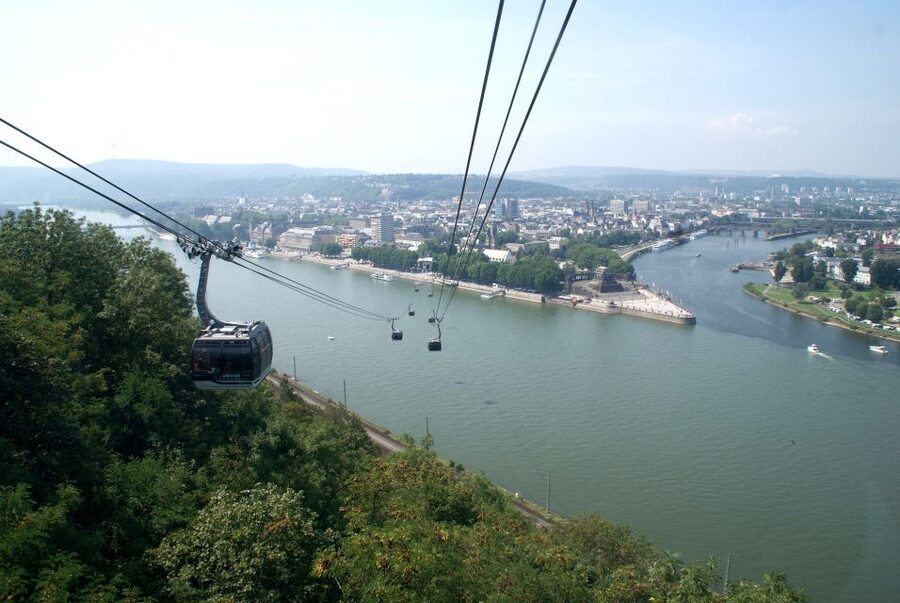
Ehrenbreitstein Fortress gives this Koblenz tour its best opening scene: the city, the Rhine, and the broad valley spread below you from a stronghold 118 meters above the river. I like the way the tour pairs that grand view with the smaller details of the old town, so you get both the big picture and the street-level story.
I also like the private format, especially for a group that wants to ask questions or move at its own pace. The guide takes you through places such as Münzplatz, the two main churches, Schängel Fountain, and Deutsches Eck rather than leaving you with a fortress visit alone.
The main consideration is the price: $430 per group of up to 20, before the fortress entrance fee. That can be good value for a full group, but expensive for only one or two people. Three hours is enough for highlights, not a slow, museum-by-museum tour.
Key points to know before booking
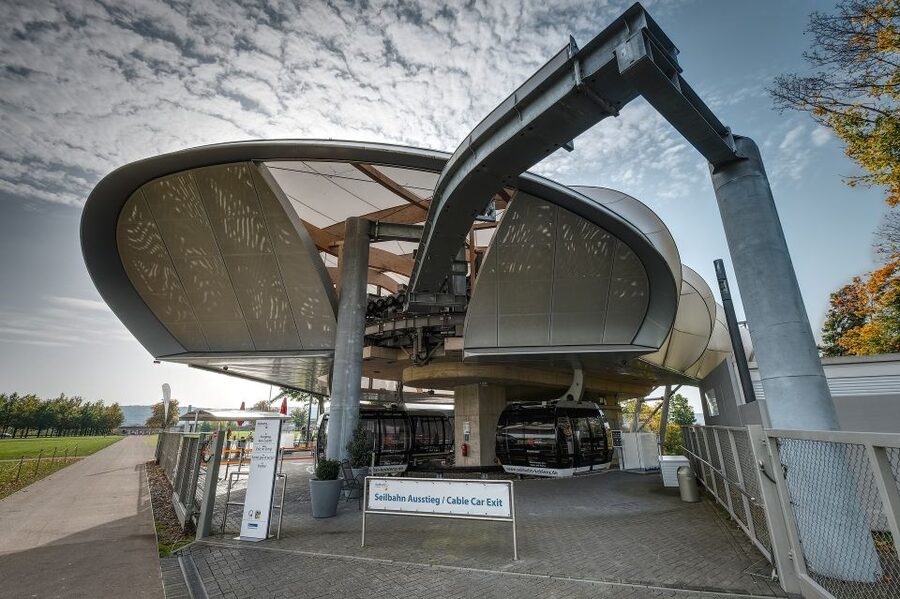
- Start above the Rhine at Ehrenbreitstein Fortress: The tour begins at the Koblenz-side cable car station, then takes you into one of Europe’s largest fortress complexes.
- Private guiding makes the history flexible: Your own guide is with your group rather than a large mixed crowd, with English, German, and Italian available.
- Münzplatz connects modern Koblenz to Roman beginnings: The square recalls the city’s Roman foundation as Castellum apud confluentes, the fort at the confluence.
- The old-town route links two important churches: You see Liebfrauenkirche with its onion domes and the older Basilica of St. Castor.
- Deutsches Eck gives the tour a strong finish: The Kaiser Wilhelm memorial marks the pointed meeting place of the Moselle and Rhine.
- The fee works best for a larger party: At $430 for as many as 20 people, the per-person cost drops sharply when shared.
Why Ehrenbreitstein is the right place to start
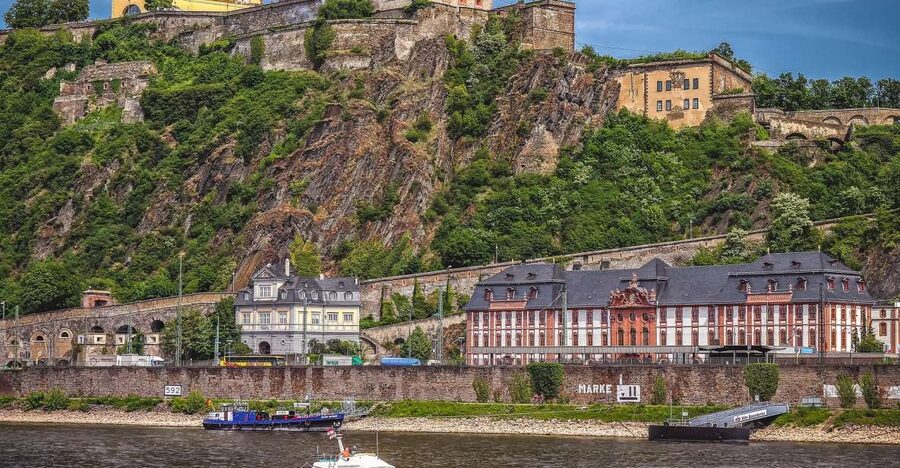
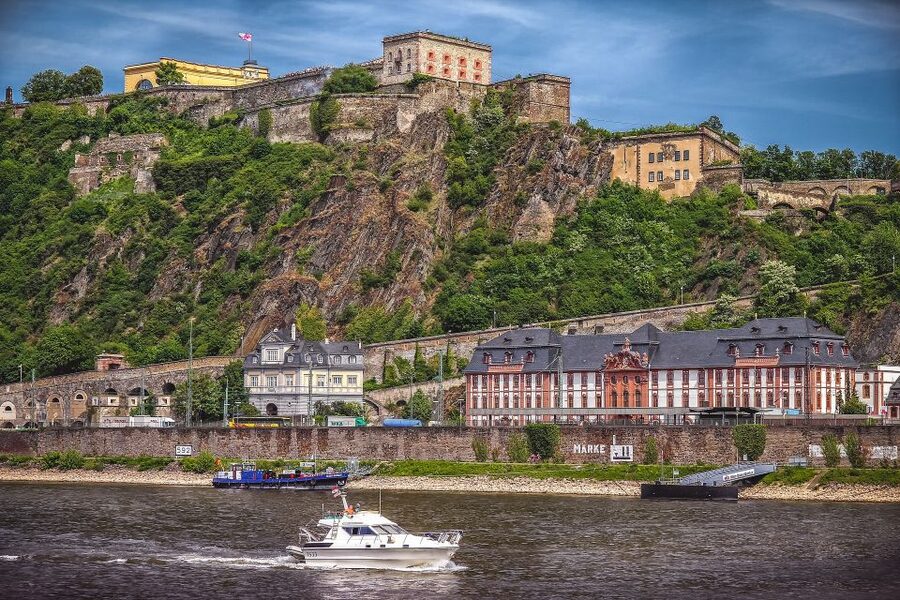
The fortress is not simply a viewpoint with a few old walls. It was built as part of a major defensive effort for the Middle Rhine between 1817 and 1828, after French troops destroyed the earlier fortifications in 1801. From its high position above the river, you can understand why this site mattered: it controlled views over the Rhine Valley and helped guard access through the region.
The setting also gives your guide useful context before you reach the old town. Down below, Koblenz sits at the meeting point of the Rhine and Moselle. From above, the city’s position makes immediate sense. You are not just ticking off a fortress and then heading into town. You are seeing the reason Koblenz grew where it did.
The fortress has a complicated past. In 1672, during a conflict involving France and Germany, the Archbishop refused requests from both sides to let troops pass along the Rhine. That detail helps explain the political pressure around the river and the importance of control over this high ground.
The site was later damaged by French forces, and the present fortress was rebuilt in the early nineteenth century. The supplied history also connects its destruction and rebuilding with Lord Byron, who wrote about the battered stronghold and the way peace had left parts of it open to the rain. You do not need to know the poem to appreciate the point: war failed to conquer the position, but peace and demolition changed its appearance.
Admission to Ehrenbreitstein Fortress is not included in the tour price. Keep that separate cost in mind when comparing this outing with other Koblenz sightseeing options. The tour information does not give the entrance fee, so check the current amount when you choose a date.
More Castle Tours in Koblenz:
- Koblenz: Rhine Valley Castles and Palaces Boat Tour
★ 4.4 · 1,824 reviews - Koblenz: Rhine Valley Castle Sightseeing Cruise
★ 4.6 · 98 reviews - From Munich: Neuschwanstein & Linderhof Castle Full-Day Trip
★ 4.5 · 12,494 reviews
The cable car meeting point and route
The official meeting point is the cable car station on the Koblenz side. The fortress is connected to the city by cable car, which makes the opening practical as well as scenic. The experience information also lists pickup at your cruise docking location or at a centrally located hotel, so you should confirm the exact pickup arrangement when booking rather than simply assuming you need to walk to the station.
Starting at the cable car station keeps the group close to the main connection between the fortress and central Koblenz. It also avoids wasting the first part of a three-hour tour on a long transfer. Since the route ends back at the meeting point, ask about the return details if your hotel or ship pickup is arranged separately.
The activity is listed as wheelchair accessible. That is useful for planning, though you should still confirm the specific route and cable car arrangements for your needs before arrival. The supplied details do not spell out which fortress sections or old-town surfaces are included in that accessibility information.
Münzplatz and Koblenz’s Roman starting point
After the fortress, the tour moves into Koblenz’s old town and reaches Münzplatz. The name comes from the electoral coin called the Münz, minted here in the eleventh century. That small fact gives the square a direct link to the city’s political and economic past.
Münzplatz also recalls the Roman foundation of Koblenz. The Romans called their fort Castellum apud confluentes, meaning the fort at the confluence. The name fits the city’s location at the meeting of the Rhine and Moselle, and it is a useful piece of background to hear before reaching the riverfront memorials later in the route.
Look for the fountain installed for Koblenz’s 2,000-year anniversary in 1992. Wili Heinzen designed it, and Sparkasse Koblenz gave it to the city and its residents. The square works well on a guided walk because the objects around you are not random decoration. The place name, the fountain, and the Roman reference all tell different parts of the same city story.
This stop should appeal to you if you like small clues more than grand speeches. Münzplatz is not presented only as an attractive square. It acts as a bridge between Roman Koblenz, medieval coin production, and the present city.
The church route between Liebfrauenkirche and St. Castor
From Münzplatz, the route follows the romantic street between two churches. This part of the tour slows the pace after the fortress and shifts attention from military power to religion, architecture, and daily city life.
Liebfrauenkirche sits on the highest point of Koblenz’s old town and is easy to recognize by its onion domes. The church was built in the seventeenth century and served as one of the city’s main parish churches during the French Revolution. It was destroyed in 1944 and rebuilt in 1955.
That rebuilding matters. What you see is not an untouched medieval church, but a landmark that carries both older traditions and the damage of the Second World War. A guide can help you read the building as a record of change rather than treating it as a single-period monument.
The Basilica of St. Castor is the older church on this route. The Archbishop of Trier built it between 817 and 836 with support from Emperor Louis the Pious. It began as a Carolingian proprietary church and is described as the oldest church in Koblenz.
The contrast between these churches gives the walking portion of the tour its shape. Liebfrauenkirche brings later architecture, wartime destruction, and reconstruction. St. Castor reaches back to the Carolingian period. In a short visit, that range is valuable because you do not need to choose between religious landmarks and the broader history of the town.
You should not expect extended interior time at every church. The activity is designed as a three-hour highlights tour, and the information does not promise special access or a detailed interior visit. Think of the churches as important stops along a connected old-town route.
More Old Town Tours in Koblenz:
- Koblenz: Old Town Sightseeing Cruise along the Rhine
★ 4.5 · 305 reviews - Dresden: Semperoper and Old Town Tour
★ 4.8 · 5,735 reviews - Nuremberg: Old Town Guided Walking Tour
★ 4.6 · 2,416 reviews - Munich: Old Town & Viktualienmarkt City Walk in German
★ 4.7 · 2,304 reviews
Schängel Fountain and Koblenz’s local character
The tour also visits the Schängel Fountain near the city hall. This is one of the stops that keeps the day from becoming a parade of official monuments. The fountain points to Koblenz’s local identity and its long connection with France.
The word Schängel comes from Koblenz’s 20-year period under French allegiance, from 1794 to 1813. Carl Burger designed the fountain in 1940, and it was dedicated to the poet Josef Cornelius. The monument is treated as a symbol of the city.
That local angle is one of the strongest reasons to choose a private guide. A standard sightseeing route can explain when a building was built. A guide can also tell you why a city has adopted a particular word, character, or fountain as its own symbol. The activity description specifically emphasizes quirky attractions as well as places of historical importance, so this is the sort of stop that adds personality to the walk.
The guide’s role is especially important here because a fountain can be easy to pass without context. You may find the stop brief, but its value comes from the story attached to it, not from spending a long time in front of the sculpture.
Deutsches Eck and the Kaiser Wilhelm memorial
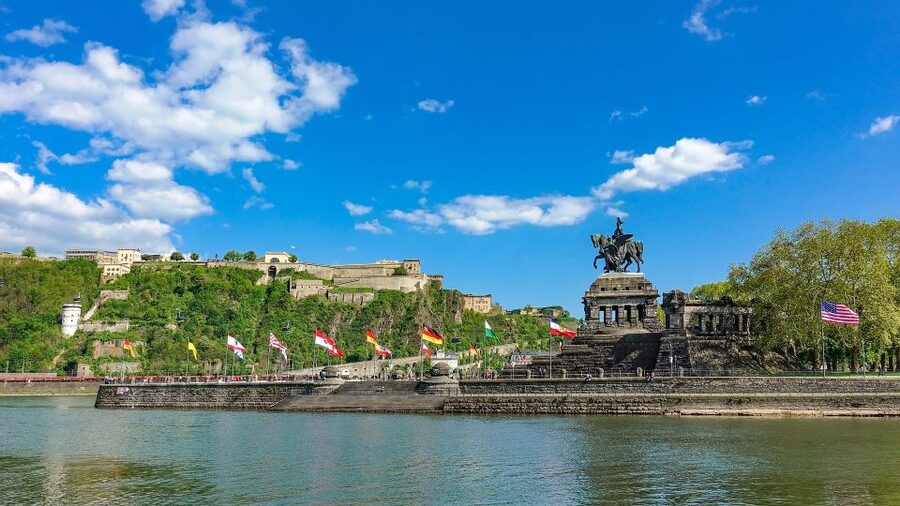
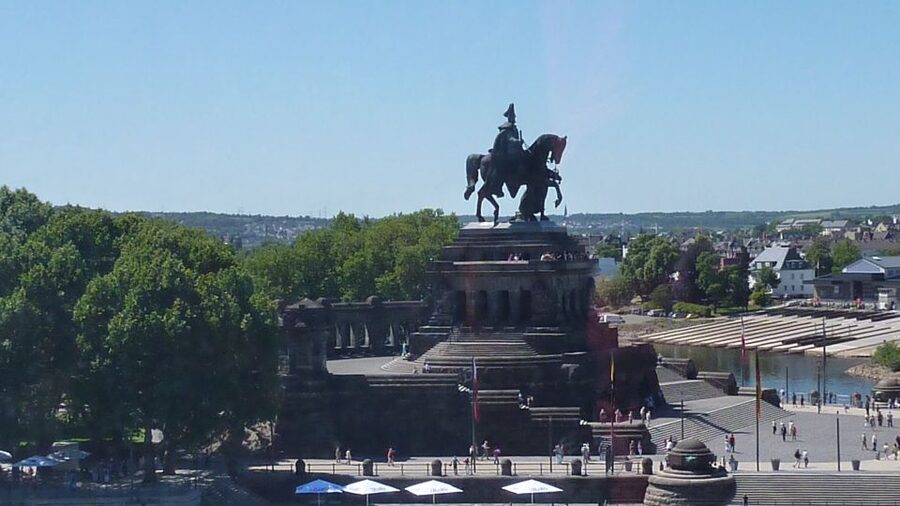
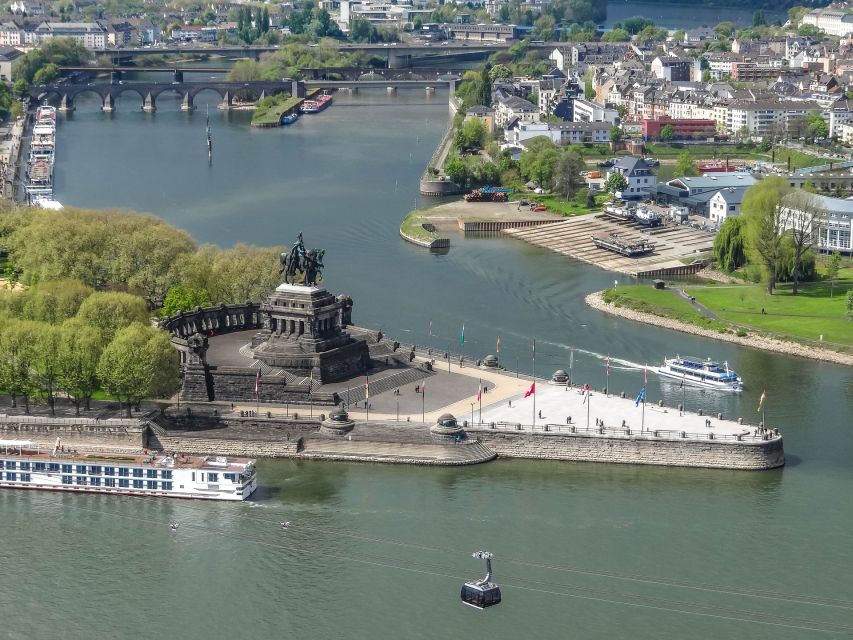
The final major sight is Deutsches Eck, the pointed headland in Koblenz where the Moselle meets the Rhine. The name means German Corner, and the location gives you another clear reminder of why the city has mattered for so long.
The Kaiser Wilhelm memorial was erected in 1897 for Kaiser Wilhelm I, the first German Emperor. It gives the end of the tour a grand, national scale after the more intimate old-town stops. The fortress looked outward over the river routes. Deutsches Eck brings you down to the meeting point itself.
This is also a good place to connect the Roman name of Koblenz with the modern city. The Romans recognized the strategic value of the confluence. Centuries later, the headland became a setting for an imperial memorial. One short route takes you from a Roman fort, through churches and civic monuments, to a national symbol beside two major rivers.
The activity ends back at the meeting point. Since the supplied details say the tour finishes at the starting location, plan any onward sightseeing, meal, or ship departure with that return in mind. The experience does not promise a separate river cruise or time inside every nearby attraction.
What three hours really gives you
Three hours is a sensible length for a first look at Koblenz. You have enough time to see the fortress, travel into the old town, hear the key stories, and reach Deutsches Eck without turning the day into a long historical lecture.
You will need to accept a brisk rhythm. The route covers a fortress, a cable car connection, several old-town landmarks, two churches, a fountain, and the river confluence. If you want to study the fortress exhibits in detail, sit quietly inside both churches, or linger at every square, you will need extra time outside the tour.
The private format helps. A guide can spend more time on the parts that interest your group and less time on subjects that do not. The experience has English, German, and Italian language options, which makes it useful for mixed-language groups who want one dedicated guide.
One especially positive detail is the guide’s attention to both major historical sites and quirky attractions. That balance gives the tour more texture than a route made only of famous names. You get military history at Ehrenbreitstein, Roman beginnings at Münzplatz, church history, local identity at Schängel Fountain, and national symbolism at Deutsches Eck.
Is $430 good value for your group?
The price is $430 for a private group of up to 20 people, with fortress admission extra. For a couple, that is a substantial outlay. For a family, cruise group, or larger party, the math looks much better.
At the full group size, the guiding cost works out to $21.50 per person before admission. With ten people, it is $43 each. With only two people, it is $215 per person. That makes group size the key value question.
You are paying for a dedicated guide, a focused three-hour route, and pickup at a cruise docking location or centrally located hotel when arranged. You are not paying for entrance to the fortress, and there is no indication that food, drinks, or any additional attraction tickets are included.
I would consider this tour good value for a larger party that wants a private introduction to Koblenz, especially if several people in the group would otherwise struggle to coordinate a route from the riverfront to the fortress. For a small party on a strict budget, a self-guided walk may cost less, but it will not provide the same focused explanation or private attention.
Free cancellation is available up to 24 hours before the tour, and you can reserve now and pay later. Those terms help if your cruise schedule or wider German itinerary is still changing.
Who should book this Koblenz tour?
I would recommend it to first-time visitors who want the main Koblenz sights in one compact outing. It fits particularly well into a cruise stop, since the route includes pickup at the docking location when centrally arranged and covers the fortress, old town, and Deutsches Eck.
It also suits families and private groups who prefer to ask questions freely. The activity is not built around a large shared party, and the guide stays exclusively with your group.
History fans will appreciate the range of periods: Roman foundations, medieval minting, Carolingian church history, French influence, nineteenth-century fortress building, and the Kaiser Wilhelm memorial. You also get a local story through Schängel Fountain, which keeps the route from feeling too formal.
I would hesitate if your main goal is an unhurried fortress museum visit. The tour gives you the fortress and its views, but the full route then continues through town. I would also compare the total cost carefully if only one or two people are booking, since the $430 group price does not shrink for a smaller party.
Should you book it?
Book this tour if you want a private, well-focused introduction to Koblenz and can share the cost with a family or group. The combination of Rhine Valley views from Ehrenbreitstein and a guided walk through the old town makes good use of three hours.
Skip it if you prefer to explore alone, plan to spend most of a day inside the fortress, or are traveling as a very small party on a tight budget. For everyone else, this is a practical way to connect Koblenz’s military, religious, Roman, French, and imperial stories without having to assemble the route yourself.
FAQ
Where does the tour begin?
The stated meeting point is the cable car station on the Koblenz side.
Where does the tour end?
The activity ends back at the meeting point.
How long does the tour last?
The tour lasts three hours.
Is the tour private?
Yes. It is offered as a private group tour, with the guide exclusively with your group.
How many people can join?
The price covers a group of up to 20 people.
What languages are available?
The live guide is available in English, German, and Italian.
Is pickup available?
Pickup is listed at your cruise docking location or at a centrally located hotel. Confirm the exact arrangement when booking.
Is the fortress entrance included?
No. Entrance fees for Ehrenbreitstein Fortress are not included in the tour price.
Can I cancel the tour?
You can cancel up to 24 hours in advance for a full refund. The activity also allows you to reserve now and pay later.
Just added in Koblenz
- Koblenz: Private pub crawl with insider guide & free shots★ 5.0 · 5 reviews
- Koblenz: The Living Vineyard, Nature & Wine Enjoyment★ 5.0 · 14 reviews
- Koblenz: City & Rhine Valley Sightseeing Cruise★ 4.7 · 39 reviews
- Koblenz: Historical Sparkling Wine Museum Guided Tour★ 4.6 · 28 reviews
- Discovery tour – cellar tour with wine tasting★ 4.2 · 26 reviews
- Koblenz: Christmas Boat Tour with Mulled Wine★ 4.3 · 35 reviews
- Winetasting / Weinprobe Koblenz★ 4.3 · 31 reviews
- Koblenz: Panoramic Cruise on Moselle River to Winningen★ 4.4 · 283 reviews
Castle Tours, compared.
From Munich: Neuschwanstein & Linderhof Castle Full-Day Trip
Read our review →
From Munich: Neuschwanstein Castle Full-Day Trip
Read our review →
Premium Neuschwanstein Castle and Linderhof VIP Tour from Munich
Read our review →
Browse the lists this tour appears in