
Reviewed · WALKING TOURS
Hamburg: Walking Tour for School Groups
Hamburg’s best lesson may be the city itself: old warehouses, a modern concert hall, grand churches, and the Reeperbahn all sit within a short guided outing. I like that you can choose three sharply different routes, and I like that the guide adjusts explanations to a school group’s age and interests. The main drawback is that the tour is German-only, and the St. Pauli route is limited to students at least 14 years old.
The 90-minute format keeps the outing manageable between school plans, while a private group of up to 25 avoids the awkwardness of mixing students with strangers. At $294 per group, the price is most sensible when you fill the group. A class of 25 pays about $11.76 per person, but a small group pays much more.
Key points for teachers planning the walk
- Three routes with different academic angles: Choose warehouse history and urban change, Hamburg’s political and religious center, or St. Pauli’s nightlife and social stories.
- Built for school groups: The guide presents information for children and adolescents instead of treating the class like a standard adult sightseeing group.
- Private format for up to 25 people: Your class stays together, and the guide can respond to the group’s age and interests.
- St. Pauli has an age limit: The Reeperbahn route is suitable only for children aged 14 and older.
- A compact 90-minute lesson outdoors: You get a focused introduction without giving up an entire day of school programming.
- Plan for German and for rain: The tour is conducted in German and runs rain or shine, so comfortable shoes and weather-ready clothing matter.
Choosing the right Hamburg route
The biggest decision is not the meeting point or the price. It is the route. Each option gives students a different Hamburg, and the choice can shape the whole lesson.
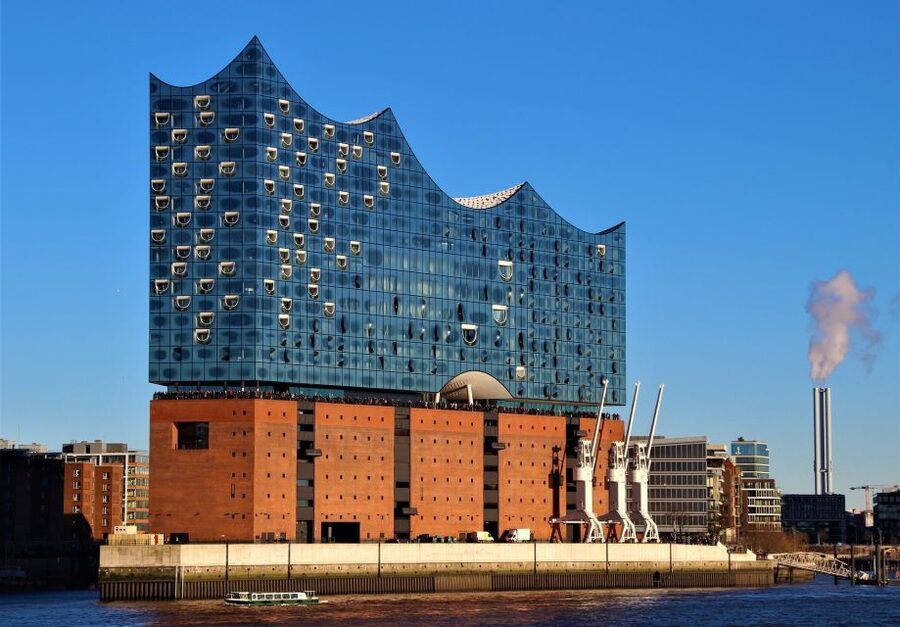
Speicherstadt and HafenCity works best if you want to show change over time. Students see the historical Speicherstadt, a huge warehouse complex and UNESCO World Heritage Site, then move into HafenCity, one of the city’s newer urban districts. The route ends at the Elbphilharmonie Plaza, Hamburg’s modern landmark.
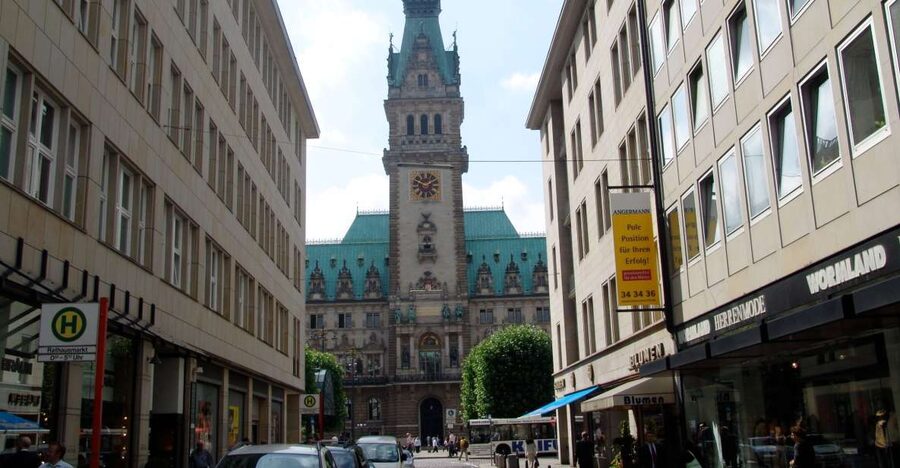
Hamburg’s Altstadt is the traditional city-center choice. It brings together the city’s history, historic Kontorhäuser, City Hall, the main churches, and the most interesting part of the port. This route gives a class a broad first look at Hamburg, with architecture and civic history doing most of the teaching.
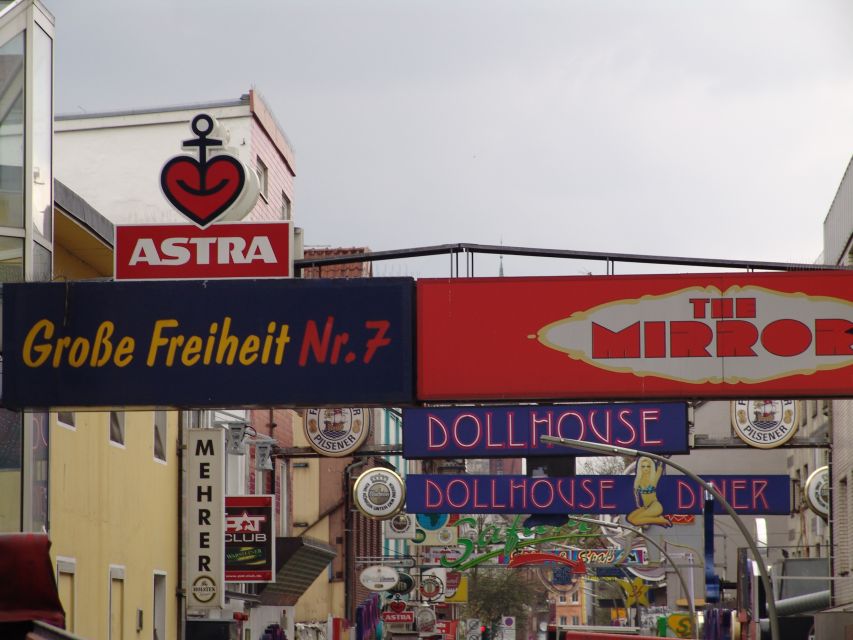
St. Pauli is the more unusual option. During the day, students visit the Reeperbahn and hear stories about the nightlife district, including social and moral questions linked to the area. It is available only for students aged 14 and older, and teachers should consider whether the subject suits their class.
I would not choose a route simply because it sounds famous. Pick the one that matches your classroom topic. Urban development points toward Speicherstadt and HafenCity. Government, religion, trade, and architecture point toward the Altstadt. Modern society, nightlife, public behavior, and changing city neighborhoods point toward St. Pauli.
More Walking Tours in Hamburg
- Hamburg: Guided Walking Tour for Magic Fans
★ 4.8 · 1,992 reviews - Reeperbahn Walking Tour with St. Pauli Local
★ 4.8 · 577 reviews - Hamburg: Speicherstadt Walking Tour with Coffee Tasting
★ 4.6 · 360 reviews
Speicherstadt and HafenCity: from storage warehouses to a new skyline
This route offers the clearest visual contrast. Speicherstadt is the historical anchor, with its large warehouse buildings and UNESCO status. It gives students a direct way to think about Hamburg as a trading city and to see how buildings once used for storage now form one of the city’s most recognizable historic areas.
The value here is not only the architecture. A guide can connect the old warehouse district to the idea of how goods, commerce, and city space shaped Hamburg. For younger students, the scale of the warehouses makes the past easier to picture than a classroom timeline.
Then the tour shifts to HafenCity. The change from historic Speicherstadt to modern development gives students a simple comparison: old and new, storage and public space, working port and redesigned city district. Since the walk is only 90 minutes, the contrast is useful. You get one strong theme rather than a long list of disconnected sights.
The final highlight is the Elbphilharmonie Plaza, Hamburg’s latest landmark in this tour’s description. It offers a modern architectural finish and gives the group a clear place to discuss how cities create new symbols while preserving older districts.
This route is a good fit for a class studying architecture, geography, trade, or urban planning. It also suits students who learn best by comparing what they see from one stop to the next. The limitation is that the route may feel less focused on Hamburg’s older civic and religious center than the Altstadt option.
Hamburg’s Altstadt: a broad first lesson in the city
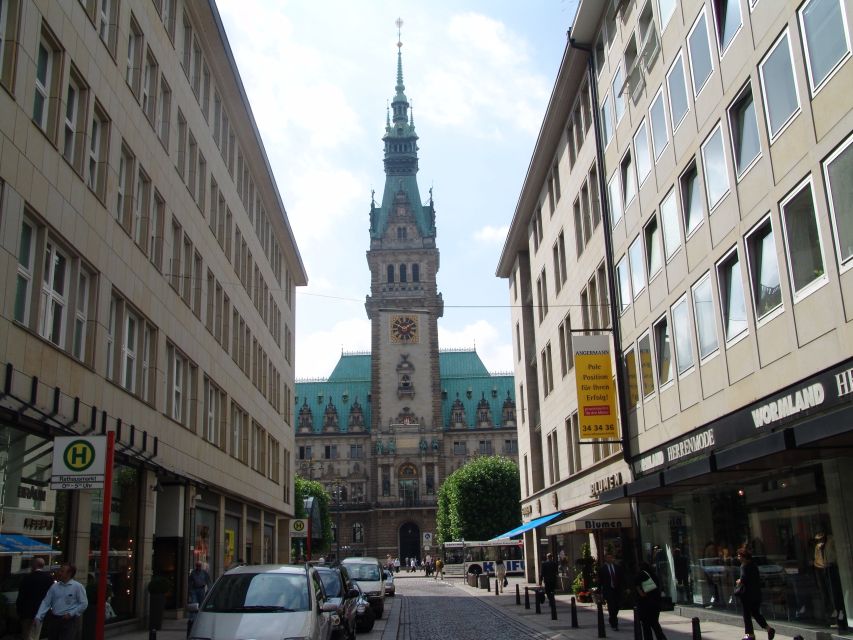
The Altstadt route packs several major themes into a short walk. You see the historic Kontorhäuser, Hamburg City Hall, the main churches, and a particularly interesting section of the port.
The Kontorhäuser are a useful stop for students because they show how business and architecture worked together in the historic city. City Hall shifts the focus toward civic life and government. The churches add another layer, helping a class consider Hamburg’s religious and architectural past without needing a separate museum visit.
The port section rounds out the route. Hamburg’s story is closely tied to its port, and this walk gives students a chance to connect the grand buildings of the center with the commercial activity that helped shape the city.
I would choose this option for a class making its first visit to Hamburg. It has the widest spread of subjects, and the main sights provide plenty of reference points for later exploration. It is also likely to suit a mixed-age school group because the route does not depend on the more sensitive subject matter associated with St. Pauli.
The tradeoff is focus. Because the Altstadt route covers history, architecture, churches, City Hall, and the port, the guide has to keep moving. If your class wants a close look at one theme, Speicherstadt and HafenCity may offer a clearer thread.
St. Pauli and the Reeperbahn during daylight
St. Pauli gives students a side of Hamburg they are unlikely to encounter on a standard historic-center walk. The route visits the Reeperbahn during the day and explains the stories and facts behind the district’s well-known nightlife.
The daytime setting matters. It allows the guide to frame the area as part of Hamburg’s social history and present-day city life, rather than treating it as a late-night entertainment stop. The experience includes moral points such as alcohol consumption, and that material may not land equally well with every class. One group found those warnings less appealing than the other parts of the tour.
That is not necessarily a flaw. It means teachers should prepare students for a route that includes social guidance as well as urban history. The tour can open a useful discussion about public behavior, nightlife, reputation, and the way a city presents a district with a complicated identity.
The route has also been praised for being lively, informative, and adjusted to students’ ages and language level. That is especially important here. St. Pauli requires a guide who can explain sensitive subjects without turning the walk into either a lecture or a joke.
Choose this route only for students aged 14 or older. It is the best match for a class studying society, city culture, or modern Hamburg, but it is not the safe default for younger pupils. If you want architecture and established historical sights, choose the Altstadt instead.
Same city, a completely different kind of day:
- Hamburg: Sex and Crime in St. Pauli Tour for Ages 18+
★ 4.7 · 15,447 reviews - Hamburg: 1.5-Hour Harbor and Speicherstadt Day Cruise
★ 4.6 · 14,200 reviews - Hamburg: 90-Minute Evening Lights Harbor Cruise
★ 4.5 · 7,728 reviews - Hamburg: 2-Hour XXL Port of Hamburg Cruise Tour
★ 4.7 · 6,979 reviews
How the guide works with a school group
The guide is the heart of this experience. The walk is not a self-guided checklist, and the advertised format is specifically designed for children and adolescents. That changes the value of the tour: you are paying for interpretation and group handling, not simply for access to streets and buildings.
The guide presents Hamburg’s history through a mix of historical information, social context, and personal stories or experiences. That blend can make a short tour feel less like memorizing dates. A class may hear how a district changed, why a place matters, and how people have experienced the city’s social conflicts.
Age adjustment is another practical strength. The St. Pauli route, in particular, has been presented in language suited to the students’ age, while the guide also responds to the group’s interests. For a teacher, this matters more than a long list of sights. A good school tour knows when to explain, when to move on, and when to answer a student’s question.
The language is German. If your class is learning German, that can add real value. If students have limited German, you should think carefully about how much they can follow, since no other tour language is provided in the activity details.
A realistic look at the 90-minute format
Ninety minutes is long enough for a proper introduction and short enough to fit into a school day. You will not see every corner of Hamburg, and you should not expect a museum-level treatment of each stop. Instead, the guide selects the key places for the route you book and gives the class a focused walk.
The short duration also helps with attention spans. One group described the outing as entertaining while still informative, which is the balance teachers usually want. A walking tour that becomes a two-hour lecture can lose students quickly. This one has a clear time limit.
Plan for walking on city streets and bring comfortable shoes. The tour takes place rain or shine, so weather can affect comfort even if it does not cancel the activity. A wet day may be manageable, but students should arrive prepared rather than dressed for a museum.
The meeting point depends on the route you choose. Check the exact starting location before the day of the walk and allow time to gather the class. Hotel pickup and drop-off are not included, so your school group must arrange its own way to and from the meeting point.
Is $294 good value for a class?
The listed price is $294 for a private group of up to 25 people. That price makes the most sense for a full class. At the maximum group size, the cost works out to roughly $11.76 per student, before any school or teacher arrangements.
For 15 students, the cost rises to about $19.60 per person. For a very small group, the fixed group price becomes harder to justify. The private format helps defend the cost because your class is not sharing the guide with unrelated participants, and the walk is designed around school-age visitors.
You are also paying for a guide who can adjust the presentation to the class. That is more useful than a low-cost general city walk if your goal is teaching rather than simply seeing landmarks. The value is strongest when you choose a route that matches a lesson plan.
There is no food or drink included, and there is no hotel transport. Those omissions are normal for a short city walk, but they matter when you budget for a school day. Plan refreshments separately if needed.
What the praise tells you, and where to be cautious
The strongest pattern is clear: the guide’s presentation works well for school groups. The most praised qualities are clear information, an age-appropriate approach, and the ability to respond to the group’s needs.
The St. Pauli route has been described as refreshing and informative, with the Reeperbahn material presented in language suited to the students. Another strong point is the attention to Hamburg’s social conflicts, both past and present. That gives the tour more substance than a quick parade of famous buildings.
The main caution is also clear. Some students may not enjoy the moral advice connected with topics such as alcohol. If you choose St. Pauli, tell students in advance that the walk includes social commentary, not only entertaining stories.
The cancellation experience has also been handled flexibly in at least one case, with an alternative arranged after a weather-related cancellation. Still, the formal rule is what matters for planning: you can cancel up to 24 hours before the start for a full refund. The tour itself runs in all weather.
Who should book this Hamburg school tour?
I would recommend it for a German-speaking school group that wants a guided introduction to Hamburg rather than a free-form stroll. It suits teachers who want a private format, a fixed 90-minute schedule, and a guide who can speak to children or adolescents at the right level.
Choose Speicherstadt and HafenCity for old and new Hamburg, the Altstadt for a broad civic and architectural overview, and St. Pauli for older students ready to discuss nightlife and social questions. The route choice matters more than the small differences in sightseeing.
I would skip it if your group needs English, if students cannot manage a rain-or-shine walk, or if the class is too small to make the group price sensible. For everyone else, the experience offers a useful mix of place, history, and real city issues without taking over the whole day.
FAQ
How long does the Hamburg school walking tour last?
The tour lasts 90 minutes.
How much does the tour cost?
The price is $294 per private group of up to 25 people.
Is this tour only for school groups?
Yes. The activity is specifically for school groups.
Which routes can I choose?
You can choose Speicherstadt and HafenCity, Hamburg’s Altstadt, or St. Pauli.
What does the Speicherstadt and HafenCity route include?
It includes the historic Speicherstadt, modern HafenCity, and the Elbphilharmonie Plaza.
What does the Altstadt route include?
The route covers Hamburg’s history, historic Kontorhäuser, City Hall, the city’s main churches, and an interesting part of the port.
Can younger children join the St. Pauli route?
No. The St. Pauli walking tour is suitable only for children aged 14 and older.
What language is the tour conducted in?
The live tour guide speaks German.
What should students bring?
Students should bring comfortable shoes. The tour takes place rain or shine, so weather-ready clothing is also sensible.
Just added in Hamburg
- Hamburg: St. Pauli Food and Bier Tour★ 4.7 · 5 reviews
- Hamburg: Private Tour Red Light District Walking Tour★ 4.7 · 227 reviews
- St. Pauli Tour: Drag-Attack with Barbie Stupid & Lee Jackson★ 4.8 · 280 reviews
- St. Michael’s, Elbe Tunnel & Harbor 2-Hour Hamburg Tour★ 4.9 · 21 reviews
- Hamburg: Safari tour in St. Pauli★ 4.9 · 11 reviews
- Satt Pauli – der kulinarische Rundgang durch St. Pauli★ 4.8 · 12 reviews
- Radtour um die Alster & durch traumhafte Alsterviertel★ 4.9 · 34 reviews
- Hamburg: Reeperbahn Comedy Club★ 4.3 · 53 reviews
Walking Tours, compared.




Berlin’s Best: 2 Hour Walking Tour Third Reich and the Cold War
Read our review →
Third Reich Berlin: Hitler and WWII Walking Tour
Read our review →Browse the lists this tour appears in