
Reviewed · WALKING TOURS
Hamburg: Guided Walking Tour
Hamburg’s story comes into focus as you walk from its grand Town Hall toward the Elbe. In two hours, you move from the inner Alster and old merchant streets to the brick warehouses of Speicherstadt and the bold curves of the Elbphilharmonie. It is a compact way to see how trade shaped the city.
I like the strong route and the contrast between old Hamburg and its new waterfront. I also like the short, useful introduction to the city’s past, especially its unusual role as a merchant town and sovereign city state. The main drawback is that the tour is in German, and two hours leaves little time for entering attractions.
Key points at a glance
- A city-to-waterfront route: Begin at the Town Hall and finish beside the Elbe in HafenCity.
- Old and new Hamburg together: See Alster arcades, historic streets, imperial port buildings, and modern architecture.
- The guide keeps the focus on history: Learn how commerce, shipping, and urban redevelopment shaped Hamburg.
- Major sights are viewed from outside: Entrance fees to attractions such as the Spice Museum, Hamburg Dungeon, and model railway are not included.
- German is the tour language: This suits German speakers best, particularly if you want to ask questions.
- A reasonable short-tour price: At $21 per person, the walk offers good value if you want orientation rather than museum visits.
From the Town Hall to Hamburg’s waterfront
The meeting point is directly in front of the main entrance to Hamburg’s Town Hall. That is a sensible place to begin. The building gives you an immediate sense of the city’s wealth and civic pride, while its central location makes it easy to reach before the walk.
Hamburg is Germany’s second-largest city, but this route does not try to cover everything. Instead, it follows a clear line through the central districts toward the port. You get a quick reading of the city’s character: water, trade, civic power, wartime loss, old warehouses, and ambitious new construction.
The guide is qualified and speaks German. This is important to consider before booking. The historical material is the heart of the tour, and you will get much more from it if you are comfortable following a spoken German presentation. The pace is intended for a walking introduction, not a slow photography stop at every building.
More Walking Tours in Hamburg
- Hamburg: Guided Walking Tour for Magic Fans
★ 4.8 · 1,992 reviews - Reeperbahn Walking Tour with St. Pauli Local
★ 4.8 · 577 reviews - Hamburg: Speicherstadt Walking Tour with Coffee Tasting
★ 4.6 · 360 reviews
Hamburg Town Hall and the city’s civic power
The Town Hall is the first major stop. Its grand exterior sets up one of the tour’s main themes: Hamburg was not simply another German city ruled from elsewhere. Its development was tied to its position as a trading center and to its long tradition as a self-governing city state.
The guide explains the building and its place in Hamburg’s story. Pay attention here, because this opening context helps the later sights make sense. The warehouses, canals, harbor facilities, and commercial streets were not random additions. They grew from Hamburg’s role in trade.
You should expect a guided look rather than a full interior visit. The activity includes the walking tour and guide, but no entrance fees. If you want to tour the Town Hall inside, you will need to arrange and pay for that separately.
Alsterarkaden and Jungfernstieg: water at the city center
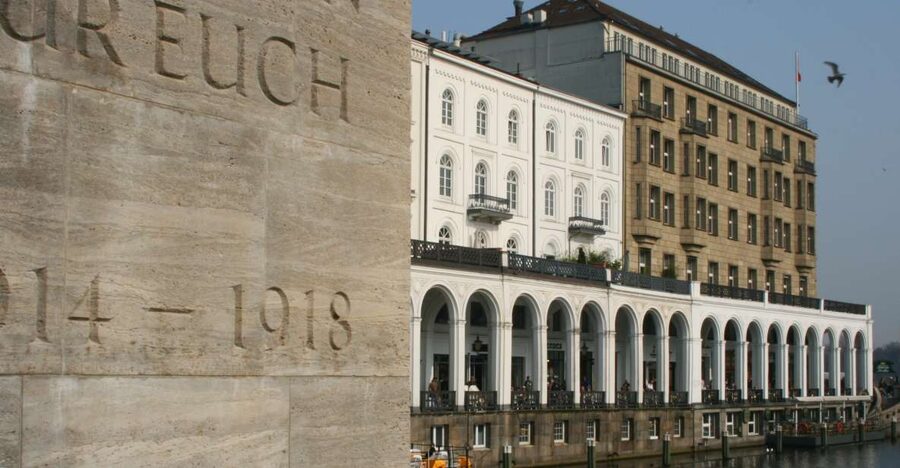
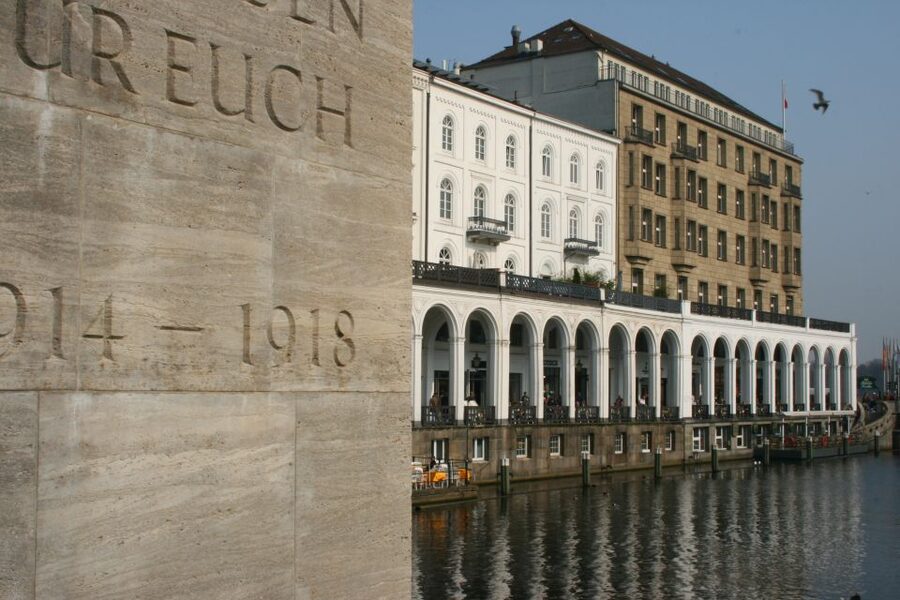
From the Town Hall, the walk continues toward the Alsterarkaden and Jungfernstieg. These stops show Hamburg from a more elegant urban angle. The arcades line the water with a polished appearance, while the inner Alster gives the city center an open view that many inland German cities do not have.
The inner Alster is not just a pretty pause. It helps explain Hamburg’s relationship with water. Canals, rivers, lakes, and the port all shape how the city feels and how its districts connect. Here, you see water used as part of everyday city life rather than as a distant industrial zone.
Jungfernstieg is another useful orientation point. It is central, easy to recognize, and close to the Town Hall. The walk gives you a chance to see how commercial streets, public spaces, and the Alster fit together before the route turns toward older port districts.
I would treat these early stops as a city overview rather than a long sightseeing session. The guide needs to keep moving to reach the waterfront in the allotted two hours.
Trostbrücke and Hamburg’s merchant past
At Trostbrücke, the route shifts toward the older commercial side of Hamburg. This is where the connection between the city center and the port becomes clearer. The bridge and surrounding streets help link civic Hamburg with the trading city that grew along the water.
The guide discusses Hamburg as a merchants’ town, a useful angle for understanding the city beyond its modern port. Commercial power shaped buildings, streets, public works, and political independence. You are not just looking at attractive architecture. You are tracing the practical reasons it exists.
This part of the walk should appeal to you if you like history tied to visible places. Instead of hearing a general account of Hamburg’s past in a museum room, you move through the streets where the city’s business life developed.
The amount of detail can depend on the guide and the pace of the group. One guide may give a smooth, tightly organized talk, while another may leave more room for questions. The format is best for people who want a clear introduction, not a specialist lecture.
Same city, a completely different kind of day:
- Hamburg: Sex and Crime in St. Pauli Tour for Ages 18+
★ 4.7 · 15,447 reviews - Hamburg: 1.5-Hour Harbor and Speicherstadt Day Cruise
★ 4.6 · 14,200 reviews - Hamburg: 90-Minute Evening Lights Harbor Cruise
★ 4.5 · 7,728 reviews - Hamburg: 2-Hour XXL Port of Hamburg Cruise Tour
★ 4.7 · 6,979 reviews
St. Nikolai Memorial and the marks of war
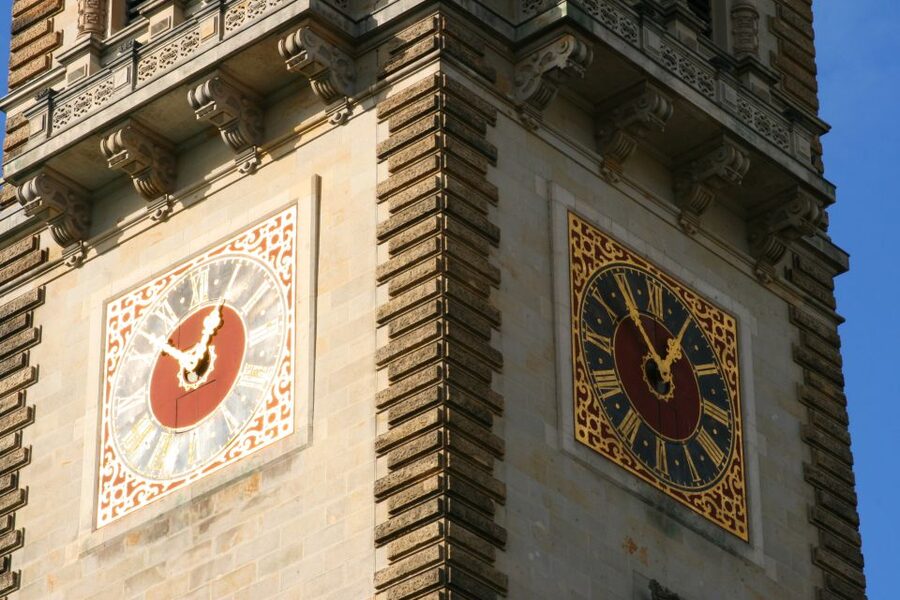
The St. Nikolai Memorial adds a more serious note. The site preserves the remains of St. Nicholas Church and serves as a memorial connected with the destruction of Hamburg during the Second World War.
This stop gives the tour historical range. Hamburg’s story is not only about merchants, ships, and impressive buildings. The city also suffered major wartime damage, and its surviving fragments help you understand the breaks between old Hamburg and the city you see today.
Expect an exterior visit and guided explanation rather than an included museum admission. The activity does not include entrance fees, so check locally if you want to enter any paid exhibition connected with the memorial.
I appreciate this stop because it prevents the tour from becoming a simple parade of attractive buildings. It adds weight to the route and makes the later rebuilding and redevelopment easier to understand.
Deichstrasse and the last old Hamburg streets
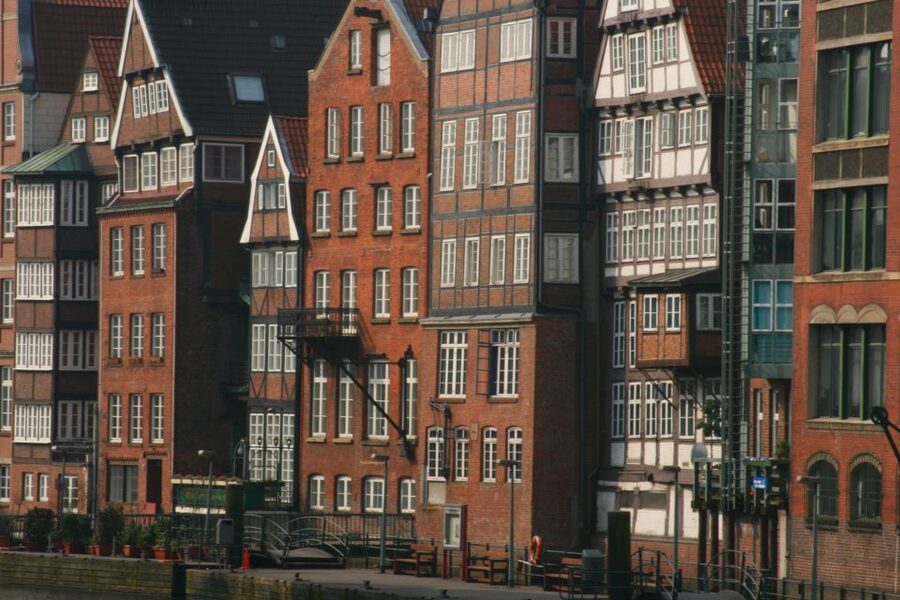
Deichstrasse offers one of the clearest looks at historic Hamburg along the route. The street is associated with older buildings near the canal and shows a more intimate side of the city than the large Town Hall or wide Alster spaces.
This is a good place to compare different kinds of architecture. Earlier commercial buildings reflect the needs of merchants and residents living close to the water. Nearby redevelopment, by contrast, uses new materials, larger public spaces, and different ideas about how the waterfront should function.
You will want to have your camera ready here, but do not expect a long free period. The tour has several stops still ahead, and the route must reach Speicherstadt and the Elbphilharmonie within two hours.
The guide’s explanations are especially useful in this section. Without context, Deichstrasse can look like a pleasant historic street. With context, it becomes part of a much larger story about fire, trade, port activity, reconstruction, and changing urban needs.
Speicherstadt: brick warehouses and port trade
Speicherstadt is one of the strongest parts of the walk. Its red-brick warehouse buildings and waterways show how Hamburg stored and moved goods before modern logistics changed the port.
The district now contains attractions including the Spice Museum, Hamburg Dungeon, and the world’s biggest model railway. Those are useful landmarks, but they are not included visits on this tour. The guide points out the area and explains its purpose, while you experience it as part of the city’s wider port district.
I like the way Speicherstadt brings trade history down to street level. You can see the scale of the old storage system in the architecture. The district is not just a backdrop for photographs. It shows how the port once worked and how former port facilities have been adapted for public use and urban life.
The brick buildings also create one of the clearest contrasts in Hamburg. You move from older streets and canals into a district that feels industrial, orderly, and purpose-built. The next stage of the walk then shifts again, toward the newer quarter of HafenCity.
HafenCity and the Elbphilharmonie
The tour finishes at Am Sandtorkai 66, near the Elbphilharmonie in HafenCity. This final stretch is about Hamburg’s present and future. Former port facilities have been turned into a growing inner-city district with new buildings, public spaces, and views across the Elbe.
HafenCity is a useful place to discuss modern development because the change is easy to see. Old industrial structures sit beside bold contemporary architecture. The district shows how Hamburg is trying to keep its waterfront active while giving it new roles beyond cargo handling.
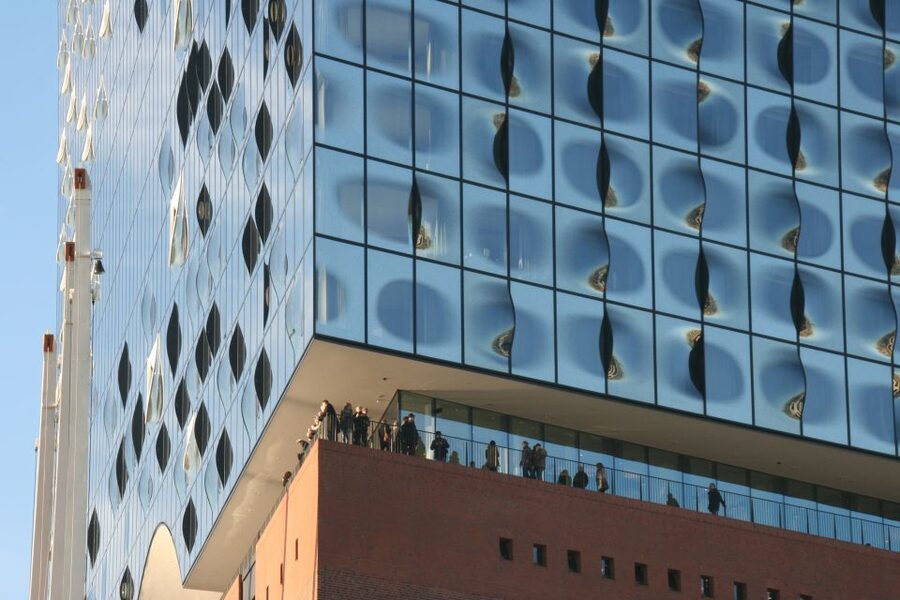
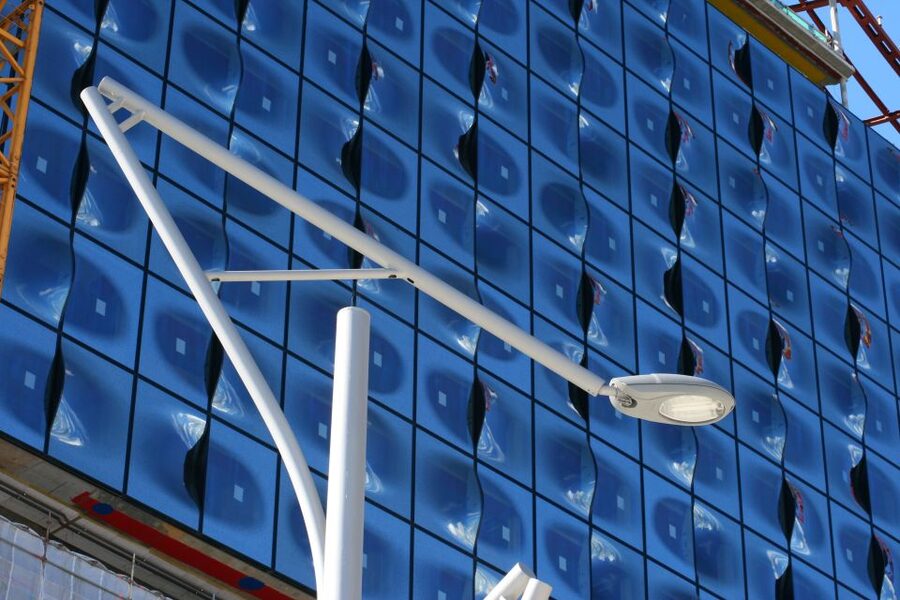
The Elbphilharmonie is the visual high point of the route. Its striking design and position above the harbor make it hard to miss. The tour gives you an explanation of the building and a chance to admire it from outside, along with harbor views.
Do not confuse this walk with a concert hall visit. Entrance fees are not included, and the tour ends nearby. If you want to enter the Elbphilharmonie or attend a performance, that requires a separate plan.
Finishing here is smart. You end with Hamburg’s most famous modern architectural statement and a clear view of the city’s working waterfront. You also finish in an area where you can continue exploring on your own.
What the two-hour format does well
Two hours is long enough to connect the main sights without demanding a full morning or afternoon. If you are in Hamburg for a short stay, the route gives you a useful first look at the center, old port districts, Speicherstadt, and HafenCity.
The tradeoff is pace. You will see many places, but you will not spend a long time inside any one of them. This works well for orientation. It works less well if you want detailed architectural study, extended photo stops, or museum visits.
I would book this early in a Hamburg visit if you want help deciding where to return later. After the walk, you can choose whether to spend more time at the Alster, revisit Speicherstadt, explore HafenCity, or arrange an attraction visit.
Wear comfortable shoes. The activity is entirely on foot, and the route covers several districts. The details provided do not specify group size or accessibility arrangements, so ask the provider directly if either point matters for you.
Guide style, language, and practical value
The guide is the main variable in this experience. The strongest version of the tour is a clear, well-paced talk that links each stop to the next. A guide may also use pictures to make historical changes easier to understand, which can be useful when discussing buildings, former port facilities, or wartime destruction.
You should also expect the chance to ask questions. The guide is described as open to questions, but the amount of discussion will depend on the group and the time available. Some people will prefer a smooth presentation. Others may want more anecdotes and a lighter touch.
That balance matters because the feedback on the experience has not been entirely uniform. The most positive response centers on clear explanations, an engaged guide, useful pictures, and a short but helpful introduction to Hamburg’s history. The main criticisms concern guides being difficult to identify in a crowd, a presentation that can feel less fluid, and a shortage of anecdotes.
A simple tip: arrive early and stand near the meeting point in front of the Town Hall entrance. Since the guide’s clothing or sign is not specified, look carefully for the group and confirm that you have found the German-language walking tour before setting off.
At $21 per person, the price is fair for a two-hour guided orientation in a major German city. You are paying for the route, the guide, and the interpretation of places that can otherwise seem disconnected. The value drops if you already know central Hamburg well or need entry to museums and landmarks, since admission is extra.
The booking terms also offer flexibility. You can cancel up to 24 hours in advance for a full refund, and you can reserve now while paying later. Those points are useful if your Hamburg schedule is still changing.
Who should book this Hamburg walk?
I would choose this tour if you want a short first look at Hamburg with a clear beginning and end. It suits visitors who enjoy history, architecture, city planning, and port stories more than visitors seeking a food tour or a museum-heavy outing.
It is also a good fit for German speakers who want to ask questions and follow a guided explanation without relying on translation. If you do not speak German, confirm that you can make full use of the tour before booking, since German is the stated language.
Families and first-time visitors may like the range of sights, but the pace can feel brisk. Independent explorers who prefer to stop whenever they wish may be better off using the route as a personal map and visiting the districts at their own speed.
Should you book it?
Book this walk if you want Hamburg’s main central sights tied together by one story: civic power at the Town Hall, water at the Alster, trade around Trostbrücke and Deichstrasse, old port storage in Speicherstadt, and new city building in HafenCity.
Skip it if you need attraction admissions, a relaxed pace, or an English-language guide. For German-speaking visitors, the $21 price is a sensible way to get your bearings and understand why Hamburg looks the way it does. Just keep your expectations clear: this is a guided city introduction, not a series of interior tours.
FAQ
Where does the Hamburg walking tour begin?
The tour begins in front of the main entrance of Hamburg Town Hall.
Where does the tour finish?
The walk finishes at Am Sandtorkai 66, 20457 Hamburg, near the Elbphilharmonie in HafenCity.
How long is the tour?
The walking tour lasts two hours.
What language is the tour conducted in?
The live guide conducts the tour in German.
Are entrance fees included?
No. Entrance fees are not included. Snacks and beverages are also not included.
Can I cancel the booking?
Yes. You can cancel up to 24 hours in advance for a full refund. You can also reserve now and pay later.
Just added in Hamburg
- Hamburg: St. Pauli Food and Bier Tour★ 4.7 · 5 reviews
- Hamburg: Private Tour Red Light District Walking Tour★ 4.7 · 227 reviews
- St. Pauli Tour: Drag-Attack with Barbie Stupid & Lee Jackson★ 4.8 · 280 reviews
- St. Michael’s, Elbe Tunnel & Harbor 2-Hour Hamburg Tour★ 4.9 · 21 reviews
- Hamburg: Safari tour in St. Pauli★ 4.9 · 11 reviews
- Satt Pauli – der kulinarische Rundgang durch St. Pauli★ 4.8 · 12 reviews
- Radtour um die Alster & durch traumhafte Alsterviertel★ 4.9 · 34 reviews
- Hamburg: Reeperbahn Comedy Club★ 4.3 · 53 reviews
Walking Tours, compared.




Berlin’s Best: 2 Hour Walking Tour Third Reich and the Cold War
Read our review →


Third Reich Berlin: Hitler and WWII Walking Tour
Read our review →Browse the lists this tour appears in