
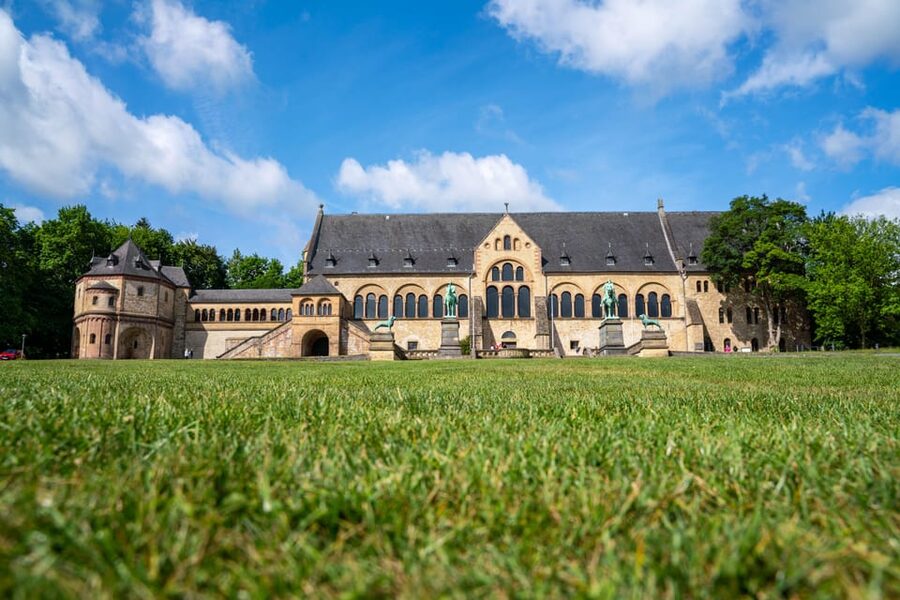
Reviewed · GERMANY
Goslar: Führung durch die Kaiserpfalz
The most striking part of Goslar’s Imperial Palace is the great hall, where paintings by art professor Hermann Wislicenus fill the walls from floor to ceiling. This is not a bare stone ruin. It is a dramatic room built to make medieval power feel large, formal, and almost theatrical.
I like the Romanesque St. Ulrich Chapel, where the grave slab of Emperor Henry III covers the place where his heart still rests. I also like the compact 90-minute format, which gives you the palace’s key rooms without swallowing your whole day. The main drawback is simple: the live tour is in German only, so you will need enough German to follow the story.
Key points about the Imperial Palace tour
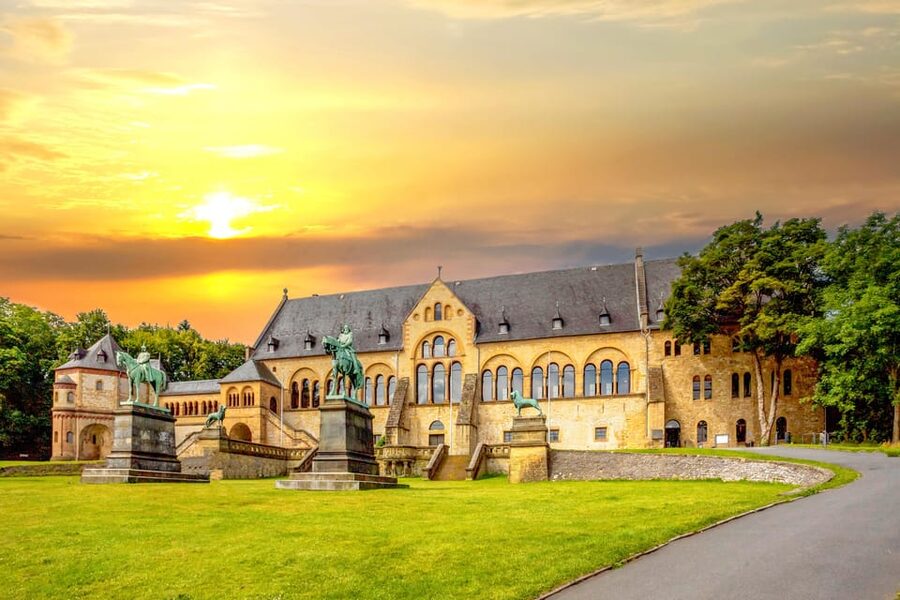
- Wall-to-wall paintings: See Hermann Wislicenus’s large historical scenes covering the great hall.
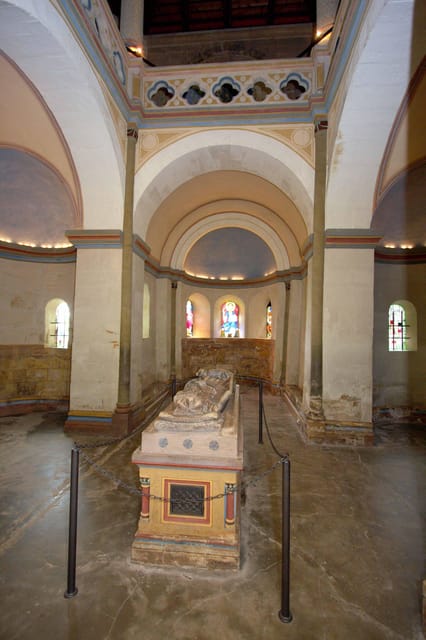
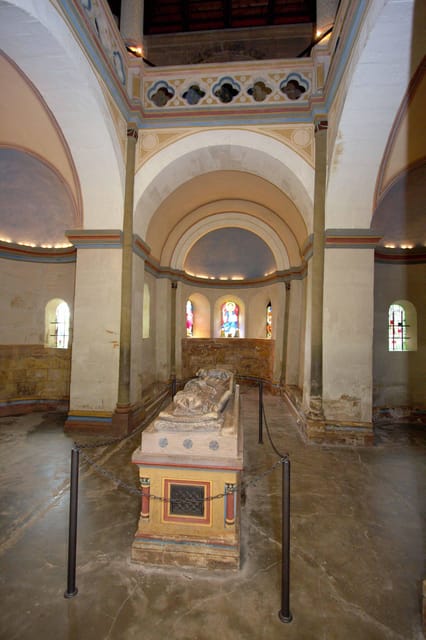
- Henry III’s heart: Visit St. Ulrich Chapel and the emperor’s high grave, beneath which his heart remains.
- UNESCO heritage: The palace forms part of the World Heritage title awarded to Goslar in 1992.
- Imperial details: Look closely at the throne’s surviving armrests and other furnishings.
- Vaulted exhibition: Explore a display in the old winter hall vaults.
- Short, focused visit: The German-language tour lasts about 1.5 hours and costs $16 per person.
Why Goslar’s Imperial Palace matters
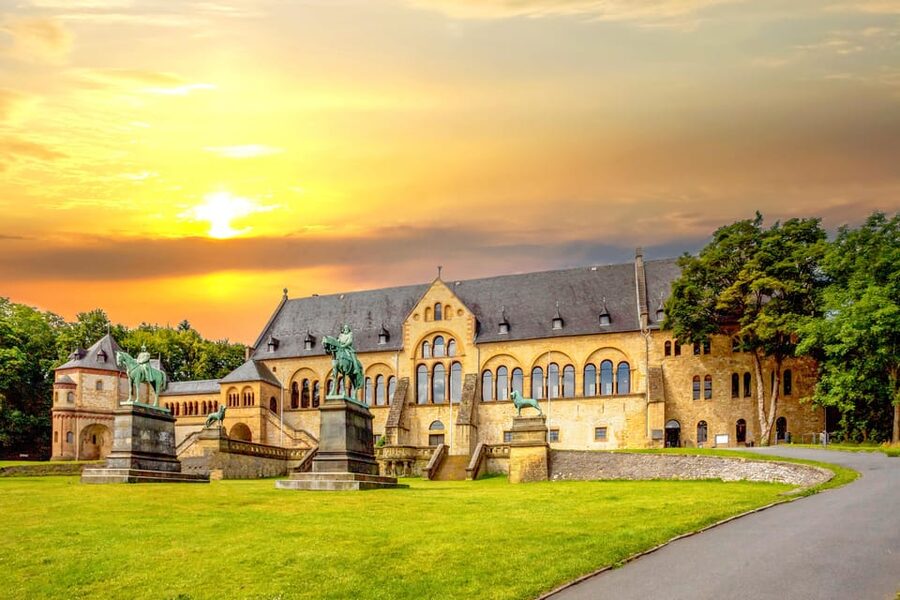
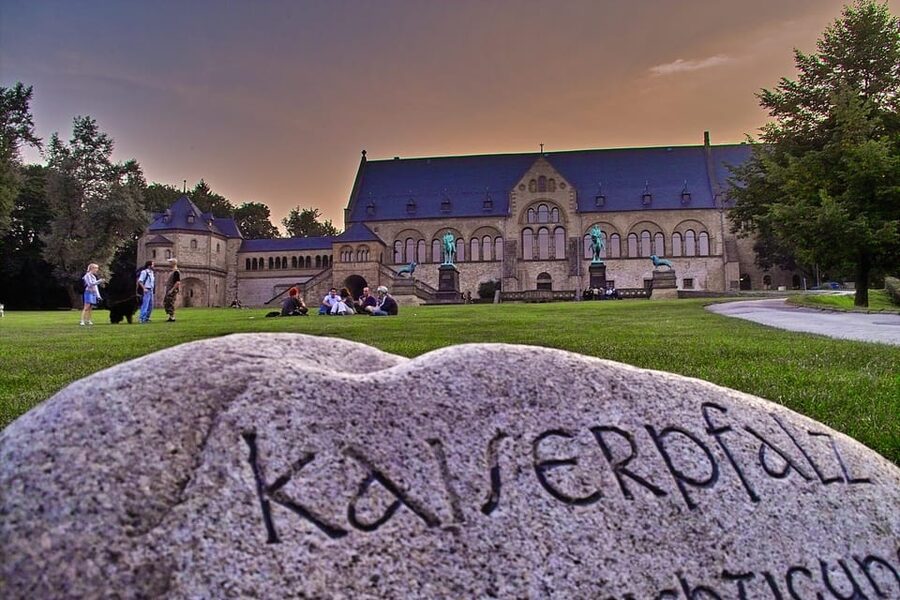
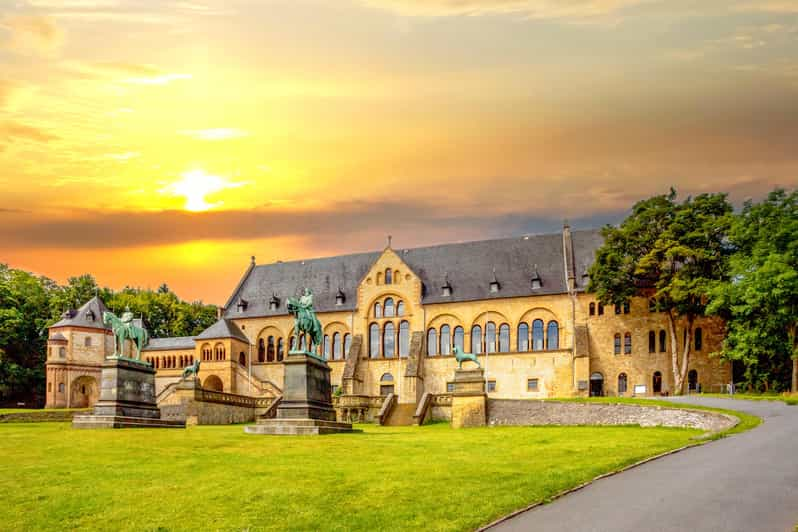
Goslar’s Imperial Palace, or Kaiserpfalz, is more than a handsome historic building. It was a place where emperors met, ruled, held court, and displayed authority. The palace helps explain why Goslar became such an important town in northern Germany.
The site is part of the UNESCO World Heritage recognition given to Goslar in 1992. That label is useful here because the palace is not an isolated attraction. It belongs to the historic character of the town, and the tour makes a good bridge between Goslar’s old streets and its imperial past.
You begin with a short walk through the Old Town before entering the palace complex. The walk is brief, but it gives the guide a chance to connect the building with Goslar itself. You get a sense of the town before turning your attention to the formal rooms, chapel, and displays inside.
I like this opening because the palace makes more sense when you see it as part of a working medieval town, not just as a grand building placed on a map. Still, the walk is described only as a short tour through the Old Town, so you should not expect a full city tour before the palace visit.
Other days out in Germany that people book alongside this one:
- Berlin: Reichstag, Dome and Government District Guided Tour
★ 4.7 · 18,288 reviews - Berlin: 1-Hour City Tour by Boat with Guaranteed Seating
★ 4.3 · 16,993 reviews - Hamburg: Sex and Crime in St. Pauli Tour for Ages 18+
★ 4.7 · 15,447 reviews
The great hall and Hermann Wislicenus’s paintings
The great hall is likely to be the visual high point. Its wall surfaces are covered without gaps by historical paintings created by Hermann Wislicenus, an art professor. The effect is bold and theatrical. Instead of asking you to imagine the palace’s importance, the room presents an image of power directly in front of you.
Take time to look beyond the overall spectacle. The scale of the paintings matters, but so does the way they transform the room. You are surrounded by scenes that present the German imperial past in a formal, idealized way. The guide’s job here is especially important, since the paintings need context if they are to mean more than decoration.
The strongest praise for the tour focuses on the guide’s delivery. The commentary is described as lively, clear, and interesting, with enough energy to keep children involved. That matters in the great hall, where a long explanation could otherwise become a list of dates and rulers.
If you speak German, this part should be especially rewarding. If you do not, you may still appreciate the room’s design and scale, but the main historical meaning will be harder to follow. The activity does not provide a separate language option, so do not book it expecting English interpretation.
St. Ulrich Chapel and Henry III’s heart
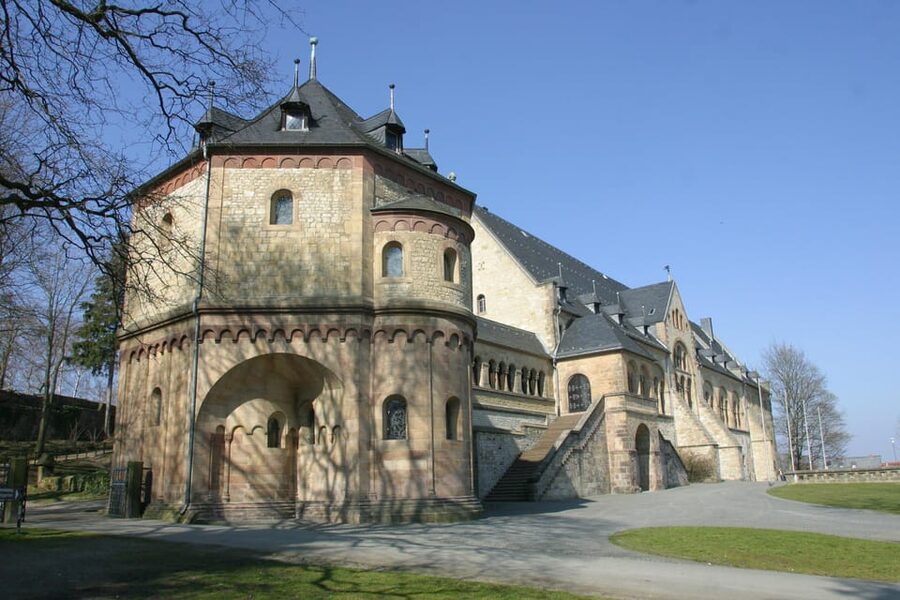
The Romanesque St. Ulrich Chapel offers a very different mood from the grand hall. Here, the focus is personal and ceremonial. You see the high grave of Emperor Henry III, along with his grave slab. Under that slab, the emperor’s heart still rests.
That detail gives the chapel unusual emotional weight. It is not only a place associated with an emperor’s public role. It also preserves a physical reminder of death, burial, and medieval ideas about remembrance. I find this kind of detail more memorable than a simple list of rulers because it gives the building a human scale.
The chapel is also valuable for its Romanesque character. The tour does not present the palace as one uniform room. You move from grand painted ceremony to a smaller sacred space, then onward to imperial furnishings and an exhibition. Those changes keep the 90-minute visit moving.
Your guide can help explain why the chapel belongs in the story of the palace, rather than treating it as a quick side stop. Since the available information does not provide a detailed minute-by-minute schedule, the exact time spent here may vary. Plan to listen closely when the group reaches this room, since the heart beneath the grave slab is one of the tour’s most distinctive details.
The imperial throne and winter hall display
The tour also includes the throne’s armrests, described as the throne seats or supports, along with an exhibition in the vaulted rooms of the winter hall. These stops are less immediately dramatic than the painted great hall, but they add useful texture.
The throne details help you focus on the objects connected to imperial ceremony. A throne is not simply a chair. It marks rank, ritual, and the public display of power. Seeing surviving parts lets you look at the practical side of imperial representation instead of only admiring the rooms around it.
The winter hall exhibition gives the visit a more museum-like section. Its vaulted setting should appeal to you if you like objects, displays, and smaller historical clues. The supplied details do not specify every exhibit, so I would not arrive expecting a particular collection or named object. Think of it as an added display that rounds out the architectural tour.
I appreciate this mix. The paintings offer spectacle, the chapel provides a quiet memorial focus, and the exhibition supplies closer historical detail. You are not spending the entire visit in one large room listening to one long talk.
Same city, a completely different kind of day:
- Hamburg: 1.5-Hour Harbor and Speicherstadt Day Cruise
★ 4.6 · 14,200 reviews - From Munich: Neuschwanstein & Linderhof Castle Full-Day Trip
★ 4.5 · 12,494 reviews - Dresden: Semperoper Tickets and Guided Tour
★ 4.7 · 12,102 reviews - Berlin: Boat Tour Along the River Spree
★ 4.4 · 11,252 reviews
A lively guide makes the difference
This experience depends heavily on the guide because it is a live tour in German. The strongest feedback praises a guide who explained Goslar and the palace in a lively, engaging way, with enough humor and clarity that children enjoyed the visit. Another description calls the tour competent, informative, interesting, and easy to follow.
Those comments point to the tour’s real strength. The building can impress you on its own, but a good explanation gives the paintings, chapel, and imperial objects a clear place in the story. The best approach is to treat the guide as the main source of interpretation, not as someone who simply opens doors and recites labels.
The guide’s name is not provided, so you cannot request a particular person. The tour is conducted in German, and that should be your first booking check. You do not need specialist knowledge, but you should be comfortable listening to spoken German for 90 minutes.
Families may find the pace helpful. Children are not left with a silent building and a long museum label. The enthusiastic delivery can make the palace more approachable, though the German-only format remains important for younger visitors and anyone who does not understand the language.
Is $16 a fair price?
At $16 per person, this is a reasonable price for a guided interior visit lasting about 1.5 hours. You are paying for access to the palace interiors plus live interpretation of the great hall, chapel, imperial throne details, and winter hall exhibition.
The value is strongest if you would otherwise walk through the palace without understanding what you are seeing. Hermann Wislicenus’s paintings are impressive, but the guide can explain their historical role and connect them with Goslar’s imperial past. The same is true of Henry III’s grave slab and heart. Without context, those details may pass quickly. With context, they become the visit’s central memories.
The price is less compelling if you speak no German and mainly want to look around independently. You may still enjoy the architecture and artwork, but you would not receive the full benefit of the live commentary. Check for an alternative way to understand the palace before booking if language is a concern.
The tour’s 90-minute length also works in its favor. You get a focused cultural stop without giving up an entire morning or afternoon. It fits well into a day spent walking through Goslar’s Old Town.
Timing, meeting point, and practical details
The meeting point is in front of the Atrium. Arrive with enough time to identify the group before the tour begins, especially if you are unfamiliar with the palace grounds.
The duration is 1.5 hours, and starting times depend on availability. Check the selected date carefully before booking. The tour is wheelchair accessible, which is useful information for visitors who need step-free access, though the supplied details do not describe specific routes, lifts, or restroom arrangements.
Pets are not allowed, but assistance dogs are permitted. This is worth noting if you are sightseeing with an animal.
You can cancel up to 24 hours before the start for a full refund. The reserve-now-and-pay-later option also gives you some flexibility, since you can hold a place without paying at the time of booking. These policies are practical, but the central decision is still language: German is the only stated tour language.
The provider is GOSLAR marketing gmbh. The activity has a rating of 4.5 from 50 reviews, a solid result that fits the main pattern of the experience: strong guiding, a clear route through the palace, and good appeal for families.
Who should book this palace tour?
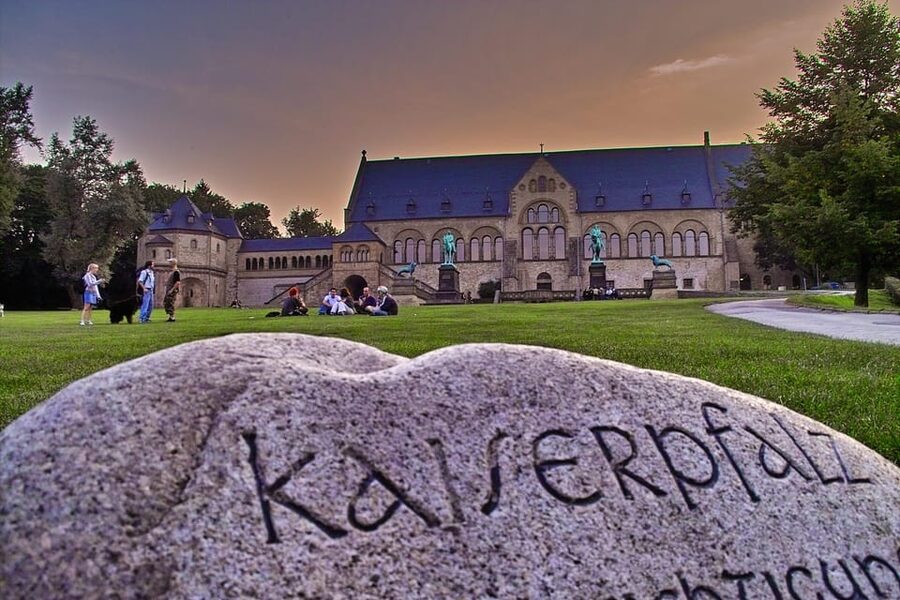
I would choose this tour if you speak German and want more than a quick look at Goslar’s most important historic building. It suits you especially well if you enjoy painted interiors, medieval and imperial history, church spaces, and guided visits that explain why objects matter.
Families should also consider it. The guide’s lively approach has worked well for children, and the short format helps prevent the palace from feeling like a long lecture. The changing sequence of rooms gives younger visitors several kinds of things to see.
This is also a good choice for a first visit to Goslar. The short Old Town walk gives the palace a town setting, while the interior tour introduces the site’s major highlights in one organized visit. You leave with a clearer sense of why Goslar received UNESCO recognition.
I would hesitate if you need English or another language. The palace may still be worth seeing, but this specific activity is built around spoken German. I would also skip the guided option if you prefer a completely independent visit and do not need help interpreting the artwork or imperial remains.
Should you book the Kaiserpfalz tour?
Book it if you can follow German and want a compact, well-guided look at Goslar’s imperial center. The great hall paintings, Henry III’s heart in St. Ulrich Chapel, the throne details, and the vaulted exhibition give you a varied visit for $16.
The best reason to go is the guide. A lively explanation turns a grand room and an old chapel into a connected story, and the format has enough energy to work for families as well as history-minded adults.
Skip it, or seek another language option, if you will not understand German. For everyone else, this is a sensible way to see the Kaiserpfalz without spending half a day indoors.
FAQ
How long does the Imperial Palace tour last?
The tour lasts 1.5 hours.
What language is the tour conducted in?
The live guided tour is conducted in German. German is the only language listed for the activity.
Where is the meeting point?
Meet in front of the Atrium.
What does the tour include?
The activity includes an interior tour of Goslar’s Imperial Palace, including the great hall, St. Ulrich Chapel, imperial throne details, and an exhibition in the vaulted winter hall rooms.
Is the tour wheelchair accessible?
Yes, the activity is listed as wheelchair accessible.
Are pets allowed on the tour?
Pets are not allowed. Assistance dogs are allowed.
How much does the tour cost?
The listed price is $16 per person.
Can I cancel for a refund?
Yes. You can cancel up to 24 hours in advance for a full refund.
Just added in Germany
- Berlin & The Third Reich Private Guided Tour★ 5.0 · 3 reviews
- Third Reich Quest Experience in Berlin★ 4.5 · 7 reviews
- Private Analogue Photography Experience in Berlin★ 5.0 · 3 reviews
- Berlin Urbex Adventure and History Tour★ 5.0 · 9 reviews
- The Beauty of Berlin by Bike: Private Tour★ 5.0 · 59 reviews
- Berlin: Guided Bike tour of the Berlin Wall and Third Reich★ 5.0 · 160 reviews
- Beyond Currywurst: Berlin’s Hidden Street Food & Culture Tour★ 5.0 · 100 reviews
- Berlin Third Reich & Cold War Walking Tour With A Guide★ 5.0 · 7 reviews