
Reviewed · RHINE-MAIN TOURS
EUMETSAT – weather data for the world “made in Darmstadt”
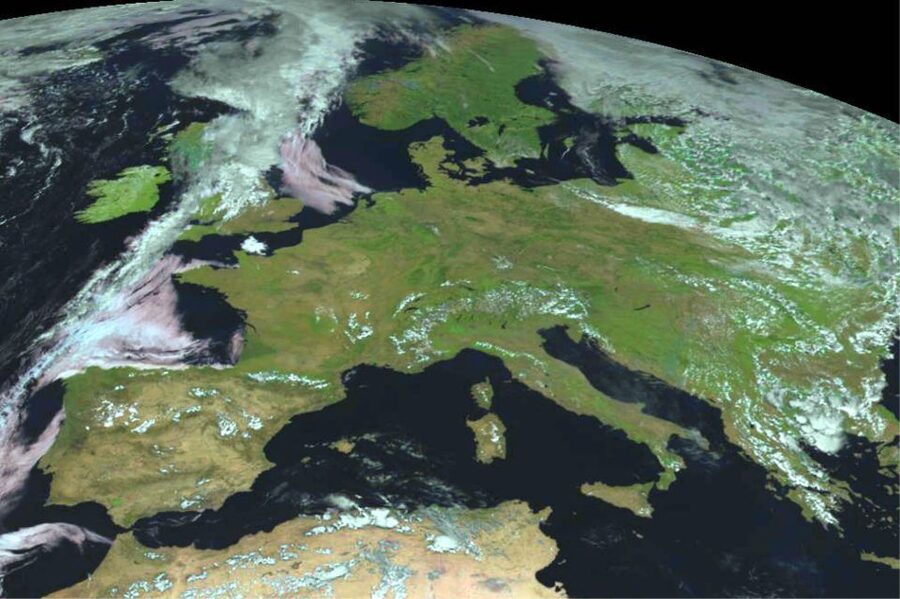
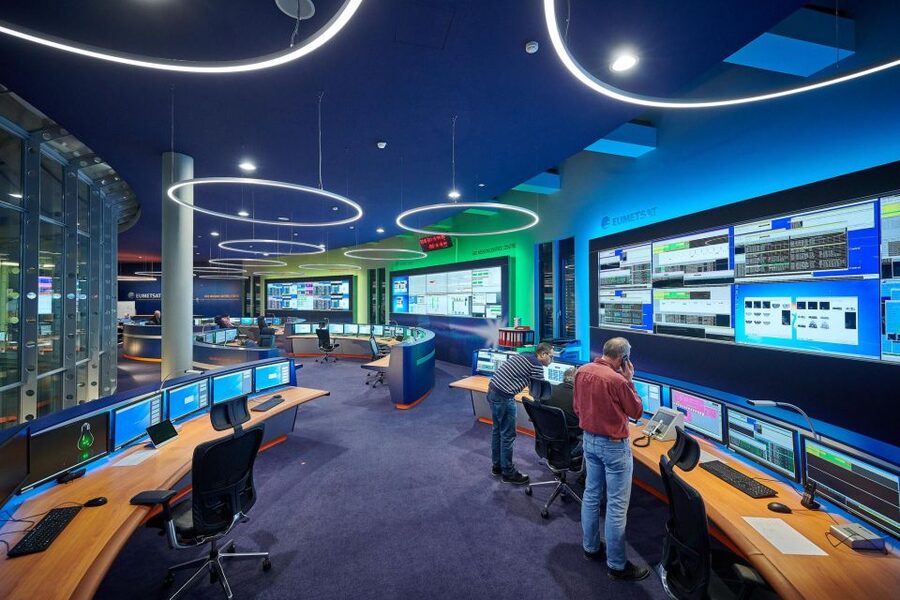
EUMETSAT turns space technology into the weather information you check every morning. On this 1.5-hour guided tour in Darmstadt, you get a behind-the-scenes look at the European organization that operates meteorological satellites around the clock.
I like two things right away: the chance to see full-size satellite models, some at true scale, and the clear link between space science, daily forecasts, and climate monitoring. A guide can answer questions in detail, and the tour has earned a strong 4.7 rating from 25 bookings.
The main catch is practical rather than scientific: the tour is in German, requires strict identity checks, and includes time outdoors. Visitors under 12 cannot join, large bags and baby carriages are not permitted, and anyone aged 16 or older must bring a valid passport or identity card.
Key points to know before you book
- Full-size satellite models: See meteorological spacecraft at a scale that photographs and diagrams cannot match.
- A working European space organization: Learn how EUMETSAT supports weather forecasts, climate studies, and global warming research.
- A 24-hour operation: The Darmstadt headquarters helps operate satellite systems every day of the year.
- German-language guiding: The tour is conducted in German, so plan accordingly if you do not speak the language.
- Strict entry rules: Your passport or identity card is checked, retained during the visit, and replaced by a visitor ID.
- A compact science visit: At $17 per person and 1.5 hours long, this fits well into a Darmstadt day without taking over your schedule.
Why EUMETSAT matters beyond the daily forecast
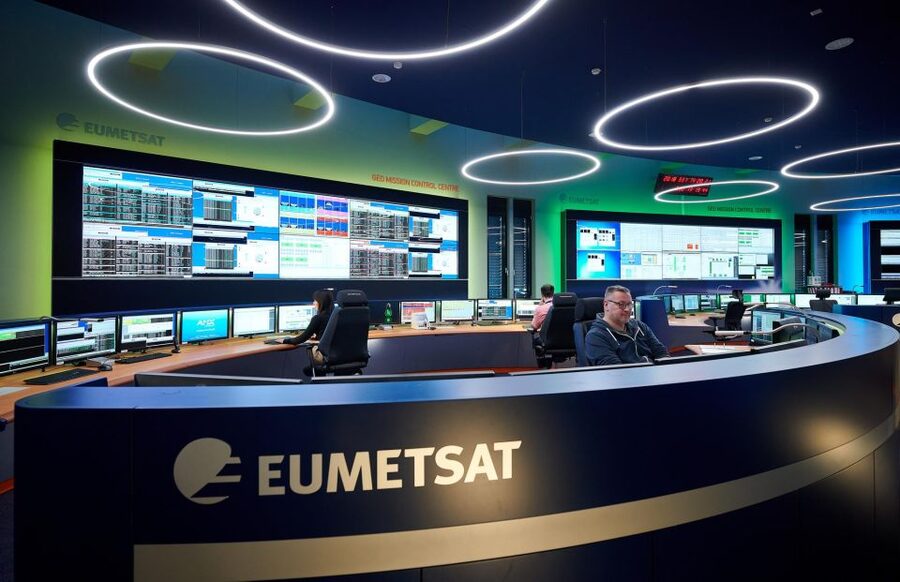
The easiest way to understand EUMETSAT is to think about the weather app on your phone. The forecast may look simple, but behind it sits a large flow of observations from satellites, ground systems, and scientific teams.
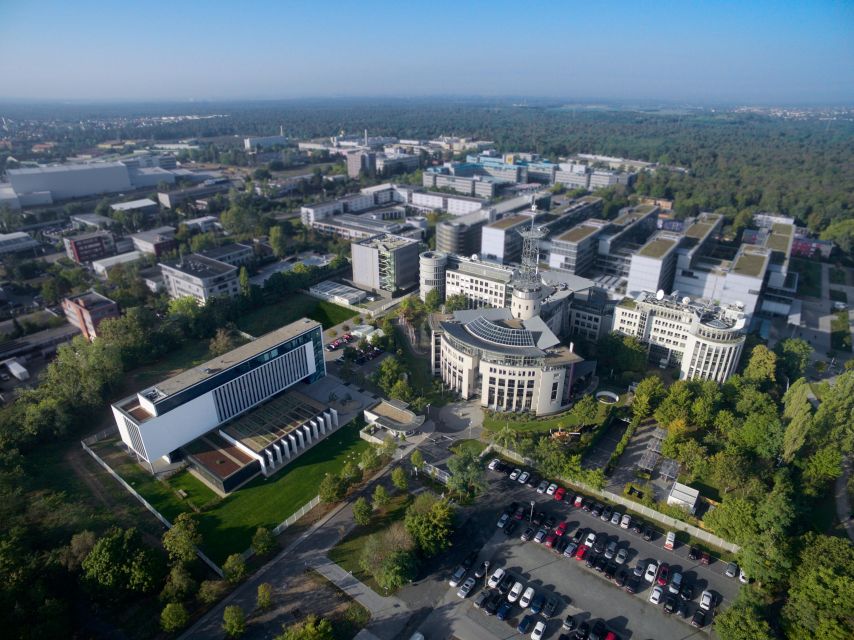
EUMETSAT, the European Organisation for the Exploitation of Meteorological Satellites, has had its headquarters in Darmstadt since 1986. From here, a system of meteorological satellites is operated 24 hours a day, 365 days a year.
That work has two useful sides. The first is immediate: satellite data help produce the forecasts you use to decide whether to pack an umbrella, delay a drive, or plan a walk. The second takes longer: the same kind of data helps scientists measure climate change and global warming.
I like this connection because it keeps the tour from being only about rockets and hardware. You are looking at spacecraft, but you are also learning why their observations matter on the ground. A satellite model becomes more interesting when you understand that its data can support both tomorrow’s forecast and long-term climate records.
The tour is especially well suited to anyone curious about the practical side of space science. You do not need to be a satellite engineer to follow the main idea. The guide explains how a European organization uses space-based tools to support weather services around the world.
A few more half-days in the Rhine-Main region worth comparing
- Speyer: Technik Museum Speyer Ticket with an IMAX Dome Film
★ 4.7 · 360 reviews - Wiesbaden: Sparkling Winemaking Tour with 3-Glass Tasting
★ 4.8 · 155 reviews - SEA LIFE Speyer Admission Ticket
★ 3.5 · 131 reviews
Meeting the spacecraft at full size
The most memorable part of the visit is likely to be the satellite display. The grounds include models that are partly or entirely presented at one-to-one scale, giving you a sense of the size and shape of the machines used for meteorological observation.
A small model in a book tells you what a satellite looks like. A full-size model tells you how large its body, panels, and instruments really are. It also helps you picture the engineering problem: a spacecraft must be powerful enough to gather useful information, yet designed to operate far above Earth for long periods.
This is where the tour has an advantage over a standard museum display. The models are connected to an active organization, not presented as isolated objects from the past. You are visiting a headquarters involved in the continuing operation of meteorological satellite systems.
The strongest comments about the tour focus on these models and on the guide’s ability to explain them. One German visitor singled out the one-to-one satellite models as especially impressive and noted that the guide answered questions. That is a good sign for visitors who prefer a guided explanation over simply walking past exhibits.
Still, keep your expectations measured. The information provided confirms a guided visit and full-size models, but it does not promise access to every operational room or a look at classified technical areas. The attraction is the combination of explanation, models, and institutional setting, not a free-roaming tour of the entire facility.
What the 1.5-hour route can show you
The experience begins at the visitors’ gate at EUMETSAT-Allee 1. You need to arrive ready for a formal entry process, not a casual museum check-in.
All participants must be pre-registered with Darmstadt Marketing. The registration requires each person’s full name and nationality. This is important for families and groups, since you should have the correct details available before the visit.
At the gate, you present a valid passport or identity card. For visitors aged 16 and over, this document is required. The document is checked for authenticity and retained for the duration of the visit. Driving licenses, residence permits, health insurance cards, and health insurance documents are not accepted as substitutes.
After the identity check, you receive a visitor ID. It must be worn visibly throughout the tour. You also remain with the group and follow the instructions of the security staff. These rules may feel more formal than those at a typical sightseeing stop, but they reflect the fact that EUMETSAT is an operating international organization rather than a conventional public museum.
The guided portion lasts about 90 minutes. Expect the guide to place the satellite models in the wider story of weather observation and climate data. The tour takes place partly outdoors, so clothing should suit the weather. You are not simply moving through heated indoor rooms from start to finish.
The exact order of the stops is not specified, so I would not promise a particular control room, laboratory, or satellite type. What you can count on is a guided look behind the scenes, an explanation of EUMETSAT’s purpose, and the chance to examine full-size satellite models on the site.
A German-language tour with room for questions
The live tour guide speaks German. That is the most important language point to consider before booking.
If you understand German, the format should work well for questions. A particularly positive detail from the available feedback is that the guide was described as very competent and able to answer all questions. Another visitor praised the guide’s strong commitment and again highlighted the answers and satellite models.
If you do not speak German, you should think carefully about the value of the tour for you. The satellite displays can still be visually interesting, but much of the experience is delivered through spoken explanation. There is no stated English-language option in the supplied information.
The guide’s role matters here. The best part of a technical visit is often not the amount of information, but the ability to ask a simple question and receive a clear answer. Why are weather satellites useful? How does their data relate to forecasts? How can the same observations help climate research? The tour appears designed for that kind of guided understanding.
You should also allow for a more controlled pace than you might find at a public science center. You cannot leave the group during the tour, and visitor IDs must remain visible. That keeps the visit organized, but it means you cannot linger independently at one display while the group moves on.
Same city, a completely different kind of day:
- Darmstadt: Mathildenhöhe UNESCO Site Guided Visit
★ 4.7 · 124 reviews - Guided tour in Mainz on the Rhine in german and english
★ 4.9 · 106 reviews - Sea Life Speyer Ticket
★ 4.2 · 99 reviews - Braunfels: Guided Tour of the Fairytale Castle Braunfels
★ 4.6 · 68 reviews
The value of $17 for a Darmstadt visit
At $17 per person, this is a reasonably priced specialist tour. The fee covers the guided visit, which is the main reason to come. You are paying for access to an active European meteorological organization, an explanation of its work, and the opportunity to see satellite models at full scale.
The value depends heavily on your interests and language ability. If you enjoy science, space, engineering, weather, or climate research, the price is modest for a focused 90-minute experience. You get a subject that is difficult to see in ordinary city sightseeing, and the models provide something physical and memorable.
If you are looking for a broad Darmstadt history tour, this is not the right choice. The subject is narrow. It will not replace a city walk, an art museum, or a general introduction to Hessen.
I also see good value for families with older children and teenagers. The minimum age is 12, which keeps the tour aimed at visitors who can follow a technical explanation and manage the formal security rules. Children under 12 cannot join, so this is not a good pick for a family with younger siblings unless you arrange separate plans.
The booking terms add some flexibility. You can reserve now and pay later, and cancellation is free up to 24 hours before the start time for a full refund. Starting times vary, so you need to check availability for your date rather than assume a fixed daily departure.
The security rules are part of the experience
The entry requirements deserve more attention than they usually get in a sightseeing review. This is not the sort of tour where you can turn up with a large backpack and sort things out at the door.
Large bags and luggage are not allowed. Baby carriages are also prohibited. You should bring only what you need, with your passport or identity card at the top of your preparation list.
The identity document is retained during the visit and returned afterward. The site collects personal information for a specific purpose, processes it under the relevant data protection rules, and deletes it after a certain period. Visitor IDs must be worn visibly, and security instructions must be followed.
You also cannot leave the group. The security service can refuse entry to people who do not cooperate or remove them from the site. That may sound strict, but it is useful to know in advance. A calm, prepared visitor will have a much easier time than someone treating the stop like an informal attraction.
Dress for the weather. Because part of the tour takes place outdoors, a rain layer or warm clothing may matter more than you expect. The supplied information does not specify how much time is outside, so I would prepare for changing conditions rather than assume the whole visit is indoors.
The site is wheelchair accessible, which makes the tour more practical for visitors with mobility needs. Even so, anyone who needs specific arrangements should confirm the details when booking, since the tour includes outdoor portions and a controlled group route.
Who will get the most from this visit
I would recommend EUMETSAT most strongly to adults and children aged 12 or older who already have some interest in science or want a focused introduction to satellite weather systems. The full-size models give the visit a strong visual center, while the guide supplies the context.
It is also a good choice for visitors who have already seen Darmstadt’s main sights and want something more unusual. You are not just looking at a historic building or a collection of objects. You are visiting the headquarters of an organization whose work feeds into weather services and climate measurement.
The tour can suit school-age children, but the German-language format is decisive. If your group cannot follow German, the visual appeal of the models may not be enough to justify the booking fee.
Space enthusiasts should appreciate the one-to-one displays. Weather watchers and people interested in climate data will get the most useful context from the organization’s role. Adults who like asking technical questions should also benefit from the guided format.
I would not choose this tour for a very young family, a visitor with heavy luggage, or someone who wants a relaxed, independent visit. The rules are clear, the group must stay together, and the subject is specific rather than general.
Practical planning for the day
Set aside the full 1.5 hours, plus extra time for arrival and the identity check. The stated duration refers to the guided tour, not necessarily every minute you will spend getting through the gate.
Have the exact registration details ready for every participant: full name and nationality. Bring an accepted identity document for each person who needs one, especially anyone aged 16 or older.
Leave large bags, luggage, and baby carriages behind. Since the site does not allow you to leave the group, it is best to handle personal needs before the tour begins.
Check the forecast and dress for outdoor conditions. Comfortable clothing is sensible, but weather protection matters more than dressing for a formal institution. You want to concentrate on the satellite displays, not spend the visit worrying about rain or cold.
The meeting point is the visitors’ gate at EUMETSAT-Allee 1. The supplied information does not provide transport instructions, parking details, group size, or the exact order of stops, so you should confirm those points when you reserve if they affect your plans.
Should you book the EUMETSAT tour?
Book it if you want a short, specialized look at how satellite technology supports weather forecasts and climate research. The full-size models, German-speaking guide, and access to a working EUMETSAT site give the visit a clear identity. At $17, it offers good value for science-minded visitors who can follow the language.
Think twice if you need English guiding, plan to bring a large bag, or want a flexible museum-style visit. The security process is strict, the group stays together, and part of the tour is outdoors.
For the right audience, this is a worthwhile Darmstadt add-on: compact, unusual, and tied to information you use every day. Bring your ID, arrive prepared, and you will be ready to see how weather data is made in Darmstadt and used far beyond Germany.
FAQ
Where does the EUMETSAT tour begin?
The meeting point is the visitors’ gate at EUMETSAT-Allee 1 in Darmstadt.
How long does the guided tour last?
The tour lasts 1.5 hours.
What language is the tour conducted in?
The live guided tour is conducted in German.
What is the minimum age?
The minimum age for the guided tour is 12. Children under 12 cannot participate.
What identity document should I bring?
Bring a valid passport or identity card. Driving licenses, residence permits, and health insurance cards are not accepted as proof of identity.
What happens to my identity document during the visit?
The identity document is checked for authenticity and retained for the duration of the visit. It is returned after the stay.
Are large bags or baby carriages allowed?
No. Large bags, backpacks, luggage, and baby carriages are not permitted.
Is the tour wheelchair accessible?
Yes, the tour is listed as wheelchair accessible. Part of the guided visit takes place outdoors, so you should also consider the weather when preparing.
Just added in the Rhine-Main region
- Neustadt: Wine tasting with cellar tour and vineyard visit★ 4.8 · 5 reviews
- Mainz Highlights, private walking tour★ 4.9 · 15 reviews
- Mainz: Private custom tour with a local guide★ 3.8 · 11 reviews
- Darmstadt entdecken mit Aurora DeMeehl: Innenstadt-Tour★ 5.0 · 15 reviews
- “Look behind the scenes” – leadership in the State Theater★ 4.5 · 8 reviews
- Wiesbaden: Private Walking Tour with a Guide★ 4.8 · 22 reviews
- Darmstadt: City Highlights and History Guided Walking Tour★ 4.0 · 23 reviews
- 1,5 Hour Private Guided Walking Tour: Cathedral and Old Mainz★ 5.0 · 25 reviews
Rhine-Main Tours, compared.
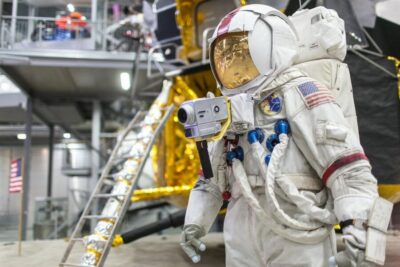
Speyer: Technik Museum Speyer Ticket with an IMAX Dome Film
Read our review →

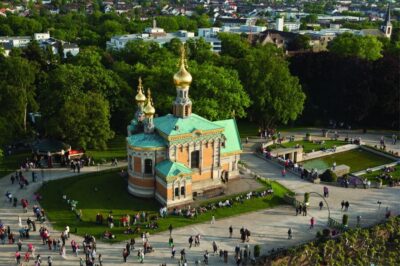
Darmstadt: Mathildenhöhe UNESCO Site Guided Visit
Read our review →
Guided tour in Mainz on the Rhine in german and english
Read our review →
Braunfels: Guided Tour of the Fairytale Castle Braunfels
Read our review →
Völklingen Ironworks World Heritage Site: Guided tour of the ironworks site
Read our review →Browse the lists this tour appears in