
Reviewed · RHINE-MAIN TOURS
Völklingen Ironworks World Heritage Site: Guided tour of the ironworks site
Völklingen Ironworks is no tidy museum. It is a huge, rust-colored industrial site where blast furnaces, pipes, halls, and machines remain in place. The guided tour helps you understand how this complicated factory turned raw materials into pig iron, and how people lived and worked around it. The machinery is the star.
I like the way the two-hour tour gives the site a clear human story, not just a parade of massive metal objects. I also like the value: your $25 ticket includes the guided visit, all permanent and special exhibitions, the Ferrodrom Science Center, the Paradise garden, and the viewing areas for the rest of the day. The main drawback is pace. One visitor found the tour informative but too fast, with little time to read displays or take photographs.
Key points to know before you go
- The tour reaches the blower hall and blast furnace: You see the machinery at the center of iron production, rather than only viewing it from a distance.
- Your German-speaking guide explains the process: Expect help making sense of pig iron production, old technology, and daily work at the plant.
- The $25 ticket covers the whole day: Stay after the two-hour tour for exhibitions, Ferrodrom, Paradise, the old coking plant, and the viewing platform.
- This is the only fully preserved ironworks from industrialization’s heyday: The site was the first monument from this era placed on the UNESCO World Heritage List.
- Height matters: The rooftop viewing platform and elevated parts of the site are not a good fit if you are afraid of heights.
- Younger visitors may enter free: Admission is free for people under 18 and under 27 with a valid student ID, with tickets collected at the entrance desk.
Entering the world of Völklingen’s ironworks
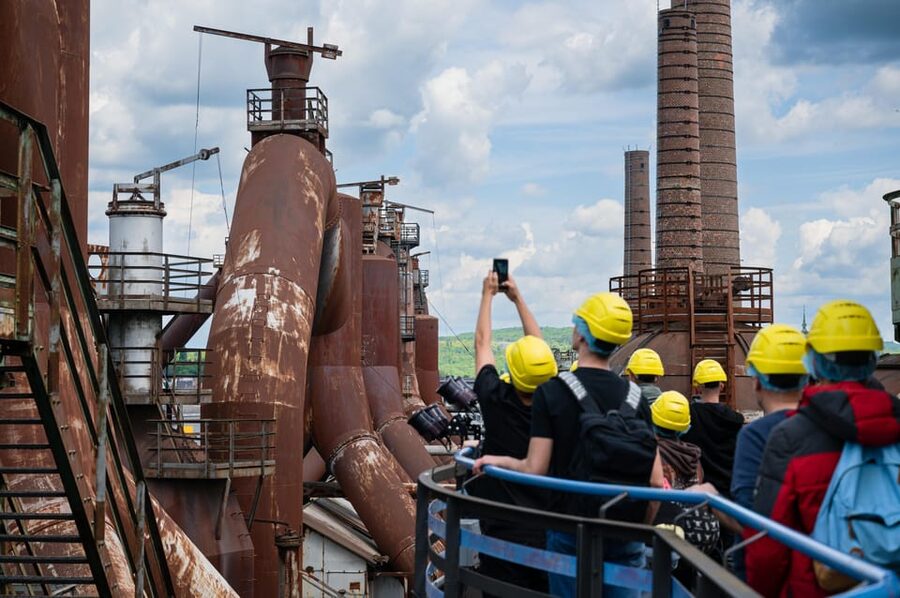
The Völklingen Ironworks sits in Saarland, a region shaped by coal, steel, and its position at the heart of Europe. This is not a reconstructed attraction built to resemble an old factory. The industrial plant itself has survived, including its halls, open areas, pipes, machines, and coking facilities.
That gives the visit a different feel from a standard museum. You are not looking at a few isolated engines behind glass. You are walking through the setting where iron production once took place. The scale can be hard to grasp at first, which is why the guided tour matters.
Meet your guide in the entrance area by the ticket office. The tour lasts about two hours and is conducted in German. Some material is presented in its original language, so you should be comfortable following German explanations if you want the full benefit of the tour.
The guide provides the basic map in your head: what each building did, how the machines connected, and why the site needed such an elaborate system of pipes and halls. Without that introduction, you can still explore the grounds, but the factory may feel like an impressive maze of metal.
A few more half-days in the Rhine-Main region worth comparing
- Speyer: Technik Museum Speyer Ticket with an IMAX Dome Film
★ 4.7 · 360 reviews - Wiesbaden: Sparkling Winemaking Tour with 3-Glass Tasting
★ 4.8 · 155 reviews - SEA LIFE Speyer Admission Ticket
★ 3.5 · 131 reviews
From the blower hall to the blast furnace
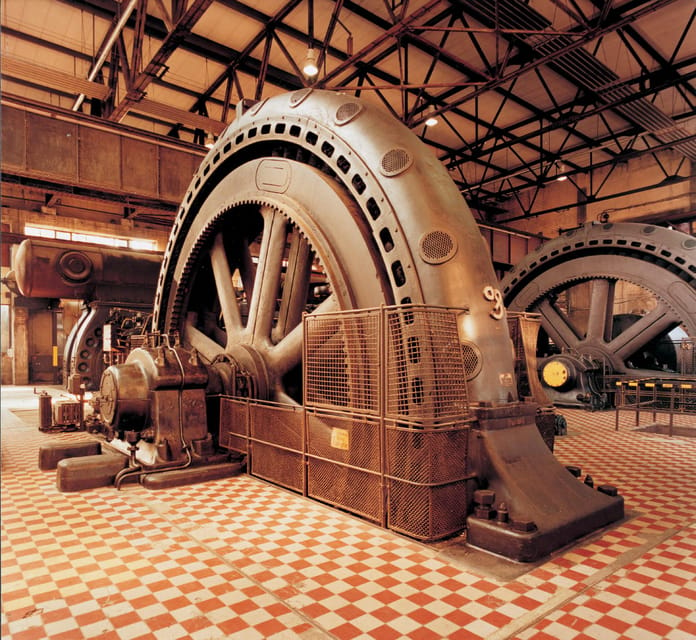
The tour takes you through some of the most important parts of the plant, including the blower hall and blast furnace area. These are not minor stops. They explain how air, heat, fuel, and raw materials worked together in the production of pig iron.
The blower hall is especially useful for understanding the power behind the operation. The old machines and equipment show the industrial scale of the works, while the guide connects the hardware to the process. You begin to see that the factory was not simply one furnace, but a linked chain of systems that had to operate together.
The blast furnace gives the tour its biggest visual punch. It also brings the central question into focus: how was pig iron produced? Your guide explains the old method and identifies the role of the machinery around you. The value is in the connection between process and place. Instead of hearing an abstract explanation in a gallery, you hear it beside the equipment that carried out the work.
You should expect a fair amount of looking, listening, and walking. The machinery is large, and the tour covers only a small part of the entire complex. One of the most useful things to understand is that the two-hour visit is an introduction, not a complete survey of every corner.
That limitation can be frustrating if you want time to photograph every pipe or read every panel. A German visitor found the tour moved quickly and left little room for independent study. If you enjoy taking pictures, you may want to return to important areas after the guide finishes.
The people behind the machines
Industrial sites can become cold collections of steel unless someone explains the human side. Here, the guide also addresses the people who worked at the ironworks and the conditions of their lives.
You learn about the workers who operated the equipment and about the communities connected to the plant. The story reaches beyond production figures. It asks how workers managed demanding industrial routines and how families lived alongside one of Saarland’s major economic forces.
This part of the tour helps put the technology in proportion. The blower hall and blast furnace are impressive, but they were not built as monuments. They were working equipment, and the people who maintained and operated them dealt with heat, noise, danger, and long hours.
The guide’s storytelling style can make a major difference here. The strongest feedback focuses on guides who explain things vividly, answer questions carefully, and allow the group to participate. You should feel free to ask questions during the tour, though a fast-moving group may limit how long each stop can last.
The language is an important practical point. The live tour guide speaks German, not English. If your German is limited, you can still appreciate the scale and machinery, but you may miss much of the technical and social explanation.
Why the UNESCO setting matters
Völklingen Ironworks became the first monument from the industrial era to be placed on the UNESCO World Heritage List. It is also described as the only fully preserved ironworks in the world from the high point of industrialization.
Those labels matter because they explain why the whole complex has been kept, rather than reduced to one attractive furnace or a handful of machines. The open areas, halls, pipe systems, old coking plant, and elevated viewpoints belong to one connected industrial setting.
You can see the site as a record of changing technology. You can also see it as a record of Saarland’s development. Steel production helped shape the region’s work, towns, and identity, and the ironworks gives that story a physical setting.
The preservation also creates an unusual contrast. Heavy industry once filled the site with smoke, heat, and noise. Today, parts of the former coking plant have been reclaimed by plants and wildlife. That change is not hidden or cleaned away. It is part of the experience.
Same city, a completely different kind of day:
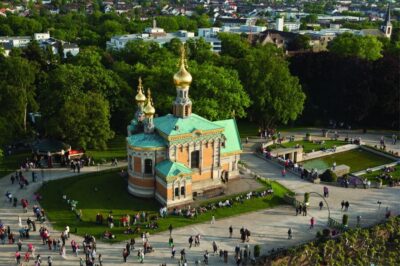
- Darmstadt: Mathildenhöhe UNESCO Site Guided Visit
★ 4.7 · 124 reviews - Guided tour in Mainz on the Rhine in german and english
★ 4.9 · 106 reviews - Sea Life Speyer Ticket
★ 4.2 · 99 reviews - Braunfels: Guided Tour of the Fairytale Castle Braunfels
★ 4.6 · 68 reviews
After the tour, take your time
The guided portion is only one part of your admission. Once it ends, you can explore the site at your own pace for the rest of the day. This is where the $25 price begins to make sense.
The admission includes permanent and special exhibitions, so you can spend more time with subjects that interest you. If the tour’s explanations move too quickly, the exhibitions give you a chance to slow down and read. If the machinery interests you most, you can return to areas that deserve another look.
The Ferrodrom Science Center adds a more direct educational element. It helps explain the scientific ideas behind iron and steel production and can make the technical side easier to follow. It is particularly useful if you are visiting with someone who wants more than industrial architecture.
The old coking plant adds another layer to the visit. Coking was closely tied to iron production, and the remains help show how the factory depended on a wider chain of fuel and processing. You may find that this part of the site feels less immediately obvious than the blast furnace, but it gives the factory story more depth.
Do not rush off after the guided tour. The best plan is to treat the tour as your orientation, then use the rest of the day to revisit the sections that caught your attention.
Paradise, where industry gives way to nature
The Paradise garden is one of the site’s most surprising features. It occupies part of the former coking plant, where nature has reclaimed sections of an area once linked to heavy industrial work.
This is not a traditional formal garden. It is a reclaimed part of the ironworks, with its own plants and wildlife. The contrast between old industrial structures and new growth gives you a different way to read the site. You see not only what the factory did, but also what happened after production ended.
I like this part because it keeps the visit from becoming a nonstop march through machinery. After the heat and mechanical scale suggested by the ironworks, Paradise gives you room to pause and look at the changing use of the grounds.
The garden also makes the site more varied for people who are not devoted to industrial technology. You can focus on the plants and open spaces, while someone else in your party studies the pipes, furnaces, or exhibitions.
Rooftop views and the height question
The viewing platform above the rooftops gives you a chance to understand the size and arrangement of the complex. From above, the pipe systems, halls, open areas, and industrial structures fit together more clearly.
This is one of the best ways to get your bearings. At ground level, the site can feel like a series of separate spaces. From the platform, you can see how the parts connect and why the works needed such a large footprint.
The warning is simple: this experience is not suitable for people afraid of heights. The elevated areas are part of the appeal, but they are also a real consideration. If you are uneasy with high platforms, you can still enjoy much of the site at ground level, yet you may not want to use every viewpoint.
Bring enough time for the view rather than treating it as a quick photo stop. It helps explain the scale of the ironworks better than any single machine can.
Is $25 a fair price?
At $25 per person, this is a strong value if you plan to stay beyond the two-hour tour. You are paying for a guided explanation of the major industrial features, then receiving access to the entire World Heritage Site, permanent and special exhibitions, Ferrodrom, Paradise, and viewing areas for the day.
The value drops if you arrive only for the guided portion and leave immediately afterward. Two hours gives you the main story, but the site is too large to fully understand in that time. The admission is designed for a longer visit.
The price is especially favorable for eligible younger visitors. Admission is free for anyone under 18, and also for anyone under 27 with a valid student ID. SaarlandCard holders enter free, while people with a disability rating of 60 percent or more can receive reduced admission. Collect free or reduced tickets at the entrance ticket office.
You also get some booking flexibility. You can cancel up to 24 hours before the activity for a full refund, and you can reserve now and pay later. Those details are useful if your Saarland schedule is still shifting.
Who will enjoy this visit most?
I would choose this tour if you enjoy industrial history, engineering, architecture, or places that show how ordinary work shaped a region. It is also a good choice if you want something more substantial than a short museum stop.
Families can find plenty to look at, especially in the Ferrodrom Science Center and the open parts of the complex. The free admission for under-18s also improves the value for families, provided everyone is comfortable with the amount of walking and the industrial setting.
Photographers should plan around the pace. The machinery, pipes, elevated viewpoints, and reclaimed areas offer plenty of visual interest, but the guided portion may not leave much time for careful composition. Use the included day admission to return to the spots you want to photograph.
You should think twice if you need an English-language tour, dislike heights, or prefer a quiet museum with short distances between displays. The German-only guide and the scale of the site are not minor details.
Practical tips for a better visit
Arrive at the entrance area and ticket office for the start of the tour. That is the stated meeting point, and the guided visit begins there.
Wear sensible shoes. The complex includes halls, open areas, old industrial structures, and elevated sections, so comfort matters more than dressing for a quick gallery visit.
Keep the rest of the day open if you can. The tour explains the major systems, but the exhibitions, coking plant, Paradise garden, and viewing platform deserve time of their own.
If you want photographs or careful reading, plan to do most of that after the guide finishes. The tour keeps moving, and one account specifically found limited time for photos and displays.
Ask questions when the guide pauses. The strongest part of the experience is the human explanation of machines that can otherwise look mysterious. A good question can turn a wall of pipes into part of a working production system.
Should you book the Völklingen Ironworks tour?
Book it if you want a guided introduction to one of Europe’s most unusual industrial World Heritage Sites, especially if you can stay for the rest of the day. The guide gives structure to a huge and complex place, while the included exhibitions, Ferrodrom, Paradise garden, and viewing platform make the $25 admission worthwhile.
Skip the guided option if you need English commentary or want to wander slowly from the start. You can still consider visiting the site independently, but the German tour is the best way to understand how the blower hall, blast furnace, coking plant, and workers’ lives fit together.
For most visitors who appreciate industrial places, this is a memorable and well-priced stop in Saarland. Just allow extra time, expect a brisk two hours, and do not forget that the factory is much bigger than the tour alone.
FAQ
Where is the Völklingen Ironworks World Heritage Site?
It is in Völklingen, in the Saarland region of Germany.
How long does the guided tour last?
The guided tour lasts about two hours.
What language is the tour conducted in?
The live tour guide speaks German. Some content is shown in its original language.
Where does the tour begin?
The meeting point and starting point are in the entrance area at the ticket office.
What does the admission include?
Admission includes the guided tour, full-day entry to the Völklingen Ironworks World Heritage Site, permanent and special exhibitions, the Ferrodrom Science Center, and the Paradise garden.
Is the site wheelchair accessible?
Yes, the activity is listed as wheelchair accessible.
Who can receive free or reduced admission?
Admission is free for people under 18, people under 27 with a valid student ID, and holders of a valid SaarlandCard. Reduced admission is available for people with a valid disability rating of 60 percent or more. Free or reduced tickets are collected at the entrance ticket office.
Just added in the Rhine-Main region
- Neustadt: Wine tasting with cellar tour and vineyard visit★ 4.8 · 5 reviews
- Mainz Highlights, private walking tour★ 4.9 · 15 reviews
- Mainz: Private custom tour with a local guide★ 3.8 · 11 reviews
- Darmstadt entdecken mit Aurora DeMeehl: Innenstadt-Tour★ 5.0 · 15 reviews
- “Look behind the scenes” – leadership in the State Theater★ 4.5 · 8 reviews
- 1,5 Hour Private Guided Walking Tour: Cathedral and Old Mainz★ 5.0 · 25 reviews
- Wiesbaden: Private Walking Tour with a Guide★ 4.8 · 22 reviews
- Darmstadt: City Highlights and History Guided Walking Tour★ 4.0 · 23 reviews
Rhine-Main Tours, compared.
Speyer: Technik Museum Speyer Ticket with an IMAX Dome Film
Read our review →
Darmstadt: Mathildenhöhe UNESCO Site Guided Visit
Read our review →
Guided tour in Mainz on the Rhine in german and english
Read our review →
Braunfels: Guided Tour of the Fairytale Castle Braunfels
Read our review →
Exclusive Wine & Food Tasting in Historic Cellar | Mainz Old Town
Read our review →Browse the lists this tour appears in