

Reviewed · OLD TOWN TOURS
Bremen: Historic old town tour with Geo Epoche
Bremen’s Old Town is more than pretty façades and a famous town musicians statue. This two-hour history walk follows the city’s rise from a small settlement near a wooden church to a proud Hanseatic trading power, with stops tied to medieval struggles, merchant wealth, and Bremen’s rebellious streak.
I like the focus on specific people and turning points, especially the merchants’ fight with the archbishop and the story of poisoner Gesche Gottfried. I also like the compact length and the small-group feel reported on one rainy outing. The main caution is that the German-only tour can lose some impact if you do not follow German well, and one booking had no guide appear at all.
Key points at a glance
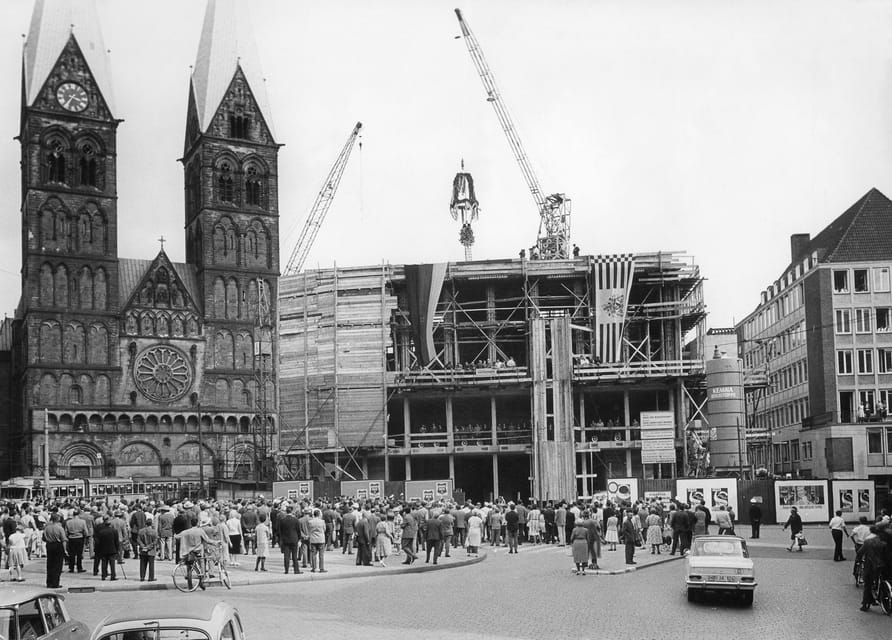
- Meet beside Bremen Cathedral: The tour begins at the Bismarck monument in front of St. Peter’s Cathedral on Domshof.
- Follow Bremen’s rise to Hanseatic power: The walk explains how a small settlement became a major trading city.
- See history through people: The stories include the archbishop, Bremen’s merchants, Böttcherstraße’s creator, and Gesche Gottfried.
- Expect a focused two-hour route: You get selected episodes rather than an attempt to cover every corner of the city.
- Plan for German and bad weather: The guide speaks German, and the tour runs in all weather.
- Bring practical walking gear: Comfortable shoes, weather-ready clothes, and a reusable water bottle make sense.
Starting at St. Peter’s Cathedral and Domshof
The meeting point is easy to identify: the Bismarck monument in front of St. Peter’s Cathedral, at Domshof 1, 28195 Bremen. The listed bus stop is Dormsheide. Arrive with enough time to locate the monument, especially if you are unfamiliar with Bremen’s central streets.
This is a useful starting place because the cathedral anchors the story of Bremen’s early power. The tour asks how a tiny settlement around a wooden church grew into a city with enough money and confidence to challenge powerful church authorities. You are not simply looking at an old building. You are being given the first piece of the city’s political puzzle.
The cathedral setting also helps explain the tension that runs through Bremen’s past. Medieval cities often grew under the shadow of bishops, archbishops, nobles, or monarchs. Bremen’s story, as presented on this walk, is one of merchants and citizens pushing back against authority while still operating inside a strongly religious and socially ordered city.
Do not expect an elaborate museum-style introduction. The experience is a walking tour, and its value depends on how clearly the guide connects the place in front of you with the event being discussed.
More Old Town Tours in Bremen:
- Bremen: Old Town Tour with Costumed Performer & Tour Guide
★ 4.3 · 257 reviews - Bremen: Outdoor Escape Game in the Old Town
★ 4.4 · 41 reviews - Dresden: Semperoper and Old Town Tour
★ 4.8 · 5,735 reviews
How a wooden church became a trading power
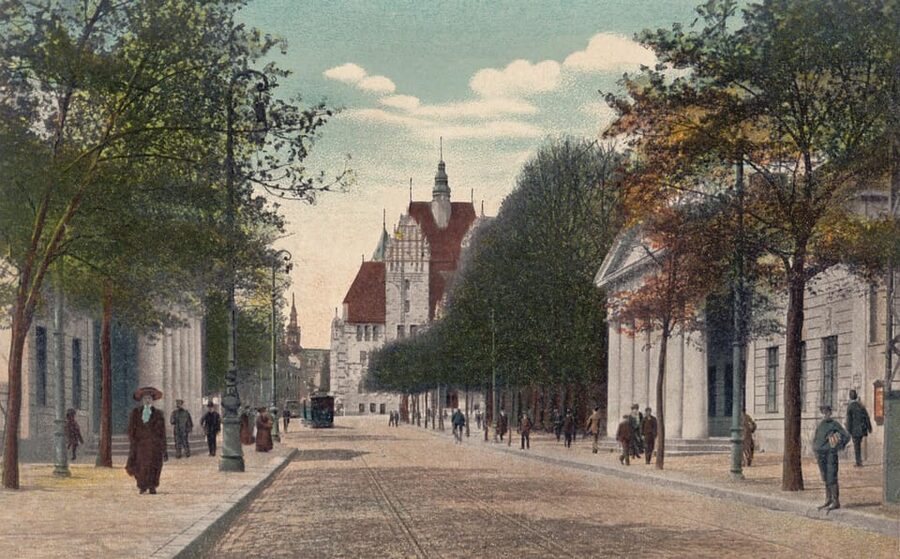
One of the strongest ideas in the tour is Bremen’s transformation. The route traces the city from a modest settlement near a wooden church to a major Hanseatic trading metropolis. That gives you a useful frame for everything that follows.
The Hanseatic connection matters because Bremen’s wealth was tied to trade, shipping, and merchant networks. The city was not important only because it had an impressive cathedral or civic buildings. Its identity grew from commerce and from the people who controlled, protected, and benefited from that commerce.
The guide’s job is to show how this economic power changed the city’s political role. Bremen’s merchants did not simply become rich and leave public affairs to church leaders. They helped shape the city’s direction and took part in conflicts over who had the right to rule.
This is where the tour’s historical approach should appeal to you. Instead of presenting Bremen as a list of dates, it connects urban growth with arguments over power. You get a clearer sense of why a trading city might develop a stubborn, independent character.
The walk covers selected episodes, so you will not receive every chapter of Bremen’s history. That is a sensible choice for two hours. A shorter route can give important events room to breathe, though the result may feel selective if you want a full chronological account.
The merchants versus the archbishop
The struggle between Bremen’s merchants and the powerful archbishop is one of the tour’s central stories. It gives the city’s past a good measure of conflict. The issue was not simply religious. It involved control, money, civic rights, and the growing strength of urban citizens.
As you listen, pay attention to the wider pattern. Medieval merchant cities often had to negotiate with church leaders and territorial rulers. Bremen’s merchants were building their own influence through trade, while the archbishop represented a different kind of authority.
The tour presents this conflict as part of Bremen’s rebellious character. That theme reaches from medieval uprisings to citizens’ initiatives in modern times. You may find this more interesting than a standard walk that treats old buildings as isolated sights.
The practical benefit of hearing the story on location is that the city becomes easier to read. Streets, squares, and major buildings are not just scenery. They reflect old power struggles and the changing balance between religious institutions, merchants, and ordinary citizens.
Still, the quality of this section depends heavily on the guide. One booking described a top guide leading a very small group despite rain, while another found the guide’s delivery too monotonous. The material has potential, but the presentation can vary.
Böttcherstraße and the city’s creative side
Böttcherstraße provides a different kind of historical question. The tour asks how this distinctive street came about and what sort of person made it possible. The focus is not simply on architecture. It is on intention, money, identity, and the way a single project can reshape how a city presents itself.
You should expect Böttcherstraße to be treated as a deliberate statement rather than an accidental collection of old buildings. The discussion adds another layer to Bremen’s story: the city’s past was not only inherited, it was also reinterpreted and actively presented.
That makes this stop useful for visitors who want to understand Bremen’s character beyond its medieval origins. The city can look calm and respectable on the surface, yet the tour keeps returning to the idea of an independent, questioning spirit underneath.
Because the route lasts only two hours, the guide cannot offer a full architectural study of Böttcherstraße. You will likely get the key story and its place in Bremen’s history, then move on. If you want detailed information about every building, a specialist architecture tour would be a better match.
More History Tours in Bremen:
- Bremen: Walking Tour of Historic Schnoor District
★ 4.8 · 429 reviews - Leipzig: City History Canal Sightseeing Tour on a Motorboat
★ 4.7 · 6,232 reviews - Berlin: Natural History Museum Entrance Ticket
★ 4.6 · 3,382 reviews - Leipzig: 1.5-Hour Historical Walking Tour in German
★ 4.7 · 2,217 reviews
The disturbing story of Gesche Gottfried
The story of Gesche Gottfried adds a darker turn to the walk. Known as a poisoner, she is one of the figures used to show that Bremen’s past was shaped by more than merchants, church leaders, and civic heroes.
This kind of story can be valuable when it is handled as social history rather than mere shock. It raises questions about crime, trust, domestic life, and how a city remembers a notorious person. The tour places Gottfried within Bremen’s streets and history, giving the story a physical setting instead of leaving it as a detached anecdote.
You should know that the tone will not stay light. The route moves between civic pride, political conflict, architecture, and a grim criminal case. That contrast is part of its appeal, but it may not suit you if you want only cheerful sightseeing.
The information supplied for the tour does not promise graphic detail, so you should expect a historical account rather than a crime reenactment. The main value is the way the story broadens your view of Bremen and its people.
A short route with a clear purpose
At two hours, this is a manageable introduction to Bremen’s Old Town. You can fit it into a morning or afternoon without giving up a full day. The compact format also works well at the start of a city visit, when you want context before exploring independently.
I like tours that give you a few strong stories instead of racing through a long list of monuments. This one appears designed around selected moments: the city’s early growth, the merchants’ struggle with the archbishop, the creation of Böttcherstraße, and Gesche Gottfried’s crime.
That approach has a tradeoff. You may leave with a clearer sense of Bremen’s character but not with a complete map of every historic sight. The route is best understood as a guided introduction, not a substitute for spending more time in the Old Town.
One booking described the walk as interesting and informative. Another found that the group could have covered the route alone because the organization felt weak. That is useful advice: if you book, treat the guide’s storytelling as the main reason to pay, not simply the path through the center.
What the German-only format means for you
The live guide speaks German, and some content is presented in its original language. You should book only if you can follow spoken German comfortably enough to understand historical explanations, names, and links between events.
This is not a minor detail. A history walk depends on nuance. If you understand only basic German, you may recognize the places but miss the argument tying them together. The brochure may help you keep track of the route, but it is not described as a full translation or transcript.
For German speakers, the format can be a strength. The guide can tell the stories naturally, and the use of original language may suit visitors who want a local presentation rather than an English-language overview.
No guide’s name is provided in the available information, so you cannot choose the tour based on a particular historian. The quality may depend on who leads your departure. Reports range from an excellent guide in a very small group to a monotonous delivery and one serious no-show.
Weather, walking comfort, and group size
The tour takes place in all weather. Bremen can be wet and windy, so bring a waterproof layer and shoes that are comfortable on city streets. A reusable water bottle is also recommended.
Rain does not automatically ruin this experience. One outing had a very small group despite wet conditions and was rated highly for the guide. A small group can make it easier to hear the explanation and ask questions, though group size is not guaranteed.
Bad weather can still affect the experience. A city-center demonstration once created enough noise to disrupt the guide and made the walk feel uncoordinated. That kind of disruption is outside the tour’s control, but it shows why a quiet day and a strong guide matter.
The activity is not suitable for people with mobility impairments. The information does not specify the exact route surface, number of stairs, or seating opportunities, so anyone with walking concerns should treat the tour as a continuous Old Town walk and confirm details before booking.
Pets are not allowed.
Is $29 a fair price?
At $29 per person, the tour is reasonably priced if you want a live German-language explanation of Bremen’s past and prefer a short, organized route. The brochure and guide are included, while meals, drinks, hotel pickup, and gratuity are not.
The value comes from interpretation, not transport or admission tickets. You are paying for someone to connect the cathedral, Old Town streets, Böttcherstraße, and historic figures into a single story. If the guide is well prepared and engaging, that can be worthwhile even though you could physically walk the same streets yourself.
The price is less attractive if you speak little German, already know Bremen well, or mainly want a self-guided stroll. One booking specifically felt the route could have been walked independently, and that is a fair concern for confident visitors who have already read about the city.
The best way to judge the cost is to ask what you need. If you want context, local narration, and a clear two-hour introduction, $29 is sensible. If you only want directions to the main sights, save the money and explore on your own.
Who should book this Bremen walk?
I would recommend it to German-speaking visitors who enjoy city history, political stories, and tours built around real people. It is a particularly good fit if you want to understand why Bremen became a Hanseatic power and how its independent civic spirit developed.
It also suits a first visit because the route gives you a framework for later wandering. After hearing the stories, you can return to Böttcherstraße or the cathedral with more questions and a better sense of what you are seeing.
I would be cautious if you need a highly polished production. The mixed experience with organization, tone, and one missed departure means you should keep your expectations realistic. The history sounds strong, but the delivery is not guaranteed to be equally strong every time.
Booking advice and final call
Book this tour if you speak German, want a focused two-hour introduction, and prefer history told through conflicts and characters rather than a simple monument checklist. The cathedral meeting point is central, the subject matter is varied, and the price is fair when the guide adds real context.
Skip it if you need English, have limited mobility, dislike walking in poor weather, or already know Bremen’s Old Town well. If you do book, wear comfortable shoes, arrive at the Bismarck monument early, and confirm the departure details close to the day of the tour. The content is promising, but the guide’s preparation and style will shape your experience.
FAQ
Where does the Bremen Old Town tour meet?
It meets at the Bismarck monument in front of St. Peter’s Cathedral, Domshof 1, 28195 Bremen. The listed bus stop is Dormsheide.
How long does the tour last?
The tour lasts two hours.
What language is the tour in?
The live tour guide speaks German. Some content is shown in its original language.
What does the price include?
The price includes the tour guide and a brochure. Drinks, meals, hotel arrival or pickup, and gratuity are not included.
Does the tour operate in bad weather?
Yes. The tour takes place in all weather, so bring comfortable clothing and shoes suitable for the conditions.
Is the tour suitable for people with mobility impairments?
No. The activity is listed as unsuitable for people with mobility impairments. Pets are also not allowed.
Just added in Bremen
- Bremen: Übersee Museum Entrance Ticket★ 4.3 · 59 reviews
- Bremerhaven: Fish Bite Guided Walking Tour★ 4.8 · 13 reviews
- Bremen Tour: Full-Day Canoe Rental on the Wümme River★ 4.8 · 4 reviews
- Bremen: Private Walking Tour with a Professional Guide★ 4.2 · 22 reviews
- Bremen Schwachhausen: Crime Mystery Tour★ 3.6 · 4 reviews
- Bremen: Private pub crawl with insider-guide & free shots★ 4.5 · 22 reviews
- Bremen: Outdoor Escape Game in the Old Town★ 4.4 · 41 reviews
- Bremen: Full-Day Kayak Rental on the Wümme River★ 4.8 · 14 reviews
Old Town Tours, compared.
Old Town & Viktualienmarkt City Walk in German
Read our review →
The Night Watchman Old Town Walking Tour in German
Read our review →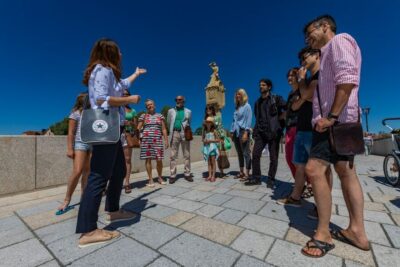
New Old Town and Highlights German-Language Tour
Read our review →Browse the lists this tour appears in