
Reviewed · 3-HOUR EXPERIENCES
Berlin Reunited and Revived! 3-Hour Alternative Tour
Berlin’s story is written in its neighborhoods. This private three-hour tour moves from restored Mitte to changing Prenzlauer Berg, then into the politically charged streets of Friedrichshain and Kreuzberg. You see how the city changed after reunification, not just which monuments survived it.
I like the focus on ordinary city life and the way four districts are used to explain gentrification, rent pressure, art, and corporate growth. I also like the stops at the Kulturbrauerei and East Side Gallery, which give the tour both architectural substance and a clear look at Berlin’s street-art culture.
The main consideration is its schedule: tours run only on Tuesdays and Fridays from April through October. The advertised price is $352 per private group of up to 20, so it makes the most sense for a family or group rather than one or two people.
Key points to know before booking
- Four neighborhoods in three hours: Mitte, Prenzlauer Berg, Friedrichshain, and Kreuzberg each show a different side of post-Wall Berlin.
- The Kulturbrauerei tells a useful reuse story: This former brewery now houses culture and arts spaces.
- East Side Gallery adds political context: You discuss why Berlin’s murals matter, rather than treating the Wall as a simple photo stop.
- The Turkish Market is the final stop: Expect produce, Turkish food, patterned fabric, local makers, farmers, and possible live music.
- Private groups get a tailored format: The tour costs $352 for up to 20 people, with an English or German-speaking guide.
- Past guide names include Tom, Maria, and JJ: Their reviews highlight humor, energy, and strong engagement.
Berlin after the Wall, explained through its neighborhoods
This tour is for you if Berlin’s recent past interests you as much as its famous buildings. The subject is not only the fall of the Berlin Wall. It is what came next: restoration, new investment, rising rents, changing residents, and the struggle to keep room for alternative culture.
The route uses four districts as four chapters. Mitte shows the rapid return of investment to central Berlin. Prenzlauer Berg shows how an artistic area can change when professionals and families move in. Friedrichshain and Kreuzberg bring the discussion closer to activism, street art, corporate pressure, and the everyday fight over who gets to remain in the city.
That approach gives the tour a useful edge. You are not simply collecting landmarks. You are looking at how a city works after a major political break.
The experience is private, which matters here. A guide can spend more time on the questions that interest your group, whether that means architecture, daily life, politics, art, or the practical effects of rising rents. The group limit is 20, large enough for a family or organized party but still more personal than a standard coach excursion.
A few more half-days in Berlin worth comparing
- Berlin Highlights 3-Hour Bike Tour
★ 5.0 · 948 reviews - Berlin Highlights: 3-Hour Bike Tour
★ 4.9 · 809 reviews - Berlin: 3-Hour Street Art Tour
★ 4.7 · 778 reviews
Mitte, where neglected buildings found new life
The tour begins in Mitte, the central district that was once neglected and divided by the Wall. After reunification, many buildings were restored to their earlier appearance, and Mitte became one of the clearest examples of Berlin’s renewed investment.
This opening gives you an important reference point. You see what happened when central property, historic buildings, and a newly unified capital came together. The change was not just cosmetic. Restored buildings brought new offices, shops, cultural venues, and higher demand for central addresses.
I like beginning here because it avoids an easy version of Berlin’s story. Reunification did not freeze the city in its old form. It set off a new round of construction, restoration, and competition for space.
Mitte may be the least alternative part of the route today, but that is the point. It helps you compare the polished center with the districts that retained more of their counterculture. If you want only classic sights and grand monuments, this section may feel indirect. If you want to understand why Berlin looks and feels so different from one neighborhood to the next, it is a strong start.
Prenzlauer Berg and the changing Kulturbrauerei
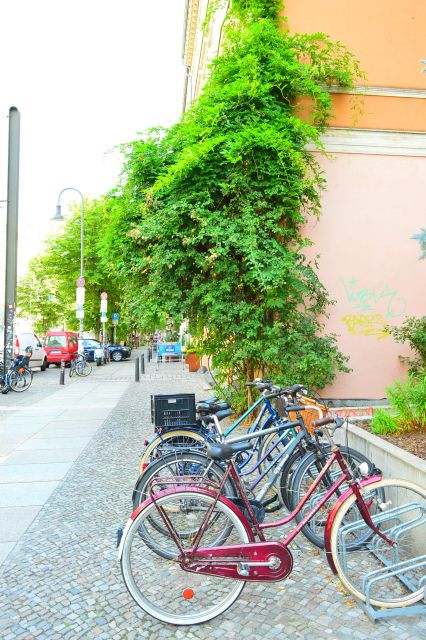
Next comes Prenzlauer Berg, known in the 1990s as an artistic center. Its later shift toward young professionals and families makes it one of the clearest places to discuss gentrification in Berlin.
The change is easy to reduce to a cliché: artists arrive, an area becomes fashionable, prices rise, and the original scene moves elsewhere. The tour gives you a more useful framework by showing the district as part of a longer cycle. Buildings and public spaces can improve, but the same improvements may make it harder for lower-income residents and independent businesses to stay.
The Kulturbrauerei is a particularly good stop. This former brewery has been reused as a center for culture and the arts. Its new role reflects a larger Berlin pattern: old industrial buildings gain a second life, often as places for exhibitions, performances, events, or creative work.
For you, the Kulturbrauerei offers something more concrete than a general lecture about urban change. You can connect the physical building to the city’s social shift. The site helps explain how former East Berlin spaces were repurposed after the Wall fell, and why old factories and breweries remain important to Berlin’s identity.
One practical point: three hours goes quickly. The tour can introduce Prenzlauer Berg and the Kulturbrauerei, but it is not designed for a long indoor visit at every stop. Think of this as a guided city walk with focused stops, not a museum tour with extended time in each building.
Friedrichshain, street art, and the fight over space
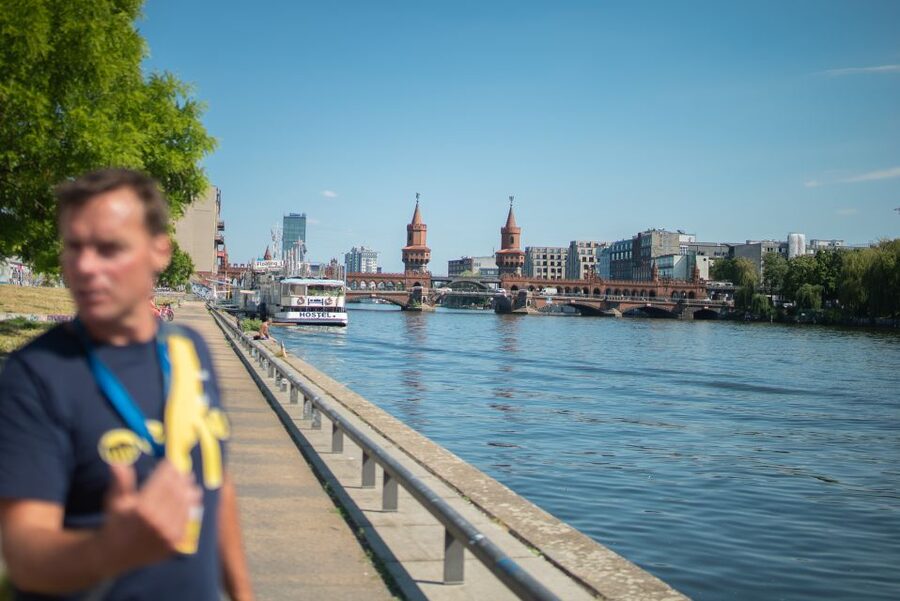
The route then turns toward Friedrichshain, one of the districts associated with Berlin’s alternative scene. Here the discussion shifts from restoration and professionalization to resistance against corporate businesses and landlords raising rents.
That contrast is one of the tour’s best features. Berlin’s image as a creative capital was built partly on low rents, unused buildings, open spaces, and room for experimentation. As the city became more desirable, those same conditions became harder to protect.
Friedrichshain lets you consider what happens when a neighborhood’s identity becomes valuable. Businesses may want the area because it already has character. Landlords may raise rents because demand has grown. Residents may organize to keep long-term communities and independent culture in place.
You should not expect a complete answer to Berlin’s housing problems in three hours. You will, however, get a clear introduction to the conflict between alternative culture and commercial pressure. That makes this part especially useful if you want to understand present-day Berlin rather than only its Cold War past.
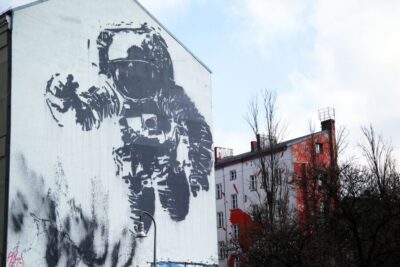
The tour also explains the political side of Berlin’s street art scene. That context matters. Murals and tags are not treated only as colorful decoration. They are connected to protest, neighborhood identity, and arguments about who has the right to speak in public space.
Same city, a completely different kind of day:
- Berlin: Reichstag, Dome and Government District Guided Tour
★ 4.7 · 18,288 reviews - Berlin: 1-Hour City Tour by Boat with Guaranteed Seating
★ 4.3 · 16,993 reviews - Berlin: Boat Tour Along the River Spree
★ 4.4 · 11,252 reviews - Discover Berlin Half-Day Walking Tour
★ 5.0 · 9,624 reviews
East Side Gallery and the Wall as an open-air gallery
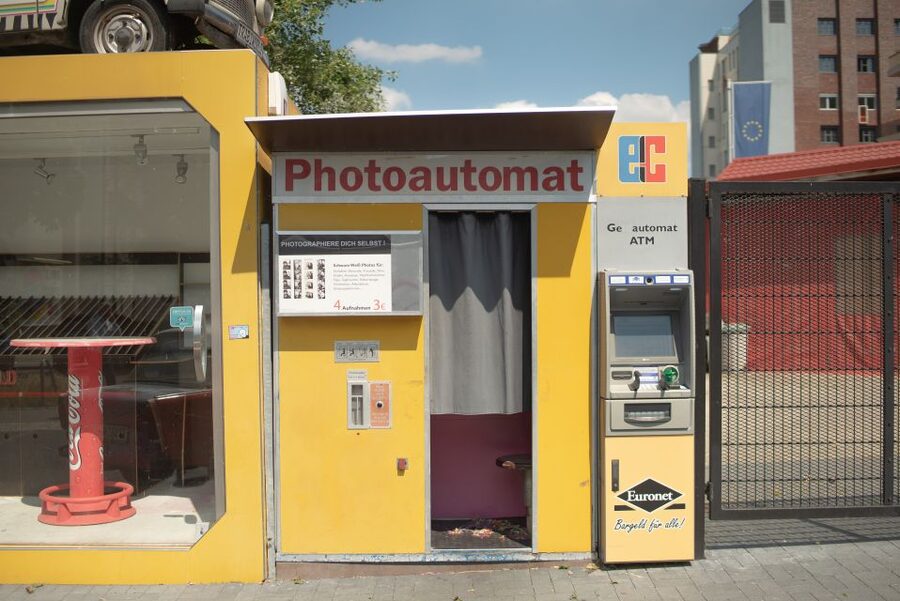
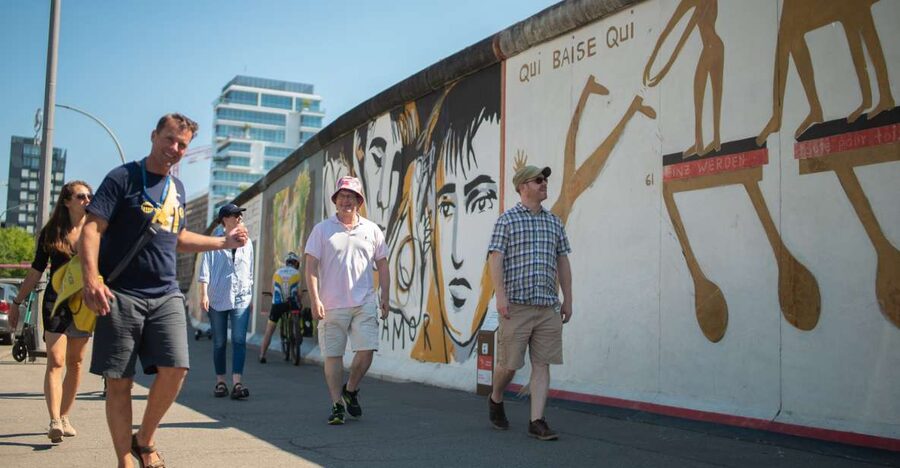
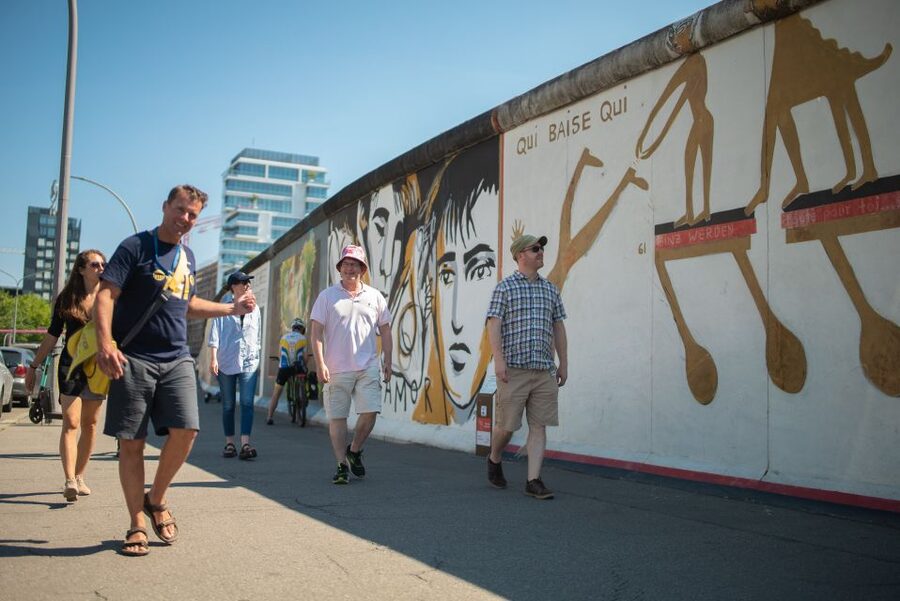
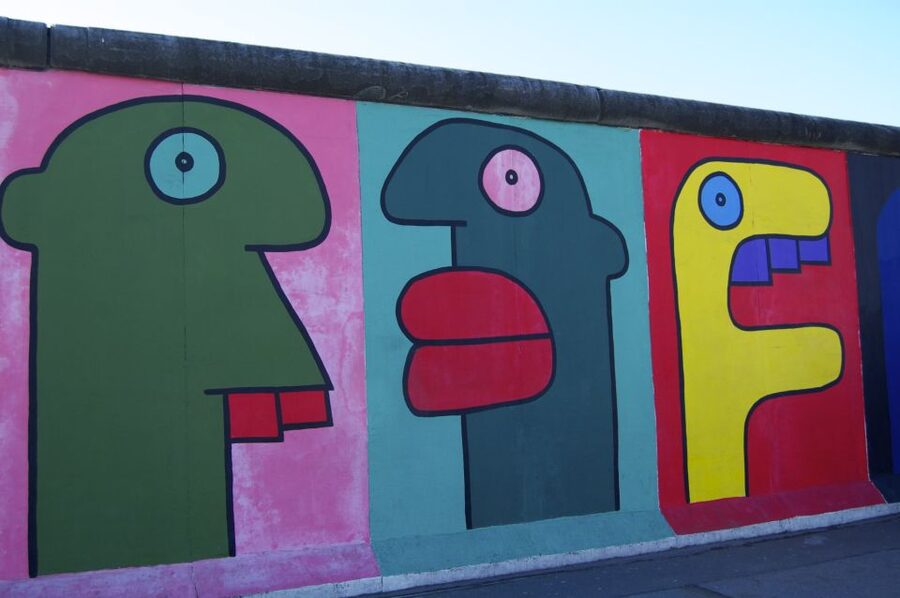
The East Side Gallery is the most recognizable stop on the route. This colorful surviving section of the Berlin Wall is now the world’s largest open-air gallery, and it gives you an immediate visual link between the city’s divided past and its creative present.
The Wall is easy to photograph without understanding much about it. A good guide adds the missing layer: why artists painted here, what the murals communicate, and how the work relates to Berlin’s political history.
The murals have different tones and messages, so the stop works best as a discussion rather than a quick checklist. You can consider the difference between a barrier built to divide people and a public artwork that invites interpretation. The political overtones of the street-art scene make the location more than a colorful backdrop.
There is also a useful tension here. The East Side Gallery is both a historic remnant and a major attraction. Its popularity can turn a serious site into a fast photo stop. This tour’s neighborhood focus helps place it in a wider story about Berlin’s art, redevelopment, and public space.
If the Wall is your main reason for booking, know that this is one important section of a larger route. You will not spend the entire three hours at East Side Gallery. If you want the Wall explained alongside the city’s later changes, the balance works well.
Kreuzberg and Berlin’s mixed cultural identity
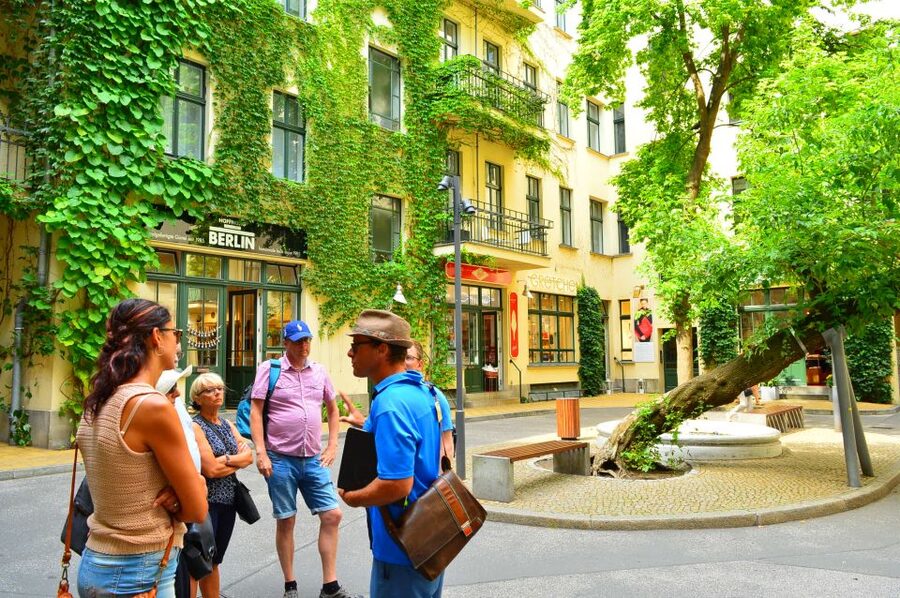
Kreuzberg brings the tour to another part of Berlin’s alternative districts. The area is associated with left-wing residents, immigrant communities, artists, and ongoing pressure from commercial development.
This is where the tour’s discussion of ordinary life becomes most practical. A city is not defined only by its official buildings. It also takes shape through shops, markets, street art, political arguments, and the people who use public space every day.
Kreuzberg also helps explain why Berlin’s identity cannot be separated from migration. The final market stop makes this especially clear, but the district itself provides the wider setting. You see a neighborhood shaped by different communities and by the long negotiation between local culture and new investment.
I appreciate that the tour does not present Kreuzberg as a frozen alternative zone. The district is changing too. That makes it more honest, even if less romantic. You may see a place celebrated for its rebellious image while residents continue to deal with the ordinary pressures of rent and redevelopment.
The Turkish Market beside the Landwehr Canal
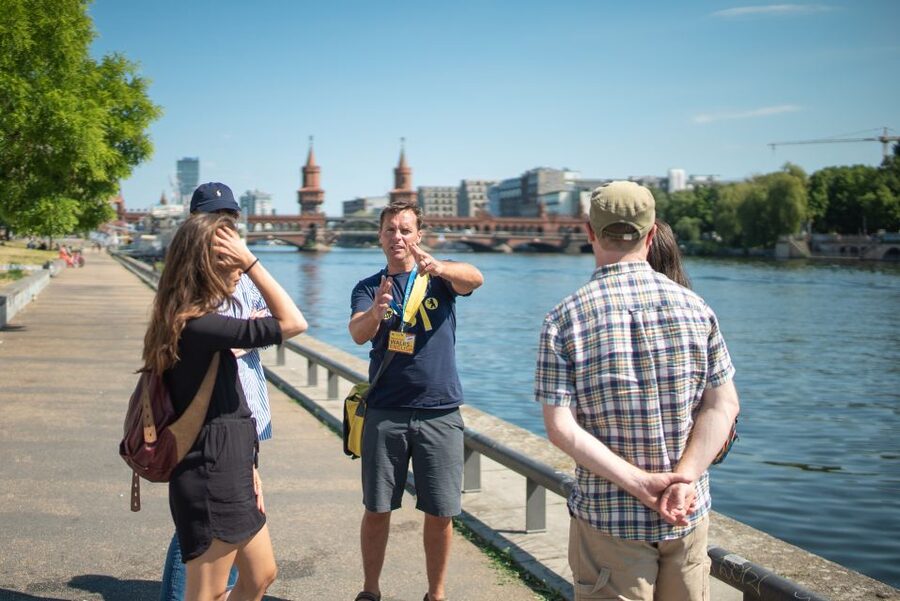
The tour ends at the Turkish Market, an outdoor bazaar beside the Landwehr canal. Its roots are in fresh produce, Turkish food, and brightly patterned fabric. Today, the market also includes Berlin artisans, local farmers, and impromptu live music.
This is a fitting final stop because it brings the tour back to daily life. After discussing walls, buildings, redevelopment, and political art, you arrive at a place built around buying food, meeting people, hearing music, and sharing public space.
You may find the market more useful than another formal monument. It shows Berlin as a working city with many cultural influences, not just as a former divided capital. You can look at the goods, listen to the sounds, and decide for yourself how much the market has changed while still keeping its older character.
Food and drinks are not included, so budget separately if you want to eat or shop. That is not a serious drawback, but it is worth remembering because the market naturally invites a snack or a browse.
The market is also a practical ending. It gives you a chance to continue exploring on your own after the guide finishes, though no extra time or independent extension is specified. The canal setting adds a pleasant change of pace after the denser neighborhood discussion.
What the private format is worth
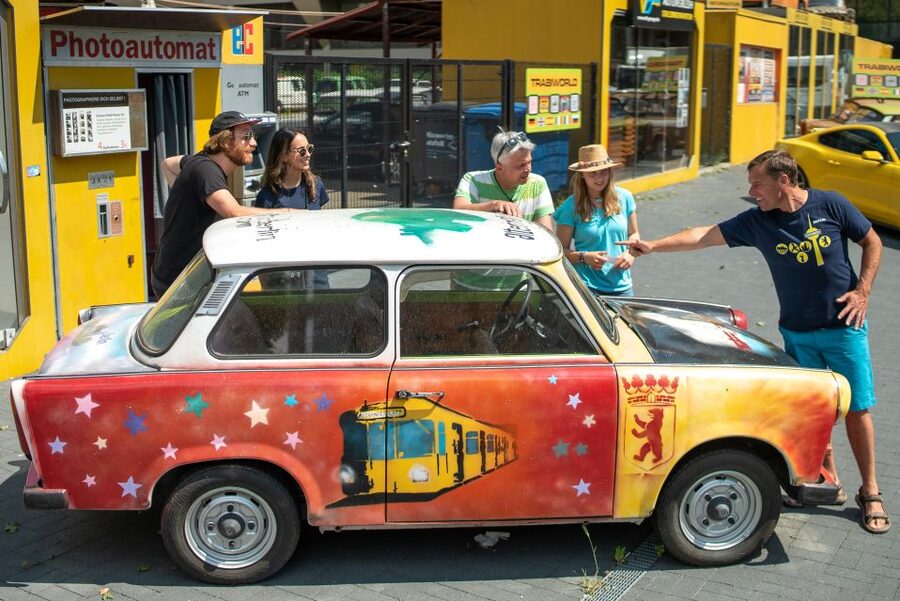
The price is $352 per group, with up to 20 people included. For a couple, that is a high cost compared with a shared walking tour. For a larger family, school group, or group of friends, the calculation changes quickly.
At the full group size, the cost works out to about $17.60 per person. That is reasonable for a private three-hour experience with hotel pickup included, especially if the guide can shape the conversation around your group’s interests.
The value depends on what you want from a Berlin tour. You are paying for a guide who connects several districts into one argument about the city. You are not paying for admission to major museums, a meal, or a long guided visit inside a single attraction.
Past guides included Tom, Maria, and JJ. The available comments describe Tom’s humor and American charm, Maria as lively and interesting, and JJ as engaged and enthusiastic. You cannot assume which guide you will receive, but the pattern suggests that personality is an important part of this experience.
The tour is offered in English or German. Pickup is included, and you should wait in your hotel lobby five minutes before the scheduled time. The guide wears a yellow name tag, a small but useful detail in a busy lobby.
Timing, clothing, and access
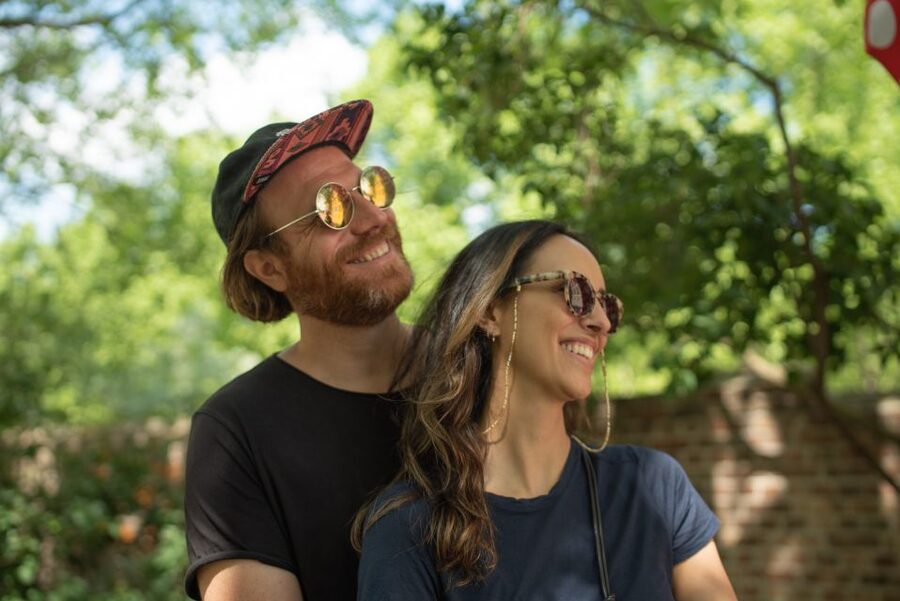
This is a three-hour tour, so wear weather-appropriate clothing. The experience is described as a walking tour, and the route covers several districts, so comfortable clothing and sensible shoes are wise even though specific footwear is not required.
Tours run Tuesdays and Fridays from April through October. That limited schedule is the biggest planning issue. If you have only one or two days in Berlin, check availability before building your itinerary around it.
The tour is wheelchair accessible. Since it covers several neighborhoods and includes outdoor areas, you should still discuss any specific mobility needs when booking if your group requires detailed route information.
Free cancellation is available up to 24 hours in advance for a full refund. You can also reserve now and pay later, which helps if your Berlin plans are still shifting.
Who should book Berlin Reunited and Revived?
I would recommend this tour to you if you have already seen Berlin’s basic sights, or if you prefer social history and neighborhood character to a list of monuments. It suits adults, families with older children, and groups who enjoy asking questions about how cities change.
It is especially useful for anyone interested in the Berlin Wall after 1989. The tour does not stop at the moment the Wall fell. It follows the consequences into restored Mitte, changing Prenzlauer Berg, and the contested districts of Friedrichshain and Kreuzberg.
You may want a different experience if you need a museum-heavy tour, a detailed Cold War chronology, or plenty of time at each landmark. The route covers a lot in three hours, so the reward is the broad connection between places rather than exhaustive detail at one site.
Should you book it?
Book this tour if you want Berlin explained through change, conflict, and everyday culture. The mix of Mitte, Prenzlauer Berg, Friedrichshain, and Kreuzberg gives you a useful view of how reunification reshaped the city.
It is best value for a private group large enough to share the $352 price. Check the Tuesday or Friday schedule, keep your clothing weather-ready, and expect a fast-moving outdoor experience with strong guide commentary rather than a series of long indoor visits.
FAQ
How long is the Berlin Reunited and Revived tour?
The tour lasts three hours.
Where does the tour take place?
It takes place in Berlin and visits Mitte, Prenzlauer Berg, Friedrichshain, and Kreuzberg.
What landmarks are included?
The route includes the Kulturbrauerei, the East Side Gallery, and the Turkish Market beside the Landwehr canal.
Is the tour private?
Yes. It is a private group tour for up to 20 people.
How much does the tour cost?
The price is $352 per group of up to 20 people.
What languages are available?
The tour is available with an English or German-speaking guide.
Is hotel pickup included?
Yes. You should wait in your hotel lobby five minutes before the scheduled pickup time. Your guide will wear a yellow name tag.
When does the tour operate?
Tours run on Tuesdays and Fridays from April through October.
Is the tour wheelchair accessible?
Yes, the experience is listed as wheelchair accessible.
Are food and drinks included?
No. Food and drinks are not included, so you should budget separately if you want to eat or shop at the Turkish Market.
Just added in Berlin
- Berlin & The Third Reich Private Guided Tour★ 5.0 · 3 reviews
- Third Reich Quest Experience in Berlin★ 4.5 · 7 reviews
- Private Analogue Photography Experience in Berlin★ 5.0 · 3 reviews
- Berlin Urbex Adventure and History Tour★ 5.0 · 9 reviews
- The Beauty of Berlin by Bike: Private Tour★ 5.0 · 59 reviews
- Berlin: Guided Bike tour of the Berlin Wall and Third Reich★ 5.0 · 160 reviews
- Shared Underground Party Tour in Berlin★ 4.5 · 9 reviews
- Beyond Currywurst: Berlin’s Hidden Street Food & Culture Tour★ 5.0 · 100 reviews
3-Hour Experiences, compared.
Munich’s Beer Halls and Breweries: 3-Hour Guided Tour
Read our review →
Browse the lists this tour appears in