
Reviewed · WALKING TOURS
Bamberg Free Walking Tour
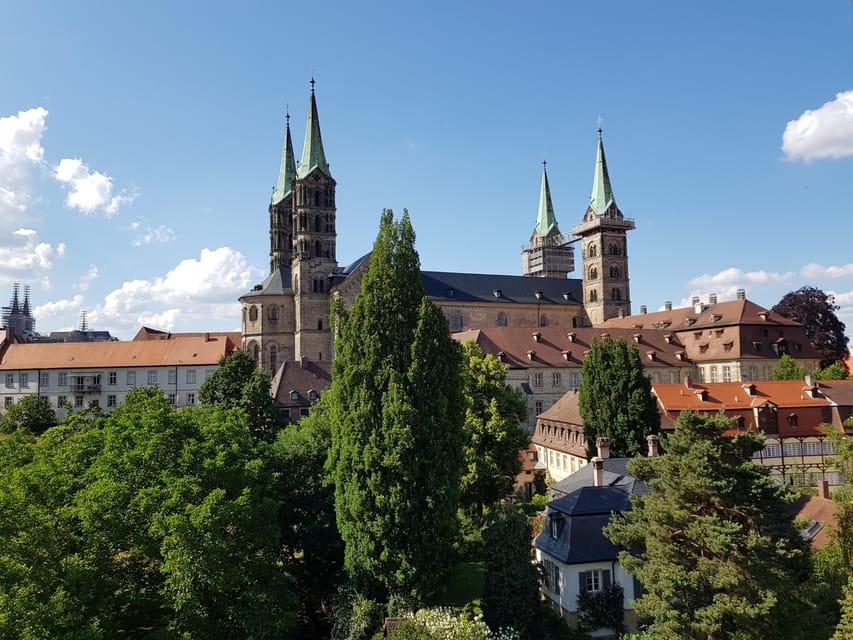
Bamberg’s best introduction comes on foot, and this two-hour walk gives you the useful big picture: the riverfront, island town, grand church buildings, and the stories that make this Franconian city more than a beer stop. Little Venice and the Old Town Hall provide the postcard views, while the history explains why Bamberg looks so grand.
I like the tour’s broad scope. You get both famous sights and everyday Bamberg, from fishermen and students to basketball players and brewers. I also like the open question time at the end, with guides such as Thomas and Julia offering practical suggestions. The main consideration is language: this is a German-language tour, and the guide works for tips, so the low listed price is not the full measure of what you should budget.
Key points at a glance
- Meet at a clear landmark: Find the Centurione statue near the Lower Bridge and look for the white umbrella with a green logo.
- Cover Bamberg’s essential sights: The route includes Little Venice, the Old Town Hall, the Romanesque cathedral, the Old Residence, and more.
- Hear over 1,000 years of history: The story runs from Castrum Babenberch in 907 through the bishops’ rise after 1007 and into the Baroque era.
- Go beyond beer: The tour also touches on fishermen, students, basketball, and modern cultural life.
- Plan for German: The live guide speaks German, and some content is presented in its original language.
- Allow for a tip: Guides work exclusively on a tip basis, so bring this cost into your planning.
Starting beside Bamberg’s Lower Bridge
The meeting point is the Centurione statue, a black-faced figure near the Lower Bridge. The white umbrella with a green logo identifies the group, which is useful in a busy part of the old town.
This location makes sense for the route. You begin close to the water and the historic bridges, then move into Bamberg’s old streets. It helps to arrive with a few minutes to spare, since the old town has several bridges and lanes that can make a quick search more awkward than expected.
The tour lasts two hours. That is enough time for an overview without taking up your whole day. You will not get a long interior visit at every building, but you should come away knowing what to return to later.
Because the tour is conducted in German, your language ability matters. If you understand German comfortably, you can follow the historical detail and humor more fully. If you do not, the sights are still easy to appreciate, but the spoken part may be harder to use.
More Walking Tours in Franconia
- Bamberg: Guided Walking Tour
★ 4.6 · 3,202 reviews - Bamberg: City Highlights Walking Tour
★ 4.6 · 679 reviews - Bamberg: Private Guided Walking Tour
★ 4.8 · 90 reviews
Little Venice and the city’s river life
Little Venice is one of Bamberg’s most appealing views. The name refers to the line of old houses along the water, where the riverfront gives the city a softer, more intimate character than its grand churches and palaces.
This is also where the tour’s focus on ordinary life becomes useful. Bamberg is not only a city of bishops, architects, and brewers. Fishermen helped shape the river districts, and the water explains part of the city’s layout and character.
Take time to look beyond the prettiest façades. The value of a guide here is not simply pointing at attractive houses. It is explaining how the river, bridges, trades, and neighborhoods fit together.
Little Venice is a photo-friendly part of the route, but the group may pause in a public area rather than provide a long, quiet photography session. If you want detailed photos, return later on your own after you know where to go.
The Old Town Hall on the island
The Old Town Hall is one of Bamberg’s defining buildings. Its unusual position between parts of the city gives it extra visual interest, and the building helps explain Bamberg’s divided urban structure.
This stop works well early in a walking tour because it gives you a strong sense of place. Instead of seeing the old town as a collection of handsome buildings, you begin to understand how water, bridges, and civic power shaped it.
The guide’s role here is especially helpful if you want context rather than a quick photograph. The building belongs to the civic side of Bamberg’s story, which balances the religious power represented by the cathedral and the former episcopal residences.
You should expect an exterior-focused visit within the two-hour route. The tour covers many sights, so it is designed to show you the city and explain its main stories rather than spend a long time inside each attraction.
The Romanesque cathedral and the bishops’ city
Bamberg Cathedral brings the religious and political history of the city into view. Its Romanesque design gives it a different feel from the later Baroque buildings nearby, and that contrast is part of what makes the old town so interesting.
Bamberg was first mentioned in 907 as Castrum Babenberch. From 1007 onward, the bishops helped turn it into one of Franconia’s most important cities. The cathedral and surrounding buildings make that power visible in stone.
For you, this historical layer adds value to what might otherwise be a quick sightseeing loop. You learn why such a relatively compact city has grand ecclesiastical buildings and why its architecture changes so sharply from one street to the next.
The cathedral is also a useful reference point for the rest of the tour. As you move between Romanesque and Baroque buildings, you can see how Bamberg changed over time rather than treating its architecture as one single period.
More Walking Tours in Bamberg:
- Bamberg Private Walking Tour With A Professional Guide
★ 4.5 · 27 reviews - Free Walking Tour Bamberg
★ 4.5 · 9 reviews - Culinary-historical walk through Bamberg
★ 4.0 · 7 reviews - Private Guided Walking Tour of Bayreuth With A Professional Guide
★ 5.0 · 3 reviews
The Old Residence and Baroque Bamberg
The Old Residence introduces the city’s Baroque side. Its formal design contrasts with the older medieval and Romanesque parts of Bamberg, giving the walking route a clear visual shift.
The tour uses this contrast to explain how the city developed under the bishops. Baroque splendor was not just decoration. It reflected authority, wealth, and the ambitions of the people who controlled Bamberg.
I like this part of the route because it connects architecture with power. You are not simply told that a building is old or beautiful. You get a sense of how different rulers and periods left their mark on the city.
The wording of the tour allows for more sights beyond the named stops, so the exact order and amount of time at each location may vary. Think of the walk as a guided orientation, with the option to return to the buildings that catch your attention afterward.
The darker chapter behind the grand façades
Bamberg’s story is not all church towers, river views, and beer. The tour also addresses the criminal persecution of witches, a difficult part of the city’s past that sits in sharp contrast to its Baroque beauty.
This subject matters because it prevents the old town from becoming a polished picture with the hard parts removed. Grand buildings can tell you about power, but persecution tells you how that power could affect ordinary people.
The tour’s historical range is one of its stronger features. In two hours, you move from the city’s early mention in 907 to the rise of the bishops after 1007, then into later architectural and social history. That gives you a useful framework for exploring independently.
You should expect an overview rather than a specialist lecture. If this topic interests you, note your questions and ask the guide after the walk. The tour specifically leaves time for questions and suggestions at the end.
Bamberg beyond beer
Bamberg is widely associated with Franconian beer, and beer is part of the conversation here. Still, the tour makes a point of showing that the city’s identity is wider than its breweries.
That wider view includes fishermen, basketball players, and students. These details help connect the historic center with modern Bamberg. You get a city with working traditions, university life, sports, and local culture, not just old buildings arranged around beer halls.
This is a good reason to choose the walk even if you already know you want to visit a brewery. A beer-focused stop can tell you what to drink. This tour helps you understand the city where that drinking culture exists.
The experience will suit you best if you like history with a local, human angle. It is less suitable if you want a dedicated tasting, a museum visit, or a long stop at one attraction. Beer comes up, but it is one part of a larger city tour.
What the two-hour format gives you
Two hours is a practical length for a first look at Bamberg. You can see the main districts, hear the key historical chapters, and still have time for lunch, a brewery visit, a museum, or another activity afterward.
The tradeoff is pace. A route covering Little Venice, the Old Town Hall, the cathedral, the Old Residence, and additional sights cannot give every stop equal attention. You will see more places, but you may want to revisit your favorites later.
I would use this as your first Bamberg activity if you have only a day. It helps you get oriented quickly and shows you which buildings and neighborhoods deserve extra time. The high rating of 4.7 from 84 reviews fits the tour’s purpose: a short, well-liked introduction rather than a specialist study.
The walk also works for a longer stay. In that case, use the guide’s final question period to ask for ideas around Bamberg and nearby places. The information provided does not promise a fixed list of recommendations, but the guides are available after the tour for tips and suggestions.
Price, tips, and practical value
The listed price is $3.54 per person, which makes this one of the cheapest ways to get a structured introduction to Bamberg. It is important, though, to understand the payment model. The guides work exclusively on tips and ask you to reward their work at the end.
That means the listed price should not be treated as the complete cost of the experience. You decide the tip, but you should plan to give one if the walk is useful to you. This model can offer good value because you pay a small booking price and then judge the tour for yourself.
The free cancellation policy allows cancellation up to 24 hours before the start for a full refund. You can also reserve now and pay later, which helps if your Bamberg plans are still changing.
The meeting point is central, and the walk lasts only two hours. Those details add real value: you do not need transport to a distant starting point, and you can fit the tour around other plans.
Who should book this Bamberg walk?
I would recommend it to first-time visitors who want a clear introduction to the city. It is also a good match for anyone who likes architecture, local history, and city stories that include both famous figures and everyday communities.
German speakers will get the fullest benefit because the live tour is in German. Families, couples, and solo visitors can all use the walk as a way to get their bearings, provided they are comfortable with a group walking format.
You may want a different experience if you need English commentary, a dedicated beer tasting, or extended access inside the cathedral and residences. This tour is about seeing the old town as a whole.
Should you book the Bamberg Free Walking Tour?
Book it if you want an affordable, efficient first look at Bamberg and understand German well enough to follow the guide. The route brings together Little Venice, the Old Town Hall, the Romanesque cathedral, the Old Residence, and the city’s long story from 907 onward.
The strongest reasons to go are the broad range of subjects and the chance to ask questions after the walk. Keep the tip-based payment in mind, and do not expect every sight to receive a long interior visit.
For a one-day Bamberg visit, this is a sensible first step. Take the tour early if possible, then return to the places that deserve more time.
FAQ
Where does the Bamberg Free Walking Tour meet?
The tour meets at the Centurione statue, near the Lower Bridge. Look for the white umbrella with a green logo.
How long does the tour last?
The guided tour lasts two hours.
What language is the tour in?
The live tour guide speaks German. Some content is shown in its original language.
Which sights are included?
The route includes Little Venice, the Old Town Hall, the Romanesque cathedral, the Old Residence, and other sights in Bamberg’s UNESCO World Heritage Old Town.
How much does the tour cost?
The listed price is $3.54 per person. The guides work exclusively on a tip basis, so you should also plan to reward the guide at the end.
Can I cancel or pay later?
You can cancel up to 24 hours in advance for a full refund. You can also reserve your place and pay later.
Just added in Bamberg
- Free Walking Tour Bamberg★ 4.5 · 9 reviews
- Private Guided Walking Tour of Bayreuth With A Professional Guide★ 5.0 · 3 reviews
- Bamberg Countryside Breweries Beer Hike Food Experience★ 5.0 · 27 reviews
- Culinary-historical walk through Bamberg★ 4.0 · 7 reviews
- Bamberg Private Walking Tour With A Professional Guide★ 4.5 · 27 reviews
- Bayreuth Scavenger Hunt and Sights Self-Guided Tour★ 5.0 · 7 reviews
- Outdoor Escape Game with puzzle backpack Bamberg: The Secret of the Horseman★ 4.7 · 39 reviews
- Bamberg: Where Hollywood dreams and movies are born★ 4.5 · 26 reviews
Walking Tours, compared.




Berlin’s Best: 2 Hour Walking Tour Third Reich and the Cold War
Read our review →


Third Reich Berlin: Hitler and WWII Walking Tour
Read our review →Browse the lists this tour appears in