
Reviewed · CYCLING TOURS
Berlin: Highlights Guided Bike Tour
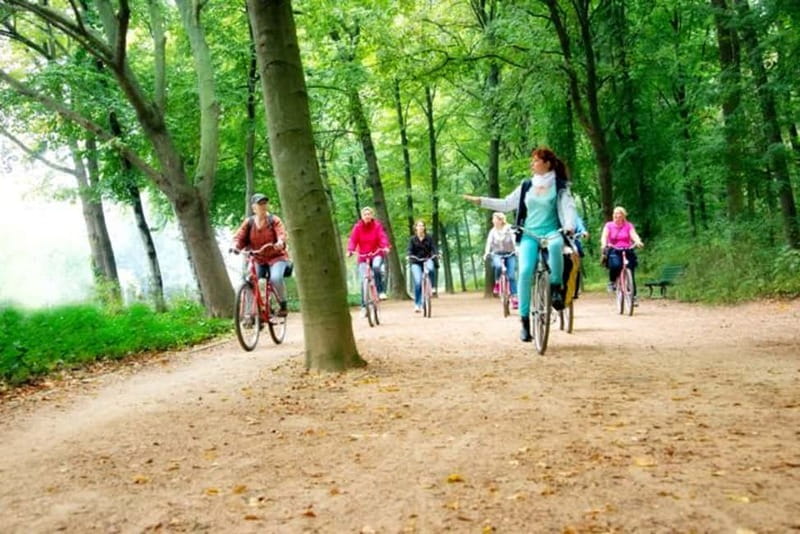
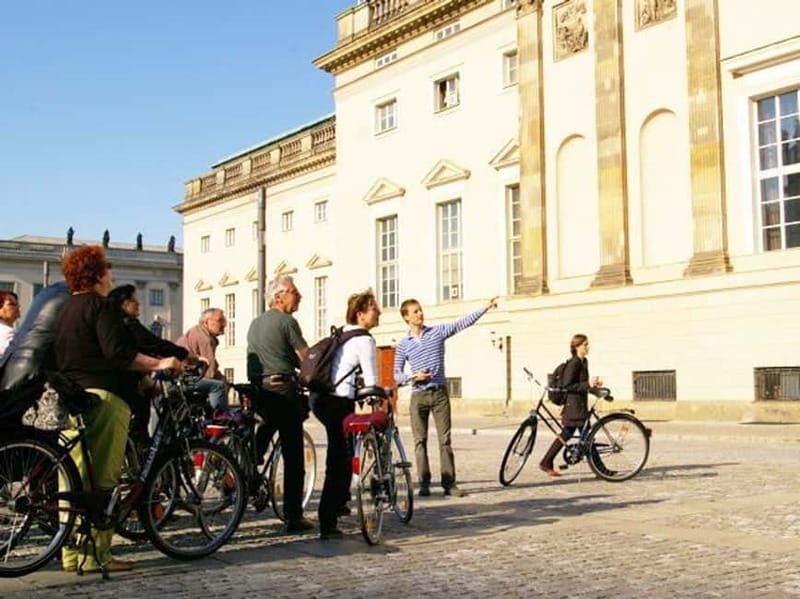
Berlin reveals itself quickly from a bicycle. In three hours, you can move from medieval Nikolaiviertel to the Brandenburg Gate, Cold War checkpoints, former Nazi power sites, and neighborhoods shaped by recent change. You cover about 12 kilometers, but the pace stays easy, with regular stops for stories and questions.
I like the strong city overview and the way the route mixes major sights with ordinary streets. I also like the practical setup: well-serviced bikes, rear baskets, optional helmets, and ponchos for wet weather. The main drawback is that the starting point can be hard to spot, and some of the bikes feel heavy when mounting.
Key points at a glance
- Start near Berlin’s oldest quarter: Meet at Poststraße 11, in the courtyard entrance marked FREE BERLIN, about five minutes on foot from the TV Tower.
- Cover central Berlin by bike: The relaxed 12-kilometer route links major sights without the stop-and-go feel of a walking tour.
- Expect different English and German routes: The German tour includes Prenzlauer Berg, while the English version focuses more on Nazi and Cold War sites.
- Hear more than dates and names: Guides such as Julia, Simon, Christopher, Fabian, Carl, Jake, Berndt, Dom, and Vincent are praised for clear stories, humor, and flexibility.
- Get useful cycling support: Bikes have baskets and are serviced by certified mechanics. Helmets are available if requested, and ponchos are supplied in rain.
- Pay about $40 for a first look at Berlin: That is fair value if you want history, orientation, and transport rolled into one active outing.
Starting in Nikolaiviertel near Poststraße
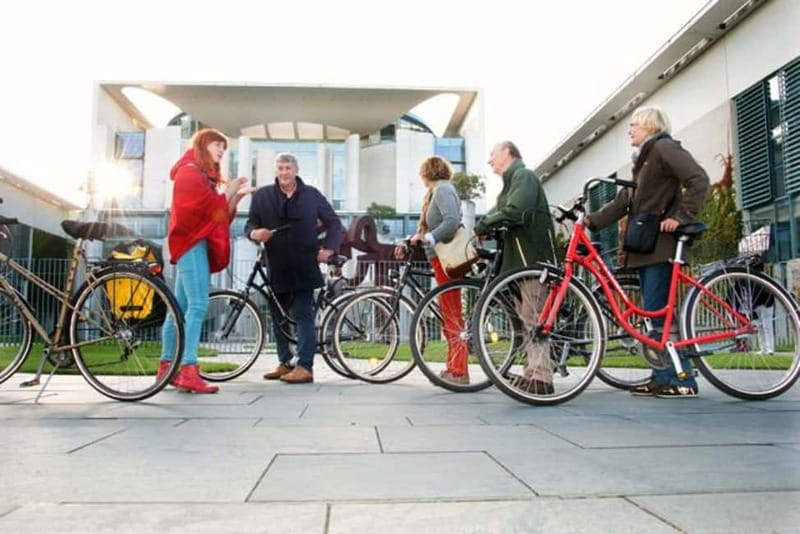
The tour begins in Nikolaiviertel, a central district with some of Berlin’s oldest associations. The meeting point is at the courtyard entrance of Poststraße 11. Look for the FREE BERLIN sign rather than expecting a large street-front shop.
This location is close to the TV Tower, roughly five minutes away on foot, but the courtyard entrance can take a little searching. Arrive early enough to find it without rushing. One practical note: large bags can be left with the operator during the ride, which makes the start much easier if you have luggage with you.
You choose from the available bicycles before setting off. The bikes have baskets and are regularly serviced by certified mechanics. They are described as solid rather than light, and one useful tip is to ask for a bike with a slanted top tube if mounting a high step-through frame is awkward.
You can request a helmet, though it is not automatically included on your head. An E-Bike can be booked under the Senior option, with the price adjusted to cover it. That is worth considering if you are uncertain about managing three hours of cycling.
More Bike Tours in Berlin
- Berlin: Sights and Highlights Bike Tour with a Local Guide
★ 4.8 · 2,698 reviews - Berlin Highlights 3-Hour Bike Tour
★ 5.0 · 948 reviews - Berlin City Bike Tour with Beer Garden Stop
★ 5.0 · 917 reviews
A gentle ride through Berlin’s center
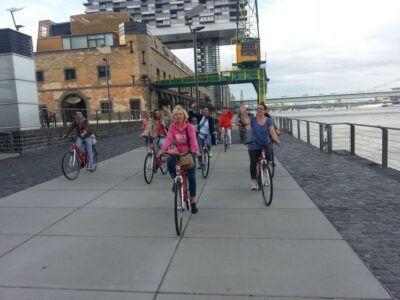
The appeal here is not speed. The guide keeps a steady pace and stops often for commentary, so you have time to listen, look around, and ask questions. The route uses cycle paths in many places, including paths on the pavement rather than directly beside moving traffic.
That does not make city cycling completely effortless. Berlin is still a working capital with traffic, pedestrians, and changing road conditions. Still, the easy pace and guide-led route help, especially if you are worried about cycling in a large city. Simon, one of the guides, is specifically praised for leading carefully from start to finish and explaining road rules before the group sets off.
The format also lets you see more than you could comfortably cover on foot. Instead of spending much of the afternoon walking between distant sites, you ride from one part of central Berlin to another and stop where the story matters.
The English route and Berlin’s difficult twentieth century
The exact route depends on the language you book. The English version places particular attention on sites tied to Berlin’s Nazi period and Cold War division.
You should expect stops connected with Checkpoint Charlie, remains of the Berlin Wall, and the site of Hitler’s bunker. These locations are not simply photo stops. Together, they help explain how Berlin became the center of Nazi rule, how the city was split after the war, and how the physical border shaped daily life.
The bunker site is especially easy to miss when exploring alone. There is no grand surviving structure to announce it, which makes a guide useful. The same is true of Wall remains scattered around the city. A short explanation can turn an ordinary-looking stretch of pavement or wall fragment into a place with real historical weight.
Checkpoint Charlie is one of Berlin’s most recognizable Cold War names. The tour gives you context for the crossing point rather than leaving you with only a famous sign and a quick photograph. The guide’s commentary is where much of the value lies, particularly when you ask about people, decisions, and the lives of Berliners across different periods.
The route is not an in-depth visit to museums or memorial interiors. You remain on the bike, stopping outside and hearing the main story. If you want long museum visits or detailed site-by-site study, add those separately. If you want the city’s major themes explained while moving through the streets, this format works well.
Brandenburg Gate and Berlin’s best-known sights
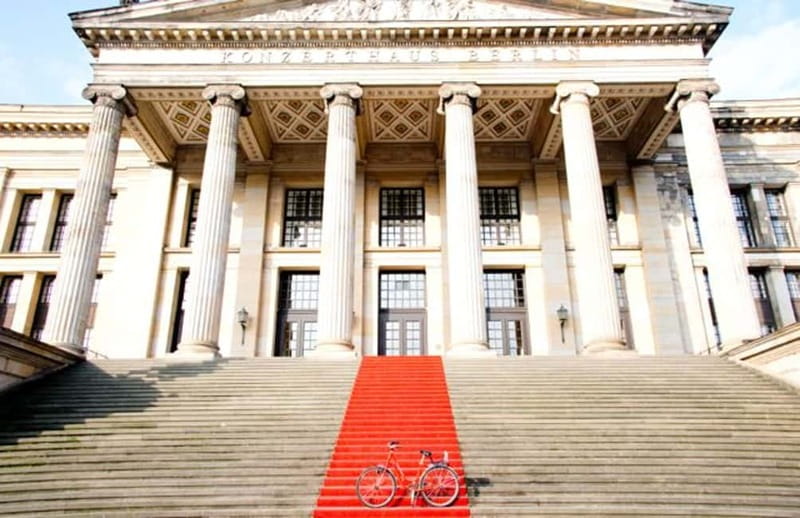
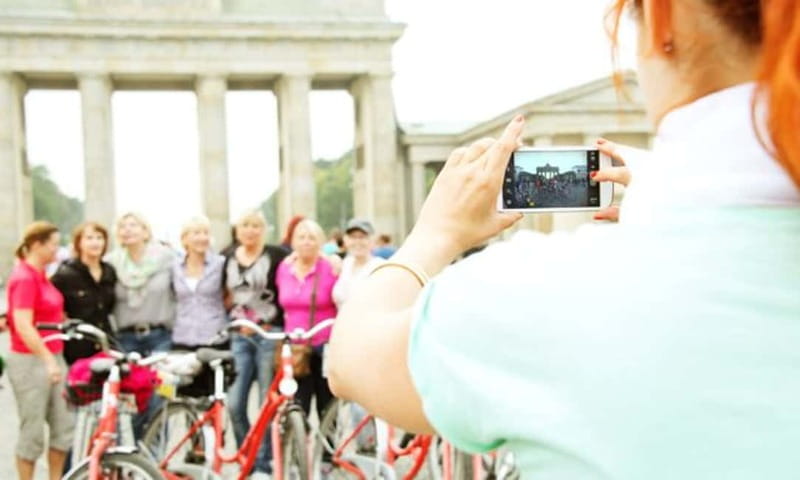
The Brandenburg Gate is one of the central landmarks on the ride. Reaching it by bicycle gives you a sense of how Berlin’s historic center is laid out, instead of viewing the monument in isolation.
The gate has served as a symbol through several very different chapters of the city. Your guide connects it with Berlin’s changing political identity and the city’s later renewal. That broader setting matters. You see how major buildings sit among open spaces, government districts, memorials, and busy public routes.
The tour is designed as an overview, not a checklist race. You pass renovated historic buildings and receive short explanations at key points. Guides have been praised for bringing both past events and current city life into the same conversation, which is useful in Berlin, where construction and redevelopment are part of the daily view.
Some guides also point out unusual or less obvious details. Dom is noted for adapting the route to a group’s interests, while another guide tailored the outing around sights already seen. A private booking gives you more control of that kind, but even a regular tour can leave room for questions.
Same city, a completely different kind of day:
- Berlin: Reichstag, Dome and Government District Guided Tour
★ 4.7 · 18,288 reviews - Berlin: 1-Hour City Tour by Boat with Guaranteed Seating
★ 4.3 · 16,993 reviews - Berlin: Boat Tour Along the River Spree
★ 4.4 · 11,252 reviews - Discover Berlin Half-Day Walking Tour
★ 5.0 · 9,624 reviews
Historical Mitte and the changing city
Mitte is where Berlin’s major political and cultural stories often overlap. The ride gives you a quick look at the central district’s old buildings, public spaces, and newer changes.
I like this part because the city does not present a polished single-era image. Renovated façades sit beside newer construction. Places associated with monarchy, dictatorship, division, and reunification are close together. A bicycle helps you understand that physical closeness.
The guides also add small details that are easy to miss in a guidebook. Julia is praised for explaining the area clearly and for going beyond standard facts. Christopher is described as energetic and engaging, while Carl is credited with linking Berlin’s past to current affairs in a way that keeps the three hours moving.
The tone matters. Berlin’s twentieth-century history is heavy, but the ride is not presented as a grim procession. Guides use humor where appropriate and make space for questions. You get serious context without spending the entire tour in lecture mode.
Prenzlauer Berg and the German-language route
The German-language version includes Prenzlauer Berg, a district often used to illustrate Berlin’s social and physical change. The route shows a different side of the city from the central memorials and government buildings.
You pass through lively streets and neighborhoods where renovated older buildings sit alongside signs of new development. The point is not simply to admire attractive façades. Prenzlauer Berg helps explain how parts of Berlin have changed since reunification and how today’s city differs from the divided capital.
If you book in English, do not assume this section will be identical. The English route instead gives more attention to major Nazi and Cold War locations, including Checkpoint Charlie, Wall remains, and Hitler’s bunker site. If one subject matters most to you, confirm the language and route when booking.
This difference is important for planning. Both versions provide a city overview, but they emphasize different parts of Berlin. The German route appears stronger for neighborhood change and Prenzlauer Berg. The English route is better suited to a first-time visitor who wants the central historical landmarks tied to Berlin’s twentieth-century tragedies.
Guides who shape the experience
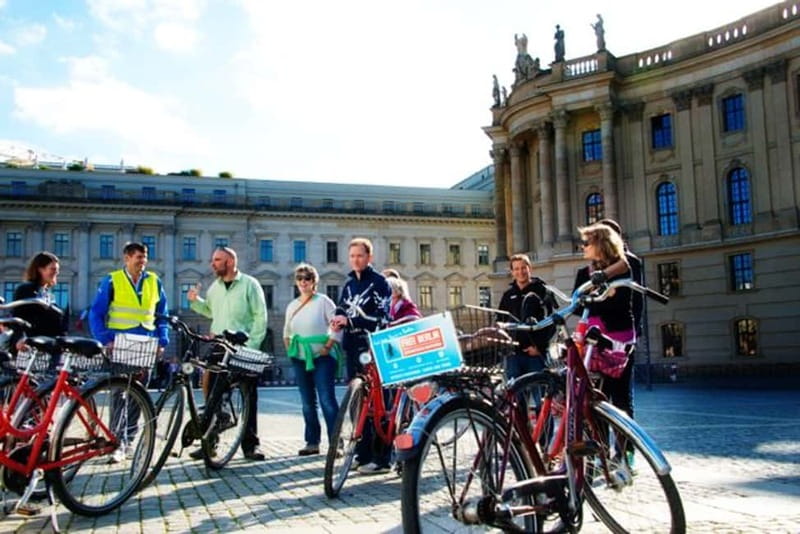
The guide makes a large difference on a tour like this. You are not just following a map. You are listening while riding, then stopping to connect a place with a person, event, or piece of city life.
Several guides receive especially strong praise. Julia combines clear explanations with useful road guidance. Simon is described as patient, funny, and careful on the streets. Christopher brings plenty of energy, while Fabian handled wet weather with ponchos and kept the outing enjoyable.
Carl is singled out for making history and current affairs feel connected. Jake is praised for helping a short Berlin visit feel worthwhile. Berndt is noted for paying attention to a family group that included a five-year-old. Dom is valued for adjusting the route to suit what the group had already seen.
You cannot choose which guide will lead a standard departure, so expect some variation in style. That is normal. The common thread is an emphasis on explanation, humor, and questions rather than simply naming buildings as you pass them.
The tour can also be booked as a private group. That costs more than the listed per-person rate may suggest, but it makes sense if your group has special interests, mixed cycling confidence, or sights it has already visited.
Bikes, weather, and comfort
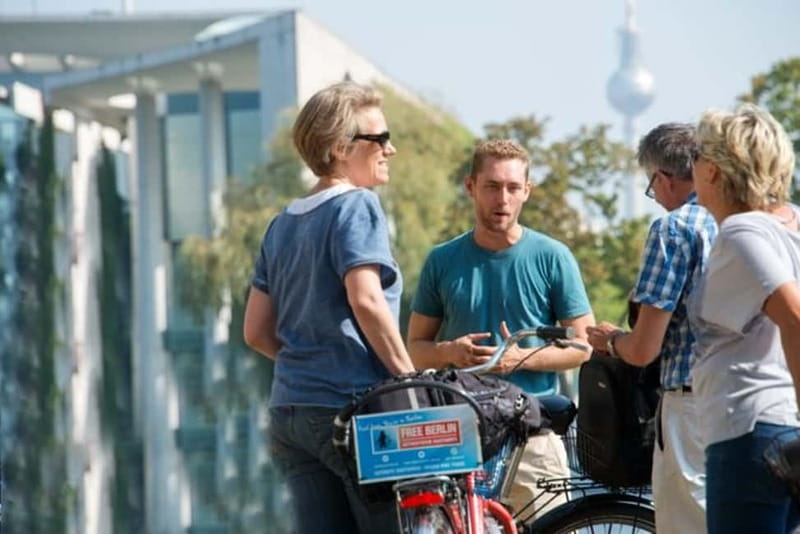
The equipment is practical. Each rental bike has a basket, and the bicycles are serviced regularly. Pedal-brake bikes may be available, which is helpful if you prefer that system over hand brakes.
Some riders find the bikes heavy. That is most noticeable when lifting a leg over the frame or getting started, not necessarily once you are moving. Ask to compare frames before leaving, especially if a high top tube is uncomfortable.
Rain does not automatically end the outing. Waterproof ponchos are available, and one guide kept the tour going in pouring rain. Still, Berlin weather can affect how enjoyable any outdoor activity feels. Wear clothing you can move in and bring layers, even though the operator supplies rain protection.
The tour is not suitable for anyone who cannot ride a bike. It is best for people comfortable with a three-hour outing at a relaxed pace. The distance is manageable for many riders, but you should still be ready to cycle continuously between stops.
Is $40 a fair price?
At $40 per person, this is a reasonable way to get an initial understanding of Berlin. You are paying for three hours, a bicycle, a local guide, and a route that links sights spread across the center.
The value is strongest early in your stay. After the ride, you will know where the Brandenburg Gate, Checkpoint Charlie, Wall remains, and other central landmarks fit together. You can then return to the places that interest you most, using museums and memorials for a longer visit.
It is less useful if you already know central Berlin well or prefer exploring at your own speed. A bicycle tour also gives you less time at each stop than a walking tour or museum visit. The advantage is range and orientation, not close study.
Free cancellation is available up to 24 hours before the start, and you can reserve now and pay later. Those policies help if your Berlin schedule is still shifting.
Who should book this Berlin bike tour?
I would choose this tour for a first or second day in Berlin, especially if you want the major sights explained before deciding where to spend more time. It suits active visitors, families who can cycle comfortably, and anyone who finds a walking tour too slow for a spread-out city.
It is also a good match if you are nervous about cycling in Berlin. The guides explain road rules, keep the pace controlled, and use cycle paths where available. The heavy bikes and city traffic are still worth considering, but the route is not designed as a race.
Book it if you want a broad, human explanation of Berlin in a short time. Skip it if you cannot ride, need extensive time inside museums, or want a fixed list of every sight regardless of language route. For most first-time visitors, the English version offers a useful mix of famous landmarks, Nazi and Cold War history, and everyday city views for a fair price.
FAQ
Where does the Berlin bike tour start?
Meet at the courtyard entrance of the building at Poststraße 11. Look for the FREE BERLIN sign. The meeting point is about five minutes on foot from the TV Tower.
Where does the tour finish?
The tour ends back at the same meeting point.
How long is the bike tour?
The tour lasts three hours and covers about 12 kilometers at a relaxed pace.
Which languages are available?
The tour is offered in English and German.
Does the English route visit Checkpoint Charlie and the Berlin Wall?
Yes. The English version includes important sites connected with Berlin’s Nazi and Cold War history, including Checkpoint Charlie, remains of the Wall, and the site of Hitler’s bunker.
Is Prenzlauer Berg included?
Prenzlauer Berg is included in the German-language version of the tour. The English route follows a different emphasis and focuses more on major Nazi and Cold War locations.
Are helmets and rain gear provided?
Bikes are included, helmets are available if requested, and waterproof ponchos are provided in case of rain.
Can I book an E-Bike or leave large luggage?
You can request an E-Bike by booking as a Senior, with the adjusted price including the E-Bike. Large baggage can be left with the tour operator during the tour.
Just added in Berlin
- Berlin & The Third Reich Private Guided Tour★ 5.0 · 3 reviews
- Third Reich Quest Experience in Berlin★ 4.5 · 7 reviews
- Private Analogue Photography Experience in Berlin★ 5.0 · 3 reviews
- Berlin Urbex Adventure and History Tour★ 5.0 · 9 reviews
- The Beauty of Berlin by Bike: Private Tour★ 5.0 · 59 reviews
- Berlin: Guided Bike tour of the Berlin Wall and Third Reich★ 5.0 · 160 reviews
- Beyond Currywurst: Berlin’s Hidden Street Food & Culture Tour★ 5.0 · 100 reviews
- Berlin Third Reich & Cold War Walking Tour With A Guide★ 5.0 · 7 reviews
Cycling Tours, compared.
Sights and Highlights Bike Tour with a Local Guide
Read our review →
Classic Mike’s Bike Tour daily @ 11.30 incl Beer Garden & Surfers
Read our review →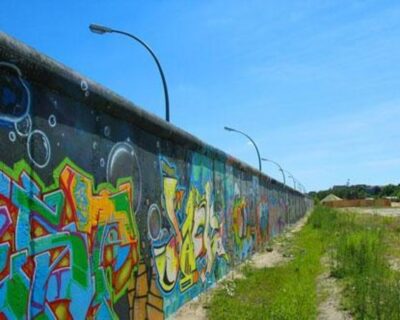

Browse the lists this tour appears in