
Reviewed · CYCLING TOURS
Berlin: Experience the Alternative Kreuzberg on a Bike Tour
Berlin’s alternative side makes the most sense from a bicycle seat. This three-hour ride moves from Nikolaiviertel into Kreuzberg, Friedrichshain, and the Spree waterfront, linking street art, former borderland, immigrant neighborhoods, artists’ spaces, and odd corners that are easy to miss on foot.
I like the personal storytelling and the way the route connects Berlin’s Wall years with the city’s present-day counterculture. I also like the frequent stops, which let you hear about places such as Das Baumhaus, Görlitzer Park, and Kottbusser Tor without turning the ride into a hard workout. The main drawback is that you may spend more time listening than pedaling, and the route can be canceled in low season if too few people book.
Key points to know before you book
- Three hours through changing Berlin: The route shifts from old central Berlin to Kreuzberg, Friedrichshain, and the Spree.
- A guide-led look at counterculture: Expect stories about squats, artists, guest workers, anarchist spaces, political activism, and urban change.
- Frequent stops keep the ride manageable: You pause often for explanations, photos, and views, so this is not a race.
- Several guides bring their own style: Jake, Bjorn, Rico, Rufus, Vincent, Karl, and others have led this experience, with each guide shaping the route.
- Bike, helmet, and child equipment are included: Infant seats can be provided on request, and children must ride with an adult.
- Practical value at $42.33: For three hours of equipment, guiding, and neighborhood coverage, the price is fair, especially early in a Berlin visit.
Why this ride shows you a different Berlin
Berlin’s famous sights tell only part of the story. The Brandenburg Gate, Reichstag, Museum Island, and Checkpoint Charlie explain the city’s major chapters, but they do not always show how Berlin’s people reshaped empty buildings, former border areas, and neglected streets.
This ride focuses on that less polished side. You move through places shaped by migration, housing struggles, political activism, music, art, and sudden redevelopment. A guide may explain how a building became an artists’ space after years of squatting, or how a small garden house beside the Wall reflected the bold, improvised spirit of Kreuzberg.
The experience is not just a list of buildings. It asks you to compare old East and West Berlin, working-class streets and expensive new construction, quiet courtyards and heavy traffic. That contrast is the real subject.
The cycling itself is not described as demanding. You stop often, and one French-language account specifically found the ride suitable for everyone in the group, while wishing for a little more cycling and less explanation. That is a useful warning. If you want a fast, athletic ride, choose another outing. If you want to cover a lot of ground while hearing the stories behind it, this format works well.
More Bike Tours in Berlin
- Berlin: Sights and Highlights Bike Tour with a Local Guide
★ 4.8 · 2,698 reviews - Berlin Highlights 3-Hour Bike Tour
★ 5.0 · 948 reviews - Berlin City Bike Tour with Beer Garden Stop
★ 5.0 · 917 reviews
From Nikolaiviertel to Kreuzberg’s mixed streets
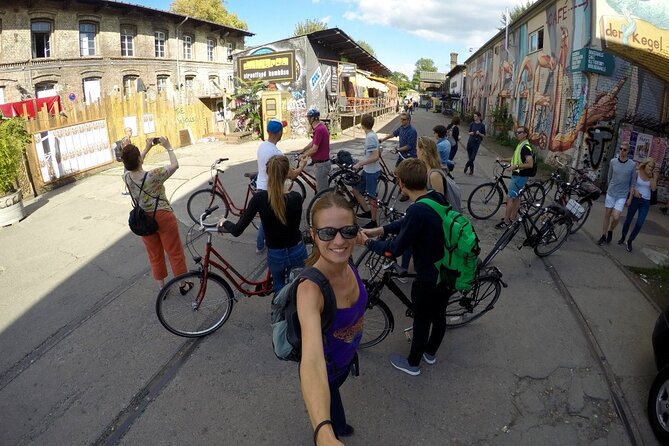
The meeting point is Free Berlin Bike Tours & Rental at Poststraße 11, near public transport. The scheduled start is 2:24 pm, and the activity returns to this same meeting point at the end.
The first brief stop is Nikolaiviertel. It is a useful starting contrast: a reconstructed historic quarter near the center, before the route moves into districts that feel more like lived-in, changing city neighborhoods. You get only about five minutes here, so think of it as a point of orientation rather than a full sightseeing stop.
Then the route heads toward Kreuzberg, one of Berlin’s most layered districts. Kreuzberg has Turkish and other immigrant influences, postwar housing, creative spaces, political history, nightlife, and streets that have changed quickly. You spend about 30 minutes in this general area, giving the guide time to explain why the district became associated with alternative living and why that identity is now under pressure from redevelopment.
The best part is the guide’s personal angle. Bjorn, Jake, Rico, Rufus, Vincent, and Karl have all led versions of this experience, and the route is designed by the guide rather than fixed to one rigid script. That means your guide matters. Jake has been praised for adding personal stories to the historical detail, while Karl is known for a lively presentation and interesting facts. Rico and Rufus have also been singled out for friendly, safe leadership.
Because each guide creates a route, you should not expect every departure to stop at precisely the same sequence of places. The central themes remain the same, but the details can shift.
Engelbecken and the quieter side of Kreuzberg
Engelbecken offers a pause from the harder-edged parts of the district. It is described as a calm place among prefabricated buildings, older structures, and newer architecture. The stop lasts about 10 minutes and helps you read Kreuzberg as more than a nightlife district.
This is where the tour’s method works well. Instead of telling you that Berlin is full of contrasts, the guide places you in one. You can look across different building periods and get a feel for how the district developed in layers.
Next comes Das Baumhaus, or the Treehouse by the Wall. The story centers on a guest worker who adapted quickly to Kreuzberg’s independent spirit and placed a garden house right beside the Wall. The point is not architectural grandeur. It is the audacity of claiming a small space in a heavily controlled and politically charged setting.
That story also gives useful context about migration. Kreuzberg was shaped by people who arrived for work and then made a life in a district with its own rules, habits, and stubborn sense of identity. This is a good stop for anyone interested in how ordinary people, not just governments, shaped Berlin.
Squats, artists, and the changing Spree
Several brief stops focus on former squats and creative spaces. In one place, years of squatting helped turn a building into a home for artists. The story reaches back to the counterculture of the 1980s and continues into the early 2000s, when Berlin’s cheap, available buildings still offered room for unconventional projects.
You may find this part especially useful if you want to understand why Berlin became associated with art and alternative living. The guide can show how activism, temporary occupation, and creative work sometimes overlapped. It also raises an important question: what happens when the city becomes more expensive and the spaces that allowed experimentation are no longer easy to find?
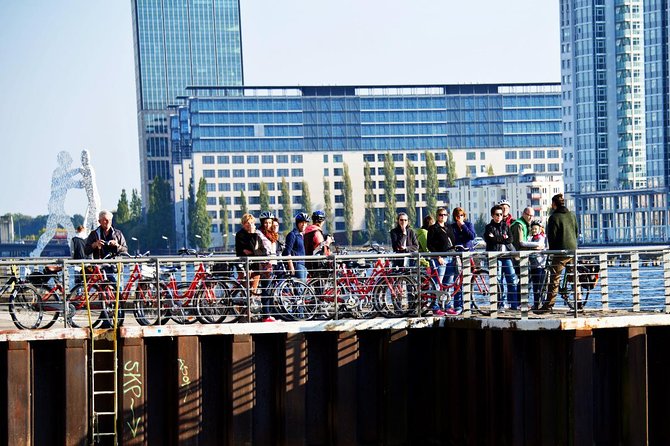
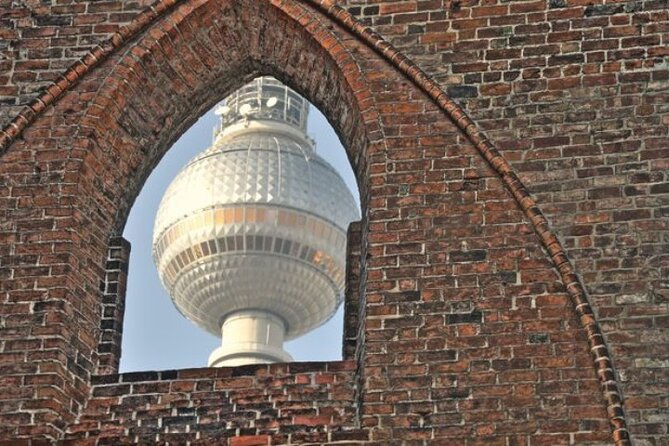
The ride then opens toward the YAAM area and the Spree. From here, you can see the TV Tower, Holzmarkt, Oberbaum Bridge, and the river. The view brings together several versions of modern Berlin: the familiar skyline, former industrial waterfront, new development, and places built around music and nightlife.
There is a lot to take in, so this is a natural point to stop and look rather than rush on. One account described the river portion as relaxing, with architecture, stories, and even a cold beer on board. The available information does not promise drinks on every departure, so do not book expecting refreshments to be included. Food and drinks are generally not part of the price unless specifically stated.
Same city, a completely different kind of day:
- Berlin: Reichstag, Dome and Government District Guided Tour
★ 4.7 · 18,288 reviews - Berlin: 1-Hour City Tour by Boat with Guaranteed Seating
★ 4.3 · 16,993 reviews - Berlin: Boat Tour Along the River Spree
★ 4.4 · 11,252 reviews - Discover Berlin Half-Day Walking Tour
★ 5.0 · 9,624 reviews
East Side Gallery and the Wall beside new development
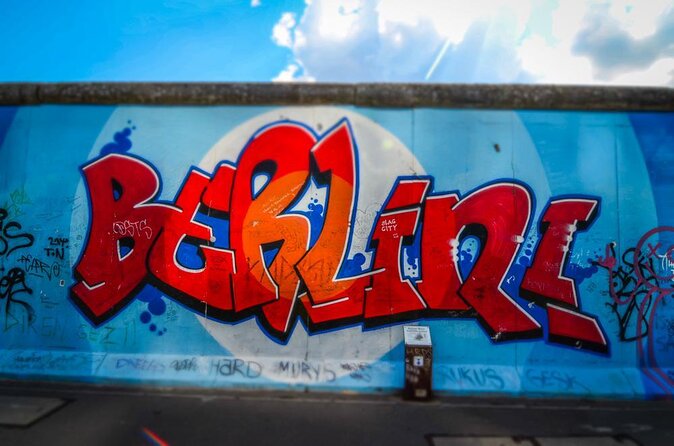
The East Side Gallery is the longest remaining section of the Berlin Wall. Its painted panels are among the city’s most recognizable public artworks, but the setting matters as much as the murals.
You see the Wall beside a completely redesigned business quarter, making the speed of Berlin’s change plain. The artwork records one period, while the offices and new construction point to another. The stop lasts about 10 minutes, enough for a close look and a short explanation, but not a full art tour.
The route continues to Oberbaum Bridge, the district’s best-known landmark. The bridge once represented division and controlled movement. Today it links neighborhoods and carries everyday traffic, but its meaning remains tied to crossing borders, both physical and social.
From there, Osthafen brings the Wall’s former border zone into focus. This area was once restricted, while today it attracts young creative businesses and urban projects. The Spree provides a break from traffic, but the location also helps explain how serious the old restrictions were. A river that now looks open and inviting once formed part of a tightly controlled boundary.
One unusual sculpture along the way has inspired several interpretations. The official explanation may be the least convincing to some people, which gives the guide room to discuss how public art can gather its own local legends. It is a small detail, but it suits the spirit of this route: Berlin often refuses to explain itself in only one way.
Falckensteinstraße and Görlitzer Park
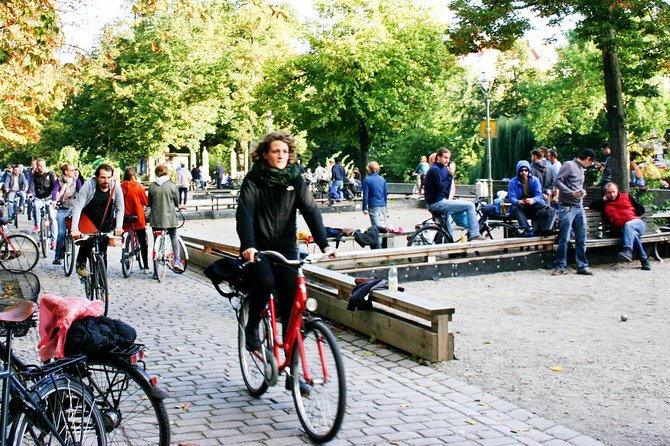
Falckensteinstraße is a strong example of Kreuzberg’s mix of buildings, people, and history. The street presents a lively city scene but also a sense of escape, with older structures and alternative corners close to busy urban life.
You do not come here for polished heritage architecture. You come to see how a neighborhood can feel both crowded and personal, rough around the edges yet full of community life. The guide’s interpretation matters, since the same street can look chaotic without context and deeply expressive with it.
Görlitzer Park occupies the site of a former railway station. The transformation from transport infrastructure to public park reflects Berlin’s habit of giving old spaces new uses. It also raises the uncomfortable question of where the line falls between alternative living, disorder, and anarchy.
The tour does not present Kreuzberg as a simple counterculture theme park. It shows the strengths and problems together. A park can offer room for people, music, and informal life, while also carrying social pressures that cannot be solved by attractive marketing.
This is one reason the frequent stops are helpful. You have time to listen, ask questions, and form your own view instead of rolling past at speed.
The car loft and Kreuzberg’s sharp contradictions
Liegnitzer Straße offers one of the tour’s strangest details: a car loft, where a building allows cars to be taken up to a balcony. It is an amusing image, but it also makes a serious point.
The building represents high-end consumption in the middle of a district associated with political activism, anarchist ideals, and working-class life. You see how different versions of Berlin can occupy the same few blocks. The contrast is too neat to be accidental, and it gives the guide a good opening to discuss property, money, and neighborhood change.
The route also touches a waterfront area connected with the Turkish market, held on Tuesdays and Fridays. That detail matters if you are planning your Berlin days. You may want to schedule this ride on one of those days if the market interests you, though the tour itself does not include food or shopping.
Another stop offers a short break in a bohemian neighborhood where people play boule and enjoy a slower pace. It is a reminder that Kreuzberg is not only about protest, nightlife, or rough edges. There is also a simple, social side that may feel far removed from the heavy traffic and concrete elsewhere in the district.
Admiral Bridge and the final contrast at Kottbusser Tor
Admiral Bridge is associated with evenings that begin at a bar or with people gathering to watch the summer sunset. The guide presents it as a place where strangers share public space without much ceremony. You simply arrive as you are.
The atmosphere can change with the season and time of day, so do not expect a sunset gathering every time. Still, the stop captures something important about Kreuzberg’s public life: streets, bridges, parks, and waterfronts often become living rooms.
The final stop is Kottbusser Tor, known locally as Kotti. It is a hard change from the slower waterfront areas. Here, heavy traffic, 1970s architecture, and an open drug scene create a more intense urban setting.
That contrast is deliberate. The route does not finish with a tidy postcard view. It ends by showing the social pressures that sit beside the bars, markets, artists’ spaces, and attractive riverside developments. If you want a carefully polished version of Berlin, this may feel uncomfortable. If you want a frank look at how a major city functions, it is valuable.
What $42.33 gets you
At $42.33 per person, this is a reasonable price for three hours. Your fee covers a bicycle, helmet, professional guide, and the planning needed to connect central Berlin with several districts and waterfront areas.
The value is strongest if you are new to Berlin or want a broader sense of the city before exploring on your own. A guide can point out places you might otherwise miss, explain why a building matters, and help you understand the difference between Berlin’s old political divisions and its current economic ones.
The price is less attractive if you mainly want to pedal without stopping. You may hear a great deal of explanation, and the ride includes many pauses. That is part of the experience, not a flaw, but it should match your expectations.
The small group size also helps. Departures are limited to 4 to 15 people, enough for conversation without the scale of a large coach outing. The minimum of four creates one practical risk: in low season, the activity may be canceled if too few people book. The operator may offer another date or experience, or a full refund.
Who should book this bike tour?
I would choose this for a first or second day in Berlin if you want to understand the city’s alternative districts before returning to them on your own. It suits curious cyclists, history-minded visitors, and anyone more interested in neighborhoods than in ticking off major monuments.
Families can join. Children must be with an adult, and infant seats can be requested. The ride operates in all weather, so bring clothing suited to the forecast. One useful clothing warning comes from the bikes themselves: wear trousers that can stay clear of the chain, or use a simple trouser strap if you have one. A little grease on your clothing would be an avoidable souvenir.
The tour is offered in English and German, depending on the option selected. The English guides have been praised for humor, safety, clear explanations, and personal stories. The strongest experiences seem to come when the guide brings the district to life instead of reciting dates.
You can cancel free of charge up to 24 hours before the start time for a full refund. Last-minute changes are not accepted, and the local start time controls the deadline.
Should you book it?
Book this tour if you want Berlin’s social and political character, not just its major sights. The Wall, East Side Gallery, Oberbaum Bridge, and TV Tower are here, but they serve as links between stories about migration, housing, art, protest, redevelopment, and daily life.
Skip it if you want a fast cycling workout or a fixed route with long stretches of uninterrupted riding. For most people, the best reason to book is the combination of coverage and context. In three hours, you see enough of Kreuzberg and Friedrichshain to understand why these districts keep attracting artists, activists, businesses, and people looking for a different way to live.
FAQ
How long is the Berlin alternative Kreuzberg bike tour?
The tour lasts approximately three hours and ends back at the meeting point.
Where does the tour start?
It starts at Free Berlin Bike Tours & Rental, Poststraße 11, 10178 Berlin, Germany.
What time does the tour start?
The listed start time is 2:24 pm.
Is bicycle use included?
Yes. The bicycle is included in the tour price.
Is a helmet provided?
Yes. Helmet use is included.
Can children join the tour?
Yes. Children are welcome, but they must be accompanied by an adult.
Are infant seats available?
Infant seats can be provided on request.
Is the tour offered in English?
Yes. It is offered in English, and German is also available depending on the option selected.
How many people can join the tour?
The group size is between 4 and 15 participants. The maximum is 15.
Does the tour run in bad weather?
Yes. The activity operates in all weather conditions, so you should dress appropriately.
Are food and drinks included?
No. Food and drinks are not included unless specifically stated.
What is the cancellation policy?
You can cancel at least 24 hours before the start time for a full refund. Cancellations or changes made less than 24 hours before the start time are not accepted for a refund.
Just added in Berlin
- Berlin & The Third Reich Private Guided Tour★ 5.0 · 3 reviews
- Third Reich Quest Experience in Berlin★ 4.5 · 7 reviews
- Private Analogue Photography Experience in Berlin★ 5.0 · 3 reviews
- Berlin Urbex Adventure and History Tour★ 5.0 · 9 reviews
- The Beauty of Berlin by Bike: Private Tour★ 5.0 · 59 reviews
- Berlin: Guided Bike tour of the Berlin Wall and Third Reich★ 5.0 · 160 reviews
- Beyond Currywurst: Berlin’s Hidden Street Food & Culture Tour★ 5.0 · 100 reviews
- Berlin Third Reich & Cold War Walking Tour With A Guide★ 5.0 · 7 reviews
Cycling Tours, compared.
Sights and Highlights Bike Tour with a Local Guide
Read our review →
Classic Mike’s Bike Tour daily @ 11.30 incl Beer Garden & Surfers
Read our review →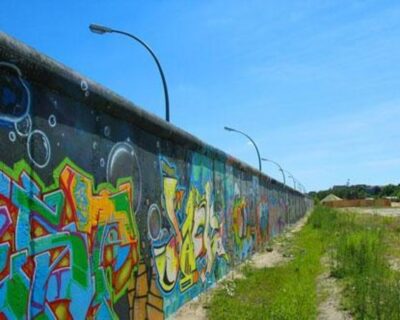

Browse the lists this tour appears in