
Reviewed · BAVARIA TOURS
Bavarian Schnitzel Cooking Class in Oberaudorf Farmhouse
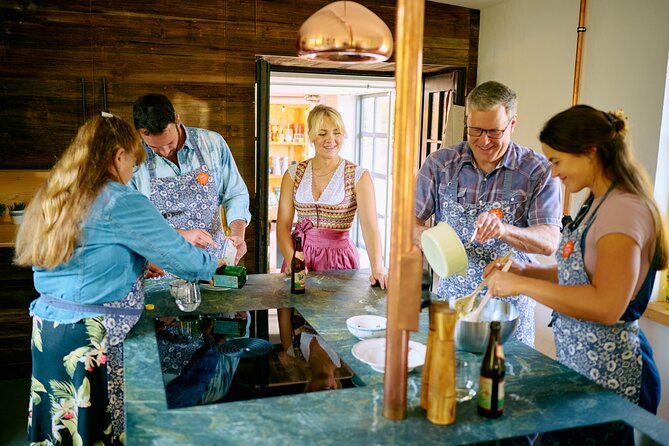
The best part of this experience is that you do not simply watch someone fry schnitzel. You pound the veal yourself, prepare the salads, bread each cutlet, and finish a fluffy Kaiserschmarrn in a 150-year-old Oberaudorf farmhouse. Anna, Tyler, and Cole turn a cooking lesson into a friendly Bavarian afternoon with mountain views and family recipes.
I like the easy train connection from Munich and the personal pickup at Oberaudorf station. I also like that the class stays small, with no more than 10 people, so you get a real turn at the counter instead of standing behind a crowd. The main consideration is the price, $252.05 per person, plus any paid transfer, which makes this a special splurge rather than a casual lunch.
Key points to know
- Hands-on schnitzel making: You pound, bread, and fry each veal cutlet yourself.
- A farmhouse setting: The class takes place in a renovated kitchen inside a 150-year-old local home.
- A full Bavarian meal: Expect pretzels and spreads, potato and radish salads, schnitzel with traditional accompaniments, and Kaiserschmarrn.
- Simple access from Munich: Trains run hourly, and the ride takes about an hour with no train change according to the supplied directions.
- Personal teaching: Anna shares recipes learned from her grandmother, while Tyler and Cole help host the session.
- Recipes for home: You leave with recipe cards, turning the class into a useful souvenir rather than a meal you quickly forget.
A Bavarian cooking day in a real Oberaudorf home
This class takes you out of central Munich and into Oberaudorf, a small Bavarian community near the Alps. The setting matters. You are not in a hotel demonstration kitchen or a restaurant classroom designed for large groups. You cook in a local farmhouse with old-world character and modern kitchen equipment.
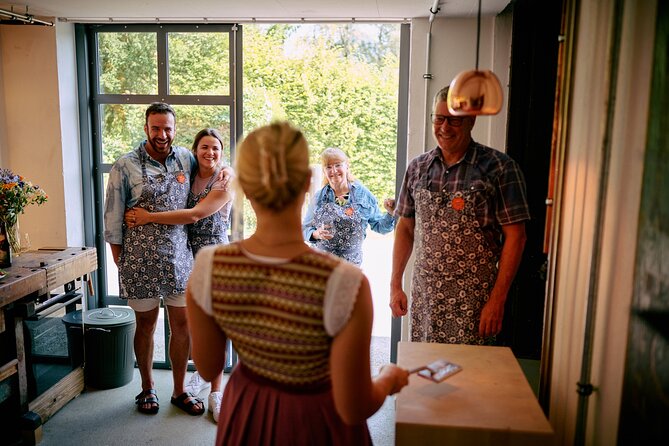
The farmhouse is about a five-minute drive from Oberaudorf station. When you arrive by train, the team meets you on the platform. Look for people in lederhosen and dirndl, a wonderfully clear meeting signal in a place where you may not know anyone yet.
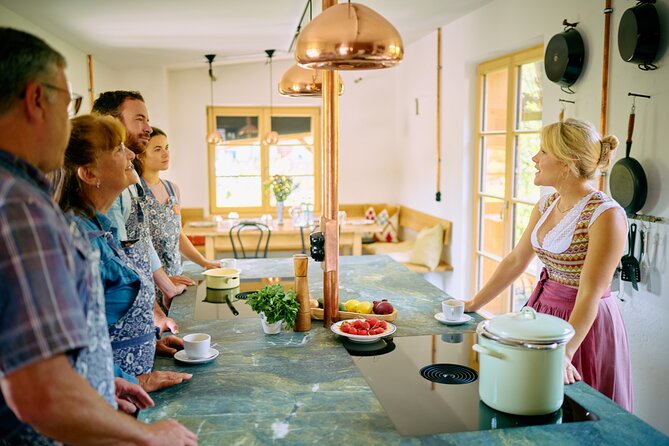
Inside, the newly renovated Adventure Bavaria Werkstatt Kitchen combines practical work surfaces with the feel of an old family home. You begin with a cappuccino and Bavarian appetizers, giving you time to settle in before the work starts. This opening is useful for families and first-time visitors because the class feels social from the start, not like a timed restaurant shift.
The maximum group size is 10. That is large enough for a lively table but small enough for everyone to handle ingredients and cooking tools. If you dislike large organized activities, this format should feel comfortable. If you want a private lesson for just your own party, the supplied details do not promise that, so ask Adventure Bavaria before booking.
More cooking classes in Bavaria:
- Eat Like a Berliner: Market Tour, Cooking Class and Lunch
★ 5.0 · 15 reviews
Pretzels, Obazda, and a proper Bavarian welcome
The first food is simple but telling: fresh pretzels with Bavarian spreads. You can try Obazda, a paprika-seasoned cheese spread, along with blue cheese, fresh black pepper, and herb butter.
Obazda is a useful introduction to Bavarian food because it is hearty, salty, and made for sharing. It also gives you something to eat while the cooking begins. With cappuccino, welcome drinks, and later beer or soft drinks, the opening has the relaxed rhythm of being invited into someone’s home.
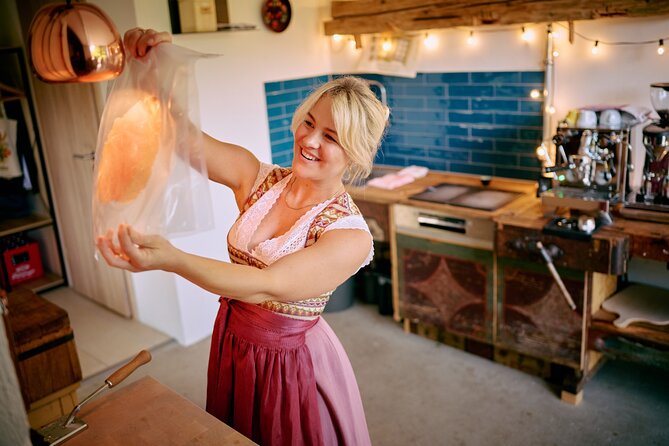
The hosts keep the tone informal. Anna teaches the recipes and explains the food, while Tyler and Cole help with the hosting. The class works particularly well for families because the cooking has several kinds of tasks. Younger participants can help with preparation, while adults can manage the hot pan under direction.
There is also a practical point here: this is not a class built only for experienced cooks. The instructions are hands-on, and the supplied comments specifically note that people with no cooking experience can enjoy it. You will still want to be comfortable handling raw meat, hot oil, and kitchen tools, but you are not expected to arrive with professional skills.
Making schnitzel with the famous hammer
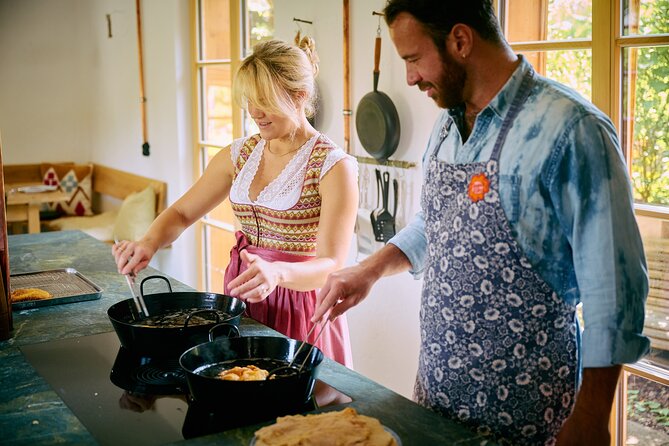
The central activity is Wiener Schnitzel, prepared in a Bavarian setting. You use the class’s custom schnitzel hammers to pound each veal cutlet until it is thin. This is the moment that makes the class more memorable than simply ordering schnitzel in a restaurant.
Pounding the meat is noisy, physical, and a little silly in the best way. It also teaches an important cooking point: an evenly thin cutlet cooks quickly and gives you the proper balance between a crisp coating and tender meat.
After the cutlets are prepared, you bread and fry them one at a time. The goal is a golden, crisp coating that puffs slightly around the veal. Since you work through each piece yourself, you can see how the breading changes in the pan and how timing affects the result.
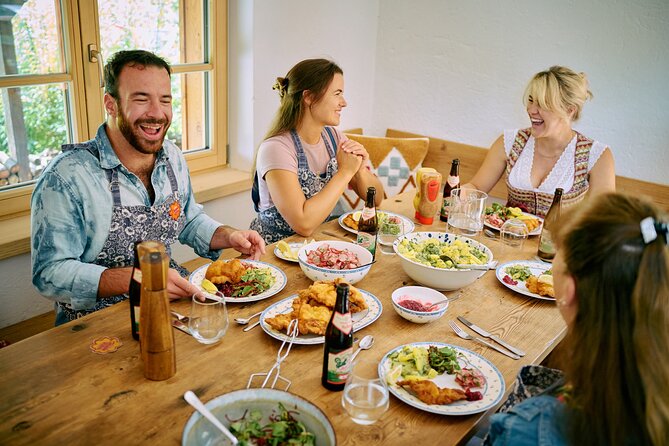
The finished schnitzel comes with lemon and lingonberry jam. The sweet-tart jam is a classic partner for the fried meat, while lemon cuts through the richness. The meal also includes Bavarian potato salad, radish salad, and a fresh green salad.
This is a full meal, not a tasting menu. Come hungry, especially if you enjoy substantial lunches. The pace also matters. You prepare the food, sit down to eat it fresh, then return to the kitchen for dessert. It is not a rushed sequence of demonstrations.
Potato salad and radish salad add the local touch
The side dishes are more important than they might first appear. Potato salad and radish salad show you how a Bavarian meal is balanced around the main dish.
You prepare the ingredients for the potato and radish salads before cooking the schnitzel. That gives you a useful break from the meat preparation and lets you work on dishes that are easier to repeat at home.
The salads also make the meal feel regional rather than generic. A schnitzel on its own is familiar across much of Central Europe. Add the Bavarian salads, pretzels, Obazda, lingonberry jam, and Kaiserschmarrn, and you get a clearer sense of how the meal fits together.
Anna explains the background of the dishes and where to find ingredients. That practical information is one of the strongest reasons to bring the recipe cards home. You are not only collecting instructions. You are learning what to look for when you try to recreate the food later.
A few more half-days in Bavaria worth comparing
- Augsburg: Walking Tour with Fuggerei
★ 4.6 · 2,245 reviews - Regensburg: Guided City Walking Tour of the Old Town
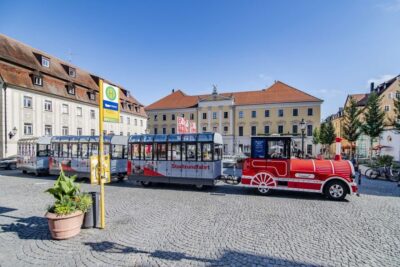
★ 4.7 · 1,395 reviews - Regensburg: City Tour with the Bimmelbahn Train
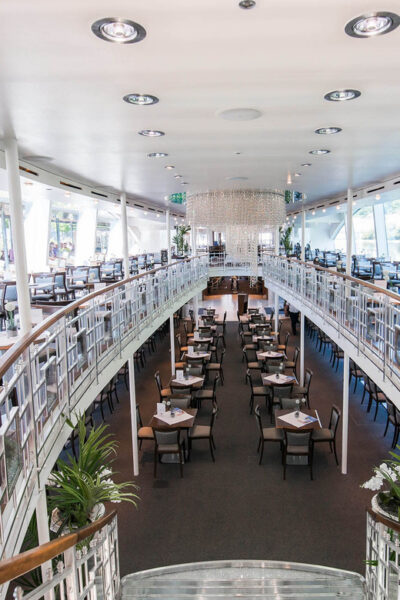
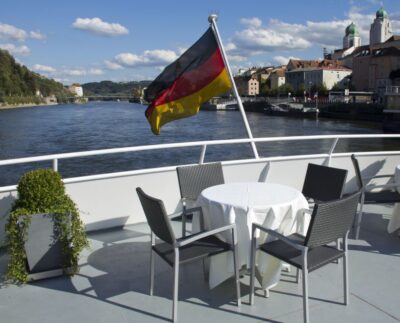
★ 4.3 · 1,010 reviews - Passau: Crystal Ship Sightseeing Cruise
★ 4.6 · 705 reviews
Kaiserschmarrn finishes the class on a sweet note
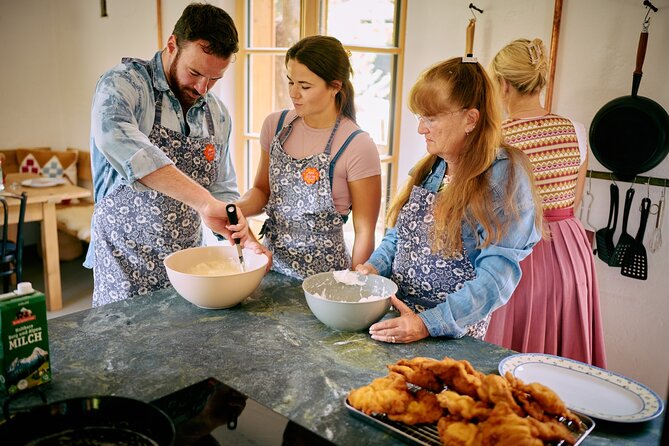
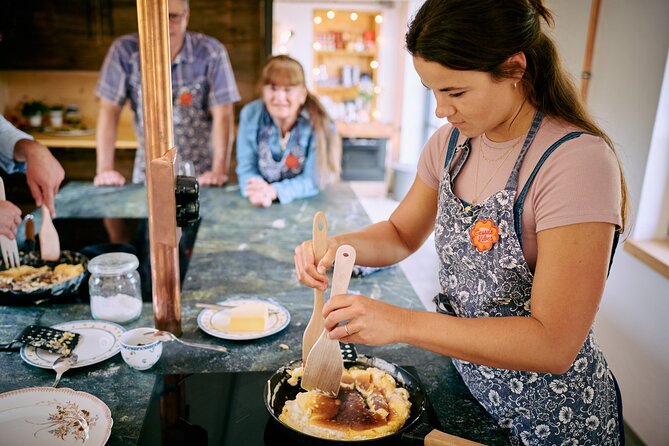
While the schnitzel fries, you prepare the batter for Kaiserschmarrn. This is an alpine-style pancake that is cooked, flipped, and ripped into soft pieces before serving.
The batter rests while you sit down for the main meal. After lunch, you return to the kitchen, finish cooking the pancake, and tear it into pieces. That change of pace gives the class a natural shape. You are not eating everything at once, and dessert feels like the final shared project.
Kaiserschmarrn is a good choice for a cooking lesson because the finished dish looks rustic and forgiving. It does not need to come out as a perfect circle. The torn pieces are part of the presentation.
Coffee and schnapps may accompany the final serving. Beer, soft drinks, and other drinks are also part of the social rhythm during the cooking session, though the supplied details do not specify a separate drinks package or unlimited service. If you do not drink alcohol, you can still take part in the food and coffee portions.
Getting there from Munich by train
For many people, the logistics are the difference between booking and skipping this class. Oberaudorf is reached by train from Munich, and the supplied directions say trains run hourly. The ride takes about an hour and does not require a change according to the practical guidance provided.
You start at Oberaudorf station at 10:00 am. The kitchen is only about five minutes away by car, and the team can meet you on the platform. This is a helpful arrangement because it removes the uncertainty of finding a rural farmhouse on your own.
One useful train tip is to sit in the front two coaches when leaving Munich. The train may split during the journey, so being in the wrong section can cause confusion. Check the current railway information before departure, but take the warning seriously and pay attention to the train displays.
At the end, the activity returns to the meeting point. You can arrange a station transfer, or you may prefer to walk back through Oberaudorf. The village is described as worth the walk, and this gives you a little free time after lunch rather than sending you straight back to Munich.
Adventure Bavaria can also help arrange a private transfer from Munich for an added cost. Pickup and drop-off from Oberaudorf station are offered at an additional cost as well, so confirm exactly what is included in your booking. The train is likely the better-value choice for most people who are comfortable using public transport.
What the $252.05 price gets you
At $252.05 per person, this is expensive for a four-hour cooking class. You are paying more than the cost of a restaurant schnitzel meal, and you should not book it if your only goal is to eat traditional food as cheaply as possible.
The value comes from the complete package: transport help, a small group, a local farmhouse, instruction from Anna, the work of preparing several dishes, drinks and appetizers, a full meal, dessert, and recipes to take home. You also get several hours of personal contact rather than a quick demonstration.
I see the price as easier to justify for a special day from Munich, a family occasion, or anyone who considers food a major part of the trip. It is less appealing for a solo visitor on a tight budget, especially once paid transfers are added.
The experience is also booked an average of 57 days ahead, suggesting that you should not leave it until the last minute if your dates are fixed. Confirmation is sent within 48 hours, subject to availability.
Who will enjoy this most
This class suits you if you want to do something active and local rather than move from one sightseeing stop to the next. It works especially well for families, couples, and small groups who enjoy preparing and eating a meal together.
It is also a strong choice for people staying in Munich who want a simple day trip into the Bavarian countryside. The train journey adds to the outing, and the village walk afterward can stretch the day without requiring another organized activity.
The class is suitable for beginners. You do not need to know how to pound, bread, or fry schnitzel before arriving. Vegetarian requests have been accommodated, but you should state your needs when booking rather than assume the standard menu will be changed automatically.
I would think twice if you dislike shared meals, hands-on kitchen work, or alcohol-centered social settings. The session is built around participation and conversation. It is not a quiet, formal lesson where you sit and take notes.
The class is offered in English, and service animals are allowed. It is near public transportation, with a maximum of 10 participants.
Small extras that can round out the day
The area around the farmhouse offers possibilities after class. One family added a short hike, and another paired the day with a summer toboggan ride within walking distance. These extras are not part of the cooking class, so you should treat them as optional ideas rather than promised inclusions.
The village itself is also worth a short look. If you have time before your return train, walking back from the kitchen to the station lets you see more of Oberaudorf and avoids paying for a ride back.
Keep your schedule flexible. The cooking, meal, dessert, and conversation make this a four-hour activity, and a leisurely lunch can feel longer than a tightly timed tour. Do not plan a major attraction immediately after the class unless you have allowed plenty of room for the return journey.
Should you book the Oberaudorf cooking class?
You should book it if you want a personal Bavarian food experience with real participation, a scenic train outing from Munich, and recipes you can use at home. The combination of Anna’s family cooking, the farmhouse setting, the schnitzel hammer, and the small group makes this more memorable than a standard restaurant meal.
You should skip it if $252.05 feels too high for lunch and a lesson, or if you would rather spend your day visiting museums and historic sites in Munich. For everyone else, especially families and food-minded visitors, this is a well-planned special occasion with enough substance to justify the journey.
FAQ
Where does the Bavarian cooking class take place?
The class takes place at Adventure Bavaria in Oberaudorf, Bavaria, inside a renovated kitchen in a local 150-year-old farmhouse.
How long does the experience last?
The cooking class lasts approximately four hours.
What time does the class start?
The stated start time is 10:00 am at Bahnhof Oberaudorf, Bahnhofplatz 2, 83080 Oberaudorf, Germany.
Can I reach Oberaudorf by train from Munich?
Yes. Trains run hourly between Munich and Oberaudorf. The supplied directions describe the journey as taking about an hour without a train change.
Is pickup from the Oberaudorf train station available?
Yes. The team can meet you at the station and drive you about five minutes to the kitchen. Station pickup and drop-off are available at an additional cost, so confirm the price when booking.
Is private transportation from Munich available?
Yes. Adventure Bavaria can arrange a private transfer from Munich in a personal car for an added cost. You need to request this when booking.
What food will I prepare and eat?
The menu includes pretzels with Bavarian spreads, veal schnitzel with lemon and lingonberry jam, Bavarian potato salad, radish salad, green salad, and Kaiserschmarrn for dessert.
Is the class suitable for people with no cooking experience?
Yes. The class is hands-on but designed so you can take part even without prior cooking experience.
How many people can join the class?
The maximum group size is 10 people. The activity is offered in English, and service animals are allowed.
Just added in Bavaria
- Rafting classic Iller – Level 2 white water tour★ 4.5 · 29 reviews
- Canyoning Starzlachklamm★ 5.0 · 51 reviews
- Family rafting Iller – white water rafting level 1★ 5.0 · 12 reviews
- Augsburg – Private Historic Tour★ 5.0 · 3 reviews
- Classic city tour in the World Heritage City of Augsburg★ 4.0 · 41 reviews
- Kloster Andechs: Brauerei-Tour mit Virtual Reality entdecken★ 4.7 · 15 reviews
- Regensburg citytour rickshaw-pedicab★ 4.3 · 20 reviews
- Regensburg: Private Walking Tour With Professional Guide★ 4.2 · 16 reviews
Bavaria Tours, compared.



Floating City Highlights Tour on the Danube and Inn
Read our review →

Browse the lists this tour appears in