
Reviewed · WALKING TOURS
Schwerin: Private Guided Walking Tour
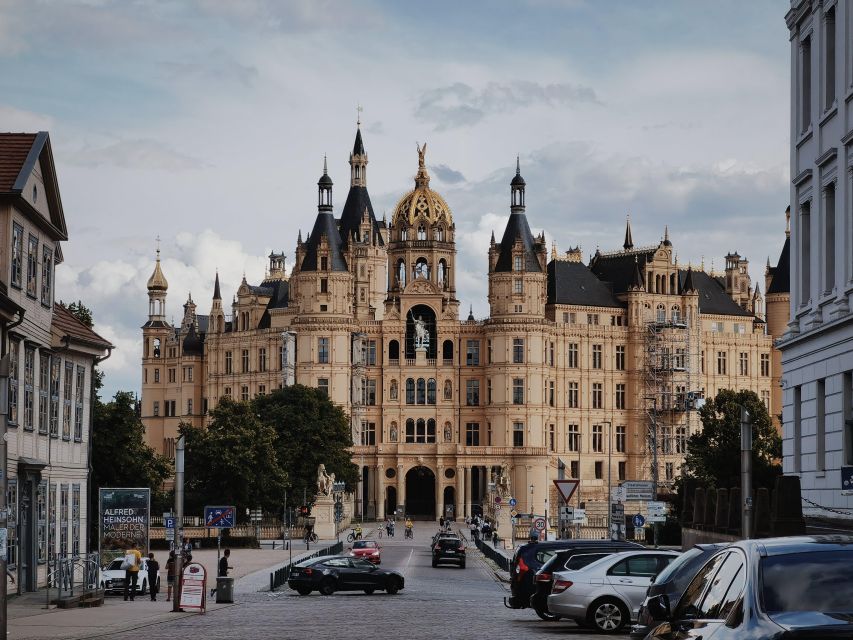
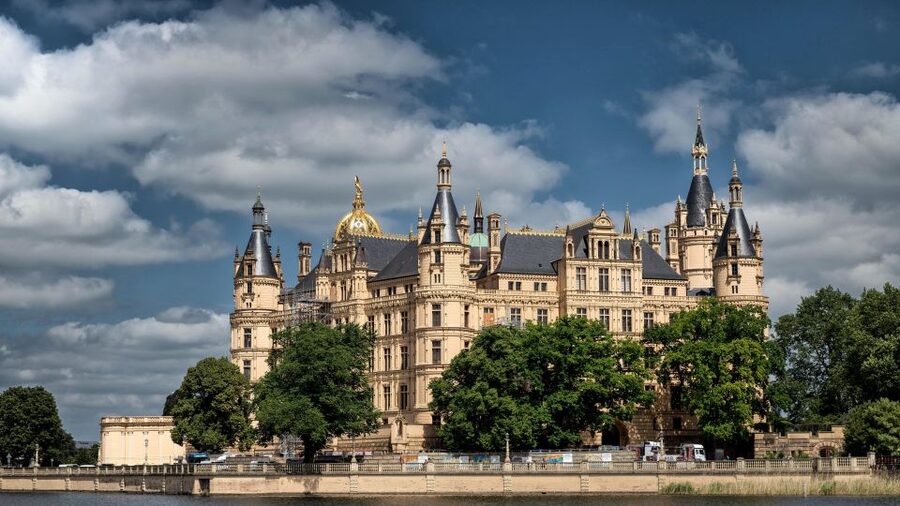
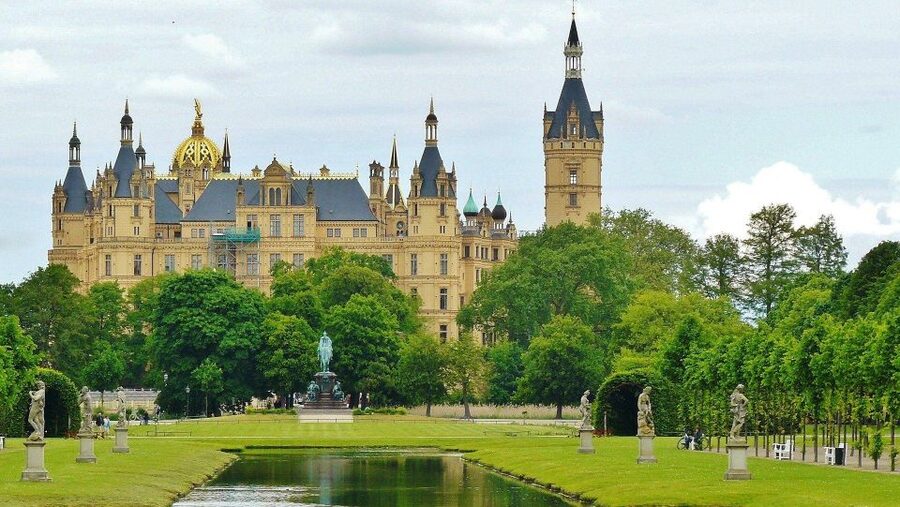
Schwerin Palace is the star here, a fanciful castle set on an island in Lake Schwerin and often called the Neuschwanstein of the North. I like that this tour puts the palace in the middle of Schwerin’s story instead of treating it as a stand-alone photo stop. You see how the court, cathedral, lakes, and old streets fit together.
I also like the private format, which gives you room to ask questions and adjust the walk. Guides Jürgen and Theresa have been singled out by name for clear, relaxed presentations, and one guide even changed the focus for a group that had already booked a night-watchman tour. The main drawback is the meeting point: directions can be confusing, especially when the castle courtyard entrance is closed.
Key points at a glance
- Schwerin Palace on an island: Begin beside the city’s most famous sight, with views across Lake Schwerin.
- A city shaped by seven lakes: The walk explains why this small state capital feels different from larger German cities.
- Medieval cathedral history: Learn why Schwerin Cathedral once drew pilgrims from across Europe.
- A flexible private tour: Your guide can respond to your interests rather than follow a fixed group script.
- A 90-minute overview: The length works well for a first look, but entrance fees are not included.
- A meeting point worth double-checking: The tour begins in front of Schwerin Castle, Lennéstraße 1, not necessarily at the museum entrance.
Schwerin Palace sets the tone
Start in front of Schwerin Castle at Lennéstraße 1, where the tour begins with the most recognizable image in town. The palace rises from an island in Lake Schwerin, surrounded by water and approached through a setting that feels more theatrical than practical. It is easy to see why people compare it with Neuschwanstein.
That comparison is useful, but only up to a point. Neuschwanstein is a 19th-century mountain fantasy. Schwerin Palace is also romantic in appearance, yet its story reaches much farther back through the rulers of Mecklenburg and the political life of the region. Your guide can help separate the palace’s fairy-tale look from the long succession of events behind it.
I like beginning here because you get your bearings quickly. The guide can point out the relationship between the palace, Lake Schwerin, and the old town before you begin walking through the streets. This makes the rest of the tour easier to follow. Instead of seeing isolated buildings, you see a compact capital shaped by water and court power.
The description of the walk says the palace itself is part of the tour, but entrance fees are not included. That matters. You should ask your guide what can be covered from outside and what requires a separate ticket. If you want a full indoor visit, budget extra time and money beyond the 90-minute walk.
More Walking Tours in the Baltic Coast:
- Stralsund: Old Town Highlights Private Walking Tour
★ 5.0 · 5 reviews - Flensburg: Private Guided Walking Tour
★ 4.0 · 4 reviews - Kiel: City Highlights Express Walking Tour with a Local
★ 3.3 · 4 reviews
A capital surrounded by seven lakes
Schwerin is the smallest state capital in Germany, and its size is part of the appeal. You are not trying to cover a huge city in one afternoon. The old town, cathedral, palace area, and lake setting can be connected on foot, giving a private guide time to explain the city without rushing from one distant sight to another.
Seven lakes surround the city. This is more than a scenic fact. The water helped shape Schwerin’s position, its views, and its sense of separation from larger urban centers. As you walk, pay attention to how often the city opens toward water or returns to it visually. The setting gives Schwerin a calmer scale than you might expect from a state capital.
The settlement has roots reaching back to at least 1018, and Schwerin was recognized as a city in 1160. Those dates give the tour a useful framework. You can hear how an early medieval settlement developed into a political center, then later became the capital of Mecklenburg-Western Pomerania.
I would not expect an archaeological walking tour. The value comes from the guide’s explanation of what you are seeing now and how it connects to earlier periods. The city’s old town remains largely intact, with only minor damage during World War II. That makes the walk especially worthwhile for anyone who wants to read the street plan and buildings as part of a continuous story.
Schwerin Cathedral and the medieval pilgrimage story
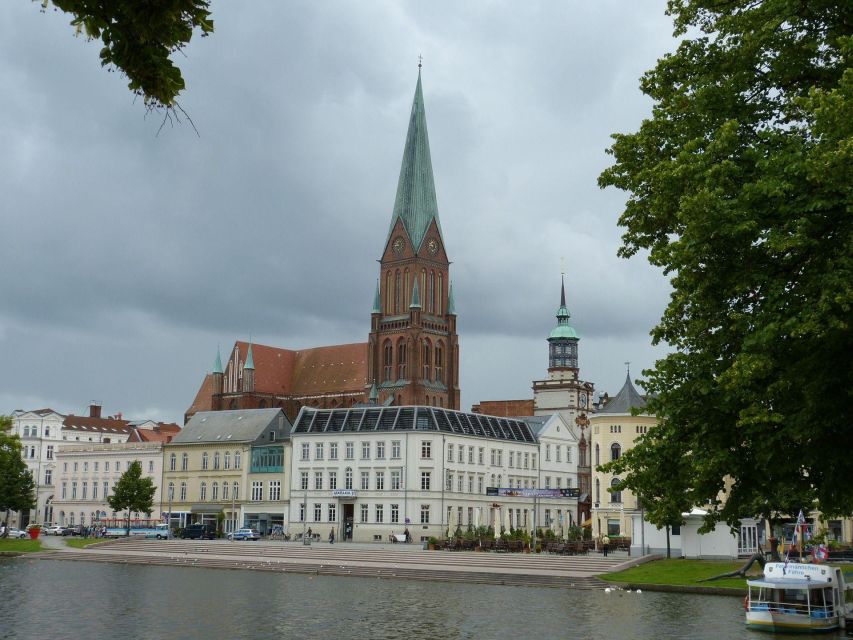
Schwerin Cathedral is one of the key stops because it gives the city a religious importance that is easy to miss if you focus only on the palace. During the Middle Ages, the cathedral became famous across Europe for reportedly holding a drop of Christ’s blood. That relic helped make Schwerin a pilgrimage destination.
You do not need to be religious to find this part interesting. Medieval pilgrimage affected trade, travel, reputation, and local power. A cathedral with a famous relic could draw people from far beyond the region, giving the town a wider European connection than its present size suggests.
The cathedral also provides a counterweight to the palace. The castle tells the story of rulers and court life. The cathedral brings in faith, pilgrimage, and the daily concerns of medieval townspeople. I like tours that show both sides, and this walk appears designed to do that.
The guide’s role matters here. A date list will not tell you why a relic changed a city’s importance. A good explanation can turn a church facade into a clue about medieval politics and travel. Jürgen has been praised for making important information clear and easy to follow, which suits this part of the tour well.
From the Protestant Reformation to the Thirty Years’ War
The tour also covers the Protestant revolution and the Thirty Years’ War. These subjects can sound broad, but they are important for understanding why German cities changed so sharply during the 16th and 17th centuries.
The Protestant Reformation challenged the religious structure that had supported institutions such as Schwerin Cathedral. The change was not simply a matter of new beliefs. It affected church property, political authority, education, and the relationship between local rulers and religious leaders.
The Thirty Years’ War then brought conflict and disruption across much of central Europe. Schwerin’s story fits into that larger period of instability. You will not get a full military history in 90 minutes, but you should come away with a sense of how European struggles affected a small northern German capital.
This is a good reason to choose a private guide rather than rely only on signs. You can ask how Schwerin’s religious and political life changed, or request more attention to the cathedral if that interests you. If your group prefers architecture, you can keep the explanation focused on the buildings. If you want wider context, ask for the connection between local events and the wars that reshaped Germany.
A few more half-days in the Baltic Coast worth comparing
- Schwerin: City Highlights Guided Tour
★ 4.7 · 541 reviews - Schwerin: Tour with the Night Watchman
★ 4.5 · 366 reviews - Stralsund: 1-Hour Harbor Cruise
★ 4.6 · 365 reviews - Baabe on Rügen: Seal-Spotting Cruise in the Baltic
★ 3.4 · 129 reviews
Streets that survived the 20th century
Schwerin’s old town is a strong part of the walk because it remains largely intact. The city suffered only minor damage during World War II, so you can still experience a historic street pattern rather than a modern reconstruction replacing much of the center.
I would use the 90 minutes to look beyond postcard views. Notice how the streets lead between civic, religious, and residential areas. The guide can help identify older buildings and explain how the center developed over time.
A particularly useful detail from the tour experience is the possibility of going into places that are not obvious from the street. One group was taken into the oldest house and into a local wild-meat butcher’s shop. These stops are not guaranteed, and they should not be treated as fixed promises, but they show what a flexible private walk can offer when circumstances allow.
That flexibility is one of the best reasons to pay for a private tour. A large group usually follows the same route at the same pace. Here, you can tell the guide that you want more architecture, more local history, or fewer subjects you will cover elsewhere.
Napoleon, German unification, and a changing city
The final historical stretch reaches into the Napoleonic era and the unification of Germany. These periods help explain how Schwerin moved from a regional seat of power into the political framework of modern Germany.
Napoleon’s campaigns changed borders and governments across the continent. The later unification of Germany changed the balance between separate states and a larger national structure. Schwerin’s position as a capital gives these events a local angle. You are not only hearing about famous leaders and battles. You are considering what those changes meant for a city with its own rulers, institutions, and identity.
I appreciate this broad time span, but you should keep your expectations realistic. A 90-minute tour cannot give equal detail to every century from 1018 to German unification. The benefit is a clear sequence: early settlement, medieval city, religious change, wartime disruption, Napoleonic pressure, and national unification.
If one period matters most to you, say so at the start. The tour allows possible customization on the spot, and the private setting makes that request practical. The guide can spend less time on familiar material and more time on the era you want to understand.
What the guides add to the walk
The strongest personal element is the guide. English and German are available, and the group is private. The guide stays with your party rather than combining you with strangers, which makes questions and changes of pace easier.
Jürgen has been praised for presenting important points in a way that is both understandable and relaxed. Theresa has also received direct praise for her work. Another guide adapted the route for a group that had already booked a night-watchman tour, avoiding a repeat of subjects they would hear later that evening.
That is exactly how I would use this tour. Tell the guide what else you have planned in Schwerin. If you are taking a night-watchman walk, ask for more daytime history, architecture, or palace context. If you have only a short visit, ask the guide to focus on the sights you would miss on your own.
The private arrangement can also help families and mixed-interest groups. One person can ask about medieval pilgrimage while another asks about palace architecture. You are not locked into the needs of a large group.
Price, timing, and practical value
The price is $280 per group of up to 15 people. At maximum capacity, that works out to less than $19 per person, but most private groups will be smaller. For two people, it is a costly 90 minutes. For a family or group of friends, the price becomes easier to justify.
The value depends on how much you want interpretation. Schwerin is walkable, and you can see the palace, cathedral, and old town without paying for a guide. What you are buying here is the connection between those sights, plus the chance to ask questions and adjust the emphasis.
A 90-minute length is enough for an introduction, not a full study of the palace and city. I see it working best at the beginning of a Schwerin visit. Afterward, you can return to the palace, cathedral, or old town with a clearer sense of what you are looking at.
Entrance fees are not included. Keep that separate from the tour price when planning your day. The booking offers free cancellation up to 24 hours in advance and a reserve-now, pay-later option, useful if your northern Germany plans are still shifting.
Finding the castle meeting point
The stated meeting point is in front of Schwerin Castle, Lennéstraße 1, 19053 Schwerin. Take this wording seriously. The phrase in front of the castle can be confusing because the palace area has more than one approach and entrance.
One person arrived at the entrance used for the museum after following signs toward the castle. The intended meeting place was the entrance to the courtyard, which was not open on a weekday. The group eventually found the guide, but the delay could have been avoided with clearer instructions.
I recommend contacting the provider before the tour to confirm the exact spot, especially if you are arriving by train, visiting on a weekday, or meeting the guide under time pressure. Arrive early enough to check the signs. Do not assume that the first door marked for the castle is the meeting point.
Who should book this Schwerin walk
I would choose this tour if you want a personal introduction to Schwerin and prefer historical context over a quick list of sights. It suits first-time visitors, families, couples, and groups of friends who want to ask questions without slowing down a larger party.
It is also a good fit if you have specific interests. Tell the guide if you want more on the cathedral’s pilgrimage role, the Reformation, the palace, the Napoleonic period, or German unification. The experience works best when you take advantage of the private format.
I would hesitate if you only want to enter the palace and spend most of your time inside. The entrance fee is extra, and the walk itself is limited to 90 minutes. In that case, you may need to plan a separate palace visit and allow enough time for both.
The price also deserves an honest look. For a couple, $280 is a premium for a short tour. For a full group of up to 15, it can be reasonable, especially if you value a private guide and tailored pacing.
Should you book it?
Book this tour if you want Schwerin’s palace, cathedral, old town, and major historical periods tied together by one guide. The best features are the private format, the chance to customize the conversation, and the city’s unusual mix of seven lakes, medieval roots, and a palace setting.
Skip it if you prefer to explore independently or want a long indoor palace visit included in the price. If you do book, confirm the courtyard meeting point and tell the guide about your other plans. That small bit of preparation should help you get much more from the 90 minutes.
FAQ
Where does the Schwerin walking tour begin?
The meeting point is in front of Schwerin Castle at Lennéstraße 1, 19053 Schwerin.
How long does the tour last?
The walking tour lasts 90 minutes.
Is this a private tour?
Yes. It is for a private group, with a local guide accompanying only your group.
How many people can join one booking?
The listed price covers a group of up to 15 people.
Which languages are available?
The live tour guide is available in English or German.
Is Schwerin Palace entrance included?
No. Entrance fees are not included in the tour price.
Does the tour include the old town?
Yes. The experience includes a walk through Schwerin’s beautiful historic streets and covers the largely intact old town.
Does the tour visit Schwerin Cathedral?
The tour explains Schwerin Cathedral’s medieval importance, including its connection with pilgrimage and the reputed relic of Christ’s blood.
Can the tour be customized?
Possible customization with your local guide is available on the spot. You can explain your interests and ask the guide to adjust the focus.
Can I cancel for a full refund?
Yes. You can cancel up to 24 hours in advance for a full refund.
Can I reserve now and pay later?
Yes. The booking option allows you to reserve your place and pay later.
Just added in the Baltic Coast
- Highlights-Tour★ 4.8 · 9 reviews
- Stralsund: Old Town Highlights Private Walking Tour★ 5.0 · 5 reviews
- Schleswig: Highlights tour (cathedral, old town, Holm, city harbor)★ 4.8 · 7 reviews
- About Vikings, kings and cheeky monks (Medieval Schleswig)★ 4.9 · 11 reviews
- Flensburg: Private Guided Walking Tour★ 4.0 · 4 reviews
- Kiel: City Highlights Express Walking Tour with a Local★ 3.3 · 4 reviews
- The shadows of history – “Schleswig’s dark secrets★ 4.6 · 7 reviews
- 1-day ticket for Schwerin Zoo★ 3.8 · 11 reviews
Walking Tours, compared.

Berlin’s Best: 2 Hour Walking Tour Third Reich and the Cold War
Read our review →
Third Reich Berlin: Hitler and WWII Walking Tour
Read our review →Browse the lists this tour appears in