
Reviewed · CONCENTRATION CAMP MEMORIALS
From Berlin: Licensed Sachsenhausen Tour with max. 15 people
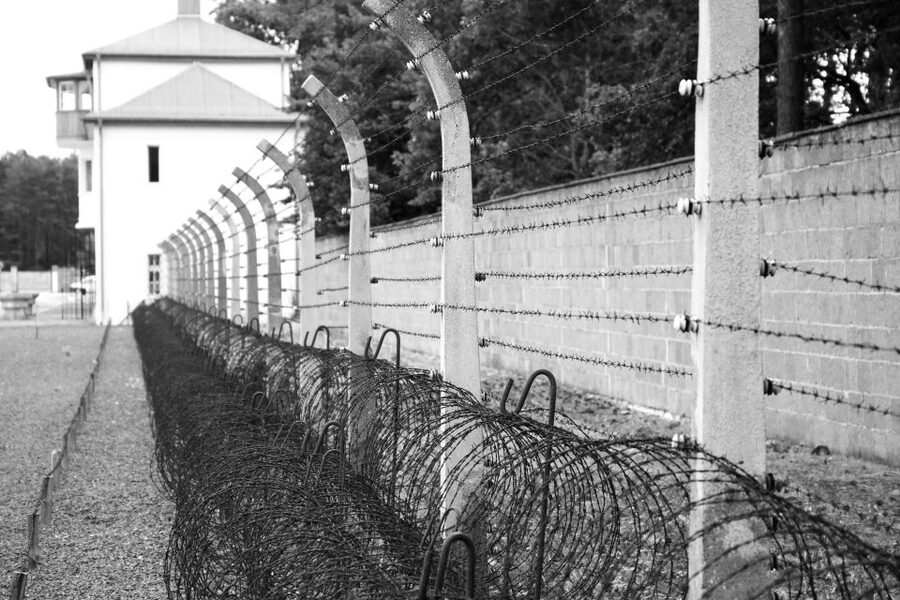
Sachsenhausen is not a quick photo stop. It is a large, sobering memorial where Tower A, Station Z, the Jewish barracks, and the forced-labor grounds help turn a chapter of Nazi history into something more tangible. The guide connects the remaining structures with prisoner accounts, resistance, escape attempts, and the camp’s final death march.
I like the small limit of 15 people, which makes it easier to hear and ask serious questions, and I like having a licensed guide handle the long public-transport journey from Berlin. The main drawback is the length and emotional weight: you spend about 5.5 to 6 hours out, walk a lot, and must bring your own food and drink.
Key points at a glance
- A full half-day at a major memorial: Allow 330 minutes, including two train and local transport legs of about 50 minutes each.
- Small English-speaking group: The maximum is 15 people, with guides such as Sarah, Rebecca, Lewis, Ronja, Natalie, and Chris praised for clear, thoughtful explanations.
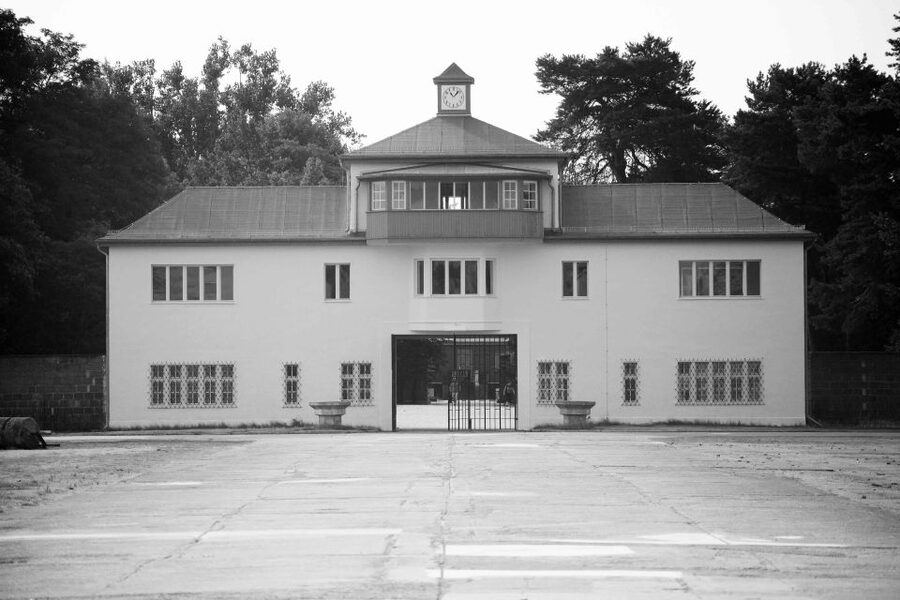
- Important original sites and memorials: See Tower A, the gate slogan, Station Z, Jewish barracks, watchtower remains, the shoe-testing track, prison kitchen, and infirmary barracks.
- Public transport is part of the experience: Meet outside Starbucks opposite Hackescher Markt S-Bahn station and travel together to Oranienburg and the memorial.
- Bring supplies: There are no cafés or shops at or around the memorial, and the tour can run in rain, cold, or mud.
- Good value at $38: The fee includes the licensed guide, memorial fee, and a €3 donation, but not your ABC public-transport ticket.
Why Sachsenhausen deserves a full half-day
Sachsenhausen was built in 1936 by the SS, soon after Dachau, as one of the main concentration camps of Nazi Germany. It was first intended to imprison people opposed to the Nazi regime, but the prisoner groups later became much broader. The site also illustrates how the concentration-camp system developed, how forced labor was organized, and how prisoners were treated as expendable.
That context matters. Without it, the remaining walls, foundations, watchtowers, and empty spaces can feel scattered. A good guide helps you understand what each place meant and how the camp functioned as a system of confinement, labor, punishment, and murder.
This is also why I would not treat Sachsenhausen as a casual add-on to a Berlin sightseeing day. The memorial needs time and attention. You will spend much of the visit outside, moving across a wide site, then stop inside surviving or reconstructed areas for further explanation.
More Concentration Camp Memorials in Berlin
- Berlin: Sachsenhausen Concentration Camp Tour in English
★ 5.0 · 5,711 reviews - Berlin: Sachsenhausen Concentration Camp Memorial Tour
★ 4.7 · 3,716 reviews - Sachsenhausen Concentration Camp Bus Tour in English from Berlin
★ 5.0 · 1,962 reviews
Starting at Hackescher Markt
The meeting point is outside Starbucks opposite Hackescher Markt S-Bahn station, at Neue Promenade 3. This is convenient if you are staying in central Berlin, and it gives the group a clear place to meet before setting off.
Your guide then leads the group through public transport toward Oranienburg, roughly 20 miles north of Berlin. The journey takes about 50 minutes in the planned schedule, though actual travel can vary. Recent transport disruptions have required guides to change trains or routes, and this is one reason the guided format is useful. Emma, Ronja, and Rebecca were specifically praised for keeping groups organized when transport plans changed.
You need an ABC public-transport ticket. An ABC day pass is recommended, but it is not included in the $38 tour price. Check the ticket requirement before meeting the group, since you cannot simply rely on the tour fee to cover the ride.
The train journey also gives the guide time to explain how the camp system developed and how the camps fit into Nazi Germany. Several guides use the ride to set up the subject before you arrive, rather than beginning the story only at the gate.
From Oranienburg to the memorial
After reaching Oranienburg, expect about a 20-minute walk to the memorial. This is not a long hike, but it adds to the time on your feet. Comfortable shoes matter, especially after rain, when the ground can become muddy.
The walk gives you a gradual transition from an ordinary town into a place of remembrance. That change can feel unsettling, and it is part of the experience. You are not being dropped beside a single preserved building. You are approaching a broad memorial site connected to the town and its transport network.
There are no shops or cafés in or around the memorial site for this tour. Bring water and a snack from Berlin. A small packed meal is sensible if you know you need regular food, since the planned day can stretch from morning until mid-afternoon without a formal lunch break.
Tower A and the camp entrance
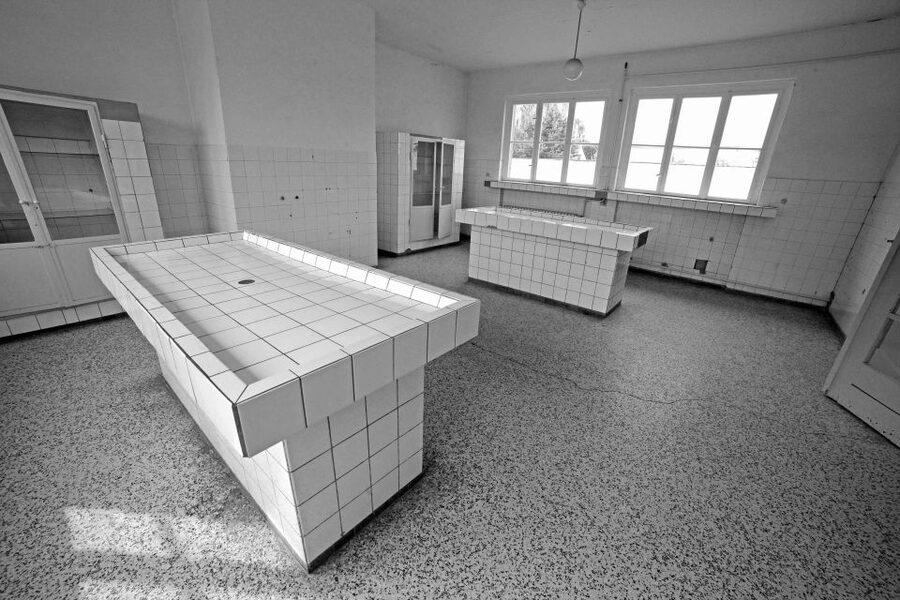
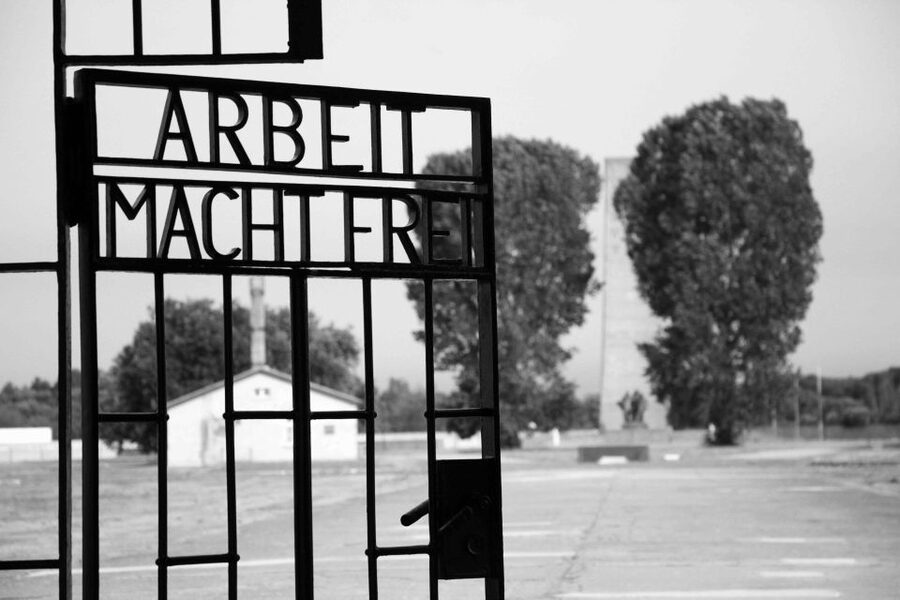
Tower A is the first major point of focus. The gate carries the infamous slogan Arbeit macht frei, usually translated as work sets you free. Here, the guide explains how the entrance was used to create a cruel false promise while prisoners were sent into forced labor.
The gate is visually familiar from photographs, but seeing it within the scale of Sachsenhausen changes its effect. The entrance is not the whole camp. It opens onto a large area where the guide can explain the layout, the SS control system, prisoner barracks, guard towers, work areas, and the strict order imposed on daily life.
Your guide uses witness accounts and historical research to describe conditions inside the camp. That approach helps avoid a simple list of dates and buildings. You hear about daily routines, forced labor, hunger, punishment, disease, and the ways prisoners tried to retain some control over their lives.
Same city, a completely different kind of day:
- Berlin: Reichstag, Dome and Government District Guided Tour
★ 4.7 · 18,288 reviews - Berlin: 1-Hour City Tour by Boat with Guaranteed Seating
★ 4.3 · 16,993 reviews - Berlin: Boat Tour Along the River Spree
★ 4.4 · 11,252 reviews - Discover Berlin Half-Day Walking Tour
★ 5.0 · 9,624 reviews
Barracks, labor, and daily survival
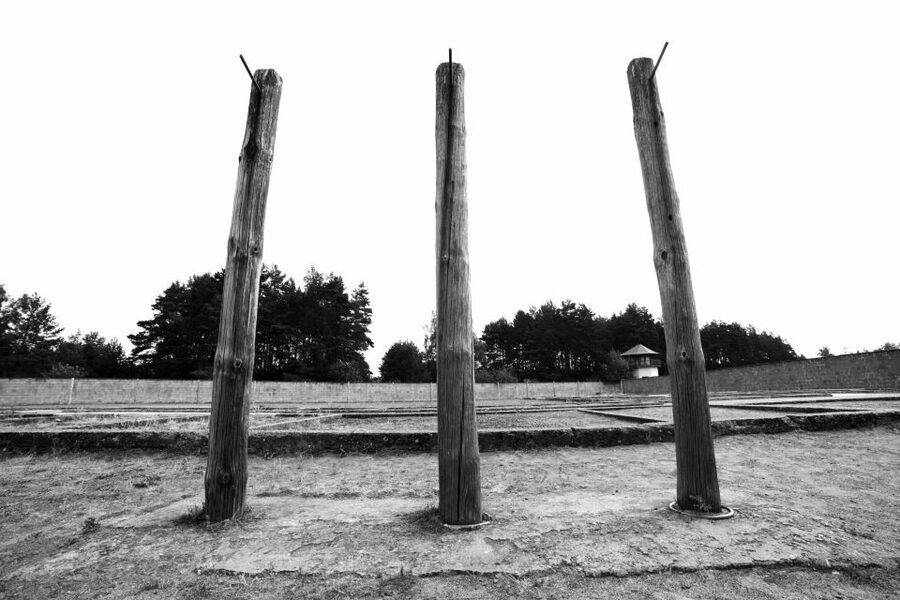
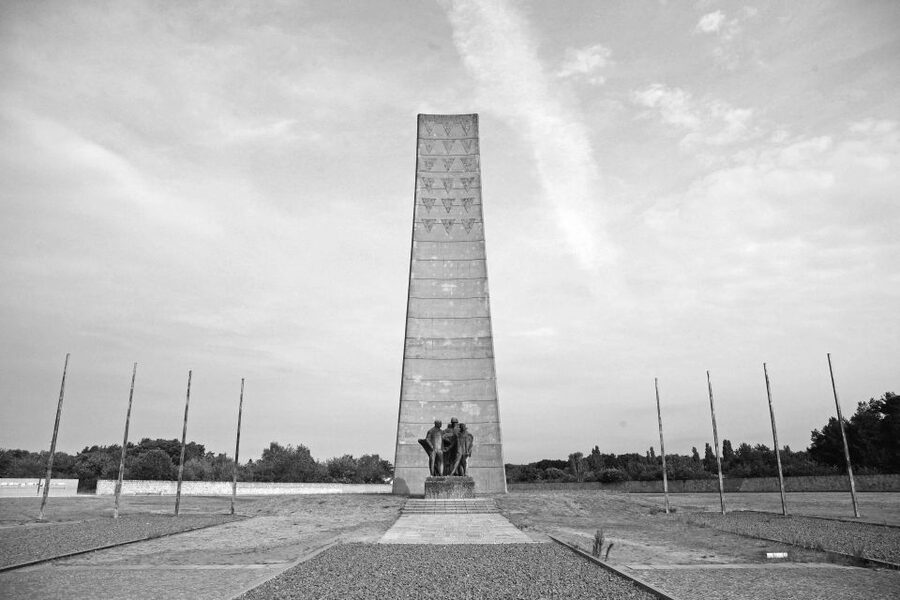
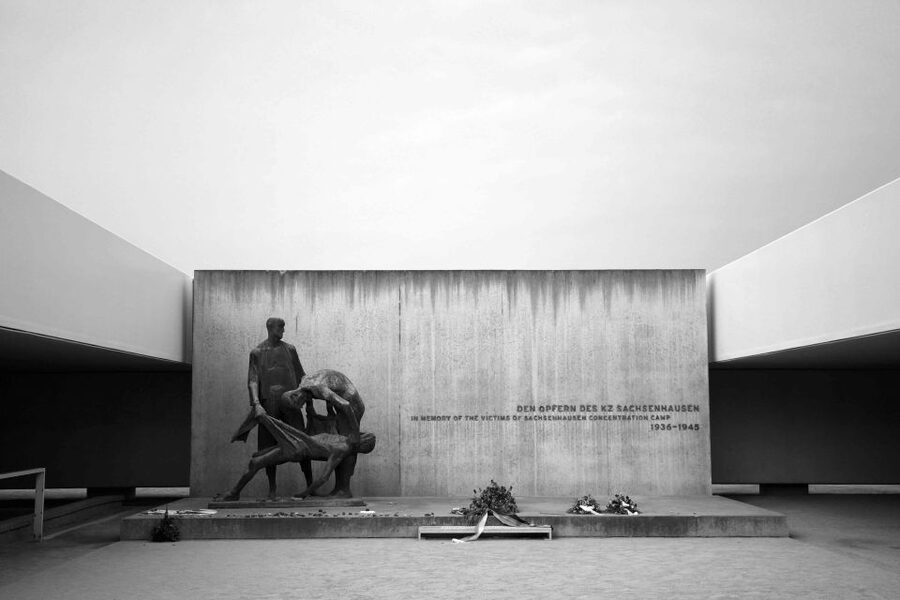
The memorial includes the remains of barracks and other structures, along with plaques, statues, and reconstructed areas. The Jewish barracks are among the most important stops, particularly when the guide explains how Jewish prisoners were treated and how their experiences related to the wider camp system.
The shoe-testing track is another unusual and revealing detail. Prisoners were forced to walk long distances on different surfaces to test footwear for the German military industry. A seemingly ordinary task becomes evidence of how forced labor was planned and exploited.
You also see the prison kitchen and infirmary barracks. These places help show that the camp was not only a set of sleeping quarters surrounded by fences. It had its own system of food distribution, medical control, punishment, labor, and surveillance.
The site is physically spread out, so expect steady walking between stops. The guide generally controls the pace and keeps the group together, but you should not expect to spend a long time reading every panel in every room. One useful compromise is to listen closely during the main explanation, then use any short independent periods to look at displays that matter most to you.
Station Z and the execution center
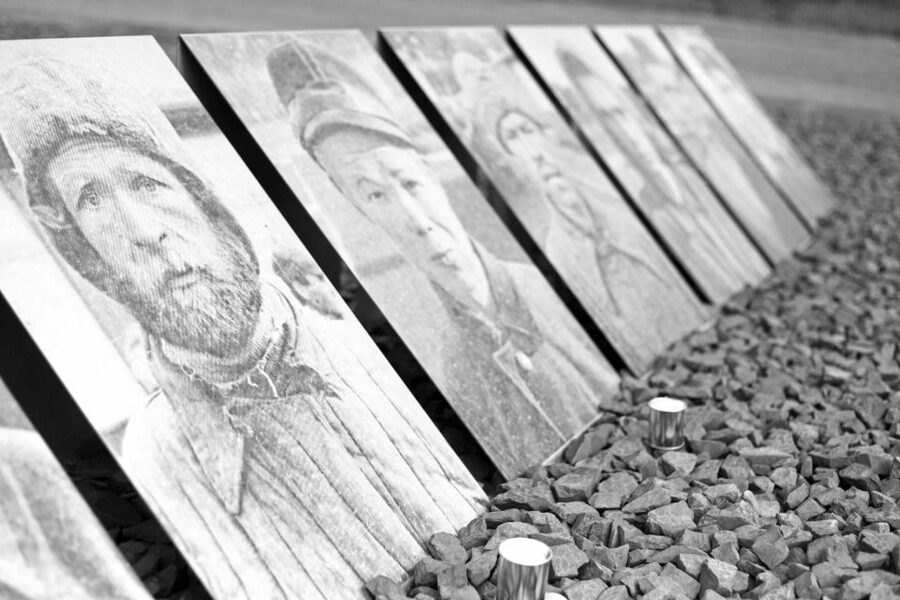
Station Z is the memorial area connected with executions. The name itself reflects the Nazi camp system’s cold administrative language, where prisoners were processed from the first station, the entrance, to the final station.
This is among the hardest parts of the visit. The guide presents the history with care, explaining what happened without turning the site into spectacle. Expect a quiet, serious stop rather than a dramatic presentation.
The value of having a guide here is clear. The physical remains cannot explain themselves, and the subject is difficult to absorb from labels alone. A good guide gives you the facts, points out what remains, and allows space for the group to take in the place.
Resistance, escape, and the forgery workshop
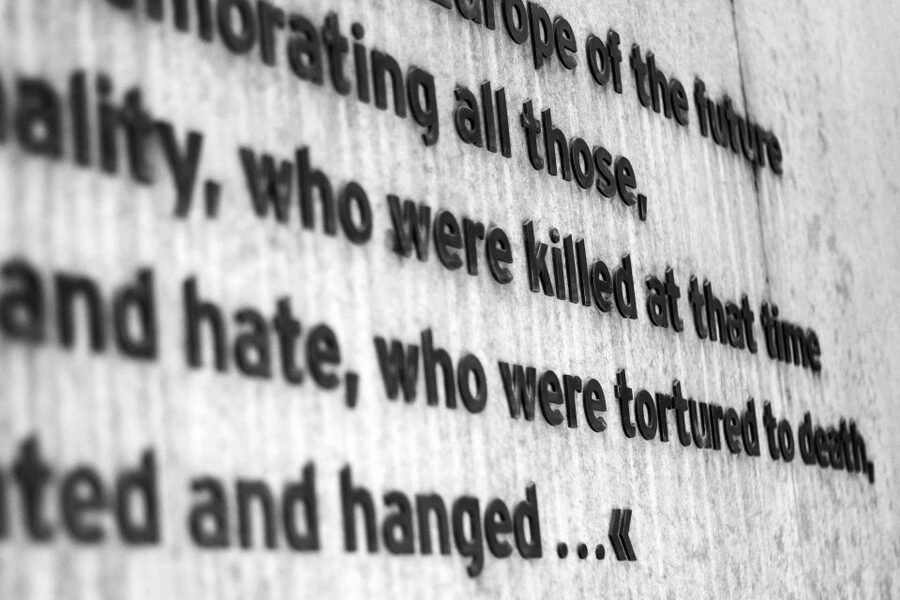
The tour is not only about suffering. It also includes stories of resistance, cooperation, and survival under conditions designed to destroy both.
You hear about the revolt of Jewish prisoners in 1942 and about the forgery workshop, where Jewish prisoners were forced to counterfeit millions of pounds sterling. That episode shows the complicated and brutal way the Nazi regime exploited prisoners with special skills while still treating them as disposable.
The guide also discusses escape attempts, including the tunnel dug by Jimmy James. These accounts add human scale to the site. They do not soften the horror, but they show prisoners making choices, taking risks, and helping one another in a place built to remove freedom.
This balance is one of the tour’s strongest features. The history is presented honestly, but the people imprisoned at Sachsenhausen are not reduced to numbers or victims without agency. Guides such as Lewis, Rebecca, Sarah, and Ronja have been praised for combining serious explanation with compassion and appropriate lightness when the subject allows it.
The Death March and liberation in 1945
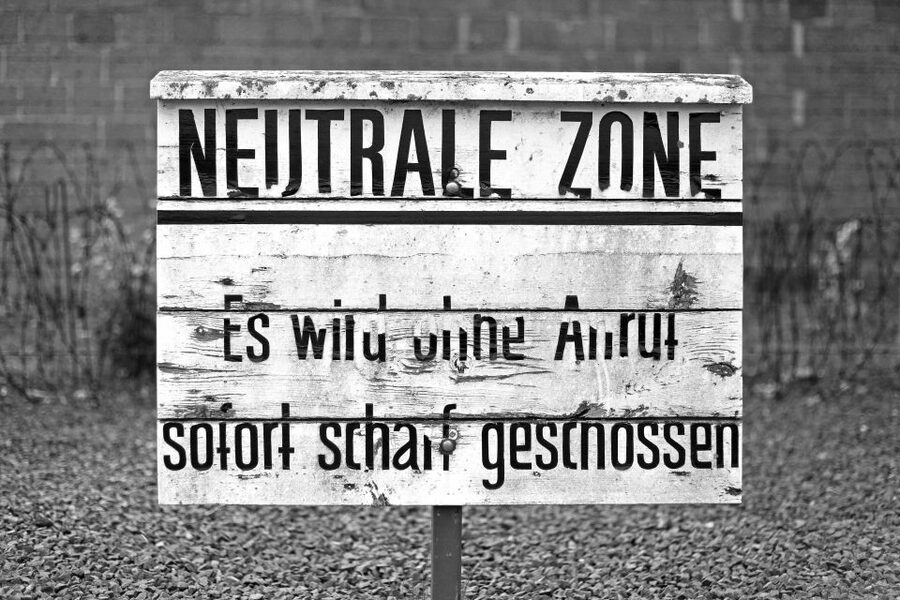
The final part of the historical story includes the Death March before the camp’s liberation in 1945. Your guide explains what happened as the Nazi regime attempted to evacuate prisoners and prevent the camp from falling into Allied hands.
This section links Sachsenhausen to the final phase of the war and makes clear that liberation was not a simple moment of relief for everyone still alive. The prisoners had already endured years of hunger, forced labor, disease, violence, and fear. The Death March added another terrible stage before the war ended.
The tour’s ending is handled with care. You may be given some time to reflect or look around at your own pace, depending on the group and the guide. Do not plan an immediate demanding activity afterward. The subject matter can stay with you, and the walk and transport home provide a natural cooling-off period.
Returning to Berlin by train
After the memorial visit, the guide walks with the group back toward Oranienburg. The return public-transport journey takes about 50 minutes in the planned schedule, and the group normally arrives at a central Berlin station such as Hauptbahnhof, Friedrichstraße, or Gesundbrunnen.
The exact arrival point can depend on the route and transport conditions. If you have an evening reservation, allow some extra time rather than scheduling something immediately after the stated 330-minute duration.
The return journey is also useful for practical questions. Guides have helped with onward transport, restaurant suggestions, and general Berlin advice. That is a small benefit, but after a long visit it is reassuring to know where you are going next.
Guide quality and group size
The strongest part of this experience is the human guidance. The licensed guides are specially trained by Original Berlin Walks and officially licensed by the memorial. Names that have received particularly warm praise include Sarah, Georgia, Anya, Lewis, Rebecca, Ronja, Natalie, Chris, Emma, Steve, and Gregor.
Their strengths are consistent: clear explanations, careful handling of a painful subject, willingness to answer questions, and good control of the transport connections. Several guides were also praised for adjusting to delays, keeping track of the whole group, and walking at a steady pace.
The 15-person maximum makes a real difference. You can hear the guide more easily, ask questions without holding up a large crowd, and stay near the group as you cross the site. It also gives the visit a more personal feel without making it private or expensive.
Do remember that individual guides have different voices and styles. Some use restrained humor at suitable moments, while others keep a more formal tone. The common thread is care and strong command of the subject.
Is $38 good value?
At $38 per person, this is a fair price for a 5.5 to 6-hour experience that includes a licensed guide, the memorial fee, and a €3 donation to the site. That donation supports the memorial’s use for education and remembrance, including work with schools and group visits.
The cost does not include public transport. Add the price of an ABC ticket or day pass when you set your budget. Even with that extra cost, the tour offers good value if you would otherwise struggle with the route, the memorial’s scale, or the historical context.
You can visit Sachsenhausen independently, but this tour removes much of the planning burden. The guide handles the route from central Berlin, explains the buildings and memorials, and helps you understand details you might miss alone.
The value is less clear if you already have specialist knowledge of Sachsenhausen and prefer to read every exhibit at your own pace. The three-hour guided portion has a set rhythm, and there may not be enough time to linger over every photograph or room.
Who should book this Sachsenhausen tour?
I recommend it to first-time visitors to Sachsenhausen, people who want historical context rather than a quick look, and anyone who feels uneasy navigating German public transport to a memorial outside Berlin. It also suits small groups who want the chance to ask questions.
You should be ready for a serious subject, long periods outdoors, and plenty of walking. Children and younger visitors may find the material difficult, so consider their maturity and interest before booking.
Bring:
- A valid ABC public-transport ticket
- Comfortable shoes with good grip
- Water and a snack or packed meal
- A rain jacket or other weather-appropriate clothing
- Extra layers in cool weather
The tour runs in all weather, and rain can make the site muddy. The memorial is not set up as a café stop, so arriving with food and drink is part of sensible planning.
Should you book it?
Book this tour if you want Sachsenhausen explained by a trained guide and prefer a well-managed small group to independent research. The combination of public-transport help, three hours at the memorial, and careful discussion of forced labor, resistance, Station Z, and the Death March gives you a fuller understanding of the site.
Skip it if you want a quick outing, dislike long walks, or need a flexible meal schedule. For most visitors with a free half-day in Berlin, though, the $38 price is reasonable, the 15-person cap is useful, and the guided context adds real value to a difficult but important visit.
FAQ
How long does the Sachsenhausen tour take?
The tour lasts about 330 minutes, or 5.5 hours. The schedule includes roughly 50 minutes of public transport each way, a 20-minute walk between Oranienburg and the memorial each way, and about three hours at the memorial.
Where does the tour meet in Berlin?
The meeting point is outside Starbucks opposite Hackescher Markt S-Bahn station, at Neue Promenade 3.
Is public transport included in the tour price?
No. You need to arrange and pay for a public-transport ticket yourself. An ABC day pass is recommended for the journey to Sachsenhausen and back.
What language is the tour conducted in?
The tour is conducted in English with a live guide.
What does the $38 price include?
The price includes the licensed and trained guide, the memorial fee, and a €3 donation to the Sachsenhausen memorial. Public transport, food, and drinks are not included.
What should I bring?
Bring comfortable shoes, drinks, a snack or packed meal, weather-appropriate clothing, and your public-transport ticket. The site can be muddy after rain and has no nearby shops or cafés for this tour.
Can I cancel the booking?
You can cancel up to 24 hours in advance for a full refund. The activity also offers reserve-now-and-pay-later booking.
Just added in Berlin
- Berlin & The Third Reich Private Guided Tour★ 5.0 · 3 reviews
- Third Reich Quest Experience in Berlin★ 4.5 · 7 reviews
- Private Analogue Photography Experience in Berlin★ 5.0 · 3 reviews
- Berlin Urbex Adventure and History Tour★ 5.0 · 9 reviews
- The Beauty of Berlin by Bike: Private Tour★ 5.0 · 59 reviews
- Berlin: Guided Bike tour of the Berlin Wall and Third Reich★ 5.0 · 160 reviews
- Beyond Currywurst: Berlin’s Hidden Street Food & Culture Tour★ 5.0 · 100 reviews
- Berlin Third Reich & Cold War Walking Tour With A Guide★ 5.0 · 7 reviews
Concentration Camp Memorials, compared.
Sachsenhausen Concentration Camp Tour in English
Read our review →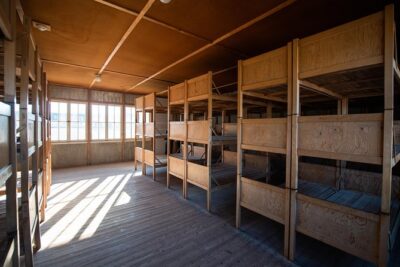
Dachau Concentration Camp Memorial Site Tour from Munich by Train
Read our review →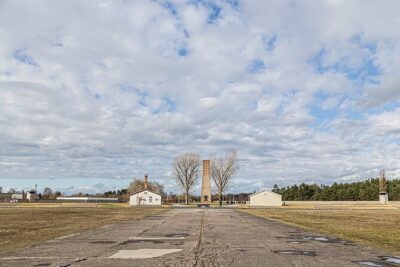
Sachsenhausen Concentration Camp Memorial Tour
Read our review →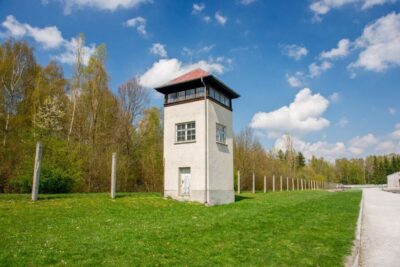
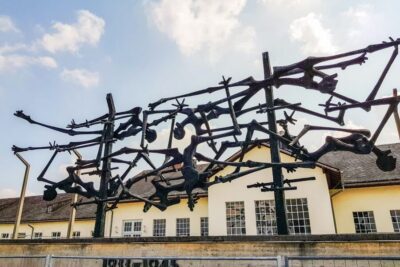
From Munich: Dachau Memorial Site Half-Day Trip
Read our review →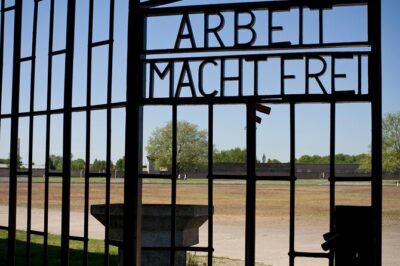
Sachsenhausen Concentration Camp Bus Tour in English from Berlin
Read our review →Sachsenhausen Concentration Camp Tour in English
Read our review →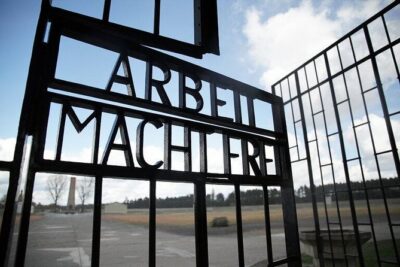
Sachsenhausen Concentration Camp Memorial Tour (Max. 15 Guests)
Read our review →Browse the lists this tour appears in