
Reviewed · CONCENTRATION CAMP MEMORIALS
Sachsenhausen Memorial: Walking Tour from Berlin
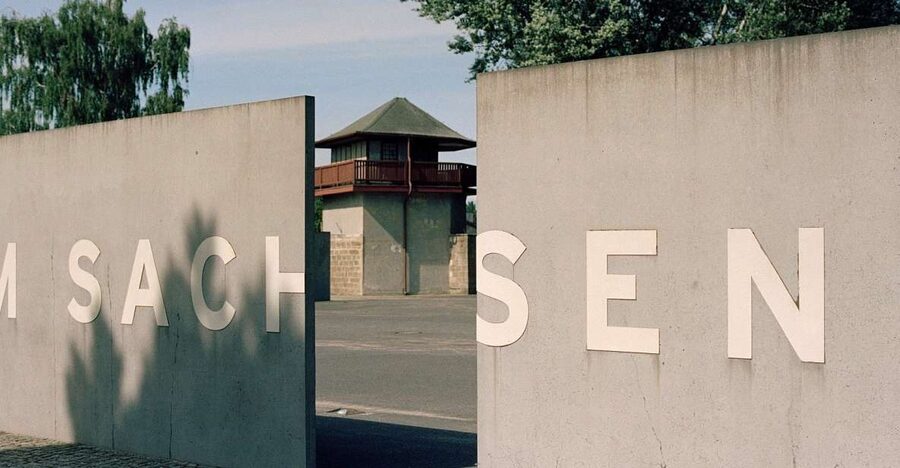
Sachsenhausen is not a casual sightseeing stop. It is a carefully planned place of terror, built close to Berlin in 1936 to serve as a model for the Nazi camp system. The tour helps you read the site itself: the gates, barracks, open spaces, work areas, and SS buildings all formed part of a machine built to control people.
I like the three-hour guided walk, which gives you time for the major sites without turning the visit into a rushed photo stop. I also like the train journey from Berlin, since it shows how close this camp was to the Nazi capital. The main drawback is the length and emotional weight: you walk a lot, eat nowhere during the activity, and face hard material for most of the day.
Key points at a glance
- A 40-minute S-Bahn ride from Berlin takes you to Oranienburg, followed by a walk to the memorial.
- Three and a half hours at Sachsenhausen covers Tower A, the roll-call square, prison barracks, medical rooms, the former kitchen, and Station Z.
- The camp’s design is part of the lesson, showing how architecture helped enforce SS control.
- Guides such as Fabio, Soleil, Lorenzo, and Andrea have been praised for clear, detailed, and sensitive explanations.
- The $511 group price works best for a full party of six, but you should confirm whether your chosen option is private or shared.
- Bring an ABC public transport ticket, lunch, water, and comfortable shoes, plus the required €3 cash memorial donation.
Why Sachsenhausen belongs on a Berlin history day
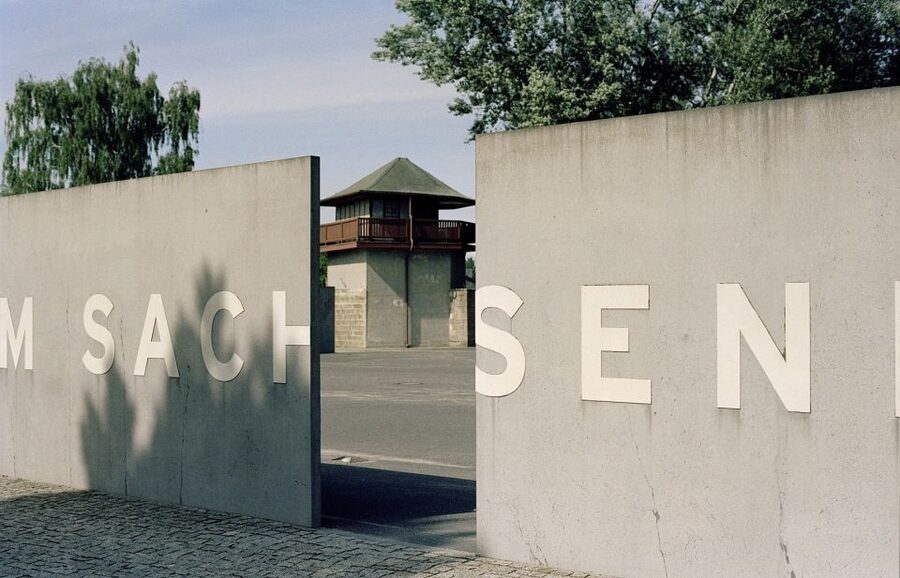
Berlin has plenty of museums about Nazi Germany, but Sachsenhausen gives you a different kind of understanding. Here, you are not only looking at documents and photographs. You are walking through a site designed to make prisoners feel watched, trapped, and powerless.
Sachsenhausen was built in 1936, just north of Berlin. It was one of the first camps created by the Nazi regime and became a model for the concentration camp system. Political opponents were imprisoned there first. Later, the camp held Sinti and Roma, Jewish prisoners, prisoners of war, Jehovah’s Witnesses, and others targeted by the regime.
More than 40,000 people died at Sachsenhausen under starvation, disease, forced labor, violence, executions, and other brutal conditions. A guide matters here because the remaining buildings and open spaces cannot explain themselves. Without context, a large area of grass and concrete can look empty. With careful explanation, you begin to see how the site operated.
I value the way this tour connects the camp to Berlin. Sachsenhausen was not an isolated place far from government power. It was close to the Nazi capital, and its location helped make it useful as a training center for SS guards and as a working part of the wider system.
More Concentration Camp Memorials in Berlin
- Berlin: Sachsenhausen Concentration Camp Tour in English
★ 5.0 · 5,711 reviews - Berlin: Sachsenhausen Concentration Camp Memorial Tour
★ 4.7 · 3,716 reviews - Sachsenhausen Concentration Camp Bus Tour in English from Berlin
★ 5.0 · 1,962 reviews
The train from Berlin puts the distance into perspective
The activity begins at a Berlin meeting point that depends on your selected booking option. Plan to arrive at least 15 minutes early. The train will most likely leave about five minutes after the official start time, and the group cannot wait for late arrivals.
You travel by S-Bahn to Oranienburg, the nearest station to the memorial. The ride takes about 40 minutes. You need an ABC public transport ticket, which covers Berlin and Oranienburg. That ticket is not included, so buy it before meeting the guide.
I like this part of the day because the journey makes the geography clear. Sachsenhausen is only about 35 kilometers from Berlin. You are not heading to some remote place outside the story. You are traveling from the capital to a camp built close enough to serve the capital’s political and security system.
From Oranienburg, the group continues on foot. The walk takes about 20 minutes. The route is not difficult in the sense of a hike, but it adds to the day’s total walking. Comfortable shoes are essential, particularly in wet or cold weather.
The activity runs in all weather. Bring a coat, rain gear, and water when needed. You should also pack food for the train journey or before the tour begins. Eating is not permitted at the memorial, and there is no lunch stop during the activity.
Entering through Tower A and the roll-call square
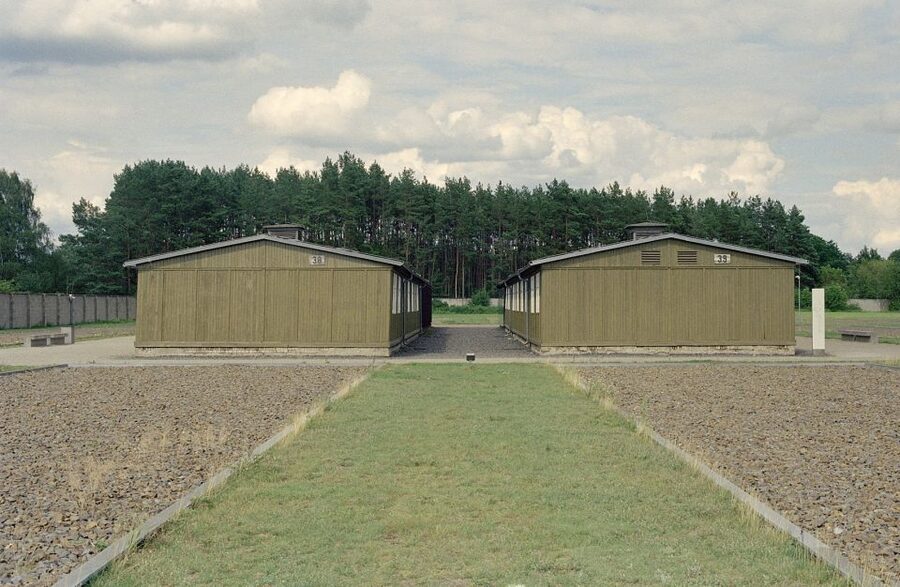
The guided visit at the memorial lasts about three and a half hours. The first major area is Tower A and the roll-call square, one of the places where the camp’s design becomes easiest to understand.
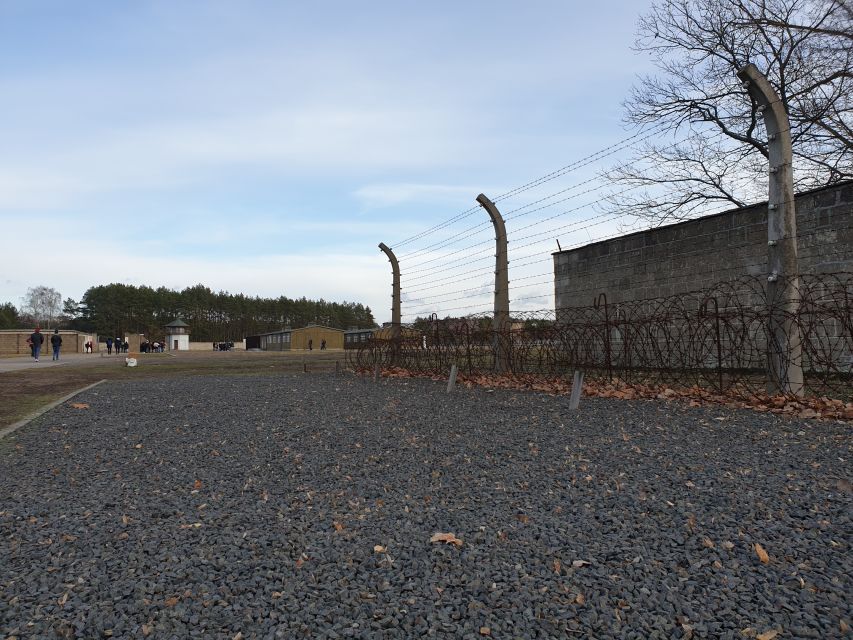
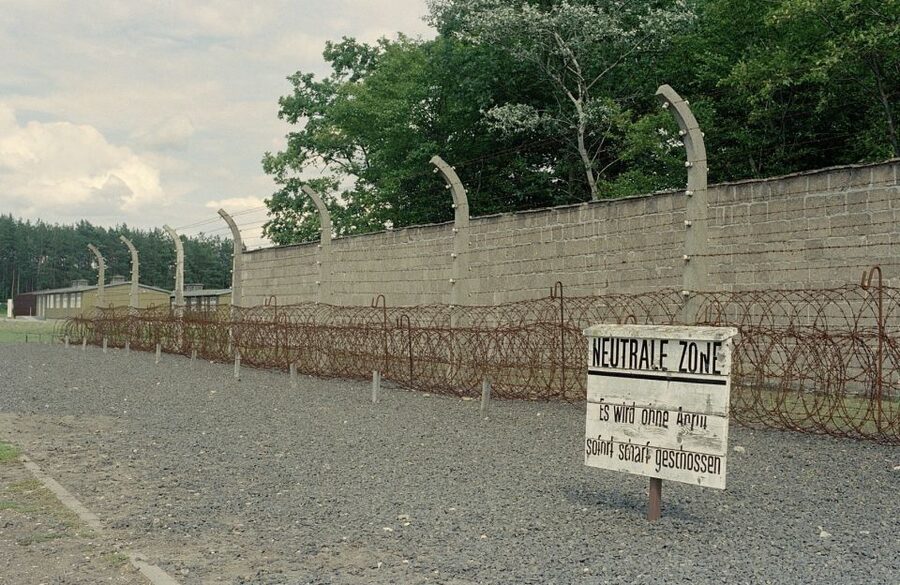
The layout was deliberate. The SS could observe prisoners across the open area, and the camp’s geometry helped reinforce total submission to authority. The guide explains how buildings, sightlines, gates, and distances were used as tools of control.
This is an important difference between walking the site alone and joining a guided visit. You may notice the size of the roll-call square, but a guide can explain what that space meant in daily life, how prisoners were assembled, and how punishment and surveillance worked.
The guide also places Sachsenhausen within the Nazi camp network. It functioned as a model SS concentration camp and a training center for guards. The camp’s methods and personnel connected it to a much wider system of imprisonment, forced labor, and mass murder across Nazi-controlled Europe.
Forced labor, punishment, and daily survival
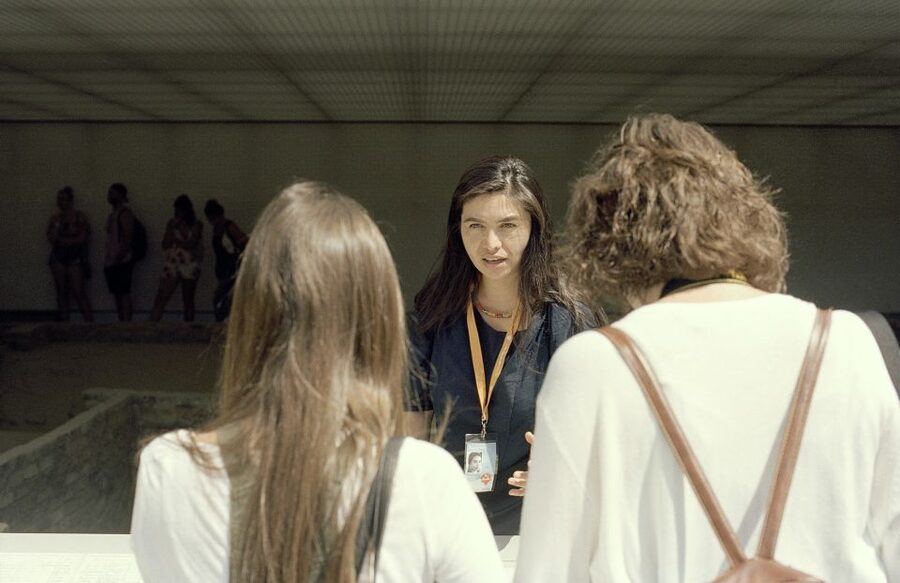
The tour then examines the system of forced labor and punishment. Sachsenhausen was not only a place of confinement. Prisoners were used as a labor force under conditions designed to exhaust and break them.
Your guide explains the rules and punishments that shaped each day. The point is not simply to list abuses. It is to show how terror worked through routine: roll calls, work assignments, surveillance, deprivation, and arbitrary discipline.
The tour also covers the prisoners’ daily lives and efforts to resist. Resistance in a concentration camp did not always mean a dramatic revolt. It could involve protecting another prisoner, keeping forbidden information alive, slowing work, or trying to preserve some personal control in a system built to destroy it.
The subject matter is severe, but the best guides keep it focused and factual. Fabio, Soleil, Lorenzo, and Andrea have each been singled out for passionate, clear, and empathetic presentations. Guides are not guaranteed by name, so treat those names as examples of the kind of guide you may encounter, not as a promise.
More Walking Tours in Berlin
- Discover Berlin Half-Day Walking Tour
★ 5.0 · 9,624 reviews - Berlin: Third Reich and Cold War 2 Hour Walking Tour
★ 4.9 · 6,830 reviews - Berlin: Discover Berlin Walking Tour
★ 4.9 · 5,998 reviews - Berlin’s Best: 2 Hour Walking Tour Third Reich and the Cold War
★ 5.0 · 5,486 reviews
Prison barracks and medical experimentation rooms
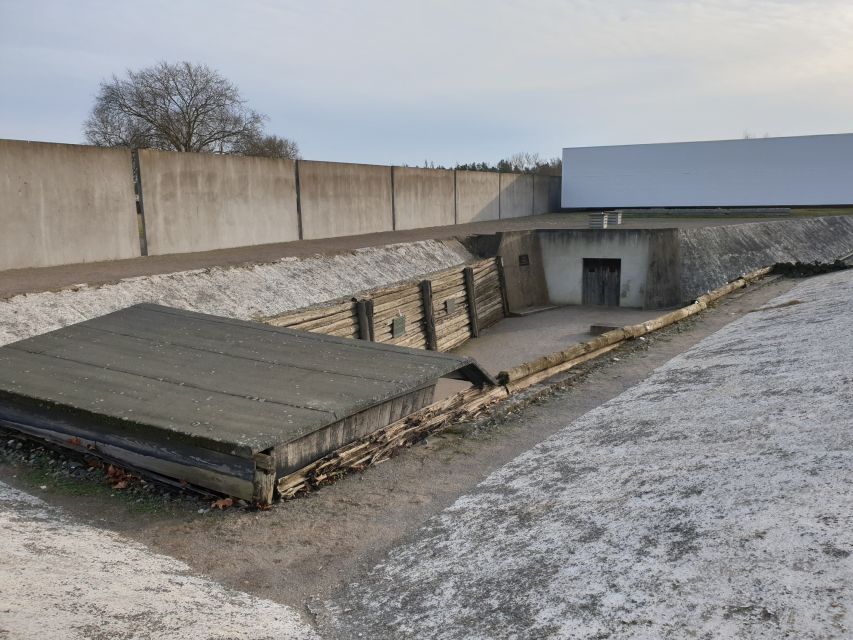
The prison barracks and medical areas show how the camp controlled bodies as well as movement. The tour discusses medical experimentation rooms and the conditions prisoners faced inside the camp.
Some areas may be preserved, reconstructed, or presented through museum displays rather than appearing exactly as they did in 1936 or 1945. That makes the guide’s explanation especially useful. You are given historical context, survivor testimony, and research to help you understand what happened in each section.
This part requires attention and patience. Sachsenhausen is not a quick stop where you can take in a few famous objects and move on. The experience asks you to listen, notice, and accept that some questions do not have neat answers.
The former kitchen and the camp museum
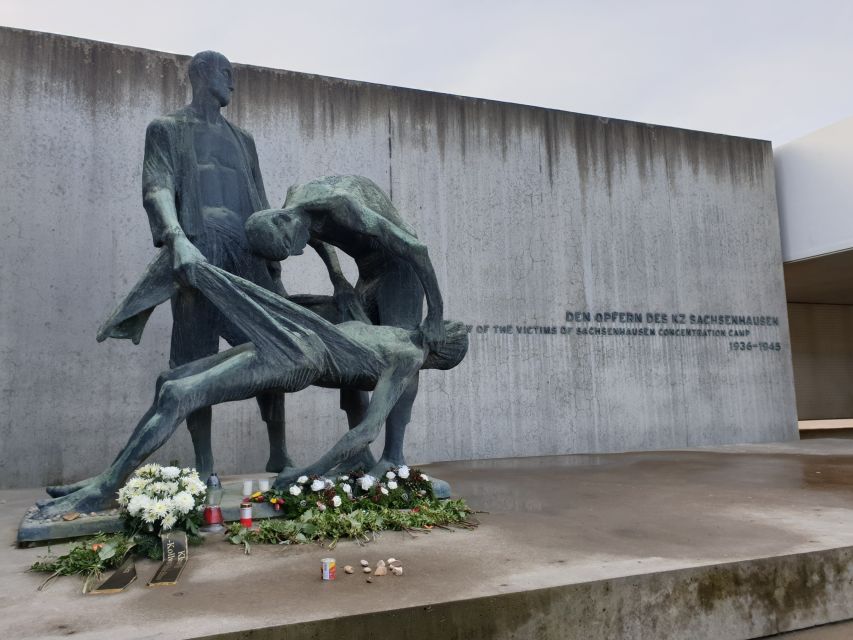
The former kitchen now serves as a museum. It offers an indoor section of the visit and helps connect the camp’s systems to individual lives.
A museum space can do something the open grounds cannot. It can show documents, photographs, and personal evidence that make the scale of the camp more human. The guide uses historical research and survivor testimony to explain how policies affected real people.
I find this balance useful. The outdoor spaces show the physical structure of imprisonment. The museum helps restore names, stories, and decisions to a place that could otherwise feel like an abstract historical site.
You should not expect a light or entertaining museum visit. The tone is serious throughout. Still, the guide’s job is to make the material understandable, not simply grim. The strongest part of this activity is the connection between facts, place, and human experience.
Station Z and the final crimes of the camp
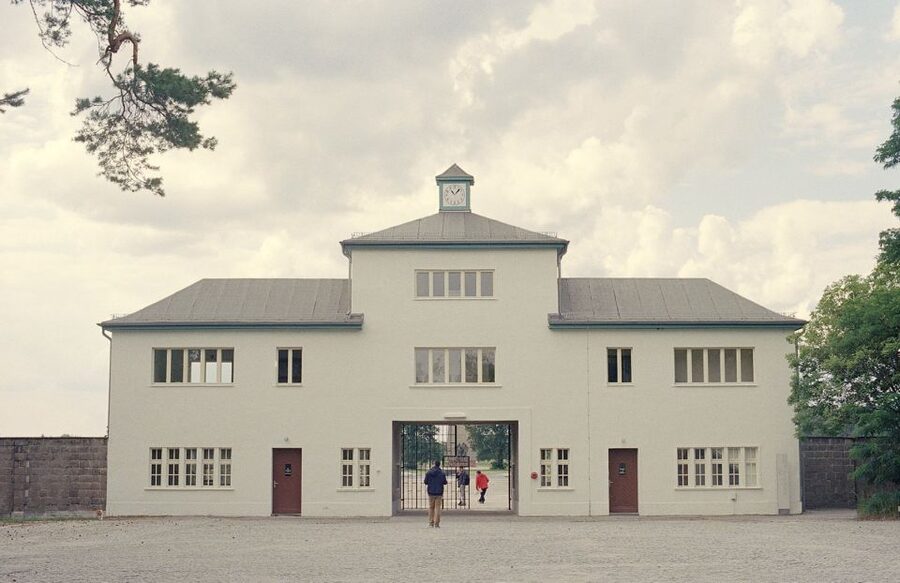
Station Z is among the most disturbing parts of Sachsenhausen. The area once contained the crematoriums and gas chamber. It was deliberately positioned outside the main prisoner camp, and the tour explains its role in the killing system.
This is where the camp’s purpose becomes impossible to separate from the Nazi program of mass murder. The guide explains what happened at the site while keeping the focus on evidence and historical record.
You should expect this section to affect you differently from the earlier parts of the tour. The open roll-call square may feel stark and controlled. Station Z carries a different weight because it points directly to organized killing.
A good visit does not turn this place into spectacle. Photography, personal conduct, and tone matter. Smoking, alcohol, and drugs are not allowed, and you should treat the entire memorial as a place of remembrance rather than a normal attraction.
The camp after 1945
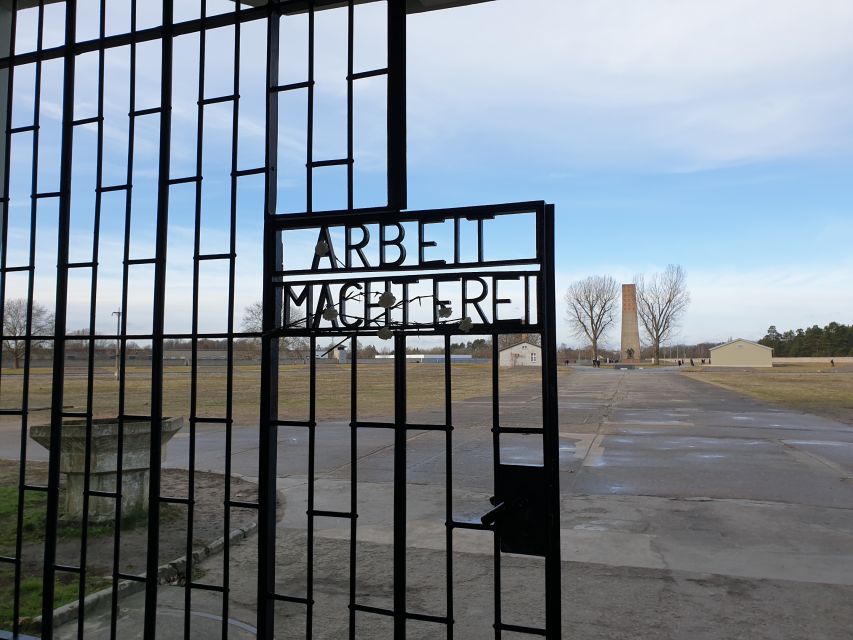
Sachsenhausen’s story did not end when Nazi rule collapsed. Under Soviet occupation, the site continued to operate as a special camp. Thousands of people, including former Nazis, political opponents, and civilians, were detained there. Many died from hunger and disease.
The postwar chapter is important because it prevents an overly simple reading of the site. You are not being asked to blur the crimes of the Nazi camp with what followed. You are being shown that the same place carried another history of detention after the war.
The guide also covers the death marches at the end of the Nazi period and the postwar history of the memorial. This wider timeline helps you understand Sachsenhausen as a site with several layers, not a single frozen moment.
How the six-hour schedule works
The full activity takes about six hours. A typical day includes a short orientation in Berlin, about 40 minutes on the train, the walk from Oranienburg, roughly three and a half hours inside the memorial, and the return journey.
The timing is full but sensible. The memorial itself deserves several hours, and the train ride is part of the historical setting rather than wasted time. You return to Berlin by train, with drop-off options at Potsdamer Platz 10 or Friedrichstraße 141.
You may stay longer at the memorial after the guided portion if you want more time alone. That flexibility is useful if you need a quiet break, want to read more museum material, or prefer to process the visit without a group around you.
The activity involves a lot of walking and takes place in all weather. I would not schedule it on a day when you need to rush to another major attraction afterward. Give yourself room to be tired, both physically and emotionally.
Group size, language, and guide quality
The tour operates with small groups, and groups can be up to 25 people. A private group option is also available. The advertised price is $511 per group of up to six, so the value changes sharply depending on how many people share that cost.
For six people, the price works out to about $85 per person before transport tickets and the memorial donation. That is a reasonable figure for a six-hour private-style day with a professional guide, but it is a poor comparison if you are traveling alone or as a couple and paying the full group amount.
Language options include English, French, and Italian. The detailed activity information also refers to a French-speaking guide and lists Italian or Spanish in one inclusion note, so check the exact language attached to your booking option before paying. The guide’s ability to explain this subject clearly is more important here than flashy presentation.
The most praised quality from the named guides is not speed or entertainment. It is preparation and empathy. Lorenzo, for example, was praised for supplying dates and details that helped place the camp within the wider period. Fabio was described as bringing the story close to the visitor. Soleil and Andrea were also praised for passion and clear communication.
One practical weakness is transport organization. If you are not comfortable navigating a Berlin station, pay close attention at the meeting point and stay with the group. The train is straightforward once everyone is together, but the beginning can feel less tidy than the memorial tour itself.
Who should book this Sachsenhausen tour?
I would choose this activity if you want serious historical context and prefer a guide to lead you through difficult material. It suits first-time visitors to Sachsenhausen, people studying Nazi history, and anyone who wants to understand how a concentration camp worked as a system rather than just see the remaining buildings.
It is also a good fit if you are staying in Berlin and do not want to organize the S-Bahn route, Oranienburg transfer, and memorial visit on your own. The return trip is handled with the group, and you still have the option to stay longer at the site.
I would think twice if you dislike long walks, need a meal during a six-hour activity, or want a light day between Berlin attractions. This is not suitable for treating the memorial as a quick photo stop. You need sturdy shoes, food for the train, and the willingness to listen to painful history.
The €3 cash donation is mandatory for every participant and goes to the memorial. Bring it separately, along with your ABC ticket. Free cancellation is available up to 24 hours before the activity, and you can reserve now and pay later, which helps if your Berlin plans are still shifting.
Should you book it?
Book this tour if you want a well-structured, guide-led visit to one of the most important historical sites near Berlin. The three-hour memorial walk, train connection, and attention to camp design make it more useful than simply arriving, walking around, and leaving with unanswered questions.
The price makes the most sense for a group of up to six sharing the $511 rate. If you are alone or traveling as a couple, compare the private and shared options carefully. Either way, expect a demanding day with substantial walking, no meal stop, and a subject that deserves quiet attention.
FAQ
How long does the Sachsenhausen tour take?
The complete activity lasts about six hours, including the train journeys, the walk from Oranienburg, and the guided visit inside the memorial.
How do I travel from Berlin to Sachsenhausen?
You travel by S-Bahn from Berlin to Oranienburg. The train ride takes about 40 minutes, followed by an approximately 20-minute walk to the memorial.
Is public transportation included?
No. You need to buy your own ABC public transport ticket for Berlin and Oranienburg.
How long is the guided visit inside Sachsenhausen Memorial?
The guided walk inside the memorial lasts about three and a half hours.
What language does the guide speak?
Guides are available in English, French, and Italian. The exact language depends on the option you select when booking, so check it before purchase.
How much is the required memorial donation?
Each participant must pay a €3 donation in cash at the meeting point. The donation goes to the Sachsenhausen Memorial.
Can I eat during the activity?
You can bring food for the train journey, but eating is not permitted at the memorial. There is no lunch stop during the activity.
What should I wear?
Wear comfortable shoes and dress for changing weather. The activity takes place outdoors in all weather and involves substantial walking.
Can I stay at the memorial after the guided tour?
Yes. You are welcome to remain longer and explore the memorial on your own after the guided portion.
Is a private group available?
Yes. A private group option is available, and the advertised price is $511 for a group of up to six people. Check the specific option for the group arrangement and language.
Just added in Berlin
- Berlin & The Third Reich Private Guided Tour★ 5.0 · 3 reviews
- Third Reich Quest Experience in Berlin★ 4.5 · 7 reviews
- Private Analogue Photography Experience in Berlin★ 5.0 · 3 reviews
- Berlin Urbex Adventure and History Tour★ 5.0 · 9 reviews
- The Beauty of Berlin by Bike: Private Tour★ 5.0 · 59 reviews
- Berlin: Guided Bike tour of the Berlin Wall and Third Reich★ 5.0 · 160 reviews
- Beyond Currywurst: Berlin’s Hidden Street Food & Culture Tour★ 5.0 · 100 reviews
- Berlin Third Reich & Cold War Walking Tour With A Guide★ 5.0 · 7 reviews
Concentration Camp Memorials, compared.
Sachsenhausen Concentration Camp Tour in English
Read our review →
Dachau Concentration Camp Memorial Site Tour from Munich by Train
Read our review →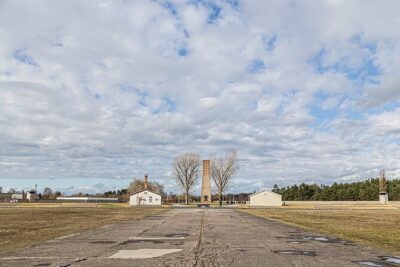
Sachsenhausen Concentration Camp Memorial Tour
Read our review →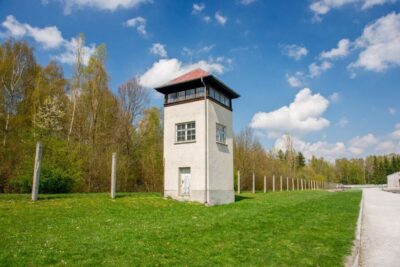
From Munich: Dachau Memorial Site Half-Day Trip
Read our review →
Sachsenhausen Concentration Camp Bus Tour in English from Berlin
Read our review →Sachsenhausen Concentration Camp Tour in English
Read our review →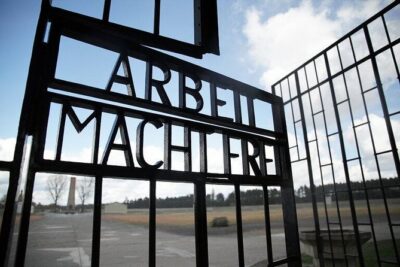
Sachsenhausen Concentration Camp Memorial Tour (Max. 15 Guests)
Read our review →Browse the lists this tour appears in