
Reviewed · CONCENTRATION CAMP MEMORIALS
Never Again Berlin – Sachsenhausen Concentration Camp
Sachsenhausen is not a quick photo stop. It is a place of forced labor, medical abuse, mass murder, and daily terror, and this tour gives you time to face those subjects at the actual site. The route from Potsdamer Platz to Oranienburg also helps explain why the camp was built there and how its setting connected to the Nazi system.
I like two things here: the later start suits anyone who does not want an early morning rush, and the tour covers hard-to-find details, from SS family life beside the camp to the shoe-testing track used to wear prisoners down. The main concern is guide consistency. Siobhan received warm praise for clear, thoughtful explanations, but one review described a guide who stayed outside for most of the visit and struggled with questions.
Key points before you book
- Four hours at the memorial: This is a serious, full visit rather than a quick circuit.
- Station Z and the infirmary: The tour deals directly with mass murder, medical experiments, eugenics, and control of prisoners’ bodies.
- Train ticket not included: You need a Berlin ABC ticket for the journey to Oranienburg.
- Later departure from Potsdamer Platz: This can work well if you prefer a slower morning.
- English-language guiding: The activity is offered in English, though one review raised concerns about two languages being handled at once.
- Bring food and water: Only two food options may be available at the memorial, and they are not always open.
Why Sachsenhausen requires more than a quick visit
The most useful feature of this experience is its scale. You do not simply enter the gate, take in the bleak geometry, and leave. The visit connects the camp to Nazi political power, SS training, forced labor, racist policy, medical crimes, and modern German politics.
That matters because Sachsenhausen can be difficult to read on your own. The surviving grounds and exhibitions give you the physical evidence, but a guide can explain how the parts fit together. The tour begins with the rise of Hitler and the selection of Oranienburg, then moves through the camp in a sequence that follows both its layout and its purpose.
This is not light sightseeing. You will hear about executions, gas chambers, cremation, sexual exploitation, forced labor, and experiments on prisoners. Children under 12 cannot join, and I would treat that age rule as a sensible minimum rather than a technical detail.
The activity has a rating of 4.3 from 26 reviews, but the individual experiences are mixed. Several people praised Siobhan in particular for being caring, dynamic, and clear. One complaint described weak explanations and very limited guiding inside the site. That difference is important when you decide how much you value a guided visit over exploring alone.
More Concentration Camp Memorials in Berlin
- Berlin: Sachsenhausen Concentration Camp Tour in English
★ 5.0 · 5,711 reviews - Berlin: Sachsenhausen Concentration Camp Memorial Tour
★ 4.7 · 3,716 reviews - Sachsenhausen Concentration Camp Bus Tour in English from Berlin
★ 5.0 · 1,962 reviews
From Potsdamer Platz to Oranienburg
The meeting point is in front of Espresso House at Potsdamer Platz. Look for the guide holding a small yellow flag. From there, the group takes a train for about 35 minutes, followed by a 10-minute bus ride to the memorial.
The train ride is part of the day’s practical rhythm. You leave central Berlin and travel toward Oranienburg, the nearby city where Sachsenhausen was built. The guide uses this opening to explain the city’s wartime story and the camp’s place within the Nazi system.
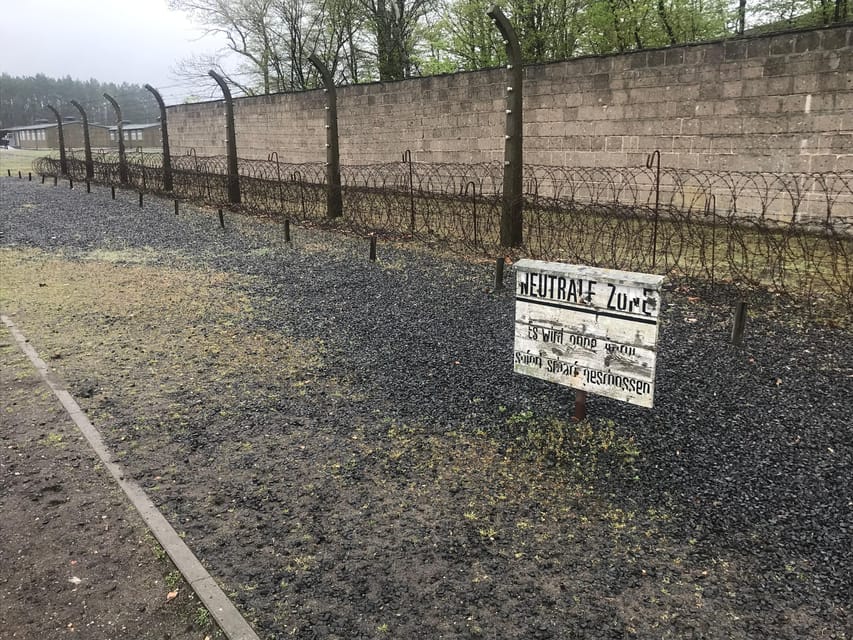
The tour description notes that wartime bombing hit Oranienburg but left the camp untouched. That detail offers a disturbing reminder that the site was not an accidental ruin. Its layout, buildings, and systems were designed for control and punishment, and much of the experience comes from seeing how deliberately that system was organized.
You need to buy the Berlin ABC train ticket yourself before the tour. It is not part of the $38 price. The activity includes entrance, but not the transport to and from Oranienburg, so check the fare rules before you meet the guide.
The visitor center and the camp’s planned design
The walk from the station leads to the visitor center, where models show the camp’s physical structure. This is a useful beginning because Sachsenhausen was designed around control. The buildings, open areas, guard positions, and routes for prisoners all served a system built to enforce Nazi power.
I like this part of the tour because models can make the site easier to understand before you walk across it. Sachsenhausen is large and emotionally heavy. A clear sense of its layout helps you see where prisoners were housed, where SS personnel worked, and how movement through the camp was controlled.
The tour also points out the former SS training camp, which is now used as a Brandenburg police academy. That contrast is hard to ignore. A place once tied to Nazi security forces now has a modern public function, raising questions about how Germany uses, marks, and explains difficult sites.
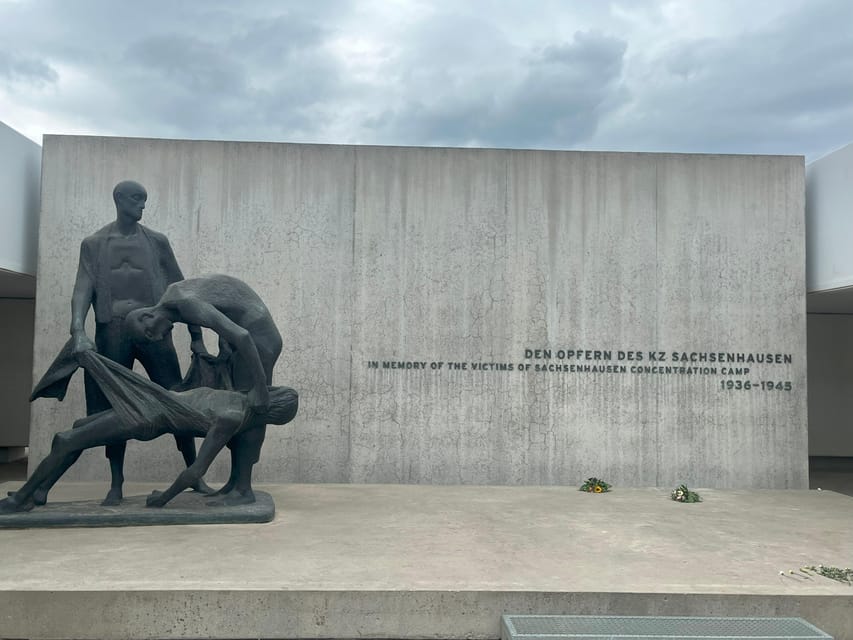
You should expect the memorial to feel stark rather than polished. The point is not to recreate the camp or turn it into a dramatic attraction. The surviving structures, memorial buildings, and exhibitions ask you to think about systems and choices, not just individual cruelty.
SS power and ordinary family life beside the camp
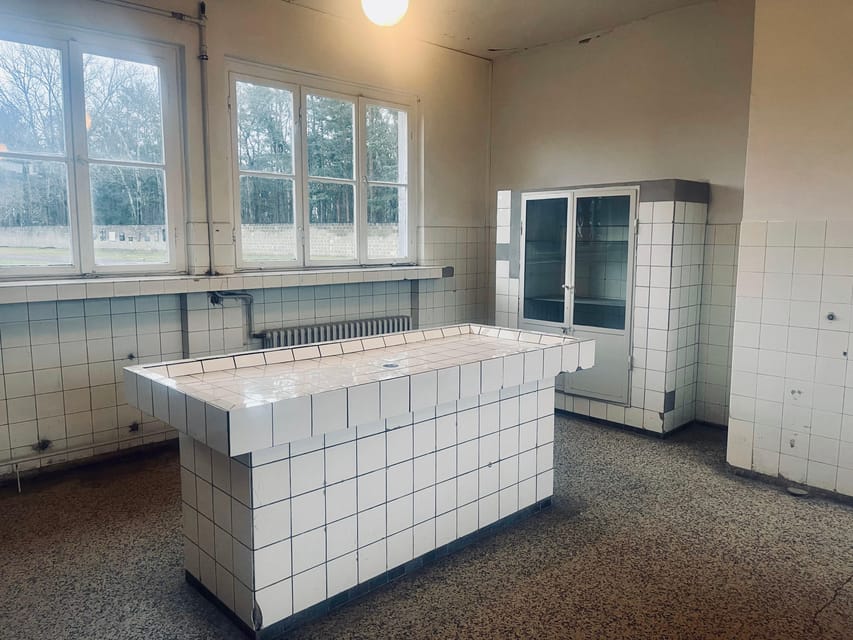
The route continues through the SS troop camp and to the head of the camp’s house. Here, the tour examines the gap between the prisoners’ suffering and the private life of the men who ran the camp.
The officers could enjoy family time close to the prison compound. That fact is more revealing than a simple description of cruelty. It shows how people involved in mass persecution could treat their work as routine while maintaining a private life nearby.
The tour also addresses sex work involving female prisoners. This is one of the more disturbing subjects on the route, and it shows how the camp system controlled prisoners’ bodies in different ways. The presence of reporters, ambassadors, and humanitarian organizations raises the question of who knew what was happening.
That question is a central strength of the tour. It pushes you beyond the familiar idea that Nazi crimes happened in total secrecy. The site asks you to consider what people saw, what they understood, and what they chose to ignore.
Same city, a completely different kind of day:
- Berlin: Reichstag, Dome and Government District Guided Tour
★ 4.7 · 18,288 reviews - Berlin: 1-Hour City Tour by Boat with Guaranteed Seating
★ 4.3 · 16,993 reviews - Berlin: Boat Tour Along the River Spree
★ 4.4 · 11,252 reviews - Discover Berlin Half-Day Walking Tour
★ 5.0 · 9,624 reviews
Tower A and the machinery of daily terror
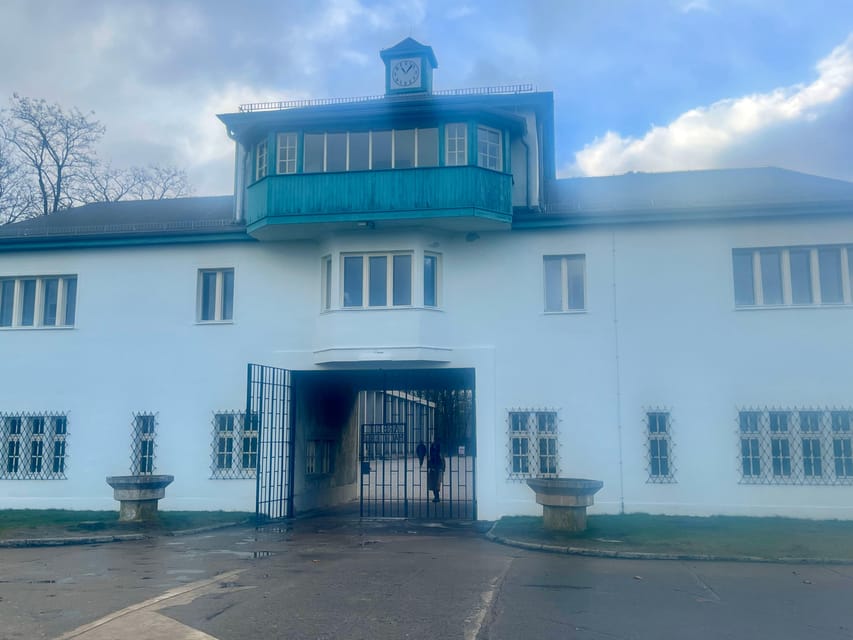
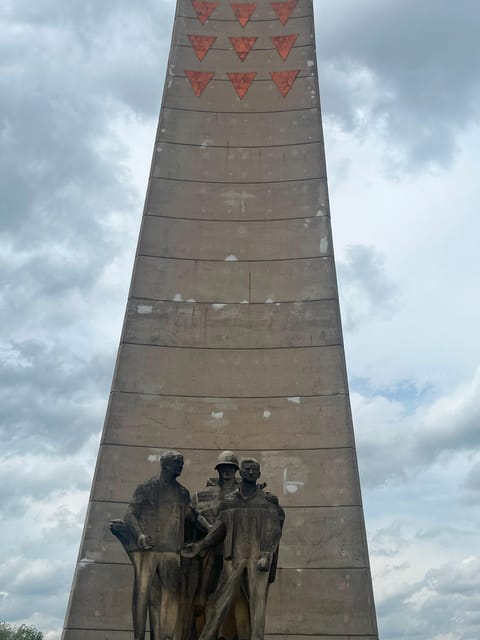
Tower A introduces the exhibition on perpetrators. Here, you learn about SS indoctrination and see portraits of officers whose actions were supported by a system of racial ideology, obedience, and power.
The exhibition is valuable because it keeps the focus on human decisions. The men who guarded and administered the camp were not abstract monsters from a distant world. They were part of an organized institution, trained to accept cruelty as duty.
From Tower A, the tour covers the daily roll calls and the punishment built into camp routines. Roll call was not just an administrative task. It could keep prisoners standing for long periods and formed part of the constant pressure imposed on them.
You also hear about the shoe-testing track. Prisoners from groups the Nazis labeled as among the lowest categories were forced to test shoes by walking long distances. The system profited from their suffering and labor.
This detail makes the economic side of the camp clear. Prisoners were not only confined and punished. Their bodies were used to test products, support production, and serve the interests of the Nazi state and private businesses.
Barracks and the camp kitchen
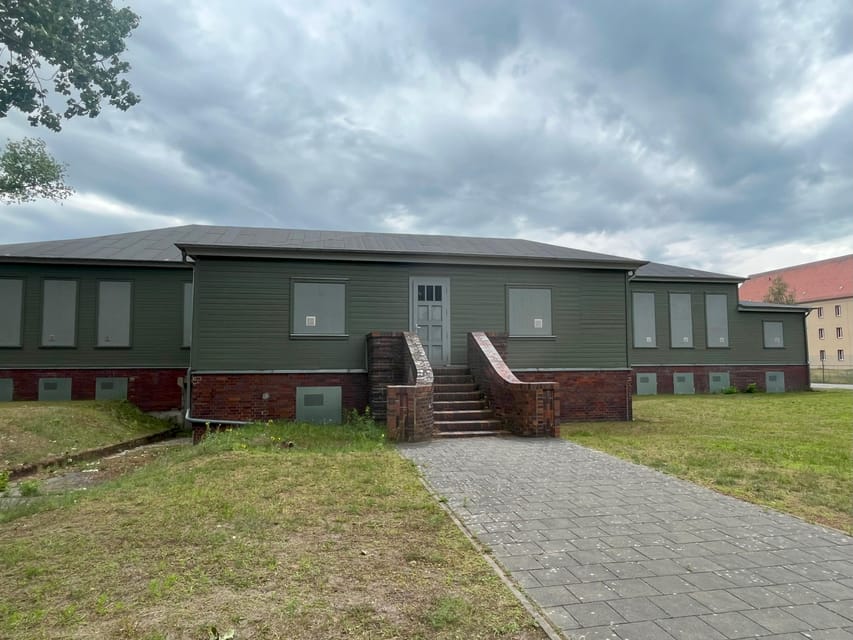
Part of the visit allows you to explore the prisoners’ barracks and the camp kitchen on your own. This gives the day a slightly different pace after the more guided sections.
The barracks help you picture the crowded, controlled daily life of prisoners. The kitchen points toward the basic needs that the camp system controlled, including food and access to it. These buildings are not simply background scenery. They show how imprisonment worked through space, schedules, labor, hunger, and surveillance.
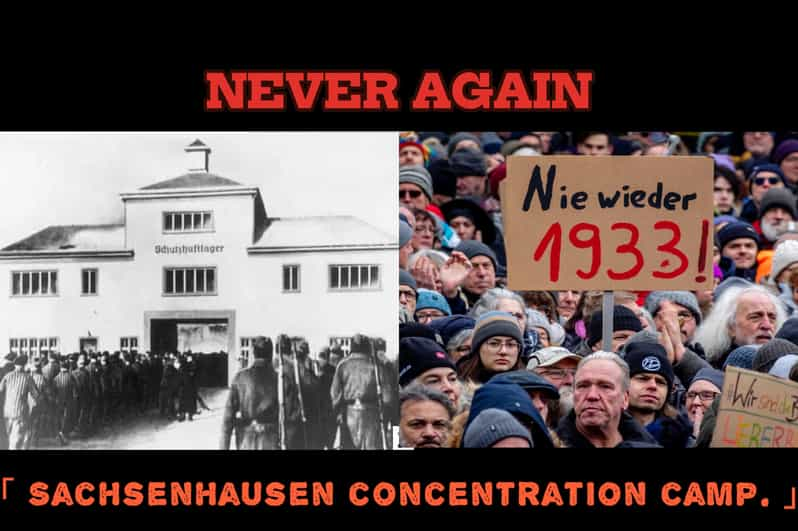
The memorial has also been attacked by Holocaust deniers and Neo-Nazis. That fact links the site to current arguments about memory and truth. You are not only looking at crimes from the 1930s and 1940s. You are also seeing a place that remains politically contested.
The tour connects this issue to the rise of the AfD, a German far-right party. The discussion does not make the visit a modern political rally, but it does show why memorials remain important. History at Sachsenhausen is tied to how Germany talks about racism, nationalism, democracy, and responsibility today.
Station Z and the murder of Soviet prisoners
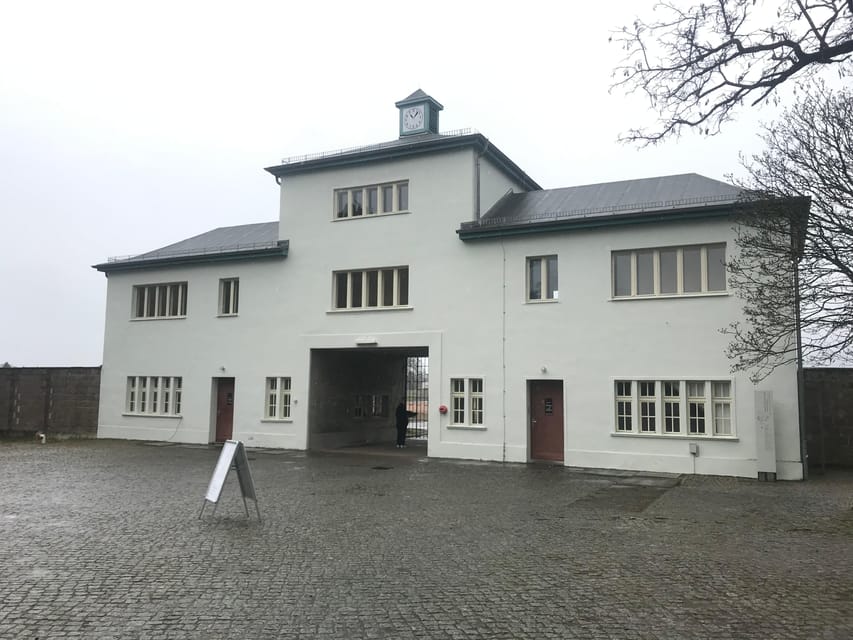
Station Z is one of the most difficult parts of the memorial. It explains the mass murder of Soviet prisoners, including child soldiers, and the operation of the gas chambers and crematorium.
The name itself is grim. Tower A marked the entrance and beginning of the prisoner experience. Station Z represented the final destination for those murdered there. The tour uses this site to explain not only what happened, but how the killing process was organized.
You should allow yourself time here. The material is confronting, and the site is not something to rush through for the sake of staying on schedule. The four-hour memorial visit gives the group enough room to move between major areas, though the emotional pace may feel slower than the clock suggests.
This is also where a guide’s quality matters most. Clear context can help you understand the evidence without turning it into spectacle. Siobhan was praised for explaining difficult sections carefully and for answering questions. At the same time, one poor review makes clear that you should not assume every guide will provide the same depth.
The infirmary and medical abuse
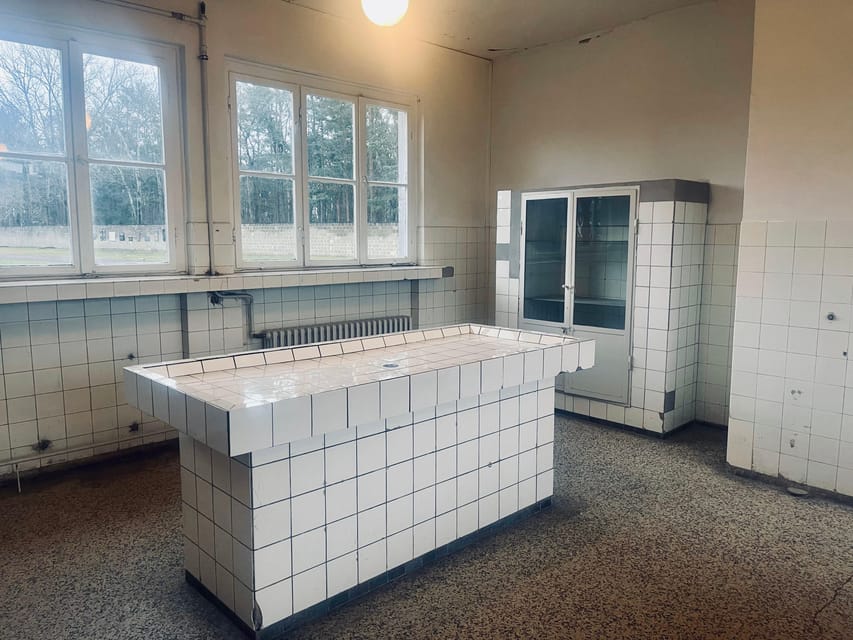
The infirmary examines racism, eugenics, control over women’s bodies, and medical experiments on prisoners. Nazi doctors treated people as material for research and used the camp to advance their careers.
This section shows how Nazi violence was supported by professional institutions. The crimes were not limited to armed guards or prison officers. Medicine, racial theory, administration, and scientific ambition could all be pulled into the system.
The focus on women’s bodies is especially important. It shows that persecution worked through forced medical procedures and reproductive control as well as imprisonment and labor. The tour’s attention to these subjects makes the visit broader than a military or political history lesson.
I would not describe this as an easy final stop. It leaves you with questions about professional ethics and the abuse of authority. That is precisely why the infirmary belongs in the route. It shows how ordinary areas of public life can become tools of oppression when human rights are removed.
What the $38 price really covers
The listed price is $38 per person. Entrance to the memorial is included, but the Berlin ABC train ticket is extra. Since the round trip includes a train and bus connection in both directions, you need to count transport when comparing this with a self-guided visit.
The memorial itself is free to enter, according to one review, so the tour price mainly pays for the guide, organization, and the day’s structure. That makes the value depend heavily on the person leading your group.
A strong guide can save you from wandering between buildings without understanding their purpose. The tour also handles the public transport route, helps you reach the memorial, and connects Sachsenhausen to other concentration camps and the broader Nazi system.
A weaker guide changes the calculation. One review said the guide did not accompany the group for most of the visit and gave vague answers when present. Another review complained about two languages being handled at once. If the operator combines languages or limits indoor guiding, the experience may feel less worthwhile.
The best case is clear from the praise for Siobhan: careful explanations, interesting stories, help with the train and bus, and a flexible approach when a group member made a mistake. If you value that kind of support, $38 plus transport can be fair. If you are comfortable reading exhibits and navigating alone, the added cost may be harder to justify.
Timing, food, clothing, and access
The full activity lasts about 270 minutes, or four and a half hours. The memorial portion takes about four hours, with roughly 35 minutes on the train and 10 minutes on the bus in each direction.
The later start is useful if you dislike early departures. It also gives you time to reach Potsdamer Platz without beginning the day in a rush. Confirm the available starting time when booking, since the schedule can vary.
Bring water and snacks. There are only two food options at the memorial, and they may not be open. A half-day at a large outdoor site is not the place to rely on finding lunch at the last minute.
Wear comfortable shoes and clothes suited to walking. The tour is wheelchair accessible, though the information provided does not explain every surface or route detail. If you use a wheelchair, it would be sensible to confirm the exact meeting and memorial route before departure.
The activity is in English. The tour is not suitable for children under 12, both because of the subject matter and the amount of walking and concentration required.
Free cancellation is available up to 24 hours before the activity, and you can reserve now and pay later. Those terms help if your Berlin schedule is still changing, but they do not remove the need to buy the ABC ticket separately.
Who will get the most from this visit
I recommend this tour to adults who want help making sense of Sachsenhausen rather than simply walking through it. It suits first-time visitors to the memorial, people with limited time in Berlin, and anyone who prefers public transport with a guide rather than handling the route alone.
It is also a good choice if you want the present-day connection. The discussion of Neo-Nazi attacks, Holocaust denial, and the AfD gives the memorial a modern frame without losing sight of the historical crimes.
I would think twice if you need a consistently private, guide-led experience inside every building. The information about the guide who remained outside for much of the visit is a real warning. The tour may also be less appealing if you prefer to read quietly at your own pace.
Ask yourself one practical question: do you want interpretation, or only access? If you want interpretation, this tour can be very useful, especially with a strong guide. If you mainly need entry and time to reflect alone, the free memorial may offer better value.
Should you book the Sachsenhausen tour?
Book it if you want a structured route from Berlin, a later start, and a guide who can connect the camp’s buildings to Nazi ideology, forced labor, medical crimes, and current politics. The strongest feedback centers on guides who are caring, adaptable, and able to explain difficult material in human terms.
Go in with realistic expectations. The train ticket costs extra, the memorial is free to enter, food options are limited, and guide quality appears uneven. I would especially try to confirm how the English guiding will work and whether the guide accompanies the group inside the main exhibitions.
For many people, the value will come from the context, not the entrance itself. If that context is delivered well, this is a serious and worthwhile half-day from Berlin. If not, you may feel you paid for transport assistance at a place you could have visited independently.
FAQ
Where does the Sachsenhausen tour meet?
The meeting point is in front of Espresso House at Potsdamer Platz. The guide carries a small yellow flag.
How long does the activity last?
The full activity lasts about 270 minutes, or four and a half hours.
How do I reach Sachsenhausen from Berlin?
The group takes a train from Potsdamer Platz for about 35 minutes, followed by a bus ride of about 10 minutes to the memorial.
Is the train ticket included?
No. You must buy a Berlin ABC train ticket before the tour. The ticket is not included in the activity price.
Is entrance to Sachsenhausen included?
Yes. Entrance to the memorial is included in the tour price.
What language is the tour offered in?
The live tour guide speaks English. One review raised a concern about two languages being handled at the same time, so confirm the guiding arrangement if that matters to you.
Is the tour wheelchair accessible?
Yes, the activity is described as wheelchair accessible.
Can children join the tour?
Children under 12 are not permitted to join.
Should I bring food and drinks?
Yes. Bring your own snacks and water because only two food options may be available at the memorial, and they are not always open.
Can I cancel the tour?
You can cancel up to 24 hours in advance for a full refund. You can also reserve now and pay later.
Just added in Berlin
- Berlin & The Third Reich Private Guided Tour★ 5.0 · 3 reviews
- Third Reich Quest Experience in Berlin★ 4.5 · 7 reviews
- Private Analogue Photography Experience in Berlin★ 5.0 · 3 reviews
- Berlin Urbex Adventure and History Tour★ 5.0 · 9 reviews
- The Beauty of Berlin by Bike: Private Tour★ 5.0 · 59 reviews
- Berlin: Guided Bike tour of the Berlin Wall and Third Reich★ 5.0 · 160 reviews
- Shared Underground Party Tour in Berlin★ 4.5 · 9 reviews
- Beyond Currywurst: Berlin’s Hidden Street Food & Culture Tour★ 5.0 · 100 reviews
Concentration Camp Memorials, compared.
Sachsenhausen Concentration Camp Tour in English
Read our review →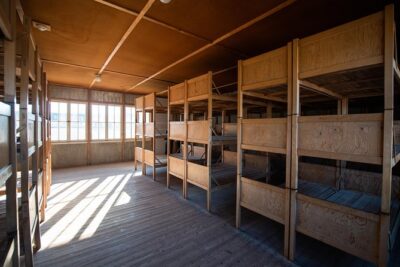
Dachau Concentration Camp Memorial Site Tour from Munich by Train
Read our review →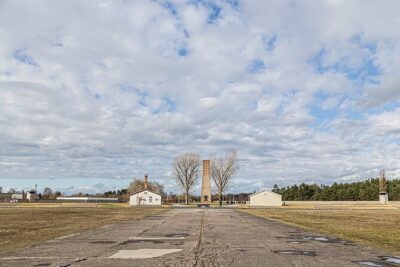
Sachsenhausen Concentration Camp Memorial Tour
Read our review →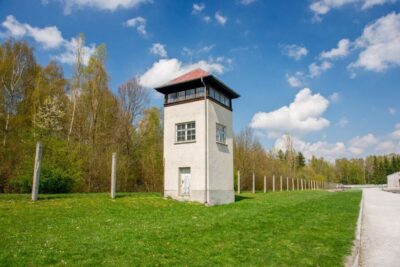
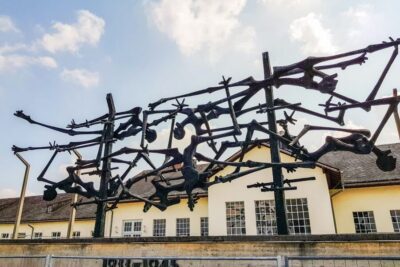
From Munich: Dachau Memorial Site Half-Day Trip
Read our review →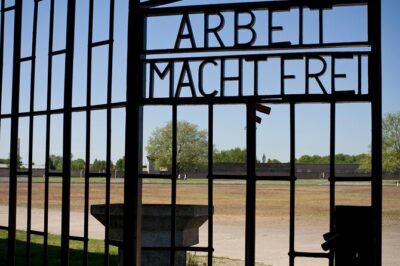
Sachsenhausen Concentration Camp Bus Tour in English from Berlin
Read our review →Sachsenhausen Concentration Camp Tour in English
Read our review →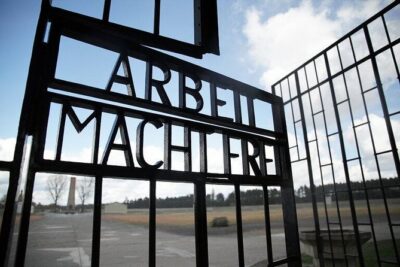
Sachsenhausen Concentration Camp Memorial Tour (Max. 15 Guests)
Read our review →Browse the lists this tour appears in