
Reviewed · OLD TOWN TOURS
Munich: Walking Tour Old Town 3D VR Tour in GERMAN
Munich’s past takes shape at street level on this two-hour Old Town walk, where your smartphone and VR glasses show earlier versions of places you can see today. At Marienplatz, you move from a 1570 grain market and execution site to an 1870 view of the New Town Hall area, then continue to Platzl and the Hofbräuhaus in 1895. I like the way the tour links old images to the buildings around you, and I like that a live guide adds stories about vanished trades and customs. The main caution is the technology: the glasses display still images, not moving scenes, and some users found a phone screen clearer.
The tour costs $37 per person, which is fair if you want a guided introduction to Munich and enjoy visual aids. It is less convincing as a pure VR attraction. The tour is conducted in German, requires a charged smartphone with internet access, and meets in front of Orlandohaus at Platzl 4, where you should look for the guide’s large blue bag marked Weis(s)er Stadtvogel.
Key points at a glance
- 1570 at Marienplatz: See the square as a medieval grain market, including the gallows used for special executions and the so-called disgraceful donkey.
- 1870 on the same square: Compare the older town hall area, carriages, trades, and the first completed part of the New Town Hall.
- Platzl in 1895: Follow the area’s change into the familiar Munich meeting place around the Hofbräuhaus.
- Four historical 3D scenes: The technology focuses on four locations rather than providing a continuous virtual world.
- German-speaking live guide: The guide supplies the context, explanations, and stories that make the images useful.
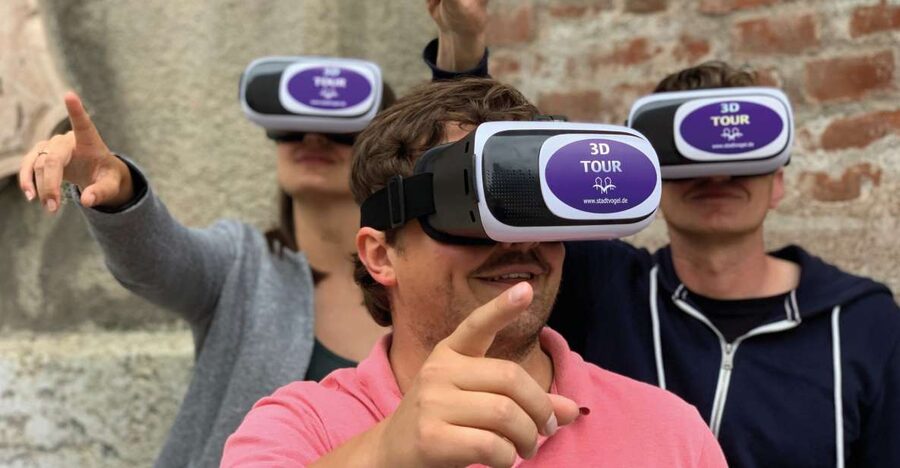
- Bring your own phone: You download an app at the meeting point and place your smartphone inside the VR glasses.
What this Munich history tour actually offers
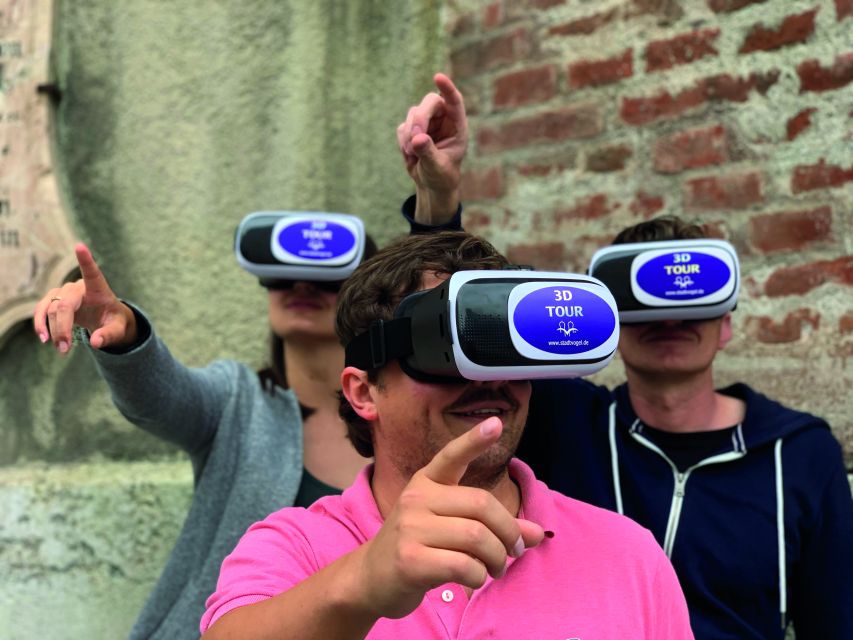
This experience is best understood as a walking tour with visual reconstruction, not as a high-end virtual reality show. The guide leads you through Munich’s Old Town, stops at four places with historical 3D renderings, and uses your phone inside the supplied glasses to show how those locations looked in earlier periods.
That distinction matters. The images are still scenes, according to the practical experience reported after the tour. You will not watch animated figures move through the square or see a fully interactive digital city. Instead, you look at a historical image, listen to the guide, and compare it with the real buildings and streets around you.
I see value in that simple approach. A photograph or reconstruction can make a vanished street layout easier to picture, especially when you are standing in the same place today. But you should book this for the guide’s storytelling and the Old Town walk first. Treat the VR equipment as an extra, not the main attraction.
The tour is in German only. That is important, since the historical explanations are central to the experience. If you understand German, you can follow the stories as they unfold. If you do not, the visual scenes alone will not provide the full tour.
More Old Town Tours in Munich
- Munich: Old Town & Viktualienmarkt City Walk in German
★ 4.7 · 2,304 reviews - Munich Old Town Walking Tour
★ 4.5 · 1,287 reviews - Munich: Spooky Tour of Old Town in German
★ 4.6 · 1,112 reviews
Meeting at Platzl and getting set up
You meet directly in front of Orlandohaus at Platzl 4, a practical location because the walk also includes this historic square. The guide carries a large blue bag with the white words Weis(s)er Stadtvogel and a 3D Tour sign. Look for the bag rather than relying only on a small badge or a meeting point pin.
At the start, every participant must download an app onto a smartphone. You then place your phone inside the VR glasses to view the historical images. Bring a charged phone and internet access. A low battery, poor connection, or trouble downloading the app could delay your start, so handle those basics before arriving if possible.
The equipment is shared through the tour, but the phone is yours. That setup keeps the glasses simple, though it also explains why the image quality may vary from person to person. Some people found the pictures easier to see directly on the phone than through the glasses. The supplied glasses are a viewing frame, not a stand-alone headset with its own screen.
The activity is listed as wheelchair accessible. It is a walking tour through Munich’s Old Town, so you may still want to confirm current route details if you have specific mobility needs.
Marienplatz in 1570: grain, punishment, and public life
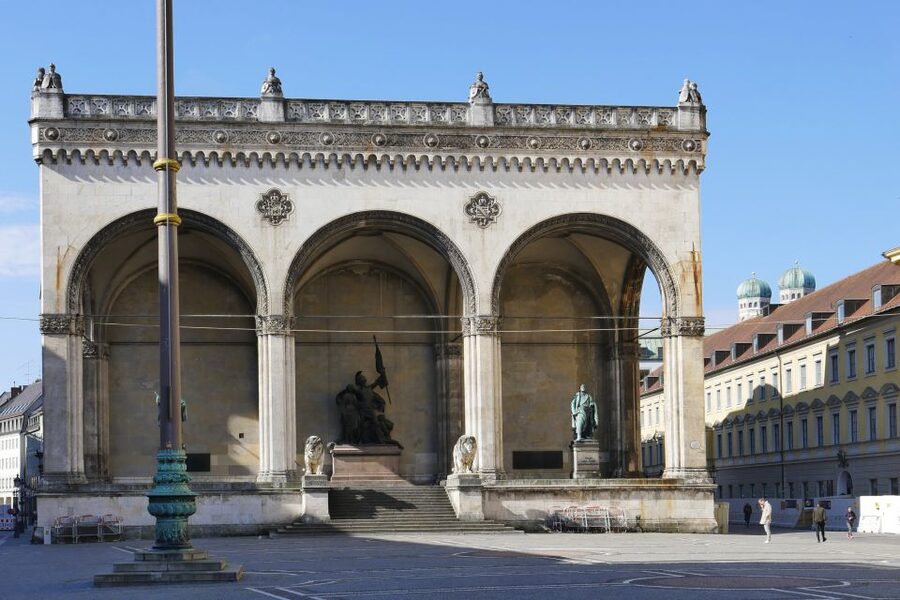
The western side of Marienplatz is used to show the square around 1570. The scene takes you back to a medieval grain market, a reminder that this central place was once tied to daily trade rather than only monuments, shopping, and city photographs.
The guide also points out the gallows used for special executions and the so-called disgraceful donkey. These details are not polished postcard history. They show the harder public side of city life, when a central square served as a place for commerce, ceremony, and punishment.
This is one of the tour’s strongest ideas. You are not simply looking at an old building. You are asked to picture how the whole square functioned and who used it. The VR image gives you a snapshot, while the guide explains the customs and social order behind it.
The historical scene works best when you take time to compare it with the present-day square. You can notice what has disappeared, what has changed, and how much the role of Marienplatz has shifted. The guide’s commentary is especially important here because a single image cannot explain the meaning of the gallows, the grain market, or the donkey on its own.
Do not expect a full reconstruction of every year between the medieval period and today. The tour chooses selected moments. That focused approach keeps the story manageable within two hours, but it also means you will see history through four carefully chosen windows.
Marienplatz in 1870: town hall, carriages, and trades
The eastern side of Marienplatz moves forward roughly three centuries to 1870. The contrast with the 1570 scene is the point. You remain in the same broad city center, but the architecture, traffic, professions, and public life have changed.
The image includes the old town hall as it appeared in that period, the first completed part of the hall, carriages, and old professions in action. These small details help you read the square as a working place. Instead of seeing only façades, you get a sense of movement and occupation.
I like this stop because it gives the guide room to explain change without leaving the square. You can compare the two historical scenes almost side by side, then look up at the real buildings. That makes the walk useful for people who have already seen Marienplatz but want a better grasp of how it developed.
The technical weakness is also clear here. If you expect moving carriages, working tradespeople, or an animated reconstruction, you may be disappointed. The glasses show images, not motion. You need to listen to the guide and use your own imagination to fill in what the still scene cannot show.
Some equipment did not work properly for every participant on every occasion. If your image fails to appear, tell the guide right away rather than struggling quietly. The guide’s role is not just to explain Munich, but also to help the group manage the viewing process.
More Walking Tours in Munich
- Munich: Third Reich & WWII Walking Tour
★ 4.6 · 6,181 reviews - Third Reich Walking Tour Munich
★ 4.5 · 4,291 reviews - Munich: Night Watchman Walking Tour
★ 4.7 · 2,092 reviews - Munich Ghosts and Spirits Evening Walking Tour
★ 5.0 · 1,900 reviews
Platzl in 1895 and the changing Hofbräuhaus
The tour returns to Platzl in 1895, including the famous Hofbräuhaus. This is a useful stop because Platzl is still closely linked with Munich’s public image, food, beer, and local identity. The historical view helps you see that the area did not simply appear in its current form.
The guide explains how Platzl came to be and how it changed into the Urmünchner place you see today. The word points to an old-style Munich character, and the tour uses the setting to discuss how an ordinary urban area became strongly associated with the city.
The Hofbräuhaus receives attention in both its past and present forms. You get a chance to compare the famous site as it was with the building and surroundings you can see now. That comparison is more useful than simply pausing outside for a photograph, since it gives the site a timeline.
This stop should appeal to anyone curious about how famous places gather meaning. Hofbräuhaus is not presented only as a beer hall for visitors. The story connects it with the development of Platzl and with Munich’s changing public life.
At the same time, the tour does not include food or drinks. You will not sit down for a beer or meal as part of the activity. Plan a separate stop if you want to experience the Hofbräuhaus from inside, and keep in mind that the walk itself remains focused on history and visual comparison.
How good is the VR technology?
The equipment is the part of this activity that needs the clearest explanation. The supplied glasses use your smartphone, and the app displays historical 3D images. The scenes are still pictures rather than moving video.
That can still be fun. Looking through the glasses gives you a different way to frame a familiar square, and the technology may help children or groups stay interested during a history walk. Friends and families can compare what they see and discuss the differences between the historical scene and the real street.
But the experience does not match what many people now expect from the words 3D and VR. The glasses are not a modern headset with animated worlds, sound effects, or free movement through a digital model. Some users found the phone screen sharper or easier to use than the glasses, and two devices reportedly failed to work during one tour.
My advice is simple: book this for the combination of guide and historical scenes, not for advanced equipment. If the glasses work well for you, they add a playful layer. If they do not, the walking tour and explanations still carry most of the value.
The guide makes the difference
The live guide is the most important part of the experience. The German commentary explains what you are seeing, points out details, and connects each selected date with Munich’s wider changes.
A guide can also make the still images easier to understand. A medieval grain market, a public execution site, or a line of old tradespeople may look interesting, but the story tells you why those details mattered. The guide turns the pictures into a sequence about work, authority, architecture, and local identity.
The strongest praise attached to this tour has been directed at the guide’s warmth, effort, and ability to make the subject interesting. That is worth keeping in mind when you judge the $37 price. You are paying for a live German-language walk with interpretation, not simply access to an app.
No individual guide’s name is provided, so I cannot promise a particular person. The quality may depend on who leads your departure, but the format clearly gives the guide plenty of room to add personality and historical context.
Is $37 a fair price?
At $37 per person, the price is reasonable if you want a structured Old Town introduction and can follow German. A two-hour walk covers four specially selected scenes, includes a guide, and supplies the VR glasses. You also get the convenience of seeing several central locations while hearing one connected story.
The value drops if you are mainly shopping for cutting-edge VR. The images are still, the phone is your own, and the equipment may not feel more impressive than a standard smartphone display. In that case, a normal walking tour could offer better value, depending on what you want from your time in Munich.
I would also consider how much of the Old Town you already know. First-time visitors who want context at Marienplatz and Platzl are likely to gain more than people who have already taken several Munich history walks. Still, the unusual time comparisons could make it worthwhile for repeat visitors who enjoy urban change and old photographs.
Food and drinks are not included, and there is no hotel pickup or drop-off. Those are minor issues because the meeting point is central, but they matter when planning your day. Leave room before or after the walk for your own meal or coffee.
Who should book this walk?
This activity suits you if you:
- Understand German and enjoy guided city history.
- Like comparing old images with real streets and buildings.
- Want a two-hour introduction to Munich’s central Old Town.
- Are traveling with friends or family who enjoy trying simple new technology.
- Prefer a focused route with four main historical scenes.
- Can bring and use your own charged smartphone.
You may want to skip it if you expect animated virtual reality, a fully digital reconstruction, or a tour conducted in English. It may also disappoint you if you dislike using your phone during a guided walk or want a food-centered experience around the Hofbräuhaus.
The tour is family-friendly in spirit because the glasses add an interactive element, but the German commentary remains the key to understanding what you see. The best audience is a group that will treat the equipment as a fun tool and pay close attention to the guide.
Practical details before you reserve
The duration is two hours, and starting times vary, so check availability for your preferred date. The activity offers free cancellation up to 24 hours before the start, and you can reserve now and pay later if you want to keep your plans flexible.
Bring your charged smartphone and make sure you have internet access. You will download the app at the meeting point, then use the phone in the VR glasses. Arrive ready to identify the large blue Weis(s)er Stadtvogel bag at Orlandohaus, Platzl 4.
The tour is wheelchair accessible. Hotel pickup and drop-off are not included, and food and drinks are separate. Since the walk takes place in the Old Town, wear something comfortable for two hours on foot, though the supplied information does not specify a particular route length or surface.
Should you book the Munich 3D Old Town Tour?
Book it if you want German-language history with a visual twist, and if you understand that the VR scenes are still images rather than moving virtual reality. The Marienplatz comparisons are the strongest part, while the 1895 Platzl and Hofbräuhaus stop adds a useful link between Munich’s past and its present identity.
I would not pay $37 solely for the glasses. Their performance can be uneven, and your phone may show the images more clearly. Pay for the guide, the carefully chosen historical moments, and the chance to look at familiar Munich places with better context. For the right audience, that makes this a lively and unusual Old Town walk. For anyone seeking advanced technology, it is safer to choose a conventional expectation and enjoy the history.
FAQ
How long does the Munich 3D Old Town Tour last?
The tour lasts two hours.
What language is the tour conducted in?
The live tour guide speaks German, and German is the only listed tour language.
Where is the meeting point?
Meet directly in front of Orlandohaus at Platzl 4 in Munich.
How will I identify the guide?
Look for a guide carrying a large blue bag with the white words Weis(s)er Stadtvogel and a 3D Tour sign.
Do I need to bring my own smartphone?
Yes. Each participant must bring a charged smartphone, download an app at the meeting point, and place the phone inside the VR glasses.
Do I need internet access?
Yes. Internet access is listed as something to bring because you must download the app at the meeting point.
Are the VR scenes moving videos?
No. The VR glasses show 3D images and still photographs rather than moving scenes.
Which historical periods are included?
The tour shows Marienplatz around 1570 and 1870, and Platzl around 1895. It also compares the Hofbräuhaus in past and present forms.
Is the tour wheelchair accessible?
Yes, the activity is listed as wheelchair accessible.
Are food, drinks, or hotel transfers included?
No. Food, drinks, hotel pickup, and hotel drop-off are not included.
Can I cancel for a full refund?
Yes. You can cancel up to 24 hours in advance for a full refund.
Can I reserve without paying immediately?
Yes. The reserve-now-and-pay-later option lets you hold a place without paying at the time of booking.
Just added in Munich
- Private transfer: Vilshofen to Munich with 2h sightseeing stop★ 5.0 · 6 reviews
- Pub crawl incl. Oktoberfest museum guided tour with beer tasting (private)★ 5.0 · 5 reviews
- South Tyrolean specialties and wine tasting★ 5.0 · 5 reviews
- Size Matters Beer Tour Munich★ 4.6 · 105 reviews
- Short & sweet: Tasting the Viktualienmarkt★ 4.8 · 37 reviews
- Secret Food Tours Munich★ 4.8 · 5 reviews
- Munich: Romantic Wine Experience for Two at Viktualienmarkt★ 4.2 · 14 reviews
- Munich: Resistance against Hitler – Historical Walking Tour★ 5.0 · 5 reviews
Old Town Tours, compared.
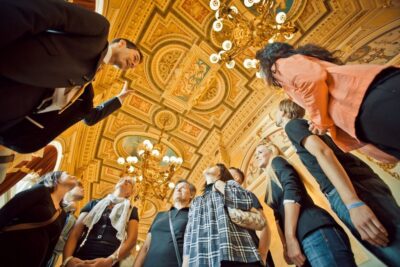
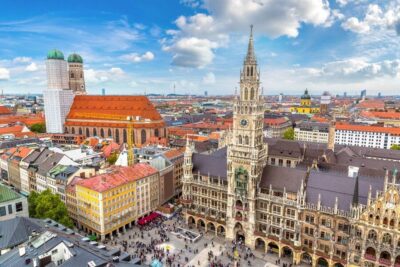
Old Town & Viktualienmarkt City Walk in German
Read our review →
The Night Watchman Old Town Walking Tour in German
Read our review →
New Old Town and Highlights German-Language Tour
Read our review →Browse the lists this tour appears in