
Reviewed · GHOST AND CRIME TOURS
München: Stadtführung Henker, Huren, Hexen in GERMAN
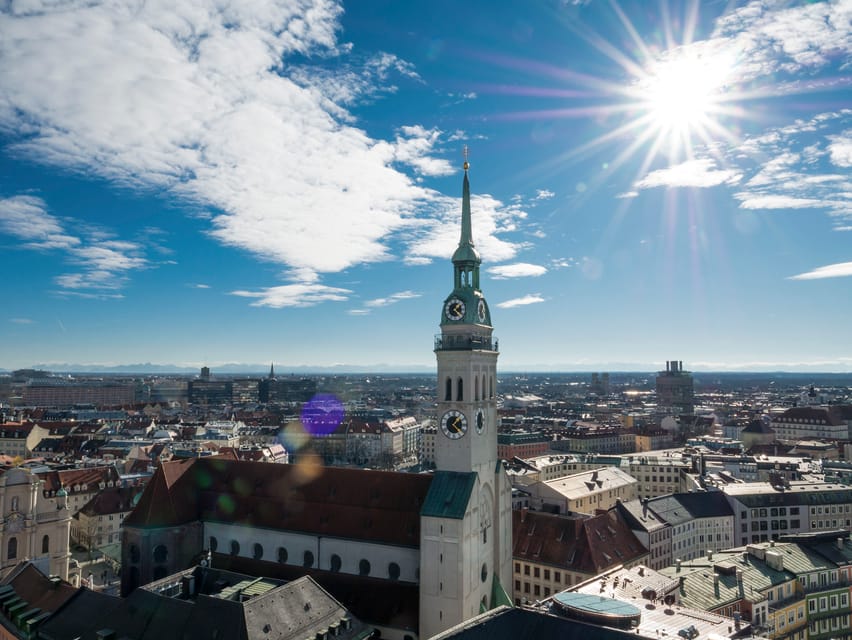
Munich’s old center looks polished today, but this two-hour walking tour takes you into its harsher past: public executions, witch hunts, torture, prostitution, and the unusual social role of the executioner. You begin at Neuhauser Tor, where condemned people were led out of the city, then follow historic streets toward St. Michael’s, the Frauenkirche, Alter Hof, and the former Jesuit college.
I like two things in particular: the tour connects familiar sights to stories you would not get from a standard city walk, and the price is a modest $25 for two hours with a German-speaking guide. Guide Julia earned especially warm praise for her organization and lively manner. The main drawback is practical: busy streets, church music, bells, and outdoor noise can make the guide hard to hear.
- Start at Neuhauser Tor: Meet under the Neuhauser archway, marked by the guide’s big blue Weis(s)er Stadtvogel bag.
- Follow the old salt road: The route links Munich’s central sights with the movement of goods and the city’s old systems of control.
- Hear the executioner’s unusual role: Learn why executioners could also work as pimps and why their headquarters sat outside the city.
- Connect churches with witch hunts: St. Michael’s, the Frauenkirche, and the former Jesuit college provide settings for stories about religion and punishment.
- Choose your format: Book a shared group tour or a private walk, depending on how much control you want over pace and questions.
- Plan for outdoor conditions: The tour runs rain or shine, and comfortable shoes matter more than fancy clothing.
Munich’s dark side begins at Neuhauser Tor
The tour starts beneath the Neuhauser archway, a useful central meeting point in Munich’s old town. Look for a guide carrying a large blue bag marked Weis(s)er Stadtvogel. That detail matters because the city center can be crowded, and a clear visual marker saves time.
Neuhauser Tor is more than a convenient starting place. It was the point where people convicted of crimes were led out of the city toward execution. Beginning here gives the tour a clear theme: Munich’s center was not only a place of churches, markets, and civic power. It was also a place where authorities displayed punishment in public.
Your guide explains how executioners fit into this system. In old European cities, the work carried a heavy social stigma. The executioner handled tasks that the city needed but many citizens did not want to associate with. That outsider status shaped where such people lived and how they earned a living.
One of the tour’s more unusual ideas is the link between the executioner and prostitution. You learn how executioners could also act as pimps, and why their headquarters were located outside the city. This is the sort of detail that gives the walk its edge. It is not simply a parade past attractive buildings. You are looking at how law, class, religion, and public shame worked together.
The salt road and the city’s working life
From Neuhauser Tor, the route follows the historic salt road. Salt was a vital commodity, so routes connected to its trade tell you something about Munich’s practical side. The old city was not just a royal or religious center. It depended on trade, transport, rules, taxes, and controlled movement.
The salt road also helps link the separate stories told during the walk. The route takes you through streets where merchants, officials, churchmen, laborers, and people pushed to the edge of respectable society once crossed paths. You are not visiting a preserved execution site or entering a torture chamber. Instead, your guide uses the streets and landmarks to explain how the city functioned.
That distinction is important. The tour contains no actors and no reenactments. You get spoken history, anecdotes, and interpretation rather than theatrical scenes. I prefer that approach for a city walk because it leaves room for the actual buildings and streets to do some of the work.
Still, the historical links may feel indirect at times. One lower-rated experience found that too much time was spent connecting churches to the main theme, with some conclusions feeling more speculative than firmly documented. If you want a tightly focused walk with a visible execution site at every turn, this may not satisfy you. If you enjoy historical context tied to existing city landmarks, the route makes more sense.
More Ghost Tours in Munich
- Munich Ghosts and Spirits Evening Walking Tour
★ 5.0 · 1,900 reviews - Munich: Raven Black Witches and Executioners Walking Tour
★ 4.7 · 294 reviews - The Original True Crime Walking Tour of Munich
★ 5.0 · 96 reviews
St. Michael’s Church and the problem of hearing the story
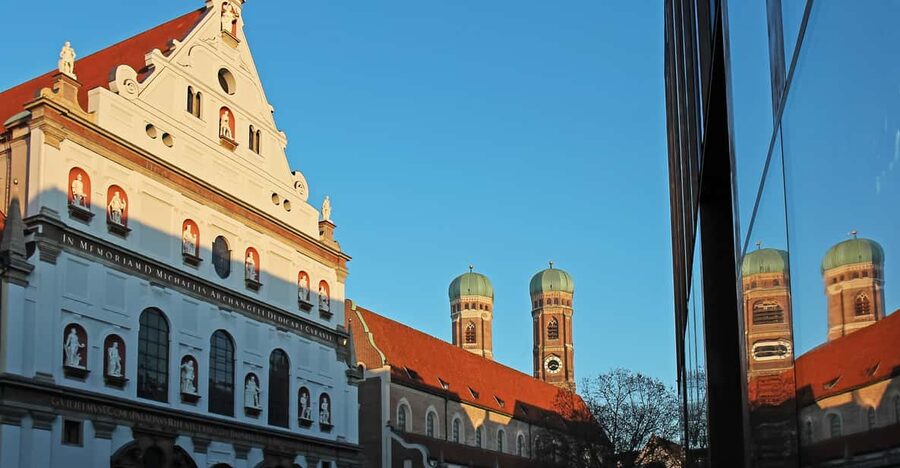
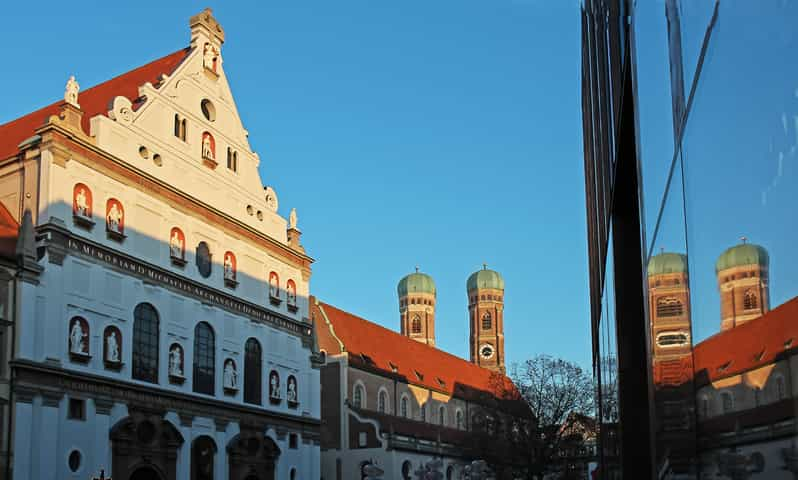
St. Michael’s Church is one of the important stops. The church gives the guide a chance to discuss religion, authority, and the witch hunts. The former Jesuit college, reached along the route, is also linked to this part of the story.
Witch hunts were not random bursts of superstition floating outside ordinary civic life. They involved accusations, institutions, religious beliefs, legal processes, and fear. The tour explains how these forces worked in Munich and why the Jesuit presence matters to the story.
You should expect to hear the subject discussed from outside rather than take part in a formal church visit. Entrance fees are not included, and the experience is a guided walk through the city. The focus is the explanation, not an interior tour of each building.
This part of the route also shows why timing can affect your experience. One afternoon walk was badly affected by a large choir rehearsal and the ringing of all the church bells at 3 p.m. The guide continued speaking near the Frauenkirche, but the noise made much of the explanation difficult to understand. That is useful advice: if you can choose a start time, a quieter period may help. The tour operates in public streets, so no guide can control every sound.
Frauenkirche, bells, and the limits of a city walk
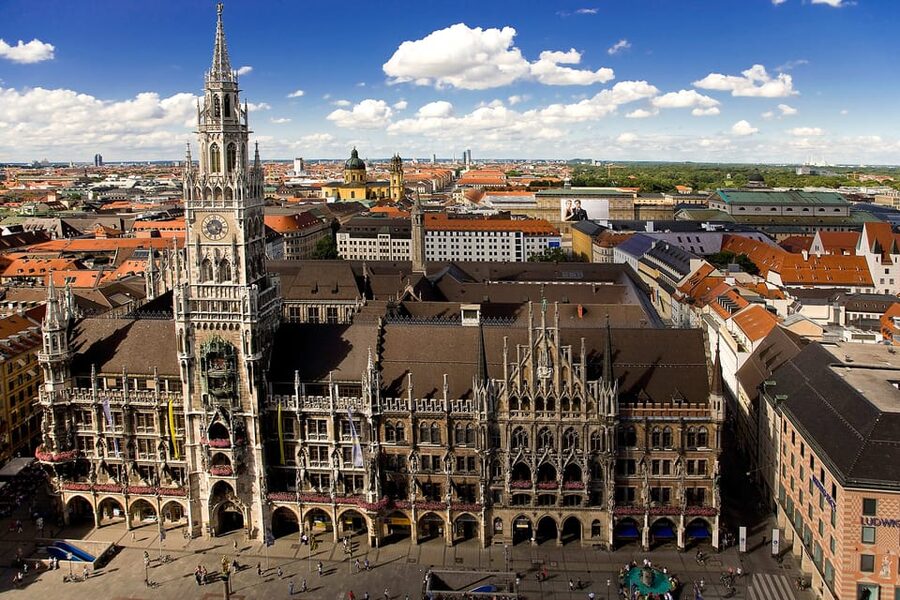
The Frauenkirche is one of Munich’s most recognizable sights, and the tour passes it while discussing the city’s religious and social order. Its familiar outline provides a strong contrast to the darker subjects of the walk. You can look at one of Munich’s most famous churches while hearing about punishment, witch hunts, and the people excluded from respectable society.
The stop can be rewarding, but it is also the clearest example of the tour’s practical limits. The square around the church can be noisy and crowded. Bells, music, passing groups, and general city noise may compete with the guide. A German-language tour depends on your ability to catch every sentence, so stand close to the guide and avoid drifting to the back of the group.
The route may also pause at places where the exact historical setting is no longer visible. You might hear where an executioner worked or where a particular activity took place without being able to see the original site in its old form. That is normal for an old city whose streets have changed, but it can disappoint if you expect a museum-like presentation.
I would treat the Frauenkirche stop as context rather than a complete explanation of Munich’s church history. The value comes from seeing how religious buildings fit into a wider story about authority, law, and public morality.
Alter Hof and the city’s powerful center
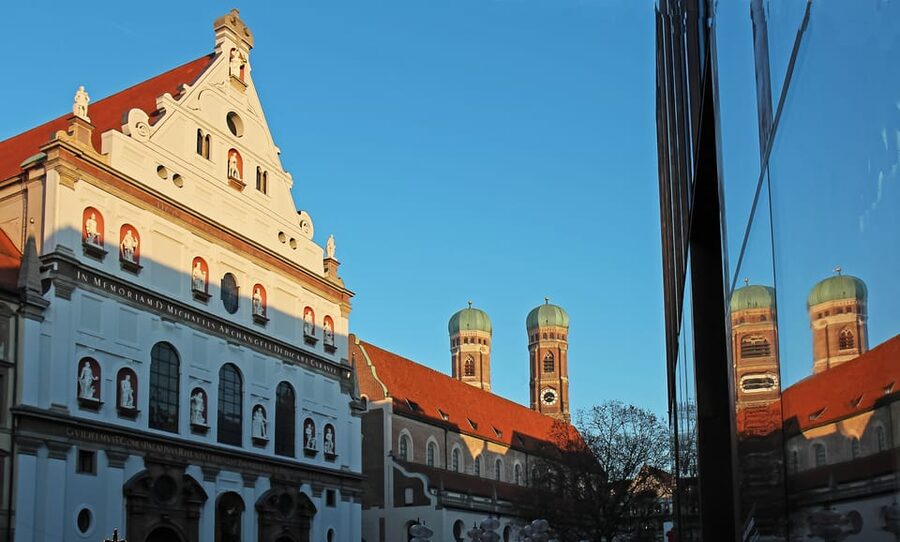
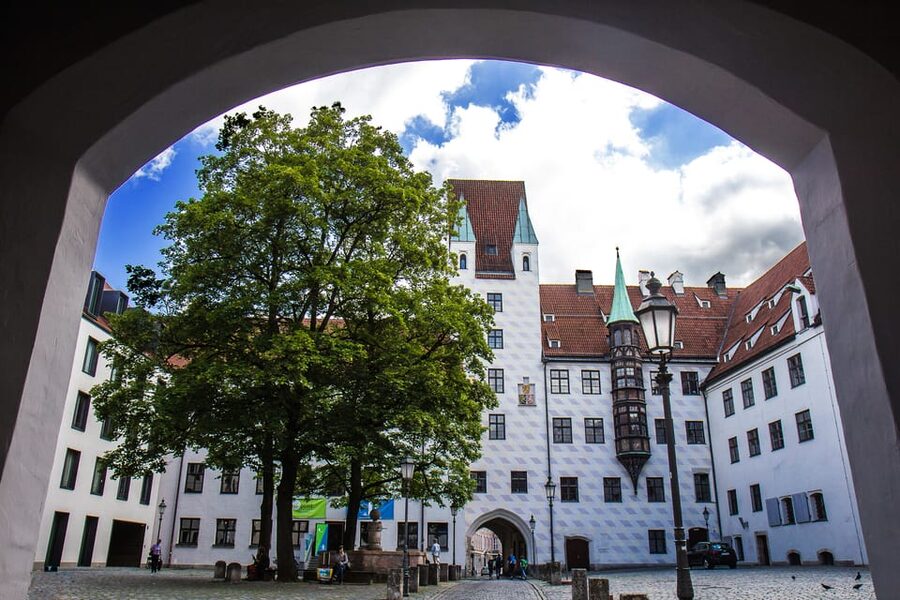
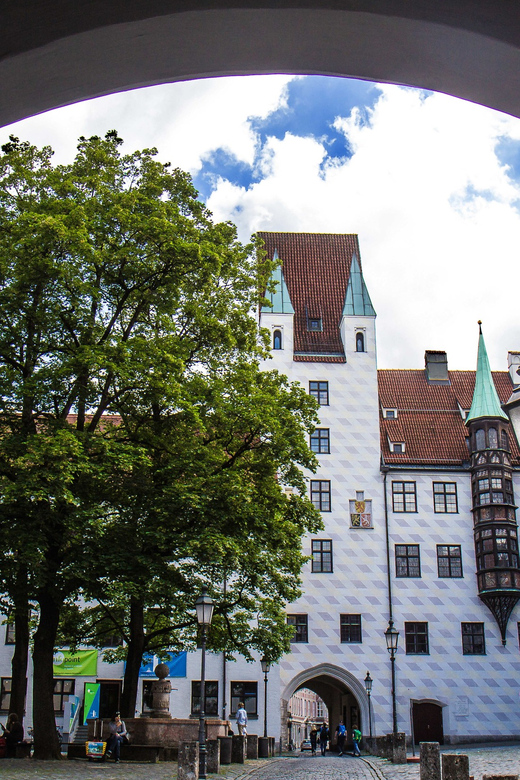
The walk passes Alter Hof, Munich’s Old Court. This stop shifts the focus toward the people who ruled and administered the city. Along with the churches, the court helps show how decisions about crime, punishment, and public behavior came from institutions with real power.
The Old Court is especially useful in a tour about social order because it brings the official side of the story into view. Executioners, prostitutes, and accused witches were not operating in isolation. They were affected by courts, religious bodies, city officials, and unwritten rules about who belonged inside the community.
A strong guide can make this connection clear through short anecdotes. The tour is built around those stories, not around long academic lectures. Past feedback describes the guides as friendly and well prepared, with the German-speaking Julia receiving particular praise for her manner. Another participant found the guide very good and soon booked a different Munich walking tour with the same company.
You should also allow for some variation from one guide to another. The route and subject stay the same, but delivery matters. A lively storyteller can make a familiar street memorable. A guide who speaks too softly, or continues in a noisy spot, can make the same material hard to follow.
Same city, a completely different kind of day:
- Munich: Third Reich & WWII Walking Tour
★ 4.6 · 6,181 reviews - Dachau Concentration Camp Memorial Site Tour from Munich by Train
★ 4.5 · 5,637 reviews - Third Reich Walking Tour Munich
★ 4.5 · 4,291 reviews - Munich Hop-On Hop-Off Tour: 1-Day or 2-Day Ticket
★ 4.3 · 4,161 reviews
Prostitution, the 1970s, and a surprising modern connection
The title promises stories about prostitutes, and the tour explains why prostitution in Munich ended in the 1970s. That gives the walk a useful modern link. The subject is not limited to medieval punishment or early religious fears. It reaches into the city’s more recent past.
You also hear how the executioner’s work connected with prostitution and pimping. That is one of the more distinctive parts of the tour because it shows how people at the edge of society could still hold practical roles within the city’s systems. The executioner was shunned, yet necessary. Prostitution was condemned, yet managed. These contradictions are central to the tour’s subject.
The description does not promise a full neighborhood tour devoted to prostitution, so keep your expectations realistic. The topic is part of a broader city walk that also covers witch hunts, churches, torture, and executions. If you want a route made entirely of former red-light locations, this is not that experience.
For me, the wider approach is an advantage. It shows how public morality changes over time and how a city can condemn an activity while also organizing or profiting from it. You get a more useful picture of Munich than a list of scandalous tales.
What the $25 price really buys you
At $25 per person, this is fairly priced for a two-hour guided walk in central Munich. You are paying for a live German-speaking guide, a planned route, and historical interpretation at several major landmarks. You are not paying for food, drinks, transportation, private pickup, or entry to attractions.
The value is strongest if you already plan to walk through the old town. The tour adds meaning to places you might otherwise photograph and pass. St. Michael’s, Frauenkirche, and Alter Hof are easy to recognize, but the stories about witch hunts, punishment, and civic control give you reasons to look more closely.
A private option can make the price more worthwhile for families or small groups that want to ask questions and set a slower pace. A shared group is the better choice if you mainly want an affordable introduction and do not need a custom route.
The overall rating is 4.6 from six published ratings, with strong praise for the organization, the interesting subject, and the guides’ friendly delivery. One poor experience focused on weak acoustics, timing, and a sense that the route spent too long near churches. That criticism is fair to keep in mind. The content may be excellent, but you need to hear it.
Timing, shoes, and who should book
Wear comfortable shoes. The walk lasts two hours, takes place outdoors, and runs in rain or sunshine. Bring clothing suited to the forecast, since there is no promise of shelter or indoor seating.
The tour is offered in German only. You should have enough German to follow a spoken historical explanation in city noise. If you understand only basic German, this is probably not the best way to learn the subject. A private tour might help with questions, but it does not change the language.
The meeting point is easy to identify if you follow the instructions: under the Neuhauser archway, with the guide carrying the big blue Weis(s)er Stadtvogel bag. Pickup and drop-off are not included, so arrange your own way to and from the central meeting point.
There is conflicting practical information about mobility. The activity details mark it as wheelchair accessible, but the same information also says it is not suitable for people with mobility impairments. Since this is a two-hour city walk and the route may include busy streets and changing surfaces, contact the provider before booking if you use a wheelchair or have difficulty walking.
Free cancellation is available up to 24 hours before the start, and you can reserve now while paying later. That is useful if your Munich plans are still shifting, but the real decision is whether the subject and German-language format suit you.
Should you book this Munich history walk?
Book it if you want Munich’s famous center explained through crime, religion, public punishment, and social outsiders. I especially recommend it to people who have already seen the main sights and now want the less polished story behind them.
The tour is a good fit for you if you like anecdotes, unusual historical connections, and a guide-led walk rather than a museum visit. Choose a private tour if you want more control over questions and pace. For a shared tour, stand close to the guide and avoid the noisiest part of the group.
Skip it if you need a quiet, fully documented stop at preserved execution sites, or if you do not understand German well. Also think twice if you dislike outdoor tours where church bells, rehearsals, and city crowds can interrupt the explanation.
At $25, the risk is modest. The best reason to book is not the promise of theatrical darkness. It is the chance to see Munich’s old center as a place shaped by fear, faith, trade, punishment, and uncomfortable social bargains.
FAQ
How long does the Munich Henker, Huren, Hexen tour last?
The tour lasts two hours.
What language is the tour conducted in?
The tour is conducted in German with a live German-speaking guide.
Where do I meet the guide?
Meet under the Neuhauser archway. The guide will carry a big blue bag with the white words Weis(s)er Stadtvogel.
What places does the walking tour include?
The route passes Neuhauser Tor, St. Michael’s Church, the Frauenkirche, Alter Hof, the historic salt road, and the former Jesuit college.
Does the tour include food, drinks, or entrance fees?
No. Food, drinks, pickup, drop-off, and entrance fees are not included.
Does the tour run in bad weather?
Yes. The tour takes place rain or shine, so bring suitable clothing and comfortable shoes.
Just added in Munich
- Private transfer: Vilshofen to Munich with 2h sightseeing stop★ 5.0 · 6 reviews
- Pub crawl incl. Oktoberfest museum guided tour with beer tasting (private)★ 5.0 · 5 reviews
- South Tyrolean specialties and wine tasting★ 5.0 · 5 reviews
- Size Matters Beer Tour Munich★ 4.6 · 105 reviews
- Short & sweet: Tasting the Viktualienmarkt★ 4.8 · 37 reviews
- Secret Food Tours Munich★ 4.8 · 5 reviews
- Munich: Romantic Wine Experience for Two at Viktualienmarkt★ 4.2 · 14 reviews
- Munich: Resistance against Hitler – Historical Walking Tour★ 5.0 · 5 reviews
Ghost and Crime Tours, compared.
Munich Ghosts and Spirits Evening Walking Tour
Read our review →
Raven Black Witches and Executioners Walking Tour
Read our review →
Görlitz: Ghosts and Spooky Historical Night Walking Tour
Read our review →
Browse the lists this tour appears in