
Reviewed · BALTIC COAST TOURS
About Vikings, kings and cheeky monks (Medieval Schleswig)
Schleswig’s story comes alive along its harbor, cathedral, and old fishing quarter, where medieval trade, Danish kings, and some cheeky monks all get a turn. This 90-minute walk keeps the focus on places you can still see today, rather than burying you in dates.
I like the small-town setting, which lets you cover major sights without spending the day on a bus. I also like the guide-led storytelling, especially the links between the Schlei waterway, Schleswig’s lost trading power, and the special rights once held by Holm’s fishermen.
The main point to weigh is language. The tour is conducted in German, and one piece of feedback found the material better suited to adults than children. The cathedral interior is also not included in the base price.
Key points to know before booking
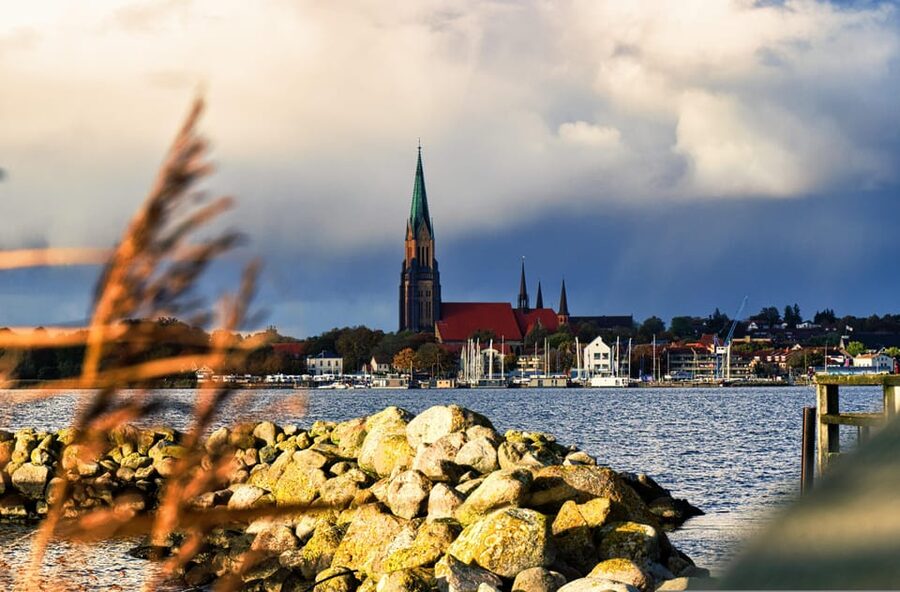
- The tour connects several sights in one walk: Schleswig Cathedral, the old town, the harbor, Holm, and St. John’s Monastery.
- The medieval trade story gives the route a clear thread: You learn why the Schlei mattered and why Schleswig later lost ground.
- Holm adds a more personal side of local history: The guide explains the fishing community’s old rights and its link to Danish King Christian I.
- The cathedral visit is outdoors only: An interior visit may be available for an extra charge, depending on the time of day.
- The guide can respond to questions: Feedback highlights an entertaining, informative approach that adapts to the group.
- The tour is easy to plan: It lasts 1.5 hours, costs $17 per person, is wheelchair accessible, and allows free cancellation up to 24 hours before the start.
Start at Rathausmarkt in the heart of Schleswig
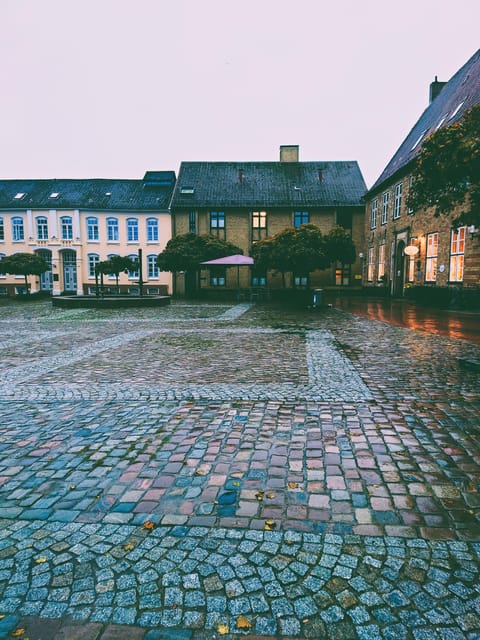
Your meeting point is Rathausmarkt, in front of the Alte Apotheke restaurant. This puts you right in the center of Schleswig, so you begin among the town’s main streets rather than at a remote transport stop.
I like this kind of starting point because it makes the tour easy to fit into a day of independent exploring. You can arrive in the old town, find the meeting spot, and then continue on your own after the walk. The address is specific enough to be useful: look for the local restaurant named Alte Apotheke rather than simply searching for a broad city-center location.
The route lasts about 90 minutes. That is long enough for a proper introduction to Schleswig, but short enough to fit before lunch, after a museum visit, or between other plans. You should still wear comfortable shoes, since the experience covers several areas on foot.
The guide speaks German. If you understand German well, you can expect a fuller experience, including the wordplay and local stories behind the title about Vikings, kings, and cheeky monks. If you do not, this is not the best choice unless you have someone in your party who can translate.
A few more half-days in Germany worth comparing
- Schwerin: City Highlights Guided Tour
★ 4.7 · 541 reviews - Schwerin: Tour with the Night Watchman
★ 4.5 · 366 reviews - Stralsund: 1-Hour Harbor Cruise
★ 4.6 · 365 reviews
Schleswig Cathedral and the question of royal power
The first major sight is Schleswig Cathedral, visited from the outside. The building is one of the city’s key landmarks, and the guide uses it to explain Schleswig’s importance during the medieval period.
The cathedral is not treated as an isolated church. Its story is tied to the Danish kings and to the wider role Schleswig once played in the region. That connection gives the stop more weight than a simple architectural photo break. You learn why the cathedral mattered to royal power and what Schleswig’s position meant in the medieval world.
The exterior-only format is important to understand before booking. Your tour price includes an outdoor visit, but an interior visit may be possible for an additional charge, depending on the time of day. If seeing the inside is high on your list, ask about that option when arranging the tour, rather than assuming it is part of the standard walk.
For many people, the outside visit will be enough to place the cathedral in the city’s story. For others, the extra cost may be worthwhile. The best choice depends on your interest in church interiors and the timing of your tour.
The old town and Schleswig’s changing fortunes
From the cathedral, the walk continues through Schleswig’s picturesque old town. This section helps you see how medieval decisions still shape the city’s present-day appearance.
The useful question here is not only what Schleswig once had, but why it changed. In the early Middle Ages, Schleswig was a major trading city known well beyond the local area. Its harbor area, near today’s city harbor, was filled with activity because the Schlei was an important shipping route.
The tour explains why Schleswig later lost its strong position in the trade network. That shift is one of the most valuable parts of the experience because it turns a pleasant stroll into a lesson in cause and effect. Cities do not remain important simply because they were important once. Trade routes move, political conditions change, and ports can lose their advantage.
As you walk, you get a better sense of how the town’s medieval importance left marks on the streets and landmarks. The guide points out places connected with the city’s former size and influence, helping you read the old town as more than a collection of attractive buildings.
I would especially recommend this section to anyone who likes urban history. You do not need to know Schleswig’s past before arriving. The route gives you a simple framework: trade made the city important, royal and religious links reinforced that importance, and later changes altered its place in the region.
The harbor and the Schlei waterway
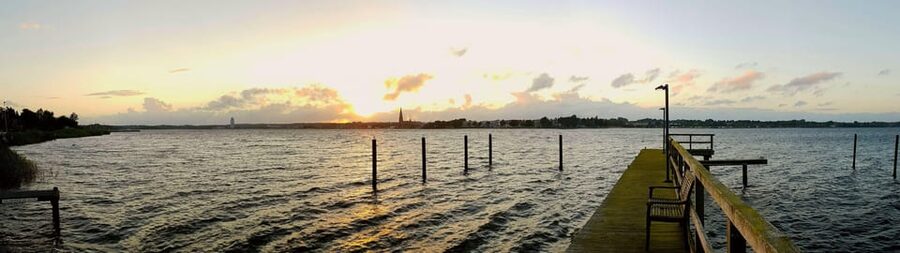
The city harbor provides a natural bridge between Schleswig’s past and its present. Today, it is a comfortable place to pause and look across the water. In the medieval period, the Schlei was a busy route for ships and goods.
This is where the tour’s hygge quality comes through most clearly. The word suggests Nordic comfort and calm, but here it is not just a mood added for decoration. The water, the compact streets, and the slower pace of the walk make it easier to picture the city as a place shaped by movement along the shore.
The guide also uses the harbor to raise practical historical questions. How did goods reach Schleswig? Why did this waterway matter so much? What changed when the city no longer held the same place in the trading system?
Those questions give the harbor purpose. You are not simply stopping for a view. You are looking at the reason Schleswig grew in the first place, and at the setting where its commercial life once played out.
The harbor is also one of the route’s more relaxed moments. If you prefer tours that mix facts with pleasant surroundings, this part should suit you. If you want an intensive museum-style presentation packed with objects and dates, the outdoor format may feel lighter.
Same city, a completely different kind of day:
- Berlin: Reichstag, Dome and Government District Guided Tour
★ 4.7 · 18,288 reviews - Berlin: 1-Hour City Tour by Boat with Guaranteed Seating
★ 4.3 · 16,993 reviews - Hamburg: Sex and Crime in St. Pauli Tour for Ages 18+
★ 4.7 · 15,447 reviews - Hamburg: 1.5-Hour Harbor and Speicherstadt Day Cruise
★ 4.6 · 14,200 reviews
Holm, the fishing settlement with old rights
The walk through Holm adds a different kind of history. Instead of focusing mainly on kings, cathedral officials, and trade networks, this part looks at a working fishing community and the people who depended on the Schlei.
The guide explains the old special rights of Holm’s fishermen. These rights were confirmed again in 1480 by the Schleibrief, issued by King Christian I of Denmark. That detail gives the settlement a direct link to royal authority and shows how local communities could hold recognized privileges within a wider political system.
I like this stop because it brings everyday life into the story. Medieval history can easily become a parade of rulers and grand buildings. Holm offers a closer look at the people who fished, worked, and protected their place on the water.
You also learn more about the relationship between Schleswig and the Schlei. The waterway was not just a trade corridor for merchants. It shaped the lives of local families and helped define the identity of the settlement.
The compact nature of this part of the route should appeal to anyone interested in traditional neighborhoods and local customs. You can also expect the guide to connect questions from the group to the planned route. One piece of feedback specifically praised the way the guide adjusted the presentation to suit the participants while still covering the main material.
St. John’s Monastery and the less holy side of the story
The final major sight is St. John’s Monastery, located in the Holm area. It is described as the best-preserved medieval monastery in Schleswig-Holstein, which makes it an important stop even if you have limited time in the region.
The monastery adds a religious layer to the route, but the tone is not solemn from start to finish. The tour asks why not all of Schleswig’s monks had a good reputation. That question explains the playful title and gives the final section a bit of humor.
This is a smart way to end the historical route. You have already heard about royal influence, commercial power, shipping, and fishing rights. The monastery shows another institution that helped shape medieval society, while the stories about the monks keep the presentation from becoming too formal.
You should not expect a long interior exploration of the monastery based on the tour details provided. The experience is an outdoor guided visit to Schleswig’s main sights, with the cathedral interior separately arranged if available. Even so, the monastery remains valuable as a place to discuss medieval religious life and local reputation.
For families, this stop may be the most engaging in subject matter, since the stories have a little mischief in them. Still, the overall tour is designed around historical explanation. One rating specifically cautioned that it may not be ideal for children, so parents should consider their child’s interest in a fairly serious walking tour before booking.
What the guide adds to the 90-minute route
The strongest praise centers on the guide’s information, friendly manner, and ability to answer questions. The feedback describes the tour as both instructive and entertaining, with the guide building the walk on solid knowledge and responding to individual interests.
That matters because this route does not depend on a long list of ticketed attractions. Much of its value comes from explanation. The cathedral, harbor, old town, Holm, and monastery are the setting. The guide supplies the links between them.
I would expect the best experience from a guide who can keep the story moving while stopping for questions. The available feedback suggests that this is part of the tour’s strength. A small group can also make it easier to ask about details that catch your attention, though no fixed group size is provided.
The information is presented in German only. You should be comfortable following a spoken historical explanation for 90 minutes. If that is not possible, you may get more from a self-guided walk with written material in a language you understand.
Is $17 a fair price?
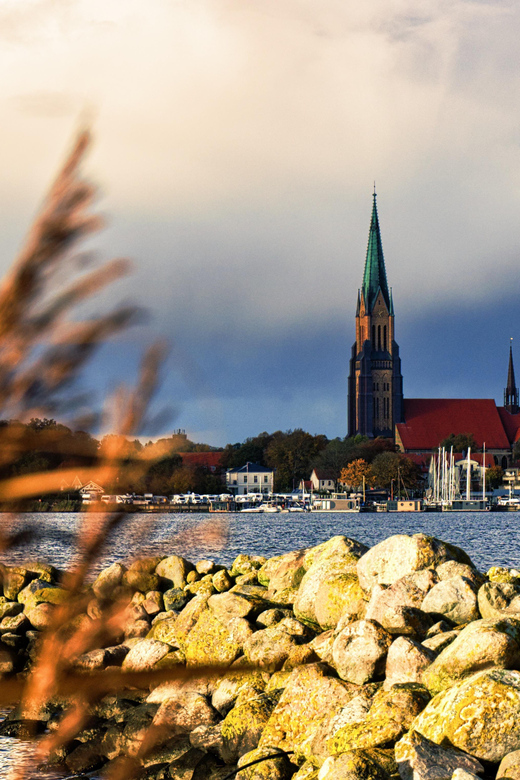
At $17 per person, this is a modestly priced introduction to Schleswig. The value comes from the number of major areas covered in a short period: the cathedral, old town, harbor, Holm, and St. John’s Monastery.
I consider the price fair if you want context rather than just directions. You could walk through these areas independently, but you would not automatically know why Schleswig lost its trading role, how the Schlei shaped the city, or what the 1480 Schleibrief meant for Holm’s fishermen.
The price does not include a cathedral interior tour. That extra charge may be available depending on the time of day, so factor it in if the inside of the cathedral is essential to your plans.
The flexible booking terms also reduce the risk of committing too early. You can reserve and pay later, and cancellation is free up to 24 hours in advance. Those details are useful if your schedule in northern Germany is still shifting.
Who will enjoy this Schleswig walking tour?
I would recommend this experience to:
- First-time visitors who want a fast, clear introduction to Schleswig
- History-minded adults interested in medieval trade, religion, and royal power
- People who prefer local streets and landmarks to a bus-based sightseeing trip
- Visitors who want to combine major sights with a traditional fishing settlement
- Families with older children who can follow a German-language history tour
- Groups that enjoy asking questions and shaping the conversation
I would be more cautious if you need an English-language experience, want a long cathedral interior visit, or prefer a tour built around hands-on activities. The walk is also less suitable for young children who may lose interest in spoken historical detail.
The experience is wheelchair accessible, which is a useful feature for visitors planning a city walk. Still, it is sensible to confirm the practical route details when booking if you have specific mobility needs, since the tour passes through several historic areas.
My verdict on Vikings, Kings and Cheeky Monks
Book this tour if you want Schleswig’s main historic sights tied together by one clear story. For $17, you get a focused 90-minute walk through the cathedral area, old town, harbor, Holm, and St. John’s Monastery, with special attention to trade, Danish royal connections, fishing rights, and medieval religious life.
I especially like the balance between grand subjects and ordinary people. The cathedral and kings give the tour scale, while Holm’s fishermen and the monastery stories make the past feel closer to daily life.
Skip it if German is not comfortable for you or if your main goal is to see the cathedral interior. For German-speaking visitors who want an informative and personable introduction to Schleswig, this is a sensible, well-priced choice.
FAQ
Where does the tour begin?
The meeting point is Rathausmarkt in central Schleswig, in front of the Alte Apotheke restaurant.
How long does the walking tour last?
The tour lasts 1.5 hours.
What language is the tour conducted in?
The live guide conducts the tour in German.
Does the tour include the inside of Schleswig Cathedral?
No. The standard experience includes an outdoor visit to the cathedral. An interior visit may be available for an additional charge, depending on the time of day.
How much does the experience cost?
The price is $17 per person.
Is the tour wheelchair accessible?
Yes, the activity is listed as wheelchair accessible.
Can I cancel the booking?
Yes. You can cancel up to 24 hours in advance for a full refund. You can also reserve now and pay later.
Just added in Germany
- Berlin & The Third Reich Private Guided Tour★ 5.0 · 3 reviews
- Third Reich Quest Experience in Berlin★ 4.5 · 7 reviews
- Private Analogue Photography Experience in Berlin★ 5.0 · 3 reviews
- Berlin Urbex Adventure and History Tour★ 5.0 · 9 reviews
- The Beauty of Berlin by Bike: Private Tour★ 5.0 · 59 reviews
- Berlin: Guided Bike tour of the Berlin Wall and Third Reich★ 5.0 · 160 reviews
- Beyond Currywurst: Berlin’s Hidden Street Food & Culture Tour★ 5.0 · 100 reviews
- Berlin Third Reich & Cold War Walking Tour With A Guide★ 5.0 · 7 reviews
Baltic Coast Tours, compared.

Baabe on Rügen: Seal-Spotting Cruise in the Baltic
Read our review →
Stralsund: Stadtrundfahrt durch die historische Altstadt
Read our review →
Usedom: Sailing tour on exclusive tall ship Thursday
Read our review →
Browse the lists this tour appears in