
Reviewed · NIGHT WATCHMAN TOURS
Mannheim: Public Night Watchman Tour with Night Watchwoman Marie
Mannheim’s night watchwoman tour turns a familiar city walk into a lantern-lit story session. Marie, in costume and carrying a halberd, leads you through the old town with tales of thieves, drunken troublemakers, odd jobs, bad smells, early technology, and the hard life of a night watchman. I like the mix of humor and darker history, along with the way the route links major sights to everyday city life.
I also like the strong local angle. The stories reach from Elector Carl Theodor’s court to the horseless carriage and the city around 1875, giving you more than a standard monument tour. The main consideration is language: the live tour is in German, and some material remains in its original language. Cold weather can also matter, since the walk takes place outdoors and one December tour had to contend with biting cold.
Key things to know before you go
- Marie leads in costume: Her halberd, lantern, and night-watchwoman character give the walk a clear sense of place.
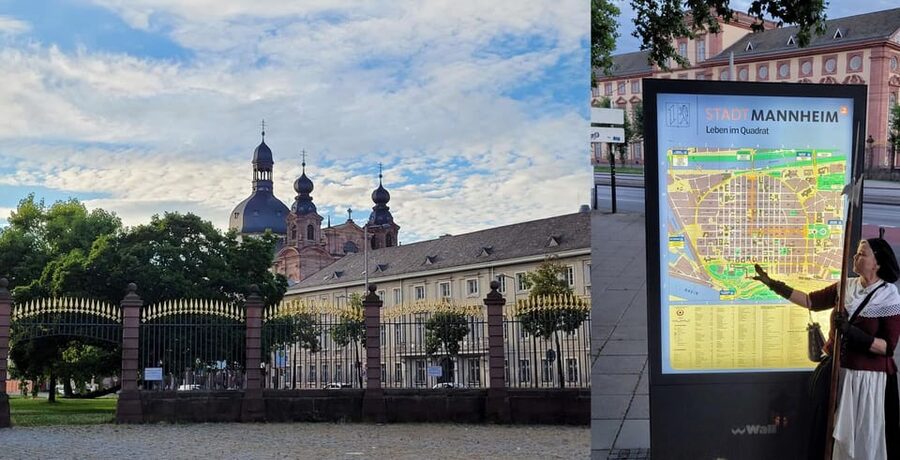
- The route covers nine historic stops: You begin and end at Mannheim Baroque Palace, passing the Jesuit Church, Paradeplatz, Schillerplatz, and more.
- The stories are not only about grand buildings: Expect dishonest professions, foul air, night patrols, the lightning rod, and early automobiles.
- The tour lasts 90 minutes: That is enough time for a focused evening outing without taking over your night.
- German is the tour language: Some content is presented in its original language, so a useful level of German will help.
- The price is $17 per person: For a cost-conscious visitor, that is a reasonable fee for a live, costumed city tour.
Meeting Marie at Mannheim Baroque Palace
Your evening begins in the Court of Honor at Mannheim Baroque Palace. This is a practical starting point because the palace is one of the city’s clearest landmarks, and the open court gives you a straightforward place to find the guide.
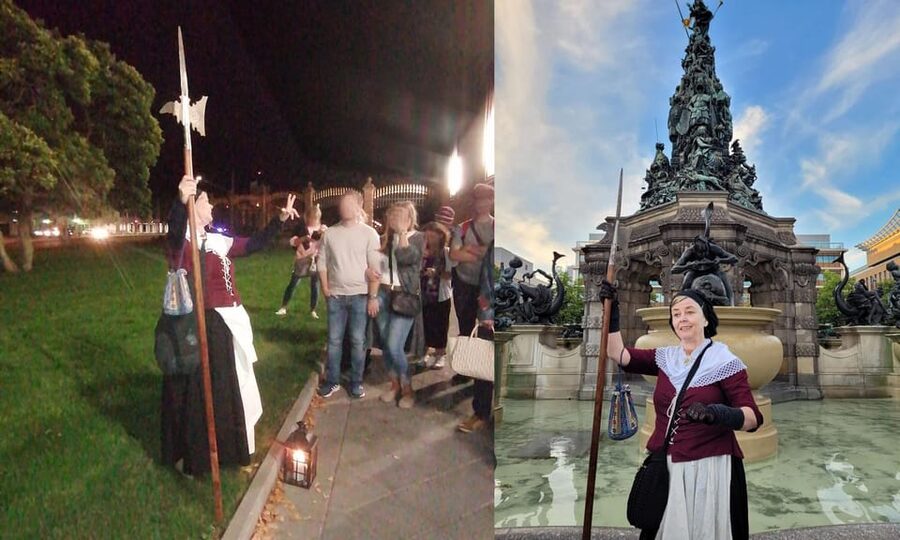
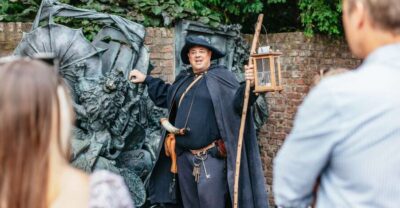
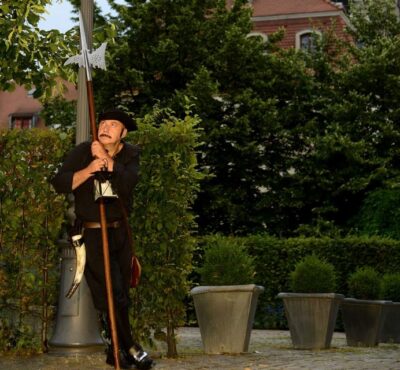
Marie’s costume is central to the experience. She is not simply walking you from one address to another. She takes on the role of the woman responsible for watching the streets, carrying a halberd as a symbol of authority and protection. The character gives the tour a playful edge, but the stories also touch on the less pleasant parts of night work: danger, disorder, bad weather, and the need to keep watch while much of the city slept.
I like this setup because it gives the history a human point of view. You are not asked to picture an abstract official or a name in a textbook. You follow someone whose supposed job was to patrol streets, notice trouble, and help keep the peace.
The experience is described as a public tour, but no group size is provided. That means you should expect a shared outing rather than a private walk. The format works best if you are happy to listen as part of a group and let the guide control the pace.
More Night Watchman Tours in Swabia:
- Mannheim, guided costume tour: Tour with Night Watchman
★ 4.9 · 26 reviews - Dresden: The Original Night Watchman Tour in Lantern Light
★ 4.6 · 6,653 reviews - Hamburg: Night Watchman’s Tour of St. Pauli in German
★ 4.7 · 4,818 reviews
Mannheim Baroque Palace and the Elector’s world
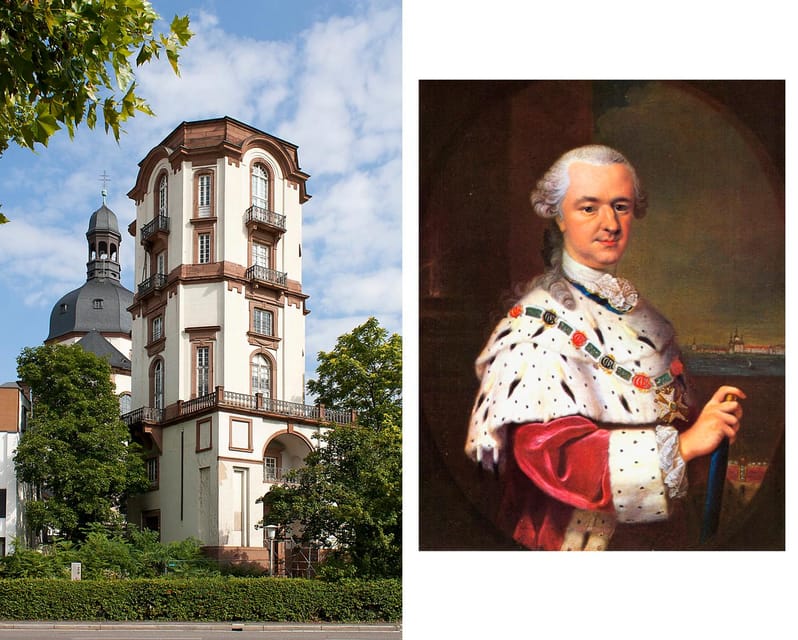
The palace is both the meeting point and one of the first major sights on the route. The tour connects Mannheim to the time of Elector Carl Theodor and his court, including the cultural world known as the Musenhof. This adds an important layer to the night-watchman character.
Carl Theodor’s Mannheim was not only a place of patrols and street trouble. It was also a center of court life, culture, and display. The contrast is useful: grand palace life existed alongside ordinary concerns such as foul air, suspicious work, and nighttime disorder.
You should not expect a full palace interior visit from the information provided. The stop is a guided part of the walking route, so the focus is the outdoor city experience and the stories Marie tells along the way. If you want detailed room-by-room palace history, you would need a separate visit.
Still, beginning here gives the tour a strong sense of scale. You start with the ruler’s world, then move toward the old streets where a night watchwoman’s work would have mattered.
Palais Bretzenheim and the city beyond the court
The route continues to Palais Bretzenheim. Like the palace, this stop connects Mannheim’s built environment with the city’s former social order. The walk is not just a chain of buildings. Marie uses the sites as prompts for stories about how people lived, worked, behaved, and misbehaved.
One of the tour’s more unusual subjects is the group of dishonest professions. This refers to jobs and trades once viewed with suspicion or social disgrace. The idea gives you a sharper sense of old urban life than a simple list of dates. Work could affect a person’s place in society, and certain occupations carried a lasting stigma.
I find this kind of material especially useful because it shifts attention away from rulers alone. Mannheim’s past also involved workers, service providers, outsiders, and people whose jobs were necessary but not respected. The subject sounds suited to Marie’s humorous style, while still showing how strict older social attitudes could be.
The precise content and depth of this stop depend on the guide’s storytelling. That is worth keeping in mind if you prefer a tightly scripted architectural tour. This outing is built around character, anecdotes, and connections between places.
Alte Sternwarte and stories of changing science
At the Alte Sternwarte, the tour brings in a different side of Mannheim’s past. The route’s themes include the lightning rod, one of the details that helps connect the old city to changing ideas about science and technology.
This is a good example of what makes the tour broader than a simple period costume performance. Marie’s stories include old fears and old routines, but they also touch on inventions and new ways of understanding the world. The lightning rod may sound like a small subject, yet it points to a time when practical technology could change how people thought about storms, safety, and risk.
The stop also helps break up the darker material. You move from dishonest trades and night patrols toward the way new devices entered everyday life. That variety should keep the 90 minutes moving at a pleasant pace.
If your main interest is astronomy, the tour may not provide a specialist explanation of the observatory. The supplied details identify it as a guided stop, but they do not promise a technical visit or interior access. Think of it as one historical waypoint within a story-led walk.
A few more half-days in Swabia worth comparing
- Ulm: City Center Walking Tour with Minster Visit
★ 4.7 · 831 reviews - Sinsheim: Technik Museum Day Pass and IMAX 3D Ticket
★ 4.8 · 616 reviews - Karlsruhe: 24-Hour Hop-On Hop-Off Sightseeing Bus Ticket
★ 4.4 · 362 reviews - Heilbronn: 24h Hop-on Hop-off City Sightseeing Bus Tour
★ 4.3 · 85 reviews
Schillerhaus, Schillerplatz, and the theatrical side of Mannheim
Schillerhaus Mannheim and Schillerplatz add literary and cultural associations to the route. The itinerary treats both as guided stops, which gives Marie room to connect Mannheim’s cultural past with the people and streets around it.
The tour also mentions the Musenhof, the courtly cultural circle associated with Carl Theodor. Schiller’s presence fits that wider theme of theater, literature, and artistic life. The result is a useful contrast with the night watchwoman’s daily concerns. While court culture celebrated music, performance, and ideas, the streets still needed patrols after dark.
I like the way these stops can widen your picture of Mannheim. A city is not only its grandest building or most famous resident. Its story includes performers, officials, workers, patrols, and ordinary people moving through the same streets for very different reasons.
Do not expect a quiet literary lecture. The experience is described as a mixture of humorous anecdotes, night-watch life, and city history. Schillerplatz is likely to be used as part of that larger story rather than treated as a separate academic presentation.
Jesuit Church and the old town walk
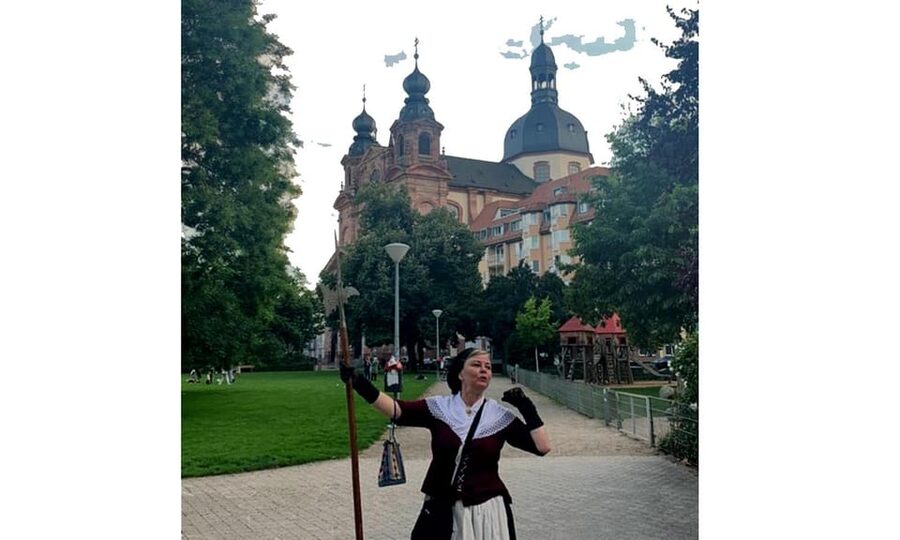
The Jesuit Church is another major point on the route. It brings the tour back to architecture, religion, and the formal public face of Mannheim. The church is one of the places where you can look up from the street-level story and see the city’s grander ambitions.
The walk through the former old town is important. Marie’s stories are meant to work in relation to streets and alleys, not just in a classroom or museum. The lantern, costume, and evening setting help you imagine how the city might have felt after dark, even though modern Mannheim is very different from the period being described.
The route’s mention of stinking air is especially telling. Old cities had problems with sanitation, smoke, animals, waste, and cramped streets. That detail keeps the story grounded. The past was not only elegant palaces and cultural courts. It could smell unpleasant, feel unsafe, and make a night watchman’s job quite real.
Because the tour is outside, wear shoes suited to a city walk and clothing suited to the season. The supplied information does not give a special equipment list, but December feedback specifically notes severe cold. A warm coat matters more here than dressing up for the evening.
Paradeplatz and the arrival of the horseless carriage
Paradeplatz gives the route another large public setting. It is a natural place to discuss how Mannheim changed over time, including the arrival of the horseless carriage, or automobile.
That subject adds a surprising turn to a night-watchman tour. You begin with a figure from an older street tradition, then hear about technology that would alter roads, travel, noise, and city life. The automobile story also helps place the tour’s historical range. This is not limited to medieval folklore. The program reaches into later developments and the period around 1875 mentioned during the tour.
I appreciate that range because it keeps the evening from feeling locked into one costume era. Marie can use the night watchwoman’s viewpoint to talk about change: what seemed strange, disruptive, dangerous, or exciting as new inventions appeared.
Paradeplatz is also a useful point for getting your bearings. The route has several named stops, and this broader urban space can help you understand how the old town’s streets relate to Mannheim’s more formal public areas.
Dalberghaus and the final stretch
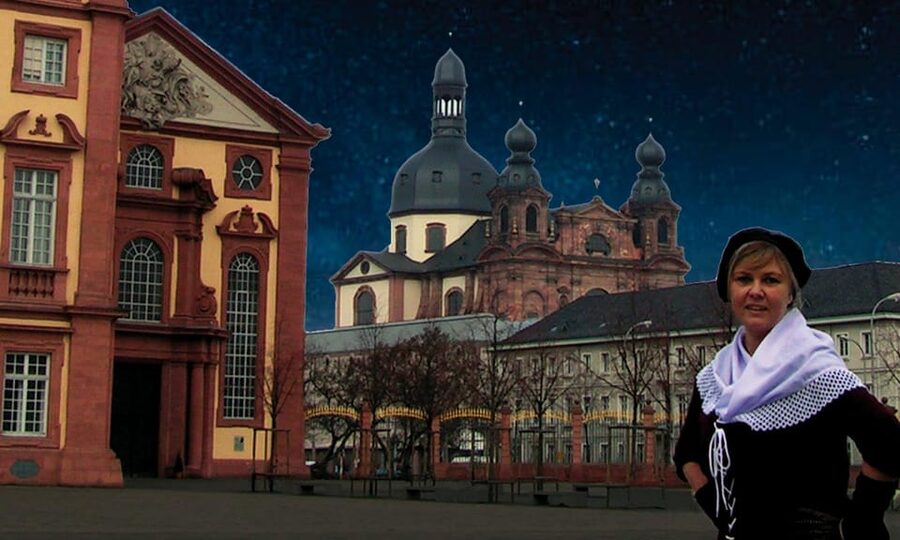
Dalberghaus is the last named stop before you return to the palace. By this point, the tour has moved through court life, culture, science, religion, public squares, technology, and the working life of the streets.
The final section is where the different threads should come together. Marie’s role is not just theatrical decoration. Her supposed duties offer a way to ask who controlled the streets, who was treated as suspicious, what counted as respectable work, and how much risk came with a nighttime job.
The tour ends back at Mannheim Baroque Palace. That circular route is convenient. You do not need to arrange transport from a distant neighborhood, and you finish at the same recognizable place where you met. The total time is 1.5 hours, so you can pair it with dinner or another evening plan, though you should allow time to reach the meeting point before the start.
What Marie’s storytelling adds
The strongest feature is Marie’s delivery. She presents the material with humor, but the reviews also describe her as engaged, informative, and able to make the period feel close. One December outing was praised for remaining interesting despite the bitter cold. Another local participant appreciated learning something new about a city they already knew well.
That matters because a costumed tour can easily become a string of jokes and props. Here, the halberd and character appear to support the content rather than replace it. You get stories about the job itself, not only a performance around a historic setting.
Marie’s husband has also led the experience, and one booking note specifically praised her for representing him very well. If the person leading your date is Marie, you can expect the night watchwoman character at the center of the walk. The exact presentation may vary with the guide.
The tone should suit you if you enjoy history delivered through anecdotes. It may be less satisfying if you want long architectural explanations, exact scholarly references, or a tour conducted in English.
Price, language, and practical value
At $17 per person, the tour offers solid value for a 90-minute live experience. You are paying for a guide, a costume character, a planned route, and a set of stories that cover several parts of Mannheim’s past. It is not the cheapest possible way to walk through the city, but it is modestly priced for an evening activity with a clear theme.
The value is strongest if you want more than a list of monuments. The subjects include dishonest occupations, Carl Theodor’s court, the lightning rod, the first automobile, foul air, and the night watchwoman’s difficult work. That range gives you conversation material and a better feel for how city life changed.
German is the stated tour language. Some content is shown in its original language. You should book only if you can follow a live German presentation, unless you are comfortable accepting that you may miss parts of the storytelling. No English version is specified.
The activity is wheelchair accessible, which makes it a useful option for visitors seeking an accessible city walk. The supplied information does not describe the exact paving, rest opportunities, or accessibility of every stop, so you may want to confirm those details if they are important for your needs.
You can cancel up to 24 hours before the start for a full refund, and a reserve-now, pay-later option is available. Those terms make it easier to hold a place while your Mannheim plans take shape.
Who should book this night watchwoman walk?
I would choose this tour if you want a short introduction to Mannheim with plenty of personality. It suits first-time visitors who want to see several central sights, as well as local residents who enjoy finding fresh stories in familiar streets.
Families with older children may like the halberd, lantern, and tales of thieves and drunken troublemakers, though the German language and darker subjects will affect how well younger children follow it. History fans who enjoy social details should pay attention to the dishonest professions and foul-air stories. People interested in technology will get something from the lightning rod and automobile themes.
I would hesitate if you need English, dislike outdoor walking in cold weather, or want detailed interior visits at every stop. The tour is also not the best match for someone seeking a private, self-paced route. It works through a shared group format, with Marie’s narration setting the rhythm.
Should you book Mannheim’s night watchwoman tour?
Book it if you want a lively German-language walk that mixes landmarks with odd, funny, and sometimes grim details. The 90-minute route is easy to fit into an evening, the $17 price is fair, and Marie’s costume character gives the experience a clear identity.
Skip it if you need English commentary or a specialist architectural tour. For everyone else, this is a good way to see Mannheim after dark while learning how court culture, social rules, technology, bad air, and street patrols shaped the city. Bring warm clothing in winter, meet at the Baroque Palace Court of Honor, and let the night watchwoman do the talking.
FAQ
Where does the Mannheim night watchman tour begin?
The tour begins at Mannheim Baroque Palace, at the Court of Honor.
Where does the tour end?
The route returns to Mannheim Baroque Palace after visiting the listed stops.
How long does the tour last?
The tour lasts 1.5 hours.
What language is the tour conducted in?
The live tour guide speaks German, and some content is shown in its original language.
Is the tour wheelchair accessible?
Yes, the activity is listed as wheelchair accessible.
Can I cancel the booking?
Yes. You can cancel up to 24 hours in advance for a full refund. A reserve-now, pay-later option is also available.
Just added in Swabia
- Guided tasting of Cider★ 5.0 · 4 reviews
- Ulm Private Walking Tour With A Professional Guide★ 5.0 · 5 reviews
- Villingen-Schwenningen Scavenger Hunt and Sights Self-Guided Tour★ 4.5 · 3 reviews
- Premium Zone Lasertag in Göppingen★ 4.5 · 6 reviews
- Sigmaringen: Hohenzollern Castle Admission & Audio Guide★ 4.9 · 15 reviews
- Segway Tour: Old Town Hall, Water Tower & Ehrenhof★ 5.0 · 21 reviews
- Mannheim: Segway Tour along the Neckar River★ 5.0 · 15 reviews
- Segway Tour of Mannheim: Rhein, Waldpark, and Lindenhof★ 5.0 · 13 reviews
Night Watchman Tours, compared.
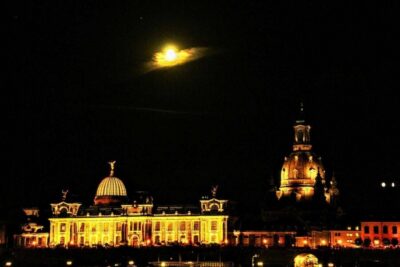
The Original Night Watchman Tour in Lantern Light
Read our review →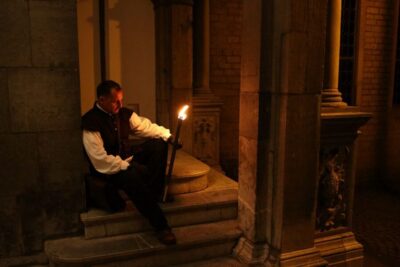
The Night Watchman Old Town Walking Tour in German
Read our review →
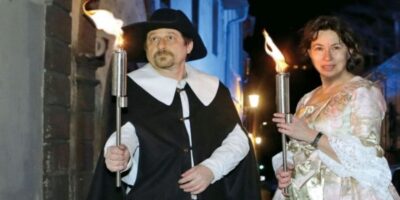
Tour of the Baroque Quarter with a Night Watchman
Read our review →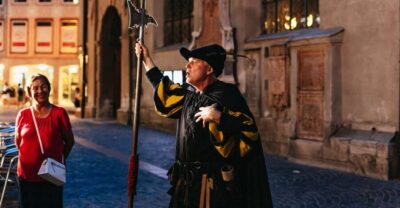
Browse the lists this tour appears in