

Reviewed · FOOD
Kreuzberg: Culinary Food Tour
Kreuzberg’s best tour trick is simple: replace one large meal with five small tastings and connect each bite to the streets around it. You move from Kottbusser Tor through SO36, Oranienstraße, Rio-Reiser-Platz, Mariannenstraße, and Admiralstraße while hearing about workers, squatters, demonstrations, migration, music, and Berlin’s divided past.
I like the mix of food and social history, and I like that the stops include both Berlin staples and international cooking rather than a single restaurant meal. Guides such as Niclas and Nike have been singled out for clear preparation and engaging stories. The main caution is that this is a walking tour, not a sit-down lunch, and in unusual cases food may be served outdoors and eaten standing up.
Key points at a glance
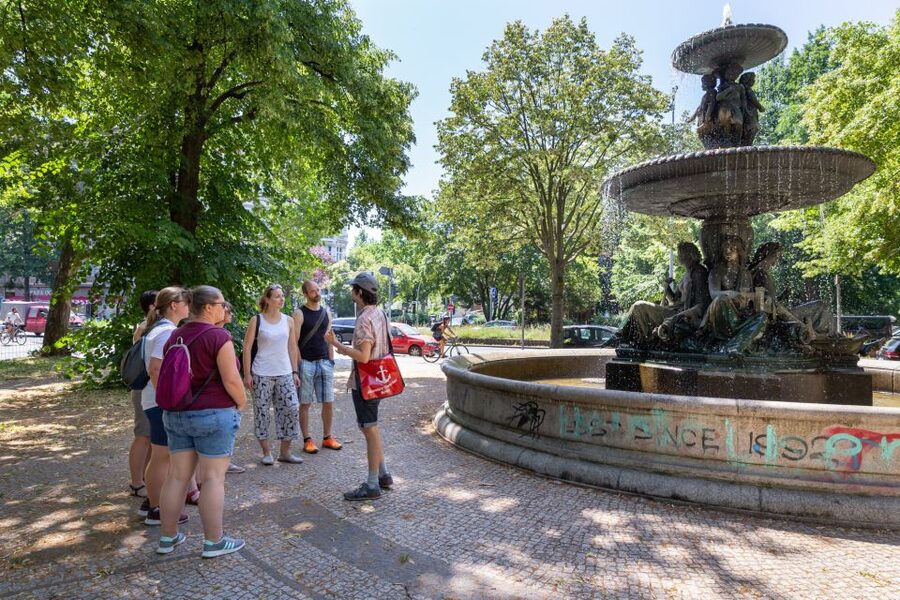
- Five tastings in three hours: Try several small portions instead of committing to one full meal.
- Kottbusser Tor to Admiralstraße: The route crosses some of Kreuzberg’s most important streets and public spaces.
- A serious look at Kreuzberg’s past: Expect working-class origins, left-wing politics, May Day protests, GDR escape stories, and Martin Luther King’s 1964 visit.
- Vegetarian food is available: Vegan food is not offered, and drinks cost extra.
- Private-group value: The $589 rate covers up to 10 people, which works out to $58.90 each for a full group.
- English or German guiding: A professional guide leads the three-hour walk, with private groups available.
Why food is the right way into Kreuzberg

Kreuzberg is not a district you understand by checking off monuments. Its story sits in ordinary places: a broad road, a back courtyard, a late-night snack shop, a political meeting spot, or a row of restaurants serving food from several continents.
This tour uses those places well. You hear how Kreuzberg began as a working-class district in the mid-19th century, then follow its changing identity into the present. The guide also explains how overcrowding once shaped daily life. On Oranienstraße, you may hear about people renting an eight-hour stay on a mattress instead of a whole room or apartment. That detail gives the neighborhood’s past a human scale.
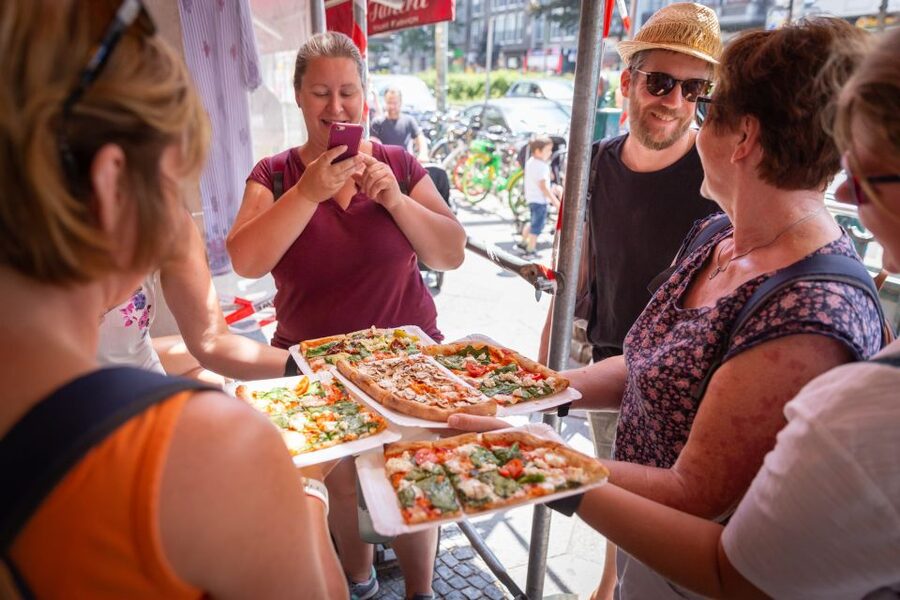
I especially like the decision to serve small portions at five restaurants. You can try original Berlin recipes, intercultural crossover dishes, and international specialties without spending the whole afternoon at one table. The food is not just fuel between sights. It shows how Kreuzberg’s population and tastes have changed.
The tradeoff is comfort. This is a moving meal, and you should expect a walking pace with food breaks rather than a relaxed restaurant experience. The food might occasionally be served outside and eaten standing up. If you need a full, seated lunch, plan one before or after the tour.
More Food Tours in Berlin
- Berlin Center Food Tour with 8+ Authentic Local Tastings
★ 5.0 · 1,227 reviews - Berlin: Mitte Culinary Food Tour
★ 4.5 · 447 reviews - Berlin: 3-Hour Secret Food Tour
★ 4.8 · 269 reviews
Starting at Kottbusser Tor and the Neues Kreuzberger Zentrum
The experience begins in the Kottbusser Tor area, usually called Kotti, a useful place to start because it puts you in the middle of Kreuzberg’s daily life right away. The meeting point can vary by booking option, with FightClub Casino listed as a starting location, so check your confirmation carefully before setting out.
The first major stop is the Neues Kreuzberger Zentrum, where the guide gives you a broad introduction to the district. This is the point where the tour sets up its main themes: workers and immigrants, political protest, changing rents and lifestyles, and the uneasy balance between old Kreuzberg and modern Berlin.
You get a photo stop, a guided explanation, and a food tasting here, with about 40 minutes assigned to the stop. That is enough time for the guide to provide context without turning the opening into a long lecture. I would pay attention to the guide’s explanation of how the area developed, because later stops make more sense once you know why Kreuzberg became associated with both hardship and political energy.
The food break also helps the group settle in. You are not waiting until the end for the culinary part. From the first stop, the tour makes its point: neighborhood stories and food belong together.
Oranienstraße, where old Kreuzberg meets today
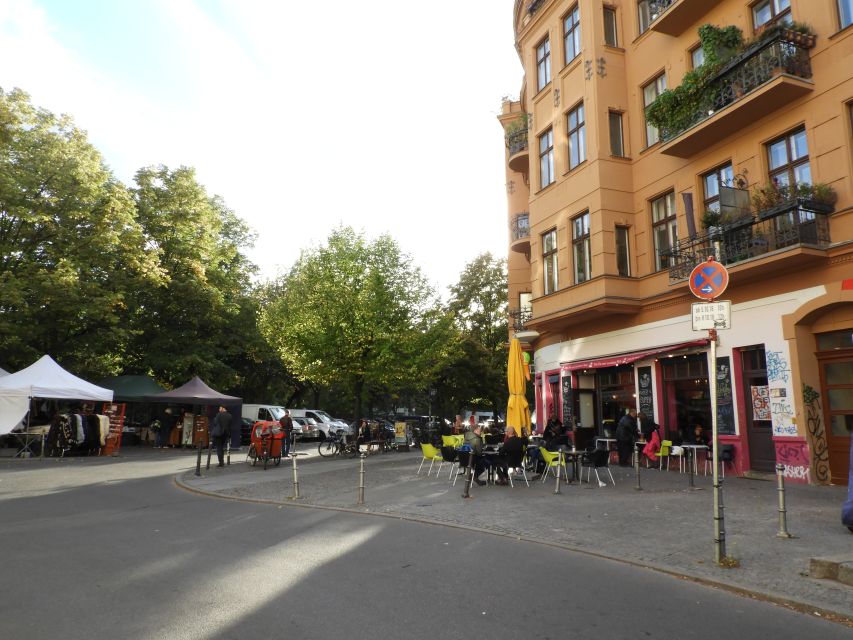
Oranienstraße receives the longest portion of the route, about an hour, and it is likely to be the tour’s main storytelling stretch. You walk, stop for photographs, hear about the district’s past, and make another food visit.
The guide uses the street to explain Kreuzberg’s working-class roots and the difficult living conditions that once shaped it. The eight-hour mattress rental is one of those details that helps you picture the pressure on housing and wages more clearly than a list of dates would.
You also hear about the district’s left-wing heritage and its demonstrations. Kreuzberg’s political identity is not treated as a museum display. It connects to the way people still use streets, squares, and public spaces to argue about housing, rights, identity, and the future of the neighborhood.
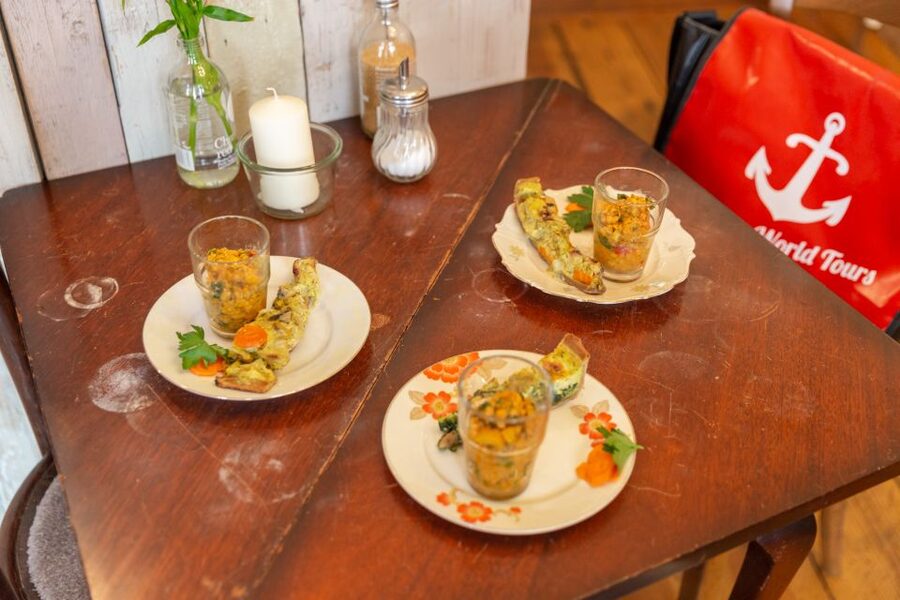
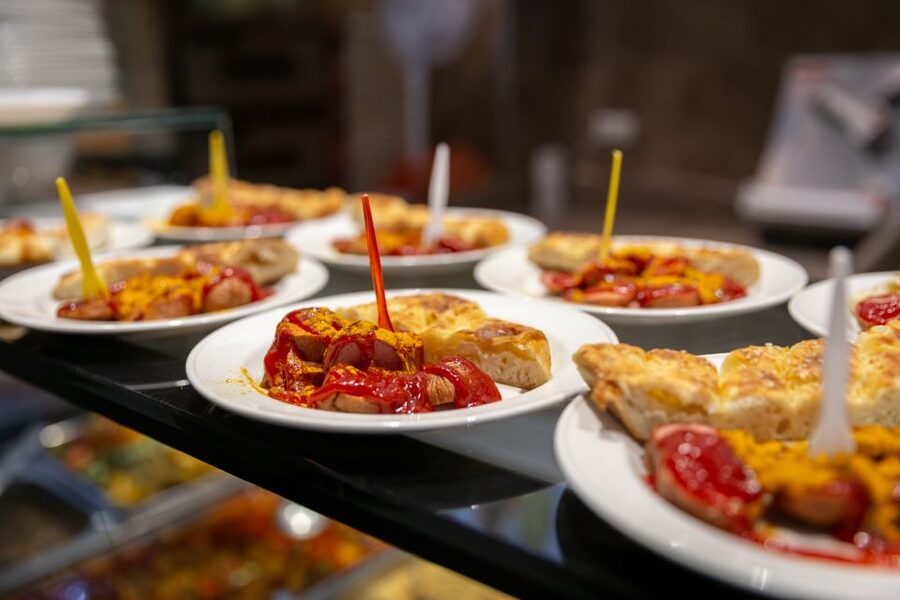
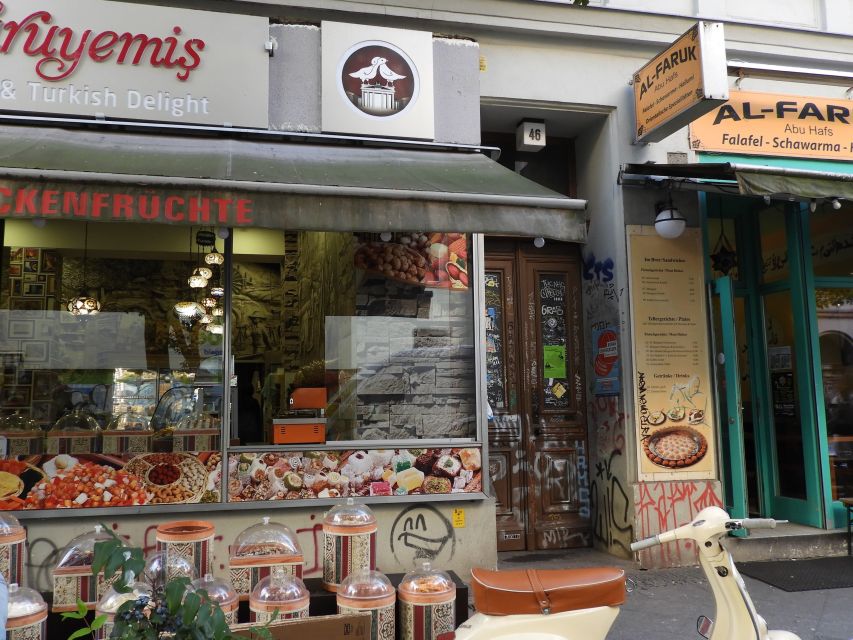
The tasting here may be one of the more varied stops, since the tour promises Berlin recipes, international delicatessen, and crossover cooking across its five restaurants. Specific dishes can change, but food noted for the experience includes döner or dürüm, currywurst, tarte flambée, baklava, vegetarian sushi, and roasted nuts in sweet and savory forms.
That range is one of the tour’s strongest features. You get a better sense of Kreuzberg from several modest bites than from a polished restaurant menu designed for outsiders. Still, remember that the food selection is not presented as a fixed menu. If you have allergies or strict dietary needs, ask before booking.
Rio-Reiser-Platz and the cultural side of SO36
The route continues to Rio-Reiser-Platz, with about 15 minutes for a guided stop, photographs, and food. The square helps shift the focus from housing and protest toward Kreuzberg’s cultural life.
The tour also takes you through SO36, the part of Kreuzberg closely tied to alternative culture and May Day demonstrations. The guide connects the area’s reputation to real events and public conflict rather than offering only a polished nightlife story.
This is a short stop, so expect a compact explanation rather than a long visit. Its value comes from the way it links with the rest of the walk. The district’s restaurants, music, politics, and street life are presented as parts of one story.
If you have heard that Kreuzberg is simply Berlin’s party quarter, this portion gives you a needed correction. Nightlife matters here, but so do jobs, housing, migration, public protest, and memory. The tour finishes with Kreuzberg’s evening reputation in mind, but it earns that ending by showing you what came before it.
Same city, a completely different kind of day:
- Berlin: Reichstag, Dome and Government District Guided Tour
★ 4.7 · 18,288 reviews - Berlin: 1-Hour City Tour by Boat with Guaranteed Seating
★ 4.3 · 16,993 reviews - Berlin: Boat Tour Along the River Spree
★ 4.4 · 11,252 reviews - Discover Berlin Half-Day Walking Tour
★ 5.0 · 9,624 reviews
Mariannenstraße and stories that do not fit a postcard
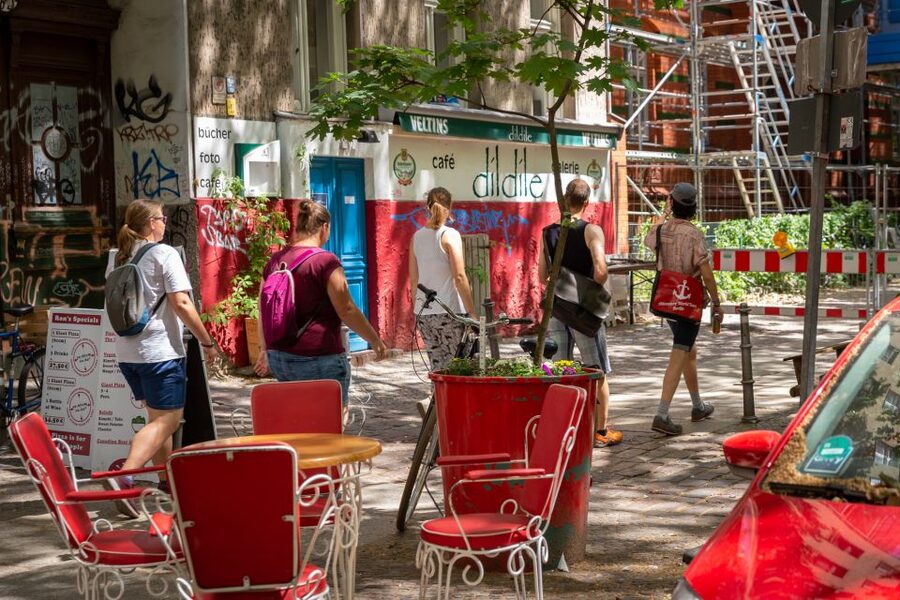
Mariannenstraße 4 receives about 20 minutes for walking, sightseeing, photographs, and another tasting. The guide uses the route to bring together several of the district’s unusual historical stories.
You may hear dramatic accounts of attempts to escape East Germany, along with the story of Martin Luther King’s visit to Berlin in 1964. The tour also refers to Berlin’s Jack the Ripper, a reminder that Kreuzberg’s past includes crime stories and urban myths alongside politics and food.
These subjects give the walk variety, but they also make guide quality important. One four-star assessment found the food excellent but felt that some of the information was not always fully consistent. That is a fair caution. The guides work hard to entertain, and most of the supplied comments praise their preparation and range of information, but a lively storyteller is not the same thing as a formal historian.
I would treat this part as neighborhood storytelling with historical context. Listen for the broad connections, enjoy the unusual details, and do not expect an academic seminar with every point documented.
Oranienplatz and Dresdener Straße
Oranienplatz is a short five-minute stop, followed by about 10 minutes on Dresdener Straße. These sections keep the walk moving and give you more street-level views of Kreuzberg rather than another long talk.
Oranienplatz is useful as a quick pause because it places the district’s public life in an open setting. Dresdener Straße adds another link in the route toward the final area. Neither stop is meant to carry the whole tour, but together they prevent the experience from becoming a chain of restaurant visits with little connection between them.
This is where comfortable shoes matter. The tour lasts three hours and includes repeated walks, photo stops, and food breaks. You do not need special hiking gear, but you should be ready to stay on your feet and move between neighborhoods at a steady pace.
Admiralstraße and the final food stretch
Admiralstraße gets about 40 minutes, making it one of the longer sections after Oranienstraße. It includes a guided walk, a photo stop, and the last part of the culinary experience before the tour ends on Grimmstraße.
By this point, the five tastings have done their work. You have sampled several styles of food while hearing how Kreuzberg became a meeting place for people of different origins, opinions, lifestyles, sexualities, and incomes. That broad mix is central to the tour’s message. Kreuzberg is not presented as one fixed culture, but as a place shaped by constant contact and change.
The experience finishes at Grimmstraße 23, in the 10967 Berlin area. That is not the original meeting point, so you should plan your onward route from the end rather than assuming you will return to Kottbusser Tor.
The stated route includes the main food and sightseeing areas, but restaurant choices may affect the precise order and timing. Food served outside is also possible in exceptional cases. Bring a little flexibility and do not schedule a train departure immediately after the tour.
What the five tastings may look like
The food is the main reason to choose this experience over a standard neighborhood walk. The promised selection includes five distinct restaurants and a spread that can include:
- Berlin specialties such as currywurst
- Döner or dürüm
- Tarte flambée
- Baklava
- Vegetarian sushi
- Sweet and savory roasted nuts
- Other local and international dishes
The list gives you an idea of the range, but it should not be treated as a guaranteed menu for every departure. The exact restaurants and dishes can vary.
I like that the food reflects Kreuzberg’s mixed population instead of trying to define Berlin cuisine too narrowly. You get familiar street food, immigrant cooking, and modern combinations in one route. For someone new to Berlin, this is a useful way to sample several food traditions without having to research each place.
Vegetarians have an option, which is a real plus. Vegan food is not available, and drinks are not included. Since this is a tasting tour, portions are intended to be sampled rather than replace every meal of the day. If you have a large appetite, eat something small beforehand or keep dinner plans open afterward.
Price, group size, and what you are really buying
The price is $589 per group of up to 10 people. For a full group, that is $58.90 per person before drinks, which is reasonable for a private three-hour walk with five tastings. The value improves if you are traveling with family or friends who would otherwise book several separate places and a private guide.
For only two people, the same group price is a much bigger commitment. You are paying $294.50 each, so the private format makes most sense when privacy, flexibility, or shared planning matters more than finding the lowest per-person rate.
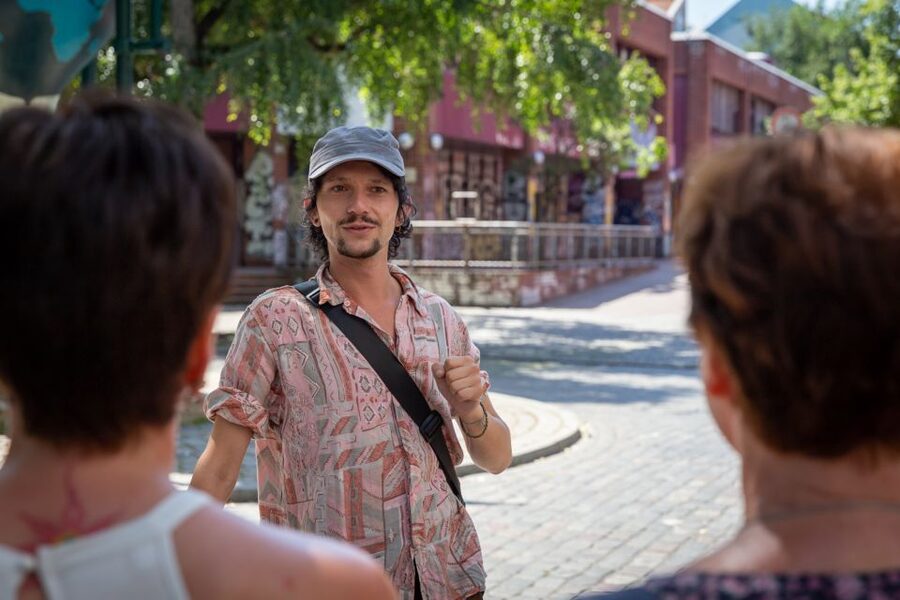
You are also paying for interpretation, not only food. A good guide turns streets such as Oranienstraße and Mariannenstraße into a connected story. Recent comments specifically praise guides named Niclas and Nike for preparation, interesting facts, and an engaging style. One guide was called especially entertaining, even though the information was not always considered fully consistent.
The tour is offered in English and German. A professional, cheerful guide leads the walk, and private groups are available. Drinks are extra, so include that in your budget.
Free cancellation is available up to 24 hours before the start for a full refund. You can also reserve now and pay later, which helps if your Berlin schedule is still shifting.
Who will enjoy this Kreuzberg walk
I would choose this tour for someone who wants food to open the door to a neighborhood, not someone searching for a formal restaurant crawl. It suits first-time Berlin visitors who want a strong introduction to Kreuzberg, as well as repeat visitors who have seen the major central sights and want a more local district.
It is also a good fit for:
- Small groups of friends who want a private experience
- Families with older children who can manage a three-hour walk
- Vegetarians who want several meat-free tastings
- People interested in Berlin’s divided past and political culture
- Anyone who likes trying several small dishes instead of one large meal
I would hesitate if you need vegan food, dislike eating while standing, or want precise historical detail at every stop. The experience is broad and lively. It is not designed as a specialist architecture tour, a nightlife tour, or a sit-down dining experience.
The 4.5 rating from 770 reviews supports the basic picture: food quality and guide enthusiasm are major strengths, while the occasional uneven historical explanation is the main caution. That balance makes sense for a tour that tries to cover a lot in three hours.
Should you book it?
Book this Kreuzberg tour if you want five varied tastings, a private guide, and a useful introduction to SO36, Oranienstraße, and the district’s working-class and political past. It gives you a practical sense of how food, migration, protest, and nightlife meet in one part of Berlin.
I would book it for a full group of friends or family, when the $589 price spreads well across up to 10 people. I would skip it if you want a fixed menu, vegan options, or a long seated meal. For most curious eaters who can walk comfortably and enjoy a guide with a storyteller’s style, it is a worthwhile way to spend three hours in Kreuzberg.
FAQ
How long does the Kreuzberg Culinary Food Tour last?
The tour lasts three hours and includes guided walking, sightseeing, photographs, and five food tastings.
Where does the tour start?
The tour begins in the Kottbusser Tor area, also known as Kotti. The meeting point may vary by booking option, and FightClub Casino is listed as a possible starting location. Check the meeting details for your selected option.
Where does the tour finish?
The tour finishes at Grimmstraße 23, 10967 Berlin, Germany.
How many food tastings are included?
Five different food tastings at five distinct restaurants are included.
Is vegetarian food available?
Yes. A vegetarian option is available. Vegan food is not available.
Are drinks included?
No. Drinks are not included in the tour price.
What languages are offered, and can the group be private?
The tour is offered in English and German. A private group option is available.
Just added in Berlin
- Berlin & The Third Reich Private Guided Tour★ 5.0 · 3 reviews
- Third Reich Quest Experience in Berlin★ 4.5 · 7 reviews
- Private Analogue Photography Experience in Berlin★ 5.0 · 3 reviews
- Berlin Urbex Adventure and History Tour★ 5.0 · 9 reviews
- The Beauty of Berlin by Bike: Private Tour★ 5.0 · 59 reviews
- Berlin: Guided Bike tour of the Berlin Wall and Third Reich★ 5.0 · 160 reviews
- Shared Underground Party Tour in Berlin★ 4.5 · 9 reviews
- Beyond Currywurst: Berlin’s Hidden Street Food & Culture Tour★ 5.0 · 100 reviews
Food, compared.
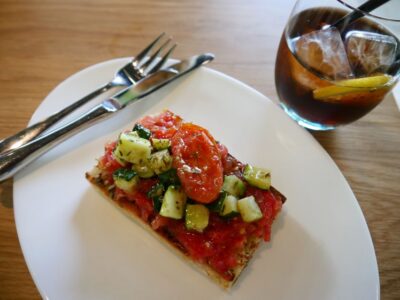
Elbphilharmonie Plaza and HafenCity Food Tour
Read our review →
Berlin Center Food Tour with 8+ Authentic Local Tastings
Read our review →
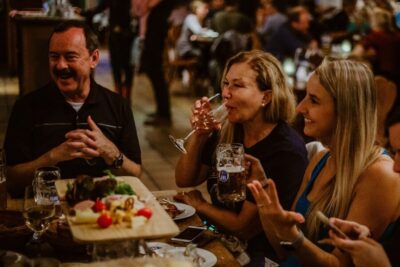
Beer and Food Tour with Dinner & Oktoberfest Museum
Read our review →
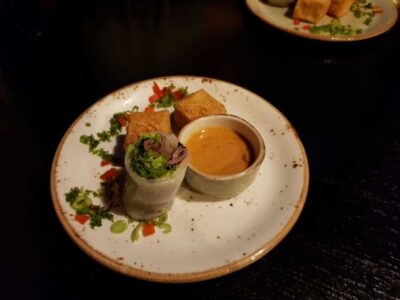

Lunch Like a Local: Munich’s ORIGINAL Viktualienmarkt Food Tour
Read our review →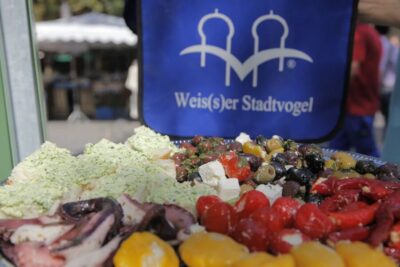
Browse the lists this tour appears in