
Reviewed · CONCENTRATION CAMP MEMORIALS
Berlin: Sachsenhausen Concentration Camp Guided Tour
Sachsenhausen is not an easy sightseeing stop. It is a place where the Nazi concentration camp system becomes painfully concrete: the entrance, roll-call ground, barracks, prison cell block, infirmary, and execution area all help you understand how mass persecution was organized. The four-hour visit gives the subject the time and seriousness it needs.
I like the small group of up to seven, since you can ask questions without shouting across a crowd. I also like the thoughtful route, which covers both Nazi use of the camp and its later Soviet history. The main drawback is time: five hours door to door leaves limited room for lingering in the exhibitions, and one visitor reasonably wished for a six- or seven-hour version.
Key points at a glance
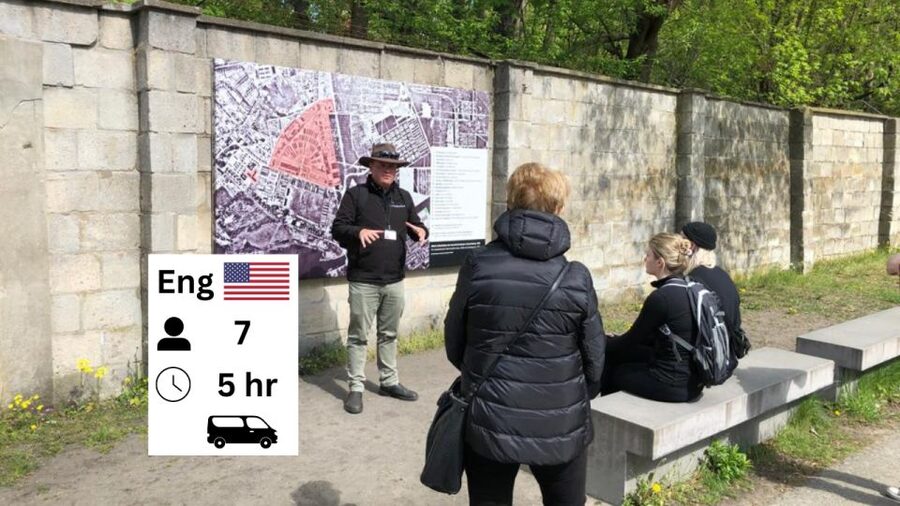
- A full half-day from Alexanderplatz: Travel by van for about 30 minutes each way, with four hours at the memorial.
- A small group of seven or fewer: The format allows direct questions and a more personal pace.
- The complete camp route: See Tower A, the prisoner barracks, Jewish sector, cell block, camp kitchen, Station Z, and infirmary.
- Two layers of history: Learn about Nazi imprisonment and murder, then the Soviet special camp that followed.
- Guides with strong subject knowledge: Matt, Tom, and Jorg are specifically praised for clear, respectful, engaging explanations.
- A serious visit in all weather: Bring comfortable shoes and a snack. The tour runs rain or shine.
Why Sachsenhausen belongs on a Berlin history day
Berlin has no shortage of museums and memorials connected to the Nazi period. Sachsenhausen gives you something different: a physical setting where the camp system’s rules, routines, and machinery can be explained on the ground.
The camp was designed as a model for the wider Nazi concentration camp system. On the drive north, your guide introduces the system’s methods and explains how Sachsenhausen was used as a pattern for later camps. That background matters. You are not simply walking through isolated ruins. You are learning how administration, guards, forced labor, punishment, starvation, and murder were made part of an organized system.
This is a difficult visit, and it should be. The best approach is to set aside the idea of a normal sightseeing outing. You will spend much of the day listening, looking closely, and trying to understand lives reduced to numbers and routines. The focus is not on shock for its own sake. It is on people, choices, systems, and the consequences of treating human beings as disposable.
More Concentration Camp Memorials in Berlin
- Berlin: Sachsenhausen Concentration Camp Tour in English
★ 5.0 · 5,711 reviews - Berlin: Sachsenhausen Concentration Camp Memorial Tour
★ 4.7 · 3,716 reviews - Sachsenhausen Concentration Camp Bus Tour in English from Berlin
★ 5.0 · 1,962 reviews
Meeting at Alexanderplatz and the 30-minute ride
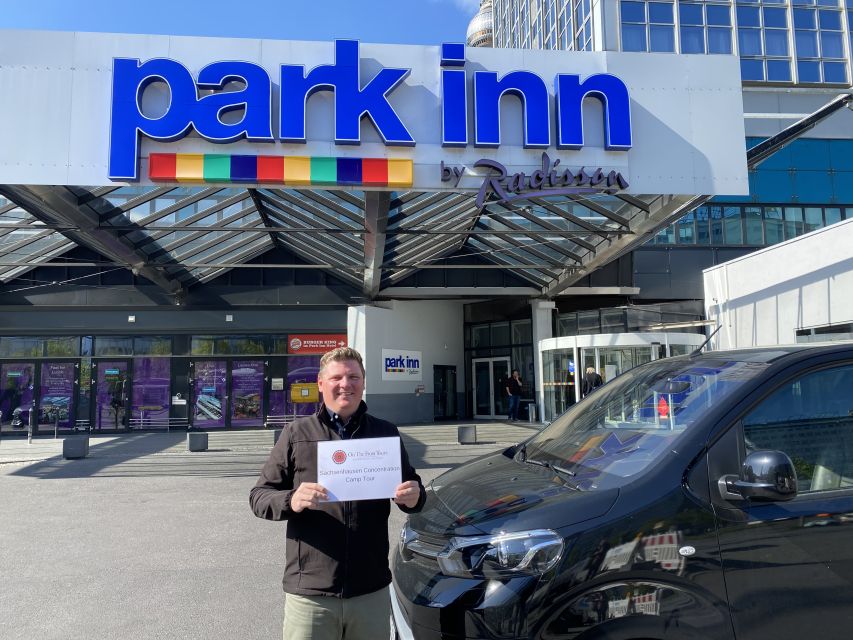
The tour begins at the main entrance of the Park Inn by Radisson Berlin Alexanderplatz, specifically at the taxi pickup and drop-off point. This is a central meeting place, but do not wander around the hotel looking for a separate tour office. Go to the main entrance and the taxi area.
The van ride takes about 30 minutes. That transfer is useful preparation rather than dead time. Your guide sets out the structure of the Nazi camp system and explains why Sachsenhausen mattered within it. You arrive with a framework for what you are about to see, which makes the later stops easier to place in context.
The small vehicle and limited group size are real advantages here. With no more than seven people, the guide can speak naturally and respond to questions. The tradeoff is that you are tied to one departure time and one group pace. This is not the right choice if you prefer to wander alone with an audio guide.
Tower A and the camp’s daily machinery
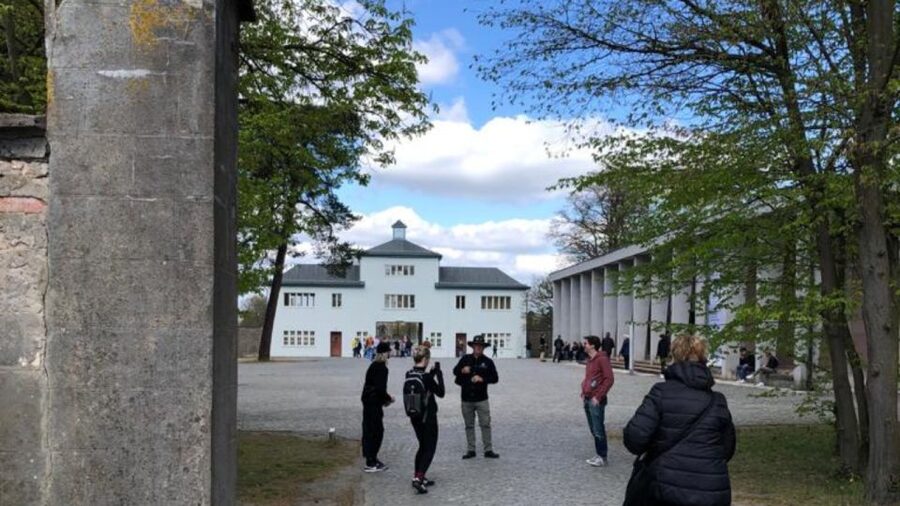
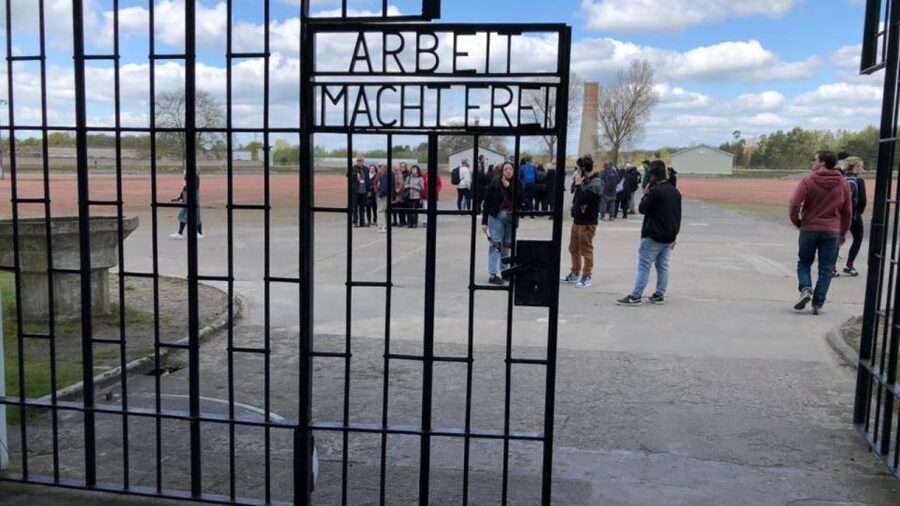
The visit begins at the main entrance, passing through Tower A and the infamous words ARBEIT MACHT FREI. From there, the guide explains the daily routine imposed on prisoners, including morning roll call and the shoe testing track.
These details help show how control worked beyond the camp fences. Prisoners faced endless counting, forced movement, exhausting work, and punishment built into ordinary routines. The shoe testing track is especially revealing because it connects physical suffering with the camp’s labor system. It was not simply a place where people were held. It was a place where bodies were managed, tested, worked, and destroyed.
This early part of the tour can feel stark because the camp’s open spaces make you confront scale and order. You will spend time standing outdoors while the guide explains what happened, so comfortable shoes and weather-appropriate clothing matter. The tour runs rain or shine, and there is no clever way to soften that practical fact.
The Jewish sector and overcrowded barracks
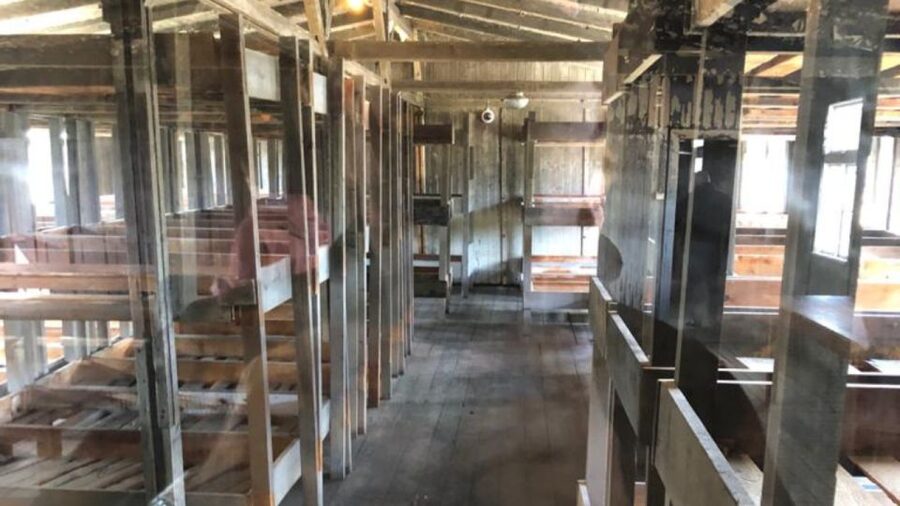
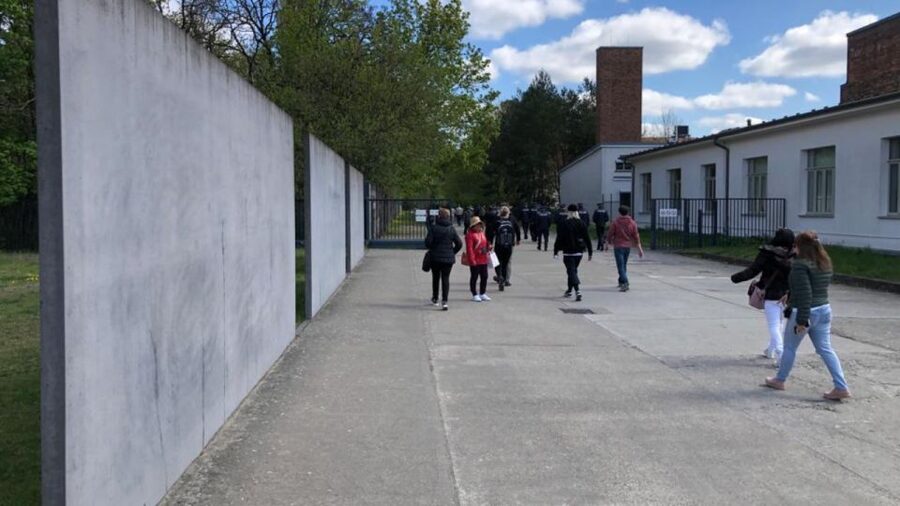
The route continues to the Jewish sector, where you can enter the barracks and learn about the conditions prisoners endured. The buildings and displays help translate broad historical terms into everyday realities: overcrowding, poor living conditions, fear, hunger, and the loss of privacy.
I find this section important because it brings attention back to individual lives. A camp history can become too abstract if it focuses only on dates, command structures, and casualty figures. Here, the guide explains what daily existence demanded from prisoners and how the camp’s design reinforced their helplessness.
The barracks are not a comfortable museum setting. You are looking at a place shaped by deliberate cruelty. Give yourself time to listen rather than rushing from room to room. Still, the four-hour camp visit has limits. If you want to study every display or read every panel, you may find the schedule tight.
Same city, a completely different kind of day:
- Berlin: Reichstag, Dome and Government District Guided Tour
★ 4.7 · 18,288 reviews - Berlin: 1-Hour City Tour by Boat with Guaranteed Seating
★ 4.3 · 16,993 reviews - Berlin: Boat Tour Along the River Spree
★ 4.4 · 11,252 reviews - Discover Berlin Half-Day Walking Tour
★ 5.0 · 9,624 reviews
The cell block, special prisoners, and camp kitchen
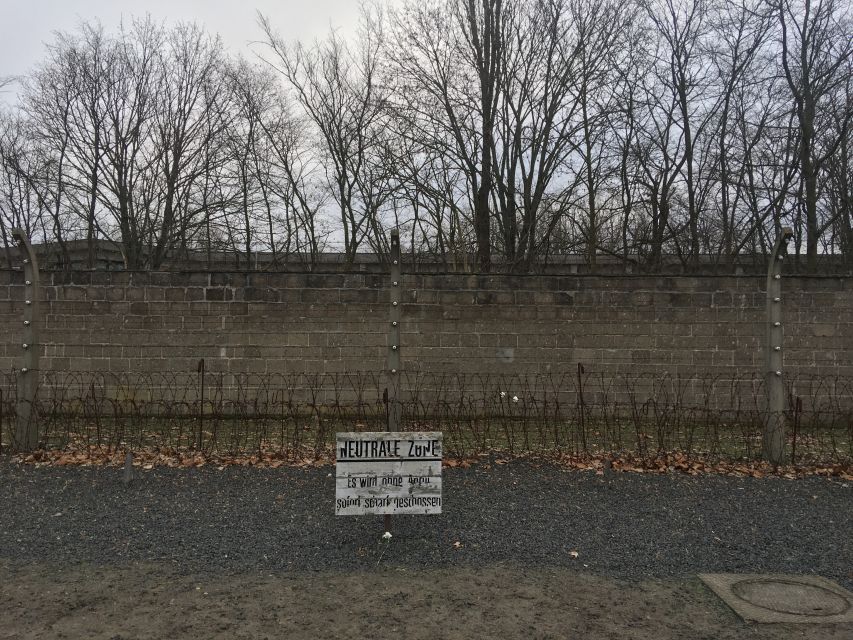
The cell block was used for cruel mistreatment and held British prisoners of war and special inmates, including Stalin’s son. Its role adds another layer to the camp’s story. Sachsenhausen was not only a place of mass detention for large prisoner groups. It also contained spaces for isolation, punishment, and politically sensitive prisoners.
The guide then takes you to the camp kitchen. This is where you get a short break, use the restrooms, and view an exhibition of camp objects. Prisoner drawings remain visible on the walls, giving this stop an especially human quality. They are not just administrative records or official documents. They are traces of people trying to express themselves in conditions designed to erase identity.
Use the break wisely. Bring a snack, since one is recommended and the day is long. The pause is brief, so do not count on having enough time for an extended meal. It is best understood as a practical reset before the most distressing part of the route.
Station Z and the machinery of murder
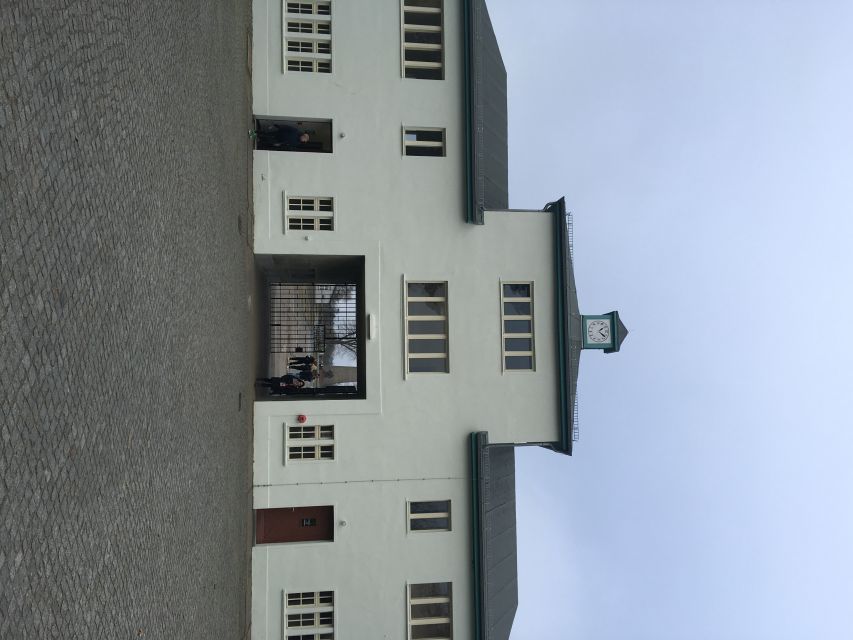
After the break, the tour reaches Station Z, the execution site, gas chamber, and crematorium area. This is where the Nazi regime’s systematic murder of prisoners is addressed most directly.
The value of having a guide here is clear. The site requires careful explanation, and a good guide can connect the physical remains with the larger process of the Final Solution without reducing the place to a grim spectacle. The guides associated with this experience, including Matt, Tom, and Jorg, are praised for combining factual detail with a respectful tone. That balance matters greatly at a site like this.
Expect the emotional weight of the tour to increase here. You are not required to react in any particular way, and there is no need to force yourself to speak. Listen, ask questions if you have them, and allow the seriousness of the place to set the pace.
The guide also explains the infirmary, where prisoners were subjected to medical experiments. This final section before departure shows that abuse was not limited to forced labor or executions. Medical authority was also turned against prisoners, with their bodies treated as tools for experimentation.
The Soviet Special Camp after 1945
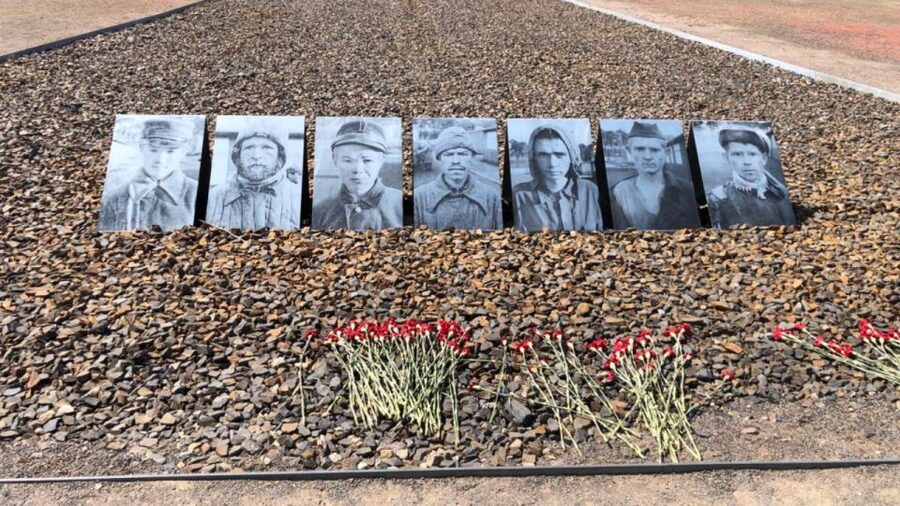
One of the strongest features of this tour is that it does not end with the defeat of Nazi Germany. After the war, the Soviet Union continued using the site as Special Camp No. 7. About 60,000 people were held there, including German prisoners of war, convicted war criminals, and political prisoners.
The postwar story needs careful handling. It does not erase the Nazi camp’s purpose or crimes, and it is not presented as an equal version of the same system. But it does show how the site continued to be used for imprisonment and mistreatment after the Nazi period ended.
This section also helps you understand why memorial sites require ongoing conservation and careful interpretation. Sachsenhausen carries several layers of painful history, and modern Germany has had to decide how to preserve, explain, and teach those layers. If you are interested in how historical memory works, this part adds much more than a standard World War II tour.
What the guides add to the experience
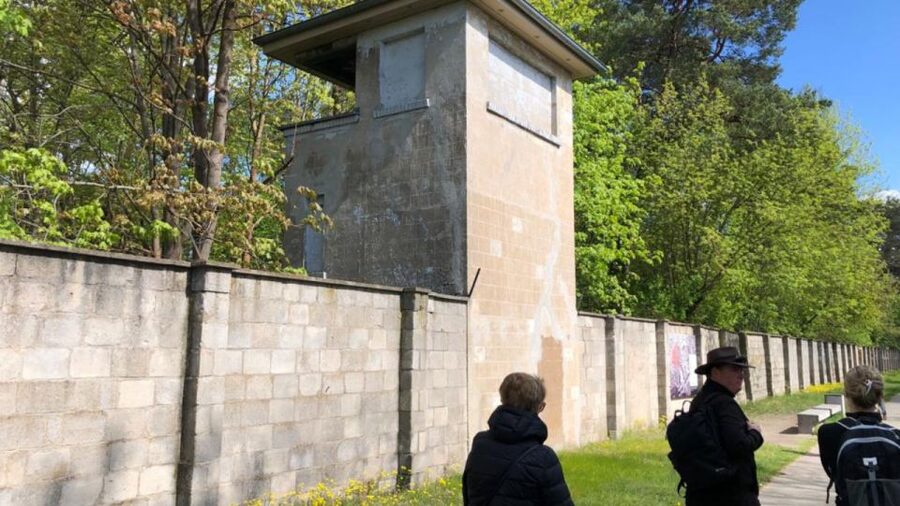
The guide makes or breaks a visit here. You need someone who can explain the camp system clearly, answer difficult questions, and avoid turning suffering into a performance.
The named guides connected with this tour receive especially strong praise for those qualities. Matt is described as passionate, sensitive, and strong on World War II history. Tom is praised for being patient, respectful, and clear, including during cold weather. Jorg is noted for engaging explanations and helpful insights into Berlin’s past.
Those comments point to what you should expect from the format: a live English-speaking guide, direct conversation, and room for questions. The small group helps. You are not one voice in a large crowd, and the guide can adjust explanations when a question opens up a useful point.
A word of caution: the exact guide affects the style and rhythm of the day. The shared strength is subject knowledge and respect, but any guided experience can vary in personality. If you prefer silence and independent reflection, a self-guided visit may suit you better.
Is $115 a fair price?
The cost is $115 per person, which is not a budget outing. The price includes central pickup and drop-off, van transportation, a bottle of water, an English-speaking guide, and a contribution to the camp memorial.
I think the value depends on what you want from Sachsenhausen. If you only need transportation and entry, the price may feel high. If you want historical context during the drive, a guide through the full site, a group capped at seven, and a direct ride back to central Berlin, the cost is easier to justify.
The memorial contribution is also meaningful. Preserving a site like this requires ongoing work, and your ticket helps support that effort. You are paying for more than a vehicle and a few hours of commentary. You are also paying for structure, context, and a responsible approach to a difficult place.
The main value concern is time. Four hours at the camp sounds generous, but Sachsenhausen includes several major areas and exhibitions. If you read every panel or want extended time inside the buildings, five hours door to door may feel rushed. A longer six- or seven-hour version would give serious history readers more breathing room.
Practical advice before you go
Wear comfortable shoes. The visit involves extensive walking and standing, and the site includes outdoor areas. Bring a snack, since the included bottle of water is useful but not a meal.
Dress for changing conditions. The tour operates rain or shine, and much of the experience takes place outside. Do not plan this as a relaxed indoor museum visit.
The tour is wheelchair accessible, but the information provided does not describe specific access arrangements at every building or surface. If detailed accessibility is important for you, confirm the practical route before booking.
The group is limited to seven people. That makes this a good fit for anyone who wants to ask questions and hear explanations without a large crowd. Pickup and drop-off at Alexanderplatz also make it simple to connect with the rest of a Berlin day.
Free cancellation is available up to 24 hours before the start, and you can reserve now and pay later. Those terms help if your Berlin plans are still shifting.
Who should book this Sachsenhausen tour?
I would choose this tour for a first visit to Sachsenhausen, especially if you want to understand how the camp operated rather than simply see the buildings. It also suits visitors with a serious interest in World War II, Holocaust history, German memory, or the postwar Soviet occupation.
The tour is a good match for adults and older teenagers who can handle the subject. The material includes executions, gas chambers, cremation, medical experiments, imprisonment, and severe prisoner mistreatment. It is not a light family outing or a casual stop between shopping and dinner.
You should think twice if you dislike fixed schedules, prefer to explore quietly, or want extensive time with every exhibition. The guide-led format gives you context, but it also means following the group and moving on when the schedule requires it.
Should you book it?
Book this experience if you want a serious, guided visit with a small group and a clear explanation of both Nazi and Soviet use of Sachsenhausen. The strongest reasons are the limited group size, the central transport, and the guides’ careful handling of painful material.
Skip it only if you need a longer independent visit or prefer to absorb memorial sites without a guide. For most first-time visitors, $115 is a reasonable price for transport, a four-hour guided route, and the chance to ask informed questions at a place where context matters enormously.
FAQ
How long does the Sachsenhausen tour last?
The full experience lasts five hours, including about 30 minutes by van each way and approximately four hours at Sachsenhausen Memorial.
Where does the tour begin?
It begins at the main entrance of the Park Inn by Radisson Berlin Alexanderplatz, at the taxi pickup and drop-off point.
Where does the tour end?
The van returns you to the Park Inn by Radisson Berlin Alexanderplatz.
What language is the tour in?
The tour is conducted in English with a live guide.
How large is the group?
The group is limited to seven participants.
What does the tour price include?
The price includes central pickup and drop-off, transportation, a bottle of water, a guide, and a contribution to the camp memorial.
What should I bring?
Bring comfortable shoes and snacks. The tour takes place rain or shine, so suitable clothing is also practical.
Can I cancel or pay later?
You can cancel up to 24 hours in advance for a full refund. You can also reserve your place and pay later.
Just added in Berlin
- Berlin & The Third Reich Private Guided Tour★ 5.0 · 3 reviews
- Third Reich Quest Experience in Berlin★ 4.5 · 7 reviews
- Private Analogue Photography Experience in Berlin★ 5.0 · 3 reviews
- The Beauty of Berlin by Bike: Private Tour★ 5.0 · 59 reviews
- Berlin: Guided Bike tour of the Berlin Wall and Third Reich★ 5.0 · 160 reviews
- Berlin Urbex Adventure and History Tour★ 5.0 · 9 reviews
- Beyond Currywurst: Berlin’s Hidden Street Food & Culture Tour★ 5.0 · 100 reviews
- Berlin Third Reich & Cold War Walking Tour With A Guide★ 5.0 · 7 reviews
Concentration Camp Memorials, compared.
Sachsenhausen Concentration Camp Tour in English
Read our review →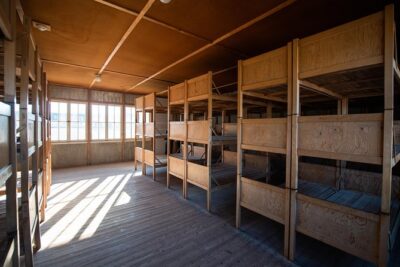
Dachau Concentration Camp Memorial Site Tour from Munich by Train
Read our review →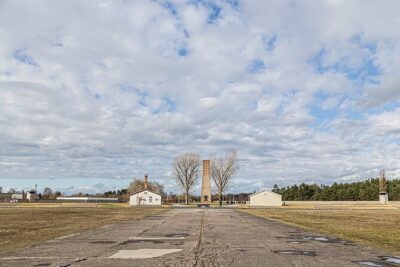
Sachsenhausen Concentration Camp Memorial Tour
Read our review →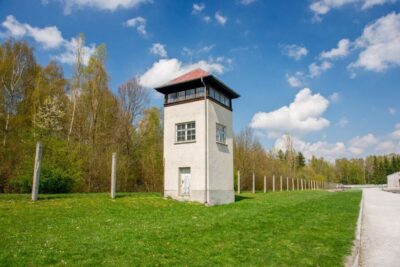
From Munich: Dachau Memorial Site Half-Day Trip
Read our review →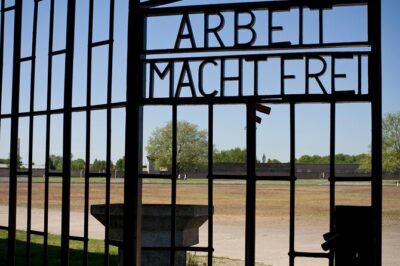
Sachsenhausen Concentration Camp Bus Tour in English from Berlin
Read our review →Sachsenhausen Concentration Camp Tour in English
Read our review →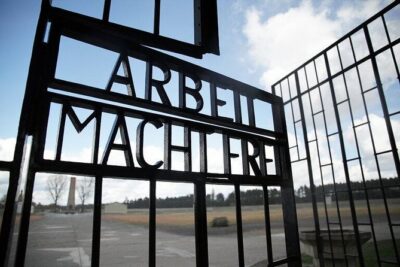
Sachsenhausen Concentration Camp Memorial Tour (Max. 15 Guests)
Read our review →Browse the lists this tour appears in