
Reviewed · 3-HOUR EXPERIENCES
Berlin: 3-Hour Private Tour in French or Italian
Berlin’s story is too large for a quick checklist, but this three-hour private drive gives you a smart first look. You can shape the route around landmarks that matter most to you, then hear how World War II, division, reunification, and today’s government shaped the city. The air-conditioned vehicle is a real help when Berlin’s distances begin to add up.
I especially like the choice of French or Italian, and the fact that the driver-guide can adjust the route rather than march you through a fixed script. I also like the small-group format, which keeps the experience personal for up to eight people. The main drawback is time: three hours is enough for orientation and selected stops, but not for serious museum visits or a detailed tour of every sight.
Key points to know before booking
- Private route by sedan or minivan: You choose which listed sights matter most, with one or two stops built into the three-hour outing.
- French and Italian guidance: This is useful for history-heavy Berlin, where clear explanations can make the city’s political story easier to follow.
- A strong first-day tour: You can connect the Brandenburg Gate, government district, Berlin Wall remains, Museum Island, and other central sights without working out public transport.
- Comfortable city coverage: The air-conditioned business-class vehicle helps you cover far more ground than you could on foot in three hours.
- Pickup in central Berlin: Hotel pickup and drop-off are included within the city center. An extra fee applies outside that area.
- Best for a short stay: The tour works well when you want a broad introduction before deciding where to return on your own.
Berlin in three hours: what this tour really offers

Berlin is not a city you understand from one monument. Its meaning comes from the sharp changes between them. A grand Prussian avenue can lead to a Nazi-era site, a Cold War scar, or a glass government building designed after reunification.
That makes a private vehicle useful. You are not spending your limited time finding the right tram, walking between far-flung districts, or trying to explain to a group why you want to linger at one stop. You can ask for the sights that fit your interests, then use the ride between them to connect the pieces.
The tour is designed for up to eight people. That is small enough to keep the outing private, though a full minivan of eight will feel less intimate than a couple or family traveling in a sedan. Your driver-guide provides the commentary through the vehicle microphone, then you can make one or two stops at locations you select.
Think of this as a city orientation with a private guide, not a three-hour museum tour. The vehicle lets you see more. The stops let you step out and take in a few places properly. The balance is efficient, but you will need to accept that several landmarks will be viewed from the road rather than explored in depth.
A few more half-days in Berlin worth comparing
- Berlin Highlights 3-Hour Bike Tour
★ 5.0 · 948 reviews - Berlin Highlights: 3-Hour Bike Tour
★ 4.9 · 809 reviews - Berlin: 3-Hour Street Art Tour
★ 4.7 · 778 reviews
Starting with Berlin’s government quarter
The Reichstag and the newer government buildings make a strong opening because they show two very different Berlins in one compact area. The Reichstag, with its historic shell and modern political role, represents the country’s complicated path from empire to democracy, dictatorship, division, and reunification.
Nearby, the government quarter is filled with contemporary buildings from the post-reunification period. Their clean lines and open spaces contrast with the older monuments along Unter den Linden. Your guide can help you see this area not simply as a collection of offices, but as part of the decision to make Berlin Germany’s capital again.
The Main Train Station is another useful modern reference point. Its glass and steel design signals a reunified city built around movement and connection. You may not stop here for long, but seeing it alongside the Reichstag helps explain how much of central Berlin was reshaped in the years after the Wall came down.
This part of the route is particularly valuable if modern architecture interests you. It is less rewarding if you want interiors, since the tour does not include entrance fees and the short schedule is aimed at exterior viewing.
Brandenburg Gate and Unter den Linden
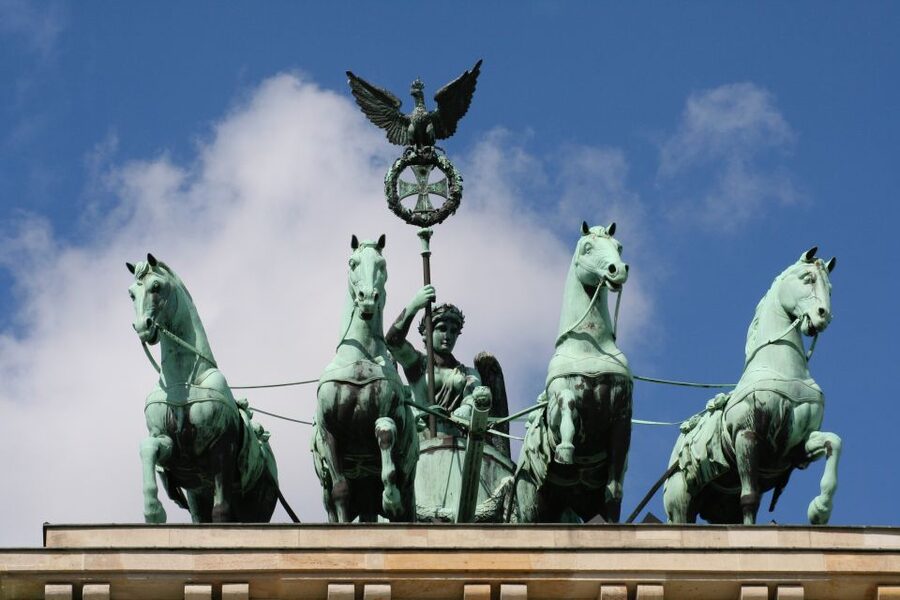
The Brandenburg Gate is Berlin’s essential landmark, but a guide can give it more meaning than a quick photo stop. Once a city gate, it later became a symbol of division because it sat near the Berlin Wall. Today it represents reunification, though that symbolism is built on a much heavier past.
From here, Unter den Linden leads east through one of Berlin’s grandest ceremonial avenues. The route connects the historic center with Museum Island and the former royal district. You will see how Berlin’s older architectural identity sits beside the rebuilt city.
The Staatsoper, or State Opera House, adds another piece to this stretch. Its presence reminds you that Berlin was a major cultural capital long before the twentieth century’s disasters. The avenue is best understood as a sequence, not as isolated buildings. Allow your guide to explain how the institutions along it served different political eras.
You should expect a short stop rather than an extended walking tour. The Brandenburg Gate area can be busy, and three hours does not leave much room for slow architectural study. Still, this is one of the best portions of the route for a first visit because several central themes meet here: monarchy, war, division, art, and reunification.
Museum Island and Berlin’s older center
Museum Island sits at the heart of Berlin’s historic center. The island’s museums hold major collections, but this experience is not built around museum entry. Entrance fees are not included, and the tour’s timing does not allow for a proper museum visit.
You can still benefit from seeing the complex from outside. Museum Island helps explain Berlin’s role as a royal and imperial capital, while nearby Nikolaiviertel offers a different sense of the old city. Nikolaiviertel is associated with Berlin’s historic beginnings and gives the central district a more intimate scale than the broad avenues nearby.
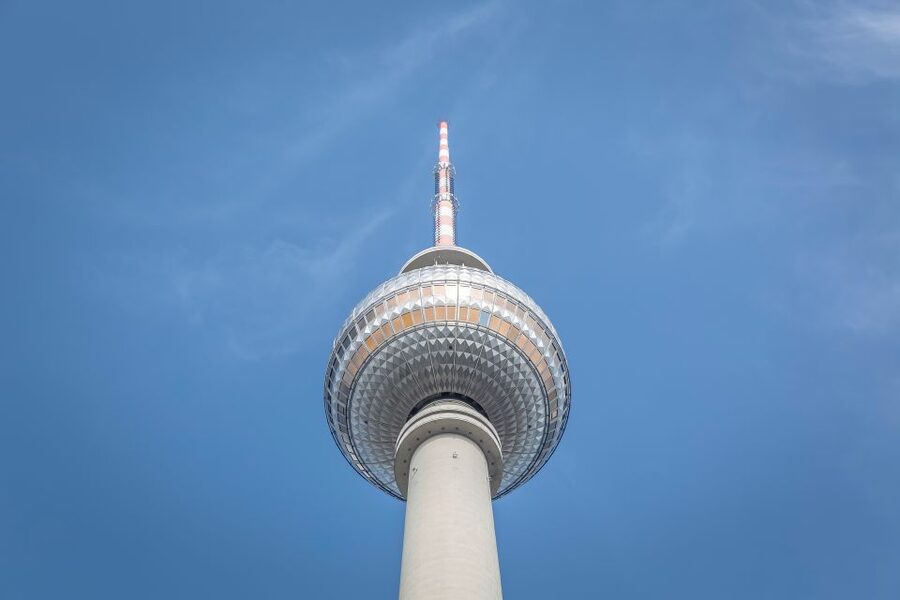
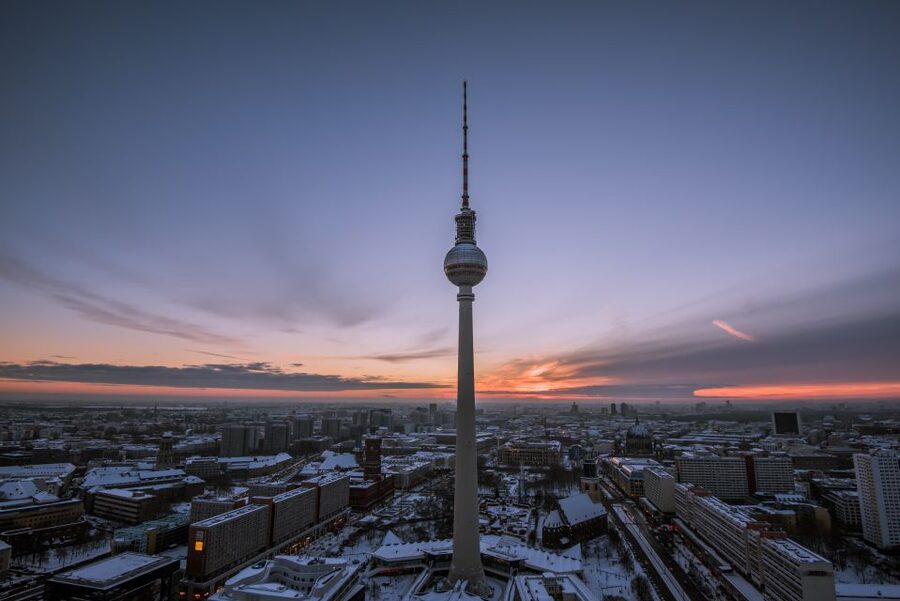
The TV Tower rises above this area as a reminder of East Berlin. Its height and location made it one of the most recognizable symbols of the former German Democratic Republic. Seeing it from the historic center creates a useful visual link between medieval Berlin, Prussian power, and the socialist capital that followed.
If you already plan to visit the museums, this tour can help you decide which ones deserve your return time. If museums are your main reason for visiting Berlin, you may prefer to protect three hours for a dedicated museum visit instead.
Same city, a completely different kind of day:
- Berlin: Reichstag, Dome and Government District Guided Tour
★ 4.7 · 18,288 reviews - Berlin: 1-Hour City Tour by Boat with Guaranteed Seating
★ 4.3 · 16,993 reviews - Berlin: Boat Tour Along the River Spree
★ 4.4 · 11,252 reviews - Discover Berlin Half-Day Walking Tour
★ 5.0 · 9,624 reviews
Gendarmenmarkt and the cultural heart
Gendarmenmarkt is one of the most elegant squares in central Berlin. Its major buildings and formal layout offer a change from the political drama of the Brandenburg Gate and the raw reminders of the Wall.
The square is a good place to appreciate Berlin’s architectural ambition. It also shows how much of central Berlin was damaged and later rebuilt. Depending on the route and timing, it may be chosen as one of your stops, but you should confirm your preferred stops when arranging the tour.
The Philharmonie offers another view of the city’s cultural life. Its distinctive modern design is part of the postwar cultural district, and it contrasts sharply with the classical forms around Gendarmenmarkt and Unter den Linden. A quick drive past these places can help you see Berlin as a city of competing architectural ideas rather than one with a single style.
The tour’s flexibility matters here. You may prefer grand squares and concert halls, while another group may care more about the Wall or the government quarter. A fixed group tour cannot easily make that trade. A private outing can, within the limits of the schedule.
Seeing the Berlin Wall and Cold War Berlin
The remains of the Berlin Wall are among the most important sights on the route. Only fragments survive, so you will not see a complete barrier dividing the city. That is part of the lesson. The Wall’s physical presence has largely disappeared, while its effect on Berlin’s families, streets, and political life still shapes the city.
Your guide can place the Wall within the wider Cold War story and explain how Berlin functioned as a divided city. This context is one reason a live guide matters. A photograph of concrete panels tells you little by itself. The surrounding history gives the remains their force.
You should be realistic about the format. A drive-by view or short stop cannot replace a dedicated visit to a Wall memorial or museum. If this is your main interest, ask to make the Wall remains one of your selected stops and use the tour to get an introduction before returning later on foot.
For many people, this is the part of the tour that turns a pleasant city drive into a meaningful history lesson. Berlin’s past is not tucked away in one museum. It appears in empty spaces, rebuilt facades, altered streets, and the line between former East and West.
Potsdamer Platz and Berlin’s new face
Potsdamer Platz shows how quickly Berlin can change. Once cut by the Wall and left in a divided city’s no-man’s land, it became a major redevelopment zone after reunification. The modern towers and broad public spaces offer a sharp contrast with the historic center.
This is a good stop for people interested in urban design and contemporary Berlin. It also gives you a clear example of how the city used new construction to reconnect areas that had been separated for decades.
The drawback is that modern architecture can feel less emotionally immediate than the Brandenburg Gate or Wall remains. You may admire the scale and design without feeling the same historical weight. Still, the comparison is useful. Berlin’s identity depends on both its surviving monuments and its new buildings.
The route may also include the Kongresshalle, a striking postwar building, and the Memorial Church area. Each adds a different layer to the city’s twentieth-century story. You will not study every building closely, but the guide can help you decide which places deserve more of your time later.
Palaces, monuments, and western Berlin

Charlottenburg Palace gives the tour a chance to leave central Berlin and show you the city’s royal side. Its grand exterior and grounds reflect the power of Prussia and the court culture that shaped Berlin before the modern republic.
The palace is not a substitute for a full interior visit. Entrance fees are separate, and the three-hour schedule favors an exterior look or a brief stop. If you have always wanted to tour the palace rooms, plan a separate visit.
The Victory Column offers another useful landmark. Its position near the Tiergarten and its monumental scale provide a different view of Berlin’s imperial past. Bellevue Palace, the official residence of Germany’s federal president, connects that older ceremonial setting with the modern republic.
The Memorial Church and KaDeWe shift the tone again. The church is tied to wartime destruction and remembrance, while KaDeWe represents Berlin’s commercial and cosmopolitan western side. Seeing them in one route gives you a quick lesson in how the city’s districts carry different memories.
The Synagogue may also be included, depending on the route you choose. It is important to remember that a listed sight is not automatically a scheduled stop. You have a limited number of stops, so rank your priorities before pickup.
What the private vehicle adds
Berlin is spread out. Walking is rewarding in the central districts, but moving from Charlottenburg Palace to the Wall, Potsdamer Platz, or the government quarter takes time. The private sedan or minivan lets you use those three hours for sightseeing rather than transfers.
The air-conditioning will be welcome in warm weather, and the business-class vehicle provides a more comfortable setting than a crowded sightseeing bus. The microphone helps you hear the guide while moving between locations.
There is also a practical benefit for groups. Up to eight people can stay together, keep the same guide, and avoid negotiating separate tickets or transport. Pickup and drop-off are included in central Berlin, and the driver holds a sign with your last name. You must provide a pickup location when booking. If your hotel or meeting point lies outside the city center, an extra fee applies.
This convenience comes at a price. The total cost is $542 per group, not per person, for up to eight people. For a full group, that works out to about $68 per person. For two people, it is $271 each, before any entrance fees or food and drinks. The value is strongest for families or friends who can share the cost and want a private French- or Italian-language route.
Guide style and language choice
A good guide is especially important in Berlin because the city’s sights do not always explain themselves. The Brandenburg Gate, Reichstag, Wall remains, and Soviet-era landmarks each carry several layers of meaning.
The experience is offered in French or Italian. That gives you a chance to ask questions and follow difficult historical subjects in the language you use most comfortably. A guide named Cristina has been singled out for warm service, excellent French, and a willingness to adjust the route. You should not assume she will lead every departure, but her example gives you a useful standard for the kind of flexible guiding this private format can provide.
The strongest part of the experience is likely to be the conversation between stops. You can ask how Berlin changed after reunification, why certain buildings were rebuilt, or how the former East and West are visible today. A private guide has more room for those questions than a large group tour.
Who should book this Berlin tour?
I would recommend it most strongly for a first visit, a short stay, or a group with different interests. It is also a sensible choice if you want French or Italian commentary and prefer not to manage Berlin’s wide geography on your own.
It works well for:
- Families who want a private vehicle and flexible pacing
- Groups of friends who can share the $542 cost
- First-time visitors who want a broad introduction
- People with only a few hours in Berlin
- French- and Italian-speaking travelers who want to ask questions freely
- Anyone who finds long walking tours tiring
I would think twice if you want long museum visits, detailed memorial work, or a slow look at every building. The tour gives you a useful framework, but you will need to return independently for depth.
The experience has received an overall rating of 4.9 from nine reviews, with especially strong praise for the comfortable vehicle, passionate guiding, short-stay usefulness, and flexibility. One important pattern is clear: the tour is valued as a way to get a strong first impression, not as the final word on Berlin.
Practical details before you go
The tour lasts three hours, and available starting times depend on the date. Pickup and drop-off are included at your hotel or another location you suggest in central Berlin. Give a precise pickup point when booking, since it is required for a valid reservation.
Food and drinks are not included. Entrance fees are also separate, so budget extra if you decide to enter a palace, museum, or another paid site. The listed route offers many possible sights, but you should select your top priorities early because only one or two stops are included.
You can cancel up to 24 hours before the tour for a full refund, and reserve now while paying later. That flexibility is useful when your Berlin plans are still changing.
Should you book it?
Book this tour if you want to get your bearings quickly, travel privately, and hear Berlin’s complicated story in French or Italian. It is particularly good value for a group of four to eight people, where the per-person cost becomes much more reasonable.
Skip it if your ideal day means spending hours inside museums, walking slowly through one neighborhood, or studying a single memorial in detail. For everyone else, this is a comfortable and efficient first pass through Berlin, with enough flexibility to make the route feel like your own.
FAQ
How long is the private Berlin tour?
The tour lasts three hours.
How many people can join the private group?
The tour is private for a group of up to eight people.
What languages are available?
Live guiding is available in French and Italian.
What vehicle is used?
Transport is provided by a private sedan or minivan with air-conditioning and a microphone. The vehicles are described as business-class.
Which Berlin sights can I request?
Possible sights include the Reichstag, government quarter, Brandenburg Gate, Unter den Linden, Staatsoper, Museum Island, TV Tower, Nikolaiviertel, Gendarmenmarkt, Potsdamer Platz, Berlin Wall remains, Philharmonie, Synagogue, Charlottenburg Palace, Memorial Church, KaDeWe, Victory Column, Bellevue Palace, Kongresshalle, and Berlin’s Main Train Station.
Are hotel pickup and drop-off included?
Pickup and drop-off are included for hotels or other suggested locations in Berlin’s city center. Pickup outside the city center costs extra.
Are entrance fees and food included?
No. Food, drinks, and entrance fees are not included in the tour price.
Just added in Berlin
- Berlin & The Third Reich Private Guided Tour★ 5.0 · 3 reviews
- Third Reich Quest Experience in Berlin★ 4.5 · 7 reviews
- Private Analogue Photography Experience in Berlin★ 5.0 · 3 reviews
- Berlin Urbex Adventure and History Tour★ 5.0 · 9 reviews
- The Beauty of Berlin by Bike: Private Tour★ 5.0 · 59 reviews
- Berlin: Guided Bike tour of the Berlin Wall and Third Reich★ 5.0 · 160 reviews
- Beyond Currywurst: Berlin’s Hidden Street Food & Culture Tour★ 5.0 · 100 reviews
- Berlin Third Reich & Cold War Walking Tour With A Guide★ 5.0 · 7 reviews
3-Hour Experiences, compared.

Munich’s Beer Halls and Breweries: 3-Hour Guided Tour
Read our review →
Browse the lists this tour appears in