
Reviewed · WALKING TOURS
Hamburg: Guided Walking Tour in Danish
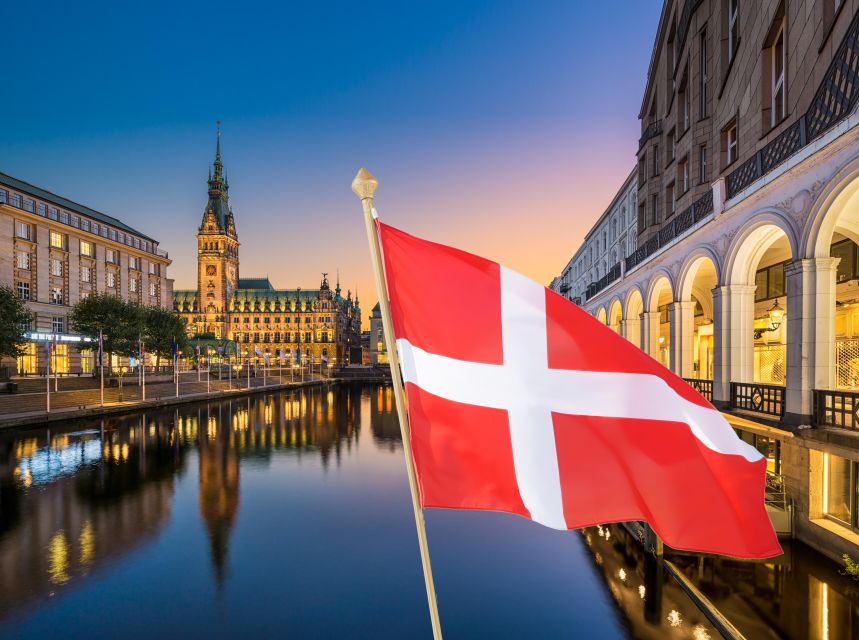
Hamburg’s story comes into focus on foot, in Danish, as this two-hour route links the Townhall, St. Nikolai Memorial, Speicherstadt, and Elbphilharmonie. I like the way it connects medieval trade, devastating fires, wartime destruction, and modern architecture instead of treating the city as a string of photo stops.
I also like the tour’s clear eastward flow from Jungfernstieg into HafenCity, plus the use of historical visual aids to make the past easier to picture. The main consideration is pace: two hours covers a lot, and the walk is not suitable for wheelchair users, people with mobility impairments, or children under six.
Key points at a glance
- A Danish-language tour with a strong history focus, covering about 1,200 years of Hamburg’s development.
- A useful route through several districts, from Jungfernstieg and the Townhall to Speicherstadt and HafenCity.
- St. Nikolai Memorial brings wartime history into the walk, with its ruined church tower and WWII museum.
- The tour ends at the Elbphilharmonie, giving you a natural chance to continue to its public viewing plaza.
- The $280 price covers a private group of up to 30, so the value improves sharply when shared by a larger party.
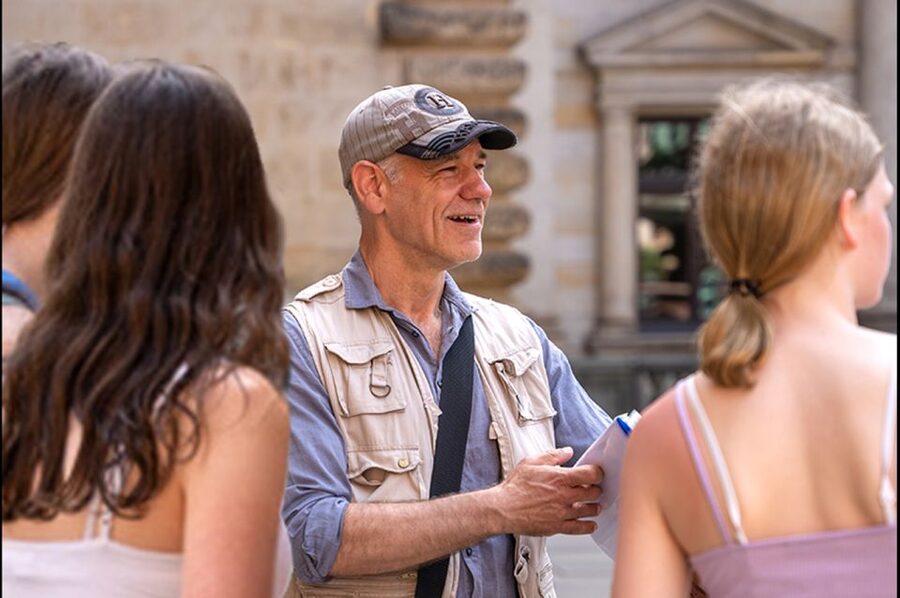
- Licensed guide Christian Meyer-Pedersen has been praised for lively, well-organized explanations in Danish.
Why this Danish Hamburg walk works
If you want Hamburg explained in Danish rather than simply pointed out, this tour has a clear purpose. It is not built around entering a long list of museums or spending time inside attractions. Instead, your guide uses the streets, buildings, memorials, and harbor districts as a map of the city’s past.
That approach suits Hamburg. The city changed dramatically through trade, fire, war, and redevelopment. You can look at a handsome building without understanding why it is there, or you can hear the story behind it and suddenly see Hamburg as a city repeatedly rebuilt.
The tour covers Hamburg’s rise from a Saxon marketplace to an important member of the medieval Hanseatic League, then follows its growth into one of the world’s largest ports. You also hear why fire mattered so much and why much of Hamburg’s so-called Old Town is actually newer than it first appears.
I particularly like the Danish format for families, friend groups, and Danish-speaking visitors who want more than a quick orientation. The guide can explain names, dates, and historical connections in the language you understand best. Christian Meyer-Pedersen has been specifically praised for making the material lively and orderly, which matters when a city’s past includes a lot of names and turning points.
More Walking Tours in Hamburg
- Hamburg: Guided Walking Tour for Magic Fans
★ 4.8 · 1,992 reviews - Reeperbahn Walking Tour with St. Pauli Local
★ 4.8 · 577 reviews - Hamburg: Speicherstadt Walking Tour with Coffee Tasting
★ 4.6 · 360 reviews
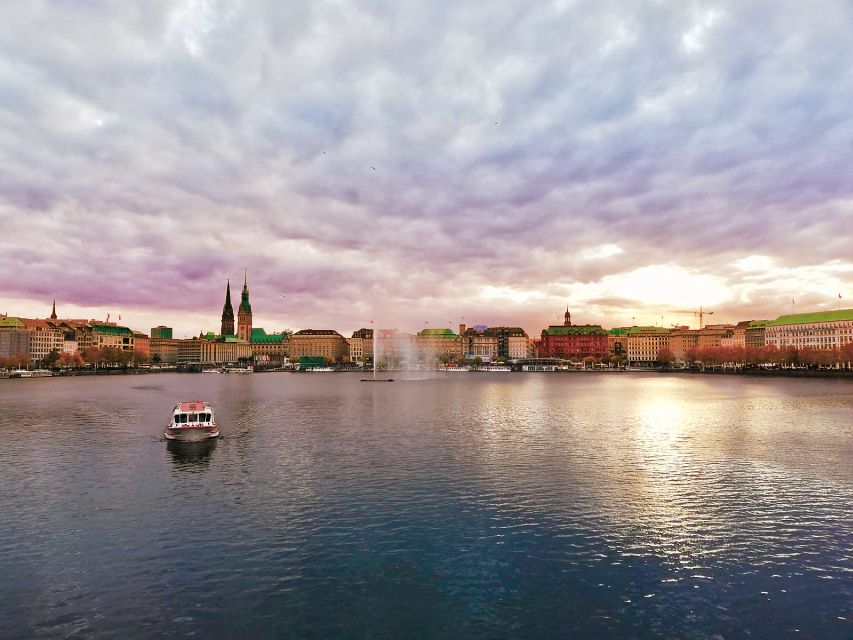
Starting at Jungfernstieg beside the Alster
The meeting point is in front of the Swatch Shop at the corner of Jungfernstieg and the Alsterarkaden. This puts you in central Hamburg, near the water and close to the city’s main shopping and civic area.
Arrive in comfortable shoes and clothes suited to the weather. The tour runs rain or shine, so a waterproof layer is sensible if the forecast is uncertain. Bring some cash as well, since it is listed among the recommended items, though food and drinks are not included.
The route is planned as a walking experience rather than a stop-and-start outing by vehicle. You should expect to remain on your feet for the full two hours, with the guide pausing at major sights. There is no food break built into the schedule, so eat beforehand if you prefer not to walk hungry.
Hamburg Townhall and the city’s civic heart
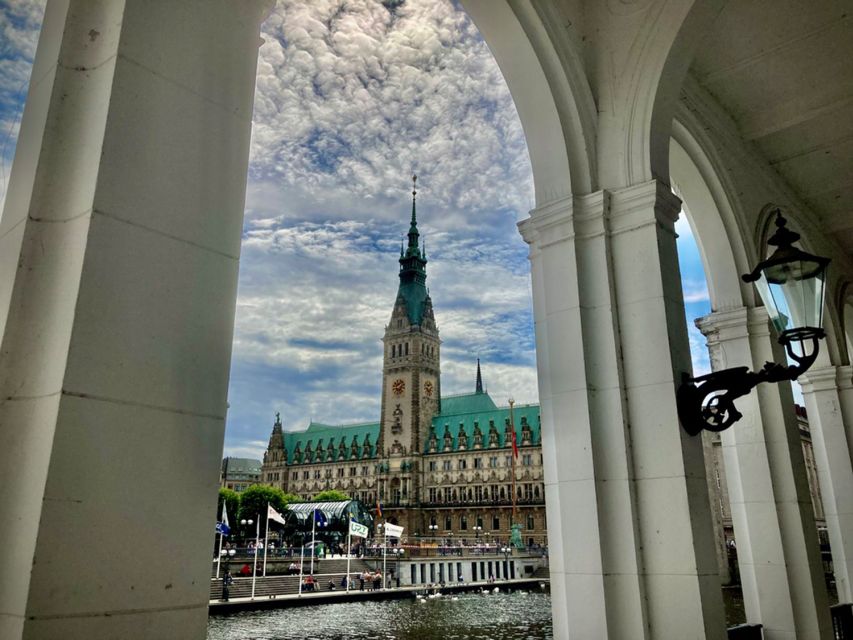
The first major stop is Hamburg’s Townhall, with about 20 minutes of guided explanation. This is one of the best places to begin because it gives you a sense of Hamburg’s civic confidence and commercial importance.
Your guide puts the building into the wider story of the city. Hamburg’s growth was tied to trade and port activity, and the Townhall represents the political side of that success. Rather than treating it as an isolated grand façade, the tour uses it to explain how Hamburg developed from a medieval marketplace into a major economic center.
This is also a useful early stop for orientation. You are still near central Hamburg, but the route soon moves toward older streets, memorials, warehouses, and the newer HafenCity district. The 20-minute visit is long enough for context without using up half the tour at one building.
Deichstraße and the surprise of the Old Town
The walk continues to Deichstraße, where the guide spends around 15 minutes. This stop helps explain why Hamburg’s Old Town can be misleading at first glance.
Hamburg has an old history, but much of what you see today has been rebuilt or altered. Fires played a major role in the city’s development, and the tour uses that fact to explain why the historic center is not simply a preserved medieval quarter.
Deichstraße is valuable because it lets you consider Hamburg at street level. The point is not just to photograph attractive buildings. You learn how fire, rebuilding, commerce, and urban change shaped the city’s appearance. I like this kind of stop because it gives you a better way to read the city during the rest of your visit.
Same city, a completely different kind of day:
- Hamburg: Sex and Crime in St. Pauli Tour for Ages 18+
★ 4.7 · 15,447 reviews - Hamburg: 1.5-Hour Harbor and Speicherstadt Day Cruise
★ 4.6 · 14,200 reviews - Hamburg: 90-Minute Evening Lights Harbor Cruise
★ 4.5 · 7,728 reviews - Hamburg: 2-Hour XXL Port of Hamburg Cruise Tour
★ 4.7 · 6,979 reviews
The Patriotic Society and Hamburg’s civic identity
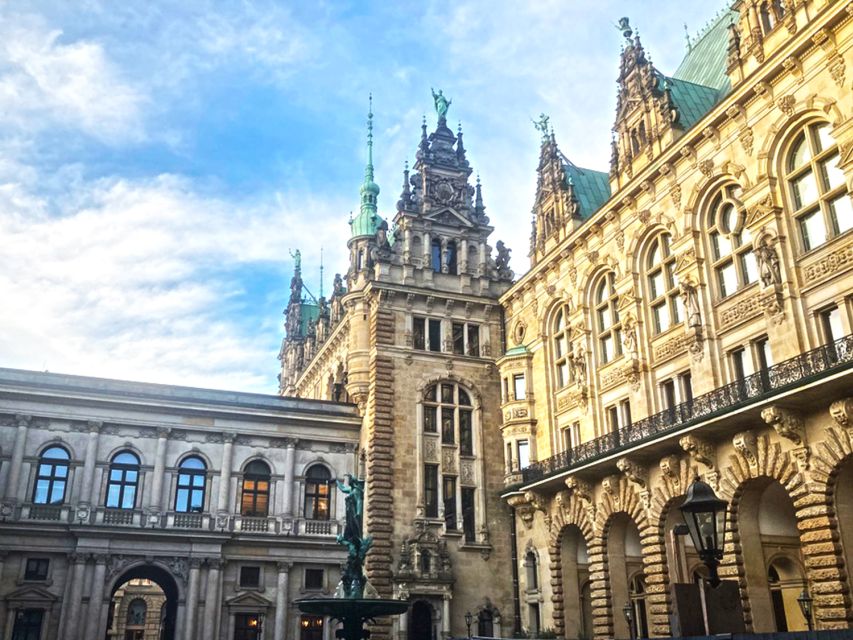
The next stop is the Patriotic Society of 1765, with about 10 minutes of guided commentary. The name may sound formal, but it offers another link between Hamburg’s commercial life and its public institutions.
Here, the guide continues the story of how Hamburg organized itself and responded to change. The stop is brief, so do not expect a long interior visit. Its value comes from the explanation around the building and its place in the city’s civic history.
This is one reason the tour works best as a first or early activity in Hamburg. You are not just collecting landmarks. You are building a framework that can help you understand other streets and buildings later.
St. Nikolai Memorial and the cost of war
The St. Nikolai Memorial is one of the most powerful stops on the route. You have about 15 minutes here, and the focus is on the church that was bombed by Allied forces during Operation Gomorrah in 1943.
The surviving ruins now house a WWII memorial and museum. The damaged church gives the subject a physical presence that a normal monument cannot quite match. Instead of seeing wartime history as a paragraph in a guidebook, you see a structure marked by destruction.
This part of the tour may feel heavier than the opening stops, but it is essential to understanding modern Hamburg. The city’s story is not only about port wealth, grand civic buildings, and new architecture. It also includes war, loss, and the difficult work of remembering.
The 15-minute stop gives you a focused introduction rather than a full museum visit. If you want to study the exhibits in detail, you would need extra time after the walking tour. The experience itself keeps moving, so pay attention to the guide’s explanation while you are there.
Laeiszhof and Hamburg’s trading past
The route then reaches Laeiszhof for another 15-minute guided stop. This continues the theme of Hamburg as a commercial and maritime city.
The tour links individual buildings to the larger port economy, helping you understand that Hamburg’s history was shaped by trade networks rather than by royal courts alone. Its place in the Hanseatic League and its later growth as a major port are central to the story.
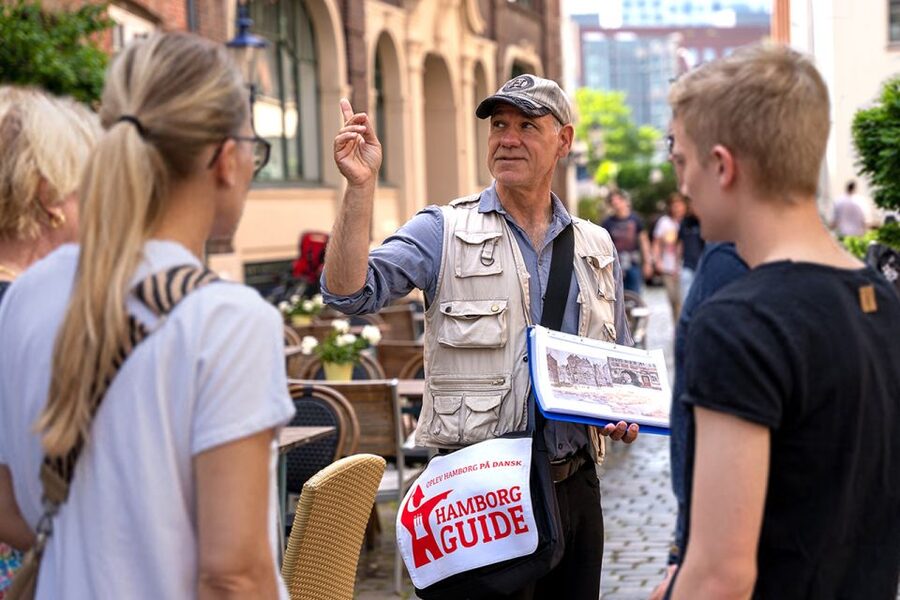
This is also where the tour’s use of visual aids can help. Historical images give you a way to compare the Hamburg in front of you with earlier versions of the city. That is especially useful in an urban area that has been rebuilt and redeveloped many times.
Speicherstadt, the world’s largest warehouse district
Speicherstadt is the visual centerpiece for many people on this walk. The guide spends about 15 minutes in the district, which is described as the world’s largest warehouse area.
The red-brick warehouses and waterways show Hamburg’s trading power in a direct, practical way. This was not a palace district designed mainly for display. It was built for storing and moving goods, and the architecture reflects that purpose.
I like this stop because it connects the city’s past to the port without requiring a separate harbor excursion. You see how warehouses formed part of Hamburg’s commercial machine, then hear how that system fit into the city’s larger development.
Keep your expectations realistic. Fifteen minutes gives you a guided look and historical context, not an exhaustive exploration of every lane or museum in Speicherstadt. If you enjoy the district, you can return later and spend more time on your own.
HafenCity and a newer Hamburg
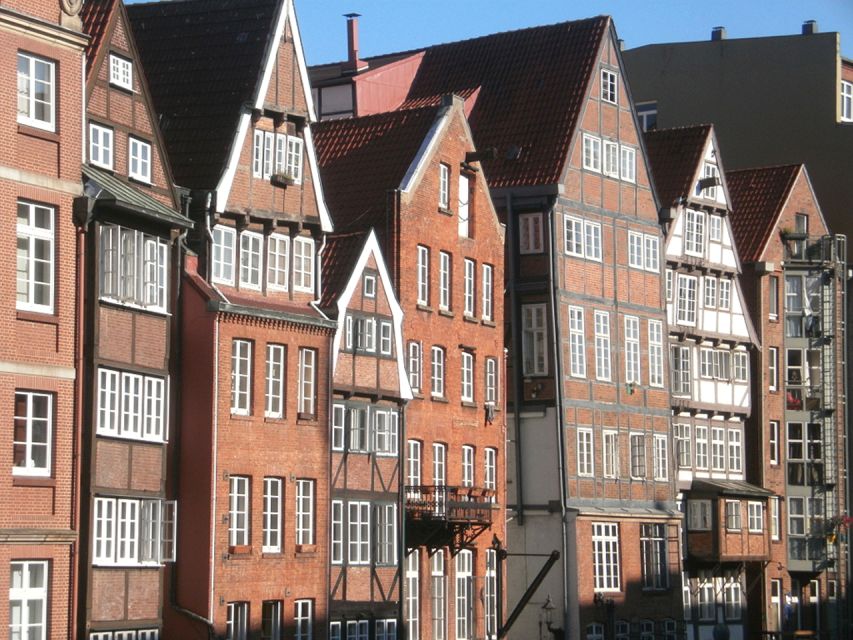
From Speicherstadt, the route moves into HafenCity for around 15 minutes. This change is one of the tour’s strongest features because you can see old commercial Hamburg and new residential and business Hamburg within the same walk.
HafenCity is presented as a modern district, not as a historic quarter. Its inclusion shows how Hamburg continues to reshape its waterfront and expand its economic and cultural center. The contrast with Speicherstadt makes both areas easier to understand.
For you, this means the tour does not stop once it reaches the famous old warehouses. It keeps moving into the city’s present-day identity. You see Hamburg as a place where older port functions and new urban development sit side by side.
The route also gives you a practical sense of how the central city leads toward the Elbe and the modern harbor districts. If you are visiting Hamburg for the first time, that geographic connection is useful.
Ending at the Elbphilharmonie
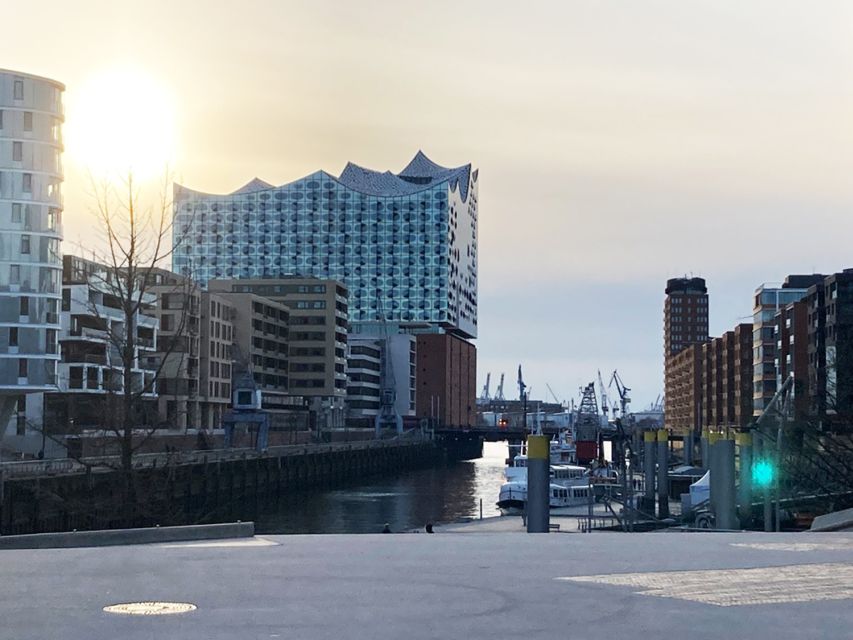
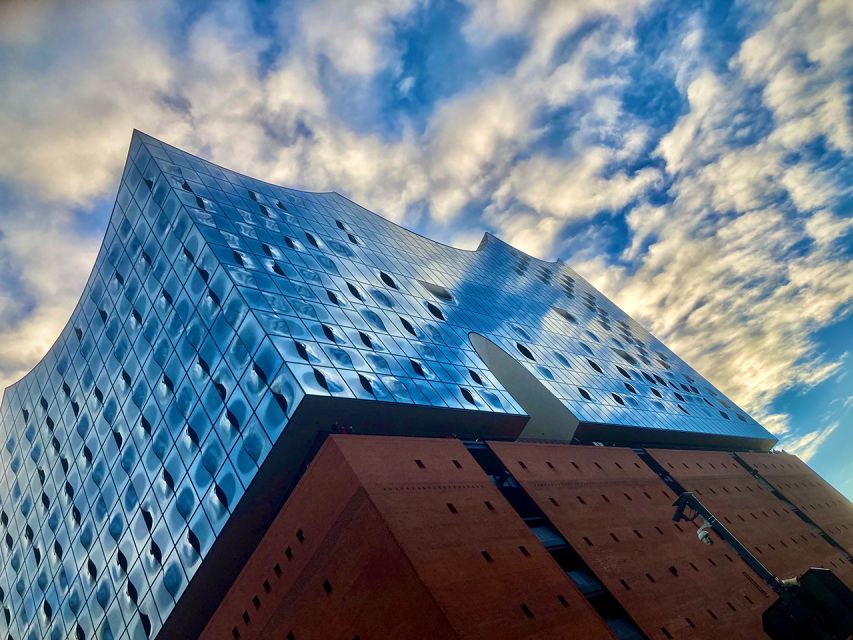
The final stop is the Elbphilharmonie, with about 15 minutes of guided attention. This grand concert hall is the tour’s architectural finale and a fitting symbol of modern Hamburg’s cultural ambitions.
The walk ends at Platz der Deutschen Einheit. That ending is convenient because it gives you a clear next step: explore the Elbphilharmonie Plaza and its public viewing platform on your own.
The plaza is not included as a guided admission or separate activity in the tour price, so plan your own time after the walk if you want to continue there. The tour’s ending works well for visitors who prefer a structured introduction followed by independent exploration.
You should also note that the route does not return to Jungfernstieg. You finish in HafenCity, so allow for that when planning your next stop. The precise travel arrangements after the tour are not provided, but the final location is clearly identified.
What $280 means for your group
The price is $280 per group of up to 30 people. That is a high total for one or two people, but a different proposition for a family, school group, club, company outing, or larger party.
At the full group limit, the price works out to less than $10 per person. With 10 people, it is $28 each. With only two people, it becomes $140 per person, so the value depends heavily on how many people share the booking.
The price includes the walking tour, a licensed guide, and historical visual aids. Food and drinks are not included. The main thing you are paying for is the Danish-language explanation and the private group format, not admission to a series of museums.
That can be good value if language matters to you and your group wants a shared introduction to Hamburg. It is less compelling if you are looking for museum entry, a meal, transportation, or a long visit inside the Elbphilharmonie.
You can cancel up to 24 hours before the tour for a full refund, and the reserve-now, pay-later option keeps your plans flexible. Starting times vary, so check availability when choosing your date.
Who will get the most from this walk
I would choose this tour for Danish-speaking adults, families with older children, and groups that want a guided overview before exploring Hamburg on their own. It is especially useful if you want history explained in Danish and prefer a licensed guide over an audio guide.
The route suits people who enjoy connections between places. You hear how the medieval marketplace, Hanseatic trade, city fires, WWII destruction, warehouse district, and HafenCity fit into one story.
It is not a good fit for children under six, wheelchair users, people with mobility impairments, visually impaired people, or hearing-impaired people, according to the stated restrictions. The tour takes place outdoors in all weather, so cold, rain, or strong wind can affect your comfort. One February outing was described as very cold, which is a useful reminder to dress for the season rather than the calendar alone.
My verdict on the Danish Hamburg experience
Book this walk if you want a focused history lesson in Danish, a route through several of Hamburg’s most important districts, and a guide who can make the city’s changes easy to follow. Christian Meyer-Pedersen has been praised for a large store of historical and cultural knowledge, lively delivery, and an organized presentation.
I would be more cautious if you want lots of free time at each attraction, indoor museum visits, or a gentle stroll with frequent breaks. The route covers substantial ground in two hours, and the group price makes the most sense when several people share it.
For a larger Danish-speaking group, the value is strong. For a couple, compare the total cost with other city walks. For everyone else, the best reason to book is the language and the carefully linked route, ending at the Elbphilharmonie where you can continue exploring independently.
FAQ
How long does the Hamburg Danish walking tour last?
The tour lasts two hours.
What language is the tour conducted in?
The live tour guide speaks Danish.
Where does the tour meet?
Meet in front of the Swatch Shop at the corner of Jungfernstieg and the Alsterarkaden.
Where does the tour finish?
The walk ends at Platz der Deutschen Einheit in HafenCity, near the Elbphilharmonie.
What sights are included?
The route includes Hamburg’s Townhall, Deichstraße, the Patriotic Society of 1765, St. Nikolai Memorial, Laeiszhof, Speicherstadt, HafenCity, and the Elbphilharmonie.
Is entry to the Elbphilharmonie Plaza included?
No. The tour ends at the Elbphilharmonie and gives you the opportunity to visit the Plaza and public viewing platform on your own.
What is included in the price?
The price includes the walking tour, a licensed guide, and historical visual aids. Food and drinks are not included.
Can I cancel the booking?
Yes. You can cancel up to 24 hours in advance for a full refund.
Just added in Hamburg
- Hamburg: St. Pauli Food and Bier Tour★ 4.7 · 5 reviews
- Hamburg: Private Tour Red Light District Walking Tour★ 4.7 · 227 reviews
- St. Pauli Tour: Drag-Attack with Barbie Stupid & Lee Jackson★ 4.8 · 280 reviews
- St. Michael’s, Elbe Tunnel & Harbor 2-Hour Hamburg Tour★ 4.9 · 21 reviews
- Hamburg: Safari tour in St. Pauli★ 4.9 · 11 reviews
- Satt Pauli – der kulinarische Rundgang durch St. Pauli★ 4.8 · 12 reviews
- Radtour um die Alster & durch traumhafte Alsterviertel★ 4.9 · 34 reviews
- Hamburg: Reeperbahn Comedy Club★ 4.3 · 53 reviews
Walking Tours, compared.


Berlin’s Best: 2 Hour Walking Tour Third Reich and the Cold War
Read our review →
Third Reich Berlin: Hitler and WWII Walking Tour
Read our review →Browse the lists this tour appears in