
Reviewed · WALKING TOURS
Hamburg: 2-Hour St. Georg Walking Tour
St. Georg gives you a side of Hamburg that is easy to miss if you stay on the main shopping streets. This two-hour neighborhood walk moves from cafés and quiet squares to mosques, the Catholic cathedral, the red-light district, and the gay village, showing how many different parts of city life share one compact district.
I like the focus on migration and religious minorities, subjects that turn an ordinary walk into a useful lesson about modern Germany. I also like the chance to see a neighborhood near the main station through local eyes, with personal details and insider information rather than only famous sights.
The main consideration is language: the live tour is in German, and the walk touches on adult nightlife and LGBTQ history. That makes it a strong choice for visitors seeking an alternative, candid look at Hamburg, but less suitable if you need an English tour or prefer only traditional sightseeing.
Key points to know before you book
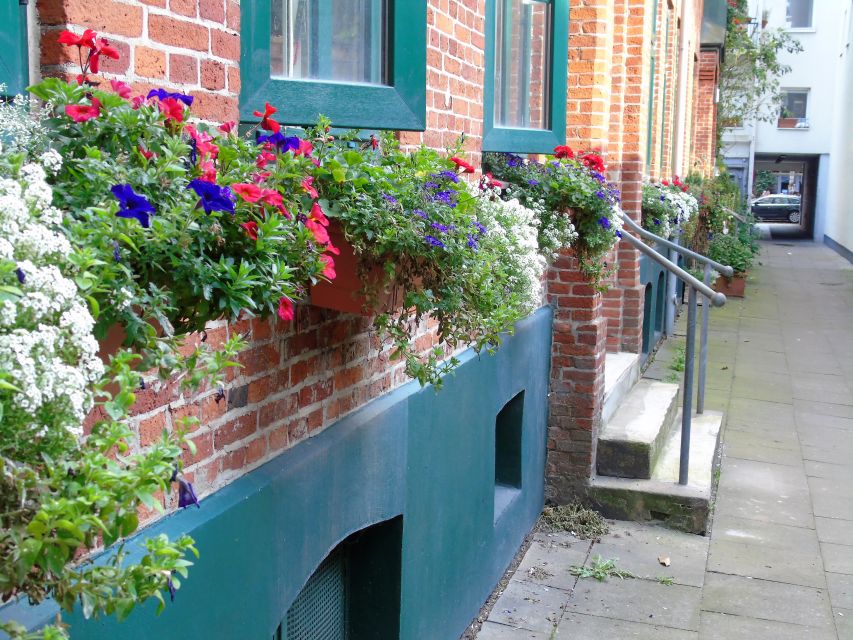
- Lange Reihe sets the tone: St. Georg’s quasi-center mixes coffee shops, sidewalk cafés, and a more relaxed local feel.
- The route covers several sides of the district: Expect religious sites, the red-light district, student protest history, and the gay village.
- This is a social-history tour: Migration, religious minorities, and changing urban life matter as much as buildings.
- The guide speaks German: You need enough German to follow a live walking tour.
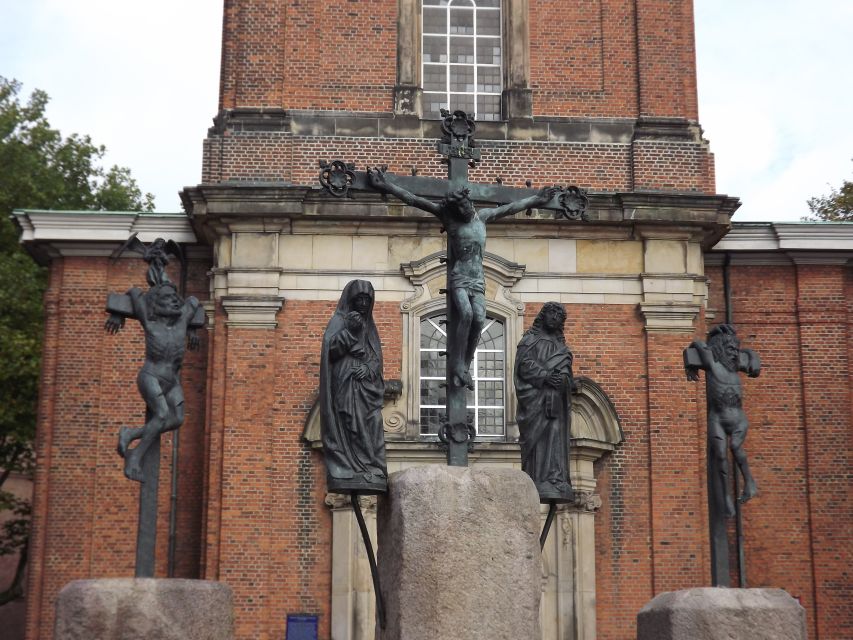
- The meeting point is easy to identify: Begin at the Crucifixion Group statue in front of Trinity Church.
- The walk costs $23 per person: For two hours of guided local context, that is fair value if the subject fits your interests.
Why St. Georg makes a good walking-tour subject
St. Georg sits close to Hamburg’s main station, yet it is not simply a transport zone. The district brings together cafés, churches, mosques, nightlife, students, migrants, and LGBTQ businesses in a small area. That mixture gives the walk its purpose.
You are not visiting a single grand monument. Instead, you are learning how a neighborhood works. The guide helps connect places that can otherwise seem unrelated: a coffee shop, a religious building, a nightlife street, and a public square can all tell part of the same urban story.
I like this approach because it gives you more than a list of dates and names. You get a look at how Hamburg has changed through migration, religious diversity, student activism, and shifting ideas about public life. For a city visit, that kind of context can be more useful than another quick pass by a landmark.
The route also has a practical advantage. St. Georg is near the main station, so you can fit the walk into a day when you are already exploring central Hamburg. It begins and ends at the same place, which keeps the logistics simple.
More Walking Tours in Hamburg
- Hamburg: Guided Walking Tour for Magic Fans
★ 4.8 · 1,992 reviews - Reeperbahn Walking Tour with St. Pauli Local
★ 4.8 · 577 reviews - Hamburg: Speicherstadt Walking Tour with Coffee Tasting
★ 4.6 · 360 reviews
Starting at Trinity Church
The meeting point is the Crucifixion Group statue in front of Trinity Church, at St. Georg Kirchhof, 20099 Hamburg. Arrive with enough time to locate the statue and settle in before the walk begins.
Starting beside a church is fitting for a tour that pays close attention to religion. The district’s Catholic cathedral and mosques are part of the route, and the opening point prepares you for a walk where faith communities are treated as central parts of neighborhood life.
The tour ends back at the same meeting point. That is helpful if you plan to continue by train, return to your hotel, or meet someone afterward. It also means you do not have to work out a second pickup location in an unfamiliar part of Hamburg.
The tour lasts two hours. That is long enough to cover several themes, but short enough to add before or after another central Hamburg activity. Wear comfortable shoes, since the experience is entirely on foot.
Walking Lange Reihe and St. Georg’s café life
Lange Reihe is described as the quasi-center of St. Georg, and it gives you the district’s more polished, social side. You can expect trendy coffee shops, sidewalk cafés, and a street atmosphere that feels more local and relaxed than the large central shopping routes.
This part of the walk is useful because it provides a clear introduction to the neighborhood’s present-day identity. Cafés are not just places to stop for a drink. They show how streets change as new residents, businesses, students, and creative communities shape an area.
You may find this section especially appealing if you like observing ordinary city life. The tour is not built around rushing from one famous attraction to another. It gives you time to notice how people use public space and how a district can feel both central and surprisingly quiet.
Still, keep your expectations sensible. This is not a dedicated food tour, and the cost does not include coffee or snacks. The cafés are part of the setting and the story, not included stops for a tasting menu.
Religion, migration, and the city’s changing identity
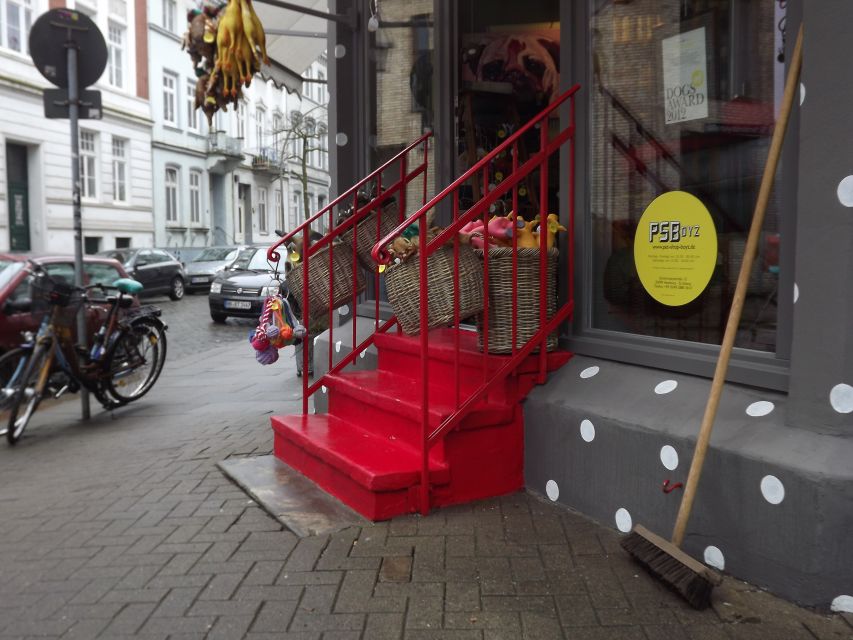
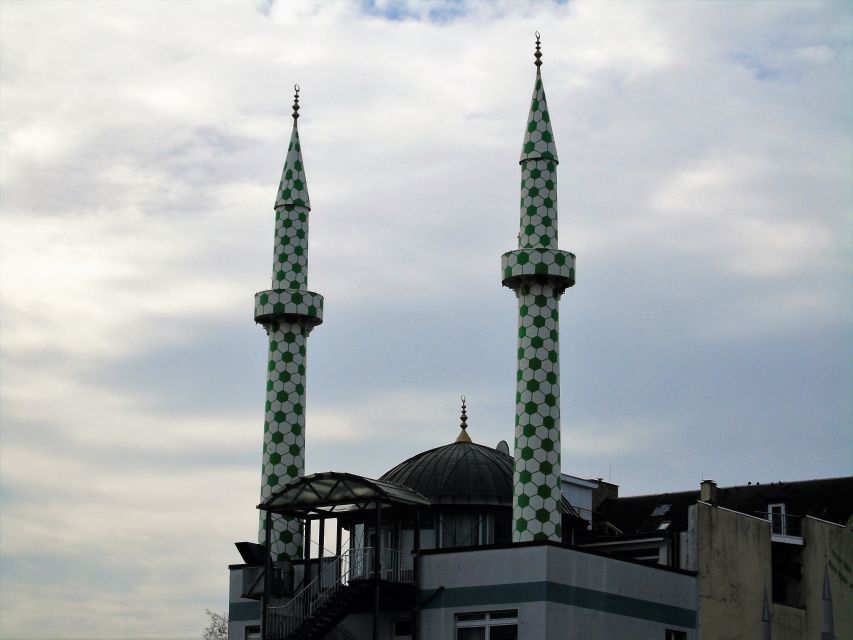
One of the strongest subjects on this walk is the number of religions represented in St. Georg. The route includes the Catholic cathedral and mosques, allowing the guide to explain how different faith communities fit into the district.
That focus gives the tour real value. A religious building can look like a single point on a map, but the surrounding community often says more about the area. The guide places these sites within the larger story of migration and minority life in Germany.
You should expect interpretation rather than an extended architectural tour. The information provided emphasizes the people and social forces connected with these places, not a detailed study of every interior feature.
I would choose this tour if you want to understand Hamburg as a changing city. It can help you see why a central neighborhood has several religious identities side by side, and how migration affects streets, businesses, and local culture.
Because the guide speaks German, your experience will depend on your language ability. If you can follow conversational German, the subject matter should give you plenty to think about. If you cannot, the tour may be difficult to enjoy fully, since no other language is listed.
Same city, a completely different kind of day:
- Hamburg: Sex and Crime in St. Pauli Tour for Ages 18+
★ 4.7 · 15,447 reviews - Hamburg: 1.5-Hour Harbor and Speicherstadt Day Cruise
★ 4.6 · 14,200 reviews - Hamburg: 90-Minute Evening Lights Harbor Cruise
★ 4.5 · 7,728 reviews - Hamburg: 2-Hour XXL Port of Hamburg Cruise Tour
★ 4.7 · 6,979 reviews
The red-light district, handled as part of the neighborhood
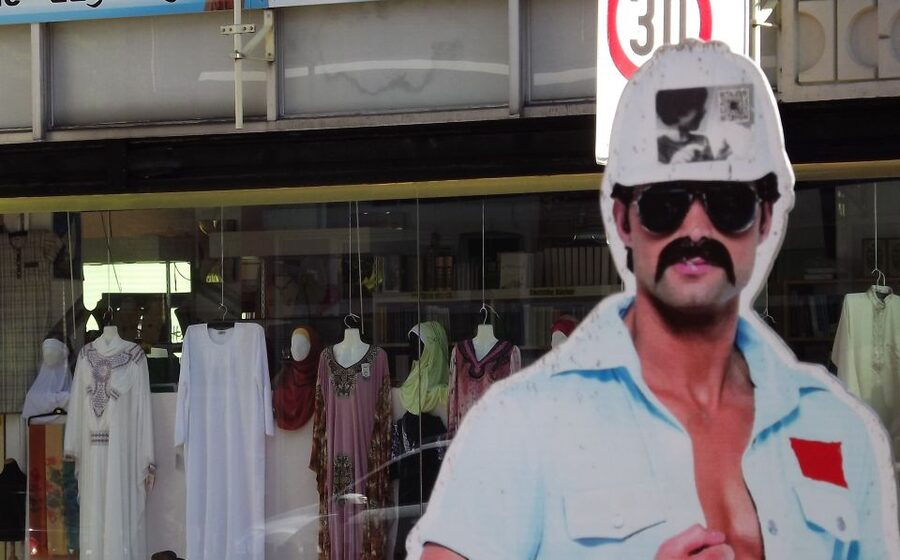
The walk also enters St. Georg’s red-light district. This adds a more direct and adult side to the experience, one that does not fit neatly into a standard sightseeing route.
The point is not simply to look at nightlife. The district is presented as part of St. Georg’s wider social history, alongside migration, religion, student revolt, and LGBTQ life. That broad treatment helps you understand that neighborhoods are made from many layers, including the parts that city brochures often avoid.
You should be comfortable discussing adult nightlife in a public walking-tour setting. The information supplied does not promise a specific club visit, performance, or entry to any venue, so think of this as an outdoor look at the area and its place in the neighborhood.
That distinction matters. You are booking a guided city walk, not a nightlife package. The value comes from explanation and context, not from exclusive access.
The gay village and LGBTQ life in St. Georg
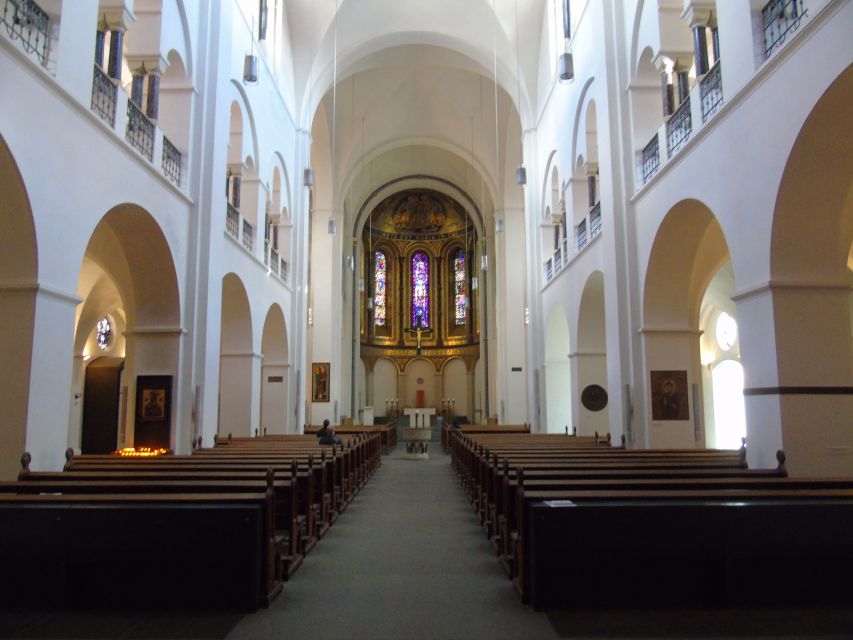
The tour includes what is described as St. Georg’s gay village. This is one of the experience’s most distinctive features, especially for anyone who wants to learn about Hamburg beyond its conventional landmarks.
The gay scene is treated as part of the district’s identity, not as a separate tourist attraction. Along with the café culture and religious diversity, it helps explain why St. Georg has such a varied public character.
I appreciate that the route puts LGBTQ life beside other major themes. It presents the neighborhood as a place where different communities share streets and public spaces. That can give you a more honest sense of urban Hamburg than a tour focused only on old buildings.
As with the red-light district, the exact stops and level of detail are not specified. You should expect a guided look at the area and its social role, not a promise of particular bars, venues, or evening entertainment.
Student revolt and the wider German story
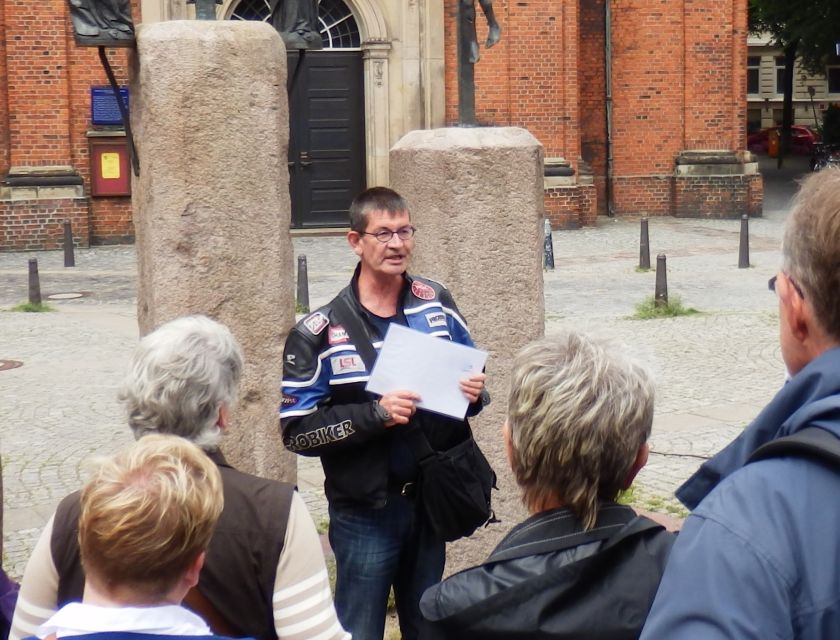
Student revolt is another subject included in the walk. This detail makes clear that the tour is not only about current cafés and nightlife. It also examines political and social change.
For you, the benefit is a stronger connection between St. Georg and wider German history. A local street can become a useful classroom for understanding how students, migrants, religious minorities, and alternative communities have influenced public life.
The tour seems designed for people who want a less polished version of Hamburg. That does not mean the district is gloomy or purely political. It means the guide gives attention to tensions and changes that are often left out of a first-time city visit.
A good local guide is especially important here. The walk needs someone who can connect separate subjects without turning the experience into a lecture. The available description emphasizes a personal style and insider information, so you can expect the guide to add local perspective rather than recite only basic facts.
What the guide adds to the experience
This tour depends heavily on its guide. The sights themselves are public streets, religious buildings, cafés, and neighborhood areas. The guide’s explanation is what turns them into a coherent two-hour experience.
The guide is described as competent, informative, personal, and generous with insider information. Those qualities matter on a social-history walk because the main reward is not a dramatic view. It is the extra meaning attached to places you might otherwise pass without noticing.
You should expect a guide who discusses St. Georg in a direct and personal way. The tour’s subjects are sometimes sensitive, so clear explanations and a respectful tone are important.
No individual guide’s name is provided, so you cannot select a particular person in advance. The language is German, and the tour is led live rather than delivered through an audio device.
Is $23 a fair price for two hours?
At $23 per person, the tour is reasonably priced for a two-hour guided walk in central Hamburg. You are paying for local interpretation, not transportation, food, museum admission, or a special venue.
The value is strongest if you would otherwise wander through St. Georg without understanding what you are seeing. Two hours of context about migration, religion, student protest, nightlife, and LGBTQ life can make the rest of your time in Hamburg more rewarding.
The price is less compelling if you want only major monuments or a general introduction to Hamburg. This is a focused neighborhood tour, and its success depends on your interest in social history and contemporary city life.
I would book it early in your Hamburg stay if you can follow German. It can give you a useful frame for later walks through the city, and you can return to St. Georg with a better sense of what you are looking at.
Who will enjoy this St. Georg walk
This experience suits you best if you:
- Want to explore an alternative side of Hamburg near the main station
- Enjoy neighborhood walks more than standard monument tours
- Are interested in migration and religious minorities
- Want to learn about LGBTQ life in Hamburg
- Feel comfortable discussing the red-light district
- Can follow a live tour in German
- Prefer a personal local guide to a self-guided route
- Have two hours available for a focused walk
You may want another tour if you need English, want a broad introduction to all of Hamburg, or prefer a route centered on museums and historic monuments. The walk is also not ideal if adult nightlife and candid social topics are outside your interests.
The 4.8 rating from 11 reviews suggests strong satisfaction, while the small number of ratings means you should treat it as useful guidance rather than a guarantee. The most important match is between your interests and the tour’s subject matter.
Practical planning for the day
Check the available start times before booking, since the schedule is not fixed in the information provided. Plan to meet at the Crucifixion Group statue in front of Trinity Church, not simply somewhere near the main station.
Wear shoes suitable for two hours of city walking. Bring anything you need to follow a German-language talk, since the tour does not list another language option.
The walk returns to its starting point. That makes it easy to combine with independent time in St. Georg, a train connection, or another central Hamburg plan.
Free cancellation is available up to 24 hours before the tour for a full refund. You can also reserve now and pay later, which helps if you are still arranging your Hamburg schedule.
Should you book the Hamburg St. Georg Walking Tour?
Book this tour if you want local context over postcard sights. It offers a compact look at cafés, faith communities, migration, student protest, the red-light district, and the gay village, all in one central neighborhood.
The best reason to choose it is its range. In two hours, you get a more complicated and useful picture of Hamburg than a simple old-town stroll can provide. The main limits are just as clear: the tour is in German, and the subject matter includes adult nightlife and sensitive social history.
If those points suit you, $23 is a fair price for a personal introduction to St. Georg. If not, choose a broader city tour or an English-language option instead.
FAQ
Where does the St. Georg walking tour begin?
The tour begins at the Crucifixion Group statue in front of Trinity Church, at St. Georg Kirchhof, 20099 Hamburg.
Where does the tour end?
The activity ends back at the same meeting point where it began.
How long is the walking tour?
The guided walk lasts two hours.
What language is the tour in?
The live tour guide speaks German. German is the only language listed for this activity.
How much does the tour cost?
The listed price is $23 per person.
What parts of St. Georg does the tour explore?
The walk includes Lange Reihe, trendy cafés, the red-light district, mosques, the Catholic cathedral, and the gay village.
What historical subjects are covered?
The tour discusses migrants, religious minorities, student revolt, and the development of St. Georg’s contemporary social life.
Is the tour guided by a local?
Yes. The experience includes a two-hour guided walk with a local guide.
Can I cancel the tour for a full refund?
Yes. You can cancel up to 24 hours in advance for a full refund. You can also reserve now and pay later.
More 2-Hour Experiences in Hamburg
- Hamburg: Speicherstadt and HafenCity 2-Hour Tour
★ 4.8 · 1,063 reviews - Hamburg: 2-Hour Harbor Cruise
★ 4.6 · 504 reviews - Hamburg: 2-Hour Sightseeing Cruise to Blankenese
★ 4.6 · 279 reviews - 2 Hours Hamburg Segway Tour
★ 4.5 · 164 reviews
Just added in Hamburg
- Hamburg: St. Pauli Food and Bier Tour★ 4.7 · 5 reviews
- Hamburg: Private Tour Red Light District Walking Tour★ 4.7 · 227 reviews
- St. Pauli Tour: Drag-Attack with Barbie Stupid & Lee Jackson★ 4.8 · 280 reviews
- St. Michael’s, Elbe Tunnel & Harbor 2-Hour Hamburg Tour★ 4.9 · 21 reviews
- Hamburg: Safari tour in St. Pauli★ 4.9 · 11 reviews
- Satt Pauli – der kulinarische Rundgang durch St. Pauli★ 4.8 · 12 reviews
- Radtour um die Alster & durch traumhafte Alsterviertel★ 4.9 · 34 reviews
- Hamburg: Reeperbahn Comedy Club★ 4.3 · 53 reviews
Walking Tours, compared.


Berlin’s Best: 2 Hour Walking Tour Third Reich and the Cold War
Read our review →
Third Reich Berlin: Hitler and WWII Walking Tour
Read our review →Browse the lists this tour appears in